


Citadel of Salah El-Din in Cairo
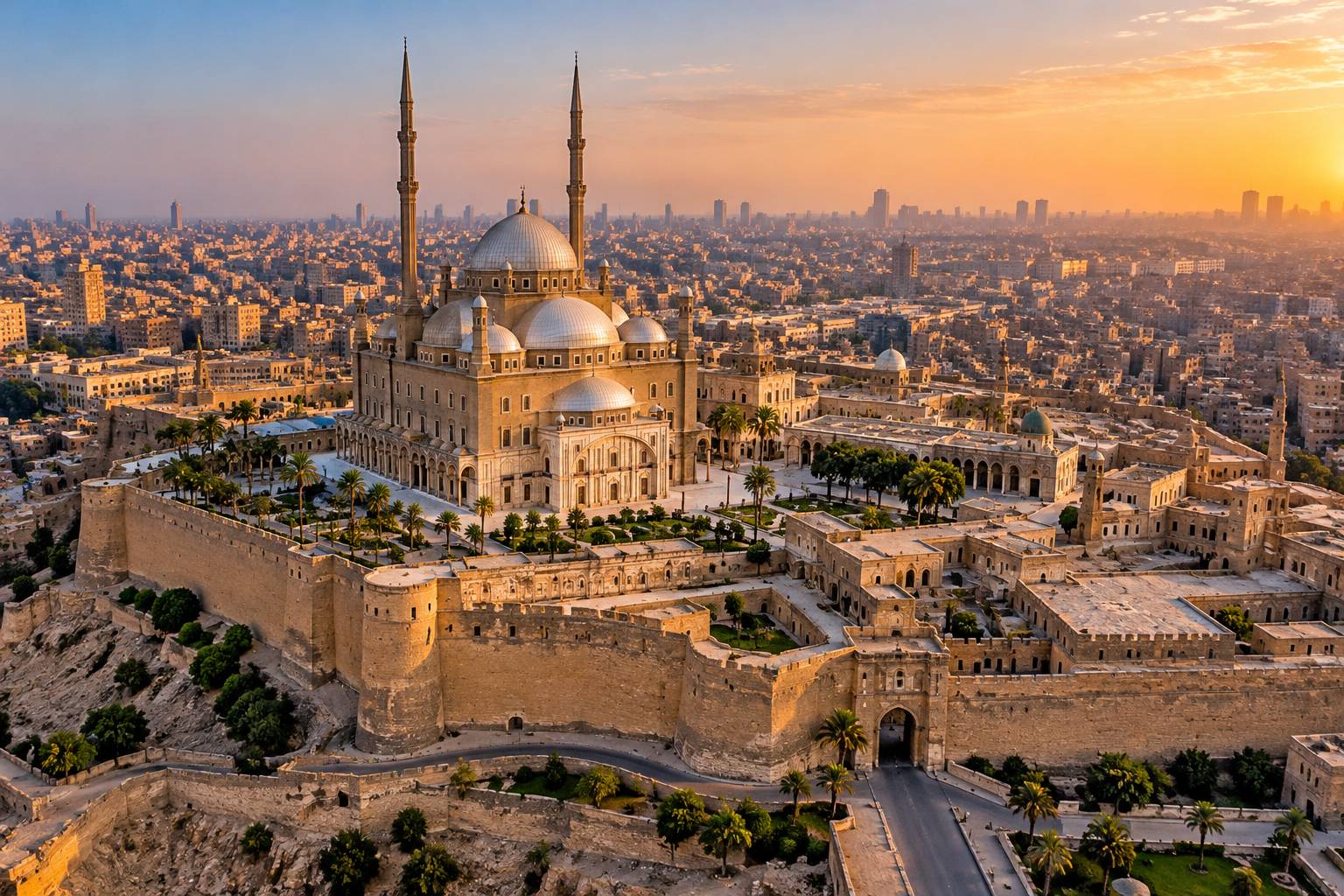
Citadel of Salah El-Din in Cairo: History, Attractions & Visitor Guide
The Citadel of Salah El-Din is one of Cairo's most impressive historical landmarks and a must-see destination for travelers interested in Egypt's Islamic history, medieval architecture, and cultural heritage. Standing on a prominent hill overlooking historic Cairo, this fortified complex has played an important role in the city's military, political, and religious history for centuries.
Often called the Cairo Citadel or Saladin Citadel, the site is best known for its defensive walls, historic mosques, museums, and panoramic views across the Egyptian capital. Its most recognizable landmark is the Mosque of Muhammad Ali, whose domes and towering minarets dominate the skyline.
A visit to the Citadel offers more than beautiful architecture. It provides an opportunity to understand how Cairo developed as a center of power and how successive rulers shaped the city's landscape.
In this guide, you will discover the history of the Citadel of Salah El-Din, its most important attractions, what to see during your visit, and how to combine it with other highlights of Cairo.
Where Is the Citadel of Salah El-Din?
The Citadel of Salah El-Din is located in the southeastern part of historic Cairo, on the Mokattam Hills overlooking much of the city.
Its elevated position was strategically important when the fortress was established. From the hill, defenders could observe the surrounding landscape and protect important areas of the capital.
Today, the Citadel is one of Cairo's major historical attractions and is commonly included in cultural tours alongside the Mosque of Sultan Hassan, Al-Rifa'i Mosque, the Egyptian Museum or the Grand Egyptian Museum, and the historic streets of Islamic Cairo.
The Citadel can be reached by private car, taxi, or organized tour. Because the complex covers a substantial area and contains several monuments, allow enough time to explore it without rushing.
History of the Citadel of Salah El-Din
The Foundation of the Citadel
The Citadel was begun in the late 12th century under Salah El-Din Yusuf ibn Ayyub, widely known in English as Saladin.
Salah El-Din ruled Egypt and became famous for uniting territories across the region during the Crusades. He ordered the construction of a fortified center to strengthen the defense of Cairo and provide a secure seat of government.
The fortress occupied a commanding position above the city. Its location allowed it to serve both military and administrative purposes.
Although Salah El-Din initiated the project, the Citadel developed over time under later rulers. The complex visitors see today reflects many centuries of additions, rebuilding, and changing uses.
The Citadel Under the Ayyubids and Mamluks
After Salah El-Din, later Ayyubid rulers continued to use the Citadel as a center of power. Its importance grew under the Mamluks, who ruled Egypt for several centuries.
During the Mamluk period, Cairo became a major center of trade, scholarship, architecture, and religious life. The Citadel served as a royal residence and administrative headquarters, while nearby areas developed into important centers of Islamic architecture.
Rulers expanded the fortress and constructed religious and residential buildings. These changes transformed the Citadel from a defensive stronghold into a complex center of government.
Ottoman Rule and Later Transformations
Under Ottoman rule, the Citadel continued to serve military and administrative purposes. Different sections were adapted as political priorities and military requirements changed.
In the 19th century, Muhammad Ali Pasha undertook major building projects in Cairo. His Mosque of Muhammad Ali, constructed within the Citadel, became one of the most recognizable landmarks in the city.
The complex later experienced additional changes in use and preservation. Today, its surviving monuments provide an overview of Cairo's political and architectural history from the medieval period into modern times.
Top Attractions Inside the Citadel of Salah El-Din
The Citadel contains several important buildings and visitor attractions. The amount you can see depends on opening arrangements, available time, and which areas are accessible on the day of your visit.
1. Mosque of Muhammad Ali
The Mosque of Muhammad Ali is the most famous building inside the Citadel and one of Cairo's most recognizable landmarks.
Built during the 19th century under Muhammad Ali Pasha, the mosque features a large central dome, surrounding semi-domes, and tall minarets. Its design reflects Ottoman architectural influences and creates a striking contrast with many older mosques in Cairo.
Inside, visitors can admire the spacious prayer hall, decorative details, hanging lamps, and the impressive central dome. The mosque's elevated position also provides opportunities for photographs of its exterior and the surrounding city.
Visitors should dress respectfully and follow the mosque's visitor rules. Access to particular areas may vary according to religious activities and local arrangements.
2. The Mosque of Al-Nasir Muhammad
The Mosque of Al-Nasir Muhammad is an important medieval monument within the Citadel.
Built during the Mamluk period and modified over time, it offers a different architectural experience from the Ottoman-inspired Mosque of Muhammad Ali.
Its historical importance is connected with the long period during which the Citadel served as a royal and administrative center. Visiting the mosque helps illustrate how Mamluk rulers used architecture to express political authority and religious patronage.
Look for the distinctive architectural details and consider how the building differs from later structures in the complex.
3. The Military Museum
The Egyptian Military Museum, located within the Citadel complex, explores aspects of Egypt's military history through displays, artifacts, and historical exhibits.
The museum's collections cover different periods and may include uniforms, weapons, military equipment, and material relating to important events in Egyptian history.
Its displays can add context to the Citadel's original purpose as a fortress and its later role as a military and administrative center.
Museum access and exhibits can change, so check current arrangements when planning your visit.
4. Panoramic Views of Cairo
One of the most rewarding aspects of visiting the Citadel is the elevated view across Cairo.
From suitable viewpoints, visitors can observe the city's dense urban landscape, historic mosques, and surrounding districts. Visibility depends on weather, air quality, and the time of day.
On clear days, the views can provide an excellent opportunity for photography and a better understanding of Cairo's geography.
Consider allowing time to pause at the viewpoints rather than moving immediately from one monument to another.
5. Historic Walls and Defensive Architecture
The Citadel's fortifications reveal its original role as a defensive stronghold.
The walls, gateways, and strategic position demonstrate how medieval rulers sought to protect the capital and control access to an important seat of government.
As you explore, pay attention to the relationship between the fortress and the surrounding terrain. Its position on elevated ground was a key part of its defensive value.
Although the complex changed significantly over the centuries, its layout still reflects the importance of military planning in medieval Cairo.
Why Was the Citadel Built?
Salah El-Din established the Citadel as part of a wider effort to strengthen the defenses of Cairo and consolidate political authority in Egypt.
The fortress was intended to provide a secure base for government and military operations. Its position offered strategic advantages, while its later development allowed it to function as a royal residence and administrative center.
The Citadel remained important under successive rulers because it combined security with political prestige. Control of the fortress was closely associated with authority over the capital.
Over time, its military role evolved, and rulers added mosques, palaces, and other structures. The complex therefore represents several different stages of Cairo's history rather than a single building project completed during Salah El-Din's lifetime.
How Long Should You Spend at the Citadel?
Many visitors allow approximately two to three hours to explore the main monuments, enjoy the views, and learn about the site's history.
You may need more time if you plan to visit museums or explore additional accessible buildings within the complex.
If you are combining the Citadel with other historic attractions, consider the time required for transportation and walking between locations.
A private guided tour can help you organize the visit efficiently and understand the historical connections between the fortress, its mosques, and the wider development of Cairo.
Best Time to Visit the Citadel of Salah El-Din
The cooler months, generally from October through April, are often more comfortable for exploring Cairo's outdoor historical sites.
Morning visits can be pleasant and may allow more time to explore before the busiest part of the day. However, actual crowd levels and weather conditions vary.
During summer, Cairo can become very hot. Carry water, wear comfortable shoes, use sun protection, and take breaks when necessary.
If you want to photograph the architecture and city views, consider the lighting conditions as well as the weather. Always check the current opening arrangements before traveling.
What Should You Wear When Visiting the Citadel?
The Citadel is a historical site that includes active religious spaces, so modest and respectful clothing is recommended.
Consider wearing:
-
Comfortable walking shoes suitable for stone paths and steps.
-
Clothing that covers the shoulders and knees.
-
Lightweight, breathable fabrics during warm weather.
-
A hat and sunscreen for outdoor areas.
-
A light jacket during cooler winter mornings.
When entering a mosque, follow the instructions provided by staff. Visitors may be asked to remove their shoes or observe additional dress requirements.
How to Combine the Citadel With Other Cairo Attractions
The Citadel can be included in a wider Cairo itinerary that explores the city's Islamic architecture, historic mosques, museums, and traditional markets.
The Mosque of Sultan Hassan and Al-Rifa'i Mosque
These important mosques are located in the historic Cairo area and are often combined with a Citadel visit.
Their architecture illustrates different periods of Islamic art and building traditions in Egypt.
Khan El Khalili Bazaar
Khan El Khalili is one of Cairo's best-known traditional market areas. It offers shops, historic streets, and opportunities to experience the atmosphere of the old city.
A visit can complement the Citadel by adding a more commercial and everyday cultural perspective to the day's sightseeing.
Coptic Cairo
Travelers interested in Egypt's diverse religious history may also consider Coptic Cairo, which contains important churches and historic religious sites.
Because travel time and opening arrangements vary, it is best to select a realistic combination of attractions rather than attempting to see every major site in one day.
The Giza Pyramids
The Giza Pyramids are another major highlight of Egypt, but they are located on the western side of the greater Cairo area. Combining them with the Citadel is possible with careful scheduling, particularly on a private tour, but the time needed depends on traffic and the number of sites selected.
Is the Citadel of Salah El-Din Worth Visiting?
Yes. The Citadel is an excellent choice for visitors who want to understand Cairo beyond its ancient pharaonic monuments.
Its history connects the city with the medieval Islamic world, the Crusades, Mamluk rule, Ottoman influences, and the modernization of Egypt under Muhammad Ali Pasha.
The Mosque of Muhammad Ali alone makes the site memorable, while the historic mosques, museums, defensive structures, and panoramic views offer additional reasons to visit.
The Citadel is particularly worthwhile for travelers interested in architecture, military history, Islamic art, and the development of Cairo as a political center.
Practical Tips for Visiting the Citadel
Before your visit, keep the following recommendations in mind:
-
Check current opening arrangements: Hours, access, and museum availability may change.
-
Allow enough time: The complex contains several monuments and outdoor areas.
-
Wear comfortable shoes: You may walk across uneven surfaces and climb steps.
-
Dress respectfully: Follow the rules for visiting mosques and religious spaces.
-
Bring water: Outdoor sightseeing can be tiring in warm weather.
-
Consider a guide: Historical explanations can help you understand the site's different architectural periods.
-
Plan transportation: Traffic in Cairo can affect your arrival time and the rest of your itinerary.
Frequently Asked Questions About the Citadel of Salah El-Din
Where is the Citadel of Salah El-Din located?
The Citadel is located on the Mokattam Hills in the southeastern part of historic Cairo, Egypt.
Who built the Citadel of Salah El-Din?
Construction began under Salah El-Din in the late 12th century. Later rulers expanded and modified the complex over many centuries.
What is the most famous attraction inside the Citadel?
The Mosque of Muhammad Ali is the best-known landmark within the complex. Its large dome, minarets, and elevated position make it one of Cairo's most recognizable buildings.
How long does it take to visit the Citadel?
Many visitors spend approximately two to three hours exploring the main attractions. Additional time may be needed for museums or a more detailed guided visit.
Can I visit the Citadel and Khan El Khalili in one day?
Yes. The Citadel and Khan El Khalili can often be combined in a Cairo sightseeing itinerary, depending on traffic, opening hours, and the time available.
Is the Citadel suitable for families?
The Citadel can be suitable for families interested in history and architecture. However, visitors should consider walking distances, steps, weather, and the needs of younger children.
Is the Mosque of Muhammad Ali inside the Citadel?
Yes. The Mosque of Muhammad Ali is located within the Citadel complex and is one of its principal attractions.
What is the best time to visit the Citadel?
The cooler months from October through April are often more comfortable for outdoor sightseeing. Morning visits can also help you make better use of the day.
Can I take photographs inside the Citadel?
Photography is generally possible in many visitor areas, but restrictions may apply inside particular buildings or religious spaces. Follow posted rules and staff instructions.
Should I visit the Citadel with a guide?
A guide can explain the history of the fortress, its architecture, and the different rulers who shaped the complex. This is especially useful if you want to understand how the Citadel fits into the wider history of Cairo.
Discover Historic Cairo With Let's Explore Egypt Travel
The Citadel of Salah El-Din offers a remarkable journey through Cairo's medieval and Islamic heritage. From the defensive walls built under Salah El-Din to the impressive Mosque of Muhammad Ali, the complex reflects centuries of political change, architectural achievement, and religious life.
Combining the Citadel with other historic Cairo attractions can help you experience the Egyptian capital from several perspectives, including its medieval mosques, traditional markets, and ancient monuments.
Plan your Cairo sightseeing experience with Let's Explore Egypt Travel and discover the history, architecture, and cultural treasures of Egypt with a carefully organized itinerary.
Best Tours to Visit the Citadel of Salah El-Din in Cairo
1. Best 8 Hours Cairo City Tour to Egyptian Museum, Citadel & Market
Discover Cairo's highlights on an eight-hour sightseeing tour combining the Egyptian Museum, the Citadel of Salah El-Din, and the famous Khan El Khalili Bazaar.
2. Half Day in the Citadel and the Khan El Khalili Bazaar from Cairo
Explore the historic Citadel of Salah El-Din and the Mosque of Muhammad Ali, then experience the atmosphere of Khan El Khalili's traditional market on a half-day tour.
Explore Cairo's historic landmarks with Let's Explore Egypt Travel and choose the tour that best fits your schedule.
Highlights
-
Explore the historic Citadel of Salah El-Din, one of Cairo's most iconic medieval landmarks.
-
Visit the magnificent Mosque of Muhammad Ali, famous for its Ottoman-style architecture, impressive domes, and towering minarets.
-
Discover the Citadel's fascinating history as a fortress and center of political power in Egypt.
-
Enjoy panoramic views of Cairo from the Citadel's elevated location.
-
Admire the historic architecture of the Mosque of Al-Nasir Muhammad.
-
Learn about Egypt's medieval history and Islamic architectural heritage.
-
Combine your Citadel visit with the famous Khan El Khalili Bazaar.
-
Explore Cairo's cultural treasures with a guided sightseeing experience.
-
Choose the Best 8 Hours Cairo City Tour to Egyptian Museum, Citadel & Market.
-
Or enjoy the Half Day Citadel and Khan El Khalili Bazaar Tour.