


Khan Khalili Bazaar in Cairo
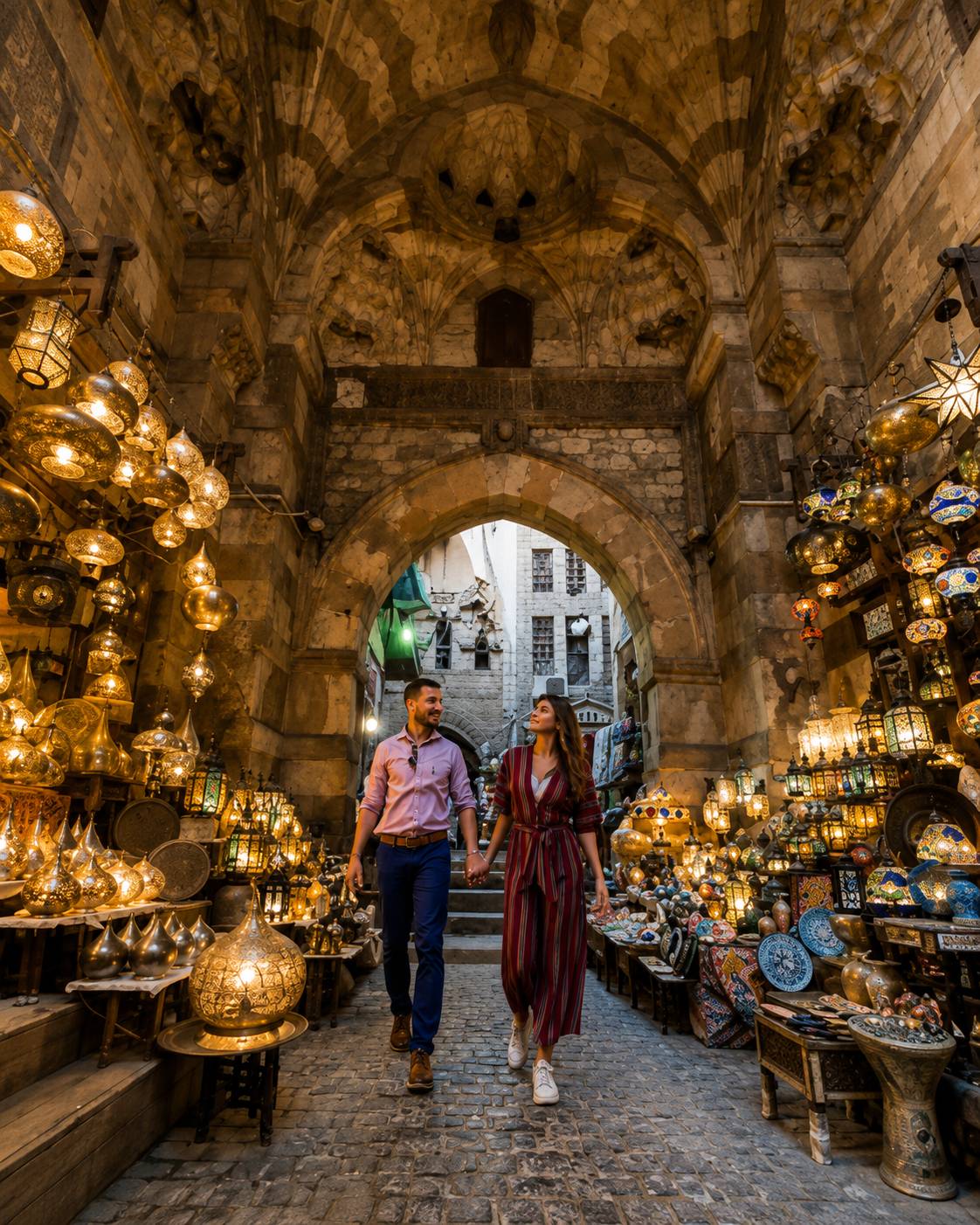
Khan Khalili Bazaar in Cairo: A Complete Guide to Egypt’s Famous Traditional Market
Khan Khalili Bazaar is one of Cairo’s most fascinating destinations for travelers who want to experience the colors, sounds, craftsmanship, and traditions of Egypt. Located in the historic heart of Islamic Cairo, this famous market is known for its narrow lanes, traditional shops, handmade souvenirs, decorative lanterns, and lively atmosphere.
Unlike modern shopping malls, Khan Khalili offers a shopping experience shaped by centuries of trade and local culture. Visitors can browse stalls selling jewelry, copperware, textiles, perfumes, spices, antiques, and traditional Egyptian gifts while discovering the historic architecture surrounding the market.
For travelers exploring Cairo beyond the Pyramids of Giza, Khan Khalili Bazaar provides a memorable opportunity to experience everyday Egyptian culture and explore one of the city's best-known historic neighborhoods.
Where Is Khan Khalili Bazaar Located?
Khan Khalili Bazaar is situated in the historic Islamic Cairo district, near Al-Muizz Street and several important medieval mosques and monuments. Its location makes it a natural stop for visitors exploring Cairo's historic architecture and traditional markets.
The bazaar lies within an area that developed as an important commercial and cultural center over many centuries. Its surrounding streets preserve architectural features from different periods of Cairo's history, creating a distinctive atmosphere for sightseeing and shopping.
Visitors can explore the market independently or include it in a guided Cairo city tour. Combining Khan Khalili with nearby historic landmarks can help travelers make the most of their time in the old city.
The History of Khan Khalili Bazaar
The history of Khan Khalili is closely connected with Cairo's development as a major center of commerce in the medieval Islamic world. The market took shape during the Mamluk period, with its origins commonly associated with the late fourteenth century.
Its name is linked to the concept of a khan, a commercial complex that traditionally provided space for merchants, storage, and trade. Such establishments played an important role in connecting local markets with wider trading networks.
Over the centuries, Khan Khalili became associated with merchants, craftspeople, workshops, and traders offering goods from Egypt and beyond. Although the market has changed considerably over time, it continues to represent Cairo's longstanding relationship with commerce and craftsmanship.
Today, the bazaar is both a shopping destination and a historic attraction. Its busy lanes, traditional storefronts, and surrounding monuments allow visitors to appreciate the connection between trade, architecture, and urban life in historic Cairo.
What Can You Buy at Khan Khalili Bazaar?
One of the main reasons travelers visit Khan Khalili is the variety of traditional products available throughout the market. The selection varies by shop, but visitors can usually find a wide range of souvenirs and handcrafted items.
Egyptian Souvenirs
Small souvenirs are popular among visitors looking for gifts that are easy to carry home. Shops may offer miniature pyramids, decorative objects inspired by ancient Egyptian imagery, keychains, magnets, and other keepsakes.
Compare items between shops before buying, especially if you are purchasing several gifts.
Traditional Lanterns
Decorative metal lanterns are among the most recognizable products associated with traditional Egyptian markets. Some feature colored glass, intricate metalwork, or geometric patterns inspired by Islamic design.
Larger lanterns can be fragile or difficult to transport, so check the dimensions and packaging if you plan to take one home.
Jewelry and Accessories
Khan Khalili includes shops selling necklaces, bracelets, rings, and other accessories. Designs range from contemporary souvenirs to pieces inspired by traditional Egyptian motifs.
If you are purchasing precious metals or gemstones, ask for clear details about the material, weight, and price before completing the transaction.
Copperware and Decorative Crafts
Metal trays, engraved plates, ornamental containers, and decorative household objects are commonly associated with the bazaar's traditional shopping experience.
These items can make distinctive souvenirs, particularly for visitors interested in craftsmanship and decorative arts.
Textiles and Traditional Clothing
Depending on the shop, visitors may find scarves, embroidered fabrics, garments, and other textile products. Colors, patterns, and materials vary widely, so take time to compare quality and prices.
Spices and Perfumes
The wider market area includes shops selling spices, aromatic products, oils, and perfumes. The displays add to the bazaar's sensory atmosphere, with different colors and fragrances filling the narrow shopping streets.
Check product labels and packaging, particularly when purchasing items that you intend to use or carry internationally.
Experience the Atmosphere of Khan Khalili
Khan Khalili is not simply a place to purchase souvenirs. Much of its appeal comes from the atmosphere of the market itself.
As you walk through the lanes, you may encounter shopkeepers displaying handcrafted objects, visitors comparing souvenirs, and small workshops continuing traditional forms of trade. The surrounding buildings and narrow passages provide a sense of the area's historic character.
The market can be busy, especially during popular visiting periods, so a relaxed pace is often the best approach. Rather than trying to cover every street, choose a few areas that interest you and allow time to explore the shops.
For photographers, the combination of traditional storefronts, decorative merchandise, architectural details, and everyday street scenes provides plenty of opportunities for memorable pictures. Always ask permission before photographing people or entering private shop areas.
Cafés and Traditional Egyptian Hospitality
Another enjoyable part of visiting Khan Khalili is taking a break at a traditional café. The surrounding historic district has long been associated with social gathering places where people meet, talk, and enjoy refreshments.
Visitors can look for cafés serving Egyptian tea, coffee, and other drinks while observing the atmosphere of the old market. Some establishments are popular with tourists, while others primarily serve local customers.
Prices, menus, and crowd levels vary, so check before ordering. A short café stop can provide a welcome pause during a busy day of sightseeing.
Best Time to Visit Khan Khalili Bazaar
The best time to visit depends on whether you prefer a quieter shopping experience or the lively atmosphere of a busy market.
Morning: An earlier visit can be convenient for exploring the surrounding historic district before the day becomes busier. However, some shops may open later, so the full market atmosphere may develop as the day progresses.
Afternoon: This can work well when combining Khan Khalili with nearby historical attractions. Allow enough time for walking, shopping, and possible traffic delays.
Evening: The bazaar is known for its lively evening atmosphere, when visitors can browse shops and enjoy the surrounding cafés. Crowds and individual shop hours vary.
If you are visiting during a public holiday or religious season, expect possible changes in opening hours and visitor numbers.
Shopping Tips for First-Time Visitors
A little preparation can make shopping at Khan Khalili more enjoyable.
-
Compare prices: Similar items may be sold at different prices in neighboring shops.
-
Agree on the price: Confirm the final price before the purchase, particularly when bargaining is customary.
-
Inspect the item: Check the quality, finish, and condition before paying.
-
Carry small amounts of cash: Smaller denominations may be useful, although payment methods differ by shop.
-
Keep belongings secure: Busy market lanes require the same awareness you would use in any crowded tourist area.
-
Ask about shipping: If buying large or fragile objects, confirm packaging and delivery arrangements in advance.
-
Respect local customs: Polite conversation makes interactions with shopkeepers more pleasant.
Bargaining may be appropriate in some souvenir shops, but it is not universal. Approach it respectfully and be prepared to decline a purchase if the price does not suit your budget.
Attractions Near Khan Khalili Bazaar
One advantage of visiting Khan Khalili is its proximity to some of Cairo's most important historic monuments.
Al-Muizz Street
Al-Muizz Street is famous for its collection of historic Islamic architecture, including mosques, religious schools, traditional houses, and decorative facades.
Walking along the street offers a deeper appreciation of medieval Cairo and makes an excellent complement to a visit to the bazaar.
Al-Azhar Mosque
Al-Azhar Mosque is one of Cairo's most significant religious and educational landmarks. Founded in the tenth century, it became an important center of Islamic scholarship.
Its historic significance and architectural features make it an appealing stop for visitors interested in the development of Islamic Cairo. Access arrangements should be checked before visiting.
The Citadel of Salah El-Din
The Citadel is a historic fortress complex overlooking parts of Cairo. It is known for its defensive architecture, historic mosques, and panoramic city views.
Because it is not immediately beside the bazaar, visiting both locations is best planned as part of a wider Cairo sightseeing itinerary.
Old Cairo and the Hanging Church
Travelers interested in Egypt's religious history can also explore Old Cairo, including the famous Hanging Church and other historic religious landmarks.
These sites are in a different part of the city, so allow sufficient travel time if you intend to visit both areas in one day.
How to Get to Khan Khalili Bazaar
Khan Khalili is located in historic Islamic Cairo and can be reached by taxi, private vehicle, or public transportation. Traffic conditions in central Cairo can affect journey times, particularly during busy periods.
If you are staying in Giza or another distant neighborhood, consider the time required to travel into the historic center. A private vehicle can be convenient when visiting several attractions, although the market's narrow streets are best explored on foot.
A guided city tour can help organize transportation and combine the bazaar with nearby monuments without requiring you to arrange every transfer independently.
Is Khan Khalili Bazaar Worth Visiting?
Khan Khalili Bazaar is an excellent choice for travelers who want to discover Cairo's traditional market culture, shop for Egyptian souvenirs, and experience the historic atmosphere of Islamic Cairo.
Its appeal comes from the combination of commerce, craftsmanship, architecture, and social life. Visitors can spend time browsing decorative objects, learning about traditional products, taking photographs, or relaxing at a café.
The bazaar is particularly rewarding when combined with Al-Muizz Street and nearby historic landmarks. Together, these attractions provide a fuller understanding of Cairo's medieval heritage and its continuing role as a cultural center.
Explore Khan Khalili with Let's Explore Egypt
Discover the historic heart of Cairo with Let's Explore Egypt. A guided visit to Khan Khalili Bazaar can be combined with historic streets, architectural landmarks, and other cultural attractions, depending on the selected tour itinerary.
Whether you want to shop for traditional souvenirs, admire Islamic architecture, or learn about Cairo's history from a local guide, a well-planned sightseeing experience can help you enjoy the city at a comfortable pace.
For visitors seeking a deeper introduction to Egypt's capital, Khan Khalili offers a memorable combination of history, culture, and traditional market life.
Explore historic Cairo with Let's Explore Egypt and discover the stories behind one of Egypt's most famous bazaars.
Frequently Asked Questions About Khan Khalili Bazaar
1. What is Khan Khalili Bazaar famous for?
Khan Khalili is famous for its traditional market lanes, souvenir shops, decorative lanterns, jewelry, handicrafts, spices, and historic Islamic Cairo setting.
2. Where is Khan Khalili Bazaar located?
The bazaar is located in the historic Islamic Cairo district, near Al-Muizz Street and Al-Azhar Mosque.
3. How much time should I spend at Khan Khalili?
Many visitors spend one to two hours browsing the market. You may need longer if you plan to shop extensively or visit nearby historical attractions.
4. Can I bargain at Khan Khalili?
Bargaining is customary in some shops, especially those selling souvenirs, but practices vary. Agree on the final price before purchasing.
5. What is the best time to visit Khan Khalili?
Morning can be convenient for exploring nearby monuments, while afternoon and evening visits offer opportunities to experience the market as it becomes busier. Individual shop hours vary.
6. Is Khan Khalili suitable for families?
Yes. Families can explore the market together, shop for souvenirs, and enjoy nearby cultural attractions. Keep children close in crowded lanes and plan breaks as needed.
7. What attractions are near Khan Khalili?
Nearby highlights include Al-Muizz Street and Al-Azhar Mosque. The Citadel of Salah El-Din and Old Cairo can also be included in a wider itinerary with additional travel time.
8. Can I visit Khan Khalili with a private tour?
Yes. A private Cairo sightseeing tour can include Khan Khalili alongside other attractions, depending on the booked itinerary.
9. What should I buy at Khan Khalili?
Popular choices include decorative lanterns, jewelry, copperware, textiles, souvenirs, and traditional crafts. Inspect products and compare prices before buying.
10. Is Khan Khalili open every day?
Opening hours vary by shop, day, and season. Check current local information before your visit, particularly around public holidays and religious occasions.
1. Best 8 Hours Cairo City Tour – Egyptian Museum, Citadel & Market
Discover Cairo's major attractions, including the Egyptian Museum, the Citadel of Salah El-Din, and Khan Khalili Bazaar.
2. Half Day in the Citadel and the Khan El Khalili Bazaar
Explore the historic Citadel of Salah El-Din and enjoy time discovering the traditional shops and lively atmosphere of Khan Khalili Bazaar.
Khan Khalili Bazaar Tour – Highlights
-
Explore Khan Khalili Bazaar, one of Cairo’s most famous traditional markets.
-
Wander through narrow historic lanes filled with Egyptian souvenirs, handicrafts, jewelry, and decorative lanterns.
-
Discover traditional copperware, textiles, spices, perfumes, and locally inspired gifts.
-
Experience the lively atmosphere of historic Islamic Cairo.
-
Walk along Al-Muizz Street and admire its remarkable medieval Islamic architecture.
-
Learn about Cairo’s history, traditional commerce, and cultural heritage with a knowledgeable local guide.
-
Enjoy an optional stop at a traditional Egyptian café for tea or coffee.
-
Capture memorable photographs of the bazaar’s colorful shops and historic streets.
-
Combine shopping with visits to nearby historic landmarks, depending on your selected itinerary.
-
Enjoy a memorable cultural experience with Let's Explore Egypt.