


Saint Simon the Tanner Monastery Cairo
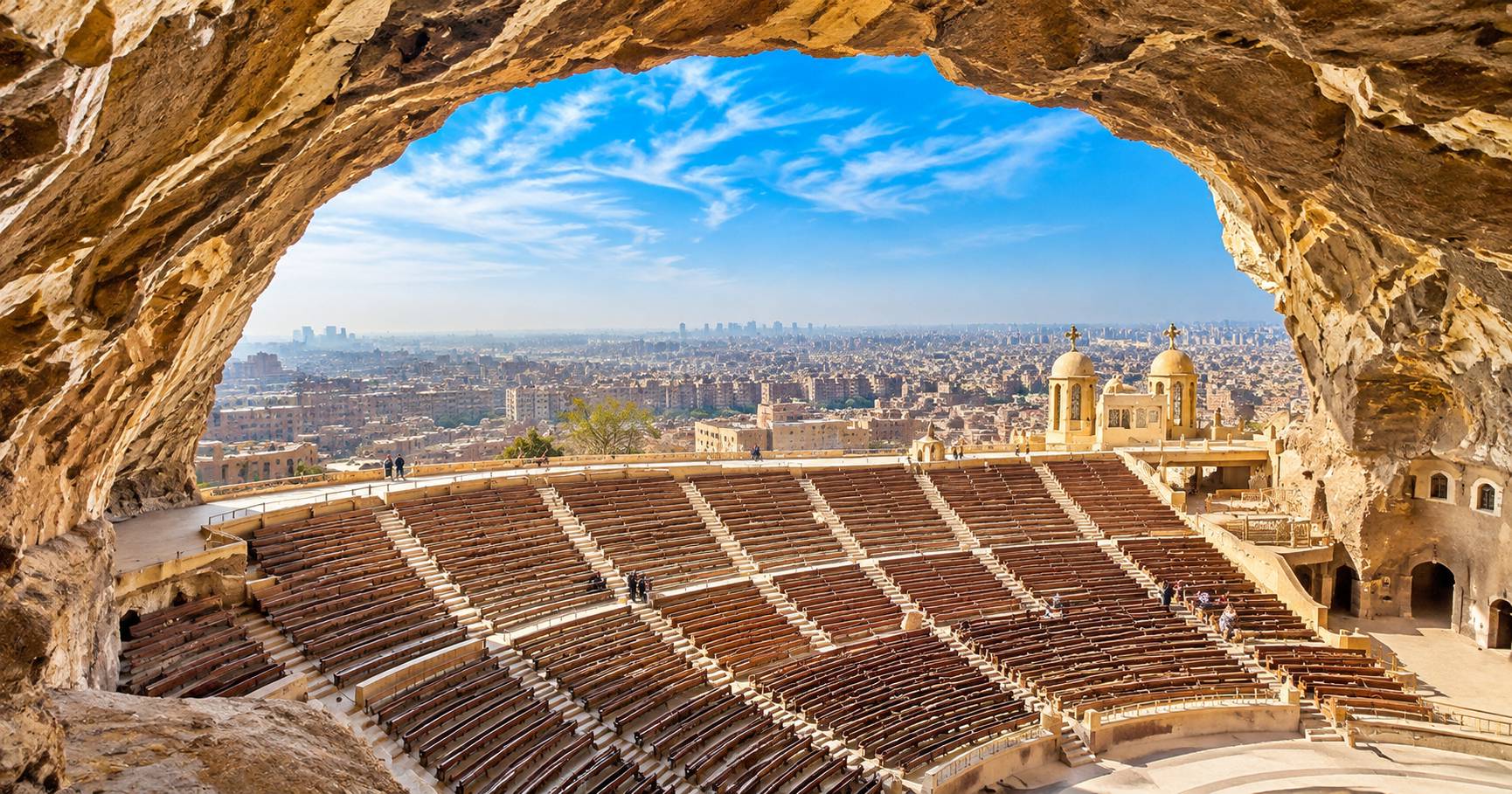
Saint Simon the Tanner Monastery Cairo: Cave Church & Visitor Guide
Cairo is famous for its ancient pyramids, Islamic architecture, historic mosques, and traditional markets. However, the city also has remarkable Christian landmarks that reveal another important part of Egypt’s cultural and religious heritage. One of the most impressive is the Monastery of Saint Simon the Tanner, widely known as the Cave Church of Mokattam.
Located in the Mokattam Hills near Cairo’s Manshiyat Naser district, the monastery is remarkable because its churches and gathering spaces are built directly into the surrounding rock. Its enormous cave auditorium, carved stone walls, biblical artwork, and unusual setting make it one of Cairo’s most distinctive religious landmarks.
The monastery is closely associated with Saint Simon the Tanner, a Coptic Orthodox saint remembered in Egyptian Christian tradition for his humility, charitable work, and connection with the story of the moving of Mokattam Mountain.
Unlike many historic churches housed inside conventional buildings, the Cave Church blends religious architecture with the natural landscape. Visitors can see vast rock-hewn spaces, carved Christian scenes, church interiors, and an impressive amphitheatre designed to accommodate large congregations.
Whether you are interested in Coptic Christianity, architecture, local history, or unusual places to visit in Cairo, Saint Simon the Tanner Monastery deserves a place on your travel itinerary.
Saint Simon the Tanner Monastery at a Glance
-
Location: Mokattam Hills, Cairo, Egypt.
-
Common Name: The Cave Church.
-
Official Name: Monastery of Saint Simon the Tanner, also known as Anba Samaan El-Kharraz Monastery.
-
Religious Affiliation: Coptic Orthodox Christianity.
-
Main Attraction: A large cave cathedral carved into the Mokattam rock.
-
Historical Association: Saint Simon the Tanner and the traditional Coptic account of the moving of Mokattam Mountain.
-
Distinctive Features: Rock-cut churches, biblical carvings, religious artwork, and a vast semicircular auditorium.
-
Local Community: Closely connected with the Coptic Christian community of Manshiyat Naser.
-
Best For: Cultural travellers, religious heritage enthusiasts, photographers, architecture lovers, and visitors exploring Cairo beyond the pyramids.
-
Visitor Tip: Confirm current visiting arrangements and dress modestly because the monastery is an active religious complex.
1. What Is Saint Simon the Tanner Monastery?
Saint Simon the Tanner Monastery is a major Coptic Orthodox religious complex built into the limestone cliffs of the Mokattam Hills in eastern Cairo.
It is commonly called the Cave Church because its most famous church occupies an enormous natural rock space that has been adapted for worship. Instead of standing as a separate building, the sanctuary and its seating areas are integrated into the surrounding mountain.
The wider complex contains multiple churches, religious halls, and spaces used for prayer and gatherings. Some of these areas feature carved biblical scenes and large stone surfaces that demonstrate how the natural rock has become part of the architecture.
The monastery is especially notable for its large main church, where rows of tiered seating face the sanctuary. The scale of this space creates an unusual combination of an open-air amphitheatre and a religious interior.
The site also has a strong connection with the history of the local community. Its development took place gradually, with residents helping to transform the rocky landscape into a place of worship and communal gathering.
For visitors, the monastery offers more than an architectural attraction. It also provides an opportunity to learn about Coptic Christian life in modern Cairo and the community that helped create this remarkable landmark.
2. Who Was Saint Simon the Tanner?
Saint Simon the Tanner, known in Arabic as Anba Samaan El-Kharraz, is a saint venerated by the Coptic Orthodox Church.
According to Coptic tradition, Simon lived during the reign of Fatimid Caliph Al-Mu'izz li-Din Allah in the tenth century. He worked as a tanner, an occupation involving the treatment and preparation of animal hides, and is remembered for his humble way of life.
Traditional accounts also associate him with charitable service. One story describes him carrying water to poorer households, illustrating the values of service and compassion attributed to him.
Saint Simon became particularly important in the religious tradition surrounding the miracle of Mokattam Mountain. His name remains closely connected with the monastery that eventually developed in the area.
Although historical details about his life are limited, his place in Coptic religious memory remains significant. The monastery commemorating him has become a gathering place for worshippers and a destination for visitors interested in Egypt’s Christian heritage.
The name “Simon the Tanner” is commonly used in English, while “Samaan El-Kharraz” is a familiar Arabic form of his name.
3. The Story of the Moving of Mokattam Mountain
One of the best-known stories associated with Saint Simon the Tanner is the traditional Coptic account of the moving of Mokattam Mountain.
According to this religious tradition, the event took place during the reign of Fatimid Caliph Al-Mu'izz li-Din Allah. The story connects the mountain with a discussion about a biblical passage in which Jesus speaks about faith being able to move mountains.
In the traditional account, Coptic Pope Abraham of Alexandria was challenged to demonstrate the meaning of the biblical passage. Abraham and the Christian community prayed and fasted, seeking divine help.
The Virgin Mary is said to have appeared to Abraham in a vision and directed him to Simon the Tanner. Simon subsequently became associated with the miraculous event in which the mountain was believed to have moved through prayer and faith.
For Coptic Orthodox Christians, the story is an important expression of faith, prayer, humility, and divine power.
It is important to understand that the moving of the mountain belongs to religious tradition rather than independently established geological history. The story's cultural and spiritual significance is nevertheless central to the monastery's identity.
Today, the monastery's association with this tradition is reflected in its name, religious artwork, and the stories shared with visitors.
4. Why Is the Cave Church Built Inside a Mountain?
One of the first things visitors notice about Saint Simon the Tanner Monastery is how closely its architecture follows the natural rock.
The Mokattam Hills contain extensive rocky formations that have been used in different ways by local communities over time. At the monastery, the rock itself forms the walls, ceiling, and backdrop of major church spaces.
Instead of constructing every part of the building from conventional materials, builders developed the available cave spaces and integrated them into the overall design.
This approach creates several distinctive features.
A Natural Rock Ceiling
The cave church's overhead rock formations make the interior feel very different from a conventional church. Natural textures and irregular surfaces remain visible, giving the building a strong connection with the mountain.
A Large Semicircular Auditorium
The main church is famous for its amphitheatre-like layout. Tiered rows of seating extend around the central religious space, allowing large numbers of worshippers to gather for services and events.
Carved Stone Architecture
Several areas of the complex feature artwork and religious imagery associated with the Christian tradition. The carved rock backgrounds create a distinctive setting for these scenes.
Integration with the Landscape
From outside, parts of the monastery appear almost absorbed into the mountain. This relationship between architecture and natural rock is one of the site's most memorable features.
The result is a religious complex that feels different from the churches, monasteries, and cathedrals found elsewhere in Cairo.
5. Exploring the Main Cave Cathedral
The main cathedral dedicated to the Virgin Mary and Saint Simon the Tanner is one of the most impressive parts of the complex.
Its broad, semicircular arrangement resembles a large outdoor amphitheatre, but the seating and sanctuary are enclosed or sheltered by the surrounding rock formations.
The cathedral was developed in stages. Early gatherings took place in a much smaller cave space before the area was expanded to accommodate larger congregations. Over time, fixed tiered seating helped transform the church into a major religious gathering place.
The completed space demonstrates how the monastery adapted to the needs of a growing community.
When visiting, observe the relationship between the sanctuary and the seating arrangement. The design allows worshippers to gather around the central religious space while preserving the dramatic natural rock environment.
The scale is one of the main reasons the Cave Church is so memorable. Official descriptions of the monastery report capacity for very large congregations, with the main amphitheatre able to accommodate up to approximately 20,000 people.
Visitors should remember that the cathedral is primarily a place of worship, not simply a sightseeing attraction. Access to parts of the monastery may be restricted during religious services or community events.
6. The Other Churches Within the Monastery
The Monastery of Saint Simon the Tanner is not a single church but a wider religious complex containing several churches and gathering spaces.
The buildings and rock-cut areas developed over time as the community expanded the site.
Anba Abram Church
This church is associated with Pope Abraham of Alexandria, who features prominently in the traditional account of the moving of Mokattam Mountain.
The name reflects the importance of his role in the religious story connected with Saint Simon.
Saint Mark Church
Saint Mark is closely associated with the Coptic Orthodox Church, which traditionally traces its foundation in Egypt to the preaching of Mark the Evangelist.
The monastery's Saint Mark Church includes religious artwork associated with important biblical themes.
Anba Paula Church
Anba Paula, also known as Saint Paul the First Hermit, is an important figure in Christian monastic tradition. He is remembered for a life of solitude and devotion.
The church named in his honour adds another dimension to the monastery's religious identity.
Other churches and worship spaces form part of the wider complex. Names, access arrangements, and the areas open to visitors can vary, so it is best to follow local guidance during your visit.
7. Biblical Artwork and Carvings Inside the Cave Church
One of the most visually striking features of Saint Simon the Tanner Monastery is its religious artwork.
Carved scenes and large images decorate selected areas of the rock and church interiors. Their subjects draw on the Christian Bible and the religious traditions of the Coptic Orthodox community.
The dramatic natural surfaces offer a distinctive background for these works. Rather than being placed solely on conventional plastered walls, the imagery appears in direct relationship with the surrounding stone.
Some of the visual themes associated with the monastery include important events from the life of Jesus Christ and scenes connected with Christian faith and salvation.
The artwork helps transform the natural cave environment into a devotional space, giving visitors a deeper understanding of the religious purpose of the complex.
When exploring the monastery, take time to observe the rock surfaces, the carved details, and the way the art interacts with natural light.
Photography may be permitted in some areas, but visitors should respect any restrictions, especially during worship or private religious events.
8. The Zabbaleen Community and the Development of the Monastery
The story of Saint Simon the Tanner Monastery is closely connected with the Zabbaleen community of Mokattam.
The Zabbaleen are widely known for their work in collecting, sorting, and recycling waste in Cairo. Over several decades, this community developed a specialised local economy and strong neighbourhood institutions.
The monastery grew through community involvement rather than being constructed all at once as a single large project.
According to accounts published by Cairo Governorate, the monastery's development followed the discovery in 1974 of a cave and a tomb believed by the community to be associated with Saint Simon the Tanner.
Construction then expanded gradually, with local residents contributing substantial labour and materials to create the churches and gathering spaces.
This community effort is an essential part of the site's modern history. It demonstrates how religious institutions can develop through local commitment, shared work, and collective support.
The monastery continues to serve as an important spiritual and community landmark in Mokattam.
For travellers, learning about the Zabbaleen helps place the monastery in its wider social context. The Cave Church is not an isolated architectural curiosity; it is part of a living neighbourhood with its own history and identity.
9. Where Is Saint Simon the Tanner Monastery Located?
The monastery is located in the Mokattam Hills in eastern Cairo, near the Manshiyat Naser area, commonly associated with the Zabbaleen community.
Because the monastery lies within a hilly urban district, the final part of the journey can involve navigating local roads and busy neighbourhood streets.
Visitors travelling from central Cairo, Giza, or hotels near the pyramids should allow time for traffic and check the route before departure.
The monastery is often visited as part of a cultural itinerary that includes other major sites in the city.
For travellers interested in Cairo's broader religious and historical heritage, our Old Cairo, Citadel & Khan El Khalili Tour offers a private cultural experience featuring Coptic Cairo, historic churches, the Citadel, and the famous bazaar.
Depending on your schedule, you can ask your tour provider whether a visit to Saint Simon the Tanner Monastery can be arranged as an additional stop.
10. How to Visit the Cave Church from Cairo
The most convenient option for many travellers is to use a private vehicle or arrange a guided excursion.
A private transfer allows you to travel directly to the monastery without needing to coordinate several public transport connections. A knowledgeable guide can also help explain the religious history and local context.
Before setting out, consider the following:
-
Confirm your destination with the driver, using both the English and Arabic names if necessary.
-
Check current visitor arrangements and any restrictions on access.
-
Allow extra time for traffic in eastern Cairo.
-
Wear modest clothing suitable for visiting a religious site.
-
Follow instructions from church staff and security personnel.
-
Ask before photographing worshippers, religious ceremonies, or restricted areas.
Opening hours and access arrangements may change according to church activities or special occasions. Confirm the latest information before travelling rather than relying on an assumed daily schedule.
If you are planning a larger cultural day in Cairo, our Old Cairo & Felucca Experience provides another option for exploring the city's religious heritage before enjoying time on the Nile.
11. What to See Near Saint Simon the Tanner Monastery
Cairo offers several attractions that can complement a visit to the Cave Church. The most suitable combination depends on your available time and interests.
Old Cairo and Coptic Cairo
Old Cairo contains important Christian, Jewish, and Roman-era landmarks. Visitors can explore historic churches, religious buildings, and streets that preserve aspects of the city's long history.
The district provides a useful contrast with the more modern development of the Mokattam area.
The Hanging Church
The Hanging Church, officially known as the Church of Saint Virgin Mary, is one of the best-known Coptic Christian landmarks in Cairo.
Its location above part of the ancient Roman Fortress of Babylon and its distinctive wooden interior make it a rewarding stop for visitors interested in Coptic architecture.
Abu Serga Church
The Church of Saints Sergius and Bacchus, commonly called Abu Serga, is another important landmark in Coptic Cairo.
The church is associated with traditions concerning the Holy Family's journey through Egypt and is an important destination for Christian pilgrims.
The Citadel of Saladin
The Citadel provides a different perspective on Cairo's religious and architectural heritage. It is known for its defensive history, historic structures, and views across the city.
Combining the Citadel with Old Cairo can help visitors appreciate the diversity of Cairo's cultural landmarks.
Khan El Khalili Bazaar
Khan El Khalili is a historic market district known for traditional shops, crafts, souvenirs, and cafés.
It offers a lively contrast to the peaceful atmosphere of a church visit and can be a suitable stop later in a full day exploring Cairo.
12. Best Time to Visit Saint Simon the Tanner Monastery
Because the monastery is both a religious site and a visitor attraction, the best time to visit depends on your interests and the church's schedule.
If you would like to explore the architecture quietly, try to avoid major services and large religious gatherings, subject to the monastery's visiting arrangements.
Weather should also be considered. Cairo's cooler months are generally comfortable for travelling between attractions and walking through the surrounding district.
For a more comfortable visit:
-
Confirm opening arrangements before departure.
-
Wear modest clothing.
-
Bring water, especially in warm weather.
-
Choose comfortable footwear.
-
Allow additional travel time for traffic.
-
Respect prayer areas and any photography restrictions.
Visitors should be prepared for a working monastery rather than a conventional museum. Religious observances, community activities, and local requirements take priority over sightseeing.
13. Is Saint Simon the Tanner Monastery Worth Visiting?
Yes, particularly if you want to explore a different side of Cairo beyond its ancient Egyptian monuments.
The monastery combines several distinctive features: an enormous cave cathedral, architecture integrated into natural rock, biblical artwork, and a story connected with Coptic Orthodox tradition.
Its community history also makes it especially interesting. The complex illustrates how local residents helped develop an important religious landmark over time.
The experience is different from visiting a conventional church. The surrounding mountain forms a major part of the architecture, and the large auditorium creates an impressive sense of scale.
However, visitors should approach the site respectfully. It is an active place of worship, and some areas may not be available for sightseeing at all times.
For cultural travellers, photographers, and people interested in Egypt's diverse religious heritage, Saint Simon the Tanner Monastery is a worthwhile addition to a Cairo itinerary.
Frequently Asked Questions About Saint Simon the Tanner Monastery
1. Where is Saint Simon the Tanner Monastery located?
The monastery is located in the Mokattam Hills in eastern Cairo, near Manshiyat Naser.
2. Why is it called the Cave Church?
It is known as the Cave Church because its main cathedral and other religious spaces are built into the rock formations of Mokattam Mountain.
3. Who was Saint Simon the Tanner?
Saint Simon the Tanner, known as Anba Samaan El-Kharraz, is a saint venerated in the Coptic Orthodox Church. He is traditionally remembered as a tanner who lived during the Fatimid period.
4. What is the story of the moving of Mokattam Mountain?
According to Coptic Orthodox tradition, Saint Simon was associated with a miracle in which Mokattam Mountain was moved through prayer and faith during the reign of Caliph Al-Mu'izz.
5. When was the monastery built?
The monastery developed gradually in modern times. Cairo Governorate reports that its development followed the discovery in 1974 of a cave and a tomb believed to be associated with Saint Simon.
6. How large is the main Cave Church?
The main church has a large amphitheatre-like layout. Official descriptions report that it can accommodate a very large congregation, with capacity of up to approximately 20,000 people.
7. Is the monastery an active religious site?
Yes. It is an active Coptic Orthodox religious complex, so visitors should respect services, prayer areas, and instructions from church staff.
8. What should I wear when visiting?
Modest clothing is recommended. Visitors should follow any specific dress guidance provided by the monastery.
9. Can I take photographs inside the Cave Church?
Photography rules may differ between areas and occasions. Ask church staff before taking photographs, especially during services or when photographing people.
10. Can I combine the monastery with other Cairo attractions?
Yes. Depending on traffic and opening arrangements, a visit may be combined with Old Cairo, the Hanging Church, Abu Serga Church, the Citadel, or Khan El Khalili.
Discover Cairo's Christian Heritage with Let's Explore Egypt
Saint Simon the Tanner Monastery is one of Cairo's most distinctive religious landmarks. Its cave cathedral, rock-cut architecture, biblical artwork, and strong connection with the local community make it a meaningful stop for travellers interested in Egyptian Christian heritage.
The monastery also offers a different perspective on Cairo's development. Rather than focusing on pharaonic monuments or medieval fortifications, it reveals the living traditions of the city's Coptic Orthodox community.
Plan your visit as part of a wider cultural experience with our Old Cairo, Citadel & Khan El Khalili Tour, or discover our Old Cairo & Felucca Experience for another way to explore Cairo's religious heritage and historic districts.
With its extraordinary setting and rich spiritual history, Saint Simon the Tanner Monastery is a memorable addition to any journey through Cairo.
Recommended Tours in Cairo
Make the most of your visit to Saint Simon the Tanner Monastery by exploring more of Cairo’s fascinating religious heritage, historic landmarks, and traditional neighbourhoods.
1. Old Cairo, Citadel & Khan El Khalili Tour
Discover Cairo’s rich history with a visit to Coptic Cairo, historic religious landmarks, the Citadel of Saladin, and the famous Khan El Khalili Bazaar. This private cultural experience is ideal for travellers who want to explore the city beyond the pyramids.
Explore the tour: Old Cairo, Citadel & Khan El Khalili Tour
2. Old Cairo & Felucca Experience
Combine a journey through Cairo’s historic districts with a relaxing felucca ride on the Nile. Discover the city’s Christian heritage and enjoy a different perspective of Cairo from the river.
Explore the tour: Old Cairo & Felucca Experience
3. Explore Coptic Cairo
Discover the spiritual and historical landmarks of Coptic Cairo, including ancient churches and sites associated with Egypt’s Christian heritage. This experience complements a visit to Saint Simon the Tanner Monastery for travellers interested in the Coptic Orthodox tradition.
Plan Your Cairo Experience with Let's Explore Egypt
Whether you want to explore historic churches, discover Islamic Cairo, browse traditional markets, or enjoy the Nile, a private tour helps you organise your visit around your interests and schedule. Contact Let's Explore Egypt to arrange transportation and plan a memorable cultural experience in Cairo.
Highlights of Saint Simon the Tanner Monastery
-
The Famous Cave Church: Discover one of Cairo’s most extraordinary churches, built directly into the rock of Mokattam Mountain.
-
Spectacular Rock-Cut Architecture: Admire the natural stone walls, dramatic cave interiors, and unique architectural design.
-
One of Cairo’s Largest Churches: Explore the impressive amphitheatre-style cathedral, designed to accommodate large congregations.
-
Saint Simon the Tanner: Learn about the Coptic Orthodox saint associated with the monastery and his story of faith and humility.
-
The Miracle of Mokattam Mountain: Discover the traditional Coptic story connected with the moving of the mountain.
-
Beautiful Biblical Carvings: See religious artwork and biblical scenes carved into the surrounding rock.
-
Coptic Christian Heritage: Experience an important religious landmark and learn about the history of Egypt’s Coptic Orthodox community.
-
The Zabbaleen Community: Discover the local community’s role in developing and maintaining this remarkable religious complex.
-
A Unique Cairo Experience: Visit a lesser-known attraction beyond the pyramids, museums, and traditional historic districts.
-
Perfect for Cultural Travellers: An excellent stop for visitors interested in religious history, architecture, photography, and authentic local experiences.