


Mosque of Ibn Tulun Cairo
Mosque of Ibn Tulun Cairo: History, Architecture & Visitor Guide
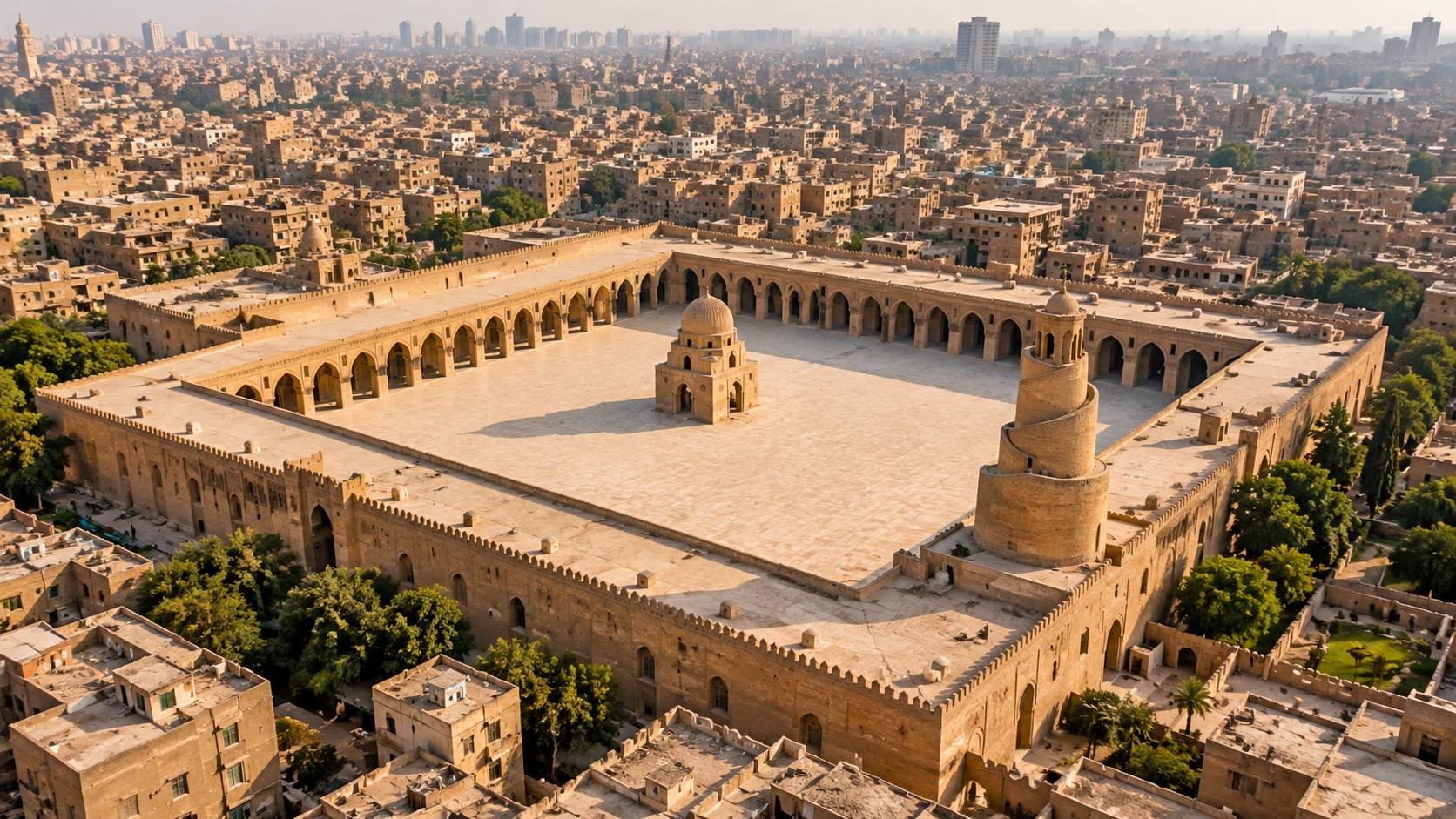
The Mosque of Ibn Tulun is one of the most remarkable Islamic monuments in Cairo, Egypt. Known for its vast courtyard, elegant arches, distinctive spiral minaret, and historic atmosphere, the mosque offers visitors a fascinating glimpse into Egypt’s early Islamic architecture.
Built during the ninth century, the mosque is closely associated with Ahmed Ibn Tulun, the founder of the Tulunid dynasty in Egypt. Today, it remains an important historical and architectural landmark for travelers interested in Islamic history, medieval Cairo, and Egypt’s cultural heritage.
Unlike many of Cairo’s more crowded attractions, the Mosque of Ibn Tulun offers a spacious setting where visitors can appreciate its architectural details and explore one of the city’s most significant historic religious buildings.
Whether you are visiting Cairo for the first time or returning to discover more of its history, adding this mosque to your itinerary can help you understand another important chapter in Egypt’s past.
1. Where Is the Mosque of Ibn Tulun?
The Mosque of Ibn Tulun is located in the Sayyida Zeinab area of historic Cairo, near the Gayer-Anderson Museum and other important cultural landmarks.
Its location makes it a convenient stop for travelers exploring Cairo’s historic districts. Visitors can combine the mosque with other attractions in Old Cairo or include it in a private sightseeing itinerary.
The surrounding neighborhood reflects the layered history of the Egyptian capital, where Islamic monuments, traditional streets, and modern city life exist side by side.
If you are planning a cultural day in Cairo, consider combining your visit with the historic landmarks featured in our Old Cairo and Khan el-Khalili tour.
2. The History of the Mosque of Ibn Tulun
The mosque was commissioned by Ahmed Ibn Tulun, who established the Tulunid dynasty and governed Egypt during the ninth century.
Construction began around 876 AD and was completed around 879 AD, according to commonly cited historical dates. At the time, Egypt was experiencing significant political and administrative developments under Ibn Tulun’s leadership.
The mosque was built as a major congregational place of worship for the growing city associated with Ibn Tulun’s new administrative center, known as Al-Qata'i.
Its scale reflected the ambition of its founder. Rather than being a small neighborhood mosque, it was designed as a large religious complex capable of accommodating substantial numbers of worshippers.
Over the centuries, the building survived changes in government, periods of urban transformation, and restoration work. Its continued existence makes it an important example of early Islamic architecture in Egypt.
Today, the mosque helps historians and visitors understand how Cairo developed into one of the most influential centers of Islamic culture.
3. Ahmed Ibn Tulun and His Legacy
Ahmed Ibn Tulun was a prominent ruler who governed Egypt from 868 to 884 AD. He is remembered for establishing a largely autonomous political authority in Egypt and for developing infrastructure and institutions during his rule.
His architectural legacy is especially visible in the mosque that bears his name.
The building reflects the importance of religious life, public architecture, and urban planning during the Tulunid period. Its design also demonstrates the influence of architectural traditions circulating throughout the wider Islamic world during the ninth century.
The Mosque of Ibn Tulun is therefore more than a religious monument. It is a lasting reminder of a period when Egypt played an increasingly important role in regional politics and culture.
4. The Unique Architecture of the Mosque
10
One of the mosque’s most impressive features is its spacious and relatively uncluttered architectural layout. Its broad courtyard, repeated arches, and large prayer hall create a sense of balance and openness.
The Large Courtyard
The central courtyard is surrounded by arcades that provide shade and frame the open space. The arrangement creates a striking visual rhythm, with repeated arches extending around the courtyard.
Visitors can walk through the complex and observe how light and shadow change throughout the day.
The Arches and Supports
The mosque features large brick supports and pointed arches, giving the building a distinctive appearance. Its architectural simplicity allows the proportions and repeated structural elements to stand out.
Decorative Details
Although the mosque is known for its spacious design, it also contains decorative features that reward closer inspection. Look for carved details, geometric patterns, and ornamental elements that reflect Islamic artistic traditions.
The Prayer Hall
The prayer hall is an essential part of the mosque’s design. Its columns, arches, and organized layout demonstrate how architectural planning supported congregational worship.
Visitors should remember that the mosque remains a religious site and should behave respectfully throughout their visit.
5. The Famous Spiral Minaret
The spiral minaret is one of the most recognizable features of the Mosque of Ibn Tulun.
Its unusual exterior staircase distinguishes it from many other minarets in Cairo. The structure is visually striking and has become one of the mosque’s defining architectural characteristics.
The minaret is frequently compared with architectural forms found elsewhere in the Islamic world, although its precise design history and influences should be considered in their historical context.
From the outside, visitors can appreciate the minaret’s shape and its relationship to the wider mosque complex. Access to elevated areas may depend on current site arrangements and safety rules.
For photography, try capturing the minaret from different points around the courtyard to show its scale against the surrounding architecture.
6. Why Is the Mosque of Ibn Tulun Important?
The mosque holds significance for several reasons.
-
Historical importance: It dates to the ninth century and is closely associated with the Tulunid dynasty.
-
Architectural value: Its courtyard, arcades, and spiral minaret make it a distinctive monument.
-
Cultural heritage: It preserves evidence of Egypt’s early Islamic architectural development.
-
Religious significance: It continues to be recognized as a historic mosque.
-
Tourism value: It offers travelers a deeper understanding of Cairo beyond the city’s famous pyramids and museums.
For anyone interested in the history of Islamic Cairo, the Mosque of Ibn Tulun is a worthwhile addition to a cultural itinerary.
7. Best Time to Visit the Mosque of Ibn Tulun
The best time to visit is generally in the morning, when temperatures are often more comfortable and the courtyard can be easier to explore.
Late afternoon may also provide attractive lighting for photography, depending on the season and the mosque’s visiting arrangements.
During warmer months, plan your visit to avoid the hottest part of the day. In winter, daytime conditions are often more comfortable for walking around Cairo’s historic monuments.
Before visiting, confirm the current opening arrangements and any access restrictions, especially if you plan to enter prayer areas or visit during religious services.
8. How Long Should You Spend at the Mosque?
Most visitors can allow approximately 45 minutes to 1.5 hours to explore the mosque, take photographs, and appreciate its main architectural features.
History enthusiasts and photographers may prefer to spend longer studying the building’s details.
If you combine the mosque with nearby historic sites, allow additional time for transportation, walking, and breaks.
A guided visit can also provide useful context about Ahmed Ibn Tulun, the Tulunid period, and the development of Islamic architecture in Egypt.
9. What to Wear When Visiting
The Mosque of Ibn Tulun is a religious site, so visitors should dress modestly.
Recommended clothing includes:
-
Clothing that covers the shoulders.
-
Trousers, long skirts, or other modest lower-body clothing.
-
Comfortable walking shoes.
-
A light scarf if needed for additional coverage.
Follow any instructions provided by mosque staff, particularly when entering prayer areas. Visitors should also keep noise to a minimum and avoid disturbing worshippers.
10. Photography Tips
The mosque offers many opportunities for architectural photography.
Consider these tips:
-
Photograph the courtyard to show the mosque’s overall scale.
-
Capture the spiral minaret from a viewpoint that includes the surrounding architecture.
-
Focus on the repeating arches and geometric patterns.
-
Visit when natural light creates interesting shadows across the courtyard.
-
Respect worshippers and follow any restrictions on photography.
A wide-angle lens can help capture the courtyard, while a standard or telephoto lens can be useful for decorative details.
11. Nearby Attractions to Combine With Your Visit
The Mosque of Ibn Tulun can be incorporated into a wider exploration of Cairo’s historic heritage.
Gayer-Anderson Museum
Located beside the mosque, the Gayer-Anderson Museum occupies historic houses filled with traditional furnishings, decorative arts, and architectural details. Check current opening arrangements before planning a combined visit.
The Citadel of Cairo
The Citadel is one of Cairo’s major historic landmarks, known for its fortifications and panoramic views. It can be included in a broader day exploring Islamic Cairo.
Khan el-Khalili
This famous historic bazaar is known for its traditional shops, handicrafts, cafés, and lively atmosphere. It is a popular stop for travelers interested in shopping and local culture.
Old Cairo
Old Cairo contains historic religious buildings and important heritage sites representing different periods of the city’s history.
For a convenient sightseeing plan, explore our Old Cairo, Citadel, and Khan el-Khalili tour.
12. How to Get to the Mosque of Ibn Tulun
The mosque is accessible by taxi or private vehicle from many parts of Cairo. Travel time depends on your starting point and traffic conditions.
Visitors staying in central Cairo can arrange a private transfer or include the mosque in a guided tour of historic Cairo.
If you are planning several attractions in one day, organizing the route in advance can save time and make it easier to visit nearby landmarks.
A private tour may be particularly convenient for travelers who want to explore the mosque alongside other historic sites without navigating transportation independently.
13. Is the Mosque of Ibn Tulun Worth Visiting?
Yes, the Mosque of Ibn Tulun is worth considering if you enjoy history, architecture, and cultural sightseeing.
It provides a different experience from Cairo’s better-known ancient Egyptian attractions. Instead of temples and pharaonic monuments, visitors encounter the architecture and history of medieval Islamic Egypt.
Its large courtyard, distinctive minaret, and historic atmosphere make it an appealing destination for photographers, architecture enthusiasts, and travelers seeking a deeper understanding of Cairo.
Even if you have visited other mosques in the city, Ibn Tulun’s distinctive design makes it a memorable stop.
Frequently Asked Questions About the Mosque of Ibn Tulun
1. When was the Mosque of Ibn Tulun built?
Construction began around 876 AD and was completed around 879 AD.
2. Who built the Mosque of Ibn Tulun?
The mosque was commissioned by Ahmed Ibn Tulun, the ruler who founded the Tulunid dynasty in Egypt.
3. What is the Mosque of Ibn Tulun famous for?
It is particularly famous for its large courtyard, distinctive arches, early Islamic architectural character, and spiral minaret.
4. Where is the Mosque of Ibn Tulun located?
It is located in historic Cairo, in the Sayyida Zeinab area, near the Gayer-Anderson Museum.
5. How long does a visit take?
Allow around 45 minutes to 1.5 hours, depending on your interest in the architecture and photography.
6. Can tourists visit the mosque?
Visitors can generally explore the mosque subject to its current opening arrangements, religious activities, and site rules. Check access conditions before your visit.
7. What should visitors wear?
Modest clothing that covers the shoulders and legs is recommended. Visitors should follow any additional requirements communicated by mosque staff.
8. Can I visit the mosque and Khan el-Khalili in one day?
Yes. Both can be included in a broader Cairo sightseeing itinerary, along with other historic attractions, depending on available time and traffic.
Conclusion
The Mosque of Ibn Tulun is an outstanding monument of Egypt’s Islamic heritage. Built during the ninth century, it preserves a distinctive architectural style and commemorates the legacy of Ahmed Ibn Tulun.
From its spacious courtyard to its famous spiral minaret, the mosque offers a rewarding experience for visitors interested in Cairo’s history and architecture.
If you are planning a trip to Egypt, consider adding the Mosque of Ibn Tulun to your Cairo itinerary and combining it with other historic attractions for a richer cultural experience.
Explore our Old Cairo and Khan el-Khalili tour to discover more of the capital’s historic landmarks.
1. Old Cairo, Citadel & Khan el-Khalili Tour
Discover Cairo’s historic mosques, the famous Citadel of Saladin, and the lively Khan el-Khalili bazaar on a private cultural tour.
Book your tour: . Old Cairo, Citadel & Khan el-Khalili Tour
2. Old Cairo & Nile Felucca Experience
Explore Cairo’s historic atmosphere and enjoy a relaxing traditional felucca sailing experience on the Nile.
-
Explore one of Cairo’s oldest and most remarkable historic mosques.
-
Discover the fascinating history of Ahmed Ibn Tulun and the Tulunid dynasty.
-
Admire the mosque’s famous spiral minaret and distinctive Islamic architecture.
-
Walk through the spacious courtyard surrounded by elegant arches.
-
Discover beautiful geometric patterns and traditional Islamic decorative details.
-
Learn about Egypt’s Islamic heritage and medieval Cairo.
-
Visit the nearby Gayer-Anderson Museum and other historic landmarks.
-
Capture stunning architectural photographs of one of Cairo’s most distinctive monuments.
-
Experience the peaceful atmosphere of a historic religious site.
-
Combine your visit with a tour of Old Cairo, the Citadel, and Khan el-Khalili.