


National Museum of Egyptian Civilization Cairo
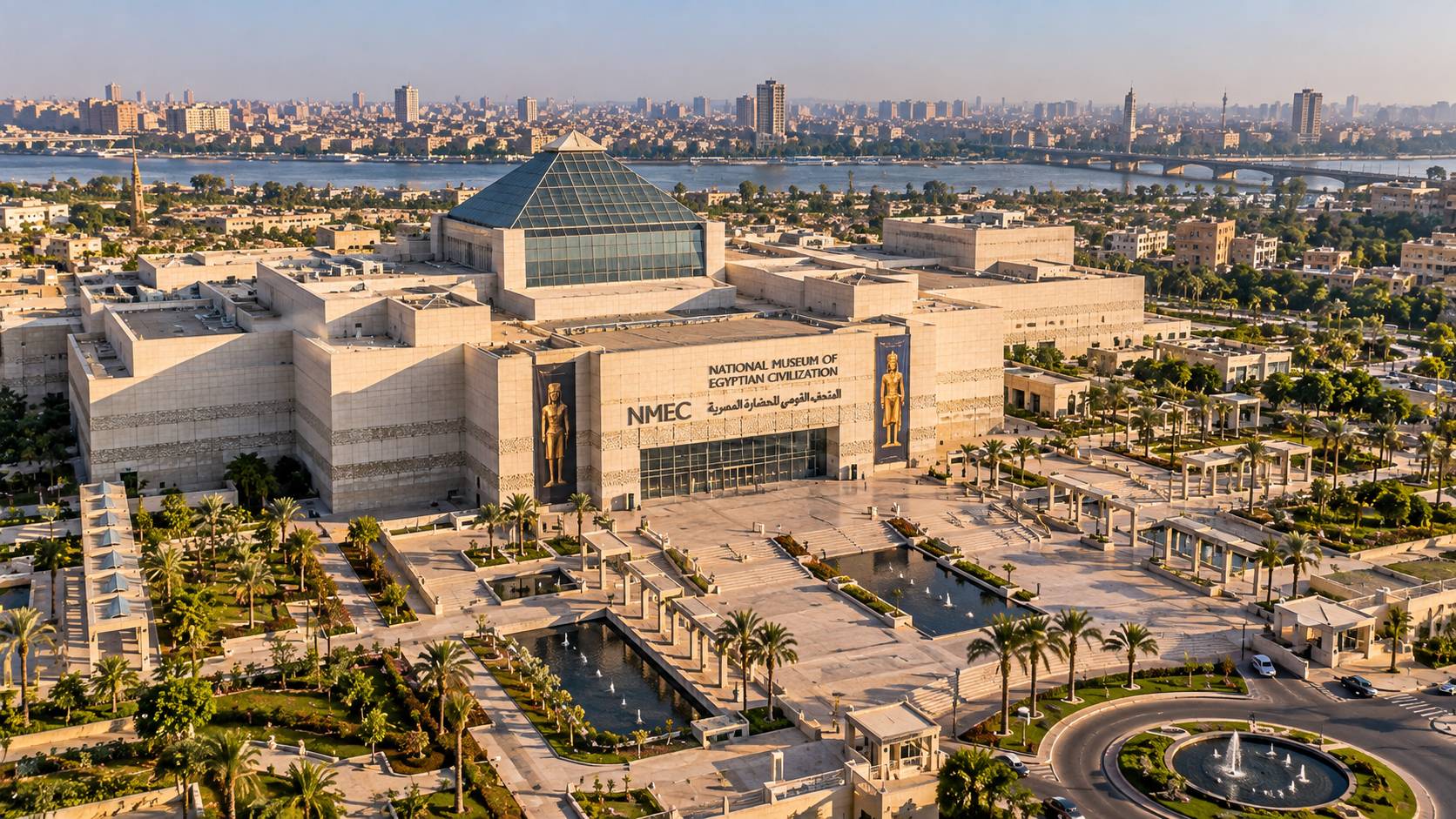
National Museum of Egyptian Civilization Cairo: Hidden Stories, Royal Mummies & the Making of Egypt
Focus Keyword: National Museum of Egyptian Civilization Cairo
SEO Title: National Museum of Egyptian Civilization Cairo: Hidden Stories & Visitor Guide
URL Slug: national-museum-egyptian-civilization-cairo
Meta Description: Explore the National Museum of Egyptian Civilization in Cairo through its Royal Mummies Gallery, ancient textiles, the Nile, writing, beliefs, and the hidden stories behind Egypt’s remarkable past.
Introduction: A Different Way to Understand Ancient Egypt
Egypt is often introduced through three familiar images: the Great Pyramids of Giza, the temples of Luxor, and the golden treasures of its pharaohs. These monuments are extraordinary, but they represent only part of the Egyptian story.
To understand how Egyptian civilization developed, it is necessary to look beyond monumental buildings and royal tombs. The history of Egypt is also the history of farmers who depended on the Nile, craftspeople who transformed raw materials into objects of daily life, scribes who recorded information, religious communities that developed different traditions, and generations of people who preserved knowledge through changing political eras.
The National Museum of Egyptian Civilization in Fustat, Cairo, offers a way to explore these connections.
Known as NMEC, the museum presents Egyptian civilization across historical periods, from prehistoric times to the modern era. Its approach brings together subjects such as the Nile, writing, society, material culture, beliefs, textiles, and royal mummies rather than treating every period as an isolated chapter.
The result is a cultural experience that can change how visitors understand Egypt. Instead of seeing history only through kings and monuments, visitors can explore the systems, skills, beliefs, and human experiences that made civilization possible.
1. Why Fustat Is the Right Place for a Museum of Egyptian Civilization
The museum’s location is part of its historical significance.
Fustat was founded in the seventh century CE following the Arab conquest of Egypt and became the first Islamic capital of Egypt. It developed into an important center of administration, trade, crafts, and urban life.
This makes Fustat a meaningful setting for a museum that presents Egyptian history as a continuing process.
The surrounding landscape contains evidence of different historical periods, including archaeological remains and religious landmarks associated with Cairo’s development. The area also lies near Ain El-Sira, connecting the museum to a landscape shaped by water, settlement, and urban growth.
A visit to NMEC can therefore become more than an indoor museum experience. It can be the starting point for exploring how Egypt’s cities changed as political authority, religious traditions, trade, and daily life evolved.
A useful way to approach the museum: Before entering, think of Fustat not simply as a neighborhood in modern Cairo, but as a place where the history of the Egyptian capital developed through successive layers.
2. The Museum’s Most Important Idea: Egyptian Civilization Is More Than the Pharaonic Period
One of NMEC’s defining characteristics is its broad chronological scope.
Egypt’s ancient kingdoms are essential to its identity, but the country’s history continued through Greek and Roman rule, the development of Coptic Christian traditions, the growth of Islamic cities, and modern social and cultural transformations.
The museum presents these different periods within a wider account of Egyptian civilization.
This matters because historical change rarely means that everything from an earlier period disappears. Some practices end, others are transformed, and many survive in altered forms.
Agricultural knowledge, craft traditions, ways of organizing communities, and relationships with the Nile continued to matter even as languages, political institutions, religious practices, and artistic styles changed.
The museum encourages visitors to consider these continuities alongside the differences between historical periods.
For travelers, this perspective is particularly useful when visiting several sites in Cairo. An ancient Egyptian monument, a Coptic church, and a medieval mosque belong to different historical contexts, but each contributes to the larger history of the same country.
3. The Royal Mummies Gallery: What the Preserved Bodies Can Tell Us
The Royal Mummies Gallery is the museum’s most internationally recognized attraction.
It presents royal mummies in a dedicated environment designed to evoke the atmosphere of the royal burial landscape of the Valley of the Kings. The museum’s official description identifies 20 royal mummies in the gallery, including 18 kings and two queens, from the 17th through the 20th dynasties.
The famous collection includes rulers such as Hatshepsut, Thutmose III, and Seqenenre Taa II.
The gallery opened to visitors in April 2021 after the royal mummies were transferred from the Egyptian Museum in Tahrir Square during the Pharaohs’ Golden Parade on April 3, 2021.
Why Mummification Was More Than Preservation
Ancient Egyptian mummification was connected to religious ideas about death, the body, and existence after death.
Preserving the body was considered important within particular funerary traditions because the body had a role in the deceased person's continued existence. Burial practices also involved rituals, protective objects, tomb preparation, and beliefs about the journey beyond earthly life.
The royal mummies provide physical evidence of these traditions. They also offer researchers opportunities to study aspects of human remains, preservation techniques, and the treatment of royal individuals.
What Can a Mummy Reveal?
A preserved body may provide information about age, physical characteristics, some health conditions, and the techniques used in preservation. However, not every question can be answered with certainty, and interpretations depend on the available evidence and scientific methods.
This distinction is important. A mummy is not simply a famous historical object; it is human remains that must be studied carefully and displayed respectfully.
Why the Gallery Is Worth Taking Slowly
Visitors sometimes focus on recognizing famous names without considering the wider historical context.
A more rewarding approach is to think about the period in which each ruler lived, the political conditions of the time, and the religious traditions surrounding royal burial.
The gallery becomes much more meaningful when the people displayed are understood as individuals who lived within particular historical circumstances rather than as isolated figures from a list of pharaohs.
4. Seqenenre Taa II: A Royal Mummy Connected to Conflict
Seqenenre Taa II is among the most historically intriguing rulers represented in the royal mummy collection.
He belonged to Egypt’s 17th Dynasty, during the Second Intermediate Period, when political authority in Egypt was divided and conflict took place between competing powers.
His mummy has attracted particular scholarly attention because of injuries visible on the head. These injuries have contributed to discussions about the circumstances of his death and the conflicts of his period.
The historical interpretation requires care: physical evidence can support hypotheses, but it does not automatically establish every detail of a death or battle.
This is precisely why royal mummies are valuable to historians and researchers. They provide material evidence that can be compared with historical records, archaeological discoveries, and modern scientific analysis.
When exploring the Royal Mummies Gallery, Seqenenre Taa II offers an opportunity to think about how physical remains can help investigate events that took place more than three thousand years ago.
5. The Nile: The Environmental Foundation of Egyptian Civilization
The Nile is not simply a geographical feature in Egyptian history. It has shaped settlement, agriculture, transport, trade, and the organization of communities for thousands of years.
Its annual flood historically deposited fertile sediment across agricultural land. Communities developed ways to manage water, cultivate crops, and organize production within the conditions of the Nile Valley.
The river also provided a transport route connecting communities along a long north-south corridor. This helped people, goods, and ideas move between different regions of Egypt.
Understanding the Nile makes it easier to understand why so many important settlements developed along its banks.
Beyond the River’s Physical Presence
The Nile also influenced Egyptian ideas about the relationship between nature, order, and the stability of society.
Agricultural cycles affected work and food production. Water management required coordination. The movement of goods connected settlements and helped support larger political systems.
The river’s role therefore extended far beyond irrigation. It formed part of the environmental and economic foundation on which Egyptian civilization developed.
For visitors, this is one of the most useful themes to keep in mind while exploring the museum’s historical galleries.
6. Writing, Administration, and the Growth of the State
Writing is one of the most important developments in the history of complex societies.
In ancient Egypt, written records served administrative, religious, commemorative, and practical purposes. Writing helped document royal activities, organize resources, preserve religious texts, and communicate information.
But writing was not merely a way to record words. It was also connected to the growth of institutions and the organization of society.
When governments can document resources, record transactions, and communicate orders, they gain tools for managing increasingly complex systems.
Scribes therefore occupied an important position within ancient Egyptian society. Their skills required specialized training, and written knowledge played a role in administration and religious life.
What Visitors Should Look For
When examining objects connected with writing, consider their purpose.
Was an inscription designed to commemorate a ruler, communicate a religious message, identify an object, or record information? The answer can reveal something about the society that produced it.
This approach transforms a written artifact from a decorative object into evidence of how people communicated, governed, worshipped, and remembered the past.
7. Textiles: The Human Story Behind Everyday Objects
Textiles are among the most revealing forms of material culture because they connect technology with daily life.
The National Museum of Egyptian Civilization includes a dedicated textile gallery, reflecting the importance of textile production within Egypt’s long cultural history.
Fabric can reveal information about fibers, weaving methods, clothing, decorative traditions, and the availability of materials.
Unlike monumental architecture, textiles are closely connected to the human body. They were worn, handled, repaired, reused, and incorporated into domestic, religious, and funerary settings.
Why Textile History Matters
Clothing and fabric can reflect climate, occupation, social status, cultural identity, and changes in technology.
The production of textiles also required knowledge of raw materials, spinning, weaving, dyeing, and finishing. These skills developed through experience and were transmitted between individuals and communities.
Studying textiles therefore helps recover parts of history that are not always visible in royal inscriptions or monumental buildings.
From Ancient Egypt to Later Periods
Textile traditions changed as Egypt passed through different historical eras. Materials, designs, and techniques reflected local practices as well as contact with other regions.
A textile gallery can help visitors understand that cultural history is not only expressed through grand buildings and political events. It is also present in the objects people used every day.
8. Material Culture: Understanding People Through Their Objects
Archaeological objects are often described according to their age, material, or artistic style. Yet their deeper significance lies in what they reveal about the people who made and used them.
Pottery can provide evidence of food storage, trade, domestic activities, and production techniques.
Tools can reveal how people worked with available materials and adapted to their environment.
Jewelry and personal ornaments can help researchers investigate artistic preferences, social identity, and the use of valuable materials.
Furniture and decorative objects can provide insights into domestic spaces and changing tastes.
Reading Objects as Historical Evidence
A useful question to ask while visiting a museum is: What problem did this object solve, or what purpose did it serve?
The answer may concern practical needs, religious practices, social relationships, or artistic expression.
A second question is equally important: What does the object tell us about the people who produced it?
The materials chosen, the effort required to create it, and the context in which it was used can reveal much about available technology, resources, and cultural values.
This way of looking at museum collections helps visitors connect individual objects to the wider history of Egyptian society.
9. Beliefs and Thinking: How Religion Shaped Egyptian Life
Religious beliefs influenced Egyptian life across many historical periods, although the forms of religious practice changed considerably over time.
In ancient Egypt, religious ideas were closely connected to kingship, funerary practices, temples, festivals, and understandings of the natural world.
Later periods brought the development and transformation of different religious traditions, including Christianity in Egypt and the growth of Islamic religious institutions.
These changes affected architecture, art, writing, burial practices, education, and community life.
Why Beliefs Should Be Studied in Their Historical Context
It is easy to view ancient religious objects only as mysterious or decorative artifacts. A more useful approach is to consider the beliefs and practices that gave them meaning.
A funerary object, for example, may be understood through ideas about death and the afterlife. An object associated with worship may reflect the relationship between a community and its religious traditions.
Understanding these contexts helps visitors avoid treating different periods as though they shared exactly the same beliefs.
The museum’s broad historical approach makes it possible to explore how Egyptian religious and cultural life changed while remaining connected to the country’s wider history.
10. Coptic and Islamic Egypt: Two Essential Chapters
Egypt’s cultural identity developed through many periods after the ancient pharaonic kingdoms.
Coptic heritage reflects the history of Christianity in Egypt, including distinctive religious traditions, art, architecture, and community life.
Islamic Egypt developed through changing political institutions, urban growth, religious scholarship, architecture, craftsmanship, and trade.
These histories should not be treated as separate from Egypt’s earlier past. They form part of the continuing story of how Egyptian communities adapted to new circumstances and created new cultural expressions.
Connecting the Museum with Historic Cairo
After visiting NMEC, travelers interested in later Egyptian history can explore the religious and architectural heritage of Cairo.
The city contains historic mosques, churches, markets, and neighborhoods that illustrate different periods of development.
For a guided cultural experience, consider the Old Cairo, Citadel and Khan el-Khalili Tour.
This provides a useful opportunity to connect the museum’s broad historical perspective with the buildings and urban spaces that visitors encounter throughout Cairo.
11. The Museum’s Location: Why Fustat Adds to the Experience
The National Museum of Egyptian Civilization is located in Fustat, in historic Cairo, near Ain El-Sira.
The area is associated with the development of Cairo’s early Islamic urban history, while the wider surroundings contain evidence of different cultural and historical periods.
This setting adds another dimension to the visit. The museum does not stand outside Egyptian history; it occupies a landscape that has itself been shaped by the development of the city.
Travelers can use the visit as a starting point for learning about the wider Fustat area and its historical landmarks.
When planning a combined itinerary, however, allow enough time for transportation and individual site visits. Traffic and opening arrangements can affect how much can comfortably be covered in one day.
12. How to Plan a Meaningful Visit to NMEC
The museum’s breadth means that a little preparation can make the experience more rewarding.
Before You Arrive
Decide which subjects interest you most. Some visitors will want to spend extra time with the royal mummies, while others may be more interested in textiles, archaeology, religious history, or the development of Egyptian society.
Check current opening hours, ticket arrangements, exhibition access, and photography rules before setting out.
During Your Visit
Rather than trying to read every label, focus on a few questions:
-
How did the Nile shape Egyptian life?
-
What can objects reveal about daily activities?
-
How did writing support the organization of society?
-
How did beliefs influence burial practices and artistic traditions?
-
What changed as Egypt moved through different historical periods?
These questions provide a framework that connects the galleries into a coherent story.
After the Museum
If time allows, explore nearby historic sites or arrange a guided tour of Cairo’s cultural landmarks.
Seeing historic buildings and neighborhoods after visiting the museum can help reinforce the relationship between objects, people, and places.
13. How Long Should You Spend at the Museum?
For many visitors, approximately two to three hours is a useful starting point for planning a visit. Those who want to explore the galleries in depth may need longer.
A shorter visit can work if you focus on selected highlights, but it may not allow enough time to appreciate the full range of the museum’s collections.
The Royal Mummies Gallery deserves particular attention, but it should not automatically replace the rest of the exhibition.
The museum’s wider value lies in the connections it makes between different periods, traditions, and aspects of everyday life.
14. National Museum of Egyptian Civilization vs. the Grand Egyptian Museum
The National Museum of Egyptian Civilization and the Grand Egyptian Museum offer different perspectives on Egypt’s heritage.
NMEC focuses on Egyptian civilization across a broad historical span, including the prehistoric, ancient, Coptic, Islamic, and modern periods. It is especially known for its Royal Mummies Gallery and its emphasis on cultural continuity.
The Grand Egyptian Museum focuses on ancient Egyptian antiquities and major pharaonic collections, providing a different experience for visitors interested in the ancient Egyptian world.
If your itinerary permits, the two museums can complement each other.
A visit to NMEC can provide a wider cultural framework, while the Grand Egyptian Museum can deepen your exploration of ancient Egyptian objects and royal history.
15. Frequently Asked Questions
What makes the National Museum of Egyptian Civilization different?
It presents Egyptian civilization across multiple historical periods and themes, rather than focusing exclusively on pharaonic antiquities.
What is the museum’s most famous attraction?
The Royal Mummies Gallery is its best-known attraction, displaying royal mummies in a dedicated exhibition environment.
Where is NMEC located?
It is located in Fustat, in the Ein El-Sira area of Cairo.
How much time should I allow?
Around two to three hours is a useful planning estimate, although the ideal duration depends on your interests and the galleries available during your visit.
Is NMEC suitable for visitors interested in Islamic history?
Yes. The museum’s broader historical scope includes Islamic Egypt, and visitors can combine it with historic Cairo’s mosques, markets, and other cultural landmarks.
Can I visit NMEC and other Cairo attractions on the same day?
Yes, but the number of additional sites depends on traffic, opening hours, and how much time you want to spend inside the museum.
Should I visit NMEC or the Grand Egyptian Museum?
They serve different purposes. NMEC emphasizes the continuity of Egyptian civilization across historical periods, while the Grand Egyptian Museum focuses on ancient Egyptian antiquities. Visiting both can provide complementary experiences.
Conclusion: Discover the People Behind Egypt’s History
The National Museum of Egyptian Civilization offers a way to understand Egypt through more than its most famous monuments.
Its galleries connect royal mummies with funerary beliefs, textiles with craftsmanship, writing with administration, and the Nile with the development of communities. Together, these themes reveal how Egyptian civilization was created, transformed, and carried forward through successive historical periods.
For visitors exploring Cairo, the museum is a valuable destination for developing a deeper understanding of the country’s cultural heritage.
Make time to look beyond the most recognizable objects. Consider how people lived, worked, worshipped, and adapted to changing circumstances. These connections are what turn a museum visit into a meaningful journey through Egyptian history.
If you are planning a cultural day in Cairo, combine your museum visit with the city’s historic landmarks through our Old Cairo, Citadel and Khan el-Khalili Tour.
Explore More of Cairo: Recommended Cultural Tours
-
Discover the story of Egyptian civilization from prehistoric times to the modern era.
-
Explore the famous Royal Mummies Gallery and learn about Egypt’s ancient rulers.
-
See royal mummies, including famous figures such as Hatshepsut and Ramesses II.
-
Learn how the Nile shaped agriculture, trade, settlement, and everyday life.
-
Explore the evolution of Egyptian writing, craftsmanship, and material culture.
-
Discover ancient textiles and traditional Egyptian weaving techniques.
-
Understand the development of Coptic and Islamic heritage in Egypt.
-
Explore archaeological objects that reveal the lives of ordinary Egyptians.
-
Learn how ancient burial practices reflected beliefs about the afterlife.
-
Visit the museum’s modern architectural complex in historic Fustat, Cairo.
-
Combine your museum visit with Coptic Cairo and other historic landmarks.
-
Gain a deeper understanding of Egypt beyond its famous pyramids and temples.