


The Egyptian Museum in Cairo
The Egyptian Museum in Cairo: Hidden Stories, Ancient Treasures & Visitor Guide
Introduction: Discover the Museum That Helped the World Understand Ancient Egypt
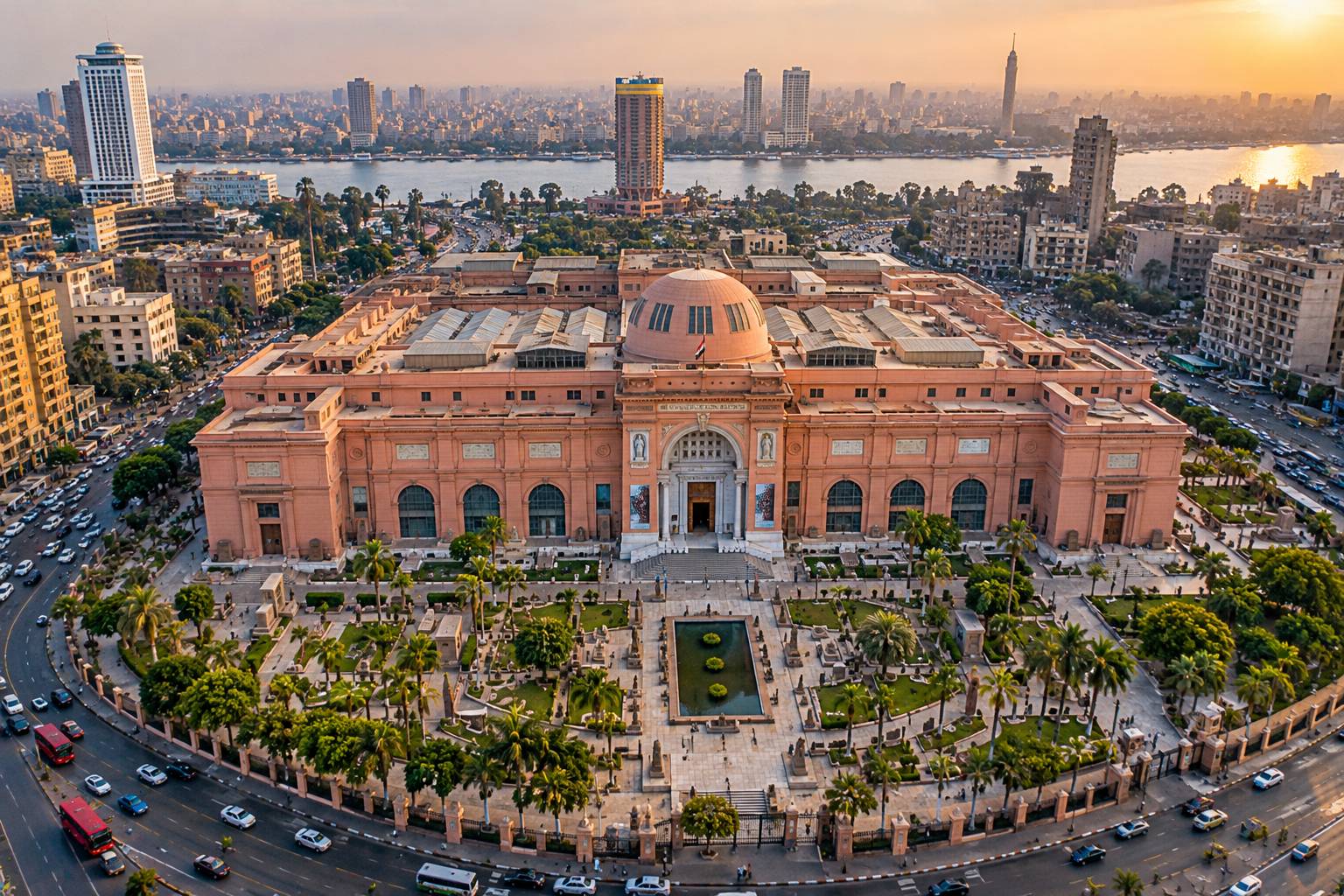
In the heart of Cairo, overlooking the busy streets of Tahrir Square, stands one of the most historically significant museums in the world: the Egyptian Museum.
Opened in 1902, the museum became a landmark in the study and preservation of ancient Egyptian civilization. Its distinctive historic building and extensive archaeological collections have welcomed generations of researchers, students, and travelers interested in the lives of the pharaohs.
Yet the museum's importance goes far beyond its famous objects. Its collections provide evidence of how ancient Egyptians organized their society, represented their rulers, practiced religion, developed artistic traditions, and prepared for the afterlife.
Visitors can encounter monumental statues, funerary objects, inscriptions, jewelry, and artifacts associated with everyday activities. Together, these objects reveal a civilization that developed over thousands of years and influenced the wider history of the ancient world.
The Egyptian Museum in Tahrir Square also occupies a special place in the history of archaeology. Many important discoveries passed through its collections during the period when Egyptology developed into a modern academic discipline.
For travelers exploring Cairo, the museum offers an opportunity to look beyond the pyramids and temples and discover the people, beliefs, and material culture behind ancient Egypt's extraordinary monuments.
1. The History of the Egyptian Museum in Cairo
The Egyptian Museum opened in Tahrir Square in 1902, following the growing need for a larger institution to house Egypt's expanding archaeological collections.
Earlier institutions had already played important roles in collecting and preserving Egyptian antiquities. However, discoveries from archaeological excavations continued to increase the number of objects requiring appropriate storage, conservation, research, and public display.
The new museum provided a purpose-built home for a substantial collection of antiquities. Its design reflected the museum architecture of the early twentieth century, when large galleries were created to accommodate monumental sculpture, coffins, and archaeological objects.
Over time, the institution became internationally recognized as a major center for the study of ancient Egyptian civilization.
Its collections include material from different periods and archaeological sites, allowing visitors to explore the development of Egyptian art, religious practices, royal representation, and daily life.
The museum also reflects the changing history of archaeology itself. The way objects were excavated, documented, collected, and displayed has evolved considerably since the building first opened.
This makes the museum valuable not only for the antiquities it preserves but also for understanding how Egypt's ancient past has been studied and presented to the public.
2. The Architecture of the Egyptian Museum
The museum's pinkish-red historic exterior is one of the recognizable landmarks of central Cairo.
Designed by French architect Marcel Dourgnon, the building was created to function as a major archaeological museum. Its monumental façade and traditional exhibition spaces reflect the architectural preferences of its period.
Inside, the galleries offer a different experience from contemporary museums built around digital displays and carefully controlled exhibition routes. Visitors encounter archaeological objects within a historic setting that has itself become part of Cairo's cultural heritage.
The building's location in Tahrir Square also connects the museum to the development of modern downtown Cairo.
When visiting, take a moment to appreciate the relationship between the museum's architecture and its collections. The building represents an important chapter in the history of preserving and exhibiting Egypt's ancient heritage.
3. Royal Statues: How Pharaohs Presented Their Power
One of the most impressive aspects of ancient Egyptian art is the way rulers used statues to communicate authority, religious responsibility, and permanence.
Royal statues were produced for temples, funerary complexes, and other important settings. Their poses, clothing, crowns, inscriptions, and proportions followed artistic conventions that conveyed particular ideas about kingship.
A statue was not necessarily intended to portray a ruler exactly as an ordinary observer might have seen them. Instead, its design could express an idealized image of strength, stability, and the ruler's role in maintaining order.
What to Look for in Royal Sculpture
When examining a royal statue, pay attention to several details:
-
The posture: A standing or seated pose could communicate different aspects of authority and religious significance.
-
The headdress: Crowns and other royal head coverings helped identify the ruler and their symbolic role.
-
The inscriptions: Names and titles can provide important information about identity and historical context.
-
The material: Stone type, craftsmanship, and surface treatment reveal aspects of production and artistic choice.
Comparing statues from different periods can also reveal changes in artistic style and royal representation.
For visitors, these details transform a gallery of sculptures into a visual record of political ideas, religious beliefs, and artistic development.
4. Ancient Egyptian Religion and the World of the Afterlife
Religion influenced many aspects of ancient Egyptian society, from temple construction and royal ceremonies to funerary customs and personal beliefs.
The museum's funerary objects help visitors explore how ancient Egyptians understood death and the possibility of continued existence after life.
Burial traditions could involve coffins, protective amulets, inscriptions, ritual objects, and carefully prepared tombs. These items were connected to religious ideas about the deceased and the journey into the afterlife.
Why Were Objects Buried with the Dead?
The objects placed in tombs could serve different purposes depending on the period, the person's status, and the beliefs associated with the burial.
Some objects had practical associations, while others carried symbolic or religious significance. Protective amulets, for example, were associated with safeguarding the deceased, while funerary inscriptions could express prayers, identify individuals, or communicate religious ideas.
The evidence also shows that burial practices changed over time. Different dynasties and social groups adopted different approaches to preparing the dead.
Exploring these objects allows visitors to understand ancient Egyptian religion through material evidence rather than through monuments alone.
5. Mummification: The Science and Beliefs Behind Preservation
Mummification is one of the most famous features of ancient Egyptian funerary culture.
The preservation of the body was associated with beliefs about the afterlife and the continued existence of the deceased. The techniques used by embalmers developed over many centuries and varied according to the period, resources, and status of the individual.
The process could involve drying the body, applying resins and oils, wrapping it in linen, and using protective objects or coverings.
However, mummification was not identical throughout Egyptian history. Techniques changed, and the quality or complexity of preservation could differ considerably.
What Can Mummies Tell Us Today?
Human remains can provide evidence about physical characteristics, age, some health conditions, and the methods used in preservation.
Modern scientific techniques have expanded researchers' ability to investigate mummies, although not every question can be answered conclusively.
A mummy should therefore be understood as both archaeological evidence and human remains deserving respectful treatment.
Visitors interested in royal mummies should also consider the National Museum of Egyptian Civilization in Fustat, where the Royal Mummies Gallery presents a dedicated exhibition of royal remains.
6. Tutankhamun and the Discovery That Captivated the World
Tutankhamun remains one of the most recognizable figures in ancient Egyptian history.
His tomb was discovered in the Valley of the Kings by Howard Carter's team in 1922. The discovery attracted international attention because the burial contained a remarkable collection of funerary objects, many of which survived in exceptional condition.
The treasures helped reveal the craftsmanship, religious traditions, and burial practices associated with an Egyptian king.
They also changed the public's understanding of archaeology, inspiring worldwide interest in ancient Egypt.
Why Was the Discovery So Important?
The tomb provided a substantial collection of objects associated with a royal burial context. Rather than relying on isolated artifacts, researchers could examine objects in relation to their original surroundings and to one another.
This helped improve understanding of ancient Egyptian funerary traditions, royal material culture, and the organization of a burial.
The discovery also illustrates the importance of careful archaeological documentation. The context in which an object is found can be as significant as the object itself.
Important visitor note: Many famous Tutankhamun objects historically associated with the Egyptian Museum in Tahrir Square have been transferred to the Grand Egyptian Museum. Check current exhibition information before visiting if you want to see a particular artifact.
7. Everyday Life: The People Behind the Monuments
Ancient Egyptian civilization was not built by pharaohs alone.
Farmers, builders, craftspeople, traders, scribes, administrators, and religious specialists all contributed to the development of society.
Everyday objects are essential for understanding these people because they provide evidence of activities that royal monuments rarely describe in detail.
Pottery and Household Activities
Pottery vessels were used for storing food, carrying liquids, cooking, and transporting goods. Their forms and manufacturing techniques can help archaeologists investigate domestic life and trade.
Tools and Craftsmanship
Tools reveal how people worked with available materials and developed specialized skills. They can provide clues about production methods, occupations, and technological knowledge.
Jewelry and Personal Objects
Personal ornaments can reflect artistic preferences, social identity, craftsmanship, and the availability of valuable materials.
What Everyday Objects Reveal
A simple object may answer questions about what people ate, how they stored supplies, what they wore, or how they performed particular tasks.
These artifacts remind visitors that ancient Egyptian history was also a history of ordinary human experience.
8. Writing and Inscriptions: How Ancient Egypt Recorded Its World
Writing played an important role in the administration, religion, and cultural life of ancient Egypt.
Hieroglyphic inscriptions are particularly recognizable, but ancient Egyptians also used other writing systems for different purposes and historical periods.
Written records could preserve royal names and titles, communicate religious texts, document administrative activities, and identify objects.
Reading an Ancient Inscription
An inscription is more than a decorative element. It may provide evidence about the identity of a ruler, the purpose of an object, the beliefs associated with a tomb, or the circumstances in which a monument was created.
Names and titles can help researchers connect an artifact with a historical period. Religious texts can reveal ideas about divine protection and the afterlife.
Even when visitors cannot read the original writing, explanatory labels can help reveal its historical significance.
The development of writing also illustrates how Egyptian society created systems for recording information and transmitting knowledge across generations.
9. Jewelry, Gold, and Ancient Egyptian Craftsmanship
Ancient Egyptian jewelry reflects the skill of craftspeople and the cultural importance of personal adornment.
Jewelry could be worn for decoration, but certain objects also carried symbolic, protective, or religious meanings.
Craftspeople worked with gold, precious and semiprecious stones, colored materials, and other resources to create beads, pendants, rings, collars, and elaborate ornaments.
Materials and Meaning
The choice of material could reflect availability, social status, artistic preference, and symbolic associations.
Colors and motifs sometimes had religious or protective meanings, although their interpretation depends on the object and its historical context.
What Jewelry Can Tell Us
Jewelry offers clues about ancient manufacturing techniques, trade connections, and changing artistic styles.
It also reveals how personal appearance could express identity and status.
When viewing ancient ornaments, look closely at the precision of the workmanship. Small objects often required considerable skill, planning, and technical knowledge.
10. How the Egyptian Museum Fits into Cairo's Museum Landscape
Cairo has several major museums, each offering a different perspective on Egyptian history.
The Egyptian Museum in Tahrir Square is historically significant for its extensive archaeological collections and traditional gallery experience.
The Grand Egyptian Museum near the Giza Pyramids offers a modern museum environment focused on ancient Egyptian antiquities and major pharaonic collections.
The National Museum of Egyptian Civilization in Fustat takes a broader chronological approach, presenting Egyptian civilization across prehistoric, ancient, Coptic, Islamic, and modern periods. It is particularly known for its Royal Mummies Gallery.
Which Museum Should You Visit?
The answer depends on your interests and available time.
Choose the Egyptian Museum in Tahrir Square if you want to explore a historic museum building and its archaeological collections.
Choose the Grand Egyptian Museum if you want to explore its modern galleries and major ancient Egyptian collections.
Choose the National Museum of Egyptian Civilization if you are interested in the development of Egyptian society across a wider range of historical periods.
If your itinerary permits, visiting more than one can provide a more complete understanding of Egypt's cultural heritage.
11. Best Time to Visit the Egyptian Museum
Morning is often a convenient time to plan your visit, especially if you want to explore the galleries before continuing to other Cairo attractions.
The most suitable time can vary according to the season, crowd levels, school holidays, and the museum's current arrangements.
Cairo's climate also makes indoor attractions useful during particularly hot periods.
Before setting out, confirm the current opening hours, admission arrangements, and availability of specific galleries.
If you intend to visit the museum with a guide, arrange the meeting point and duration in advance so that your day can be planned efficiently.
12. How Long Should You Spend Inside?
Many visitors can plan around two to three hours for a general museum visit.
A shorter visit may be possible if you focus on selected highlights, while visitors with a strong interest in archaeology may prefer a longer exploration.
To make the most of your time:
-
Decide which collections interest you most.
-
Check which famous objects are currently on display.
-
Read selected labels rather than rushing through every room.
-
Pay attention to everyday objects as well as royal statues.
-
Leave time for entry procedures and movement between galleries.
A licensed Egyptologist guide can help connect individual artifacts with the historical events, beliefs, and artistic traditions that shaped ancient Egyptian society.
13. How to Get to the Egyptian Museum
The museum is located in Tahrir Square in central Cairo.
Visitors can reach it by taxi, ride-hailing service, private vehicle, or metro, depending on their starting point and preferred transportation.
Sadat Metro Station is a useful reference point for Tahrir Square, but visitors should check current station access and service conditions.
If you are staying in Giza, allow extra time for traffic, particularly during busy periods.
Travelers who plan to visit several attractions in one day may find a private vehicle convenient because it reduces the need to arrange separate transfers.
14. Nearby Attractions to Combine with Your Visit
The museum's central location makes it possible to explore other parts of Cairo on the same day.
Downtown Cairo
Discover historic streets, architectural landmarks, cafés, and the urban atmosphere of central Cairo.
The Nile Corniche
Enjoy views of the Nile and explore the riverfront area.
Khan el-Khalili
Visit the famous traditional bazaar, known for handicrafts, souvenirs, shops, and cafés.
Historic Cairo
Explore historic mosques, religious landmarks, and traditional neighborhoods that reveal later chapters of Egyptian history.
For a guided cultural experience, consider our Old Cairo, Citadel and Khan el-Khalili Tour.
15. Practical Tips for Visitors
-
Check current opening hours and admission information before your visit.
-
Verify the location of specific artifacts if you want to see particular treasures.
-
Wear comfortable shoes for walking through the galleries.
-
Follow the museum's photography rules.
-
Allow extra time during busy periods.
-
Consider a licensed Egyptologist guide for historical context.
-
Plan transportation in advance if you are combining the museum with other attractions.
-
Treat displayed human remains and funerary objects respectfully.
Frequently Asked Questions
What is the Egyptian Museum in Cairo famous for?
It is known for its extensive collection of ancient Egyptian antiquities, including statues, funerary objects, inscriptions, jewelry, and artifacts associated with royal and everyday life.
When did the Egyptian Museum open?
The museum in Tahrir Square opened in 1902.
Is Tutankhamun's golden mask still displayed there?
The mask has historically been associated with the Egyptian Museum, but many Tutankhamun treasures have been transferred to the Grand Egyptian Museum. Confirm the current exhibition arrangements before visiting.
How long does a museum visit take?
Around two to three hours is a useful planning estimate, although the duration depends on your interests and which galleries are available.
Is the Egyptian Museum suitable for families?
Yes. The museum offers opportunities for visitors of different ages to learn about ancient Egyptian history, art, religion, and daily life.
Can I visit the museum and the Giza Pyramids in one day?
Yes, with careful planning. Travel time, traffic, museum opening hours, and the time spent at the pyramids will affect the schedule.
Is a tour guide necessary?
A guide is not essential, but a licensed Egyptologist can help explain the context and significance of the artifacts.
Conclusion: Discover the Human Story Behind Ancient Egypt
The Egyptian Museum in Cairo remains an important destination for anyone interested in the history of ancient Egypt.
Its historic building and archaeological collections offer a chance to explore royal power, religious beliefs, craftsmanship, writing, and everyday life through material evidence that has survived for thousands of years.
The museum is also a reminder that Egypt's past cannot be understood through monuments alone. The objects people created, used, valued, and buried reveal a more complete picture of the civilization behind the pyramids and temples.
Whether you are visiting Cairo for the first time or returning to explore more deeply, the Egyptian Museum provides a valuable starting point for understanding the country's extraordinary archaeological heritage.
Combine your visit with Cairo's historic districts and cultural landmarks to experience more of Egypt's history in one trip.
Explore our Old Cairo, Citadel and Khan el-Khalili Tour to continue discovering Cairo's rich cultural heritage.
-
Explore one of Cairo’s most historic museums, opened in 1902.
-
Discover an extensive collection of ancient Egyptian archaeological artifacts.
-
Admire royal statues, carved reliefs, and monumental sculptures.
-
Learn about ancient Egyptian pharaohs, dynasties, and royal traditions.
-
Explore funerary objects that reveal ancient Egyptian beliefs about the afterlife.
-
Discover ancient jewelry, pottery, tools, and objects from everyday life.
-
Learn how hieroglyphic inscriptions preserve information about ancient Egyptian history.
-
Understand the traditions of mummification and ancient burial practices.
-
Discover the craftsmanship behind ancient Egyptian ornaments and decorative objects.
-
Explore the museum’s historic architecture in Tahrir Square, central Cairo.
-
Compare the museum’s traditional galleries with the modern Grand Egyptian Museum.
-
Combine your visit with Cairo’s historic districts and cultural attractions.