


Bibliotheca Alexandrina
Bibliotheca Alexandrina: Complete Visitor Guide to Alexandria's Modern Library
The Bibliotheca Alexandrina is one of the most famous cultural landmarks in Alexandria, Egypt. Overlooking the Mediterranean Sea, this remarkable building celebrates the legacy of the ancient Library of Alexandria while serving as a modern center for knowledge, research, art, and culture.
With its distinctive architectural design, extensive library collections, museums, exhibitions, and planetarium, the Bibliotheca Alexandrina offers much more than a traditional library visit. It is an excellent destination for travelers interested in history, architecture, science, and Egyptian culture.
Whether you are visiting Alexandria for one day or planning a longer stay, this guide explains the history of the Bibliotheca Alexandrina, what to see inside, visitor information, and how to include it in your Alexandria sightseeing itinerary.
What Is the Bibliotheca Alexandrina?
The Bibliotheca Alexandrina, also known as the New Library of Alexandria, is a major cultural institution located in the coastal city of Alexandria, Egypt.
The modern library was created to revive the spirit of the ancient Library of Alexandria, which was one of the most celebrated centers of learning in the ancient world. Today, the institution combines a major research library with museums, specialized libraries, exhibition spaces, cultural programs, and scientific facilities.
Its location near the Mediterranean waterfront makes it one of Alexandria's most recognizable landmarks. The building attracts students, researchers, architecture enthusiasts, and tourists from around the world.
Unlike a conventional public library, the Bibliotheca Alexandrina is a cultural complex where visitors can explore different aspects of knowledge and creativity in one place.
History of the Bibliotheca Alexandrina
The Legacy of the Ancient Library of Alexandria
Alexandria was founded by Alexander the Great in 331 BC and later became an important center of scholarship, trade, and intellectual exchange.
The ancient Library of Alexandria was associated with the city's scholarly institutions during the Hellenistic period. It aimed to collect written works and encourage the study of literature, philosophy, mathematics, astronomy, medicine, and other fields.
Scholars from different parts of the ancient Mediterranean world were connected with Alexandria's intellectual life. The library became a lasting symbol of the pursuit of knowledge.
The ancient institution eventually declined, but its precise history and the circumstances surrounding the loss of its collections remain subjects of historical debate. It is misleading to attribute its disappearance to one single event without qualification.
The Creation of the Modern Library
The idea of establishing a modern library in Alexandria emerged as an effort to honor the city's intellectual heritage and create a new international center for learning.
The modern Bibliotheca Alexandrina was inaugurated in 2002. It was developed through international cooperation and became a major cultural institution for Egypt and the wider region.
Although it is not the original ancient library, the modern institution draws inspiration from its predecessor's ideals of knowledge, dialogue, and intellectual exchange.
Today, the Bibliotheca Alexandrina supports research, public education, exhibitions, conferences, and cultural events.
Architecture of the Bibliotheca Alexandrina
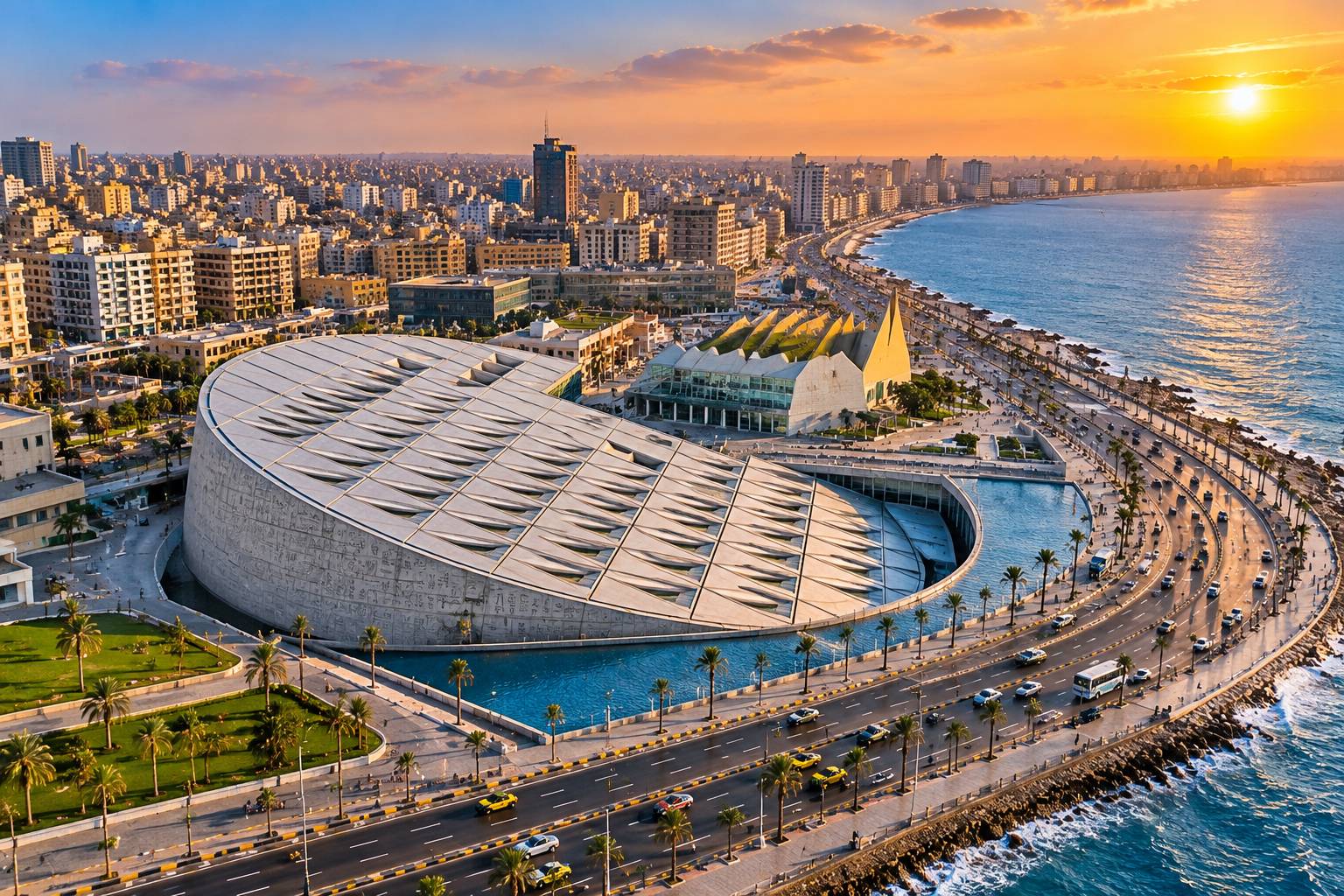
One of the first things visitors notice is the building's unusual shape and enormous sloping roof.
The design features a broad circular form that appears to rise from the ground toward the Mediterranean. The exterior incorporates materials and visual elements that give the building a distinctive appearance, while its interior is designed to accommodate a large reading area and numerous cultural facilities.
The building's architecture reflects the relationship between knowledge, the natural environment, and the city's ancient heritage.
The Circular Roof
The sloping circular roof is one of the building's defining features. Its scale and orientation make the library easy to recognize from the surrounding area.
The design also creates an impressive visual connection between the building and the nearby sea.
The Reading Hall
The main reading area is a central feature of the complex. Its spacious interior and tiered arrangement create an impressive environment for reading and research.
Visitors can appreciate the scale of the building and its architectural details while learning about the library's role as a modern research institution.
Access to reading areas and certain facilities may depend on visitor rules and the type of admission purchased.
The Exterior Walls and Public Spaces
The building's exterior and surrounding plaza are also worth exploring. The area provides opportunities to admire the architecture and take photographs from permitted public viewpoints.
The location near the waterfront makes it easy to combine a visit with a walk along Alexandria's Corniche.
What to See Inside the Bibliotheca Alexandrina
The Bibliotheca Alexandrina contains several facilities and cultural attractions. The exact exhibitions and visitor access arrangements may vary, so it is worth checking the official website before your visit.
1. The Main Library
The main library is the heart of the institution. It contains extensive collections and provides facilities for reading, study, and research.
The library supports a broad range of subjects, including literature, history, science, technology, and the humanities.
Visitors interested in books and research can gain an appreciation of the institution's scale and its role in modern Egyptian cultural life.
2. The Antiquities Museum
The Antiquities Museum presents archaeological objects associated with Egyptian history and the civilizations that influenced Alexandria.
Its collections help visitors understand the cultural connections between ancient Egypt, the Greek world, and the Roman period.
For travelers exploring Alexandria's archaeological attractions, the museum can provide useful context for monuments such as Pompey's Pillar and the Catacombs of Kom El Shoqafa.
Museum admission and opening hours may differ from those of the main library, so check the current arrangements before visiting.
3. The Manuscripts Museum
The Manuscripts Museum focuses on written heritage, historical manuscripts, and the preservation of documentary collections.
It offers an opportunity to learn about the development of writing, scholarship, and the transmission of knowledge across generations.
The museum is particularly interesting for visitors who appreciate books, calligraphy, historical documents, and cultural heritage.
Guided visits may be available in selected languages, subject to current arrangements.
4. The History of Science Museum
The History of Science Museum explores scientific ideas and achievements across different periods.
Its displays and educational material help visitors understand the development of scientific knowledge and the contributions of scholars from different cultures.
It is a useful addition to a visit for families, students, and anyone interested in the relationship between science and history.
5. The Planetarium Science Center
The Planetarium Science Center introduces scientific concepts through educational activities and planetarium experiences.
It is especially appealing to families and visitors traveling with children who enjoy astronomy, space, and interactive learning.
Shows and activities may operate on specific schedules, and some experiences require separate tickets or advance arrangements.
6. Exhibitions and Art Galleries
The Bibliotheca Alexandrina regularly hosts cultural activities, art exhibitions, lectures, and public events.
Depending on the program, visitors may encounter exhibitions covering visual arts, photography, history, literature, science, and contemporary cultural topics.
If you want to see a particular exhibition or attend an event, check the institution's current program before planning your visit.
Why Visit the Bibliotheca Alexandrina?
The Bibliotheca Alexandrina appeals to a wide range of travelers because it combines architecture, culture, education, and history.
Here are some of the main reasons to include it in your itinerary:
-
Unique architecture: Admire one of Alexandria's most recognizable modern buildings.
-
Historical significance: Learn about the legacy of the ancient Library of Alexandria.
-
Cultural experiences: Discover museums, exhibitions, and educational facilities.
-
Scientific learning: Explore science-related displays and planetarium activities when available.
-
Photography: Photograph the building's distinctive exterior from permitted viewpoints.
-
Waterfront location: Combine the visit with sightseeing along the Mediterranean coast.
-
Family activities: Explore educational facilities suitable for visitors of different ages, subject to admission rules.
The library is especially worthwhile for travelers who want to experience Alexandria beyond its ancient ruins and coastal scenery.
Bibliotheca Alexandrina Opening Hours
Opening hours can change because of public holidays, special events, seasonal schedules, or temporary institutional announcements.
The official website publishes separate schedules for the main reading area, general visits, museums, and other facilities. These areas may not all close at the same time.
Before traveling, confirm the latest information on the official Bibliotheca Alexandrina website.
Official website: https://www.bibalex.org/
When checking the schedule, make sure you distinguish between the hours for the main library and those for guided visits, museums, and the Planetarium Science Center.
Bibliotheca Alexandrina Tickets and Admission
Admission arrangements depend on the facilities you want to visit.
Some visitor experiences may require a general admission ticket, while museums, exhibitions, or special activities may have separate or combined ticket options.
Ticket prices can differ by visitor category, and rates may change. It is best to verify current prices directly with the institution before your visit rather than relying on outdated information.
Tips for Buying Tickets
-
Check which areas are included in your chosen ticket.
-
Confirm whether guided visits are included or require separate arrangements.
-
Ask about museum admission if you plan to visit more than one collection.
-
Check the availability and schedule of planetarium shows.
-
Arrive early enough to purchase tickets and complete security procedures.
-
Keep your ticket until your visit is finished.
For large groups, schools, or organized tours, contacting the institution in advance can help clarify the available arrangements.
Where Is the Bibliotheca Alexandrina Located?
The Bibliotheca Alexandrina is located in the Chatby area of Alexandria, near the Mediterranean waterfront.
Its coastal location makes it relatively convenient to combine with other attractions in the city, depending on traffic and opening hours.
The surrounding area includes major roads, public transportation options, and access to Alexandria's waterfront districts.
How to Get There
By private car: A private vehicle can be convenient if you are visiting several Alexandria attractions in one day.
By taxi or ride-hailing service: This is a practical option for traveling from your hotel or another attraction. Confirm your destination before starting the journey.
By public transportation: Local transport may be suitable for travelers familiar with Alexandria, but you should check routes and stops in advance.
From Cairo: Travelers can reach Alexandria by road or train. If you are planning a day trip, allow sufficient time for the journey in both directions.
How Much Time Should You Spend at the Bibliotheca Alexandrina?
The time needed depends on your interests and which facilities you plan to explore.
Around 1 hour: Suitable for a brief visit focused on the building's architecture and selected public areas, depending on access arrangements.
Around 2–3 hours: A reasonable starting point for visitors who want to explore the main visitor areas and one or more exhibitions or museums.
Half a day: Better for travelers who want to visit several museums, attend an available activity, and explore the library complex at a relaxed pace.
If you are particularly interested in manuscripts, archaeology, or science, you may want to allow more time.
Best Time to Visit the Bibliotheca Alexandrina
The library can be visited throughout the year because much of the experience takes place indoors.
Spring and autumn are often comfortable seasons for combining the visit with outdoor sightseeing in Alexandria.
Summer can be busy, particularly during the coastal holiday season. Visiting earlier in the day may help you organize your schedule, depending on the opening hours.
Winter can be a good time for indoor cultural activities, although Alexandria may experience rain and windy weather.
The best time of day depends on your itinerary. Check the current schedule and allow enough time for any museums or exhibitions you particularly want to see.
Places to Visit Near the Bibliotheca Alexandrina
The library can be combined with other attractions during a day of sightseeing in Alexandria.
Alexandria Corniche
The Corniche is the city's famous waterfront route, offering views of the Mediterranean Sea. A walk or short drive along a suitable section can be a relaxing way to continue your visit.
Citadel of Qaitbay
The Citadel of Qaitbay is a historic coastal fortress associated with the site of the ancient Lighthouse of Alexandria. It is one of the city's most famous historical landmarks.
Pompey's Pillar
Pompey's Pillar is a monumental Roman-era column located within an archaeological area associated with the ancient Serapeum.
Catacombs of Kom El Shoqafa
These underground tombs demonstrate the interaction of Egyptian, Greek, and Roman artistic traditions in ancient Alexandria.
The attractions are spread across different parts of the city, so allow time for transportation rather than assuming they can all be visited quickly on foot.
Suggested One-Day Alexandria Itinerary
If you are visiting Alexandria for one day, the Bibliotheca Alexandrina can be an excellent part of a balanced itinerary.
Morning: Bibliotheca Alexandrina
Begin with the library and explore the facilities that interest you most. Check the museum and exhibition schedules in advance.
Late Morning: Alexandria Corniche
Enjoy the waterfront and take photographs from permitted public areas.
Afternoon: Citadel of Qaitbay
Visit the historic fortress and enjoy views of the Mediterranean.
Later Afternoon: Local Lunch and Historic Alexandria
Have lunch at a local restaurant and, if time permits, visit another historical attraction such as Pompey's Pillar.
This is a suggested route rather than a fixed schedule. Choose fewer attractions if you want more time inside the library or its museums.
Visiting the Bibliotheca Alexandrina with Children
The Bibliotheca Alexandrina can be an educational destination for families. Its science-related facilities, selected exhibitions, and cultural activities can help children discover new subjects in an engaging environment.
However, age restrictions and access rules may differ between facilities. Check the current policies before visiting with young children.
For a more enjoyable family visit:
-
Choose activities that suit your children's ages and interests.
-
Check planetarium show times before arriving.
-
Allow time for breaks.
-
Follow the institution's rules in reading areas and museums.
-
Confirm which facilities are open to children.
Photography at the Bibliotheca Alexandrina
The building is a popular subject for architectural photography, particularly because of its distinctive roof and waterfront setting.
Before taking photographs inside, check the rules for the specific area you are visiting. Photography permissions can differ between public spaces, museums, exhibitions, and special events.
Avoid using flash or professional recording equipment where prohibited, and follow any instructions from staff.
For exterior photographs, the surrounding public areas may provide attractive views of the building, subject to local access and safety rules.
Practical Tips for Visiting the Bibliotheca Alexandrina
To make the most of your visit, keep the following recommendations in mind:
-
Check official opening hours: Schedules can change, especially around public holidays and special events.
-
Plan the museums you want to visit: The complex contains several facilities, so prioritize your interests.
-
Confirm ticket arrangements: Check which areas are included before purchasing admission.
-
Allow enough time: A rushed visit may not leave enough time for exhibitions and museums.
-
Follow visitor rules: Respect restrictions in reading areas, galleries, and exhibition spaces.
-
Wear comfortable shoes: You may spend considerable time walking through the complex.
-
Bring identification if required: Check the institution's current entry requirements before arrival.
-
Plan nearby attractions: Combine the library with other sites only if your schedule allows enough travel time.
-
Check special events: Exhibitions, lectures, and performances can affect availability in particular areas.
-
Keep your schedule flexible: Allow extra time for ticketing, security, and activities that interest you.
Frequently Asked Questions About the Bibliotheca Alexandrina
Is the Bibliotheca Alexandrina the original ancient Library of Alexandria?
No. The current Bibliotheca Alexandrina is a modern institution inaugurated in 2002. It was established to honor the legacy and intellectual spirit of the ancient Library of Alexandria.
What is the Bibliotheca Alexandrina famous for?
It is famous for its distinctive architecture, major research library, museums, exhibitions, cultural events, and connection to the history of the ancient Library of Alexandria.
Is the Bibliotheca Alexandrina worth visiting?
Yes. It is one of Alexandria's most important cultural attractions and is particularly worthwhile for visitors interested in architecture, history, science, and education.
How long does a visit take?
A short visit may take around an hour, while exploring several museums and exhibitions can take two to three hours or longer. Your visit length will depend on the facilities you choose.
Are there museums inside the Bibliotheca Alexandrina?
Yes. The complex includes museums such as the Antiquities Museum, Manuscripts Museum, and History of Science Museum. Other facilities and exhibitions may also be available.
Can tourists enter the Bibliotheca Alexandrina?
Visitors can access designated visitor areas subject to the institution's admission arrangements, security procedures, and opening schedule. Some facilities may have separate access requirements.
Is the Bibliotheca Alexandrina suitable for children?
It can be suitable for families, particularly those interested in educational and science-related activities. Check the age rules and schedules for individual facilities before visiting.
What is the best time to visit?
The best time depends on the current opening schedule and your sightseeing plans. Spring and autumn are often comfortable for combining an indoor visit with outdoor attractions in Alexandria.
Can I visit the Bibliotheca Alexandrina on a day trip from Cairo?
Yes. Alexandria can be visited on a day trip from Cairo, but travel time reduces the time available for sightseeing. Plan your transportation and choose a manageable number of attractions.
What other attractions can I visit nearby?
You can combine the library with selected sections of Alexandria's Corniche and other historical attractions, such as the Citadel of Qaitbay. Check distances and traffic before deciding on the route.
Plan Your Alexandria Visit
The Bibliotheca Alexandrina is more than a modern library. It is a cultural landmark that connects Alexandria's ancient intellectual legacy with contemporary learning, research, and creativity.
From its striking architecture to its museums, exhibitions, and scientific facilities, the complex offers a rewarding experience for visitors interested in understanding another side of Egypt.
If you are planning a wider journey around the country, explore our Egypt Tour Packages and discover more experiences with Let's Explore Egypt Travel.
Recommended Tours
Discover the history and Mediterranean charm of Alexandria with these recommended experiences from Let's Explore Egypt Travel.
1. All-Inclusive Alexandria Day Tour from Cairo
Explore Alexandria's most famous historical landmarks on a private day trip from Cairo. Visit the Catacombs of Kom El Shoqafa, Pompey's Pillar, the Bibliotheca Alexandrina, and the Citadel of Qaitbay, with private transportation, a professional Egyptologist guide, and lunch according to your selected package.
Best for: Travelers staying in Cairo who want to explore Alexandria in one day.
2. Three-Day Cairo, Museums & Alexandria Tour
Combine the highlights of Cairo with Alexandria's rich cultural heritage on a multi-day private tour. Discover the Giza Pyramids, explore Egypt's renowned museums, and visit Alexandria's most famous historical attractions, including the Bibliotheca Alexandrina and Citadel of Qaitbay.
Best for: First-time visitors who want to experience Cairo and Alexandria in one trip.
3. Private Alexandria Sightseeing Experience
Explore Alexandria at your own pace with a private sightseeing itinerary tailored to your interests. Focus on ancient history, museums, architecture, and Mediterranean scenery while enjoying a more personalized experience.
Best for: Couples, families, and travelers who prefer a flexible itinerary.
Bibliotheca Alexandrina Highlights
-
Discover the modern revival of the legendary Ancient Library of Alexandria.
-
Admire the library's iconic circular architecture overlooking the Mediterranean Sea.
-
Explore an impressive main reading hall and extensive library collections.
-
Visit the Antiquities Museum and discover artifacts connected to Egyptian history.
-
Explore the Manuscripts Museum and learn about written cultural heritage.
-
Discover scientific achievements at the History of Science Museum.
-
Enjoy educational experiences at the Planetarium Science Center, subject to availability.
-
Explore temporary exhibitions, art displays, and cultural events.
-
Learn about Alexandria's role as a historic center of knowledge and scholarship.
-
Capture photographs of one of Alexandria's most recognizable modern landmarks, following photography rules.
-
Combine your visit with Alexandria Corniche and other nearby attractions.
-
Enjoy an enriching cultural experience for history lovers, architecture enthusiasts, students, and families.