


Pompey's Pillar Alexandria
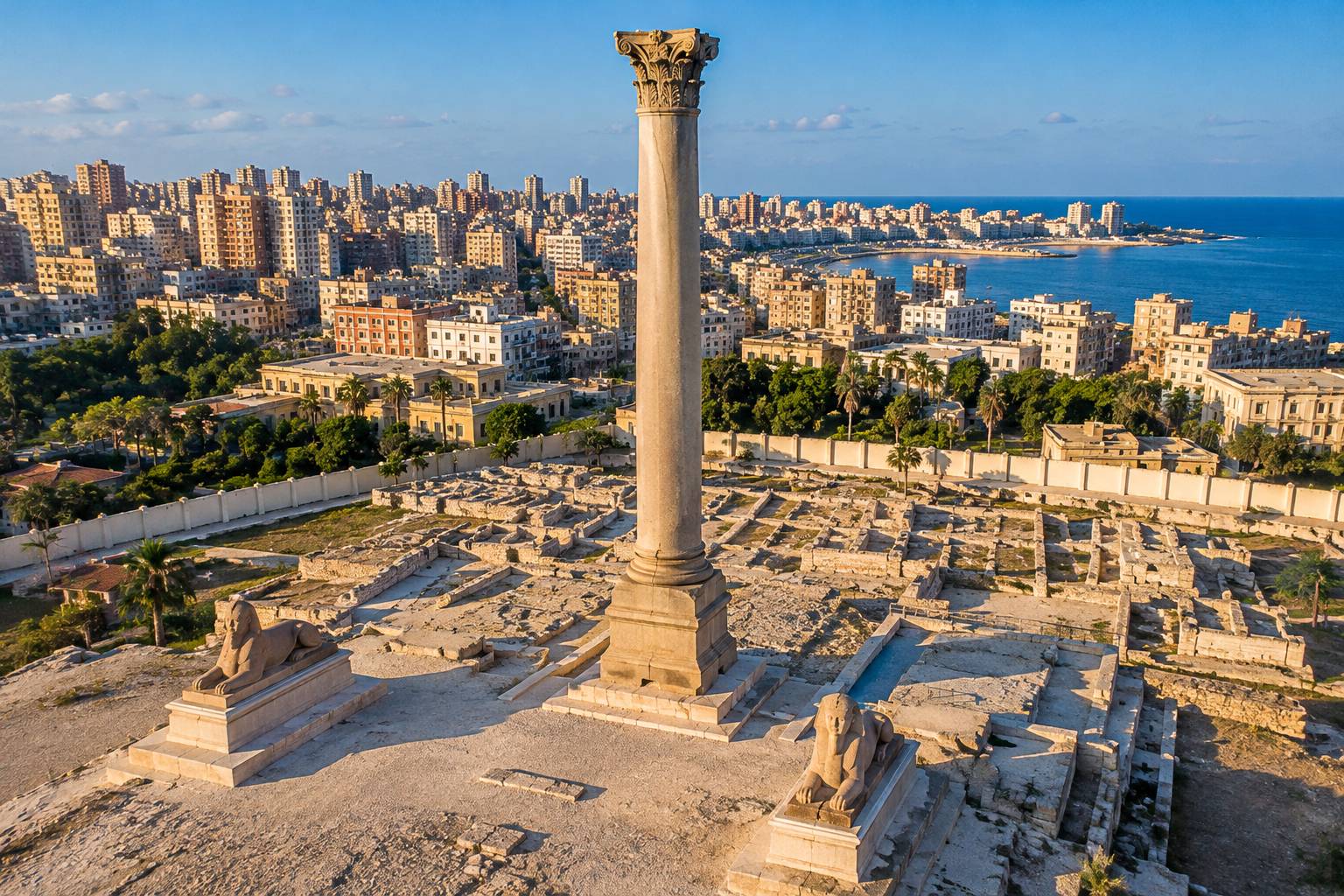
Pompey's Pillar dates to the late 3rd century AD, during the reign of Emperor Diocletian. It is commonly associated with a dedication honoring the emperor, who became an important figure in Alexandria's history following political unrest in the city.
The monument was erected within the Serapeum, a major religious complex dedicated to Serapis. This deity combined aspects of Greek and Egyptian religious traditions and reflected Alexandria's diverse population.
Over the centuries, the sanctuary declined, and much of its architecture disappeared. The granite column survived, becoming one of the most prominent remnants of ancient Alexandria.
Why Is It Called Pompey's Pillar?
Despite its famous name, the column has no established connection to Pompey the Great, the Roman general who lived during the 1st century BC.
The name appears to have resulted from historical confusion and later associations with stories about Pompey. The monument itself dates from several centuries after his lifetime and is associated with Emperor Diocletian.
This distinction makes the site especially interesting for visitors who want to understand the difference between popular legends and archaeological evidence.
Recommended Tours
Discover Pompey's Pillar as part of an Alexandria sightseeing experience. Combine this remarkable Roman monument with other historic landmarks to explore the city's diverse heritage.
1. Catacombs of Kom El Shoqafa Alexandria
Explore one of Alexandria's most fascinating underground burial complexes, known for its combination of Egyptian, Greek, and Roman artistic influences.
2. Citadel of Qaitbay, Alexandria
Visit the historic coastal fortress overlooking the Mediterranean Sea and discover another important chapter in Alexandria's history.
3. Alexandria Day Trip from Cairo
Discover the city's historic landmarks, archaeological sites, and Mediterranean atmosphere on a planned sightseeing trip.
For the best booking experience, replace the general website links with the exact product pages for the relevant tours if separate pages are available.
Frequently Asked Questions
1. Why is it called Pompey's Pillar?
The name is misleading. The column is associated with Emperor Diocletian and dates to the late 3rd century AD, rather than being a monument erected for Pompey the Great.
2. How tall is Pompey's Pillar?
The monument is approximately 26.85 meters high, including its base.
3. Who built Pompey's Pillar?
It is associated with the reign of Roman Emperor Diocletian, around AD 297.
4. What is the Serapeum?
The Serapeum was an ancient religious sanctuary dedicated to Serapis, a deity associated with Greek and Egyptian traditions. Pompey's Pillar stands among its surviving archaeological remains.
5. How long does it take to visit Pompey's Pillar?
Most visitors can allow around 30–60 minutes to explore the column and surrounding ruins. Visitors with a strong interest in archaeology may wish to spend longer.
6. Can I visit Pompey's Pillar on a day trip from Cairo?
Yes. It can be included in a full-day Alexandria excursion, often alongside the Catacombs of Kom El Shoqafa, the Citadel of Qaitbay, and other city attractions.
7. Is Pompey's Pillar worth visiting?
Yes, especially for travelers interested in Roman history, ancient architecture, and Alexandria's multicultural past. It is also a convenient stop on a wider sightseeing itinerary.
Conclusion
Pompey's Pillar is a remarkable reminder of Alexandria's importance during the Roman period. Its towering granite column, nearby sphinxes, and the remains of the Serapeum make it a worthwhile destination for travelers interested in ancient Egyptian and Greco-Roman history.
Whether you are visiting Alexandria independently or joining a private day trip from Cairo, this historic landmark offers a fascinating glimpse into the city's past beyond its famous name.
Include Pompey's Pillar in your Alexandria itinerary to discover one of Egypt's most distinctive surviving Roman-era monuments.
Highlights of Pompey's Pillar
1. The Monumental Granite Column
Admire the towering red granite column, approximately 26.85 meters high including its base. Its impressive size and elegant proportions make it one of Alexandria's most recognizable ancient monuments.
2. The Ancient Inscription
Look for the inscription associated with the monument's dedication to Emperor Diocletian. It offers an important historical clue about the column's origins and helps explain why the popular name is misleading.
3. The Granite Sphinxes
Discover the sphinx statues near the column. These figures add another dimension to the archaeological site and reflect the long history of monumental sculpture in Egypt.
4. The Ruins of the Serapeum
Explore the remains of the ancient sanctuary dedicated to Serapis. The surviving archaeological features help visitors imagine the importance of this religious complex in Roman Alexandria.
5. The Ancient Archaeological Site
Walk around the monument and observe the surviving stonework and foundations. The wider site reveals more than the famous column alone and rewards visitors interested in ancient architecture.
Opening Hours and Ticket Prices
Pompey's Pillar is part of the Serapeum archaeological site in Alexandria. Opening hours and admission prices can change, so check the current details before your visit.
For reliable planning:
-
Admission tickets: Confirm the latest price for your visitor category.
-
Opening hours: Check the current schedule, especially during public holidays.
-
Visit duration: Allow approximately 30–60 minutes to explore the column and surrounding ruins.
-
Photography: Confirm the current photography rules at the entrance.
-
Guided tours: Consider a licensed guide if you want to learn more about the Serapeum and Alexandria's Roman history.
Official ticket information: Egyptian Monuments ticket portal.
How to Get to Pompey's Pillar
Pompey's Pillar is located in the Carmous district of Alexandria, within the historic archaeological area of the Serapeum.
From Central Alexandria
Take a taxi or private vehicle to the archaeological site. Allow extra time for traffic, particularly during busy periods.
From Alexandria Train Station
Travelers arriving by train can continue by taxi or arrange a private transfer. Journey times depend on traffic and the exact starting point.
From Cairo
You can visit Pompey's Pillar on a full-day trip from Cairo. Private transportation makes it easier to combine the monument with other Alexandria attractions without arranging separate transfers.
Consider combining your visit with the Catacombs of Kom El Shoqafa, the Citadel of Qaitbay, and the Bibliotheca Alexandrina, depending on your schedule and opening hours.
Best Time to Visit
Spring and autumn are often pleasant seasons for exploring Alexandria's outdoor attractions. Earlier visits can also help you avoid the hottest part of the day.
For a comfortable experience:
-
Wear comfortable walking shoes.
-
Bring drinking water.
-
Allow time to explore the surrounding archaeological remains.
-
Plan nearby attractions together to reduce unnecessary travel.
-
Consider a guided visit if ancient history is a major interest.
Visitor Tips
-
Understand the monument's real history. The column is associated with Emperor Diocletian, not Pompey the Great.
-
Explore beyond the column. The remains of the Serapeum are an important part of the experience.
-
Check admission details in advance. Ticket prices and visiting arrangements may change.
-
Respect the archaeological site. Avoid climbing on ancient structures or touching fragile remains.
-
Bring a camera. The column and surrounding ruins provide excellent subjects for historical photography.
-
Combine nearby attractions. A planned route can help you make the most of your time in Alexandria.