


Alexandria Port
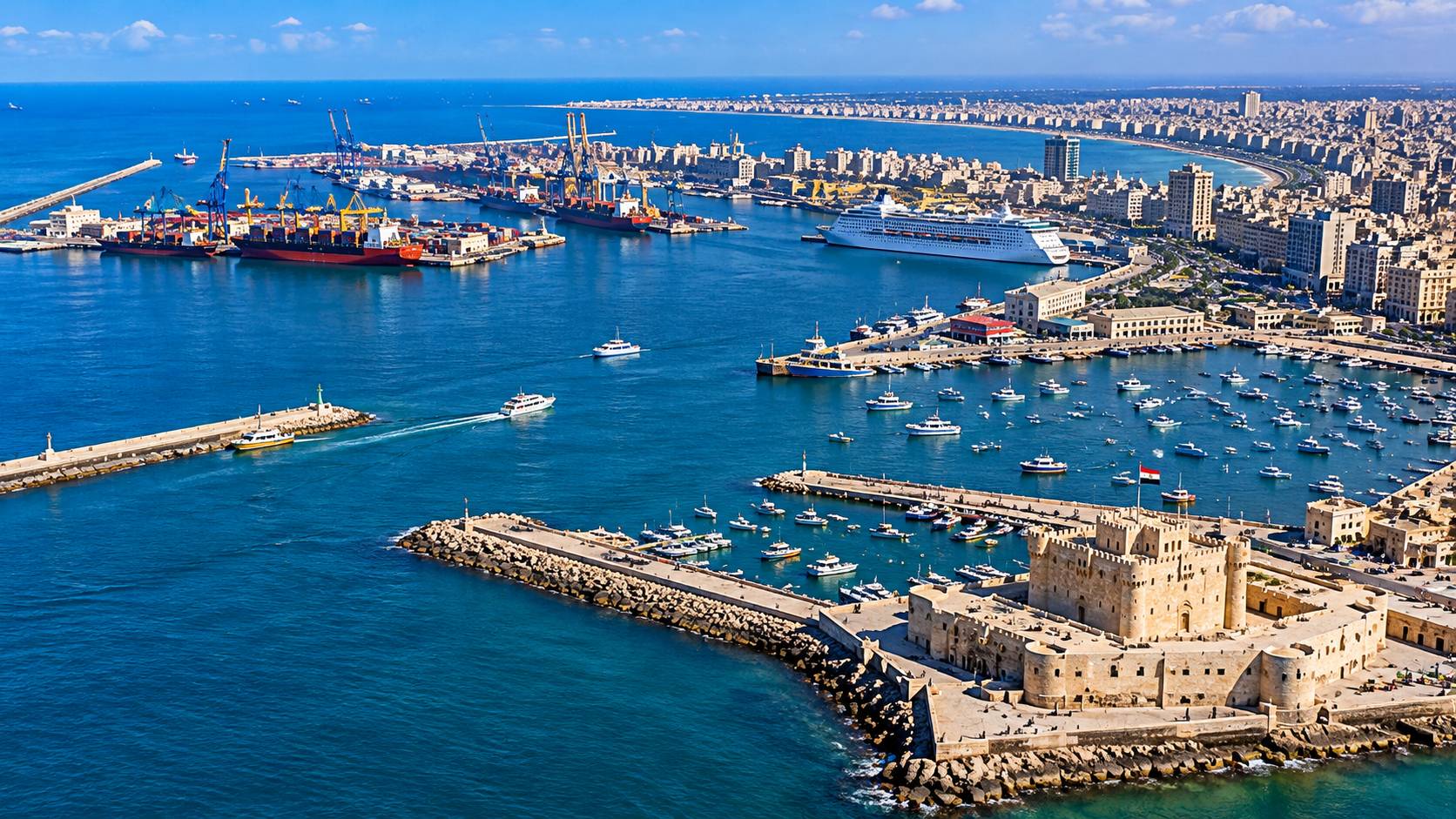
Alexandria Port, Egypt: Where Ancient Maritime History Meets the Modern Mediterranean
A Harbor That Shaped the Identity of Alexandria
The story of Alexandria cannot be separated from the sea. For more than two thousand years, the Mediterranean has influenced the city's economy, architecture, culture, and relationship with the wider world. Alexandria Port is one of the clearest expressions of that connection.
Founded by Alexander the Great in 331 BC, Alexandria grew into a major center of commerce and learning during the Ptolemaic period. Ships connected the city with Mediterranean destinations, carrying goods, travelers, ideas, and cultural influences that helped make Alexandria one of the ancient world's most cosmopolitan cities.
Today, the modern port continues this maritime tradition in a different form. Commercial vessels, cargo terminals, and shipping operations reflect Egypt's continuing relationship with international trade.
The Two Harbors of Alexandria
Alexandria's maritime landscape includes two historically important harbor areas: the Eastern Harbor and the Western Harbor. They are separated by a peninsula that extends into the Mediterranean.
The Eastern Harbor is especially important to the city's ancient history. It formed part of the royal waterfront of Ptolemaic Alexandria, where palaces and important administrative buildings once stood. Archaeological remains beneath the sea preserve traces of this lost landscape.
The Western Harbor, by contrast, developed into the principal modern commercial harbor. Its growth accelerated during the 19th century, when Muhammad Ali Pasha pursued projects to modernize Egypt and strengthen Alexandria's maritime economy.
These two harbors reveal two different chapters of the same story: one associated with ancient royal power and the other with modern shipping and commerce.
From Ancient Trade Routes to Modern Shipping
In antiquity, Alexandria's position on the Mediterranean helped connect Egypt with markets throughout the region. Its maritime connections supported the movement of agricultural products, manufactured goods, and valuable commodities.
During the 19th century, improvements to the Western Harbor helped restore Alexandria's prominence as a major port city. The expansion of commercial facilities accompanied the growth of international trade and the development of new urban districts.
Today, Alexandria Port remains a major gateway for Egypt's imports and exports. Its importance extends beyond the waterfront, influencing logistics, transportation, employment, and the movement of goods throughout the country.
The port is therefore more than a collection of docks and ships. It is part of the economic infrastructure that connects Egypt with the global economy.
The Ancient Eastern Harbor: A Lost Royal Waterfront
One of the most fascinating aspects of Alexandria's maritime history lies beneath the waters of the Eastern Harbor.
During the Ptolemaic era, this area formed part of the city's prestigious royal quarter. Historical and archaeological research has helped identify submerged remains associated with ancient buildings, waterfront structures, and the changing coastline.
These underwater discoveries provide a different way to understand ancient Alexandria. Rather than imagining the city only through surviving columns and ruins on land, visitors can consider how much of its original urban landscape has disappeared beneath the sea.
The ancient harbor is also closely connected with Alexandria's broader archaeological heritage, including the legendary Lighthouse of Alexandria, which once stood on the island of Pharos near the entrance to the ancient harbor.
The remains beneath the Eastern Harbor are an important reminder that Alexandria's history is preserved both above and below the Mediterranean.
What Can Travelers See Around Alexandria Port?
The commercial port is an operational maritime facility, so access to its working areas may be restricted. Visitors should not assume that every dock, terminal, or industrial section is open to the public.
However, travelers can explore accessible parts of Alexandria's waterfront and visit nearby cultural and historical attractions.
1. Citadel of Qaitbay
Standing beside the Mediterranean, the Citadel of Qaitbay is one of Alexandria's best-known historic landmarks. Built in the 15th century, the fortress occupies the area associated with the ancient Lighthouse of Alexandria.
Its sea-facing walls and strategic position make it an excellent place to appreciate the city's maritime character.
2. Alexandria's Eastern Harbor
The Eastern Harbor offers a connection between the city's modern waterfront and its ancient past. Visitors can explore accessible areas around the harbor and learn about the archaeological remains preserved beneath the water.
3. Bibliotheca Alexandrina
The modern Bibliotheca Alexandrina celebrates Alexandria's historic association with scholarship, research, and cultural exchange. It offers a contemporary cultural experience that complements the city's archaeological sites.
4. Pompey's Pillar
Pompey's Pillar is a monumental Roman-era column surrounded by archaeological remains. It provides another perspective on Alexandria's development during antiquity and can be included in a broader historical itinerary.
5. Catacombs of Kom El Shoqafa
These underground tombs combine Egyptian, Greek, and Roman artistic influences. Their distinctive architecture illustrates the cultural interactions that helped define ancient Alexandria.
Alexandria Port for Cruise Passengers
For travelers arriving by cruise ship, Alexandria can serve as a starting point for exploring Egypt's Mediterranean heritage.
Depending on the ship's schedule and the authorized arrangements at the terminal, visitors may have time to discover several of the city's major attractions. A private sightseeing itinerary can help coordinate transportation and visits within the available time.
Cruise passengers should confirm their designated arrival terminal, meeting point, permitted pickup arrangements, and return deadline before booking a shore excursion.
Is Alexandria Port Worth Visiting?
Alexandria Port is most interesting to travelers who appreciate maritime history, international trade, and the evolution of coastal cities. The working commercial harbor itself is not a conventional tourist attraction, but its historical context helps explain why Alexandria became such an important Mediterranean center.
For most visitors, the best approach is to explore the accessible waterfront and nearby historical sites while learning about the ancient and modern harbors.
Frequently Asked Questions
Why is Alexandria Port important?
Alexandria Port is one of Egypt's major commercial ports and plays an important role in the country's international trade.
What is the difference between Alexandria's Eastern and Western harbors?
The Eastern Harbor is strongly associated with ancient Alexandria and its royal quarter, while the Western Harbor is the principal modern commercial harbor.
Can tourists enter Alexandria Port?
Access to operational port facilities may be restricted. Visitors should check with the relevant authorities or their cruise operator before planning a visit.
Is the ancient harbor still visible?
Much of the ancient Eastern Harbor's archaeological landscape lies underwater. Submerged remains provide evidence of Alexandria's former royal and maritime district.
Can Alexandria Port be included in a city tour?
Visitors can explore accessible waterfront areas and combine them with nearby attractions, such as the Citadel of Qaitbay, Pompey's Pillar, and the Catacombs of Kom El Shoqafa.
Discover Alexandria with Let's Explore Egypt Travel
Alexandria offers a remarkable combination of Mediterranean scenery, ancient history, archaeological discoveries, and modern urban life. Understanding its port adds another dimension to a visit, revealing how the sea has shaped the city across centuries.
Explore Alexandria's historic landmarks on a sightseeing trip with Let's Explore Egypt Travel and discover the stories behind one of Egypt's most fascinating coastal cities.
Recommended Tours from Let's Explore Egypt Travel
For your Alexandria Port article, add this section to direct readers toward relevant tours offered by Let's Explore Egypt Travel.
1. All-Inclusive Alexandria Day Tour from Cairo
Discover the Catacombs of Kom El Shoqafa, Pompey's Pillar, the Bibliotheca Alexandrina, and Qaitbay Citadel, with private transportation and a guided sightseeing experience.
Ideal for first-time visitors and history lovers.
2. Catacombs of Kom El Shoqafa Tour
Explore one of Alexandria's most fascinating archaeological sites, known for its blend of Egyptian, Greek, and Roman artistic traditions.
3. Giza Pyramids and Sphinx Private Tour
Stand before the Great Pyramids and the Great Sphinx with a private guided experience in the Giza Plateau.
4. Grand Egyptian Museum Tour
Discover remarkable archaeological treasures and learn more about ancient Egyptian civilization at the Grand Egyptian Museum.
These experiences align with the tour categories listed on the company's website, including Alexandria day trips, Giza sightseeing, and museum tours.
letsexploreegypttravel.com
+1
SEO tip: For this article, place the Alexandria Day Tour first because it is the closest match to visitors researching Alexandria Port. Use direct product links whenever available rather than sending every visitor to the homepage.
Highlights – Alexandria Port, Egypt
-
Discover one of Egypt’s most important commercial ports on the Mediterranean Sea.
-
Learn how Alexandria became a major maritime and trading center after its founding in 331 BC.
-
Explore the difference between the ancient Eastern Harbor and the modern Western Harbor.
-
Discover the submerged archaeological remains associated with ancient Alexandria’s royal waterfront.
-
Enjoy views of Alexandria’s Mediterranean coastline and historic harbor areas from accessible public locations.
-
Visit the nearby Citadel of Qaitbay, built near the site associated with the ancient Lighthouse of Alexandria.
-
Explore Alexandria’s maritime heritage, international trade connections, and coastal culture.
-
Combine your visit with Pompey’s Pillar, the Catacombs of Kom El Shoqafa, and the Bibliotheca Alexandrina.