


Best Places to Visit in Bahariya Oasis
Best Places to Visit in Bahariya Oasis: 10 Amazing Attractions in Egypt’s Western Desert
Discover the best places to visit in Bahariya Oasis, Egypt, from the spectacular Black Desert and White Desert to Crystal Mountain, Agabat Valley, natural hot springs, and ancient archaeological sites. Located southwest of Cairo, Bahariya Oasis is an excellent destination for travelers looking for desert adventures, unique landscapes, local culture, and a different side of Egypt beyond the pyramids and the Nile.
Whether you are planning a day trip from Cairo or an overnight desert safari, the Bahariya region offers a remarkable combination of natural beauty and history. Visitors can explore volcanic-looking hills, walk among extraordinary chalk formations, enjoy a 4x4 adventure, relax near natural springs, and discover the archaeological heritage of the oasis.
In this guide, Let’s Explore Egypt Travel introduces the best attractions in and around Bahariya Oasis, explains what makes each place special, and helps you plan an unforgettable Western Desert experience.
1. Black Desert: Explore Egypt’s Dramatic Volcanic Landscape
The Black Desert is one of the most distinctive natural attractions in the Bahariya region. Its landscape is characterized by dark hills, black stones, and volcanic-looking terrain contrasting with the golden sand of the surrounding desert.
Many hills are covered with dark volcanic rock, creating a dramatic environment that looks very different from Egypt’s more familiar sandy landscapes. The contrast between the dark hills and the bright desert sky makes this area particularly attractive to photographers and nature enthusiasts.
What can you do in the Black Desert?
-
Explore the desert landscape in a suitable 4x4 vehicle.
-
Stop at scenic viewpoints for panoramic photographs.
-
Discover the contrast between dark hills and golden sand.
-
Experience an off-road adventure with an experienced local guide.
-
Combine the Black Desert with Crystal Mountain and the White Desert on a longer safari.
The Black Desert is a highlight for visitors who want to experience the Western Desert beyond the main tourist attractions of Cairo.
Recommended experience: Explore our Black Desert Tour to learn more about visiting this remarkable landscape.
2. White Desert National Park: A Natural Wonder of Egypt
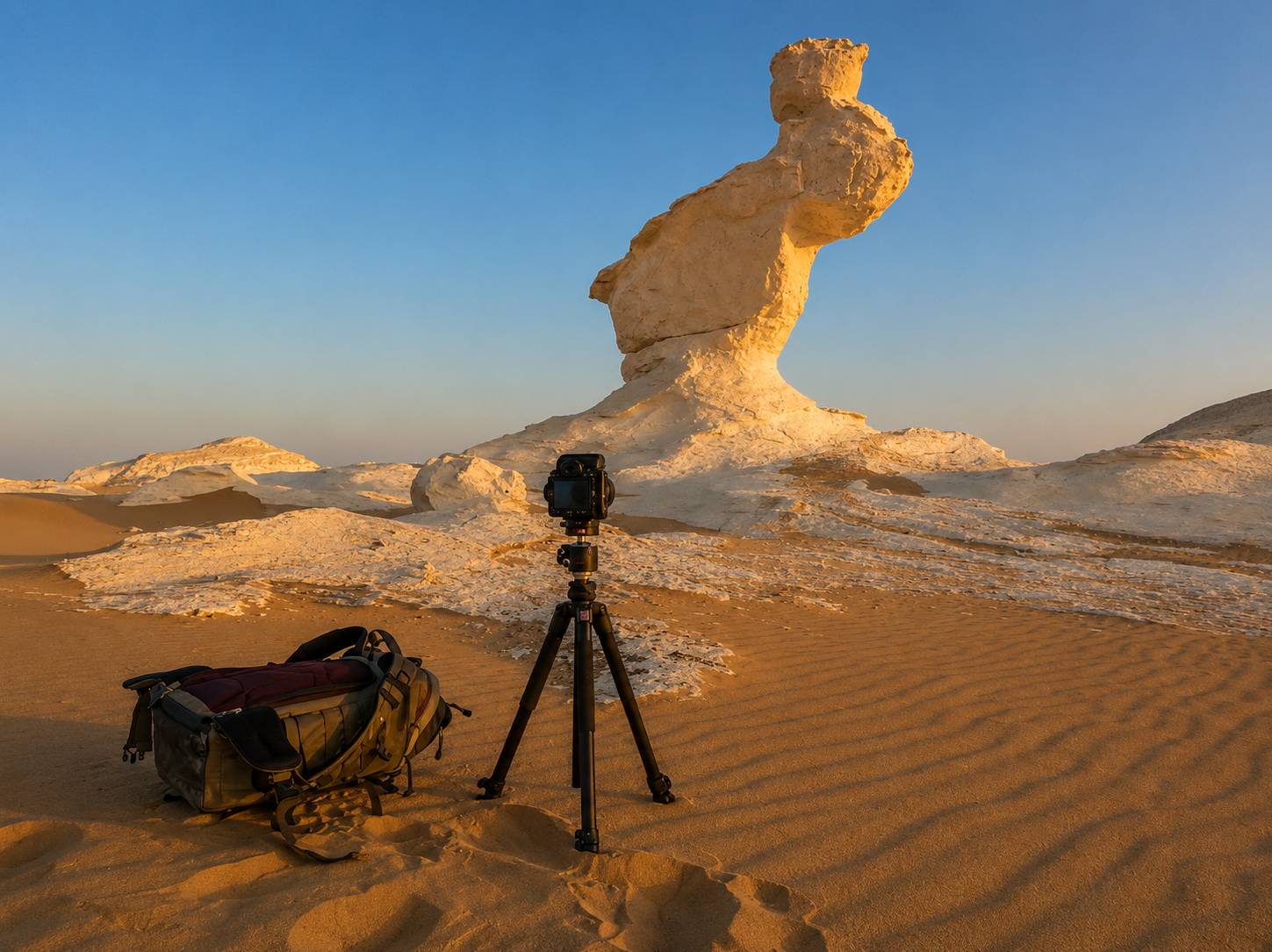
The White Desert is one of the most famous natural attractions in Egypt’s Western Desert. It is known for its extraordinary white chalk and limestone formations, sculpted over time by wind and erosion into unusual shapes.
Some formations resemble mushrooms, towers, animals, and abstract sculptures. The white rocks stand out against the surrounding sand, creating a landscape that can look almost otherworldly.
The White Desert lies farther south toward the Farafra area. It is commonly included in multi-stop desert safaris starting from Bahariya Oasis, rather than being an attraction located directly inside the oasis town.
Best things to do in the White Desert
-
Photograph the unusual chalk formations.
-
Explore the landscape with an authorized desert guide.
-
Watch the colors of the rocks change around sunset.
-
Enjoy the peaceful atmosphere of the open desert.
-
Experience an overnight camping trip when permitted and arranged responsibly.
-
Wake up early to enjoy the sunrise over the white formations.
The White Desert is particularly memorable at sunrise and sunset, when changing light creates shadows and highlights the shapes of the rocks.
Is an overnight White Desert tour worth it?
For travelers who have enough time, an overnight trip offers a different experience from a quick visit. Instead of seeing the desert only during daylight, visitors may enjoy an evening meal, stargazing, and the quiet atmosphere of the desert night.
Camping arrangements, permitted locations, meals, and facilities depend on the operator and current park regulations. Confirm these details before booking.
Recommended experience: Discover White Desert Tours from Cairo for desert exploration and camping options.
3. Crystal Mountain: A Sparkling Geological Attraction
Crystal Mountain is a well-known stop on many Western Desert safari routes between the Bahariya and Farafra areas. It is famous for its exposed mineral-rich rock, including sparkling crystal formations that catch the sunlight.
Despite its name, Crystal Mountain is better understood as a geological formation than a conventional mountain with a summit hike. Visitors usually stop to appreciate its appearance, learn about the geology, and take photographs.
Why visit Crystal Mountain?
-
See a distinctive geological feature of the Western Desert.
-
Photograph the rock formations in natural light.
-
Learn about the region’s varied desert geology.
-
Add another memorable stop to a Black Desert and White Desert safari.
Crystal Mountain is often visited as part of a broader desert route rather than as a standalone destination. The amount of time spent there depends on the itinerary and road conditions.
Visitors should admire the formation without removing crystals or other geological material.
4. Agabat Valley: Sand Dunes and Extraordinary Rock Formations
Agabat Valley is another spectacular destination in the wider White Desert region. Its landscape combines pale rock formations, open sandy areas, and dramatic natural shapes.
The scenery changes throughout the day as the sun moves across the sky. This makes the valley especially appealing to photographers and travelers who enjoy remote landscapes.
What makes Agabat Valley special?
The valley offers an impressive contrast between sculpted rock formations and soft golden sand. Depending on the route and conditions, visitors may have opportunities to enjoy photography, explore the surroundings on foot, or experience sandboarding at suitable locations.
A guided 4x4 excursion is the practical way to reach the area's remote desert stops. Visitors should follow their guide's advice and avoid climbing unstable formations.
Agabat Valley is best experienced as part of a carefully planned desert safari that also includes other nearby attractions.
5. Gabal al-Ingleez: Panoramic Views of Bahariya Oasis
Gabal al-Ingleez, also known as the English Mountain, is a notable viewpoint in the Bahariya area.
The hill is associated with the remains of a British observation post from the First World War period. Its elevated position offers views across the oasis landscape, including palm groves, surrounding hills, and the desert beyond.
Why visit Gabal al-Ingleez?
-
Enjoy panoramic views of Bahariya Oasis.
-
Photograph the oasis and surrounding desert from above.
-
Learn about a lesser-known part of the area's modern history.
-
Experience a different landscape from the sand and rock formations farther south.
A visit may involve a short but steep climb, depending on the access point. Wear suitable shoes, carry water, and avoid climbing during extreme heat. Check local access conditions before including the viewpoint in your itinerary.
For travelers interested in combining landscapes with local history, Gabal al-Ingleez provides a useful addition to a visit to Bahariya.
6. Valley of the Golden Mummies: Discover Ancient Egyptian History
Bahariya Oasis is not only a destination for desert adventures. It is also an important archaeological region with a rich history spanning several periods of ancient Egyptian civilization.
The Valley of the Golden Mummies became internationally known following the discovery of numerous Greco-Roman-period mummies in the area. The discoveries revealed important information about burial practices, funerary traditions, and life in the oasis during antiquity.
What can visitors learn?
-
How burial customs developed during the Greco-Roman period.
-
Why Bahariya was an important settlement in the Western Desert.
-
What archaeological discoveries reveal about the region's past.
-
How the oasis connected local communities with wider Egyptian history.
The name refers to an archaeological discovery area; it should not be confused with a single monument containing every mummy found in the region. The availability of exhibits and archaeological sites can change, so check which locations are open to visitors before traveling.
For history enthusiasts, the Valley of the Golden Mummies adds a valuable cultural dimension to a trip that might otherwise focus entirely on natural scenery.
7. Ain el-Muftella: Explore Ancient Temples Near Bawiti
Ain el-Muftella is an archaeological site near Bawiti, the principal town of Bahariya Oasis. It is known for temple remains associated with ancient Egyptian religious life.
The site offers a different perspective on the oasis, showing that the Western Desert was not isolated from the religious, political, and cultural developments of ancient Egypt.
Why include Ain el-Muftella in your itinerary?
Visitors interested in archaeology can explore the remains and learn about the historical importance of Bahariya. The site can complement visits to other local archaeological attractions, depending on opening hours and access arrangements.
Ain el-Muftella is particularly relevant for travelers who want to understand the oasis as a historic settlement, rather than simply a starting point for a desert safari.
Consider arranging a knowledgeable guide if you would like more context about the temples and their historical setting.
8. Temple of Alexander the Great: A Remarkable Historical Site
The Temple of Alexander the Great is another archaeological attraction associated with Bahariya Oasis. It is traditionally linked to Alexander the Great's visit to Egypt in 332 BCE and is an important part of the region's historical story.
The surviving remains provide an opportunity to explore the connection between Bahariya and the wider history of Egypt during the early Ptolemaic period.
What should visitors know?
This is a historical site rather than a large, fully preserved temple complex. Its condition and visitor access should be checked before traveling.
If you are particularly interested in ancient history, ask your tour provider whether the temple can be included alongside other archaeological stops near Bawiti.
Combining archaeological sites with the oasis landscape makes the experience more varied and helps visitors appreciate Bahariya's cultural heritage.
9. Natural Hot Springs: Relax in the Bahariya Oasis Landscape
Natural springs are among the attractions that distinguish Bahariya Oasis from the surrounding desert. The area is known for hot and cold springs, some of which are used locally for bathing and relaxation.
After spending time exploring the desert, a stop at an accessible spring can provide a welcome change of pace.
What is the experience like?
Depending on the spring and its facilities, visitors may find warm water, simple bathing areas, and views of the surrounding oasis landscape. Conditions vary between locations, and not every spring has developed visitor facilities.
Before entering a spring, check local guidance, water conditions, hygiene, and any posted restrictions. Avoid bathing where access is prohibited or the water quality is uncertain.
A visit to a spring can be combined with sightseeing around Bawiti, palm groves, and nearby villages when time allows.
10. Bawiti and the Palm Groves: Experience Local Oasis Life
Bawiti is the main town of Bahariya Oasis and an important base for exploring the surrounding area.
Unlike the remote desert landscapes farther south, Bawiti and its surroundings reveal the everyday life of an Egyptian oasis. Palm trees, cultivated land, local settlements, and traditional agricultural activities form an important part of the landscape.
What can you experience around Bawiti?
-
See the date palms and agricultural areas.
-
Learn about the oasis's role in local farming.
-
Explore the town and its surrounding settlements.
-
Enjoy a slower-paced experience between desert excursions.
-
Discover local food and hospitality, depending on the arrangements available.
The oasis is especially known for date palms and olive trees. These cultivated landscapes demonstrate how communities have adapted to living in an environment surrounded by desert.
Travelers who have time should consider exploring Bahariya itself instead of immediately continuing toward the White Desert. This allows for a more balanced trip that includes nature, local culture, and history.
How to Combine the Best Attractions in Bahariya Oasis
The most practical itinerary depends on how much time you have and whether you want to focus on archaeological sites, natural landscapes, or desert camping.
Option 1: Bahariya Oasis Day Trip
A day trip from Cairo can focus on Bahariya Oasis and selected attractions, subject to driving time and the chosen itinerary.
Possible activities include:
-
Traveling from Cairo to Bahariya Oasis.
-
Exploring selected areas around Bawiti.
-
Visiting an accessible viewpoint or spring.
-
Learning about local history and oasis life.
-
Returning to Cairo.
Because the drive is substantial, confirm the schedule carefully before choosing a day trip.
Explore our Bahariya Oasis Day Tours from Cairo for options that suit your available time.
Option 2: Black Desert and White Desert Safari
For visitors whose main interest is the desert scenery, a longer safari can combine several natural attractions.
Depending on the route, conditions, and permissions, stops may include:
-
Black Desert.
-
Crystal Mountain.
-
Agabat Valley.
-
White Desert National Park.
-
Sunset viewing and an overnight camp, where permitted.
This option is ideal for travelers who want to see several of the Western Desert's most distinctive landscapes in one journey.
Compare our Black Desert Tour and White Desert Tours from Cairo to find the most suitable experience.
Option 3: A Longer Bahariya Oasis Experience
If you have additional time, consider combining desert sightseeing with the archaeological attractions and local landscapes around Bawiti.
A longer itinerary may include selected temples, historical sites, natural springs, and palm groves before continuing toward the desert.
The precise schedule should be planned according to opening hours, road conditions, the time needed for each stop, and any applicable access restrictions.
Best Time to Visit Bahariya Oasis
The cooler months, generally from October to April, are often more comfortable for exploring Egypt's Western Desert. Daytime temperatures can still vary, and desert nights may be cold.
During warmer months, sightseeing should be planned carefully around the heat. Early starts, sufficient drinking water, sun protection, and a suitable vehicle are important throughout the year.
For overnight camping, bring layers of clothing and confirm the equipment and sleeping arrangements supplied by your tour operator.
How to Get to Bahariya Oasis from Cairo
Bahariya Oasis lies approximately 370 kilometres southwest of Cairo by the commonly used road route, although the actual distance and journey time depend on your starting point and route.
Most visitors travel by road to the oasis, then use a suitable 4x4 vehicle for off-road desert excursions.
For remote desert routes, use an experienced local operator who understands the terrain, access requirements, and current conditions. Do not attempt to drive into remote desert areas independently without the necessary preparation and authorization.
Frequently Asked Questions About Bahariya Oasis
What are the best places to visit in Bahariya Oasis?
Popular attractions in and around Bahariya include the Black Desert, White Desert, Crystal Mountain, Agabat Valley, Gabal al-Ingleez, natural springs, the Valley of the Golden Mummies, and archaeological sites near Bawiti.
Can I visit the White Desert from Bahariya Oasis?
Yes. Bahariya is a common starting point for excursions to the White Desert. The trip normally involves a combination of road travel and off-road driving, so allow enough time for the route.
Is the Black Desert part of Bahariya Oasis?
The Black Desert is closely associated with the Bahariya area and is commonly visited on excursions from the oasis. The White Desert and Crystal Mountain are farther south along routes toward Farafra.
Can I visit Bahariya Oasis in one day from Cairo?
A day trip is possible, but the long road journey limits the time available for sightseeing. If you want to explore the White Desert, Crystal Mountain, and Agabat Valley at a relaxed pace, consider a longer itinerary.
Is overnight camping available in the White Desert?
Overnight desert experiences may be available through operators that arrange camping in accordance with current regulations and permitted locations. Confirm the camping location, equipment, meals, and facilities before booking.
What should I bring on a Bahariya desert safari?
Bring comfortable clothing, sturdy shoes, sun protection, drinking water, a camera, and warmer layers for the evening. For overnight trips, confirm what camping equipment and meals are provided.
Is Bahariya Oasis suitable for families?
Yes, with appropriate planning. A private itinerary can be adjusted to suit children's ages, comfort requirements, and the amount of time they can comfortably spend traveling. Discuss the route and facilities with your tour provider before booking.
Plan Your Bahariya Oasis Adventure with Let’s Explore Egypt Travel
From the dark hills of the Black Desert to the extraordinary chalk formations of the White Desert, Bahariya Oasis offers a different perspective on Egypt's natural and historical heritage.
Whether you want a day trip from Cairo, a 4x4 desert safari, an overnight camping experience, or a journey combining desert scenery with archaeological sites, choosing the right itinerary will help you make the most of your visit.
Explore our Bahariya Oasis Tours and discover the available options for your next Western Desert adventure.
Let’s Explore Egypt Travel — discover Egypt beyond the ordinary.
Recommended Trips
1. Bahariya Oasis Day Tours from Cairo
Discover the beauty of Bahariya Oasis on a desert adventure from Cairo, with opportunities to explore local landscapes, desert attractions, and the unique environment of Egypt’s Western Desert.
2. Black Desert Tour
Explore the dramatic black volcanic hills and golden sand dunes of the Black Desert on an exciting 4x4 safari through one of Egypt’s most distinctive desert landscapes.
3. White Desert Tours from Cairo
Discover extraordinary white chalk formations, Crystal Mountain, and the spectacular scenery of the White Desert, with options for an overnight camping experience.
4. Bahariya Oasis Tours
Compare available Bahariya Oasis experiences and discover the natural landscapes, desert attractions, and cultural heritage of Egypt’s Western Desert.
-
Explore the dramatic volcanic hills and black rocks of the Black Desert.
-
Discover the spectacular white chalk formations of White Desert National Park.
-
Visit Crystal Mountain and admire its distinctive sparkling mineral formations.
-
Experience the breathtaking landscapes of Agabat Valley, with its sculpted rocks and golden sand dunes.
-
Enjoy panoramic views of Bahariya Oasis from Gabal al-Ingleez (English Mountain).
-
Discover the archaeological heritage of the Valley of the Golden Mummies.
-
Explore the ancient temples and historical landmarks near Bawiti.
-
Relax and experience the natural surroundings of Bahariya Oasis and its palm groves.
-
Enjoy an exciting 4x4 desert safari through the Western Desert.
-
Capture unforgettable photographs of desert landscapes at sunrise and sunset.
-
Experience an overnight desert camping adventure under the stars, where permitted.
-
Discover Egypt beyond Cairo with a journey through the natural beauty and history of Bahariya Oasis.