


Valley of the Golden Mummies
Valley of the Golden Mummies, Egypt: A Complete Travel Guide
The Valley of the Golden Mummies in Bahariya Oasis, Egypt, is one of the most remarkable archaeological discoveries in the Western Desert. Dating mainly to the Greco-Roman period, this ancient burial ground offers a fascinating look at how people in Bahariya preserved their dead, decorated their burials, and combined traditional Egyptian beliefs with artistic influences from the Greek and Roman worlds.
Located near Bawiti, the principal town of Bahariya Oasis, the Valley of the Golden Mummies is an important attraction for travelers interested in ancient Egyptian history beyond the famous pyramids of Giza and the temples of Luxor. A visit to the region can also be combined with desert landscapes, palm groves, historic temples, and the dramatic scenery of the Black Desert and White Desert.
In this guide, you will discover the story behind the Valley of the Golden Mummies, what made the discovery significant, what visitors can expect to see, and how to include Bahariya's archaeological heritage in a Western Desert trip.
What Is the Valley of the Golden Mummies?
The Valley of the Golden Mummies is a large Greco-Roman-era necropolis discovered in Bahariya Oasis in Egypt's Western Desert. A necropolis is an ancient burial ground containing tombs and human remains.
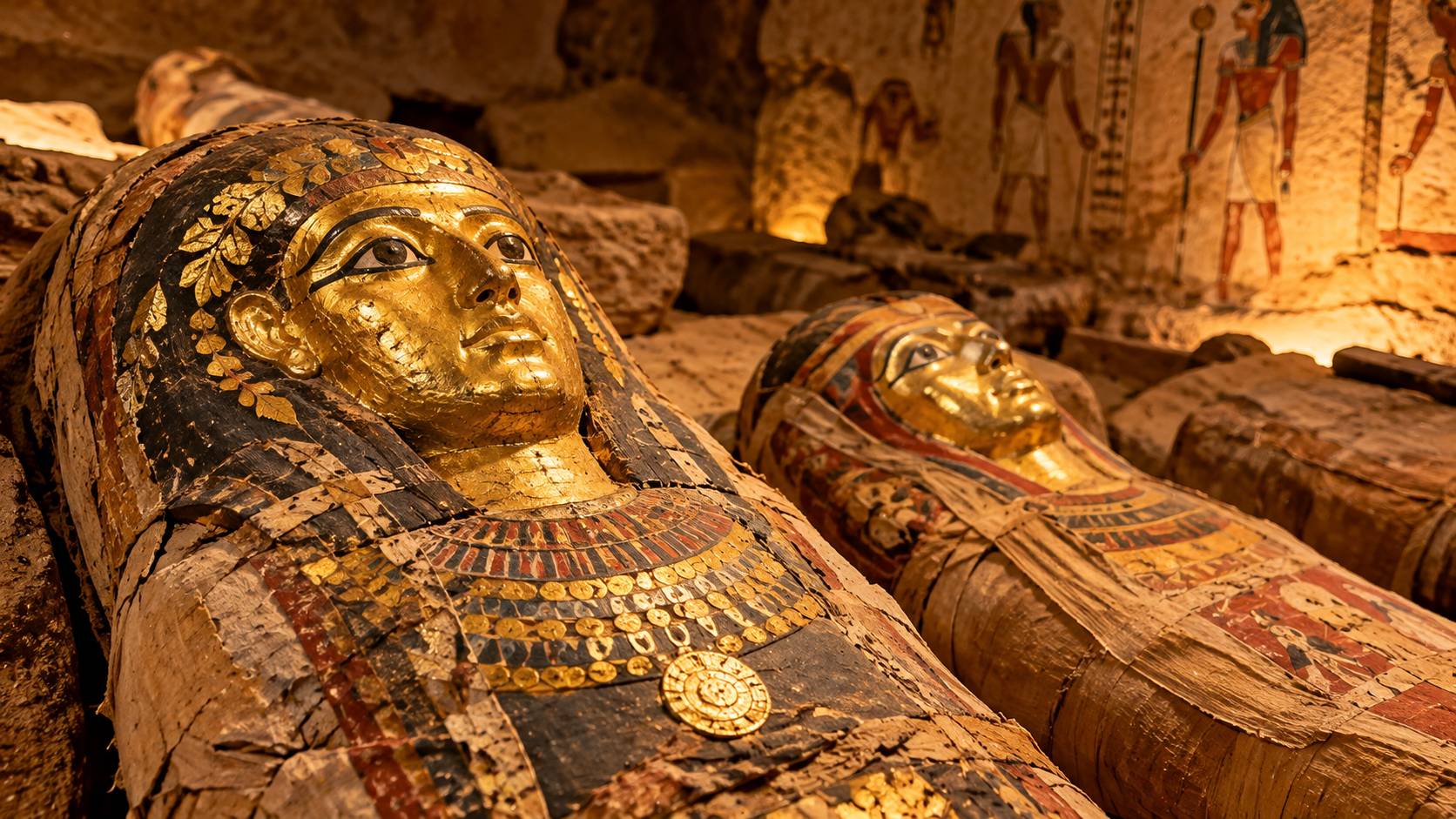
The site became internationally known because archaeologists uncovered numerous mummies with distinctive funerary decorations. Some had gilded masks or decorative coverings that gave the discovery its memorable modern name.
The burial ground reveals the cultural richness of Bahariya Oasis during the Ptolemaic and Roman periods. Although Egypt was influenced by Greek and Roman political and artistic traditions during these eras, many Egyptian funerary customs continued. The mummies demonstrate how these cultural influences could exist together in the same community.
The discovery also showed that Bahariya was more than an isolated desert settlement. It was home to communities with established religious traditions, agricultural activity, and connections to wider cultural and commercial networks.
The Discovery of the Golden Mummies
The modern archaeological story began in 1996, when an antiquities guard's donkey reportedly stumbled near a burial chamber outside Bawiti. The incident led to the discovery of an extensive ancient cemetery.
Egyptian archaeologist Zahi Hawass and his team subsequently investigated the area. Excavations uncovered mummies with different types of funerary decoration, including gilded facial masks and painted coverings.
The original excavations recovered approximately 250 mummies. Estimates that the wider cemetery may contain thousands more reflect the enormous potential of the burial ground, rather than a confirmed count of all the remains buried there.
This distinction matters: the Valley of the Golden Mummies is a vast archaeological discovery, but not every burial has been excavated or documented. Continuing archaeological research may reveal more about the people who lived and died in Bahariya during the Greco-Roman period.
Why Are They Called the Golden Mummies?
The name comes from the gilded decorations found on some of the mummies. Gold was associated with divine qualities and could symbolize an enduring or transformed state in ancient Egyptian religious beliefs.
However, not every mummy discovered at the site was covered in gold. The burials featured different levels and styles of decoration, providing clues about funerary practices and the resources available to different individuals.
Some mummies had gilded masks or decorated coverings, while other burials were less elaborate. These variations help archaeologists investigate differences in social status, artistic traditions, and the ways families prepared their deceased relatives for the afterlife.
The decorations are particularly significant because they reveal a combination of Egyptian funerary traditions and Greco-Roman artistic influences. They help tell a more complex story of ancient Egyptian society than one based only on royal tombs and monumental temples.
The Greco-Roman History of Bahariya Oasis
Bahariya Oasis has a long history, but the Valley of the Golden Mummies is particularly associated with the Ptolemaic and Roman periods.
During the Ptolemaic period, Egypt was ruled by a Greek-speaking dynasty following the conquests of Alexander the Great. Egypt later became a province of the Roman Empire. Throughout these political changes, local religious traditions and burial customs continued to play an important role.
Bahariya's location also made it a valuable oasis community. Water sources, agricultural land, and palm groves supported settlement in an otherwise arid landscape. Date palms and other crops contributed to local life and the oasis economy.
The archaeological discoveries at Bahariya help researchers understand how people in a Western Desert community maintained Egyptian burial traditions while living in a world influenced by wider Mediterranean cultures.
For visitors, the Golden Mummies provide a different perspective on Egypt's past. They are a reminder that ancient Egyptian history did not end with the great pyramids or the New Kingdom pharaohs. Religious customs, artistic traditions, and everyday life continued to evolve over many centuries.
What Can You See When Visiting?
1. Golden Funerary Masks and Decorations
The most famous feature associated with the discovery is the gilded decoration found on some mummies. These coverings could include masks or other carefully crafted funerary elements.
Their appearance helps explain why the discovery attracted international attention. They are also valuable evidence of the artistic traditions and burial customs that developed in Greco-Roman Bahariya.
2. Mummies from the Greco-Roman Period
The excavated mummies provide evidence of burial practices used by the local population. Their preservation, coverings, and funerary details offer opportunities to study how different Egyptian communities prepared their dead.
The mummies are not all identical. Differences in decoration and preparation make the collection particularly interesting to archaeologists and visitors who want to learn about ancient society.
3. Archaeological Artifacts
Discoveries associated with the burial ground and the wider archaeological landscape of Bahariya have included objects such as pottery, jewelry, statues, and coins. Such objects can help researchers investigate daily life, religious beliefs, craftsmanship, and the movement of goods.
The collection of artifacts provides context for the burials and helps place the cemetery within the broader history of the oasis.
4. The Historical Landscape Around Bawiti
Bahariya is not only a destination for desert scenery. The oasis contains archaeological sites, old settlements, palm groves, and historic places that illustrate its development over many centuries.
Combining an archaeological visit with a drive through the oasis allows travelers to appreciate how the surrounding landscape helped sustain communities far from the Nile Valley.
Can Tourists Visit the Valley of the Golden Mummies?
Access arrangements are important to check before planning your visit. Egypt's official tourism portal states that the excavation site itself is not open to the public, although some of the mummies are displayed in El-Bawiti.
For that reason, travelers should not assume they can walk through the original burial ground or enter individual tombs. Ask your tour operator or local guide to confirm which museum displays and archaeological locations are accessible on your travel date.
A visit to the available mummy displays can still be a worthwhile way to learn about the discovery. Travelers can also explore other accessible archaeological sites around Bahariya, depending on opening arrangements and the itinerary.
For official background information, consult the Egypt tourism guide to the archaeological sites of Al-Bahariyya.
Other Attractions to Explore in Bahariya Oasis
A trip to Bahariya can include several different experiences, allowing travelers to combine ancient history with the natural beauty of the Western Desert.
Black Desert
The Black Desert is known for dark volcanic hills and rocky formations scattered across a sandy landscape. The contrast between dark slopes and golden desert terrain creates striking views for photography.
Learn more in our Black Desert Tour.
White Desert
The White Desert is famous for its pale limestone formations, sculpted by wind and erosion into unusual shapes. It is one of the region's most distinctive natural attractions and is often included in multi-day desert journeys.
Explore our White Desert Tours from Cairo.
Agabat Valley
Agabat Valley is known for its sandstone and limestone scenery, rolling dunes, and dramatic desert views. It is an excellent place to appreciate the changing geology of the Western Desert.
English Mountain
English Mountain, also known as Gabal al-Ingleez, is associated with panoramic views over Bahariya Oasis and historical remains connected with the British presence during the First World War. Access and walking conditions should be checked locally.
Ain el-Muftella
Ain el-Muftella is an important archaeological area near Bawiti, known for ancient chapel remains and decorated walls. It can provide additional context for understanding the religious history of Bahariya.
Best Time to Visit Bahariya Oasis
The cooler months, generally from autumn through spring, are often more comfortable for outdoor exploration in Bahariya Oasis. Temperatures can rise considerably during summer, particularly around midday.
For a more comfortable experience, plan outdoor sightseeing for the morning or later afternoon when possible. Bring drinking water, sun protection, comfortable shoes, and clothing suitable for the weather.
Desert excursions require additional planning. Routes, vehicle requirements, weather, and local access conditions should be confirmed with an experienced operator before departure.
How to Get to Bahariya Oasis from Cairo
Bahariya Oasis lies southwest of Cairo in Egypt's Western Desert. Visitors generally travel by road, with the journey taking several hours depending on traffic, the starting point, and road conditions.
A private vehicle can make it easier to organize stops at archaeological attractions and nearby desert landscapes. For longer journeys into the Black Desert or White Desert, the itinerary may require a suitable four-wheel-drive vehicle and an experienced desert driver.
If you are planning a trip from Cairo, review our Bahariya Oasis Day Tours from Cairo and Bahariya Oasis Tours to explore possible itinerary options.
Before booking, confirm whether the tour includes archaeological museum visits, which attractions are accessible, and whether entrance fees are included.
Is the Valley of the Golden Mummies Worth Visiting?
The Valley of the Golden Mummies is especially interesting for travelers who want to discover a different side of Egyptian history. Instead of focusing only on the royal tombs and monumental structures found at Egypt's most famous archaeological sites, it offers insight into burial traditions within a Western Desert community during the Greco-Roman period.
Its gilded funerary decorations, varied burial styles, and archaeological significance make it an important part of Bahariya's heritage. The surrounding oasis adds another dimension to the experience, with palm groves, historic sites, and desert landscapes nearby.
The key is to plan realistically around current site access. Confirm what can be visited before traveling, and consider combining the available mummy displays with other archaeological attractions and a desert excursion.
Plan Your Bahariya Oasis Adventure
The Valley of the Golden Mummies reveals an extraordinary chapter in the history of Egypt's Western Desert. Its discovery transformed the archaeological profile of Bahariya Oasis and highlighted the cultural richness of the communities that lived there during the Greco-Roman period.
Whether you are interested in ancient Egyptian funerary traditions, archaeological discoveries, or the landscapes of the Western Desert, Bahariya offers a rewarding destination beyond the usual tourist route.
Explore our Bahariya Oasis Tours and White Desert Tours from Cairo to plan a journey combining oasis heritage with Egypt's remarkable desert scenery.
Recommended Trips to Explore Bahariya Oasis
Discover the archaeological heritage and spectacular desert landscapes of Egypt’s Western Desert with these recommended trips from Let’s Explore Egypt Travel.
1. Bahariya Oasis Tours
Explore Bahariya Oasis, its historical landmarks, lush palm groves, and traditional desert scenery with a customized tour.
2. Bahariya Oasis Day Tours from Cairo
Travel from Cairo to discover Bahariya Oasis on a day trip, with itinerary options depending on your interests and available time.
3. Black Desert Tour
Discover the dramatic volcanic hills and dark rocky landscapes of the Black Desert, a striking destination for photography and desert exploration.
4. White Desert Tours from Cairo
Explore the White Desert’s extraordinary chalk formations and expansive sand landscapes on an adventure into Egypt’s Western Desert.
Planning Your Trip
Interested in the Valley of the Golden Mummies? Confirm current museum displays and archaeological-site access before booking, as the original excavation area may not be open to the public. You can combine accessible archaeological attractions around Bahariya Oasis with a Black Desert or White Desert excursion for a broader experience of the region.
Highlights of the Valley of the Golden Mummies
-
Discover the fascinating story of the Valley of the Golden Mummies in Bahariya Oasis, Egypt.
-
Learn about the remarkable Greco-Roman-era archaeological discoveries dating back approximately 2,000 years.
-
Explore the history of gilded mummy masks and decorated funerary coverings.
-
Understand how ancient Egyptian burial traditions blended with Greek and Roman artistic influences.
-
Discover archaeological artifacts that reveal details about religion, craftsmanship, and life in ancient Bahariya.
-
Learn about the discovery that brought international attention to this ancient cemetery.
-
Explore Bahariya Oasis, including its palm groves, traditional settlements, and historical landmarks.
-
Combine archaeological sightseeing with the dramatic landscapes of the Black Desert and White Desert.
-
Enjoy a cultural experience away from Egypt's more crowded archaeological destinations.
-
Plan your visit with a local guide and check current museum displays and site-access arrangements before traveling.