


Ain el-Muftella Temple, Bahariya Oasis
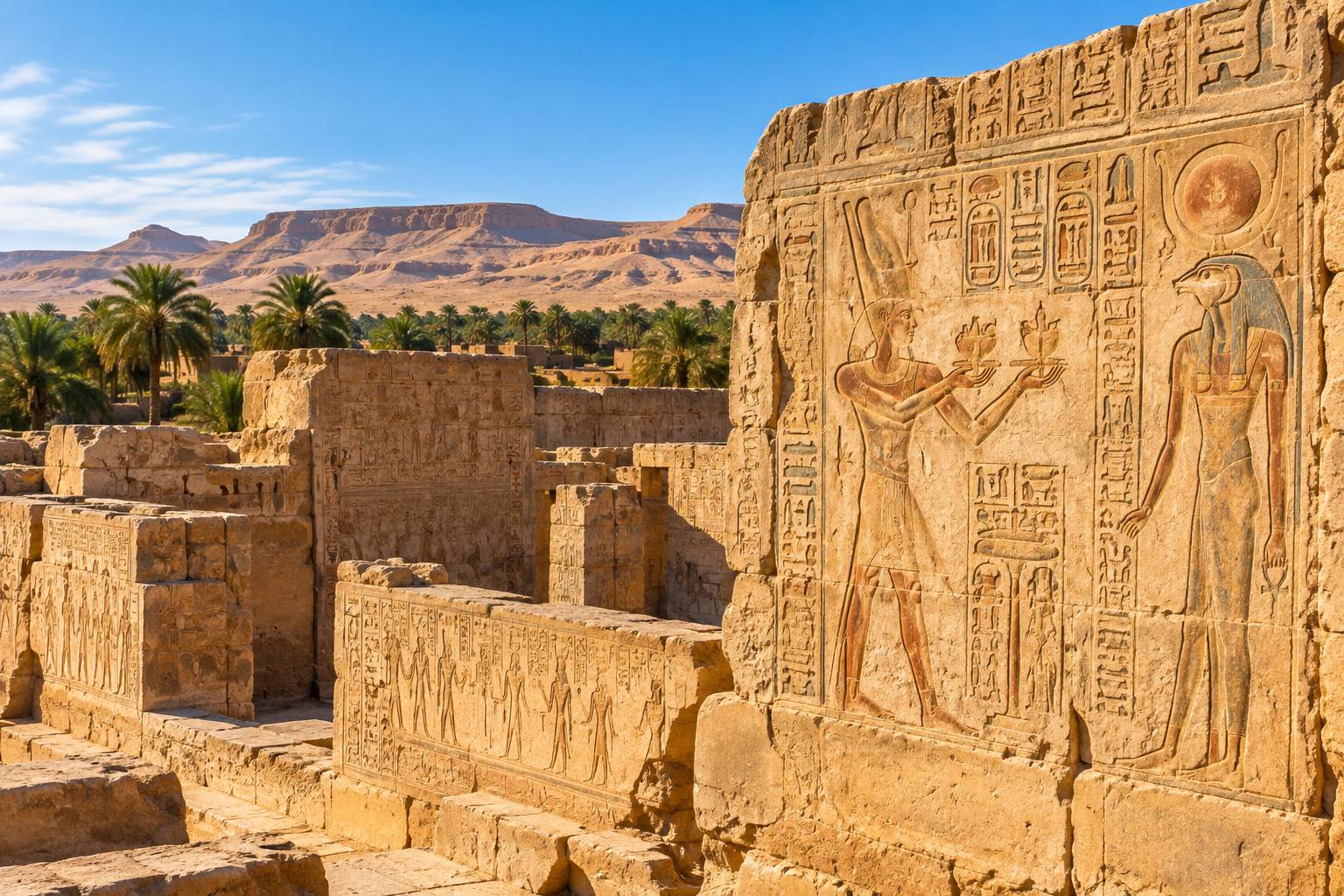
Ain el-Muftella Temple, Bahariya Oasis: A Complete Travel Guide
Ain el-Muftella Temple is one of the most interesting ancient archaeological sites in Bahariya Oasis, Egypt's Western Desert. Located near Bawiti, the main town of the oasis, this historic temple complex preserves evidence of religious life during the Late Period of ancient Egyptian history.
Unlike the famous temples of Luxor and Karnak, Ain el-Muftella offers a quieter archaeological experience in a desert oasis. Its decorated chapels, surviving wall reliefs, and historical inscriptions reveal how local priests and rulers honored their gods thousands of years ago.
The site is particularly associated with the Twenty-sixth Dynasty and the reign of Pharaoh Amasis, who ruled Egypt from approximately 570 to 526 BC. The surviving decorations include religious scenes showing the king presenting offerings to deities worshipped in the oasis.
If you are planning a trip to Bahariya Oasis, this guide explains the history of Ain el-Muftella, its archaeological importance, what to look for during a visit, and how to combine it with other attractions in the Western Desert.
Where Is Ain el-Muftella Temple?
Ain el-Muftella is located near Bawiti and the historic settlement area of El-Qasr in Bahariya Oasis, within Egypt's Western Desert. The wider area contains archaeological remains from several periods, reflecting the long history of human settlement in the oasis.
Bahariya is known for its date palms, natural springs, agricultural land, ancient cemeteries, and dramatic desert scenery. The contrast between the green oasis and the surrounding arid landscape makes the region an appealing destination for travelers interested in both culture and nature.
Ain el-Muftella can be considered as part of a historical sightseeing itinerary around Bawiti. Depending on local access arrangements, travelers may be able to combine it with other archaeological sites and a drive into the surrounding desert.
Before visiting, confirm current opening arrangements and access conditions with a local guide or tour operator.
The History of Ain el-Muftella Temple
The Twenty-sixth Dynasty
Ain el-Muftella is primarily associated with Egypt's Twenty-sixth Dynasty, also known as the Saite Dynasty. This period saw a revival of traditional Egyptian art, religious practices, and royal monumental building.
The complex is closely connected with the reign of Amasis, also called Ahmose II, who ruled during the sixth century BC. His reign was a significant period in the history of ancient Egypt, when the country maintained important commercial and cultural connections with the wider Mediterranean world.
The monuments at Ain el-Muftella demonstrate that Bahariya Oasis was not an isolated settlement. It had an established religious community, local leadership, and connections to the wider political and cultural traditions of ancient Egypt.
The Role of the Priests
Inscriptions associated with the complex mention local religious figures, including Zed-Khonsu-efankh and his brother Sheben-Khonsu. Their positions help illustrate the importance of local religious administration in Bahariya during this period.
Priests were responsible for maintaining religious institutions, conducting rituals, and making offerings to the gods. Such activities played a central role in ancient Egyptian society, connecting the local community with its religious traditions.
The remains at Ain el-Muftella provide a glimpse into this world through inscriptions and decorated walls rather than through large monumental gateways or towering columns.
Archaeological Discoveries
The area was investigated by archaeologists in the early twentieth century. Ahmed Fakhry conducted important excavations at Ain el-Muftella in 1938–1939, documenting its decorated chapels and contributing significantly to the study of Bahariya Oasis.
Later archaeological research helped improve the understanding of the complex and its religious significance. The site has also faced challenges from wind erosion, an important conservation concern in the exposed environment of the Western Desert.
The combination of early excavations and later research has helped scholars better understand the layout, decoration, and religious function of Ain el-Muftella.
What Can You See at Ain el-Muftella?
1. The Decorated Chapels
The most notable features of Ain el-Muftella are its decorated religious chambers, traditionally described as four chapels. These structures formed part of an important religious complex associated with the Late Period.
Their surviving decoration gives visitors an idea of how ancient Egyptian sacred spaces were designed and used. Although the buildings are far less monumental than the great temples of southern Egypt, their inscriptions and reliefs make them historically significant.
2. Ancient Egyptian Wall Reliefs
The decorated walls are among the site's most interesting features. Some scenes show the king making offerings to gods, a common theme in ancient Egyptian temple art.
Such scenes expressed the relationship between the ruler and the gods. The king's duty was to maintain religious order and support the divine powers believed to protect Egypt and its people.
Look carefully at the surviving figures, ritual scenes, and inscriptions if access allows. Even relatively small details can help explain the purpose of the building and the beliefs of its ancient visitors.
3. Scenes of Pharaoh Amasis
Amasis is an important figure in the history of Ain el-Muftella. Some of the temple's reliefs depict the king presenting offerings to deities.
Royal offering scenes were not simply decorative images. They communicated religious ideas about kingship, worship, and the maintenance of harmony between the human and divine worlds.
These representations also place Bahariya within the wider artistic and religious traditions of ancient Egypt during the Twenty-sixth Dynasty.
4. Evidence of Local Religious Traditions
The complex is associated with several gods worshipped in the oasis. Research into the decorated chambers has explored the significance of deities including the feline gods Mahes and Bastet.
The identification and interpretation of individual scenes can be complex, and not every detail is fully understood. Nevertheless, the site demonstrates that religious life in Bahariya had its own local character within the broader Egyptian religious tradition.
For travelers, this is one of the most interesting aspects of visiting a smaller archaeological site: it reveals how major cultural traditions were expressed in a particular community.
5. The Desert Setting
Ain el-Muftella is also interesting because of its setting. The archaeological remains stand within the wider landscape of Bahariya Oasis, where historic settlements, palm groves, farmland, and desert terrain exist close together.
The landscape helps explain why an oasis could sustain a community and its religious institutions despite being surrounded by arid land.
Visitors interested in photography may appreciate the contrast between the pale desert ground, weathered archaeological structures, and the greener areas of the oasis.
Why Is Ain el-Muftella Important?
Ain el-Muftella is valuable because it provides evidence of ancient Egyptian religion outside the major centers of the Nile Valley.
The site helps researchers investigate how royal authority, local priesthoods, and religious traditions interacted in an oasis community. Its inscriptions and reliefs preserve information about the gods worshipped in the area and the rituals associated with them.
It also contributes to a broader understanding of Bahariya Oasis as a historically important region. The oasis contains evidence from different periods, including ancient settlements, temples, tombs, and later communities.
For travelers, Ain el-Muftella offers a more focused experience than some of Egypt's largest archaeological complexes. Its importance lies not in enormous scale, but in the historical information preserved in its decorated chambers and the connection it provides to the local history of the Western Desert.
Best Time to Visit Ain el-Muftella
The cooler months, generally from autumn through spring, are often more comfortable for exploring Bahariya Oasis.
Summer temperatures in the Western Desert can become very high, making outdoor sightseeing more demanding. During warmer periods, it is sensible to plan visits earlier in the day, carry sufficient drinking water, and use sun protection.
Wear comfortable walking shoes and follow local guidance around archaeological structures. Avoid touching ancient decorations or climbing on fragile remains.
Opening times, access restrictions, and conservation measures may change, so confirm the latest information before your visit.
How to Reach Ain el-Muftella from Cairo
Bahariya Oasis is located southwest of Cairo and is usually reached by road. The drive takes several hours, depending on traffic, the exact departure point, and road conditions.
A private tour can make it easier to visit archaeological attractions around Bawiti without having to organize separate transportation for each stop.
For visitors interested in desert scenery as well as history, a longer itinerary can combine the oasis's archaeological heritage with a journey into the Black Desert or White Desert. Trips into remote desert areas may require a suitable four-wheel-drive vehicle and an experienced driver.
Explore our Bahariya Oasis Day Tours from Cairo and Bahariya Oasis Tours to review possible trip options.
Nearby Attractions to Combine with Ain el-Muftella
Black Desert
The Black Desert features dark volcanic hills and rocky formations scattered across a sandy landscape. It offers a dramatic contrast to the greener areas of Bahariya and is a popular stop on Western Desert excursions.
Discover our Black Desert Tour.
Valley of the Golden Mummies
The Valley of the Golden Mummies became internationally known after the discovery of a large Greco-Roman-era burial ground near Bawiti. The mummies and associated artifacts provide insight into burial traditions and cultural influences in ancient Bahariya.
Read our guide to the Valley of the Golden Mummies for more information about the history of this discovery. Check current museum displays and archaeological-site access before planning a visit.
English Mountain
English Mountain, also known as Gabal al-Ingleez, is associated with panoramic views across Bahariya Oasis and historical remains linked to the British presence during the First World War.
It can be a useful addition to an itinerary for travelers interested in the region's landscape and more recent history. Check access and walking conditions locally.
White Desert
The White Desert is famous for its unusual white limestone formations shaped by wind erosion. Its distinctive scenery makes it one of Egypt's most memorable desert landscapes.
Travelers wishing to experience the Western Desert beyond the oasis can explore our White Desert Tours from Cairo.
Is Ain el-Muftella Temple Worth Visiting?
Ain el-Muftella is a worthwhile stop for travelers interested in ancient Egyptian religion, archaeological details, and the history of Bahariya Oasis.
Its decorated chapels and surviving reliefs provide a more intimate perspective on ancient religious life than the enormous monuments found in Egypt's most famous archaeological destinations. The site is particularly appealing to visitors who want to learn how local communities participated in the religious and artistic traditions of the Late Period.
A visit is best approached as part of a wider historical tour of Bahariya. Combining Ain el-Muftella with other accessible archaeological locations and the oasis landscape can create a richer understanding of the region.
Plan Your Bahariya Oasis Tour
Ain el-Muftella Temple is an important part of Bahariya Oasis's archaeological heritage. Its decorated chambers, religious imagery, and links to the reign of Amasis reveal a fascinating chapter in the history of ancient Egypt.
Whether you are interested in archaeology, local history, photography, or the landscapes of the Western Desert, Bahariya offers a distinctive experience beyond the country's most familiar tourist routes.
Explore Bahariya Oasis Tours with Let's Explore Egypt Travel to plan an itinerary that combines the accessible historical sites of the oasis with the dramatic scenery of the Black Desert and White Desert.
Recommended Trips to Explore Bahariya Oasis
Discover the ancient history and breathtaking desert scenery of Egypt’s Western Desert with these recommended trips from Let’s Explore Egypt Travel.
1. Bahariya Oasis Tours
Explore Bahariya Oasis, its archaeological landmarks, historic sites, traditional settlements, and beautiful palm groves.
2. Bahariya Oasis Day Tours from Cairo
Enjoy a journey from Cairo to Bahariya Oasis and discover its historical attractions and desert landscapes on a day trip.
3. Black Desert Tour
Discover the Black Desert’s dark volcanic hills and dramatic rocky scenery, with opportunities for desert exploration and photography.
4. White Desert Tours from Cairo
Experience the White Desert’s extraordinary chalk formations and vast sandy landscapes on an adventure through Egypt’s Western Desert.
5. Valley of the Golden Mummies
Learn about the remarkable Greco-Roman-era burial discoveries near Bawiti and explore the archaeological heritage of Bahariya Oasis. Check current museum displays and site access before planning your visit.
Plan Your Visit
Combine Ain el-Muftella Temple with other accessible archaeological sites around Bahariya Oasis for a richer historical experience. Confirm opening times, entrance fees, and access arrangements before traveling.
Highlights of Ain el-Muftella Temple
-
Explore one of the most important archaeological sites in Bahariya Oasis, Egypt.
-
Discover ancient decorated chapels associated with the Twenty-sixth Dynasty.
-
Learn about Pharaoh Amasis and his connection to the temple complex.
-
Admire surviving ancient Egyptian wall reliefs, religious scenes, and inscriptions.
-
Discover the religious traditions and local deities worshipped in Bahariya Oasis.
-
Learn how ancient Egyptian priests conducted religious ceremonies and offerings.
-
Explore the history of Egypt's Western Desert beyond the famous Nile Valley temples.
-
Enjoy a cultural sightseeing experience near Bawiti, the main town of Bahariya Oasis.
-
Capture photographs of the archaeological remains and surrounding desert landscape where permitted.
-
Combine your visit with the Valley of the Golden Mummies, Black Desert, and other Bahariya attractions.