


Crystal Mountain Egypt
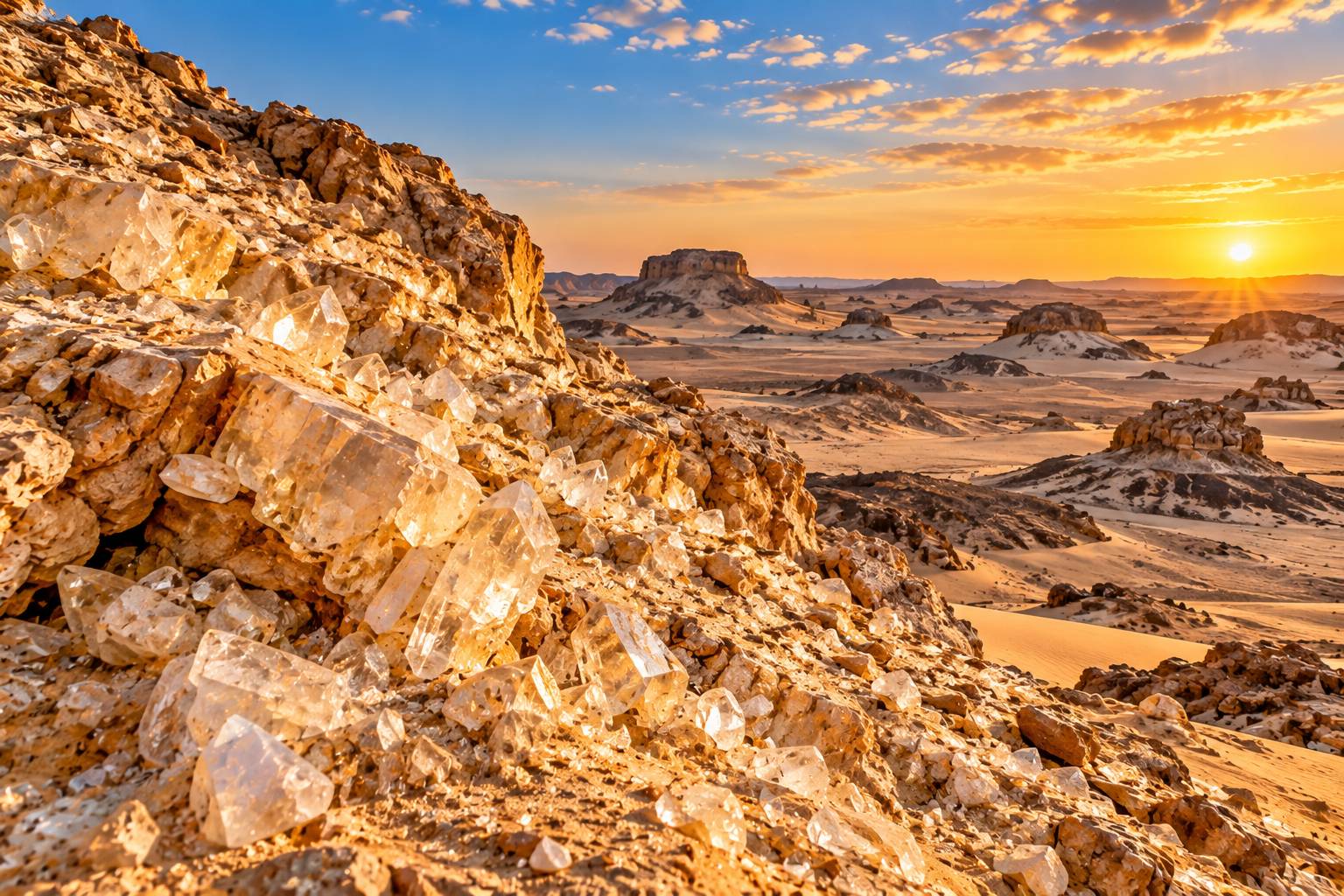
Crystal Mountain Egypt: Discover a Natural Wonder of the Western Desert
Crystal Mountain in Egypt is one of the most unusual geological attractions in the Western Desert. Located along the desert route between Bahariya Oasis and Farafra, this remarkable rock formation is famous for its exposed crystalline minerals, pale stone surfaces, and sparkling textures that catch the sunlight.
Often included in White Desert safari itineraries, Crystal Mountain offers a fascinating stop for travelers exploring Egypt beyond its famous pyramids and temples. Its unusual formations create a striking contrast with the golden sand, rugged hills, and wide-open landscapes of the surrounding desert.
For visitors traveling from Cairo, Crystal Mountain is best experienced as part of a wider Bahariya Oasis and White Desert adventure. Combining it with the Black Desert, Agabat Valley, and the White Desert allows you to experience several of the Western Desert's most distinctive landscapes in one journey.
In this guide, you will discover what Crystal Mountain is, why it is worth visiting, what to see, when to go, and how to plan your trip with Let's Explore Egypt Travel.
What Is Crystal Mountain in Egypt?
Crystal Mountain, sometimes called Gebel Crystal, is a mineral-rich rock outcrop in Egypt's Western Desert. Despite its name, it is not a towering mountain that requires a long hike to reach the summit. It is better understood as a compact geological formation where crystalline minerals are visible within the surrounding rock.
The formation is known for its pale mineral surfaces and naturally exposed crystals. Depending on the sunlight, some surfaces appear white, cream, or golden, creating an attractive contrast with the desert sand and darker rock layers.
Egypt's State Information Service describes Crystal Mountain as a rare geological feature within the White Desert area, between the Bahariya and Farafra regions. The site is a popular stop on Western Desert excursions because of its distinctive appearance and geological interest.
Crystal Mountain is especially appealing to visitors who enjoy natural landscapes, geology, photography, and exploring places that look very different from Egypt's better-known archaeological destinations.
Where Is Crystal Mountain Located?
Crystal Mountain lies on the Western Desert route connecting Bahariya Oasis and Farafra, within the broader White Desert region.
Bahariya Oasis is southwest of Cairo and commonly serves as the starting point for organized desert safaris. From the oasis, travelers continue south toward the Black Desert, Crystal Mountain, Agabat Valley, and the White Desert, depending on their itinerary.
The exact driving distance and time to Crystal Mountain depend on the starting point and route. It should not be treated as a quick excursion directly from central Cairo; most travelers visit it during a longer desert journey.
For the most convenient experience, arrange transport with an operator familiar with the Western Desert routes and local conditions.
Why Is Crystal Mountain Famous?
1. Its Unusual Crystalline Formations
The main attraction is the natural display of crystalline minerals exposed in the rock. These formations create angular, reflective surfaces that look quite different from ordinary sand-covered desert hills.
Sunlight helps reveal the details. On a clear day, pale crystals may catch the light, while the surrounding rock creates shadows and contrasting textures.
Visitors interested in geology can use the stop to observe how mineral deposits create distinctive patterns within the landscape.
2. A Unique Desert Landscape
The surrounding terrain is characteristic of Egypt's Western Desert, with open sandy areas, weathered rock, and distant hills.
Crystal Mountain provides a visual change from the dark volcanic hills of the Black Desert and the sculpted white chalk formations of the White Desert.
This diversity is one reason the area works so well as a multi-stop safari destination.
3. A Popular Photography Stop
Crystal Mountain is a rewarding place for travel photography because its mineral textures look different under changing light.
Close-up photographs can emphasize the crystals and their patterns, while wider shots capture the formation within the surrounding desert.
Early morning and late afternoon often provide softer light and more pronounced shadows. Avoid climbing onto fragile surfaces or moving loose minerals just to create a photograph.
4. A Short Stop with Geological Interest
Unlike destinations that require several hours of walking, Crystal Mountain is commonly visited as a short stop during a larger desert safari.
The amount of time needed depends on the route, group interests, and local conditions. Many visitors use the opportunity to walk around the accessible area, examine the formation, take photographs, and learn about the geology before continuing their journey.
Its value comes from being part of the wider desert experience rather than being a destination that requires a full day on its own.
What Can You See at Crystal Mountain?
Exposed Crystalline Minerals
Look closely at the exposed mineral surfaces and the way they contrast with the surrounding rock. The appearance can vary depending on the angle of the sun and the condition of the surface.
Travel descriptions sometimes use different mineral names, so avoid assuming every sparkling surface is pure quartz or a precious gemstone. The attraction is the natural geological formation itself.
Natural Rock Shapes and Textures
The rock around Crystal Mountain displays irregular shapes, fractures, and weathered surfaces. These features make the site interesting for anyone curious about how geological processes shape the Western Desert.
A guide can help explain the visible features while keeping the visit focused on the accessible areas.
Desert Views
The surrounding landscape provides wide views of the desert terrain between Bahariya and Farafra. Depending on the route, visitors may also see pale rock, sandy tracks, and distant hills.
The open surroundings make Crystal Mountain a useful stop for appreciating the scale and variety of the Western Desert.
Photography Opportunities
For the best photographs, bring a camera or smartphone capable of capturing close-up detail. A wider lens can show the formation within its environment, while a close-up shot can highlight the mineral patterns.
Use natural light where possible, and take care on uneven ground. There is no need to climb onto delicate rock formations to take good pictures.
Best Time to Visit Crystal Mountain
The cooler months, generally from autumn through spring, are often more comfortable for exploring Egypt's Western Desert.
Morning
Morning light can reveal surface textures without the strongest midday glare. It is also useful when Crystal Mountain is part of a longer route with several stops planned for the day.
Late Afternoon
Later sunlight can produce warmer tones and stronger shadows across the rocks. The exact timing depends on the season, driving schedule, and route.
Summer
Summer travel can be demanding because desert temperatures may become very high. Plan with an experienced local operator, carry sufficient water, and avoid unnecessary exposure during the hottest hours.
Crystal Mountain can be visited in different seasons, but the weather should determine the pace of your excursion.
How to Visit Crystal Mountain from Cairo
The most practical option is to book a multi-stop Western Desert trip rather than arranging a separate journey just to see Crystal Mountain.
A typical itinerary may include:
Day 1: Cairo to Bahariya Oasis
Travel southwest from Cairo to Bahariya Oasis. Depending on the itinerary, visit selected oasis attractions or spend time exploring the area around Bawiti.
Day 2: Western Desert Safari
Continue toward the Black Desert and other stops along the route. Crystal Mountain may be included before visiting Agabat Valley and the White Desert, depending on the tour plan.
Optional overnight camping
Some White Desert itineraries include an overnight camp, allowing visitors to enjoy the desert after sunset and experience the night sky away from city lights.
The exact itinerary varies by operator, season, road conditions, and the amount of time available. Confirm which sites are included, whether camping is part of the package, and what meals, permits, transfers, and other services are covered.
Recommended Tours to Crystal Mountain
If Crystal Mountain is on your Egypt travel list, the following trips are useful starting points for planning your journey.
1. White Desert Tours from Cairo
Best for: Travelers who want to see Crystal Mountain alongside the White Desert's famous rock formations.
Explore our White Desert Tours from Cairo to discuss a desert itinerary that may include Crystal Mountain, Agabat Valley, and other accessible stops along the route.
2. Bahariya Oasis Tours
Best for: Travelers interested in combining oasis scenery, local history, and desert exploration.
Our Bahariya Oasis Tours provide a starting point for arranging a visit around your available time and interests.
3. Bahariya Oasis Day Tours from Cairo
Best for: Travelers who want to explore the oasis region on a shorter schedule.
Review our Bahariya Oasis Day Tours from Cairo. Because Crystal Mountain lies farther along the route toward Farafra, confirm whether it can realistically be included in your chosen itinerary rather than assuming every day tour visits it.
4. Black Desert Tour
Best for: Visitors who want to experience the contrasting landscapes of the Western Desert.
Explore our Black Desert Tour to learn about options for seeing the region's dark volcanic hills and rocky desert scenery. Ask about combining the Black Desert with Crystal Mountain and the White Desert on a longer trip.
Why Combine Crystal Mountain with the White Desert?
Crystal Mountain and the White Desert provide different experiences, which makes them a natural pairing for a desert safari.
Crystal Mountain attracts visitors with its exposed crystalline minerals and distinctive geology. The White Desert, in contrast, is known for pale chalk and limestone formations shaped into unusual forms by erosion.
Agabat Valley adds another change of scenery, with sandy terrain, striking rock formations, and open desert views. The Black Desert offers a further contrast through its darker volcanic hills.
Visiting these places together helps travelers understand the remarkable variety of Egypt's Western Desert. Rather than seeing one isolated geological feature, you experience a sequence of landscapes that look and feel different from one another.
For a multi-stop route, a suitable vehicle and an experienced local driver are important. Discuss access, timing, and any route restrictions before departure.
Travel Tips for Visiting Crystal Mountain
Wear comfortable shoes. The ground may be uneven, rocky, or sandy.
Bring enough drinking water. Desert conditions can be dehydrating even when the weather feels mild.
Protect yourself from the sun. A hat, sunscreen, and lightweight clothing are useful during outdoor stops.
Respect the natural formation. Photograph the minerals, but do not chip, remove, or collect crystals and rock fragments. Leave the site as you found it.
Follow your guide's instructions. Stay within accessible areas and avoid unstable or fragile surfaces.
Keep your camera ready. Crystal Mountain is commonly a short stop, so prepare your equipment before arriving.
Confirm the route in advance. Ask whether Crystal Mountain is included in the itinerary and how much time is planned for the stop.
Check the full package price. Before booking, clarify transportation, meals, accommodation, camping equipment, entrance fees, permits, and other inclusions.
Frequently Asked Questions About Crystal Mountain Egypt
Is Crystal Mountain worth visiting?
Yes, especially for travelers exploring the Western Desert. Its exposed crystalline minerals create a distinctive landscape, and it works well as part of a wider trip to the Black Desert, Agabat Valley, and the White Desert.
Is Crystal Mountain a real mountain?
It is known by that name, but it is better understood as a relatively compact rock formation or outcrop rather than a high mountain requiring a summit climb.
Where is Crystal Mountain in Egypt?
It is located along the desert route between Bahariya Oasis and Farafra, within the broader White Desert region.
How long should I spend there?
Crystal Mountain is commonly treated as a short stop on a longer safari. The appropriate visit time depends on your interests, the accessibility of the area, and the overall itinerary.
Can I visit Crystal Mountain on a day trip from Cairo?
A trip focused specifically on Crystal Mountain is not usually the most practical plan because of its location along the Bahariya–Farafra desert route. A longer Western Desert itinerary is generally more suitable. Confirm feasibility with your operator before booking.
Can I visit Crystal Mountain and the White Desert on the same trip?
Yes. The two attractions are commonly included in multi-stop Western Desert itineraries, often alongside the Black Desert and Agabat Valley.
Can I take crystals home as souvenirs?
Visitors should not remove minerals or pieces of the natural formation. Enjoy the site through observation and photography, and follow local conservation rules.
Do I need a 4x4 vehicle?
Vehicle requirements depend on the route and current conditions. Many organized Western Desert safaris use suitable 4x4 vehicles for off-road sections. Confirm the vehicle and route with your operator.
Book Your Crystal Mountain and White Desert Adventure
Crystal Mountain is one of the Western Desert's most distinctive geological stops, offering a closer look at the minerals and rock formations that make this region so unusual.
For the most rewarding experience, combine Crystal Mountain with the Black Desert, Agabat Valley, and the White Desert on a carefully planned desert safari from Bahariya Oasis.
Ready to explore Egypt's Western Desert?
Contact Let's Explore Egypt Travel to discuss your travel dates, group size, preferred itinerary, and whether Crystal Mountain can be included in your White Desert adventure.
Start planning with our White Desert Tours from Cairo or explore our Bahariya Oasis Tours.
Discover the natural beauty of Egypt beyond the ordinary tourist route.
Recommended Trips to Explore Crystal Mountain, Egypt
Discover the remarkable landscapes of Egypt’s Western Desert with these recommended trips from Let’s Explore Egypt Travel. Combine Crystal Mountain with the White Desert, Black Desert, and Bahariya Oasis for an unforgettable desert adventure.
1. White Desert Tours from Cairo
Explore the spectacular white chalk formations of the White Desert and ask about including Crystal Mountain, Agabat Valley, and scenic desert stops in your itinerary.
2. Bahariya Oasis Tours
Discover Bahariya Oasis, its palm groves, historic attractions, and surrounding desert landscapes. Choose an itinerary that suits your interests and available time.
3. Black Desert Tour
Experience the dramatic black volcanic hills and rugged scenery of the Black Desert. Combine this contrasting landscape with Crystal Mountain on a longer Western Desert adventure.
4. Bahariya Oasis Day Tours from Cairo
Travel from Cairo to explore Bahariya Oasis and its nearby attractions. Crystal Mountain is farther along the route toward Farafra, so confirm whether it can be included in your chosen itinerary.
Plan Your Crystal Mountain Adventure
For the best experience, consider a multi-day private desert safari that combines Crystal Mountain, the Black Desert, Agabat Valley, and the White Desert. Contact Let’s Explore Egypt Travel to confirm the route, travel dates, included services, and total price before booking.
Highlights of Crystal Mountain, Egypt
-
Discover the unique crystalline rock formations of Crystal Mountain in Egypt’s Western Desert.
-
Admire sparkling mineral surfaces that create striking patterns in the desert sunlight.
-
Explore one of the Western Desert’s most distinctive geological attractions between Bahariya Oasis and Farafra.
-
Capture spectacular desert photographs featuring unusual rock textures, golden sand, and rugged landscapes.
-
Learn about the geological features that make Crystal Mountain a popular stop on desert safaris.
-
Experience the dramatic contrast between Crystal Mountain, the Black Desert, and the White Desert.
-
Explore Agabat Valley and other remarkable landscapes along the Western Desert route.
-
Enjoy a scenic adventure through the vast desert wilderness with an experienced local driver.
-
Discover the natural beauty of Egypt beyond the famous pyramids and ancient temples.
-
Combine Crystal Mountain with a White Desert safari from Cairo for a memorable multi-stop desert adventure.
-
Enjoy opportunities for landscape photography during morning or late-afternoon light.
-
Plan a private Western Desert trip tailored to your travel dates, interests, and available time.