


White Desert Egypt
White Desert Egypt: A Complete Travel Guide
For travelers looking for something beyond Egypt’s famous pyramids and temples, the White Desert offers a completely different adventure. You can explore unusual natural formations, travel across open desert terrain in a 4x4 vehicle, watch the landscape change color at sunset, and experience the quiet atmosphere of the Western Desert.
The White Desert is particularly rewarding when combined with Bahariya Oasis, the Black Desert, Crystal Mountain, and Agabat Valley. A carefully planned multi-day safari allows you to discover several contrasting landscapes without rushing from one attraction to another.
In this guide, you will discover the best places to see, what makes the White Desert unique, how to plan a safari from Cairo, and how to choose the right trip for your adventure.
What Is the White Desert in Egypt?
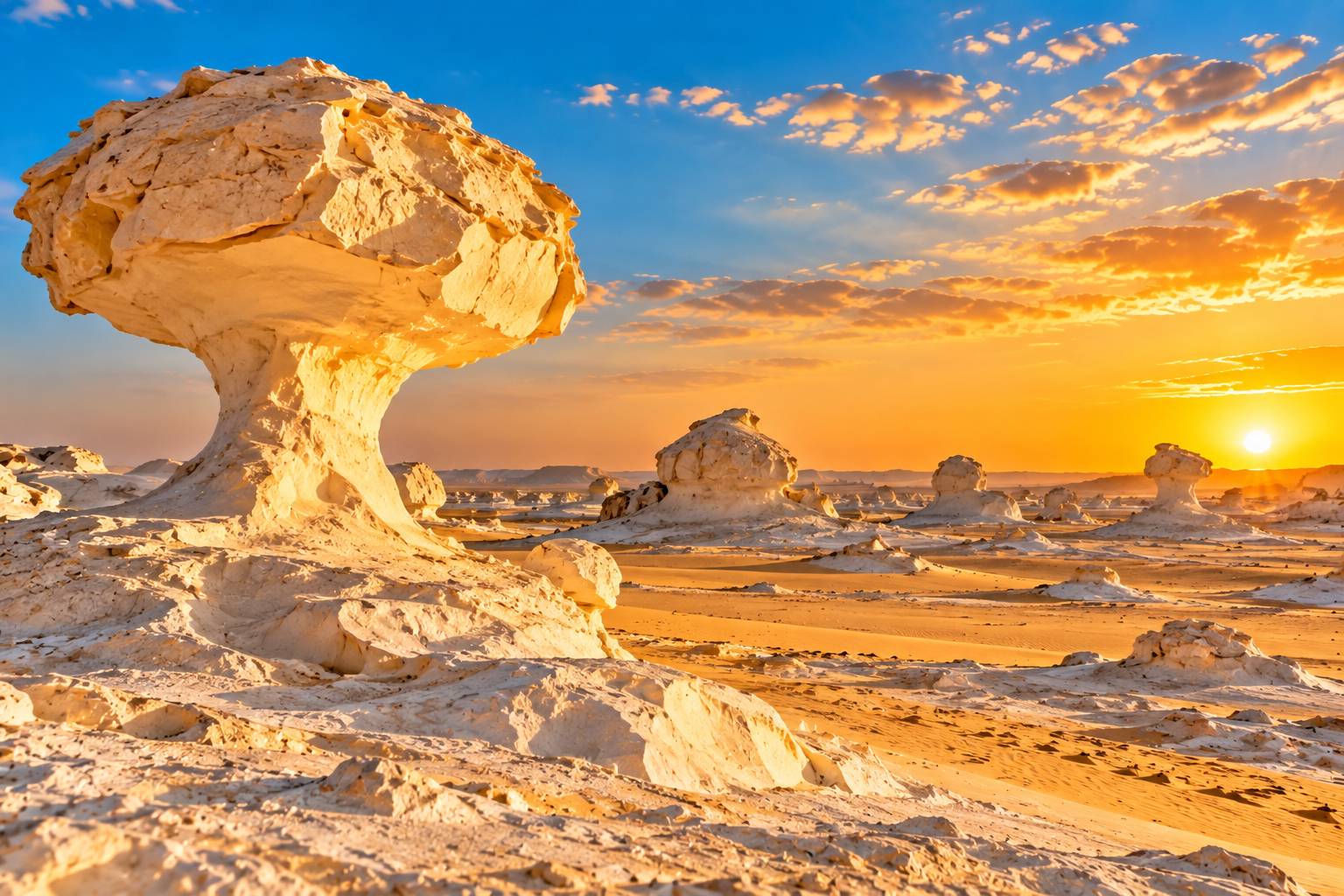
The White Desert, known in Arabic as Sahara el-Beyda, is a protected natural area in Egypt’s Western Desert. It is famous for its pale chalk and limestone formations that have been sculpted into unusual shapes by natural erosion.
Some formations resemble giant mushrooms, towers, animals, and abstract sculptures. Others rise from flat expanses of white sand and rock, creating a landscape that can look almost otherworldly.
The reserve is located in the Farafra region, approximately 38 kilometres northwest of the center of Farafra according to Egypt’s State Information Service. Its protected landscape includes chalk formations and other important desert features. <Cite refs={["turn554480search2","turn554480search7"]}/>
The White Desert is not simply a destination for photography. It is also an important geological landscape that demonstrates how wind, sand, and erosion can shape rock over long periods.
For visitors, the combination of unusual geology, wide-open scenery, and beautiful evening light makes it one of the highlights of a Western Desert adventure.
Why Visit the White Desert?
1. Extraordinary White Chalk Formations
The most famous attraction is the remarkable collection of white rock formations scattered across the desert.
Natural erosion has created shapes with narrow bases, rounded tops, pointed pinnacles, and irregular surfaces. The shapes vary considerably from one area to another, so moving through the landscape can feel like discovering a series of natural sculptures.
The pale formations look especially dramatic against the golden sand and blue sky.
2. Unforgettable Sunset Views
Sunset is one of the most memorable times to experience the White Desert.
As the sunlight becomes softer, the chalk formations change from bright white to cream, peach, pink, and gold. Shadows stretch across the sandy ground, emphasizing the shapes and textures of the rocks.
This is an excellent time for landscape photography and simply enjoying the scenery before nightfall.
For visitors staying overnight, sunset also marks the transition from an open desert landscape to an exceptionally quiet night under the stars.
3. A Peaceful Desert Camping Experience
An overnight safari can offer a deeper appreciation of the White Desert than a quick sightseeing stop.
After exploring the rock formations, travelers may enjoy a freshly prepared dinner at a designated camping area, followed by time beneath the night sky. Morning brings another perspective, as early sunlight illuminates the pale rock formations.
Camping arrangements, permitted locations, and available facilities depend on current conservation rules and the tour operator. Confirm the details before booking.
4. Incredible Photography Opportunities
The White Desert is suitable for a wide range of photography, from panoramic landscape images to detailed close-ups of weathered chalk.
Early morning and late afternoon often provide softer light. At midday, strong sunlight can create sharp contrasts between bright rock surfaces and dark shadows.
A phone camera can capture memorable images, but a wider lens can be useful for photographing the scale of the landscape.
Always follow your guide’s instructions and avoid climbing on delicate formations merely to obtain a better photograph.
5. A Different Side of Egypt
Most first-time visitors to Egypt focus on Cairo, Giza, Luxor, and Aswan. The White Desert introduces a completely different environment.
Instead of monumental temples and ancient cities, you encounter sculpted chalk, vast sandy plains, isolated rocky hills, and desert silence.
This makes the White Desert an excellent addition for travelers who have extra time in Egypt or who want to combine cultural sightseeing with nature and adventure.
Best Places to Explore in the White Desert Area
1. The White Chalk Formations
The main attraction is the collection of pale chalk and limestone shapes that give the White Desert its name.
These formations vary in size and appearance. Some rise like columns, while others have broad caps or rounded contours that resemble mushrooms.
Take time to observe how the sunlight changes the landscape throughout the day. The shapes that appear simple at noon can become much more dramatic when viewed in softer evening light.
2. The White Desert National Park Landscape
The wider protected area contains a mixture of chalk formations, desert plains, cliffs, and other natural features.
Rather than treating the White Desert as a single viewpoint, explore it as a landscape with changing scenery. Your guide can select accessible locations according to the route, available time, weather, and conservation requirements.
3. Agabat Valley
Agabat Valley is known for its contrasting pale rock formations, sandy valleys, and rugged desert scenery. It is a popular addition to some Western Desert itineraries.
Its unusual geological shapes and wide views make it particularly appealing to landscape photographers.
Read our guide to Agabat Valley Egypt and ask about including this area in your White Desert itinerary. Confirm the exact stops included in your selected tour.
4. Crystal Mountain
Crystal Mountain is a distinctive geological stop along the route between Bahariya Oasis and Farafra. It is associated with exposed crystalline minerals and unusual rock textures.
It provides a visual contrast to the chalk formations of the White Desert and can be included in suitable multi-stop itineraries.
Learn more in our article about Crystal Mountain Egypt, and ask your tour operator whether the stop is included in your route.
5. The Black Desert
The Black Desert is famous for its dark volcanic hills scattered across sandy terrain. The contrast between dark rocky slopes and pale desert ground makes it one of the region’s most recognizable landscapes.
Many travelers visit the Black Desert before continuing farther into the Western Desert.
Explore our Black Desert Tour to discover possible tour options.
6. Bahariya Oasis
Bahariya Oasis offers a different atmosphere from the remote desert landscapes. Its palm groves, agricultural land, traditional settlements, natural springs, and archaeological sites provide opportunities for cultural sightseeing.
The oasis is also a common starting point for organized desert journeys toward the White Desert.
Discover our Bahariya Oasis Tours to explore possible itineraries.
White Desert Safari from Cairo: How to Plan Your Trip
For most visitors starting in Cairo, a multi-day trip is the most practical way to explore the White Desert.
The journey usually combines road travel with a guided desert excursion. Egypt’s official tourism guidance recommends arranging desert trips through experienced, licensed guides with suitable 4x4 vehicles. <Cite refs={["turn554480search6"]}/>
Option 1: Two-Day White Desert Tour
A two-day trip is suitable for travelers who want to experience the main highlights within a limited schedule.
Day 1: Cairo to Bahariya Oasis and the White Desert region
Depart Cairo by road and travel toward Bahariya Oasis. Depending on your confirmed itinerary, the trip may continue through desert landscapes and selected stops such as the Black Desert or Crystal Mountain.
Later, explore the White Desert’s distinctive chalk formations. If an overnight stay is included, enjoy dinner and an evening in the desert at an authorized camping location.
Day 2: Sunrise and return to Cairo
Wake up early to enjoy the morning light across the chalk formations. After breakfast, continue exploring the planned route before returning toward Bahariya and travelling back to Cairo.
The exact sequence depends on the route, road conditions, and the tour services you choose. Confirm the timing and attractions included before departure.
Option 2: Three-Day Western Desert Adventure
A three-day itinerary provides more time to explore the region without squeezing every attraction into a short schedule.
Possible highlights include:
-
Bahariya Oasis and selected local attractions.
-
The Black Desert’s dark volcanic hills.
-
Crystal Mountain and its distinctive geological formations.
-
Agabat Valley’s unusual desert scenery.
-
The White Desert’s sculpted chalk formations.
-
An overnight desert camp, subject to the itinerary and permitted arrangements.
This option is especially suitable for visitors who enjoy photography, landscape exploration, and spending more time away from cities.
Option 3: A Personalized Private Desert Safari
A private itinerary allows you to discuss your preferred travel dates, group size, sightseeing priorities, and comfort requirements before booking.
You can ask about accommodation in Bahariya, desert camping, meal arrangements, and how much time will be spent at each stop.
A private trip is also useful for families or small groups who prefer to travel at their own pace.
What Is Included in a White Desert Tour?
Inclusions vary by tour and operator, so always check the specific package before confirming a reservation.
A tour may include:
-
Transportation from Cairo or an agreed pickup location.
-
Local desert transportation in a suitable 4x4 vehicle where required.
-
An experienced local guide or driver.
-
Meals during the safari.
-
Desert camping equipment and an overnight arrangement, where offered.
-
Visits to selected attractions listed in the confirmed itinerary.
-
Applicable permits or entrance fees, when explicitly stated.
Items that may not be included include personal expenses, optional activities, tips, accommodation outside the package, or entrance and conservation fees that have not been specified.
Before booking, ask for a written list of inclusions and exclusions. This prevents misunderstandings and helps you compare tour prices accurately.
Best Time to Visit the White Desert
The cooler months from autumn through spring are generally more comfortable for desert sightseeing and camping.
Autumn and Spring
These seasons can offer pleasant conditions for exploring during daylight and spending time outdoors in the evening. Temperatures still vary, so check the forecast before departure.
Winter
Winter can provide comfortable daytime sightseeing but cold nights in the desert. Warm clothing is essential for overnight camping.
Summer
Summer conditions can be extremely hot, particularly during midday. Travelers should follow their guide’s advice about timing, hydration, and sun protection.
No matter the season, the best itinerary depends on current weather, road conditions, and the arrangements available from local operators.
What to Pack for a White Desert Safari
Preparing properly makes the journey more comfortable.
-
Comfortable walking shoes: Useful for uneven sandy and rocky ground.
-
Sun protection: Bring a hat, sunglasses, and sunscreen.
-
Reusable water bottle: Carry sufficient drinking water and follow your guide’s advice.
-
Lightweight clothing: Suitable for warm daytime conditions.
-
Warm layers: Essential for cooler evenings and winter camping.
-
Camera or smartphone: Ideal for landscapes, sunset photography, and close-ups.
-
Personal toiletries: Facilities can be basic, particularly during camping.
-
Power bank: Useful when charging options are limited.
-
Small day bag: Convenient for water, snacks, and essentials during stops.
If your tour includes camping, confirm whether tents, sleeping bags, bedding, and other equipment are provided.
Responsible Tourism in the White Desert
The White Desert is a protected natural area, so visitors should take care to minimize their impact.
Do not break, collect, or remove pieces of chalk and rock formations. Avoid leaving rubbish, follow designated vehicle routes, and use authorized camping locations.
Follow your guide’s instructions around fragile geological features and protected areas. Taking care of the landscape helps preserve it for future visitors and local communities.
It is also important to avoid assuming that all locations are accessible at all times. Routes and permitted activities may depend on current conservation requirements and local conditions.
Is the White Desert Worth Visiting?
The White Desert is an excellent choice for travelers who enjoy natural landscapes, photography, geology, and outdoor adventures.
Its sculpted chalk formations are unlike the ancient monuments that most visitors associate with Egypt. The scenery changes with the light, and an overnight trip can offer the additional experience of sunset, desert dinner, and a quiet morning away from city life.
The destination is particularly rewarding when combined with Bahariya Oasis, the Black Desert, Crystal Mountain, and Agabat Valley.
For travelers who prefer to move at a slower pace, a multi-day itinerary allows more time for exploration and reduces the pressure to fit everything into one long day.
Frequently Asked Questions About the White Desert Egypt
Where is the White Desert in Egypt?
The White Desert is located in Egypt’s Western Desert, in the Farafra region of New Valley Governorate. Bahariya Oasis is a common starting point for organized trips approaching the region from Cairo.
What is the White Desert famous for?
It is famous for its bright chalk and limestone formations sculpted by natural erosion into unusual shapes, including mushroom-like rocks, towers, and ridges.
Can I visit the White Desert from Cairo?
Yes. Many travelers arrange a road journey from Cairo through Bahariya Oasis and continue into the desert with an experienced local team. A multi-day trip is generally more suitable for exploring the main highlights comfortably.
How many days do I need?
Two days and one night can provide an introduction to the region. Three days can allow more time for Bahariya Oasis, the Black Desert, Crystal Mountain, Agabat Valley, and the White Desert, depending on the itinerary.
Is camping possible in the White Desert?
Overnight desert trips and camping are part of some organized itineraries. Confirm the designated camping location, equipment, meals, current access rules, and what your package includes before booking.
Is a 4x4 vehicle necessary?
A suitable 4x4 vehicle is commonly used for off-road desert sections. The exact vehicle and route depend on current conditions and the planned itinerary. Arrange your visit with an experienced local operator rather than assuming an ordinary car can reach every location.
Can I visit the Black Desert and White Desert on the same trip?
Yes. Many Western Desert itineraries combine the two areas, often with Crystal Mountain and other stops along the route.
Is the White Desert suitable for families?
It can be suitable for families who are comfortable with long road journeys and outdoor conditions. Consider children’s ages, weather, travel time, bathroom arrangements, and camping comfort when choosing an itinerary.
What should I wear in the White Desert?
Wear comfortable shoes and lightweight clothing for the daytime. Bring a warm layer for the evening, especially during the cooler months, as desert temperatures can drop significantly after sunset.
Do I need to book a guide?
For a remote protected area and off-road desert travel, using an experienced, appropriately licensed guide and suitable vehicle is strongly recommended. Confirm the arrangements with your tour operator before departure.
Book Your White Desert Tour from Cairo
The White Desert is one of Egypt’s most distinctive natural destinations, with extraordinary chalk formations, dramatic sunset views, and the opportunity to experience the Western Desert far from busy cities.
Whether you are planning a short desert adventure or a multi-day safari, choosing the right itinerary helps you make the most of your time.
With Let’s Explore Egypt Travel, you can discuss your travel dates, group size, preferred attractions, and the services you need before confirming your trip.
Ready to Explore the White Desert?
Explore our White Desert Tours from Cairo and Bahariya Oasis Tours to start planning your Western Desert adventure.
Contact our team to discuss a suitable itinerary, confirm what is included, and request a personalized quote.
Discover Egypt beyond the pyramids with a memorable journey through the White Desert.
Recommended Trips to Explore the White Desert, Egypt
Discover Egypt’s spectacular Western Desert with these recommended trips from Let’s Explore Egypt Travel. Combine the White Desert’s extraordinary chalk formations with desert safaris, geological wonders, and the natural beauty of Bahariya Oasis.
1. White Desert Tours from Cairo
Best for: Exploring the White Desert and its famous chalk formations.
Discover unusual rock sculptures, enjoy breathtaking desert views, and ask about overnight camping beneath the stars. Depending on your itinerary, you may also visit Crystal Mountain and Agabat Valley.
2. Bahariya Oasis Tours
Best for: Combining desert landscapes with oasis scenery and local history.
Explore palm groves, archaeological landmarks, and the distinctive landscapes surrounding Bahariya Oasis, a popular starting point for Western Desert adventures.
3. Black Desert Tour
Best for: Discovering contrasting desert landscapes.
Experience the dark volcanic hills and rugged terrain of the Black Desert before continuing toward other Western Desert attractions on a longer safari.
4. Bahariya Oasis Day Tours from Cairo
Best for: Travelers with limited time.
Discover Bahariya Oasis on a trip from Cairo. Confirm the itinerary carefully, as reaching the White Desert and exploring it properly may require a longer journey.
Plan Your White Desert Adventure
For the most complete experience, consider a two- or three-day private desert safari combining the White Desert, Black Desert, Crystal Mountain, and Agabat Valley where the route and conditions allow.
Contact Let’s Explore Egypt Travel to confirm availability, itinerary, camping arrangements, transportation, entrance fees, and the total price before booking.
Highlights of the White Desert, Egypt
-
Explore the spectacular white chalk formations of Egypt’s White Desert National Park.
-
Admire naturally sculpted rock formations resembling mushrooms, towers, and unusual figures.
-
Experience breathtaking desert sunsets as the white rocks glow with golden and pink tones.
-
Enjoy an unforgettable overnight desert camping experience beneath a sky full of stars.
-
Capture incredible landscape photographs of chalk formations, golden sand, and dramatic desert scenery.
-
Discover the geological wonders created by millions of years of natural erosion.
-
Explore Agabat Valley and its striking limestone formations and sandy dunes.
-
Visit Crystal Mountain and discover its distinctive crystalline mineral formations.
-
Experience the contrasting landscapes of the Black Desert and the White Desert.
-
Explore Bahariya Oasis, with its lush palm groves and fascinating archaeological heritage.
-
Enjoy a guided 4x4 desert safari with an experienced local driver.
-
Discover Egypt beyond the famous pyramids with a multi-day Western Desert adventure.
-
Choose a private White Desert tour from Cairo tailored to your travel dates, interests, and group size.