


Gebel Maghrafa, Bahariya Oasis
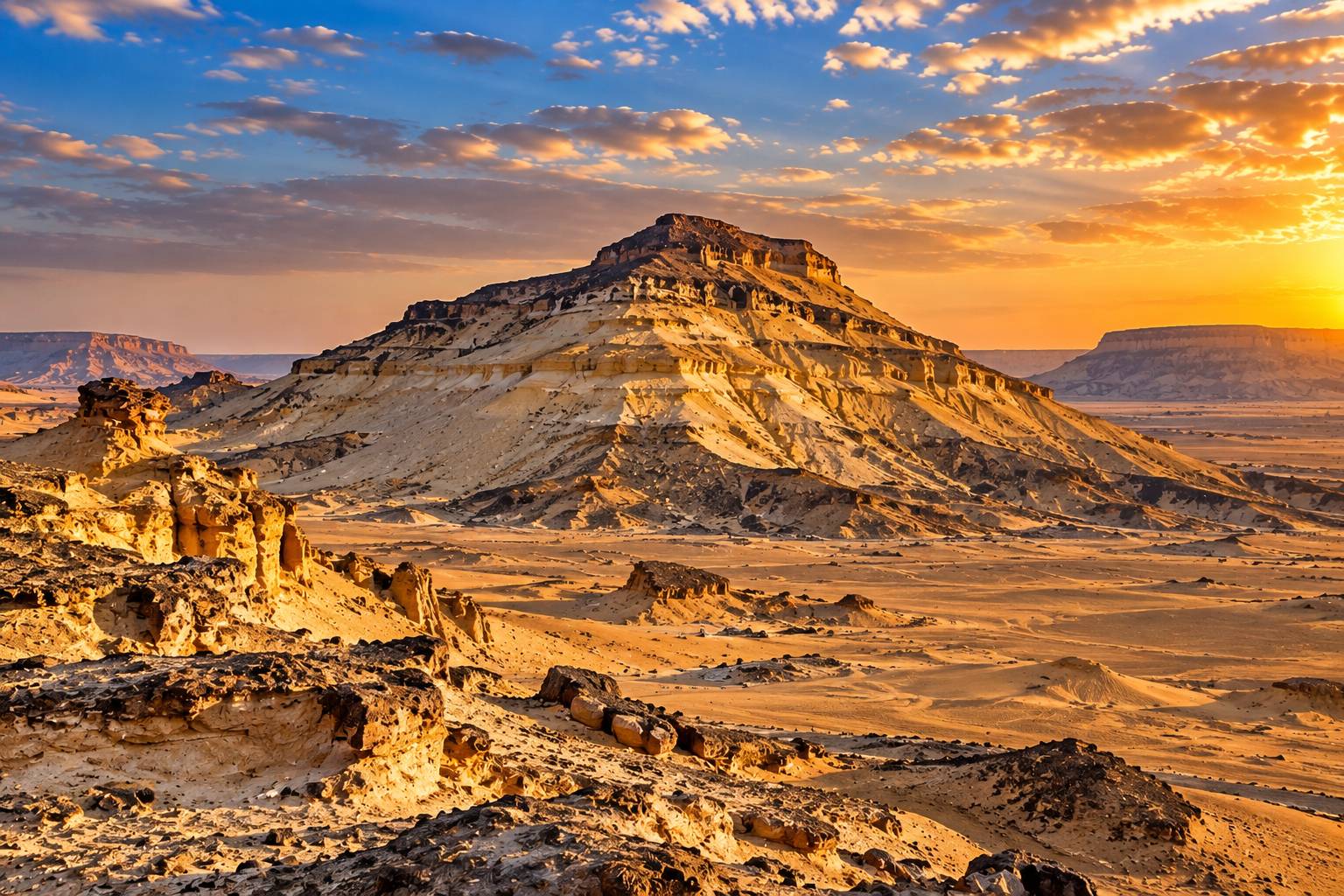
Gebel Maghrafa, Bahariya Oasis: A Complete Travel Guide to Egypt’s Dinosaur Heritage
Discover Gebel Maghrafa in Bahariya Oasis, Egypt, a remarkable geological landmark associated with the region’s extraordinary prehistoric history. Located in Egypt’s Western Desert, this mountain is part of a landscape that has helped scientists investigate the dinosaurs and other animals that lived in North Africa around 100 million years ago.
Unlike the pyramids of Giza or the temples of Luxor, Gebel Maghrafa is interesting primarily for its natural geology and scientific significance. The surrounding Bahariya Formation preserves sedimentary rocks and fossil remains that provide evidence of ancient ecosystems, including rivers, coastal environments, plants, and large vertebrates.
The wider Bahariya Oasis has become internationally known for its dinosaur discoveries, including the famous Spinosaurus and Carcharodontosaurus. Today, travelers interested in geology, prehistoric animals, and desert landscapes can explore the oasis as part of a broader Western Desert adventure.
In this guide, discover the geological importance of Gebel Maghrafa, the dinosaurs associated with Bahariya Oasis, what visitors can expect, and how to plan a trip with Let's Explore Egypt Travel.
What Is Gebel Maghrafa?
Gebel Maghrafa is a geological landmark in Bahariya Oasis, a desert depression in Egypt’s Western Desert. Its slopes and surrounding rock exposures form part of the geological landscape associated with the Bahariya Formation, a sequence of sedimentary rocks dating to the Cretaceous Period.
The mountain is especially interesting because the wider formation has produced important fossils of dinosaurs, fish, crocodile relatives, turtles, and ancient plants.
The name is sometimes written as Gabal Maghrafa or Gebel el-Maghrafa. Travelers may encounter different English spellings in maps and travel literature, so confirming the intended location with a local guide is helpful.
Gebel Maghrafa is not an ancient monument built by people. Its importance comes from the natural processes recorded in the rocks and the wider scientific history of Bahariya Oasis.
For visitors, the mountain offers an opportunity to explore a landscape that looks very different from Egypt’s famous archaeological sites while learning about the prehistoric world that existed long before the Sahara became the desert we know today.
Where Is Gebel Maghrafa Located?
Gebel Maghrafa is in the Bahariya Oasis region of Egypt’s Western Desert, within Giza Governorate.
Bahariya Oasis lies approximately 370 kilometres southwest of Cairo and is usually reached by road. Bawiti, the principal town of the oasis, is a convenient base for arranging local sightseeing and desert excursions.
The surrounding landscape includes palm groves, agricultural land, rocky hills, and broad desert plains. This combination makes Bahariya appealing to travelers interested in both nature and history.
Gebel Maghrafa can be considered as part of a wider sightseeing itinerary around Bahariya, especially for visitors interested in the area’s geological features.
Exact access points and walking routes should be confirmed with a knowledgeable local guide. Do not assume every part of the mountain or nearby fossil-bearing terrain is accessible to tourists.
Why Is Gebel Maghrafa Famous?
1. Its Connection with Dinosaur Fossils
The wider Bahariya Formation is one of Egypt’s most important sources of Cretaceous vertebrate fossils.
Researchers have recovered dinosaur remains alongside fossils of fish, crocodile relatives, turtles, and other animals. These discoveries help scientists reconstruct the environments that existed in North Africa during the Cretaceous Period.
The geological layers preserve evidence of a world much wetter and more biologically diverse than the modern Western Desert. Sediments associated with rivers, coastal plains, tidal channels, and other environments help explain the habitats in which these animals lived.
Gebel Maghrafa is part of this scientifically important landscape, although visitors should not expect to see dinosaur bones exposed on the surface during a normal sightseeing trip.
2. A Window into Prehistoric Egypt
Around 100 million years ago, the region that is now Bahariya Oasis supported ecosystems containing large dinosaurs and many other animals.
The discovery of fossil remains has made the area important to paleontologists studying the evolution and distribution of dinosaurs in Africa.
Scientific research also continues to improve understanding of the region’s ancient plants, sediments, and environments.
For travelers, learning about this prehistoric landscape adds another dimension to a visit. The desert is not simply an empty expanse of sand; its rocks preserve evidence of a very different world.
3. Distinctive Geological Scenery
Gebel Maghrafa and the surrounding Bahariya landscape feature sedimentary rock exposures, weathered slopes, and rocky terrain.
The visible layers can help illustrate how sediments accumulated and became rock over geological time. Weathering and erosion have since shaped the exposed surfaces into the forms seen today.
The mountain is interesting for nature photography as well as geology, particularly when the light emphasizes the layers and contours of the terrain.
4. A Less Familiar Side of Egypt
Most visitors to Egypt focus on ancient monuments, temples, and museums. Gebel Maghrafa offers an alternative experience centered on natural history and geological scenery.
It can appeal to travelers who enjoy science, outdoor exploration, and places beyond the usual tourist route.
Combining the mountain with Bahariya Oasis and the nearby Black Desert or White Desert creates an itinerary that includes several different landscapes and experiences.
Dinosaurs Associated with Bahariya Oasis
The wider Bahariya Formation is famous for its rich Cretaceous fossil record. Several large dinosaur species are associated with discoveries from this geological unit.
It is important to distinguish fossils discovered in the broader Bahariya region from fossils confirmed at a particular visitor viewpoint. Not every species listed below was necessarily discovered at Gebel Maghrafa itself.
Spinosaurus aegyptiacus
Spinosaurus is one of the most famous dinosaurs associated with Egypt.
It was a large predatory dinosaur with an elongated skull, conical teeth, and a distinctive sail-like structure formed by elongated back spines. Scientific studies suggest that it was unusually adapted to life around water compared with many other large predatory dinosaurs.
The original Egyptian specimens described by German paleontologist Ernst Stromer were collected from the Bahariya Formation in the early twentieth century. Much of the original material was later destroyed during the Second World War.
Spinosaurus remains a major subject of scientific research, and new discoveries continue to influence debates about its anatomy and ecology.
Carcharodontosaurus saharicus
Carcharodontosaurus was another large predatory dinosaur known from the Cretaceous deposits of North Africa.
Its name refers to its large, shark-tooth-like teeth. It belonged to a group of theropod dinosaurs that included some of the largest land predators of their time.
Fossils associated with the Bahariya Formation helped establish the importance of Egypt in the study of large Cretaceous dinosaurs.
The story of Carcharodontosaurus also illustrates the challenges of paleontology: important early specimens were lost during the Second World War, and researchers have had to use other fossils to refine their understanding of the animal.
Aegyptosaurus
Aegyptosaurus was a long-necked, plant-eating sauropod dinosaur associated with Egypt’s Cretaceous fossil record.
Sauropods were large herbivores with long necks and tails. Their remains provide important evidence about the diversity of dinosaurs that lived alongside large predators in prehistoric North Africa.
The species is one of several dinosaurs associated with the scientific history of the Bahariya region.
Bahariasaurus
Bahariasaurus is a theropod dinosaur named after Bahariya Oasis. It is part of the region’s important fossil history, although its precise relationships and anatomy remain subjects of scientific discussion.
Like other dinosaurs known from early discoveries in Bahariya, much of the historical material was lost during the Second World War, complicating later research.
These dinosaurs help explain why Bahariya Oasis attracts international scientific interest. However, seeing their fossils in person requires visiting an appropriate museum or exhibition; a tour of Gebel Maghrafa alone does not guarantee access to fossil specimens.
What Can You See at Gebel Maghrafa?
1. The Mountain and Its Rock Formations
The most immediately visible feature is the mountain itself and the surrounding rocky landscape.
Its exposed slopes and sedimentary layers offer an opportunity to observe geology in the natural environment. Depending on the viewpoint and lighting, the layers can create attractive contrasts between pale rock, darker surfaces, and the sandy terrain.
Remain on suitable ground and follow your guide’s instructions around steep slopes or unstable areas.
2. The Wider Bahariya Geological Landscape
The scientific importance of Gebel Maghrafa becomes clearer when viewed as part of the wider Bahariya Formation.
The formation preserves evidence of ancient environments, including sediments associated with water and coastal conditions. These layers are valuable because they help researchers reconstruct the habitats and ecosystems that existed when the dinosaurs lived.
A guide with knowledge of the region’s geology can explain how visible rock layers relate to the fossils known from the area.
3. Views across Bahariya Oasis
Depending on your route and viewpoint, the surrounding landscape may include rocky hills, desert plains, and areas of cultivated land.
The contrast between the arid terrain and the greener oasis creates opportunities for landscape photography.
If you want to visit several viewpoints, discuss the route and walking requirements in advance.
4. Opportunities for Geological Photography
Gebel Maghrafa is interesting for photographers who enjoy natural textures and layered rock formations.
Wide-angle images can show the mountain within its setting, while close-up photographs can emphasize the color and structure of exposed rock.
Morning and late afternoon often provide softer light. Do not remove stones or fossils to create photographs, and avoid climbing onto unstable outcrops.
Best Things to Do around Gebel Maghrafa
Learn about Dinosaur Science
If you are interested in prehistoric animals, use the visit to learn about the Bahariya Formation and its fossil record.
Your guide may be able to explain which dinosaur groups are associated with the region and why the fossils are important to paleontology.
For a deeper understanding, consider visiting a museum with relevant fossil displays if one is accessible as part of your wider Egypt itinerary.
Explore the Desert Landscape
Combine the geological visit with other scenic stops around Bahariya Oasis.
The Black Desert provides dark volcanic hills, while the White Desert is known for pale chalk formations sculpted by erosion. Each destination offers a different view of the Western Desert’s geological diversity.
Photograph the Oasis and Surrounding Hills
The landscape around Bahariya combines desert terrain with palm groves and cultivated areas.
A well-planned route can provide a variety of photographs, from rocky mountains to wide views over the oasis.
Discover Bahariya Oasis
Bahariya is more than a starting point for desert safaris. It also has archaeological attractions, traditional settlements, palm groves, and natural springs.
Depending on access and available time, you can combine Gebel Maghrafa with other attractions around Bawiti.
Best Time to Visit Gebel Maghrafa
The cooler months, generally from autumn through spring, are often more comfortable for exploring Bahariya Oasis.
Morning Visits
Morning can provide softer lighting and more comfortable conditions for walking and photography.
Late Afternoon
Late-afternoon light can emphasize rock layers and mountain contours. Confirm timing with your guide to ensure that your return journey is planned appropriately.
Summer Travel
Summer temperatures in the Western Desert can become very high. If visiting during warmer months, carry sufficient drinking water, use sun protection, and follow local guidance about the safest times for outdoor activities.
Weather, road conditions, and access arrangements should be checked before setting out.
How to Get to Gebel Maghrafa from Cairo
Bahariya Oasis is generally reached by road from Cairo, with the journey taking several hours depending on traffic and road conditions.
Once in the oasis, a local guide or organized tour can help arrange transportation to accessible geological viewpoints and nearby attractions.
If you are primarily interested in geology and prehistoric history, explain that when booking so the itinerary can focus on suitable sites rather than only general desert sightseeing.
Explore our Bahariya Oasis Tours and Bahariya Oasis Day Tours from Cairo to discuss options.
Ask whether the mountain can be included in your route, how much time is allocated to the visit, and whether the planned stops are suitable for your group.
Nearby Attractions to Combine with Gebel Maghrafa
Gebel el Dist (Pyramid Mountain)
Gebel el Dist is another important geological landmark in Bahariya Oasis. It is known for its pyramid-like natural silhouette and its relationship to the Bahariya Formation.
Visiting both mountains can provide a broader understanding of the region’s geological landscape.
Black Desert
The Black Desert features dark volcanic hills and rocky slopes scattered across the sandy terrain. It is one of the most distinctive natural landscapes in the Western Desert.
Explore our Black Desert Tour.
Crystal Mountain
Crystal Mountain is known for exposed crystalline minerals and unusual rock textures. It is commonly included as a stop on some longer routes toward Farafra and the White Desert.
White Desert
The White Desert is famous for its pale chalk and limestone formations, which have been sculpted by natural erosion into unusual shapes.
It is a rewarding destination for landscape photography and overnight desert adventures.
Discover our White Desert Tours from Cairo.
Bahariya Oasis Palm Groves
The oasis’s date palms and cultivated areas create a green contrast with the surrounding desert. A visit can help explain how water supports agricultural communities in this dry region.
Ain el-Muftella Temple
Ain el-Muftella is associated with the religious history of Bahariya Oasis during the Late Period of ancient Egypt. It offers a cultural contrast to the geological and prehistoric attractions.
Responsible Tourism and Fossil Protection
Fossils and geological formations are part of the scientific heritage of Bahariya Oasis. Removing them can destroy information about where they were found and the environment in which they formed.
Visitors should not collect bones, fossils, rock samples, or other geological materials. Avoid digging, breaking exposed rock, or entering restricted areas.
Follow your guide’s instructions and respect any conservation rules in place. Staying on approved routes helps protect the landscape for future scientific study and responsible tourism.
Is Gebel Maghrafa Worth Visiting?
Gebel Maghrafa is an interesting destination for travelers who enjoy geology, dinosaurs, natural history, and desert landscapes.
Its importance lies in its connection with the wider Bahariya Formation and the scientific discoveries that have made this part of Egypt famous among paleontologists.
It is not a dinosaur theme park or a guaranteed fossil-viewing location. Visitors should approach it as a natural geological site that provides context for the prehistoric history of the region.
For the best experience, combine the mountain with other accessible attractions in Bahariya Oasis or a longer Western Desert adventure.
Frequently Asked Questions about Gebel Maghrafa
What is Gebel Maghrafa famous for?
Gebel Maghrafa is known as a geological landmark in Bahariya Oasis and is associated with the region’s dinosaur fossil heritage.
Did dinosaurs live in Bahariya Oasis?
Yes. The Bahariya Formation preserves fossil remains of dinosaurs and other vertebrates from the Cretaceous Period, around 100 million years ago.
Can I see dinosaur fossils at Gebel Maghrafa?
Do not assume that fossils will be visible at the mountain itself. The region is scientifically important for its fossil record, but confirmed fossil displays may require a separate museum visit.
Which dinosaurs are associated with Bahariya Oasis?
The wider Bahariya Formation is associated with dinosaurs including Spinosaurus aegyptiacus, Carcharodontosaurus saharicus, Aegyptosaurus, and Bahariasaurus.
Is Gebel Maghrafa an archaeological site?
It is primarily a geological landmark. Its importance relates to the rock formations and the broader fossil-bearing geology of Bahariya Oasis rather than to a built ancient monument.
Can I visit Gebel Maghrafa on a day trip from Cairo?
You can travel to Bahariya Oasis from Cairo, but the journey takes several hours. Confirm whether the mountain can realistically be included in a day-trip itinerary. A longer trip can allow more time for local attractions.
Can I combine Gebel Maghrafa with the White Desert?
Yes, you can ask about combining Bahariya’s geological attractions with a wider Western Desert trip. The exact itinerary depends on access, road conditions, and the time available.
Can I collect fossils or rocks?
No. Visitors should leave fossils and geological materials undisturbed to protect the scientific value of the region.
Plan Your Gebel Maghrafa Adventure
Gebel Maghrafa offers a fascinating introduction to the geological history of Bahariya Oasis and the prehistoric animals associated with the Western Desert.
Whether you are interested in dinosaur science, natural landscapes, or photography, the mountain can add a distinctive element to your journey through Bahariya.
Ready to explore Bahariya Oasis?
Discover our Bahariya Oasis Tours or Bahariya Oasis Day Tours from Cairo to discuss your travel dates, group size, and preferred attractions.
For a longer journey, explore our White Desert Tours from Cairo and ask about combining geological sites with the Black Desert and other Western Desert highlights.
Discover Egypt beyond the pyramids with Let's Explore Egypt Travel.
Recommended Trips to Explore Gebel Maghrafa, Bahariya Oasis
Discover Egypt’s prehistoric heritage, geological wonders, and spectacular desert scenery with these recommended trips from Let’s Explore Egypt Travel.
1. Bahariya Oasis Tours
Explore Bahariya Oasis, its palm groves, geological landmarks, and archaeological attractions. Ask about including Gebel Maghrafa in your itinerary, subject to local access and route conditions.
2. Bahariya Oasis Day Tours from Cairo
Travel from Cairo to discover the landscapes and attractions around Bahariya Oasis. Confirm whether Gebel Maghrafa can be included in your schedule.
3. Black Desert Tour
Discover the Black Desert’s dark volcanic hills and rugged terrain. Combine geological sightseeing with other accessible natural attractions around Bahariya Oasis on a longer trip.
4. White Desert Tours from Cairo
Explore the White Desert’s remarkable chalk formations and unusual natural sculptures. Ask about a multi-day Western Desert safari combining several geological highlights.
5. Explore Gebel el Dist (Pyramid Mountain)
Discover another striking natural landmark in Bahariya Oasis, known for its pyramid-like shape and exposed geological layers. Ask your local guide whether both mountains can be included in the same itinerary.
Plan Your Gebel Maghrafa Adventure
Combine Gebel Maghrafa with other accessible geological attractions in Bahariya Oasis for a memorable natural-history experience. Contact Let’s Explore Egypt Travel to discuss your travel dates, group size, transportation, and preferred stops.
Please confirm site access and route conditions before booking. Dinosaur fossils are part of the region’s scientific heritage, but fossil viewing at the mountain itself is not guaranteed. Leave all rocks and fossils undisturbed.
Highlights of Gebel Maghrafa, Bahariya Oasis
-
Discover Gebel Maghrafa, a geological landmark in Egypt’s Western Desert.
-
Explore the region’s remarkable connection to prehistoric dinosaurs and ancient ecosystems.
-
Learn about the Bahariya Formation and its importance to paleontological research.
-
Discover the prehistoric history of the area where large dinosaurs lived around 100 million years ago.
-
Learn about famous dinosaurs associated with Bahariya Oasis, including Spinosaurus and Carcharodontosaurus.
-
Observe exposed sedimentary rock layers that reveal clues about ancient environments.
-
Capture stunning photographs of rugged mountains and the surrounding desert landscape.
-
Enjoy a nature and geology experience away from Egypt’s busiest tourist destinations.
-
Discover the relationship between Bahariya’s geological formations and its internationally significant fossil discoveries.
-
Combine your visit with Gebel el Dist (Pyramid Mountain) and other geological attractions around Bahariya Oasis.
-
Explore the contrasting landscapes of the Black Desert, Crystal Mountain, and the White Desert.
-
Enjoy a guided Bahariya Oasis tour from Cairo tailored to your travel dates and interests.
-
Help protect Egypt’s geological heritage by leaving rocks and fossils undisturbed.