


Old Qasr Temple, Bahariya Oasis
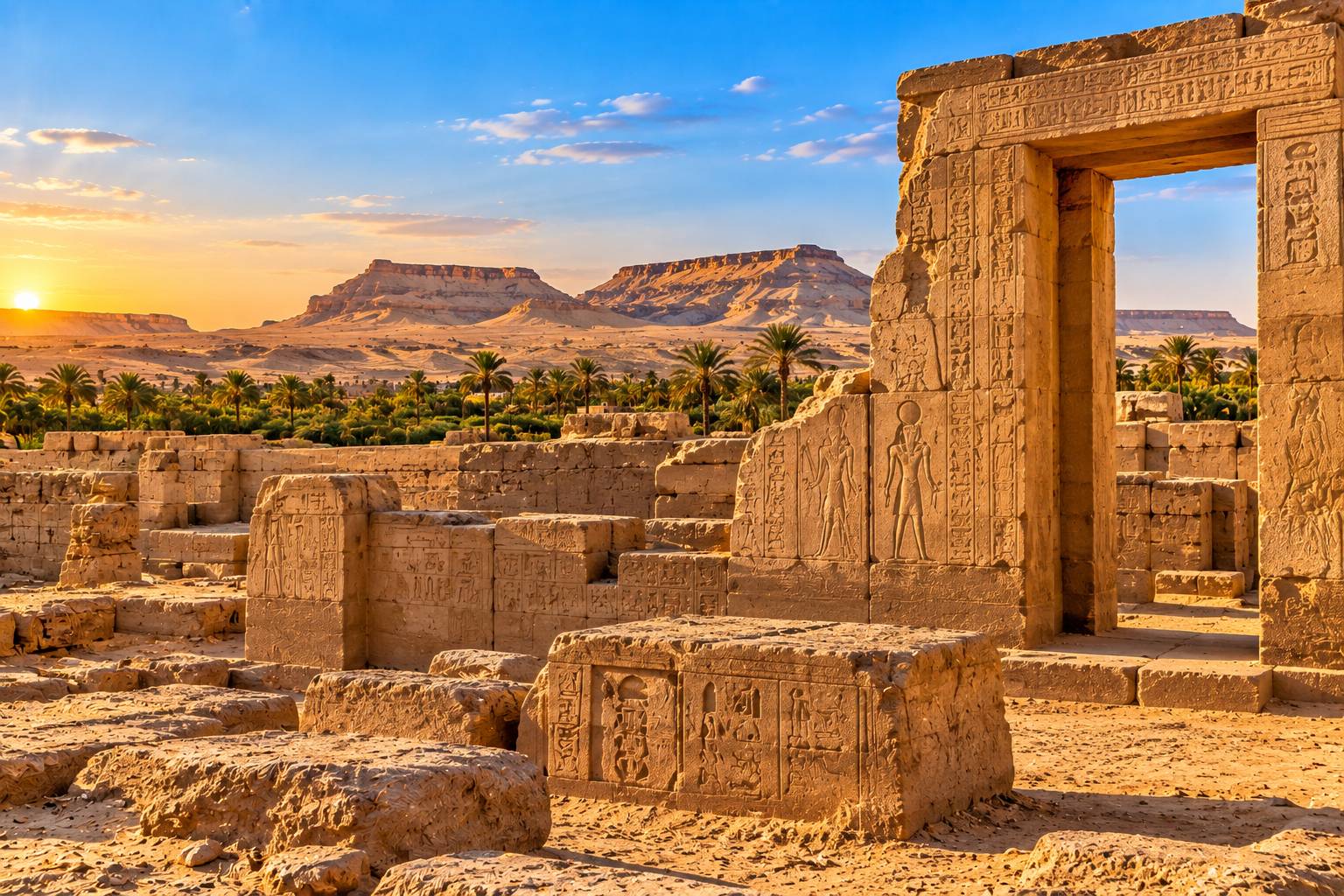
Old Qasr Temple, Bahariya Oasis: Discover an Ancient Egyptian Religious Center
Hidden within the historic landscape of Bahariya Oasis, the Old Qasr Temple offers an opportunity to discover a lesser-known chapter of ancient Egyptian history. While most travelers associate Egypt with the Pyramids of Giza, Karnak Temple, or the Valley of the Kings, Bahariya preserves archaeological remains that reveal how important religious centers developed outside the Nile Valley.
Located at the Old Qasr archaeological site in the village of El-Qasr, the temple reflects the importance of Bahariya Oasis during the Late Period of ancient Egypt. Its history extends across several dynasties, and archaeological discoveries suggest that activity at the site continued into the Greek and Roman periods and later centuries.
For travelers interested in archaeology, ancient Egyptian religion, and destinations beyond the country's best-known monuments, Old Qasr Temple is a fascinating subject to explore as part of a wider Bahariya Oasis itinerary.
In this guide, you will discover the temple's history, recent archaeological findings, religious significance, and how to plan a trip to the surrounding oasis.
Where Is Old Qasr Temple Located?
Old Qasr Temple is located at the Old Qasr archaeological site in El-Qasr village, within Bahariya Oasis in Egypt's Western Desert.
Bahariya Oasis lies approximately 370 kilometres southwest of Cairo and is usually reached by road. Bawiti is the main town and a convenient base for visitors exploring the region's archaeological attractions, palm groves, and desert landscapes.
The oasis has a long history of settlement. Its water resources supported agriculture and communities in an otherwise arid environment, while its location connected it with wider developments in ancient Egypt.
Old Qasr is particularly interesting because archaeological evidence suggests that the site served as an important religious and administrative center during the Late Period.
Important for visitors: The fact that a site has been excavated does not automatically mean it is open to tourists. Confirm current access arrangements, opening hours, and any restrictions before including Old Qasr Temple in your travel itinerary.
The History of Old Qasr Temple
The Twenty-sixth Dynasty
The temple's principal construction phase dates to the Twenty-sixth Dynasty, also known as the Saite Dynasty.
According to information released by Egypt's Supreme Council of Antiquities, construction began during the reign of King Psamtik I. Later stages were completed under subsequent rulers, including Wahibre, also known as Apries, and Amasis II.
These rulers governed during an important period in ancient Egyptian history, when traditional religious practices and royal institutions remained central to society.
The temple's inscriptions and architectural remains help researchers understand how royal authority and religious life extended into the Western Desert.
An Important Religious and Administrative Center
The Old Qasr site was more than an isolated place of worship. Archaeological findings suggest that it played an important religious and administrative role within Bahariya Oasis.
Temples in ancient Egypt often served several functions. In addition to religious ceremonies, they could be associated with the administration of resources, storage, and the organization of local activities.
Discoveries around Old Qasr provide evidence of this broader role. The remains of rooms, storage areas, and installations associated with production suggest that activity at the site extended beyond the central religious buildings.
This makes the temple valuable for understanding how oasis communities functioned in ancient Egypt.
Evidence from Earlier Periods
Although the temple is principally associated with the Twenty-sixth Dynasty, archaeological discoveries indicate that the site's history may extend further back.
A stone stela dating to the reign of King Amenhotep II of the Eighteenth Dynasty was found at the site. Artifacts associated with the reign of Ramesses II have also been reported.
These findings provide evidence connecting Bahariya with the wider Egyptian state during the New Kingdom, centuries before the main construction period traditionally associated with Old Qasr Temple.
Researchers continue to investigate the significance of these discoveries and the relationship between the different phases of activity at the site.
Continued Use in Greek and Roman Times
Archaeological evidence suggests that the site remained active during the Greek and Roman periods and continued to be used into the fourth and fifth centuries AD.
Researchers have identified written materials, including ostraca and texts in Coptic and Latin, alongside industrial installations and storage facilities.
These discoveries indicate that the site's history was not limited to a single dynasty. Instead, Old Qasr formed part of a changing landscape that continued to serve local communities under different political and cultural influences.
This long history makes the archaeological site particularly important to the study of Bahariya Oasis.
What Makes Old Qasr Temple Special?
1. The Sandstone Chamber
One of the discoveries announced in June 2026 was the remains of a chamber constructed from sandstone.
This finding contributes to a better understanding of the temple's architectural layout and the spaces associated with its religious and administrative functions.
The discovery is especially valuable because archaeological excavations can reveal how buildings developed over time, even when much of their original structure has disappeared.
2. Inscribed Blocks Bearing the Name of Psamtik I
The archaeological mission also uncovered inscribed stone blocks bearing the names and titles of King Psamtik I.
Such inscriptions are important because they help researchers connect architectural remains with particular rulers and historical periods.
Royal names could appear in religious buildings to record the authority of the king and his relationship with the gods. In this case, the inscriptions provide important evidence for the temple's construction history.
3. The Hypostyle Hall
The temple's main hypostyle hall is one of its notable architectural features. A hypostyle hall is an interior space supported by multiple columns.
According to the archaeological announcement, the hall included sixteen sandstone columns, together with adjoining rooms and chapels.
The arrangement helps illustrate the complexity of the religious structure and gives researchers clues about its original design.
Visitors should not assume that all the architectural elements are currently visible or accessible. Excavation, conservation, and access arrangements can affect what can be seen at any given time.
4. Inscriptions Naming Ancient Egyptian Gods
The excavations have revealed hieroglyphic inscriptions documenting the names of deities, including Amun-Re, Amunet, and Khonsu.
These gods were important within ancient Egyptian religious traditions, and their presence in the inscriptions contributes to the understanding of worship practiced at the temple.
Such inscriptions also help researchers investigate how religious traditions were maintained in the Western Desert and how the temple related to wider Egyptian religious institutions.
5. Artifacts and Religious Objects
Finds reported from Old Qasr include a statue of Thoth, a bronze statue of Osiris, a bronze amulet of Re-Horakhty, and the head of a statue believed to depict a prominent priest or official.
Archaeologists have also reported discovering a shrine belonging to the local ruler and priest Pa-di-Iset.
Together, these objects provide insight into religious beliefs, local authority, and the artistic traditions of the oasis.
The Name of the Temple: Ibp-Set
One of the earlier discoveries at the site was a metal seal that revealed the temple's name as Ibp-Set, translated as “House of the Heart.”
This identification is significant because an ancient name can help researchers understand how a religious institution was known to the people who used it.
Names recorded on seals and inscriptions are valuable sources of information. They can connect archaeological remains with historical texts and improve our understanding of the function and identity of a building.
The name also makes Old Qasr more than a collection of ancient walls. It offers a connection to how the temple was understood in its own historical setting.
Why Is Old Qasr Temple Important to Egyptian History?
The temple contributes to a wider understanding of Egypt's Western Desert and its connections with the Nile Valley.
Bahariya Oasis was not isolated from the major developments of ancient Egyptian civilization. Its archaeological remains show links with royal dynasties, religious traditions, and administrative structures across different periods.
Old Qasr is especially useful because it preserves evidence from multiple phases of activity. The combination of architectural remains, royal inscriptions, religious artifacts, and later written materials allows researchers to study how the site changed over time.
It also highlights the continuing importance of archaeological research in Egypt. New discoveries can refine existing interpretations and reveal details that were not previously understood.
For travelers interested in history, the temple represents an opportunity to explore a less familiar part of ancient Egypt's heritage.
What Can Visitors Expect?
Old Qasr Temple is an archaeological site rather than a fully reconstructed monument or modern visitor attraction.
The remains and features accessible to visitors may differ from those described in excavation reports. Some objects found during archaeological work may be stored or displayed elsewhere rather than remaining at the original site.
If access is permitted, a knowledgeable local guide can help explain the historical background, architectural remains, and significance of the discoveries.
Before travelling, confirm whether the site is open to the public, whether an archaeological inspector or guide is required, and whether an entrance fee applies.
These checks will help you plan a realistic itinerary and avoid assuming that every excavated section can be visited.
Best Time to Visit Bahariya Oasis
The cooler months, generally from autumn through spring, are often more comfortable for exploring the Western Desert.
Morning Visits
Morning can be a practical time for outdoor sightseeing, particularly when visiting several archaeological sites in one day.
Late Afternoon
Late afternoon can provide softer light for photographing the surrounding landscape, subject to site opening hours and local arrangements.
Summer Travel
Temperatures in the Western Desert can become very high during summer. Bring drinking water, use sun protection, and follow local advice about safe sightseeing times.
Always confirm site access and road conditions before departure.
How to Reach Old Qasr Temple from Cairo
Bahariya Oasis is generally reached by road from Cairo, with the journey taking several hours depending on traffic and road conditions.
Once in the oasis, local transportation can help you reach accessible archaeological attractions around Bawiti and El-Qasr.
For visitors interested in history, it can be practical to combine Old Qasr with other archaeological sites in Bahariya rather than arranging an individual journey for every monument.
A broader itinerary may include Ain el-Muftella Temple, the Temple of Alexander the Great, and accessible museum displays associated with the Valley of the Golden Mummies.
If you would also like to explore the natural landscapes of the region, consider a longer trip that includes the Black Desert or White Desert.
Explore our Bahariya Oasis Tours or Bahariya Oasis Day Tours from Cairo to discuss suitable options.
Nearby Attractions to Combine with Old Qasr Temple
Ain el-Muftella Temple
Ain el-Muftella is associated with the religious history of Bahariya during the Late Period of ancient Egypt. Its decorated chapels provide another perspective on the area's religious heritage.
Temple of Alexander the Great
This archaeological site is connected with Alexander the Great and the Egyptian god Amun. It can be a useful addition for visitors interested in the interaction between Egyptian and Greek traditions.
Valley of the Golden Mummies
The Valley of the Golden Mummies became internationally known following the discovery of a large burial ground near Bawiti, associated with the Greco-Roman period.
Confirm current museum displays and access arrangements before visiting.
Bahariya Oasis Palm Groves
The date palm groves and cultivated landscapes around Bahariya offer a different experience from the archaeological sites. They illustrate how agriculture and water resources support life in the oasis.
Black Desert
The Black Desert is known for dark volcanic hills and rocky slopes scattered across the sandy landscape.
Discover our Black Desert Tour.
White Desert
The White Desert is famous for its chalk formations sculpted by wind erosion. It is an excellent addition for travelers who want to combine cultural sightseeing with nature.
Explore our White Desert Tours from Cairo.
Travel Tips for Visiting Old Qasr Temple
-
Confirm access in advance: The current status of an archaeological site may differ from its excavation history.
-
Use a knowledgeable local guide: Historical context can make a visit more rewarding.
-
Wear comfortable shoes: Archaeological terrain may be uneven.
-
Bring water and sun protection: Outdoor conditions can be demanding.
-
Respect conservation rules: Do not touch fragile remains, climb on ancient structures, or remove artifacts.
-
Check the itinerary: Ask whether transportation, entrance fees, permits, and guide services are included in your trip price.
-
Allow time for other attractions: Bahariya's archaeological sites and desert landscapes are spread across the region.
Is Old Qasr Temple Worth Visiting?
Old Qasr Temple is especially interesting for travelers who want to understand the historical importance of Bahariya Oasis beyond its famous desert landscapes.
Its archaeological evidence connects the site with the Twenty-sixth Dynasty, earlier New Kingdom activity, and later Greek and Roman periods. The discoveries also illustrate how excavation continues to improve our knowledge of religious and administrative life in the Western Desert.
Because it is an archaeological site undergoing investigation, it should not be approached in the same way as a fully developed tourist attraction. The most rewarding experience depends on confirmed access and the availability of a guide who can explain what remains visible.
If you enjoy ancient history and quieter destinations, Old Qasr can be a valuable addition to a wider Bahariya Oasis itinerary.
Frequently Asked Questions About Old Qasr Temple
Where is Old Qasr Temple?
It is located at the Old Qasr archaeological site in El-Qasr village, within Bahariya Oasis in Egypt's Western Desert.
How old is Old Qasr Temple?
Its principal construction phase dates to the Twenty-sixth Dynasty, beginning under King Psamtik I and continuing under later rulers. Artifacts from earlier periods have also been found at the site.
What was discovered in 2026?
An Egyptian archaeological mission announced new architectural remains, including part of a sandstone chamber and inscribed blocks bearing the names and titles of Psamtik I. <Cite refs={["turn777056view0"]}/>
Which gods were worshipped at the temple?
Hieroglyphic inscriptions reported from the site include references to Amun-Re, Amunet, and Khonsu.
What does Ibp-Set mean?
The temple's name has been identified through a metal seal as Ibp-Set, translated as “House of the Heart.”
Is Old Qasr Temple open to tourists?
Public access should be confirmed before your visit. Archaeological excavation and conservation work do not necessarily mean that a site is open for general tourism.
Can I visit Old Qasr Temple on a day trip from Cairo?
A trip to Bahariya Oasis can be arranged from Cairo, but the road journey takes several hours. Confirm the feasibility of including Old Qasr alongside other attractions before booking.
Can I combine it with the White Desert?
Yes, a multi-day itinerary can combine archaeological sightseeing around Bahariya Oasis with a Western Desert safari. The exact itinerary will depend on your schedule, route, and current access arrangements.
Plan Your Bahariya Oasis Historical Tour
Old Qasr Temple reveals a fascinating chapter of Bahariya Oasis's past. Its architectural remains, royal inscriptions, and religious artifacts provide evidence of a site that served local communities across several historical periods.
Whether your interest is ancient Egyptian religion, archaeology, or exploring destinations beyond the main tourist route, Bahariya offers a rewarding combination of historical heritage and natural scenery.
Ready to explore Bahariya Oasis?
Discover our Bahariya Oasis Tours or Bahariya Oasis Day Tours from Cairo to discuss your travel dates, group size, and preferred attractions.
For a longer adventure, explore our White Desert Tours from Cairo and ask about combining the oasis's archaeological heritage with the dramatic landscapes of Egypt's Western Desert.
Discover Egypt beyond the pyramids with Let's Explore Egypt Travel.
Recommended Tours to Explore Old Qasr Temple, Bahariya Oasis
Discover the ancient history, archaeological landmarks, and spectacular desert landscapes of Egypt’s Western Desert with these recommended trips from Let’s Explore Egypt Travel.
1. Bahariya Oasis Tours
Explore Bahariya Oasis, its archaeological sites, palm groves, and traditional landscapes. Ask about including Old Qasr Temple and other accessible historical attractions in your itinerary.
2. Bahariya Oasis Day Tours from Cairo
Travel from Cairo to discover Bahariya Oasis and its historical heritage. Confirm the available sightseeing time and whether Old Qasr Temple can be included in your selected itinerary.
3. Black Desert Tour
Discover the Black Desert’s dark volcanic hills and rugged scenery. Combine the natural landscapes with historical sightseeing around Bahariya Oasis on a longer trip, where practical.
4. White Desert Tours from Cairo
Explore the White Desert’s extraordinary chalk formations and dramatic desert scenery. Choose a multi-day adventure to combine nature exploration with accessible archaeological attractions around Bahariya Oasis.
5. Explore Ain el-Muftella Temple
Discover another important archaeological site in Bahariya Oasis, known for its decorated chapels and ancient religious heritage. Check current access arrangements before planning your visit.
Plan Your Old Qasr Temple Visit
Combine Old Qasr Temple with other accessible archaeological sites around Bahariya Oasis for a richer historical experience. Contact Let’s Explore Egypt Travel to discuss your travel dates, group size, transportation, and preferred attractions.
Important: Confirm whether Old Qasr Temple is open to visitors before booking, as ongoing archaeological work and conservation arrangements may affect access. Entrance fees and tour inclusions should also be verified in advance.
Highlights of Old Qasr Temple, Bahariya Oasis
-
Discover Old Qasr Temple, an important archaeological site in El-Qasr village, Bahariya Oasis, Egypt.
-
Explore the temple’s connection with the Twenty-sixth Dynasty of ancient Egypt.
-
Learn about King Psamtik I and the royal inscriptions associated with the temple.
-
Discover archaeological evidence of later construction phases under other ancient Egyptian rulers.
-
Explore the remains of sandstone chambers, temple walls, and architectural features.
-
Learn about ancient Egyptian deities, including Amun-Re, Amunet, and Khonsu.
-
Discover artifacts and inscriptions that reveal the religious and administrative importance of Bahariya Oasis.
-
Learn about archaeological discoveries that shed light on the temple’s long history.
-
Explore the historical heritage of Egypt’s Western Desert beyond the famous pyramids and temples.
-
Combine your visit with Ain el-Muftella Temple and the Temple of Alexander the Great, subject to site access.
-
Discover nearby palm groves and traditional oasis landscapes around Bawiti.
-
Include Old Qasr Temple in a Bahariya Oasis tour from Cairo for a memorable historical journey.