


Luxor Temple
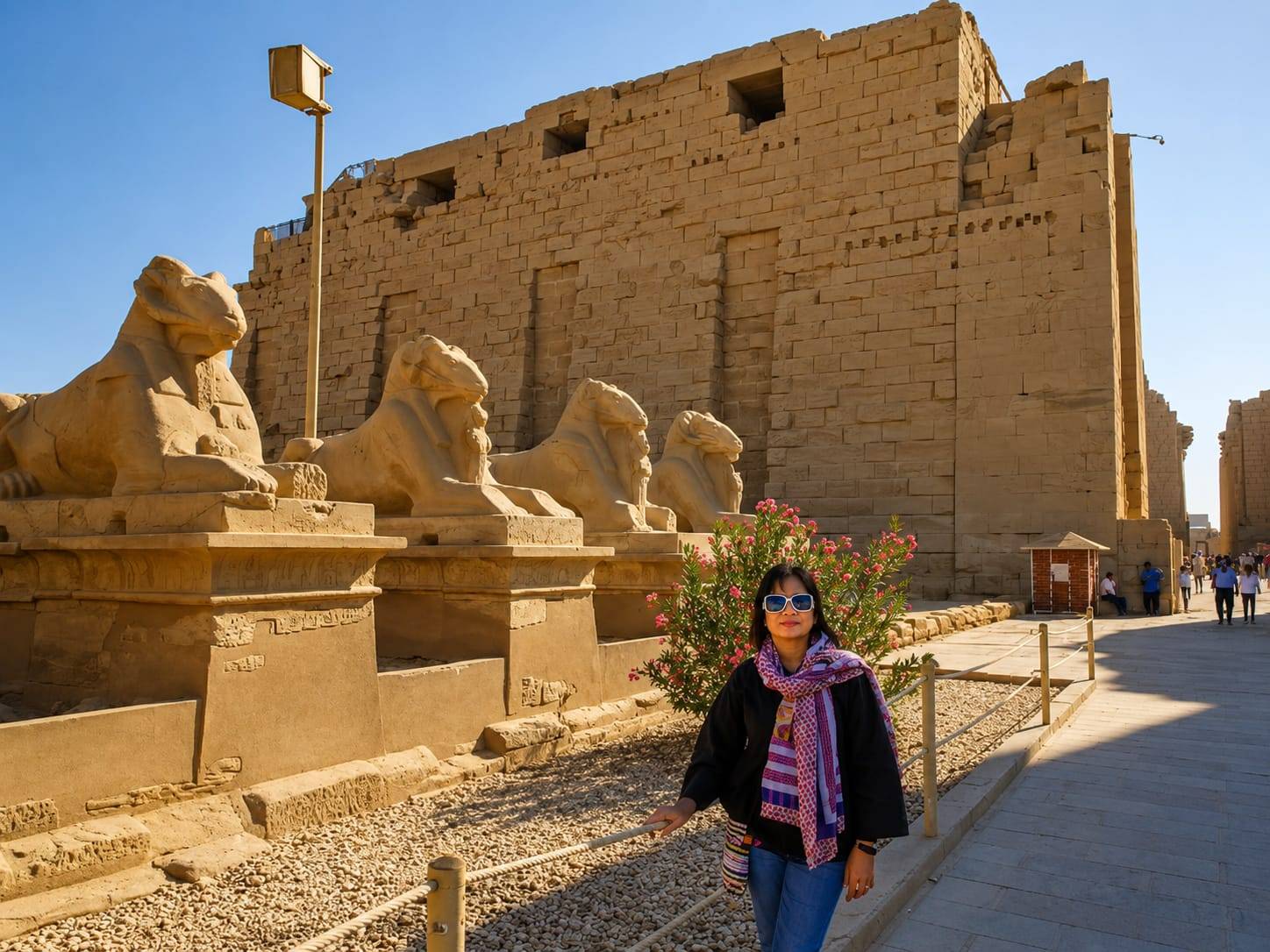
Luxor Temple, Egypt: History, Facts, Highlights and Visitor Guide
Luxor Temple is one of the most fascinating ancient monuments in Egypt and a must-visit attraction for travelers exploring the historic city of Luxor. Located on the east bank of the Nile River, this magnificent temple features monumental statues, towering columns, ancient inscriptions, and architectural details that reveal the extraordinary achievements of ancient Egyptian civilization.
Built and expanded by several pharaohs over many centuries, Luxor Temple played an important role in religious ceremonies and royal traditions. Unlike some ancient Egyptian temples that primarily served as centers of worship for a particular deity, Luxor Temple was closely associated with the renewal of kingship and the annual Opet Festival.
Today, visitors can explore its impressive entrance, discover the stories carved into its walls, and learn how the temple was connected to the nearby Karnak Temple through the famous Avenue of Sphinxes.
Whether you are planning a short visit or a longer historical journey through Upper Egypt, Luxor Temple offers an unforgettable experience.
Where Is Luxor Temple Located?
Luxor Temple is located in the center of modern Luxor, on the east bank of the Nile River in southern Egypt. Its central location makes it convenient to visit from hotels, restaurants, Nile cruise docking areas, and other attractions in the city.
The temple is part of the archaeological landscape of ancient Thebes, which served as a major religious and political center in ancient Egypt. It is also connected to Karnak Temple by the Avenue of Sphinxes, an ancient ceremonial route approximately 2.7 kilometers long.
Because of its location, Luxor Temple can easily be combined with Karnak Temple during a day of sightseeing. Travelers with additional time can cross the Nile to explore the West Bank, home to the Valley of the Kings, the Temple of Hatshepsut, and the Colossi of Memnon.
The History of Luxor Temple
Construction Under Amenhotep III
The principal core of Luxor Temple was commissioned by Pharaoh Amenhotep III during the 18th Dynasty, around the 14th century BCE.
Amenhotep III ruled during a period of considerable prosperity, artistic development, and international influence. His building projects demonstrated the wealth and power of ancient Egypt, and Luxor Temple became an important ceremonial center in Thebes.
The original structure included courtyards, halls, and sacred spaces designed for religious activities. Its architectural arrangement helped create a progression from open public areas toward more restricted inner sanctuaries.
The Contributions of Ramesses II
Ramesses II, one of ancient Egypt's best-known pharaohs, made significant additions to Luxor Temple. He commissioned the monumental entrance pylon, a large forecourt, and impressive statues of himself.
These structures transformed the temple's entrance into a powerful statement of royal authority. The colossal statues and carved inscriptions celebrated the king and his relationship with the gods.
As you explore the entrance, look closely at the surviving statues and decorative details. They provide an excellent introduction to the monumental style of ancient Egyptian royal architecture.
The Opet Festival
Luxor Temple played an important role in the annual Opet Festival, one of the major religious celebrations of ancient Thebes.
During the festival, sacred images of Amun, Mut, and Khonsu were carried in ceremonial processions between Karnak Temple and Luxor Temple. These rituals reinforced the connection between the gods, the pharaoh, and the prosperity of the kingdom.
The Avenue of Sphinxes formed part of this ceremonial route. Today, walking along the restored avenue helps visitors understand how the temples functioned as connected parts of a wider religious landscape.
Luxor Temple Through Later Periods
Luxor Temple continued to be used and modified long after the height of ancient Egyptian civilization. Roman-era remains demonstrate that the site retained importance during later historical periods.
Abu Haggag Mosque, located within the temple complex, is another striking example of the site's layered history. Its presence reflects the continued religious significance of the location across different eras.
These later additions make Luxor Temple especially interesting for travelers who want to understand the many civilizations and traditions that shaped Egypt.
Top Things to See at Luxor Temple
1. The Monumental Entrance Pylon
The entrance pylon is one of the most recognizable features of Luxor Temple. Its massive towers were designed to create a dramatic approach to the sacred complex.
The structure is associated with Ramesses II and features carved scenes and inscriptions celebrating the king. Its impressive scale illustrates how architecture was used to communicate the authority of the pharaoh and the importance of the gods.
2. The Colossal Statues of Ramesses II
The monumental statues of Ramesses II are among the temple's most memorable highlights. They depict the king in a formal royal style, emphasizing his status and connection with the divine.
These statues also provide excellent opportunities for photography. Take a moment to observe the details of the royal headdress, facial features, and inscriptions carved into the surrounding stonework.
3. The Obelisk of Luxor Temple
One ancient granite obelisk remains near the temple entrance. It originally formed part of a pair, while its counterpart was transported to Paris in the 19th century and now stands in Place de la Concorde.
Obelisks were important monuments in ancient Egyptian religious and royal traditions. Their tall, tapering shapes were associated with solar symbolism, while their inscriptions recorded the ruler responsible for commissioning them.
4. The Great Colonnade
The Great Colonnade is one of the most impressive architectural features inside Luxor Temple. Its tall columns form a monumental passage decorated with ancient reliefs and inscriptions.
The colonnade is associated with Amenhotep III's building program and was developed further during later reigns. The scale and arrangement of its columns create a dramatic architectural space that is particularly impressive when viewed from different angles.
5. The Sun Court of Amenhotep III
The Sun Court is an open courtyard surrounded by columns. It provides a sense of how the temple's spaces were organized for religious ceremonies and movement through the complex.
Look at the relationships between the courtyard, columns, gateways, and surrounding rooms. These architectural features help explain how ancient Egyptian temples were designed as carefully arranged ceremonial environments.
6. The Inner Sanctuary
Deeper inside Luxor Temple are rooms and sacred spaces connected with religious rituals. These areas were more restricted than the outer courtyards and formed important parts of the temple's ceremonial layout.
The transition from open courtyards to enclosed spaces reflects a traditional feature of Egyptian temple architecture, in which the innermost sanctuary was considered the most sacred area.
7. Ancient Hieroglyphics and Reliefs
The temple's walls and columns preserve inscriptions and carved scenes depicting rulers, gods, offerings, and religious ceremonies.
These images provide valuable evidence of ancient Egyptian beliefs and royal traditions. Even visitors who cannot read hieroglyphics can appreciate the artistic detail and symbolic imagery.
A knowledgeable Egyptologist can help explain the meanings of these scenes and identify how different historical periods influenced the temple.
8. Abu Haggag Mosque
Abu Haggag Mosque stands within the Luxor Temple complex and reflects the site's continued importance after the pharaonic period.
The mosque is a distinctive feature of Luxor's cultural heritage. Visitors should respect its role as an active religious site while exploring the surrounding ancient structures.
9. The Avenue of Sphinxes
The Avenue of Sphinxes connects Luxor Temple with Karnak Temple along an ancient ceremonial route lined with sphinx statues.
The route is approximately 2.7 kilometers long and was associated with important religious processions, including the Opet Festival. Its restoration has helped visitors better understand the historical relationship between the two temple complexes.
Luxor Temple vs. Karnak Temple
Luxor Temple and Karnak Temple are two of the most important archaeological attractions in Luxor, but they offer different experiences.
Karnak Temple is a vast religious complex that developed over many centuries. It is famous for the Great Hypostyle Hall, monumental pylons, obelisks, and sacred precincts associated primarily with Amun-Ra.
Luxor Temple is more compact and centrally located. Its most recognizable features include the statues of Ramesses II, the entrance obelisk, the Great Colonnade, and its connection with the Opet Festival.
If you have enough time, visiting both temples provides a fuller understanding of the religious and ceremonial landscape of ancient Thebes.
Best Time to Visit Luxor Temple
The cooler months from October through April are generally comfortable for sightseeing in Luxor. During summer, temperatures can become very high, so visitors should plan carefully and protect themselves from the sun.
Early morning is often a good time to explore the temple because temperatures may be more pleasant. Late afternoon and evening can also be attractive, as changing light highlights the ancient stonework.
Luxor Temple is particularly atmospheric after dark when its monumental structures may be illuminated. Opening hours can vary, so check the current schedule before planning your visit.
How Long Should You Spend at Luxor Temple?
Most visitors need approximately one to two hours to explore the principal highlights of Luxor Temple.
History enthusiasts, photographers, and travelers visiting with a guide may prefer more time to study the inscriptions, statues, and architectural details.
If you plan to visit both Luxor Temple and Karnak Temple, allow several hours for the two sites. Adding the Valley of the Kings and the Temple of Hatshepsut on the West Bank generally requires a well-organized full-day itinerary.
Practical Tips for Visiting Luxor Temple
-
Wear comfortable walking shoes suitable for stone surfaces and outdoor exploration.
-
Bring drinking water, sunscreen, sunglasses, and a hat.
-
Consider hiring a licensed Egyptologist to understand the temple's history and inscriptions.
-
Check current opening hours and entrance fees before visiting.
-
Respect religious areas within the complex, including Abu Haggag Mosque.
-
Allow time to explore the Avenue of Sphinxes and understand its connection with Karnak Temple.
-
If photography is important to you, consider the changing light throughout the day.
-
Plan transportation in advance if you intend to visit attractions on both banks of the Nile.
Explore Luxor with Let’s Explore Egypt Travel
Discover the history of Luxor with a sightseeing experience that combines convenience, historical insight, and the city's most important ancient monuments.
Our Private Full-Day Luxor Tour to the West and East Banks is an option for travelers who want to explore major attractions on both sides of the Nile in one day.
For a more extensive historical experience, discover our 3-Day Luxor Tour. Spending several days in Luxor allows you to explore the temples, royal tombs, and archaeological sites at a more relaxed pace.
Whether you are visiting for a short stay or planning a deeper journey through ancient Egypt, Luxor Temple is an essential part of the experience.
Frequently Asked Questions About Luxor Temple
Where is Luxor Temple located?
Luxor Temple is located on the east bank of the Nile River in central Luxor, southern Egypt. Its location makes it convenient to visit alongside Karnak Temple and other attractions in the city.
Who built Luxor Temple?
Amenhotep III commissioned the principal core of Luxor Temple during the 18th Dynasty. Ramesses II later added the monumental entrance and statues, while other rulers contributed to the complex over time.
How old is Luxor Temple?
The main construction phase dates to approximately the 14th century BCE, making Luxor Temple more than 3,300 years old. Additional structures and modifications were added in later periods.
Why was Luxor Temple built?
Luxor Temple was developed for religious ceremonies and royal rituals associated with the gods of ancient Thebes. It was particularly connected with the Opet Festival and traditions surrounding the renewal of kingship.
What is Luxor Temple famous for?
Luxor Temple is famous for its monumental entrance, colossal statues of Ramesses II, ancient obelisk, Great Colonnade, hieroglyphic inscriptions, and connection with the Avenue of Sphinxes.
Is Luxor Temple worth visiting?
Yes. Luxor Temple is one of Egypt's most impressive ancient monuments. Its architecture, statues, inscriptions, and fascinating history make it a rewarding attraction for travelers interested in ancient Egyptian civilization.
How long does it take to visit Luxor Temple?
Most visitors spend approximately one to two hours exploring the site. You may need longer if you want to examine the inscriptions or visit with a guide.
Can you visit Luxor Temple at night?
Luxor Temple is known for its atmosphere after dark, when the architecture may be illuminated. Check the current opening schedule to confirm evening access.
What is the difference between Luxor Temple and Karnak Temple?
Karnak is a larger religious complex that developed over many centuries, while Luxor Temple is a more compact ceremonial site in central Luxor. Both temples are historically connected and are worth visiting during the same trip.
Can you visit Luxor Temple and Karnak Temple in one day?
Yes. Both sites are on the east bank of the Nile and can usually be visited on the same day with suitable planning. You can also explore the Avenue of Sphinxes between them.
What is the Avenue of Sphinxes?
The Avenue of Sphinxes is an ancient ceremonial road connecting Luxor Temple and Karnak Temple. It extends for approximately 2.7 kilometers and was associated with important religious processions.
What happened to the second obelisk of Luxor Temple?
Luxor Temple originally had two obelisks at its entrance. One remains in Egypt, while the other was transported to Paris in the 19th century and now stands in Place de la Concorde.
What is the Opet Festival?
The Opet Festival was an important ancient religious celebration during which sacred images of Amun, Mut, and Khonsu were carried in ceremonial processions between Karnak Temple
Tours You May Like
1. Private Full-Day Luxor Tour to the West and East Banks
Discover Luxor’s most famous ancient landmarks, including Karnak Temple, Luxor Temple, the Valley of the Kings, and the Temple of Hatshepsut.
2. 3-Day Luxor Tour
Explore Luxor’s extraordinary temples, royal tombs, and archaeological treasures over three days, with more time to experience the history of ancient Thebes.
Highlights – Luxor Temple
-
Explore the magnificent Luxor Temple, one of ancient Egypt’s most remarkable archaeological monuments.
-
Admire the colossal statues of Pharaoh Ramesses II at the monumental temple entrance.
-
Discover the impressive Great Colonnade, featuring towering columns and beautifully carved reliefs.
-
See the ancient granite obelisk and learn about its fascinating history.
-
Explore the temple’s courtyards, sanctuaries, hieroglyphics, and royal inscriptions.
-
Learn about Amenhotep III and Ramesses II, two pharaohs who shaped the temple’s architecture.
-
Discover the fascinating story of the ancient Opet Festival and its religious ceremonies.
-
Walk along the historic Avenue of Sphinxes connecting Luxor Temple with Karnak Temple.
-
Visit Abu Haggag Mosque and discover the temple’s rich history across different periods.
-
Enjoy spectacular photography opportunities among ancient columns and monumental statues.
-
Experience the magical atmosphere of Luxor Temple illuminated after dark, subject to opening hours.
-
Combine your visit with Karnak Temple and the Valley of the Kings on a memorable Luxor sightseeing tour.