


Abu Simbel Temples
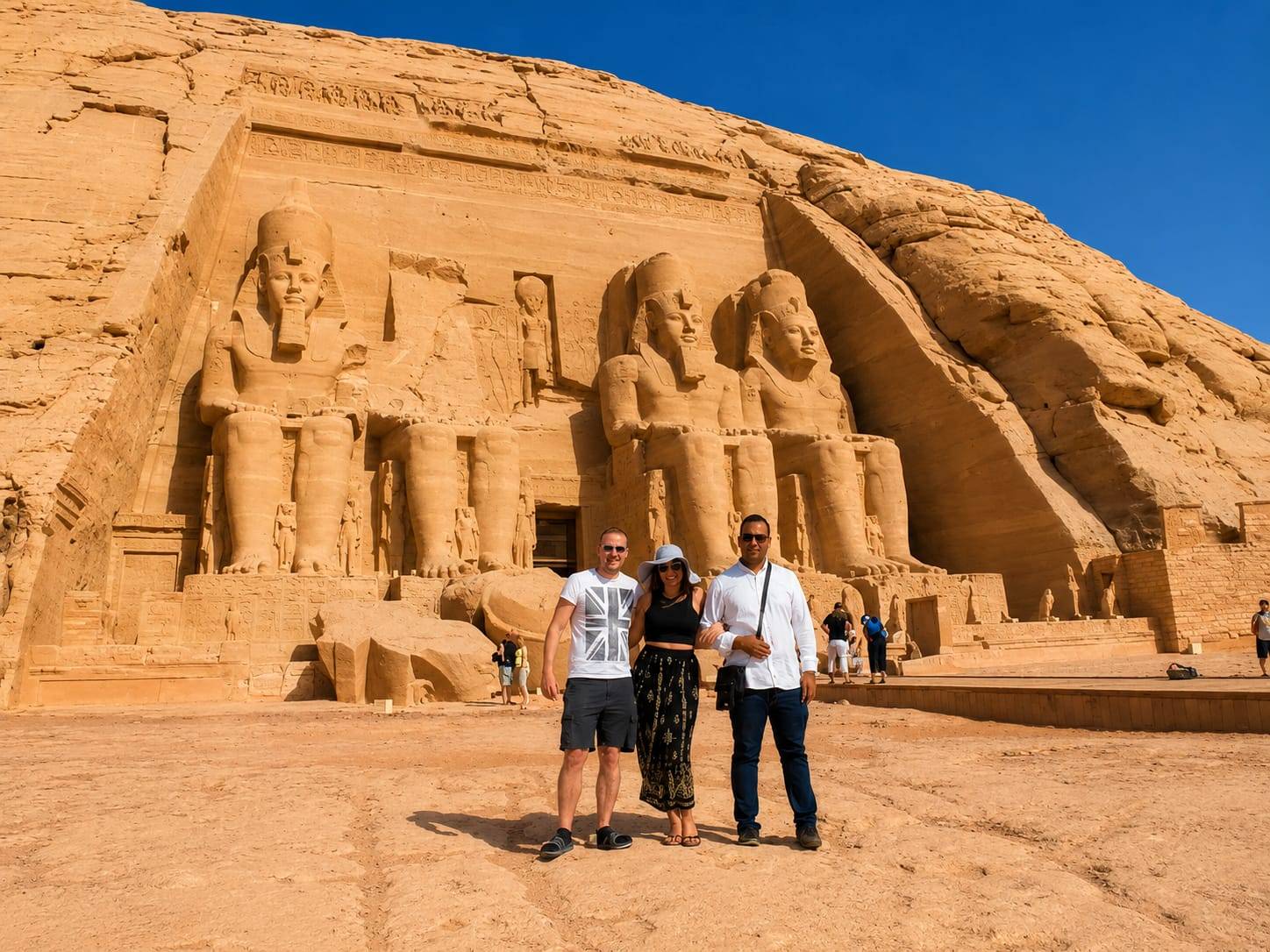
Abu Simbel Temples, Egypt: The Ultimate Travel Guide to History, Tickets, Sun Festival & Tours
SEO Title: Abu Simbel Temples Egypt: History, Tickets & Tours
Meta Description: Discover the Abu Simbel Temples in Egypt. Explore Ramses II’s Great Temple, Queen Nefertari’s temple, the Sun Festival, visitor tips, and day trips from Aswan.
Focus Keyword: Abu Simbel Temples
Suggested URL Slug: abu-simbel-temples-egypt
Introduction: Discover the Magnificent Abu Simbel Temples
The Abu Simbel Temples are among the most impressive archaeological monuments in Egypt and one of the greatest achievements of ancient Egyptian architecture. Located in southern Egypt near the Sudanese border, overlooking the waters of Lake Nasser, these magnificent rock-cut temples reveal the power, religious beliefs, and artistic achievements of Pharaoh Ramses II.
Built during the 13th century BC, the Abu Simbel complex consists of two extraordinary monuments: the Great Temple of Ramses II and the Small Temple dedicated to Queen Nefertari and the goddess Hathor. Their colossal statues, richly decorated interiors, and remarkable solar alignment have made Abu Simbel one of Egypt’s most unforgettable destinations.
Abu Simbel is also famous for an extraordinary modern engineering achievement. During the 1960s, an international rescue campaign led by UNESCO moved the temples to higher ground to protect them from the rising waters of Lake Nasser following the construction of the Aswan High Dam.
Whether you are planning a day trip from Aswan, a Nile cruise extension, or a private Egypt tour, Abu Simbel offers a unique opportunity to explore the history and cultural heritage of ancient Egypt.
1. Where Are the Abu Simbel Temples Located?
The Abu Simbel Temples are located in Egypt’s Aswan Governorate, approximately 280–290 kilometers south of Aswan, close to the Sudanese border.
The temples stand beside Lake Nasser, one of the largest artificial lakes in the world. Their dramatic desert setting, enormous sandstone facade, and proximity to the water create a striking landscape unlike any other archaeological site in Egypt.
Abu Simbel forms part of the UNESCO World Heritage property known as the Nubian Monuments from Abu Simbel to Philae, which includes several important archaeological sites rescued during the construction of the Aswan High Dam.
Abu Simbel at a Glance
-
Location: Southern Egypt, Aswan Governorate
-
Nearest major city: Aswan
-
Main builder: Pharaoh Ramses II
-
Construction period: 13th century BC
-
Main monuments: Great Temple and Small Temple
-
Famous event: Abu Simbel Sun Festival
-
UNESCO World Heritage inscription: 1979
-
Recommended sightseeing time: Approximately 2–3 hours, excluding transportation
2. The History of Abu Simbel: Why Did Ramses II Build the Temples?
Ramses II, also known as Ramses the Great, was one of the most powerful and influential pharaohs of ancient Egypt. He ruled during the 19th Dynasty and became famous for his military campaigns, diplomatic achievements, and ambitious building projects.
He commissioned the Abu Simbel Temples during the 13th century BC, carving them directly into a sandstone cliff in Nubia, south of Egypt’s traditional political and religious centers.
Their location was significant. Nubia was an important region for trade, natural resources, and political relations with Egypt. The monumental temples reinforced the pharaoh’s authority and expressed his connection with the gods.
The Great Temple was dedicated to Amun-Ra, Ra-Horakhty, Ptah, and the deified Ramses II. Through its colossal statues and elaborate reliefs, the monument presented the pharaoh as a powerful ruler protected by the gods.
The Small Temple honored Queen Nefertari and the goddess Hathor, emphasizing the queen’s royal status and religious significance.
Together, the two temples demonstrate how ancient Egyptian architecture combined religious devotion, political symbolism, and artistic excellence.
Ramses II and the Battle of Kadesh
Ramses II is closely associated with the Battle of Kadesh, fought against the Hittite Empire. Royal inscriptions and reliefs at several Egyptian temples depict the campaign as a demonstration of the pharaoh’s courage and military leadership.
These scenes are important historical sources, although they reflect the royal Egyptian interpretation of the battle rather than a neutral account.
At Abu Simbel, the imagery of the king and his achievements reinforces the connection between military power, divine protection, and royal authority.
3. The Great Temple of Ramses II
The Great Temple is the most recognizable monument at Abu Simbel. Its enormous facade features four colossal seated statues of Ramses II, carved directly into the sandstone cliff.
The statues dominate the entrance and communicate the authority of the pharaoh. Smaller figures of royal family members appear near the king’s legs, providing a sense of scale and illustrating the importance of the royal household.
One of the statues was damaged by an ancient earthquake, and its fallen fragments remain near the base of the facade.
The Great Hypostyle Hall
Inside the Great Temple, visitors enter a large hall supported by pillars decorated with Osiride representations of Ramses II.
The walls feature elaborate reliefs depicting religious ceremonies, royal achievements, and scenes associated with the pharaoh’s military campaigns.
The architectural arrangement leads progressively toward the sanctuary, creating a sequence of spaces that reflects the temple’s religious significance.
The Inner Sanctuary
At the far end of the temple lies the sanctuary, containing four seated figures associated with Ptah, Amun-Ra, Ra-Horakhty, and the deified Ramses II.
This chamber is central to the temple’s international reputation because of the solar alignment that occurs on two dates each year.
The combination of monumental architecture, religious symbolism, and astronomical precision makes the Great Temple one of the most extraordinary achievements of ancient Egyptian civilization.
4. The Small Temple of Queen Nefertari
The Small Temple stands near the Great Temple and is dedicated to Queen Nefertari and the goddess Hathor.
Its facade features six standing statues: four representing Ramses II and two representing Nefertari. The queen’s statues are unusually prominent, appearing at a scale comparable to those of the king.
This artistic choice reflects Nefertari’s importance within the royal household and gives the temple a distinctive place in ancient Egyptian monumental art.
Who Was Queen Nefertari?
Nefertari was one of the most prominent royal women during the reign of Ramses II. She is remembered for her royal status, her association with religious monuments, and her beautifully decorated tomb in the Valley of the Queens near Luxor.
At Abu Simbel, her connection with Hathor emphasizes themes of divine protection, beauty, music, and royal devotion.
The Small Temple is essential to a complete visit. Although smaller than the Great Temple, it provides a different perspective on ancient Egyptian beliefs and the role of royal women.
Travel tip: Allow time to visit both temples. The Great Temple may be the main attraction, but the Small Temple is equally important for understanding the full historical significance of Abu Simbel.
5. The Abu Simbel Sun Festival
One of the most famous features of Abu Simbel is its remarkable solar alignment.
Traditionally observed on February 22 and October 22, this phenomenon occurs when sunlight travels through the Great Temple and reaches the statues in the inner sanctuary.
The sunlight illuminates three of the four seated figures: Amun-Ra, Ra-Horakhty, and the deified Ramses II. The statue of Ptah remains in shadow.
This carefully arranged alignment demonstrates the extraordinary relationship between ancient Egyptian architecture, religious symbolism, and the movement of the sun.
The traditional festival dates are widely associated with important events in Ramses II’s life, although the precise original reason for selecting these dates remains debated.
When Should You Visit the Sun Festival?
The principal dates are:
-
February 22
-
October 22
These events attract visitors from Egypt and around the world. If you plan to attend, arrange transportation and accommodation in advance and confirm the current entry schedule.
The alignment takes place early in the morning, so ordinary daytime arrival arrangements may not be suitable for witnessing the event.
Even if you visit outside the festival dates, Abu Simbel remains an exceptional destination. The monumental statues, decorated interiors, and story of the temples’ relocation make the site worthwhile throughout the year.
6. How the Abu Simbel Temples Were Saved
The modern history of Abu Simbel is almost as remarkable as its ancient origins.
During the 1960s, construction of the Aswan High Dam threatened numerous archaeological monuments in Nubia. The rising waters that formed Lake Nasser placed Abu Simbel and other important sites at risk of permanent submersion.
UNESCO launched an international campaign to save the endangered monuments, attracting support from countries, engineers, archaeologists, and conservation specialists worldwide.
The solution required an extraordinary engineering operation. The temples were carefully cut into large blocks, dismantled, moved to higher ground, and reconstructed in a specially designed location.
The relocation was completed in 1968, preserving the monuments for future generations.
The temples now stand approximately 64 meters above their original elevation and around 180 meters inland from their original position.
Why the Relocation Was So Important
The rescue of Abu Simbel became one of the most famous international heritage conservation projects in history.
It demonstrated how international cooperation and engineering innovation could protect irreplaceable cultural monuments from modern development.
Today, visitors experience two histories at once: the extraordinary achievements of ancient Egyptian builders and the modern determination to preserve their legacy.
7. How to Get to Abu Simbel from Aswan
Most visitors reach Abu Simbel from Aswan, the main gateway to southern Egypt’s Nubian monuments.
There are three main options.
Option 1: Private Car and Guided Tour
A private excursion is a convenient choice for couples, families, and small groups who want flexibility.
A typical day trip includes an early departure from Aswan, transportation to Abu Simbel, time to explore both temples, and a return journey.
Depending on your arrangements, a private tour may include:
-
Private round-trip transportation
-
Hotel pickup and drop-off
-
A licensed Egyptologist guide
-
Assistance with sightseeing arrangements
-
A flexible schedule based on your preferences
Road travel generally takes around three to four hours each way, although journey times can vary.
Option 2: Domestic Flight
Flights between Aswan and Abu Simbel may be available on selected dates. Flying can reduce road travel time, but schedules, baggage policies, and connections should be checked before booking.
This option can be useful for travelers with limited time or those connecting Abu Simbel with a wider Egypt itinerary.
Option 3: Organized Group Excursion
Organized excursions are suitable for travelers who prefer a planned schedule and shared transportation.
Before booking, confirm the departure time, group size, guide language, entrance tickets, and whether all transportation costs are included.
Which Option Is Best?
A private excursion is often the most flexible option, particularly for families and travelers who want a personalized experience. Flights may be preferable when saving travel time is the priority.
The right choice depends on your budget, schedule, and preferred travel style.
8. Best Time to Visit Abu Simbel
The best time to visit Abu Simbel depends on the weather, your travel schedule, and whether you want to attend the Sun Festival.
October to April
The cooler months are generally more comfortable for exploring southern Egypt. October through April is a popular period for sightseeing, while February and October are particularly notable because of the solar alignment events.
May to September
Summer temperatures in southern Egypt can be extremely high. Visitors traveling during these months should plan carefully, carry water, wear sun protection, and avoid unnecessary exposure to direct sunlight.
Best Time of Day
Early morning is often a practical choice because temperatures are generally lower and the light can be attractive for photography.
However, the solar alignment inside the Great Temple occurs on specific dates. Ordinary sunrise visits do not automatically provide the same experience.
9. Abu Simbel Tickets and Opening Hours
Ticket prices and opening hours can change, so travelers should confirm current information before their visit.
The Egyptian Ministry of Tourism and Antiquities provides official information about the monument and its visiting arrangements.
Check the following resources before traveling:
-
Official monument information: https://egymonuments.gov.eg/archaeological-sites/abu-simbel/
-
UNESCO World Heritage Centre: https://whc.unesco.org/en/list/88/
What Should You Bring?
For a comfortable visit, consider bringing:
-
Comfortable walking shoes
-
Drinking water
-
A hat and sunscreen
-
A camera or mobile phone
-
Your entrance ticket and any applicable identification
-
A suitable payment method for additional expenses
Follow all site instructions concerning photography, restricted areas, and conservation rules.
If you require accessibility assistance, contact the site or your tour provider before departure.
10. How Long Should You Spend at Abu Simbel?
Most visitors should allow approximately two to three hours to explore the two temples.
Travel time must be added if you are visiting from Aswan.
A typical sightseeing estimate is:
-
Great Temple: 45–75 minutes
-
Small Temple: 30–45 minutes
-
Photography and additional exploration: 15–30 minutes
These estimates depend on crowd levels, personal interests, and site conditions.
Travelers who want a more relaxed experience may consider staying overnight in Abu Simbel, particularly around the Sun Festival or when coordinating flights and other southern Egypt attractions.
11. Can You Visit Abu Simbel on a Day Trip from Aswan?
Yes. A day trip from Aswan is one of the most popular ways to visit Abu Simbel.
An organized excursion generally begins early in the morning, allowing enough time for transportation and sightseeing. After arriving, visitors explore both temples before returning to Aswan.
A private tour can be arranged according to your preferred transportation, guide language, and schedule.
Before confirming a booking, ask whether the quotation includes:
-
Round-trip transportation
-
Hotel pickup and drop-off
-
A licensed Egyptologist guide
-
Entrance tickets
-
Meals or refreshments, if applicable
-
Any additional transportation or service charges
Comparing these details helps you understand exactly what is included in your tour.
12. Other Attractions to Visit in Aswan
If you have extra time in Aswan, consider visiting other important attractions in the region.
Philae Temple
Philae Temple is dedicated primarily to the goddess Isis. Its island setting, elegant columns, and religious reliefs make it one of the most beautiful temples in southern Egypt.
Like Abu Simbel, Philae was relocated as part of the international campaign to preserve Nubian monuments.
The Unfinished Obelisk
Located in an ancient granite quarry, the Unfinished Obelisk provides insight into the techniques used by Egyptian stoneworkers to produce monumental stone structures.
The Nubian Museum
The Nubian Museum explores the history, archaeology, and cultural heritage of Nubia, providing valuable context for understanding the region around Abu Simbel.
Lake Nasser
Lake Nasser offers striking desert scenery and a different perspective on southern Egypt. Depending on your itinerary, you may consider a longer stay or additional sightseeing opportunities in the region.
13. Photography Tips for Abu Simbel
Abu Simbel is an excellent destination for travel photography.
Capture the full facade. A wide-angle composition helps show the four colossal statues and the scale of the sandstone monument.
Include people for scale. Visitors in the frame can help communicate the enormous size of the statues.
Photograph the Small Temple. Its facade and statues of Nefertari provide distinctive compositions.
Respect interior restrictions. Photography rules may vary by area and can change, so follow the instructions displayed at the site.
Allow enough time. A rushed visit can make it difficult to appreciate the details of the reliefs and architecture.
14. Is Abu Simbel Worth Visiting?
For most travelers interested in ancient Egypt, Abu Simbel is absolutely worth considering.
The temples offer a different experience from the pyramids of Giza and the monumental complexes of Luxor. Their colossal statues, rock-cut interiors, religious symbolism, and modern conservation story make them a destination of exceptional historical importance.
Abu Simbel is particularly rewarding for:
-
First-time visitors exploring Egypt beyond Cairo
-
History and archaeology enthusiasts
-
Couples and families interested in cultural experiences
-
Photographers and architecture enthusiasts
-
Travelers exploring Aswan and the Nile Valley
-
Visitors interested in ancient astronomy and the Sun Festival
The main consideration is the distance from Aswan. The journey requires planning, but the experience of standing before the colossal statues makes the effort worthwhile for many visitors.
15. Frequently Asked Questions About Abu Simbel Temples, Egypt
1. What are the Abu Simbel Temples famous for?
The Abu Simbel Temples are famous for their colossal statues of Pharaoh Ramses II, their remarkable rock-cut architecture, the smaller temple dedicated to Queen Nefertari, and the spectacular solar alignment inside the Great Temple.
2. Who built Abu Simbel and why?
Pharaoh Ramses II commissioned the temples during the 13th century BC. They served religious purposes and demonstrated the pharaoh’s power and authority in Nubia, an important region south of ancient Egypt.
3. Where exactly are the Abu Simbel Temples located?
The temples are located in southern Egypt, in Aswan Governorate, near the Sudanese border and on the western shore of Lake Nasser. They are approximately 280–290 kilometers south of Aswan.
4. How far is Abu Simbel from Aswan?
Abu Simbel is approximately 280–290 kilometers from Aswan. Traveling by road generally takes around three to four hours each way, depending on road conditions and transport arrangements.
5. Can you visit Abu Simbel from Aswan in one day?
Yes. Many travelers visit Abu Simbel on a day trip from Aswan. An early departure allows time to explore both temples before returning to Aswan on the same day.
6. Is Abu Simbel worth visiting?
Yes. Abu Simbel is one of Egypt’s most impressive ancient monuments, combining monumental architecture, religious symbolism, royal history, and an extraordinary modern conservation story.
7. What is the best time of year to visit Abu Simbel?
October through April is generally a comfortable period for sightseeing because temperatures in southern Egypt can be extremely high during summer. February and October are particularly popular because of the solar alignment events.
8. When is the Abu Simbel Sun Festival?
The solar alignment is traditionally observed on February 22 and October 22. Visitors planning to attend should confirm the current event schedule and entry arrangements in advance.
9. What happens during the Abu Simbel Sun Festival?
Sunlight travels through the Great Temple and illuminates three of the four seated figures in the inner sanctuary: Amun-Ra, Ra-Horakhty, and the deified Ramses II. The statue of Ptah generally remains in shadow.
10. How many temples are there at Abu Simbel?
The main archaeological complex consists of two temples: the Great Temple of Ramses II and the Small Temple dedicated to Queen Nefertari and the goddess Hathor.
11. Who was Queen Nefertari?
Queen Nefertari was one of the most prominent royal women of the reign of Ramses II. Her temple at Abu Simbel reflects her royal status and her association with Hathor, a goddess connected with beauty, music, and divine protection.
12. Why were the Abu Simbel Temples relocated?
The temples were threatened by the rising waters of Lake Nasser following the construction of the Aswan High Dam. During an international UNESCO-led rescue campaign in the 1960s, they were dismantled into large blocks and reconstructed at a higher location.
13. When were the Abu Simbel Temples moved?
The relocation project was completed in 1968. The temples were reconstructed approximately 64 meters above their original elevation and around 180 meters inland from their former location.
14. Are the Abu Simbel Temples a UNESCO World Heritage Site?
Yes. Abu Simbel forms part of the Nubian Monuments from Abu Simbel to Philae World Heritage property, which was inscribed on the UNESCO World Heritage List in 1979.
15. How long should I spend at Abu Simbel?
Allow approximately two to three hours to explore both temples. If you are traveling from Aswan, you should also account for approximately six to eight hours of round-trip road travel.
16. What are the opening hours of Abu Simbel?
Opening hours can change according to official regulations, special events, and seasonal arrangements. Check the Egyptian Ministry of Tourism and Antiquities website before your visit for the latest information.
17. How much are Abu Simbel entrance tickets?
Ticket prices may change and can differ for foreign visitors, Egyptian citizens, students, and special festival dates. Check the official Egyptian Ministry of Tourism and Antiquities website for current admission prices.
18. Can I fly from Cairo to Abu Simbel?
Travelers can plan a journey from Cairo using domestic flights and onward transportation, depending on available schedules and connections. Another option is to travel to Aswan first and arrange a separate excursion to Abu Simbel.
19. Can I visit Abu Simbel without a tour guide?
Independent visits may be possible, subject to current ticketing and access arrangements. However, a qualified Egyptologist can explain the historical scenes, religious symbolism, and architectural features in greater detail.
20. What should I bring when visiting Abu Simbel?
Bring comfortable walking shoes, drinking water, sunscreen, a hat, and a camera or mobile phone. During warmer months, take particular care to protect yourself from the strong southern Egyptian sun.
21. Is Abu Simbel suitable for families with children?
Yes. Families can enjoy the enormous statues, fascinating history, and impressive temple interiors. Because the journey from Aswan is long, plan suitable breaks and consider your children's comfort during the road trip.
22. Can I visit Abu Simbel during summer?
Yes, but summer temperatures can be extremely high in southern Egypt. An early departure, adequate drinking water, sun protection, and a carefully planned itinerary are especially important.
23. What other attractions can I visit with Abu Simbel?
Popular attractions in and around Aswan include Philae Temple, the Unfinished Obelisk, the Nubian Museum, and Lake Nasser. These can be incorporated into a longer itinerary depending on your available time.
24. Is Abu Simbel included in Nile cruise itineraries?
Some Nile cruise itineraries offer Abu Simbel as an optional excursion or as part of a broader southern Egypt travel package. Availability depends on the cruise schedule and departure arrangements, so confirm the details with your tour operator.
25. Can I book a private Abu Simbel tour from Aswan?
Yes. Private tours can be arranged with transportation and, depending on the package, a licensed Egyptologist guide and entrance tickets. Before booking, confirm exactly which services are included in the quoted price.
26. What is the difference between the Great Temple and the Small Temple?
The Great Temple is dedicated to Amun-Ra, Ra-Horakhty, Ptah, and the deified Ramses II. The Small Temple honors Queen Nefertari and the goddess Hathor. Both monuments have distinctive facades, interiors, and religious significance.
27. Can I take photographs inside Abu Simbel?
Photography rules may vary by area and can change. Follow the signs and instructions provided by site staff, particularly inside the temples and around protected monuments.
28. What makes Abu Simbel different from the temples in Luxor?
Abu Simbel is carved directly into a sandstone cliff and is famous for its colossal royal statues, solar alignment, and relocation project. Luxor's major monuments, including Karnak and Luxor Temple, form a different archaeological landscape with extensive open-air temple complexes.
29. Is one day enough to visit Abu Simbel?
One day is generally sufficient for a visit from Aswan if transportation is arranged efficiently. Travelers who want a more relaxed experience or plan to attend the Sun Festival may prefer an overnight stay.
30. How can I arrange an Abu Simbel tour with Let’s Explore Egypt Travel?
You can contact Let’s Explore Egypt Travel to discuss transportation, guide services, entrance tickets, and an itinerary suited to your travel dates. Confirm the inclusions, departure time, and total cost before finalizing your booking.
16. Plan Your Abu Simbel Trip with Let’s Explore Egypt Travel
Abu Simbel offers an unforgettable journey into the world of ancient Egypt. From the monumental statues of Ramses II to the elegant temple of Queen Nefertari, the complex reveals the artistic ambition, religious beliefs, and political vision of one of Egypt’s greatest pharaohs.
The extraordinary story of the temples’ relocation adds another dimension to the experience, demonstrating the importance of protecting cultural heritage for future generations.
With proper planning, you can explore both temples, learn about their historical significance, and experience the famous solar alignment if your travel dates coincide with the festival.
Let’s Explore Egypt Travel can help you explore private Egypt tour options and plan an itinerary around your travel dates, interests, and preferred travel style.
Consider combining Abu Simbel with Philae Temple, the Unfinished Obelisk, and other attractions in Aswan, or include it in a longer journey through Egypt.
Plan your visit, discover the wonders of ancient Nubia, and experience one of Egypt’s most remarkable archaeological treasures.
Explore ancient Egypt beyond the ordinary with Let’s Explore Egypt Travel.
Official Sources and Further Reading
-
Egyptian Ministry of Tourism and Antiquities: https://egymonuments.gov.eg/archaeological-sites/abu-simbel/
-
UNESCO World Heritage Centre: https://whc.unesco.org/en/list/88/
For accurate visitor planning, always verify current entrance fees, opening hours, and transportation schedules through official sources before departure.
Tours You May Like from Our Website
Discover more of Egypt with Let’s Explore Egypt Travel. From the magnificent temples of ancient Nubia to the Pyramids of Giza and the legendary temples of Luxor, explore our private tours and multi-day Egypt vacation packages.
1. 10-Day Egypt and Nile Cruise Tour: Cairo, Luxor & Aswan
Experience the best of ancient Egypt on a multi-day journey combining Cairo’s iconic landmarks with the temples of Luxor and Aswan. This itinerary is an excellent choice for travelers who want to explore Egypt’s most famous archaeological sites and enjoy a Nile cruise.
Highlights: Giza Pyramids, Cairo sightseeing, Luxor temples, Aswan attractions, and a memorable Nile cruise.
2. 8-Day Cairo, Luxor & Aswan Package
Discover Egypt’s most celebrated destinations on a carefully planned vacation combining ancient history, monumental temples, and authentic cultural experiences.
Highlights: Cairo, the Giza Pyramids, Luxor, Aswan, and the remarkable heritage of the Nile Valley.
3. 12-Day Best of Egypt Tour
Explore Egypt at a relaxed pace with a longer itinerary designed for travelers who want to discover the country’s major historical destinations and experience more of its extraordinary heritage.
Highlights: Ancient Egyptian monuments, historic cities, archaeological sites, and unforgettable cultural experiences.
Discover Our Multi-Day Egypt Tours
4. 5-Day Cairo & Luxor Tour
Combine the legendary Pyramids of Giza with the spectacular temples and royal tombs of Luxor. This tour is a great option for travelers who want to experience two of Egypt’s most important historical destinations in one trip.
Highlights: Giza Pyramids, ancient Egyptian history, Luxor temples, and the Valley of the Kings, depending on the itinerary.
Explore Our Egypt Tour Packages
5. Private Egypt Tours with Expert Egyptologist Guides
Prefer a more personalized experience? Explore private Egypt tours with flexible itineraries, professional Egyptologist guides, and transportation arrangements tailored to your travel plans.
You can discuss adding Abu Simbel to a wider itinerary that includes Aswan, Luxor, and Cairo, subject to availability and travel logistics.
Contact Let’s Explore Egypt Travel
Plan Your Egypt Adventure
Whether you want to visit Abu Simbel on a day trip from Aswan or discover Egypt through a longer vacation, Let’s Explore Egypt Travel can help you plan an itinerary suited to your interests and schedule.
Explore Egypt’s ancient wonders with a local team and create a journey you will remember for a lifetime.
Highlights of the Abu Simbel Temples Tour
-
Discover the magnificent Abu Simbel Temples, one of Egypt’s most extraordinary ancient monuments.
-
Admire the four colossal statues of Pharaoh Ramses II at the entrance to the Great Temple.
-
Explore the Great Temple’s impressive halls, ancient hieroglyphics, and beautifully carved religious reliefs.
-
Visit the Small Temple dedicated to Queen Nefertari and the goddess Hathor.
-
Learn about Ramses II’s reign, royal achievements, and the religious significance of the temples.
-
Discover the remarkable solar alignment that illuminates the Great Temple’s inner sanctuary twice a year.
-
Explore the fascinating story of the UNESCO-led international campaign that saved Abu Simbel from the rising waters of Lake Nasser.
-
Enjoy spectacular desert scenery and views of Lake Nasser in southern Egypt.
-
Capture unforgettable photographs of the monumental statues and ancient Egyptian architecture.
-
Experience one of Egypt’s most important UNESCO World Heritage attractions as part of your southern Egypt adventure.