


Aswan High Dam,
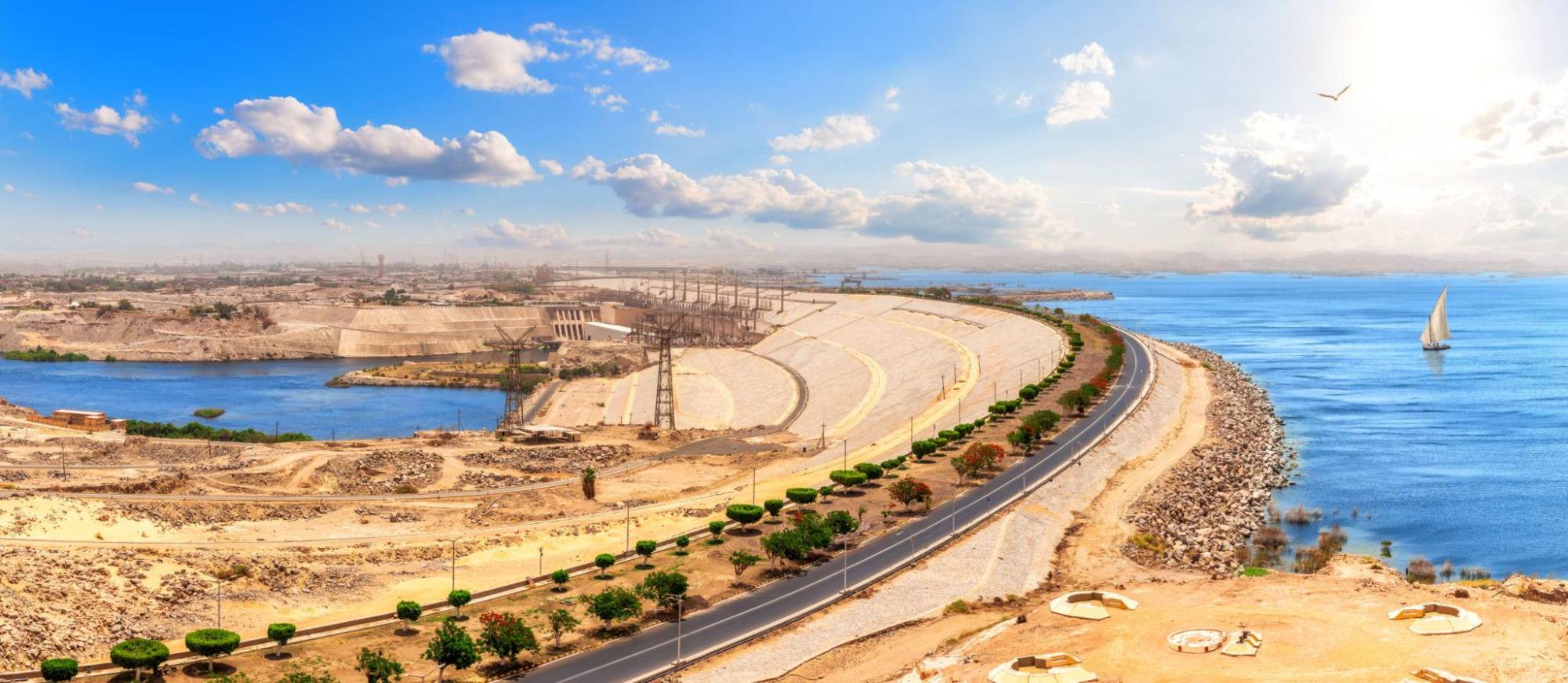
Aswan High Dam, Egypt: History, Facts, Lake Nasser, and Abu Simbel
Discover the Aswan High Dam in Egypt, one of the country’s most important modern engineering achievements. Located on the River Nile near Aswan in southern Egypt, the High Dam transformed water management, agriculture, and electricity generation while creating the enormous Lake Nasser.
For travelers exploring Aswan, the dam offers an opportunity to understand how modern Egypt manages the Nile and how the construction project helped trigger an international effort to rescue ancient Nubian monuments, including the magnificent temples of Abu Simbel.
This comprehensive guide covers the history of the Aswan High Dam, its engineering features, its economic importance, Lake Nasser, the relocation of Abu Simbel, and practical information for visitors planning an Aswan sightseeing tour.
1. What Is the Aswan High Dam?
The Aswan High Dam is a large rock-fill dam built across the River Nile in southern Egypt. It was designed to regulate the Nile’s flow, store water for use throughout the year, reduce the risk of destructive flooding, and generate hydroelectric power.
Before the High Dam was constructed, Egypt depended heavily on the annual Nile flood. Although these floods had supported agriculture for thousands of years, their volume varied considerably. Excessive flooding could damage homes and farmland, while years of insufficient water could threaten agricultural production.
The High Dam introduced a system for storing water during periods of high inflow and releasing it when required. Its reservoir, Lake Nasser, became a major component of Egypt’s water-management infrastructure.
According to Egypt’s Ministry of Water Resources and Irrigation, the dam measures approximately 3,830 meters along its crest and stands about 111 meters above the riverbed. Its power station was designed to generate substantial hydroelectric electricity.
Official reference: Egypt’s Ministry of Water Resources and Irrigation.
2. Where Is the Aswan High Dam Located?
The Aswan High Dam is located south of Aswan city, near the southern end of Egypt’s Nile Valley. Aswan is approximately 870 kilometers south of Cairo by road, although the exact distance depends on the route.
The dam is a popular stop on sightseeing tours of Aswan, a destination known for its temples, islands, Nubian culture, and beautiful Nile scenery.
Nearby attractions include:
-
Philae Temple, dedicated primarily to the goddess Isis.
-
The Unfinished Obelisk, located in an ancient granite quarry.
-
The Nubian Museum, which explores Nubian history and culture.
-
Lake Nasser, the vast reservoir created by the dam.
-
Abu Simbel Temples, located farther south near Egypt’s border with Sudan.
Visitors can combine a visit to the High Dam with other Aswan landmarks to make the most of their time in southern Egypt.
For background on the region’s archaeological attractions, consult the Egyptian Ministry of Tourism and Antiquities’ Aswan guide.
3. History of the Aswan High Dam
The idea of constructing a much larger dam at Aswan developed because the existing water-control infrastructure could not provide the level of long-term storage Egypt needed.
The original Aswan Dam was completed in 1902 and subsequently raised twice. However, it could not provide the same storage capacity as the proposed High Dam.
In the early 1950s, Egyptian engineer Adrian Daninos proposed a major dam project to store Nile water and generate electricity. The Egyptian government subsequently studied the proposal and developed plans for construction.
Work on the High Dam began on January 9, 1960. The project involved major excavation, diversion channels, construction of the dam embankment, and the installation of hydroelectric generating equipment.
The Nile’s flow was diverted through special channels and tunnels in 1964, allowing the reservoir to begin filling. Construction was completed in 1970, and the dam was officially inaugurated on January 15, 1971.
The project became a defining symbol of Egypt’s modern development and its effort to control the country’s most important natural resource.
Source: Egypt’s State Information Service — The High Dam.
4. Important Facts About the Aswan High Dam
The following facts help explain the scale and importance of the project.
-
Location: On the River Nile, south of Aswan, Egypt.
-
Construction began: January 9, 1960.
-
Construction completed: 1970.
-
Official inauguration: January 15, 1971.
-
Crest length: Approximately 3,830 meters.
-
Height above the riverbed: Approximately 111 meters.
-
Structure: Rock-fill dam.
-
Major reservoir: Lake Nasser.
-
Main purposes: Water storage, flood management, irrigation support, and hydroelectric power generation.
Lake Nasser extends far into southern Egypt and into Sudan, where the corresponding portion of the reservoir is known as Lake Nubia.
The dam is among the most recognizable examples of large-scale water engineering in modern Egyptian history.
5. Why Was the Aswan High Dam Built?
The High Dam was constructed to address several long-standing challenges associated with the Nile.
Water storage
The Nile’s annual flow varies from year to year. A large reservoir enables water to be stored during periods of greater inflow and made available when natural river flows are lower.
Flood management
The dam gives Egyptian authorities greater control over the release of Nile water, reducing the risk of destructive downstream flooding compared with the river’s former uncontrolled seasonal variations.
Agricultural irrigation
Reliable water releases support irrigation throughout the year. This helps farmers plan agricultural activities without relying exclusively on the timing and volume of the annual flood.
Electricity generation
Water released through the dam’s turbines produces hydroelectric power. This was particularly significant during the early decades of the project, when expanding electricity access was a major national priority.
Economic development
The project supported broader plans for agricultural development, industrialization, and infrastructure expansion.
The High Dam therefore serves several interconnected purposes rather than functioning only as a barrier across the river.
6. Lake Nasser: The Vast Reservoir Behind the Dam
Lake Nasser is one of the most striking geographical features associated with the Aswan High Dam. The enormous artificial reservoir was formed as water accumulated behind the dam.
The Egyptian portion is called Lake Nasser, while the reservoir extending into Sudan is known as Lake Nubia.
The lake is approximately 500 kilometers long, although its exact dimensions and surface area vary with water levels. It extends through a dramatic desert landscape, creating a striking contrast between blue water and the surrounding arid terrain.
Lake Nasser is important for water storage and supports fishing activities. It is also associated with remote archaeological sites and opportunities to experience a less-visited part of southern Egypt.
The lake illustrates the enormous geographical changes that can follow the construction of a major dam. Its creation also led to the relocation of communities and the rescue of archaeological sites threatened by rising water.
Reference: NASA Earth Observatory — Lake Nasser, Egypt.
7. The Aswan High Dam and the Rescue of Abu Simbel
One of the most remarkable chapters in the history of the High Dam concerns the ancient temples of Abu Simbel.
When the reservoir began to rise, several Nubian archaeological sites faced the threat of permanent submersion. Among the most famous were the Great Temple of Ramesses II and the nearby temple dedicated to Queen Nefertari at Abu Simbel.
An international campaign coordinated by UNESCO helped rescue endangered monuments across Nubia. The Abu Simbel temples were carefully dismantled, cut into large blocks, and reconstructed at a higher location between 1964 and 1968.
The relocation preserved the temples for future generations and became one of the most celebrated archaeological rescue projects in history.
Today, visitors can admire the monumental statues of Ramesses II, explore the richly decorated interiors, and learn about the extraordinary engineering effort that saved the complex.
The temples are also famous for their solar alignment. On two traditionally observed dates, February 22 and October 22, sunlight reaches the sanctuary of the Great Temple and illuminates several of its statues.
Official reference: Egyptian Ministry of Tourism and Antiquities — Abu Simbel.
Explore the Abu Simbel Temples with Let’s Explore Egypt Travel
Discover one of southern Egypt’s most extraordinary archaeological destinations with a visit to the magnificent Abu Simbel Temples. Admire the colossal statues of Ramesses II, explore the temple dedicated to Queen Nefertari, and learn how this ancient masterpiece was saved from the rising waters created by the Aswan High Dam.
Planning to visit Abu Simbel during your stay in Aswan? Explore our Abu Simbel Temples Tour to plan your journey into the history of ancient Egypt.
8. The Benefits of the Aswan High Dam
The High Dam has influenced several major aspects of Egyptian life.
Improved water management
The reservoir gives Egypt a way to store and regulate water supplies, helping authorities manage changing inflows and periods of low water availability.
Greater control over flooding
The dam substantially reduced the threat posed by uncontrolled seasonal floods downstream. This helped protect agricultural areas and infrastructure from certain types of flood damage.
Year-round irrigation
The ability to regulate water releases supported the expansion of perennial irrigation and changed traditional agricultural practices in many areas.
Hydroelectric electricity
The dam’s power station contributed significantly to electricity generation during the period when Egypt was rapidly expanding its power infrastructure.
Fishing and economic activity
Lake Nasser supports fisheries and related economic activities, creating additional uses for the reservoir.
These benefits need to be considered alongside the project’s social and environmental consequences. The High Dam transformed the Nile system, but its impacts have not been uniformly positive for every community or ecosystem.
9. Environmental and Social Impacts
The Aswan High Dam is a major engineering achievement, but understanding its history requires considering its costs as well as its benefits.
Relocation of Nubian communities
The formation of Lake Nasser flooded extensive areas of historic Nubia. Many Nubian families had to leave ancestral settlements and relocate, resulting in significant changes to community life, traditional landscapes, and cultural heritage.
Changes to the Nile’s natural flow
Regulating the river altered the natural pattern of seasonal flooding. This changed the movement of sediment and nutrients through the Nile system.
Sediment retention
The reservoir traps much of the sediment that would otherwise move downstream. This can affect soil replenishment, river processes, and coastal environments.
Water loss through evaporation
Lake Nasser has an extensive surface area in a hot, dry climate, so evaporation is an important consideration in reservoir management.
Ecological changes
The dam altered aquatic habitats and the river’s natural dynamics. These changes can influence fisheries, wetlands, and ecosystems along the river and its delta.
A balanced understanding of the High Dam recognizes that its benefits in water management and electricity generation came with substantial social and environmental trade-offs.
10. What Can You See at the Aswan High Dam?
For visitors, the High Dam is primarily an engineering and sightseeing attraction rather than an ancient temple complex.
Depending on access arrangements, visitors may be able to see:
-
The enormous dam embankment and its scale across the Nile.
-
Views toward the reservoir and surrounding desert landscape.
-
The broader water-control infrastructure associated with the project.
-
Information about the dam’s role in Egyptian development.
-
The contrast between the modern engineering project and Aswan’s ancient monuments.
The dam is especially interesting for travelers who enjoy history, infrastructure, geography, and understanding how Egypt’s relationship with the Nile has changed over time.
Because access rules and security arrangements may change, visitors should confirm current entry requirements and any photography restrictions with their tour operator or local authorities.
11. How to Visit the Aswan High Dam
The easiest way to visit the High Dam is to include it in an Aswan sightseeing itinerary.
By private car
A private vehicle offers flexibility when combining the dam with other attractions, such as Philae Temple and the Unfinished Obelisk. It can be particularly convenient for families and small groups.
With a guided Aswan tour
A knowledgeable guide can explain the dam’s history, engineering, and impact on Egypt. A guided visit is useful for understanding why the project was built and how it changed life along the Nile.
As part of a longer Egypt itinerary
Travelers can combine Aswan with Luxor, Cairo, or a Nile cruise. Abu Simbel can be added as a separate excursion, subject to the itinerary, transport arrangements, and available time.
For travelers interested in ancient monuments, the combination of the High Dam and Abu Simbel provides a particularly meaningful perspective: one represents modern Egypt’s effort to control the Nile, while the other demonstrates the international effort to protect ancient Egyptian heritage.
12. Best Time to Visit the Aswan High Dam
The cooler months, generally from October through April, are often more comfortable for sightseeing in Aswan.
During summer, temperatures in southern Egypt can become extremely high, so visitors should plan outdoor activities carefully, carry drinking water, and wear sun protection.
For a more comfortable experience:
-
Visit earlier in the day when possible.
-
Wear lightweight, breathable clothing.
-
Bring a hat, sunscreen, and water.
-
Allow enough time to visit nearby attractions.
-
Confirm opening hours and entry arrangements before traveling.
If you plan to visit Abu Simbel as well, allow sufficient time for transportation and the temple visit rather than assuming it can be combined with every other attraction in a single short excursion.
13. Why Include the Aswan High Dam in Your Egypt Trip?
The Aswan High Dam adds an important modern chapter to a trip focused on Egypt’s ancient history.
Many visitors travel to Aswan to see temples, archaeological sites, and the Nile. Visiting the dam helps explain the infrastructure that shaped modern water management in Egypt and the circumstances that led to the rescue of important Nubian monuments.
The experience is particularly rewarding when combined with Philae Temple or an excursion to Abu Simbel. Together, these destinations reveal different aspects of the region: ancient religious architecture, Nubian heritage, modern engineering, and the continuing importance of the Nile.
With a well-planned itinerary, travelers can explore these attractions while learning how the geography and history of southern Egypt are closely connected.
Frequently Asked Questions About the Aswan High Dam
1. What is the Aswan High Dam?
The Aswan High Dam is a large rock-fill dam on the River Nile in southern Egypt. It was built to regulate water flow, store water, support irrigation, reduce flood risks, and generate hydroelectric power.
2. Where is the Aswan High Dam located?
It is located on the River Nile south of Aswan city in southern Egypt.
3. When was the Aswan High Dam built?
Construction began on January 9, 1960, and the project was completed in 1970. Its official inauguration took place on January 15, 1971.
4. How long is the Aswan High Dam?
The dam measures approximately 3,830 meters along its crest.
5. How high is the Aswan High Dam?
It stands approximately 111 meters above the riverbed.
6. Why was the Aswan High Dam constructed?
The dam was built to improve water storage and management, control the release of Nile water, support agriculture, reduce the risk of destructive floods, and produce hydroelectric electricity.
7. What is Lake Nasser?
Lake Nasser is the enormous reservoir created behind the High Dam. It extends through southern Egypt and into Sudan.
8. Is Lake Nasser a natural lake?
No. It is an artificial reservoir formed by the accumulation of water behind the Aswan High Dam.
9. Does the Aswan High Dam generate electricity?
Yes. The dam has a hydroelectric power station that generates electricity by directing water through turbines.
10. How did the High Dam change Egyptian agriculture?
It enabled greater regulation of irrigation water and supported year-round irrigation in areas that previously depended more heavily on seasonal flooding.
11. Did the Aswan High Dam eliminate all flood risks?
No. It provides substantial control over Nile flows and reduces many downstream flood risks, but it does not eliminate every possible water-related hazard or management challenge.
12. How did the High Dam affect ancient monuments?
The rising reservoir threatened numerous Nubian archaeological sites. International rescue efforts helped document, relocate, and preserve important monuments, including Abu Simbel and Philae.
13. Why were the Abu Simbel temples relocated?
The temples were moved to prevent them from being submerged by the rising waters of Lake Nasser following the construction of the High Dam.
14. When were the Abu Simbel temples relocated?
The relocation project was completed in 1968 after a major international archaeological and engineering effort.
15. Can I combine the Aswan High Dam with Abu Simbel?
Yes. You can visit the High Dam during an Aswan sightseeing tour and arrange a separate excursion to Abu Simbel. Explore our Abu Simbel Temples Tour to discover one of Egypt’s most remarkable ancient monuments.
16. How far is Abu Simbel from Aswan?
Abu Simbel is approximately 280–300 kilometers south of Aswan by road, depending on the route and starting point.
17. Can I visit the High Dam and Philae Temple on the same day?
Yes. Many Aswan sightseeing itineraries combine the High Dam with Philae Temple and other nearby attractions. The final schedule depends on opening hours, transport, and your preferences.
18. Is the Aswan High Dam worth visiting?
It is worth considering if you are interested in modern Egyptian history, engineering, water management, or the story behind the rescue of Nubian monuments.
19. How much time should I allow for a visit?
Allow enough time to pass through any required entry procedures, view the dam, and learn about the site. Your overall sightseeing schedule should also account for travel between attractions. Confirm current access arrangements before your visit.
20. What is the best time of year to visit?
October through April is generally more comfortable for sightseeing in Aswan because temperatures are usually lower than during the summer months.
21. Does the High Dam have environmental impacts?
Yes. Its impacts include changes to sediment transport, river flow patterns, aquatic habitats, and the movement of nutrients downstream. Reservoir evaporation is also an important consideration.
22. What happened to Nubian communities when Lake Nasser was created?
Many Nubian communities were displaced when the reservoir flooded their traditional settlements. Relocation changed settlement patterns and affected cultural landscapes and ways of life.
23. Is the Aswan High Dam an ancient Egyptian monument?
No. It is a modern engineering structure built in the twentieth century. However, its construction is closely connected to the preservation of ancient monuments such as Abu Simbel.
24. Can I visit the High Dam with a private guide?
A private guided visit may be included in an Aswan sightseeing itinerary, depending on the service arranged. Confirm transport, guiding arrangements, and entry requirements when booking.
25. What other places should I visit in Aswan?
Popular choices include Philae Temple, the Unfinished Obelisk, the Nubian Museum, and Abu Simbel. Your best itinerary depends on how many days you have and whether you prefer archaeology, cultural experiences, or Nile scenery.
Plan Your Aswan and Abu Simbel Experience
The Aswan High Dam reveals an important part of modern Egypt’s story: the effort to manage the Nile, develop water and electricity infrastructure, and protect communities from extreme variations in river flow. Its construction also changed the landscape of Nubia and prompted one of the world’s most remarkable archaeological rescue campaigns.
For travelers exploring southern Egypt, combining Aswan’s modern landmarks with its ancient temples creates a deeper understanding of the region’s history and cultural significance.
Ready to explore one of Egypt’s most famous archaeological sites?
Discover the temples of Ramesses II and Queen Nefertari with Let’s Explore Egypt Travel — Abu Simbel Temples Tour.
Plan your visit and experience the extraordinary history of southern Egypt.
Recommended Official Sources
-
Discover the Aswan High Dam, one of Egypt’s most important modern engineering achievements.
-
Learn how the dam regulates the Nile River and supports water storage and irrigation.
-
Explore the history of the High Dam, constructed between 1960 and 1970.
-
Admire panoramic views of Lake Nasser, one of the world’s largest artificial reservoirs.
-
Understand the dam’s role in hydroelectric power generation and Egypt’s economic development.
-
Discover how the construction of the dam led to the international rescue of the Abu Simbel Temples.
-
Learn about the environmental changes and the relocation of Nubian communities caused by the creation of Lake Nasser.
-
Explore an essential landmark for understanding modern Egyptian history and the importance of the Nile.
-
Combine your Aswan sightseeing experience with a visit to Philae Temple and other local attractions.
-
Extend your journey to the magnificent Abu Simbel Temples with Let’s Explore Egypt Travel.