


The Unfinished Obelisk in Aswan
The Unfinished Obelisk in Aswan: History, Tickets, Size & Visitor Guide
The Unfinished Obelisk in Aswan, Egypt, is one of the most fascinating archaeological monuments in the country. Located in the ancient granite quarries of southern Egypt, this enormous stone monument offers a rare opportunity to understand how ancient Egyptians extracted and shaped the massive obelisks that once stood in front of their temples.
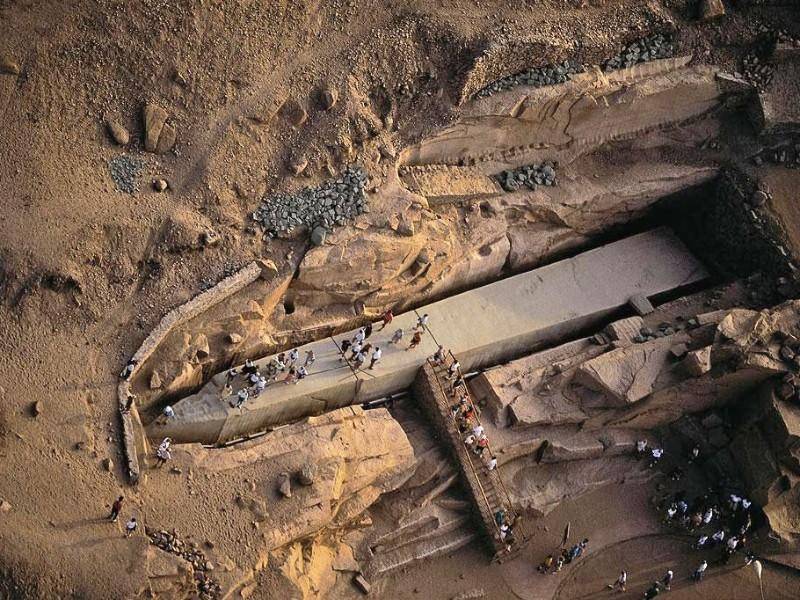
Unlike completed obelisks displayed at famous archaeological sites, the Unfinished Obelisk remains attached to the bedrock where ancient workers began carving it thousands of years ago. Its unfinished state reveals details about ancient Egyptian engineering, stone-cutting techniques, and the challenges involved in creating monumental structures from a single block of granite.
Whether you are planning a sightseeing trip to Aswan, a Nile cruise, or a longer Egypt vacation, this guide covers everything you need to know about the Unfinished Obelisk, including its history, estimated dimensions, entrance tickets, opening hours, location, and frequently asked questions.
The Unfinished Obelisk at a Glance
-
Location: Ancient granite quarries in Aswan, southern Egypt.
-
Historical period: New Kingdom, traditionally associated with the reign of Queen Hatshepsut.
-
Estimated height: Approximately 42 meters if completed.
-
Estimated weight: Approximately 1,168 tonnes.
-
Material: Aswan pink granite.
-
Why it was abandoned: Flaws and multiple fissures in the stone.
-
Opening hours: The official monument listing gives 7:00 AM to 4:00 PM.
-
Recommended visit duration: Approximately 30–60 minutes.
-
Best time to visit: Early morning, especially during warmer months.
Where Is the Unfinished Obelisk Located?
The Unfinished Obelisk is located in the northern granite quarries of Aswan, a historic area famous for supplying high-quality granite used in ancient Egyptian monuments.
Aswan was an important source of granite for the construction of obelisks, statues, temple elements, and other monumental structures. The ancient Egyptians extracted stone here and transported finished or partially finished blocks to construction sites throughout Egypt.
The archaeological site allows visitors to see the unfinished monument in its original quarry setting. You can examine the surrounding rock surfaces, the channels cut around the obelisk, and the evidence of the stone-working process.
The site is relatively close to other major attractions in Aswan, making it easy to include in a half-day sightseeing itinerary.
Who Built the Unfinished Obelisk?
The Unfinished Obelisk is traditionally believed to have been commissioned by Queen Hatshepsut, one of the most prominent rulers of ancient Egypt.
Hatshepsut ruled during the Eighteenth Dynasty, approximately 1473–1458 BC. She commissioned major building projects and monumental works, including structures associated with the great religious centers of ancient Egypt.
According to the Egyptian Ministry of Tourism and Antiquities, the obelisk may have been intended for the Temple of Amun at Karnak near modern Luxor.
However, because the monument was never completed, its exact original destination cannot be established with absolute certainty.
Why Is the Unfinished Obelisk Famous?
The Unfinished Obelisk is famous because it reveals the process of creating an enormous monument from a single piece of granite.
Most ancient Egyptian obelisks that visitors see today are standing monuments. Their extraction and transportation are difficult to understand simply by looking at the finished structures.
At Aswan, the unfinished obelisk provides direct evidence of the work involved. Visitors can observe the enormous stone shaft, the trenches cut into the surrounding bedrock, and the fissures that prevented the project from being completed.
It is an exceptional archaeological site for anyone interested in ancient engineering and the practical challenges faced by Egyptian stoneworkers.
How Big Is the Unfinished Obelisk?
Had it been completed, the Unfinished Obelisk would have stood approximately 42 meters tall and weighed an estimated 1,168 tonnes.
Its intended dimensions would have made it taller than any other known ancient Egyptian obelisk.
The monument remains partly connected to the underlying bedrock, allowing visitors to appreciate its enormous scale and understand how challenging it would have been to extract, transport, and erect such a structure.
Its dimensions also demonstrate the ambitions of ancient Egyptian rulers, who commissioned monumental architecture to honor the gods and express royal authority.
Why Was the Unfinished Obelisk Never Completed?
Work on the Unfinished Obelisk was abandoned because workers discovered flaws and multiple fissures in the granite.
An obelisk had to be carved from a single block of stone. Significant cracks could weaken the structure and make it unsuitable for transportation or erection.
Continuing to extract the monument could have caused it to break, wasting considerable time and labor. Abandoning the project was therefore a practical response to the condition of the stone.
The visible cracks are now among the site's most important archaeological features. They help explain why the monument remains unfinished and provide clues about the difficulties of ancient stone extraction.
How Did Ancient Egyptians Carve Obelisks?
Ancient Egyptian workers developed techniques to extract enormous blocks of granite from solid rock, even without modern power tools.
At Aswan, the quarry preserves evidence of the methods used to separate stone from the surrounding bedrock.
1. Cutting Channels Around the Stone
Workers created trenches around the intended obelisk to separate it from the surrounding granite. These channels provided access to the sides of the monument and helped define its shape.
2. Working the Granite Surface
Hard stone tools were used to break down and shape the granite. The quarry contains visible evidence of ancient stone-working techniques, including marks and depressions associated with the extraction process.
3. Separating the Obelisk from the Bedrock
The final stage required the base to be separated carefully without damaging the monument.
This was an extremely demanding task, particularly for a stone block weighing more than a thousand tonnes.
4. Transporting and Erecting the Monument
Once extracted, a completed obelisk would have needed to be moved to its destination and raised vertically. Such operations required careful planning, coordinated labor, and substantial engineering knowledge.
Because the Unfinished Obelisk was never fully extracted, it offers an unusual opportunity to study the earlier stages of this process.
What Can You See at the Unfinished Obelisk Site?
The Giant Granite Monument
The main attraction is the massive obelisk lying in its quarry. Walk around the permitted viewing areas to appreciate its length, width, and relationship to the surrounding bedrock.
The Visible Cracks
Examine the fissures that caused the project to be abandoned. These natural flaws explain why the ancient workers could not safely continue extracting the stone.
The Ancient Quarry
The surrounding quarry is part of the experience. It helps visitors understand that Aswan was an important center of stone production rather than simply the location of one isolated monument.
Evidence of Ancient Stoneworking
Look for the channels, depressions, and worked surfaces associated with granite extraction. These features provide insight into the labor and technical knowledge required to create monumental architecture.
A knowledgeable guide can help explain what you are seeing and how the quarry relates to obelisks found elsewhere in Egypt.
Unfinished Obelisk Tickets and Entrance Fees
The official Egyptian Ministry of Tourism and Antiquities ticket portal lists the following entrance prices:
| Visitor category | Entrance fee |
|---|---|
| Foreign adult | EGP 220 |
| Foreign student | EGP 110 |
| Egyptian adult | EGP 20 |
| Egyptian student | EGP 10 |
These are the published admission prices on the official portal. Ticket prices and eligibility rules can change, so check the current information before your visit.
Students may need to present valid identification, and additional eligibility requirements may apply to concessions.
Official ticket booking: Unfinished Obelisk — Egyptian Monuments
The entrance ticket is separate from any private transportation, guide services, or other sightseeing arrangements unless these are explicitly included in your tour package.
Unfinished Obelisk Opening Hours
The Egyptian Ministry of Tourism and Antiquities lists the following visiting hours:
-
Opening time: 7:00 AM.
-
Closing time: 4:00 PM.
-
Last entry: 3:00 PM, according to the official ticket portal.
Opening arrangements can change, so confirm the schedule before traveling. Arriving early is recommended, particularly if you are visiting several Aswan attractions on the same day.
How Long Does It Take to Visit the Unfinished Obelisk?
Most visitors can explore the main monument and surrounding quarry in approximately 30–60 minutes.
The exact duration depends on your interest in ancient engineering, photography, and guided explanations.
If you are combining the site with Philae Temple and the Aswan High Dam, allow additional time for driving between attractions and completing each visit.
What Is the Best Time to Visit the Unfinished Obelisk?
The cooler months, generally October through April, are popular for sightseeing in Aswan.
During summer, temperatures can become extremely high. Because the quarry is an exposed outdoor site with limited shade, an early morning visit is usually more comfortable.
Wear comfortable walking shoes and bring drinking water, a hat, and sun protection.
How to Get to the Unfinished Obelisk
By Taxi or Private Car
You can travel from your hotel or Nile cruise accommodation to the archaeological site by taxi or private car.
A private vehicle is especially convenient if you intend to visit the Unfinished Obelisk, the High Dam, and Philae Temple on the same trip.
By Guided Tour
A guided Aswan sightseeing tour can combine transportation, historical explanations, and visits to several attractions.
Before booking, confirm whether the price includes the entrance ticket, licensed guide, hotel pickup, and any additional activities.
Can You Visit Without a Guide?
Yes. Independent visitors can purchase an entrance ticket and explore the permitted visitor areas.
However, a knowledgeable guide can explain the stone-cutting techniques, the significance of the cracks, and the relationship between the quarry and ancient Egyptian monumental architecture.
Can You Visit the Unfinished Obelisk, Philae Temple, and the High Dam in One Day?
Yes. These three attractions are commonly included in an Aswan sightseeing itinerary.
The Unfinished Obelisk reveals the techniques used to work granite. The High Dam demonstrates modern engineering and its importance to Egypt's water management. Philae Temple offers a different experience, with monumental architecture dedicated primarily to the goddess Isis.
Visiting all three provides a broad perspective on Aswan's ancient heritage and modern history.
If you have more time in the region, consider adding the Nubian Museum or planning a separate excursion to Abu Simbel.
Is the Unfinished Obelisk Worth Visiting?
Yes, particularly if you are interested in ancient Egyptian engineering, archaeology, or the history of monumental construction.
The site offers something different from a completed temple or standing obelisk: evidence of how ancient workers actually extracted stone and the problems they faced during the process.
It is also a relatively short visit, making it easy to combine with other attractions in Aswan.
For travelers interested in how the great monuments of ancient Egypt were created, the Unfinished Obelisk provides a valuable complement to visits to Karnak, Luxor Temple, and other historic sites.
Plan Your Aswan Sightseeing Tour
Explore Aswan's most important landmarks with an itinerary designed around your schedule and interests.
Depending on the services selected, a sightseeing experience can combine the Unfinished Obelisk, Philae Temple, and the Aswan High Dam. Confirm the itinerary, entrance fees, transportation, guide arrangements, and pickup details before booking.
Discover the remarkable engineering achievements of ancient Egypt and learn more about the monuments that made its civilization famous.
Explore Aswan with Let's Explore Egypt Travel.
1. Where is the Unfinished Obelisk located?
The Unfinished Obelisk is located in the ancient granite quarries of Aswan, southern Egypt, near the city center.
2. Who commissioned the Unfinished Obelisk?
It is believed to have been commissioned by Queen Hatshepsut during the Eighteenth Dynasty, possibly for the Temple of Amun at Karnak.
3. Why is it called the Unfinished Obelisk?
It is called the Unfinished Obelisk because ancient workers abandoned the project before completing the extraction and finishing of the stone monument.
4. Why was the Unfinished Obelisk abandoned?
Work stopped because flaws and multiple fissures were discovered in the granite, making it unsuitable for safely completing the monument.
5. How tall would the Unfinished Obelisk have been?
It would have stood approximately 42 meters tall if completed.
6. How much would the Unfinished Obelisk have weighed?
Its estimated completed weight is approximately 1,168 tonnes.
7. How old is the Unfinished Obelisk?
It is traditionally associated with Queen Hatshepsut's reign during the fifteenth century BC, making it approximately 3,500 years old.
8. How much is the entrance ticket?
The official ticket portal lists EGP 220 for foreign adults and EGP 110 for foreign students. Egyptian visitors have different rates. Check the official portal for current prices.
9. What are the opening hours?
The official monument listing gives opening hours of 7:00 AM to 4:00 PM, with last entry listed as 3:00 PM on the ticket portal.
10. How long does a visit take?
Most visitors spend approximately 30–60 minutes exploring the monument and surrounding quarry.
11. Can I visit the Unfinished Obelisk without a tour?
Yes. You can visit independently by arranging transportation to the site and purchasing an entrance ticket.
12. What is the best time to visit?
Early morning is generally recommended, especially during the hot summer months. October through April is popular for comfortable sightseeing weather.
13. Can I visit the Unfinished Obelisk and Philae Temple on the same day?
Yes. They are commonly included in the same Aswan sightseeing itinerary, often together with the High Dam.
14. Is the Unfinished Obelisk worth visiting?
Yes. It offers a rare look at ancient Egyptian stone extraction techniques and the engineering challenges behind monumental obelisks.
15. What should I bring when visiting?
Bring comfortable walking shoes, drinking water, a hat, and sun protection. Check the current visitor rules before your trip.
Highlights of the Unfinished Obelisk in Aswan
-
Discover the massive granite monument believed to have been commissioned by Queen Hatshepsut.
-
Learn why ancient Egyptian workers abandoned the obelisk after discovering cracks in the granite.
-
See how ancient craftsmen carved monumental structures directly from solid bedrock.
-
Explore the historic granite quarries that supplied stone for ancient Egyptian temples and monuments.
-
Admire the obelisk's impressive estimated length of 42 meters and weight of approximately 1,168 tonnes if completed.
-
Examine ancient stone-cutting marks and the channels carved around the unfinished monument.
-
Gain insight into the engineering skills and labor required to create Egypt's famous obelisks.
-
Enjoy a fascinating archaeological experience in the heart of Aswan.
-
Combine your visit with Philae Temple and the Aswan High Dam for a memorable sightseeing tour.
-
Discover one of Egypt's most important examples of ancient stoneworking and monumental engineering.