


Temple of Hatshepsut Travel Guide
Temple of Hatshepsut Travel Guide: History, Facts, Architecture & Visiting Tips
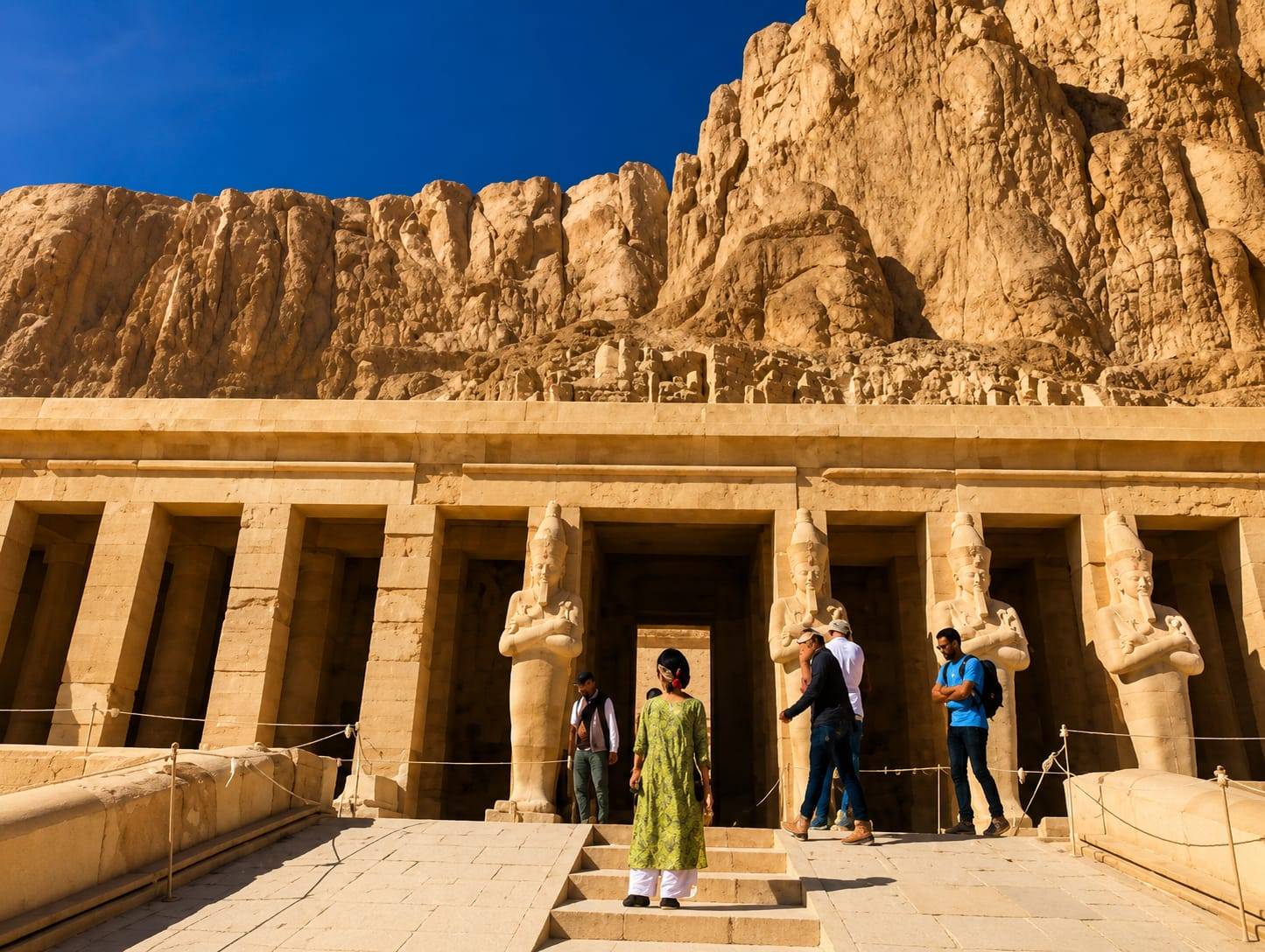
The Temple of Hatshepsut is one of the most impressive ancient monuments in Luxor, Egypt. Built beneath the dramatic cliffs of Deir el-Bahari on the West Bank of the Nile, this extraordinary temple is famous for its unique architecture, historical importance, and connection to one of ancient Egypt's most remarkable rulers.
Queen Hatshepsut was one of the few women to rule Egypt as pharaoh. During her reign, she commissioned an impressive mortuary temple that reflected her political power, religious beliefs, and achievements.
Today, the Temple of Hatshepsut is one of the most popular attractions in Luxor and an essential stop for travelers exploring the West Bank.
This guide covers the temple's history, architecture, famous reliefs, what to see, entrance information, the best time to visit, and practical travel tips.
If you are planning a visit, explore our complete Luxor Attractions Guide to discover more historical sites and experiences in the city.
1. Where Is the Temple of Hatshepsut?
The Temple of Hatshepsut is located at Deir el-Bahari on the West Bank of Luxor, southern Egypt.
It stands beneath a dramatic natural limestone cliff, creating one of the most recognizable landscapes in the Theban Necropolis.
The temple is close to several important archaeological attractions, including:
-
Valley of the Kings
-
Valley of the Queens
-
Colossi of Memnon
-
Medinet Habu Temple
-
Deir el-Medina
-
Ramesseum
Because of its location, the Temple of Hatshepsut is commonly included in a full-day West Bank sightseeing itinerary.
2. Who Was Queen Hatshepsut?
Hatshepsut was one of the most important rulers of ancient Egypt's 18th Dynasty.
She initially served as regent for her stepson, Thutmose III, but later assumed the title and authority of pharaoh.
Her reign is generally associated with political stability, economic development, construction projects, and international trade.
One of the most famous events of her reign was an expedition to the Land of Punt, an important trading destination that supplied Egypt with valuable goods.
Hatshepsut commissioned temples, monuments, and statues to strengthen her royal image and demonstrate her connection with the gods.
Her mortuary temple at Deir el-Bahari remains one of the greatest architectural achievements of her period.
3. History of the Temple of Hatshepsut
The Temple of Hatshepsut was built during the 15th century BC as a mortuary temple dedicated to the queen and the god Amun.
Its ancient Egyptian name was Djeser-Djeseru, commonly translated as "Holy of Holies."
The temple was designed by Senenmut, an important official who served Hatshepsut and played a significant role in her building projects.
Its location was carefully selected beside the cliffs of Deir el-Bahari, close to the earlier mortuary temple of Mentuhotep II.
The temple served religious and funerary purposes and celebrated Hatshepsut's divine legitimacy and royal achievements.
After her death, some of her images and monuments were damaged or altered during the reign of Thutmose III and later periods. However, much of the temple's architecture and decoration survived.
Archaeological restoration has helped preserve the monument and make it accessible to visitors today.
4. Architecture of the Temple of Hatshepsut
The Temple of Hatshepsut is famous for its distinctive architectural design.
Unlike many traditional Egyptian temples, which feature large pylons and enclosed courtyards, this monument is organized into three broad terraces connected by long ramps.
Its horizontal arrangement creates a striking visual connection between the temple and the surrounding cliffs.
The Three Terraces
The temple has three main levels:
First Terrace
The lowest terrace forms the entrance level and provides the approach to the monument.
Second Terrace
The middle terrace contains important decorated areas and reliefs associated with Hatshepsut's reign.
Third Terrace
The upper terrace includes the sanctuary area and impressive architectural elements overlooking the surrounding landscape.
The Long Ramps
The ramps connect the three terraces and create a central approach through the temple.
They also help emphasize the monument's symmetrical design.
The Limestone Cliffs
The dramatic cliffs behind the temple form a natural architectural backdrop.
This combination of monumental terraces and natural rock formations makes the Temple of Hatshepsut one of the most photogenic ancient sites in Egypt.
5. What to See Inside the Temple of Hatshepsut
There are several important areas to explore during your visit.
The Punt Expedition Reliefs
One of the most famous sections of the temple depicts Hatshepsut's expedition to the Land of Punt.
The reliefs show ships, foreign landscapes, animals, trees, and trading activities.
They provide valuable information about ancient Egyptian international trade and the products brought back to Egypt.
The Birth Colonnade
The Birth Colonnade contains scenes connected with Hatshepsut's divine birth.
These representations helped establish her religious legitimacy as pharaoh and reinforced her claimed divine connection with Amun.
The Hathor Chapel
The temple includes areas dedicated to Hathor, an important ancient Egyptian goddess associated with motherhood, music, beauty, and protection.
Some decorative elements depict Hathor in her symbolic cow form.
The Anubis Chapel
Another important religious area is associated with Anubis, the god connected with mummification and the protection of the dead.
The decorated walls provide insight into the religious beliefs and rituals of ancient Egypt.
The Sanctuary of Amun
The upper part of the temple includes the sanctuary dedicated to Amun.
This sacred area was important for religious ceremonies and the worship of the god.
Statues of Queen Hatshepsut
The temple originally contained many statues of Hatshepsut.
Some surviving examples provide an opportunity to appreciate the royal artistic style of the 18th Dynasty.
6. Why Is the Temple of Hatshepsut Unique?
The Temple of Hatshepsut is different from many other ancient Egyptian monuments for several reasons.
-
Its three-level terrace design is unusual.
-
It is built directly against a dramatic limestone cliff.
-
It celebrates the achievements of a female pharaoh.
-
Its reliefs provide information about trade and royal religion.
-
It combines monumental architecture with the surrounding natural landscape.
The temple is an excellent example of the architectural and artistic achievements of ancient Egypt's New Kingdom.
7. The Connection Between Hatshepsut and the Land of Punt
One of the most interesting historical subjects represented at the temple is Hatshepsut's expedition to the Land of Punt.
The expedition was an important commercial and diplomatic activity during her reign.
The temple reliefs show ships carrying Egyptian representatives and returning with valuable products.
These included:
-
Incense and aromatic resins
-
Myrrh trees
-
Precious materials
-
Exotic animals
-
Other valuable trading goods
The scenes are particularly important because they provide detailed visual evidence of ancient Egyptian trade and international relations.
The exact location of the Land of Punt remains a subject of scholarly discussion.
8. Best Time to Visit the Temple of Hatshepsut
The best time to visit the Temple of Hatshepsut is generally between October and April, when temperatures in Luxor are more comfortable.
October and November
These months are suitable for outdoor sightseeing and exploring the West Bank.
December to February
Winter is a popular season for visiting Luxor. Days are generally pleasant, although mornings can be cooler.
March and April
Spring is another good period for visiting the temple, but temperatures gradually become warmer.
May to September
Summer can be extremely hot in Luxor.
If you visit during these months, arrive early in the morning, carry water, and protect yourself from direct sunlight.
9. How Long Do You Need to Visit?
Most visitors should allow approximately one hour to explore the Temple of Hatshepsut.
You may need more time if you want to:
-
Examine the decorated walls carefully.
-
Take photographs.
-
Explore the different terraces.
-
Learn about the temple's history.
-
Enjoy the surrounding mountain scenery.
If you are visiting with a licensed Egyptologist, the historical explanations can make the experience more interesting and informative.
10. How to Get to the Temple of Hatshepsut
The temple is located on Luxor's West Bank and can be reached in several ways.
Private Car and Driver
A private air-conditioned vehicle is a convenient way to visit the temple and other nearby archaeological attractions.
It allows you to follow your own schedule and combine several sites in one day.
Taxi
Taxis are available in Luxor. Agree on the price and return arrangements before starting your journey.
Local Ferry and West Bank Transportation
Visitors staying on the East Bank can cross the Nile using local ferry services and arrange transportation after reaching the West Bank.
Organized Private Tour
A private guided tour can combine the Temple of Hatshepsut with the Valley of the Kings, Colossi of Memnon, and other attractions.
This is a practical option for travelers who want transportation and sightseeing arrangements organized in advance.
11. Attractions Near the Temple of Hatshepsut
The Temple of Hatshepsut is surrounded by several important historical sites.
Valley of the Kings
The Valley of the Kings is one of the most famous archaeological sites in Egypt.
It contains the royal tombs of many New Kingdom pharaohs, including the tomb of Tutankhamun.
Discover more about the royal burial ground in our Valley of the Kings Tour.
Colossi of Memnon
These two enormous statues represent Pharaoh Amenhotep III.
They are among the most recognizable monuments on Luxor's West Bank and are often included in sightseeing itineraries.
Medinet Habu Temple
Medinet Habu is the impressive mortuary temple of Ramesses III.
Its decorated walls and monumental entrance make it an interesting addition to a West Bank visit.
Explore this monument through our Medinet Habu Temple Tour.
Valley of the Queens
The Valley of the Queens contains tombs belonging to royal women and members of the royal family.
It is especially famous for the beautifully decorated tomb of Queen Nefertari.
Deir el-Medina
Deir el-Medina was the village of the artisans who built and decorated the royal tombs.
It offers a different perspective on daily life in ancient Egypt.
12. Suggested West Bank Itinerary Including Hatshepsut Temple
If you want to explore the major archaeological attractions on Luxor's West Bank, consider the following itinerary.
8:00 AM – Hotel Pickup
Begin your day with transportation from your hotel.
8:30 AM – Valley of the Kings
Explore selected royal tombs and discover the burial traditions of the New Kingdom.
11:00 AM – Temple of Hatshepsut
Visit the three terraces and admire the temple's unique architecture and decorated walls.
12:15 PM – Colossi of Memnon
Stop to see the monumental statues of Amenhotep III and take photographs.
1:00 PM – Lunch
Enjoy lunch at a local restaurant.
2:00 PM – Optional Additional Attractions
Depending on your interests and available time, visit Medinet Habu or another archaeological site.
This itinerary is flexible. Actual visiting times depend on opening hours, ticket arrangements, and your personal interests.
13. Entrance Tickets and Visitor Information
The Temple of Hatshepsut requires an entrance ticket.
Ticket prices, opening hours, and visitor arrangements can change, so check the official information before your visit.
Keep the following points in mind:
-
Entrance fees are generally separate from transportation and guide services.
-
Student discounts may be available for eligible visitors.
-
Some areas may have temporary access restrictions.
-
Follow all photography instructions displayed at the site.
-
Confirm the latest opening arrangements before traveling.
If you are booking a tour, ask whether the entrance ticket is included in the quoted price.
14. What to Wear and Bring
Visiting the Temple of Hatshepsut involves walking outdoors and exploring large terraces.
For a comfortable visit, bring:
-
Comfortable walking shoes.
-
Lightweight clothing.
-
A hat or cap.
-
Sunglasses.
-
Sunscreen.
-
Drinking water.
-
A camera or smartphone.
During summer, try to visit early in the morning to avoid the hottest hours.
15. Is the Temple of Hatshepsut Worth Visiting?
Absolutely.
The Temple of Hatshepsut is one of the most impressive monuments in Luxor and an essential stop for visitors interested in ancient Egyptian history.
Its unusual architecture, connection with a powerful female pharaoh, decorated reliefs, and dramatic natural setting make it different from other temples in Egypt.
Whether you are interested in history, architecture, photography, or ancient Egyptian civilization, this temple deserves a place on your Luxor itinerary.
16. Frequently Asked Questions About the Temple of Hatshepsut
Where is the Temple of Hatshepsut located?
It is located at Deir el-Bahari on the West Bank of Luxor, southern Egypt.
Who built the Temple of Hatshepsut?
The temple was commissioned by Queen Hatshepsut during the 18th Dynasty. Its design is traditionally associated with her official Senenmut.
When was the Temple of Hatshepsut built?
It was constructed during the 15th century BC, during the reign of Queen Hatshepsut.
Why is the Temple of Hatshepsut famous?
It is famous for its three-level terrace architecture, its location beneath dramatic cliffs, and its connection with one of ancient Egypt's most important female pharaohs.
How long should I spend at the temple?
Approximately one hour is a reasonable visit, although history enthusiasts may prefer to spend longer exploring the decorated areas.
Can I visit the Temple of Hatshepsut and Valley of the Kings on the same day?
Yes. Both attractions are located on the West Bank and are commonly included in the same sightseeing itinerary.
What is the best time to visit?
October through April is generally more comfortable for sightseeing. During summer, early morning visits are recommended.
Is the Temple of Hatshepsut suitable for children?
Yes. Families can visit, although children should wear comfortable shoes and be protected from the sun.
Is a guide necessary?
A guide is not compulsory, but a licensed Egyptologist can explain the temple's history, architecture, and religious scenes in greater detail.
What is the Land of Punt?
The Land of Punt was an important trading destination connected with ancient Egypt. Hatshepsut's temple contains famous reliefs depicting an expedition there.
17. Explore Luxor with Let's Explore Egypt Travel
Discover the history of ancient Thebes with Let's Explore Egypt Travel.
We help visitors explore Luxor's most important archaeological attractions through private sightseeing experiences, comfortable transportation, and knowledgeable local guides.
You can combine the Temple of Hatshepsut with the Valley of the Kings, Colossi of Memnon, and Medinet Habu for a complete West Bank experience.
Explore our Luxor Attractions Guide to discover more historical sites and plan your visit.
You can also explore our Egypt Tour Packages to find more ways to discover the country's ancient monuments.
Ready to discover the Temple of Hatshepsut?
Contact Let's Explore Egypt Travel with your travel date and group size to arrange your private Luxor sightseeing experience.
Travel information note: Entrance fees, opening hours, and visitor access rules may change. Confirm the latest information through official channels before your visit.