


How Many Days in Luxor, Egypt? The Perfect 1, 2, 3 & 4-Day Itinerary
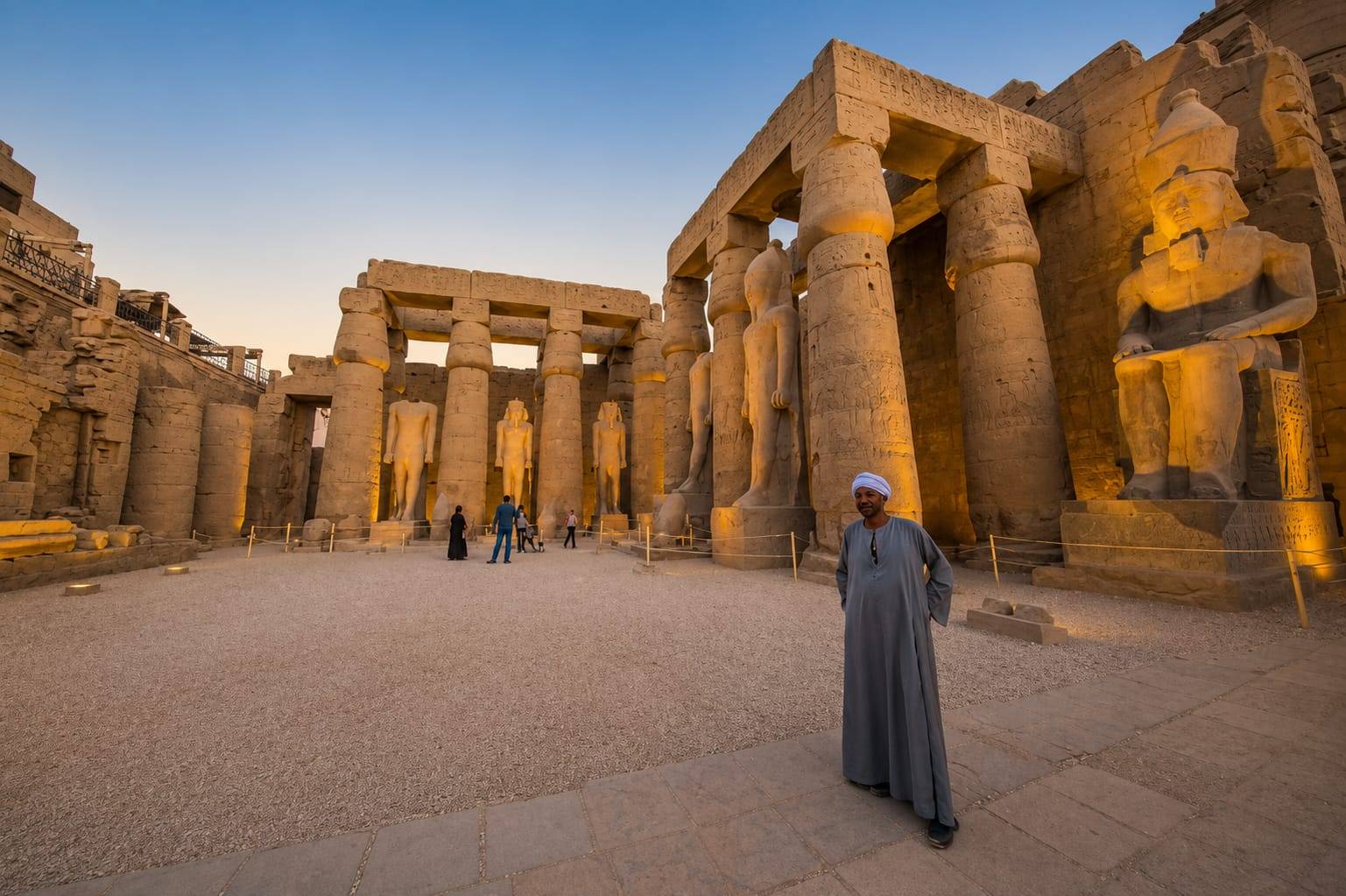
How Many Days in Luxor, Egypt? The Perfect 1, 2, 3 & 4-Day Itinerary
Planning a trip to Luxor, Egypt, and wondering how many days you should spend exploring this incredible historical destination?
Luxor is one of the most fascinating places in Egypt, famous for its magnificent ancient temples, royal tombs, archaeological treasures, and beautiful Nile River scenery. Often described as the world's greatest open-air museum, Luxor offers an extraordinary journey into the history of ancient Egyptian civilization.
Whether you have just one day, two days, or four days to explore, you can discover some of Egypt's most important historical landmarks with the right itinerary.
In this guide, we explain how many days you need in Luxor, what to see each day, and how to organize your visit to make the most of your time.
If you are planning your first trip, start with our complete Luxor Travel Guide, which covers the city's attractions, transportation, accommodation, and essential travel information.
1. How Many Days Do You Need in Luxor?
For most travelers, two to three days in Luxor is the ideal amount of time.
However, the best duration depends on your interests, travel schedule, and whether you want to explore only the main attractions or discover additional archaeological sites.
Here is our recommendation:
-
1 Day: Visit the most important highlights of Luxor's East and West Banks.
-
2 Days: Explore the major temples and royal tombs at a comfortable pace.
-
3 Days: Discover additional archaeological sites and enjoy more experiences.
-
4 Days: Enjoy a deeper exploration of Luxor and nearby destinations.
If you love ancient Egyptian history, we recommend spending at least three days in Luxor.
2. One Day in Luxor: The Essential Highlights
If you have only one day in Luxor, you can still experience some of its most famous attractions.
The best approach is to combine the East Bank and West Bank in one private sightseeing itinerary.
Morning: Valley of the Kings
Start your day on Luxor's West Bank with a visit to the Valley of the Kings.
This extraordinary archaeological site served as the burial place of many New Kingdom pharaohs, including the famous Tutankhamun.
Explore selected royal tombs and admire their ancient paintings, hieroglyphics, and beautifully decorated burial chambers.
Additional entrance tickets may be required for certain special tombs.
Visit the Temple of Hatshepsut
Continue to the magnificent Temple of Hatshepsut, built into the cliffs of Deir el-Bahari.
The temple is famous for its impressive terraces, architectural design, and connection to one of ancient Egypt's most remarkable female rulers.
Stop at the Colossi of Memnon
Visit the Colossi of Memnon, two enormous statues that have stood on Luxor's West Bank for thousands of years.
This is an excellent stop for photographs and a short introduction to the history of ancient Thebes.
Afternoon: Karnak Temple
Cross to the East Bank and explore Karnak Temple, one of the largest religious complexes ever constructed.
Its enormous columns, obelisks, statues, and sacred lake make it one of Egypt's most impressive historical attractions.
Late Afternoon: Luxor Temple
Finish your day at Luxor Temple.
Located in the center of modern Luxor, this magnificent temple is particularly beautiful in the late afternoon and evening.
Recommended: A private guided tour is the most convenient way to visit these attractions in one day.
3. Two Days in Luxor: The Best Itinerary for First-Time Visitors
Two days in Luxor is an excellent choice for travelers who want to explore the major attractions without rushing too much.
You can dedicate one day to the East Bank and another to the West Bank.
Day 1: Luxor East Bank
Start your first day by exploring the East Bank's most famous monuments.
Karnak Temple
Begin with Karnak Temple, a vast religious complex dedicated primarily to the god Amun-Ra.
Allow enough time to explore the impressive Hypostyle Hall, with its enormous columns covered in ancient inscriptions.
Luxor Temple
Continue to Luxor Temple, an important monument connected to ancient Egyptian religious ceremonies and royal traditions.
Its beautiful statues and monumental entrance make it one of the city's most recognizable attractions.
Optional Nile Felucca Experience
In the afternoon, enjoy a traditional felucca sailing experience on the Nile River.
Relax while admiring the river scenery and the green landscapes along its banks.
Day 2: Luxor West Bank
Spend your second day discovering the royal tombs and funerary monuments of ancient Thebes.
Valley of the Kings
Explore the burial chambers of ancient Egyptian pharaohs and learn about their beliefs regarding the afterlife.
Temple of Hatshepsut
Discover the impressive mortuary temple of Queen Hatshepsut and its unique architecture.
Colossi of Memnon
Stop for photographs at these famous ancient statues.
Optional Hot Air Balloon Ride
For an unforgettable experience, start your morning with a sunrise hot air balloon ride over Luxor's West Bank.
Enjoy spectacular views of the Nile, desert landscapes, agricultural fields, and ancient monuments from above.
Two days provide an excellent introduction to Luxor's most important historical attractions.
4. Three Days in Luxor: A More Complete Experience
If you have three days, you can explore the main attractions at a more relaxed pace while discovering additional historical sites.
Day 1: Karnak Temple and Luxor Temple
Spend your first day exploring the East Bank.
-
Karnak Temple.
-
Luxor Temple.
-
Avenue of Sphinxes.
-
Nile Corniche.
-
Optional felucca sailing experience.
Take your time learning about the temples' history and their importance in ancient Egyptian religious life.
Day 2: Valley of the Kings and West Bank Attractions
Dedicate your second day to Luxor's West Bank.
-
Optional sunrise hot air balloon ride.
-
Valley of the Kings.
-
Temple of Hatshepsut.
-
Colossi of Memnon.
-
Optional additional archaeological sites.
Your guide can explain the history of the pharaohs, royal tombs, and ancient burial traditions.
Day 3: Additional Historical Sites and Experiences
Use your third day to discover more of Luxor's archaeological heritage.
Medinet Habu
Visit the impressive mortuary temple of Ramesses III, known for its well-preserved reliefs and historical inscriptions.
Valley of the Queens
Explore another important royal burial area, where several queens and royal family members were buried.
Deir el-Medina
Discover the ancient village where the workers and craftsmen who built the royal tombs lived.
Luxor Museum
If time allows, visit Luxor Museum to admire an exceptional collection of ancient Egyptian artifacts.
A three-day itinerary is ideal for travelers who want more than just the main tourist attractions.
5. Four Days in Luxor: The Ultimate Historical Experience
Four days in Luxor allow you to explore its most important monuments while enjoying additional activities and nearby destinations.
Day 1: East Bank Highlights
-
Karnak Temple.
-
Luxor Temple.
-
Avenue of Sphinxes.
-
Nile River experience.
Day 2: West Bank Highlights
-
Valley of the Kings.
-
Temple of Hatshepsut.
-
Colossi of Memnon.
-
Optional hot air balloon ride.
Day 3: Hidden Historical Treasures
-
Medinet Habu.
-
Valley of the Queens.
-
Deir el-Medina.
-
Additional archaeological discoveries.
Day 4: Choose Your Experience
Use your final day for an experience that matches your interests.
Options include:
Dendera Temple Day Trip
Visit the magnificent Temple of Hathor at Dendera, famous for its impressive astronomical ceiling, decorated columns, and beautiful reliefs.
Abydos Temple Day Trip
Discover the Temple of Seti I at Abydos, one of Egypt's most important ancient religious sites.
Nile River Experience
Enjoy a relaxing boat trip and explore the beautiful landscapes surrounding Luxor.
Relaxing Day in Luxor
Spend the day enjoying your hotel, exploring local markets, and experiencing the atmosphere of the city.
Four days are ideal for travelers who want to discover Luxor beyond its most famous attractions.
6. Best Attractions to Include in Your Luxor Itinerary
Luxor has numerous historical attractions, but some sites should be priorities when planning your visit.
Karnak Temple
One of the largest ancient religious complexes in the world, famous for its enormous columns and impressive architecture.
Luxor Temple
A beautiful ancient temple located in the center of Luxor, especially impressive after sunset.
Valley of the Kings
The famous royal burial ground containing the tombs of numerous New Kingdom pharaohs.
Temple of Hatshepsut
A magnificent temple built into the cliffs of Deir el-Bahari.
Colossi of Memnon
Two monumental statues that have become an iconic landmark of Luxor's West Bank.
Medinet Habu
An impressive mortuary temple dedicated to Ramesses III.
Valley of the Queens
An important archaeological site containing royal tombs, including the famous tomb of Queen Nefertari.
Dendera Temple
A remarkable temple complex dedicated to Hathor, located north of Luxor.
7. Best Time to Visit Luxor
The best time to visit Luxor is generally between October and April.
During these months, temperatures are more comfortable for outdoor sightseeing.
November, December, January, and February are particularly popular because visitors can explore temples and archaeological sites without experiencing extreme summer heat.
Summer temperatures can exceed 40°C, so travelers visiting between May and September should plan outdoor activities early in the morning.
For more details, read our guide: Best Time to Visit Luxor, Egypt.
8. Should You Visit Luxor Independently or Book a Private Tour?
Both options are possible, but your decision depends on your travel style.
Exploring Luxor Independently
Independent travel allows you to organize your schedule and explore attractions at your own pace.
However, arranging transportation between different archaeological sites can take additional planning.
You may also miss important historical details without a knowledgeable guide.
Booking a Private Luxor Tour
A private tour offers a convenient way to discover the city's historical attractions.
Benefits can include:
-
Private air-conditioned transportation.
-
Professional licensed Egyptologist guide.
-
Flexible sightseeing schedule.
-
Assistance organizing entrance tickets.
-
Convenient transfers between attractions.
-
Personalized experiences.
For travelers with limited time, a private tour can make sightseeing easier and more efficient.
9. How Much Does a Luxor Trip Cost?
The cost of visiting Luxor depends on several factors, including accommodation, transportation, entrance tickets, meals, and guided tours.
Your travel budget may include:
-
Hotel accommodation.
-
Domestic flights or train tickets.
-
Private transportation.
-
Licensed tour guide.
-
Archaeological site entrance tickets.
-
Food and drinks.
-
Optional activities such as hot air balloon rides.
Travelers who book private experiences should check exactly what is included in the price, especially entrance fees and optional activities.
10. Frequently Asked Questions About How Many Days to Spend in Luxor
Is one day enough to visit Luxor?
One day is enough to visit several major attractions, including the Valley of the Kings, Hatshepsut Temple, Karnak Temple, and Luxor Temple. However, the schedule will be busy.
Are two days enough for Luxor?
Yes. Two days are enough to explore the major East Bank and West Bank attractions comfortably.
Is three days in Luxor too long?
Not at all. Three days allow you to discover additional historical sites such as Medinet Habu, Deir el-Medina, and the Valley of the Queens.
Is four days in Luxor worth it?
Yes. Four days are ideal for travelers interested in ancient Egyptian history who want to explore beyond the main tourist attractions.
Can I visit Luxor and Aswan in four days?
Yes. You can combine both destinations in four days, but you will need careful planning. A Nile cruise is one of the most convenient ways to experience the two cities.
Should I visit Luxor before or after Cairo?
Both options work well. Many travelers start in Cairo to explore the Giza Pyramids and museums, then travel south to Luxor and Aswan.
What is the best way to travel around Luxor?
Private air-conditioned transportation is one of the most convenient ways to travel between Luxor's East Bank and West Bank attractions.
11. Final Recommendation: How Long Should You Stay in Luxor?
If you are visiting Luxor for the first time, we recommend spending at least two full days exploring the city's main attractions.
Three days are even better if you want to discover more archaeological sites and enjoy additional experiences.
Four days are ideal for travelers who want a deeper understanding of ancient Egyptian civilization and nearby historical destinations.
No matter how long you stay, Luxor promises an unforgettable journey through thousands of years of history.
Explore Luxor with Let's Explore Egypt Travel
Discover the extraordinary history of ancient Thebes with Let's Explore Egypt Travel.
We organize private Luxor sightseeing experiences with professional licensed Egyptologist guides and comfortable air-conditioned transportation.
Whether you have one day or four days, we can help you create a personalized itinerary based on your schedule and interests.
Explore the Valley of the Kings, Karnak Temple, Luxor Temple, Hatshepsut Temple, and many other extraordinary attractions.
Plan your Luxor adventure with Let's Explore Egypt Travel and discover the wonders of ancient Egypt!
Related Luxor Travel Guides
-
Valley of the Kings Visitor Guide.
-
Karnak Temple Visitor Guide.
-
Luxor Temple Travel Guide.
-
Best Things to Do in Luxor, Egypt.