


Deir el-Medina, Luxor: Complete Visitor Guide
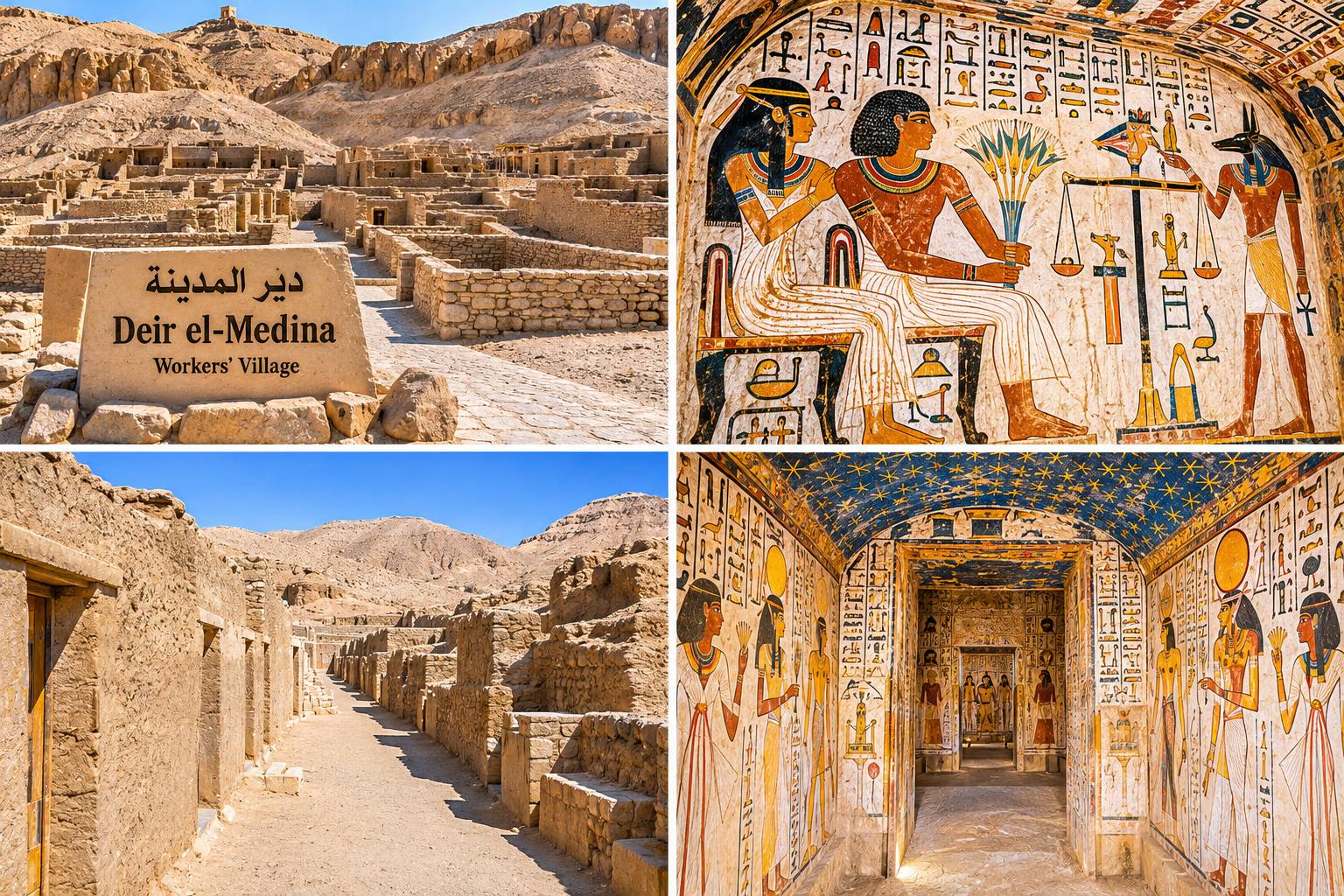
Deir el-Medina, Luxor: Complete Visitor Guide to the Workers’ Village, Tombs & History
Located on the West Bank of the Nile in Luxor, Deir el-Medina is one of the most fascinating archaeological sites in ancient Egypt. Unlike the grand temples and royal tombs that attract most visitors, this remarkable settlement tells the story of ordinary people who played an extraordinary role in Egyptian history.
For centuries, Deir el-Medina was home to the skilled craftsmen, painters, stonecutters, and builders responsible for creating and decorating the royal tombs in the Valley of the Kings and the Valley of the Queens.
Today, visitors can explore the remains of their ancient village, discover beautifully decorated private tombs, and learn how these workers lived, worked, worshipped, and raised their families.
If you are planning a trip to Luxor, Deir el-Medina is an excellent addition to your West Bank itinerary.
Where Is Deir el-Medina?
Deir el-Medina is situated on the West Bank of the Nile River, near the Valley of the Queens and the Valley of the Kings in Luxor, southern Egypt.
The archaeological site lies in a desert valley between the surrounding Theban hills. It includes the remains of an ancient workers’ village, a necropolis, and religious structures.
Its location makes it convenient to combine with other important West Bank attractions, including:
-
Valley of the Kings
-
Valley of the Queens
-
Medinet Habu Temple
-
Hatshepsut Temple
-
Colossi of Memnon
Visitors can explore several of these places in one full-day private tour with a professional Egyptologist guide.
What Is Deir el-Medina?
Deir el-Medina was an ancient Egyptian settlement established during the New Kingdom. It housed the specialized workforce responsible for constructing and decorating royal tombs.
The workers were highly skilled professionals who created the elaborate burial chambers of pharaohs and members of the royal family.
The ancient name of the settlement was Set Maat, meaning the Place of Truth. Its inhabitants were known as servants in the Place of Truth.
The village was an organized community with houses, streets, workshops, religious spaces, and nearby cemeteries.
What makes Deir el-Medina especially important is the extraordinary amount of evidence it provides about everyday life in ancient Egypt. Archaeologists have discovered written records, drawings, household objects, and personal documents that reveal details about the workers and their families.
History of Deir el-Medina
The settlement developed during the 18th Dynasty, around the beginning of the New Kingdom, and continued to be occupied through much of the Ramesside period.
For generations, its residents worked on royal burial projects in the nearby valleys. Their work required exceptional knowledge of stone cutting, architecture, painting, religious traditions, and funerary decoration.
The village was carefully organized, and its residents received provisions and wages for their work. Administrative records provide information about work schedules, food supplies, disagreements, family matters, and even periods when workers stopped working because they had not received their payments.
These records offer a rare picture of the social and economic life of ancient Egyptian craftsmen.
As political and security conditions changed toward the end of the New Kingdom, the settlement gradually lost its importance. The community eventually abandoned the village.
The Ancient Workers’ Village
One of the most interesting parts of Deir el-Medina is the remains of the residential settlement.
The village was surrounded by an enclosure wall and contained rows of small houses connected by narrow streets.
Although many buildings are now ruins, visitors can still recognize the original layout and imagine how the community lived.
Ancient Egyptian Houses
The houses were relatively modest compared with royal palaces and temples. They were built mainly from mudbrick and included several rooms arranged around a central living area.
Daily activities included cooking, sleeping, working, raising children, and maintaining household religious practices.
The archaeological remains reveal that the workers were not simply laborers. They were members of a structured community with families, responsibilities, and personal interests.
Daily Life of the Workers
The people of Deir el-Medina had specialized occupations. Some were stonecutters, others were painters, draftsmen, sculptors, or assistants.
Their work took place in the royal necropolises, where they created tomb chambers, carved inscriptions, and painted religious scenes.
Their personal lives were also documented through letters, legal records, and other written material.
These discoveries make Deir el-Medina one of the most valuable places for understanding the everyday lives of non-royal ancient Egyptians.
The Most Famous Tombs at Deir el-Medina
The village is surrounded by a necropolis containing the tombs of its former residents. Some of these private tombs are famous for their colorful paintings and detailed religious scenes.
Not every tomb is open to visitors at all times, so the available tombs may vary.
1. Tomb of Sennedjem (TT1)
The Tomb of Sennedjem is among the most famous tombs at Deir el-Medina.
Sennedjem lived during the 19th Dynasty and held a position connected with the royal necropolis. His tomb is particularly admired for its colorful wall paintings and well-preserved funerary decoration.
The scenes illustrate ancient Egyptian beliefs about the afterlife, including the journey of the deceased, religious rituals, and the rewards of eternal life.
The paintings provide an excellent example of the artistic skills possessed by the craftsmen of Deir el-Medina.
2. Tomb of Pashedu (TT3)
The Tomb of Pashedu is another important burial site associated with the workers’ community.
Pashedu was a craftsman who lived during the Ramesside period. His tomb is known for its religious decoration and representations connected with the afterlife.
Like other private tombs in the area, it demonstrates how the workers used their professional knowledge to create elaborate burial places for themselves and their families.
3. Tomb of Inherkhau (TT359)
The Tomb of Inherkhau is an important example of the funerary art produced by the community.
Inherkhau held a senior position among the workers during the 20th Dynasty. His tomb contains decorated chambers with religious scenes and images of deities.
The tomb is especially interesting because it demonstrates the artistic quality of private funerary monuments created by people who worked on royal burial projects.
Important: Tomb access and photography regulations can change. Check the current official ticket information before your visit.
The Temple of Hathor at Deir el-Medina
In addition to the village and tombs, Deir el-Medina includes a small temple dedicated to Hathor and other religious structures.
Hathor was one of the most important goddesses in ancient Egyptian religion. She was associated with motherhood, music, joy, protection, and the afterlife.
The temple reflects the religious beliefs of the local community and provides another perspective on life in the settlement.
Although it is much smaller than the great temples of Karnak and Luxor, it is an interesting stop for visitors who want to understand the religious world of the workers.
Why Is Deir el-Medina So Important?
Deir el-Medina is one of the most significant archaeological sites for understanding everyday life during the New Kingdom.
Many ancient Egyptian monuments focus on pharaohs, gods, and royal achievements. Deir el-Medina provides a different perspective by revealing the lives of the people who helped create those monuments.
Its archaeological discoveries include:
-
Residential buildings and household remains.
-
Personal letters and administrative documents.
-
Drawings and inscriptions on limestone flakes known as ostraca.
-
Religious objects and votive structures.
-
Private tombs with painted decoration.
-
Evidence of work organization, payments, and community life.
These discoveries help historians understand the social structure, economy, family relationships, and artistic traditions of ancient Egypt.
Best Time to Visit Deir el-Medina
The best time to visit Deir el-Medina is generally from October to April, when temperatures in Luxor are more comfortable for outdoor sightseeing.
The summer months, especially June, July, and August, can be extremely hot. If you visit during this period, plan to arrive early in the morning, carry water, and wear sun protection.
For more seasonal advice, read our guide:
Best Time to Visit Luxor, Egypt: Weather, Seasons & Travel Tips
How Long Do You Need at Deir el-Medina?
Most visitors should allow approximately 45 minutes to 1.5 hours, depending on their interest in the archaeological remains and which tombs are open.
If you enjoy ancient Egyptian history, you may want additional time to explore the village, temple area, and surrounding necropolis.
A knowledgeable Egyptologist can help explain the meaning of the tomb paintings and the daily lives of the ancient workers.
How to Get to Deir el-Medina
Deir el-Medina is located on the West Bank of Luxor and can be reached by private car, taxi, or organized tour.
The easiest option for most travelers is a private West Bank tour that includes transportation and a licensed Egyptologist guide.
A private vehicle allows you to visit several archaeological sites at your own pace without depending on public transportation.
You can combine Deir el-Medina with the Valley of the Kings, Valley of the Queens, Hatshepsut Temple, and Medinet Habu.
Can You Visit Deir el-Medina with the Valley of the Queens?
Yes. Deir el-Medina and the Valley of the Queens are located in the same general area of Luxor's West Bank and can be included in one itinerary.
The two sites offer different but complementary experiences.
The Valley of the Queens contains royal burial places, including the famous tomb of Queen Nefertari. Deir el-Medina reveals the lives and burial traditions of the craftsmen who helped create royal tombs.
Visiting both places gives you a broader understanding of ancient Egyptian society, from the royal family to the skilled workers who served them.
What to Wear When Visiting Deir el-Medina
Luxor can be very hot, especially during summer. Comfortable clothing and suitable footwear will make your visit easier.
We recommend:
-
Lightweight and breathable clothing.
-
Comfortable walking shoes.
-
A hat or cap.
-
Sunglasses.
-
Sunscreen.
-
Drinking water.
Some paths are uneven, and the archaeological area includes exposed ground and stone remains. Comfortable shoes are important.
Visitor Tips for Deir el-Medina
Before visiting, keep these practical tips in mind:
-
Arrive early: Morning visits are more comfortable, especially during warmer months.
-
Hire an Egyptologist guide: The site becomes much more interesting when you understand the history behind the houses and tomb paintings.
-
Check tomb availability: Not all tombs are necessarily open at the same time.
-
Respect the monuments: Do not touch painted surfaces or ancient remains.
-
Check photography rules: Regulations can differ between areas and may change.
-
Combine nearby attractions: Plan your West Bank sightseeing route to make the most of your day.
Suggested West Bank Luxor Itinerary
If you want to explore Deir el-Medina and other major historical attractions, consider this full-day itinerary:
Morning
-
Visit the Valley of the Kings.
-
Explore the Temple of Hatshepsut.
-
Stop at the Colossi of Memnon.
Afternoon
-
Visit the Valley of the Queens.
-
Explore Deir el-Medina and its ancient tombs.
-
Visit Medinet Habu Temple.
The order can be adjusted according to opening hours, ticket availability, and your interests.
For more information about the monuments in the area, read our Luxor Travel Guide and our detailed guide to Medinet Habu Temple.
Is Deir el-Medina Worth Visiting?
Absolutely. Deir el-Medina is worth visiting for anyone interested in ancient Egyptian history, archaeology, and everyday life in the New Kingdom.
Its importance goes beyond its ancient buildings and decorated tombs. It tells the story of the skilled people who helped create some of Egypt's most extraordinary monuments.
While the Valley of the Kings and the major temples show the power of the pharaohs, Deir el-Medina gives visitors a rare opportunity to discover the lives of the craftsmen behind those achievements.
It is one of the most rewarding and educational stops on Luxor's West Bank.
Explore Deir el-Medina with Let's Explore Egypt Travel
Discover the history of ancient Thebes with Let's Explore Egypt Travel.
Our private Luxor tours are designed to help you explore the West Bank with comfortable transportation and professional Egyptologist guides.
Whether you want to visit Deir el-Medina, the Valley of the Kings, the Valley of the Queens, or the great temples of Luxor, we can organize a private experience based on your interests and schedule.
Explore ancient Egypt at your own pace and discover the stories behind its extraordinary monuments.
Contact Let's Explore Egypt Travel to plan your private Luxor tour.
Frequently Asked Questions About Deir el-Medina
1. What is Deir el-Medina famous for?
Deir el-Medina is famous for being the ancient village of the craftsmen who built and decorated the royal tombs in the Valley of the Kings and the Valley of the Queens.
2. Where is Deir el-Medina located?
It is located on the West Bank of the Nile in Luxor, Egypt, near the Valley of the Queens and other major archaeological sites.
3. Who lived in Deir el-Medina?
The village was home to skilled workers, including stonecutters, painters, sculptors, draftsmen, and their families.
4. Which tombs can you visit at Deir el-Medina?
Important tombs include those of Sennedjem (TT1), Pashedu (TT3), and Inherkhau (TT359). Access depends on current site arrangements and ticket availability.
5. How much time should I spend at Deir el-Medina?
Allow approximately 45 minutes to 1.5 hours, depending on how much of the site is accessible and how deeply you want to explore it.
6. Can I visit Deir el-Medina and the Valley of the Queens on the same day?
Yes. Both sites are on Luxor's West Bank and can easily be combined in a private sightseeing itinerary.
7. Is Deir el-Medina suitable for children?
Yes. Children interested in ancient history may enjoy exploring the archaeological remains and learning how people lived thousands of years ago. Keep in mind that the site involves outdoor walking and uneven surfaces.
8. Do I need a tour guide at Deir el-Medina?
A guide is not essential, but a professional Egyptologist can make the experience much more meaningful by explaining the tomb paintings, inscriptions, and history of the workers' community.
9. What is the best time of year to visit Deir el-Medina?
October to April is generally the most comfortable period because temperatures are usually milder than during the summer months.
10. Is Deir el-Medina worth visiting?
Yes. It offers a rare look at the lives of the craftsmen who created the royal tombs and is an excellent addition to a Luxor West Bank tour.