


Tombs of the Nobles, Luxor: Complete Visitor Guide
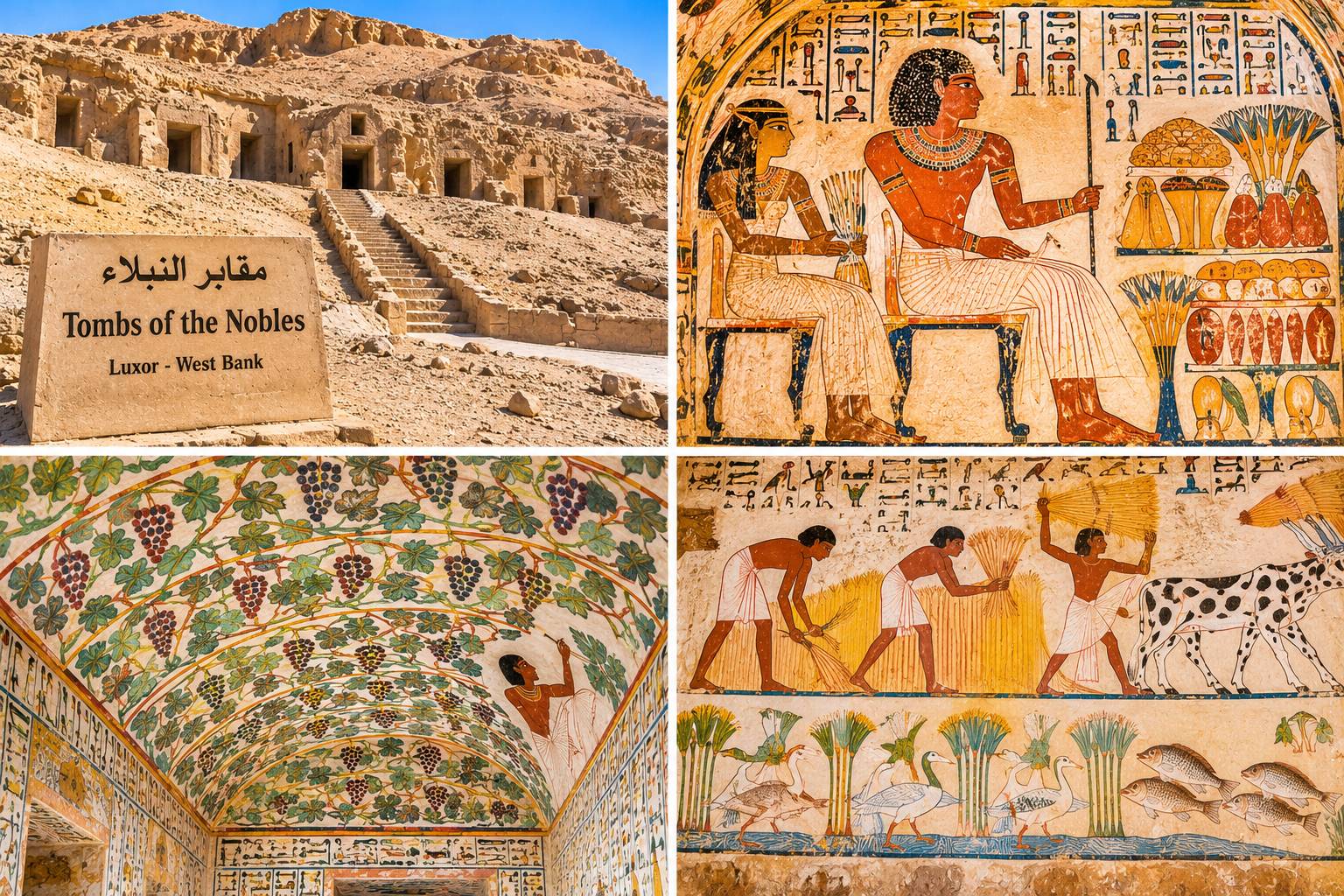
Tombs of the Nobles, Luxor: Complete Visitor Guide to Ancient Egyptian Noble Tombs
The Tombs of the Nobles in Luxor are among the most fascinating archaeological sites on the West Bank of the Nile in Egypt. While the Valley of the Kings is famous for the burial places of pharaohs, the Tombs of the Nobles reveal the lives, careers, families, and beliefs of the powerful officials who helped govern ancient Egypt.
These remarkable tombs belonged to viziers, priests, scribes, military officers, governors, and senior administrators who served the Egyptian kings. Their beautifully decorated walls preserve detailed scenes of agriculture, hunting, fishing, music, banquets, religious ceremonies, and everyday activities.
For travelers interested in ancient Egyptian history, the Tombs of the Nobles offer a different experience from the royal tombs and major temples of Luxor.
This guide explains where the tombs are located, which ones are worth visiting, what you can see inside, and how to plan your visit.
Where Are the Tombs of the Nobles in Luxor?
The Tombs of the Nobles are located on the West Bank of the Nile in Luxor, within the ancient Theban Necropolis.
They are distributed across several archaeological areas, including:
-
Sheikh Abd el-Qurna
-
El-Khokha
-
Dra Abu el-Naga
-
Qurnet Murai
-
El-Asasif
One of the best-known areas is Sheikh Abd el-Qurna, where many important New Kingdom officials were buried.
The tombs are located close to other famous West Bank attractions, including:
-
Valley of the Kings
-
Valley of the Queens
-
Ramesseum Temple
-
Hatshepsut Temple
-
Medinet Habu Temple
-
Deir el-Medina
You can combine a visit to selected noble tombs with other West Bank attractions during a private sightseeing tour.
For a broader overview of the city's monuments and attractions, explore our Luxor Travel Guide.
Who Were the Nobles of Ancient Egypt?
The term "Tombs of the Nobles" refers to the burial places of important non-royal individuals who held influential positions in ancient Egyptian society.
These people were not pharaohs, but many were extremely powerful and wealthy.
They included:
-
Viziers who served as senior government officials.
-
Governors who managed important regions.
-
Priests responsible for religious ceremonies.
-
Scribes who recorded administrative and economic information.
-
Military officers who served the king.
-
Estate managers who supervised agricultural land and resources.
-
Officials responsible for temples and royal institutions.
Their tombs reflect their social status, religious beliefs, family relationships, and professional achievements.
Unlike many royal tombs, which focus heavily on religious texts and the king's journey into the afterlife, noble tombs often include detailed scenes of life in ancient Egypt.
History of the Tombs of the Nobles
The Theban Necropolis developed over many centuries as an important burial area for members of the royal family, religious officials, administrators, and other high-ranking individuals.
Many of the best-known noble tombs date to the New Kingdom, particularly the 18th Dynasty.
During this period, Thebes became one of the most important political and religious centers in Egypt.
Wealthy officials commissioned elaborate rock-cut tombs decorated with paintings and reliefs. These scenes recorded their achievements and expressed their hopes for a successful afterlife.
Other tombs in the wider necropolis date to different historical periods, including the Middle Kingdom, Third Intermediate Period, and Late Period.
The archaeological landscape therefore provides evidence of changing burial customs, artistic traditions, and social structures throughout ancient Egyptian history.
The Most Famous Tombs of the Nobles in Luxor
Several tombs are especially famous for their beautiful paintings and historical importance. Access can vary, so confirm which tombs are open when planning your visit.
1. Tomb of Sennefer (TT96) – The Tomb of the Vineyards
The Tomb of Sennefer is one of the most visually impressive noble tombs in Luxor.
Sennefer was an important official during the reign of Amenhotep II in the 18th Dynasty. He held the position of Mayor of Thebes and was associated with the administration of the estates of Amun.
The tomb is particularly famous for its decorated burial chamber ceiling, which features grapevines, leaves, and bunches of grapes.
The ceiling creates the appearance of standing beneath a painted vineyard.
The decoration also includes religious scenes and representations connected with Sennefer, his family, and his journey into the afterlife.
Why visit?
The painted grapevine ceiling makes this tomb one of the most memorable examples of private funerary decoration in Luxor.
2. Tomb of Rekhmire (TT100) – The Vizier's Tomb
The Tomb of Rekhmire is one of the most historically important tombs in the Theban Necropolis.
Rekhmire served as vizier during the reigns of Thutmose III and Amenhotep II. As one of the highest-ranking officials in ancient Egypt, he was responsible for important administrative and governmental duties.
His tomb contains extensive scenes illustrating different aspects of ancient Egyptian society.
Visitors may find representations of:
-
Foreign delegations bringing tribute.
-
Workers producing goods in workshops.
-
Agricultural activities.
-
Food preparation and offerings.
-
Administrative and religious ceremonies.
The scenes provide valuable information about Egypt's international relationships, economy, craftsmanship, and government during the New Kingdom.
Why visit?
Rekhmire's tomb is an excellent place to understand how the Egyptian administration worked and how wealthy officials presented their achievements.
3. Tomb of Nakht (TT52) – Daily Life in Ancient Egypt
The Tomb of Nakht is famous for its colorful paintings and detailed representations of everyday life.
Nakht was a royal scribe associated with agricultural administration during the 18th Dynasty.
His tomb contains beautiful scenes showing farming, hunting, fishing, music, dancing, and religious offerings.
One of the most interesting features is the representation of agricultural activities, which illustrates how important farming was to ancient Egyptian society.
The paintings also provide an insight into entertainment, family life, and religious beliefs.
Why visit?
Nakht's tomb is particularly interesting for visitors who want to see how ordinary activities were represented in the funerary art of wealthy ancient Egyptians.
4. Tomb of Menna (TT69) – Agriculture and Farming
The Tomb of Menna is another outstanding example of ancient Egyptian tomb decoration.
Menna was an official responsible for agricultural estates associated with the god Amun.
His tomb contains detailed scenes showing different stages of agricultural production.
Visitors can see representations of:
-
Plowing fields.
-
Sowing seeds.
-
Harvesting crops.
-
Collecting and processing grain.
-
Fishing and hunting in the marshes.
-
Religious offerings.
These scenes reveal the importance of agriculture in the ancient Egyptian economy and provide a remarkable visual record of farming practices.
Why visit?
The paintings offer an unusually detailed look at the agricultural world of ancient Egypt.
5. Tomb of Ramose (TT55) – Traditional and Amarna Art
The Tomb of Ramose is one of the most important artistic monuments in the Theban Necropolis.
Ramose was a vizier who served during the reigns of Amenhotep III and Amenhotep IV, later known as Akhenaten.
His tomb is especially interesting because its decoration reflects a period of artistic transition in ancient Egypt.
Some scenes follow traditional Egyptian artistic conventions, while others show features associated with the Amarna artistic style.
The tomb contains beautifully carved reliefs, unfinished decorative sections, and representations of religious and royal ceremonies.
Why visit?
Ramose's tomb offers a rare opportunity to observe changes in ancient Egyptian art during one of the most important religious and political periods of the New Kingdom.
What Can You See Inside the Tombs?
The Tombs of the Nobles are famous for their detailed wall decorations.
Unlike the more formal royal imagery found in many pharaonic tombs, these private burial places often show scenes inspired by the owners' professional and personal lives.
Scenes of Agriculture
Agriculture was central to ancient Egyptian civilization.
Many noble tombs contain representations of plowing, planting, harvesting, threshing, and storing grain.
These scenes show how agricultural production supported households, temples, and the wider economy.
Hunting and Fishing
Scenes of hunting and fishing are common in several private tombs.
They often show the tomb owner participating in activities in the Nile marshes, surrounded by birds, fish, and other wildlife.
These images were not simply decorative. They also expressed ideas about abundance, prosperity, and life after death.
Music and Banquets
Some tombs contain detailed representations of musicians, dancers, guests, and food.
These scenes provide a glimpse into celebrations and social entertainment among wealthy ancient Egyptian families.
Musicians are sometimes shown playing harps, flutes, and other instruments.
Religious Ceremonies and Offerings
Religious beliefs were an essential part of ancient Egyptian life.
Tomb paintings often show the deceased and their family presenting offerings to gods and participating in funerary rituals.
These scenes were intended to support the deceased in the afterlife and maintain their relationship with the divine world.
What Makes the Tombs of the Nobles Different from the Valley of the Kings?
Both the Tombs of the Nobles and the Valley of the Kings are important burial areas on Luxor's West Bank, but they have different purposes and artistic characteristics.
The Valley of the Kings was primarily used for the burial of pharaohs and some members of the royal family.
The Tombs of the Nobles belonged to high-ranking officials, priests, administrators, and other influential members of society.
The differences are especially clear in their decoration.
Royal tombs often emphasize religious texts, divine protection, and the king's journey through the afterlife.
Noble tombs frequently include scenes of agriculture, family life, professional responsibilities, hunting, music, and social activities.
If you want to understand both royal and non-royal burial traditions, visiting the two areas offers a more complete picture of ancient Egyptian society.
Read our guide to the Valley of the Queens in Luxor for more information about the royal burial areas of the West Bank.
Best Time to Visit the Tombs of the Nobles
The best time to visit the Tombs of the Nobles is generally from October to April.
During these months, temperatures in Luxor are usually more comfortable for outdoor sightseeing and walking between the different tomb areas.
Summer can be extremely hot, especially in June, July, and August.
If you visit during the warmer months, it is best to arrive early in the morning.
For more information about seasonal weather, temperatures, and travel planning, read our guide:
Best Time to Visit Luxor, Egypt: Weather, Seasons & Travel Tips.
How Long Do You Need to Visit the Tombs of the Nobles?
The time required depends on how many tombs you want to explore and which ticketed groups are available.
As a general planning suggestion, allow approximately 1.5 to 2 hours for a visit to several selected tombs, including time to walk between nearby locations.
Visitors with a strong interest in ancient Egyptian art and history may want additional time.
A professional Egyptologist can help explain the scenes, inscriptions, and historical background of each tomb.
How to Get to the Tombs of the Nobles
The Tombs of the Nobles are located on Luxor's West Bank, across the Nile from the main city.
You can reach the archaeological areas by:
-
Private air-conditioned vehicle.
-
Taxi.
-
Organized sightseeing tour.
-
Bicycle, for visitors comfortable with cycling in the area.
A private vehicle is a convenient option if you plan to visit several West Bank attractions on the same day.
Some tomb groups are located on hillsides, and walking between them may involve uneven paths and steps.
Can You Visit the Tombs of the Nobles with Other Luxor Attractions?
Yes. The Tombs of the Nobles can be combined with several important West Bank monuments.
A suggested itinerary could include:
Morning
-
Valley of the Kings.
-
Hatshepsut Temple.
-
Colossi of Memnon.
Afternoon
-
Tombs of the Nobles.
-
Ramesseum Temple.
-
Medinet Habu Temple.
You can also include Deir el-Medina if you have enough time and want to explore the lives of the craftsmen who decorated the royal tombs.
For more information about nearby monuments, read our Medinet Habu Temple visitor guide.
What to Wear When Visiting the Tombs of the Nobles
Luxor's West Bank can be hot and sunny, and walking between tombs may involve exposed paths and uneven ground.
We recommend wearing:
-
Lightweight and breathable clothing.
-
Comfortable walking shoes.
-
A hat or cap.
-
Sunglasses.
-
Sunscreen.
-
Drinking water.
Some tomb entrances include stairs or narrow passages, so comfortable footwear is particularly important.
Practical Tips Before Visiting
Before visiting the Tombs of the Nobles, keep these recommendations in mind:
-
Check which tombs are open: Access may change because of conservation work and site arrangements.
-
Confirm ticket requirements: Different tomb groups may require separate tickets.
-
Arrive early: Morning visits are generally more comfortable.
-
Hire an Egyptologist: A guide can explain the stories behind the wall paintings.
-
Respect the paintings: Never touch the ancient walls or decorated surfaces.
-
Follow photography rules: Ask before taking photographs, and never use flash where prohibited.
-
Bring water: There is limited shade on some hillside paths.
Are the Tombs of the Nobles Worth Visiting?
Absolutely. The Tombs of the Nobles are among the most rewarding archaeological attractions on Luxor's West Bank.
They provide a different perspective on ancient Egyptian civilization by focusing on the people who managed the government, temples, agriculture, and economy.
The beautiful paintings in the tombs of Sennefer, Rekhmire, Nakht, Menna, and Ramose reveal a world of work, family, celebration, and religious belief.
If you have already visited the Valley of the Kings and the major temples, the Tombs of the Nobles are an excellent addition to your Luxor itinerary.
Explore Luxor with Let's Explore Egypt Travel
Discover the remarkable history of ancient Thebes with Let's Explore Egypt Travel.
We organize private Luxor sightseeing tours with comfortable transportation and professional Egyptologist guides.
Explore the Valley of the Kings, Hatshepsut Temple, the Tombs of the Nobles, the Ramesseum, Medinet Habu, and other important historical sites.
Our private tours can be arranged according to your interests, available time, and preferred sightseeing pace.
Explore more attractions and travel advice through our Luxor Travel Guide.
Contact Let's Explore Egypt Travel to plan your private Luxor experience.
Frequently Asked Questions About the Tombs of the Nobles
1. What are the Tombs of the Nobles in Luxor?
The Tombs of the Nobles are ancient burial places belonging to high-ranking officials, priests, scribes, administrators, and other influential people in ancient Egyptian society.
2. Where are the Tombs of the Nobles located?
They are located on the West Bank of Luxor, across the Nile from the modern city, in several areas of the Theban Necropolis.
3. How many Tombs of the Nobles are there?
Hundreds of noble tombs have been identified across Luxor's West Bank. The number accessible to visitors changes depending on conservation work and site arrangements.
4. Which are the most famous Tombs of the Nobles?
Some of the best-known examples include the tombs of Sennefer (TT96), Rekhmire (TT100), Nakht (TT52), Menna (TT69), and Ramose (TT55).
5. What is the most beautiful Tomb of the Nobles?
Many visitors admire the Tomb of Sennefer for its famous painted grapevine ceiling. The tombs of Nakht, Menna, and Rekhmire are also known for their detailed artwork.
6. What is the difference between the Tombs of the Nobles and the Valley of the Kings?
The Valley of the Kings was primarily used for royal burials, while the Tombs of the Nobles belonged to important officials and members of the elite.
7. How long does it take to visit the Tombs of the Nobles?
Allow approximately 1.5 to 2 hours for several selected tombs, depending on the available access and walking time.
8. Can I visit the Tombs of the Nobles and the Valley of the Kings on the same day?
Yes. Both are located on the West Bank of Luxor and can be combined in a private sightseeing itinerary.
9. Are photography and video allowed inside the tombs?
Photography rules vary by tomb and may change. Always check the current regulations at the entrance before taking pictures.
10. Are the Tombs of the Nobles worth visiting?
Yes. They are especially worthwhile for visitors interested in ancient Egyptian art, daily life, history, and the people who helped manage the civilization of ancient Thebes.