


Solo Female Travel in Siwa Oasis
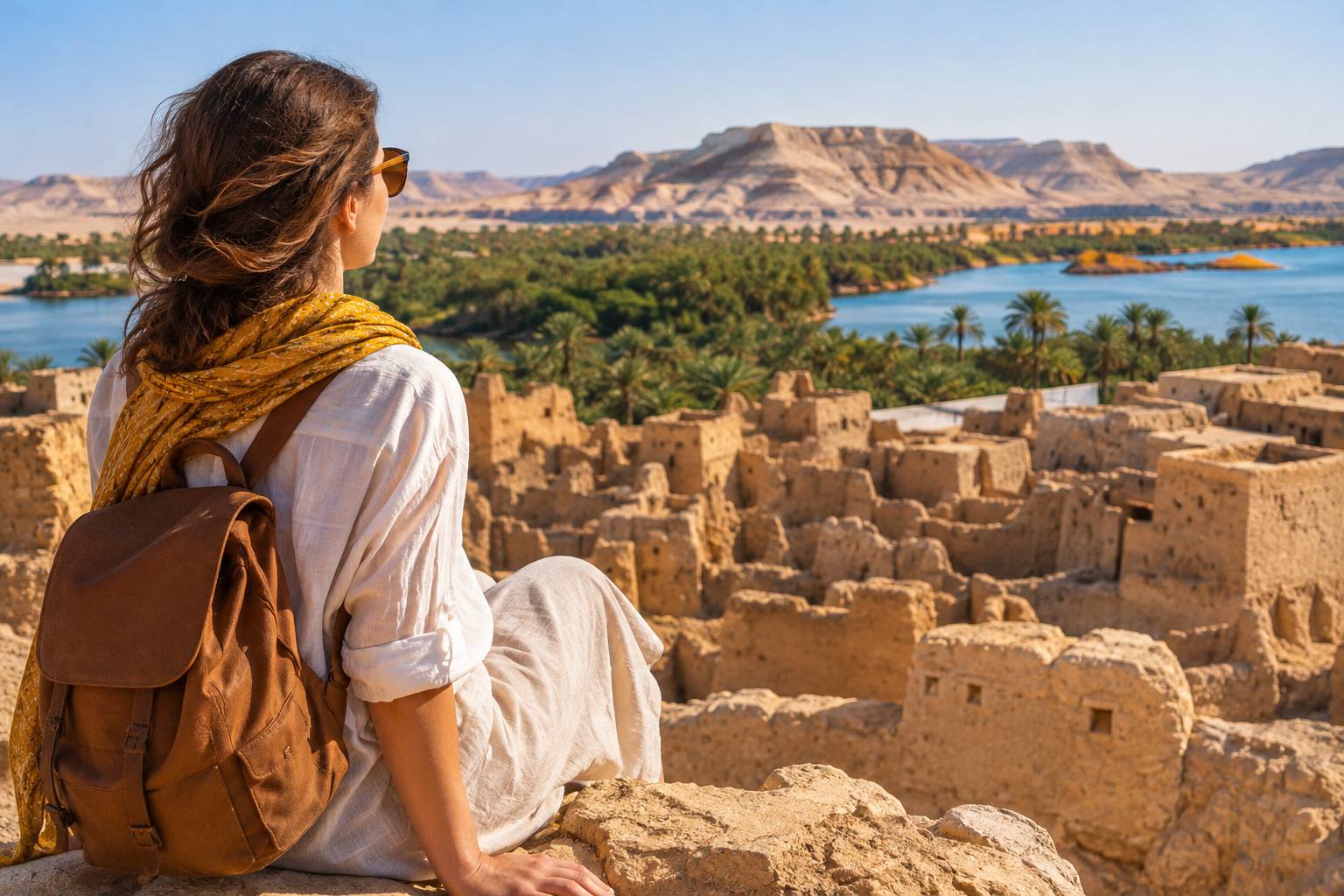
Solo Female Travel in Siwa Oasis: A Complete Guide for Women
Introduction: Discover the Magic of Siwa Oasis
Imagine waking up surrounded by thousands of palm trees, watching the golden desert dunes change color at sunset, and enjoying the peaceful atmosphere of a traditional Egyptian oasis.
Welcome to Siwa Oasis, one of Egypt's most fascinating and distinctive destinations.
Located in Egypt's Western Desert, near the Libyan border, Siwa offers a completely different experience from Cairo, Luxor, Hurghada, and Sharm El Sheikh. It is famous for its natural salt lakes, freshwater springs, traditional mud-brick architecture, ancient history, and unique Siwan Amazigh culture.
For women traveling alone, Siwa can be a rewarding destination for slowing down, enjoying nature, discovering local traditions, and experiencing a quieter side of Egypt.
However, traveling independently in a remote desert destination requires more preparation than visiting a major tourist city. Transportation, accommodation, local customs, desert excursions, and communication should all be considered before departure.
This guide explains what solo female travelers should know before visiting Siwa, including practical safety advice, places to visit, where to stay, what to wear, and how to plan a memorable trip.
1. Is Siwa Oasis Safe for Solo Female Travelers?
Siwa is a relatively small and traditional community where visitors can experience a quieter atmosphere than in Egypt's larger cities.
Many travelers visit to enjoy its natural landscapes, traditional guesthouses, and welcoming local culture. Nevertheless, no destination can guarantee complete safety, and women traveling alone should take sensible precautions.
Before planning your journey, check your government's latest Egypt travel advisory. Recommendations differ between countries and can change.
For example, the British Foreign Office currently distinguishes Siwa town and the Marsa Matruh–Siwa road from other parts of the Western Desert. It advises against all but essential travel on the Bahariya–Siwa road. The US State Department advises particular caution in the Western Desert and recommends using a professionally licensed tour company.
For solo female travelers, the following precautions are particularly important:
-
Arrange your transportation before leaving your starting city.
-
Choose established accommodation with recent guest reviews.
-
Avoid isolated areas after dark.
-
Use reputable local guides for desert excursions.
-
Avoid traveling into remote desert areas without an authorized professional operator.
-
Share your itinerary and accommodation details with someone you trust.
-
Keep your passport and emergency contact information accessible.
-
Check road conditions and security requirements before departure.
Is it suitable for a first solo trip to Egypt?
Siwa may be more challenging for a first-time solo traveler because it is remote, transportation options are limited, and English is less widely spoken than in major tourist destinations.
If this is your first visit to Egypt, consider combining Siwa with Cairo or Alexandria and arranging your transportation and desert activities in advance.
2. Why Should Solo Female Travelers Visit Siwa?
Siwa is not simply another tourist destination. It offers a distinctive combination of nature, culture, history, and relaxation.
Here are some reasons why women traveling alone may enjoy visiting.
A Peaceful Natural Environment
Unlike busy tourist cities, Siwa has palm groves, olive farms, salt lakes, and open desert landscapes.
You can enjoy quiet mornings, explore traditional streets, and spend time surrounded by nature.
A Unique Local Culture
Siwa has a distinctive Amazigh cultural heritage, including its own traditional language, clothing, food, architecture, and customs.
Learning about the community and its traditions can make the experience particularly meaningful.
Beautiful Natural Landscapes
The oasis is famous for its salt lakes, freshwater springs, and the Great Sand Sea.
These landscapes provide opportunities for photography, relaxation, and outdoor activities.
Traditional Accommodation
Many guesthouses and eco-lodges incorporate local architectural styles and natural materials.
Some properties offer rooftop terraces, traditional meals, and peaceful garden settings.
A Different Side of Egypt
Siwa provides an opportunity to understand Egypt beyond its famous archaeological attractions and coastal resorts.
It is an excellent destination for travelers interested in cultural discovery and slower travel.
3. Best Places to Visit in Siwa Oasis
Siwa offers several attractions that can be included in a solo travel itinerary. Most can be visited with a local guide or arranged transportation.
Shali Fortress
Shali is the historic heart of Siwa.
This traditional settlement was constructed using kershef, a local building material made from salt, clay, and other natural elements.
Although much of the original settlement has deteriorated, its remains provide an interesting insight into traditional Siwan architecture.
Visitors can walk through the old settlement, explore its narrow pathways, and enjoy panoramic views from elevated areas.
Tips for solo female visitors:
-
Visit during daylight hours.
-
Wear comfortable walking shoes.
-
Ask before photographing local residents.
-
Consider visiting with a local guide to understand the history.
Cleopatra's Spring
Cleopatra's Spring, also known as Cleopatra's Bath, is one of Siwa's best-known natural attractions.
It is a freshwater spring surrounded by palm trees and local cafés.
Visitors often stop here to relax, enjoy refreshments, and experience one of the oasis's traditional landmarks.
If you plan to swim, check the conditions and choose an appropriate swimming area.
Women traveling alone may prefer visiting during daylight hours and choosing a comfortable, reputable place.
Siwa Salt Lakes
The salt lakes are among the most recognizable natural attractions in Siwa.
Their bright blue water and white salt formations create beautiful landscapes, especially for photography.
The high salt concentration allows visitors to float easily in the water.
Important swimming advice:
-
Avoid getting salt water into your eyes.
-
Do not swallow the water.
-
Cover cuts or irritated skin.
-
Bring fresh drinking water.
-
Follow local swimming instructions.
-
Avoid swimming alone in isolated areas.
Respect local customs when choosing swimwear, particularly when other visitors or local families are present.
Fatnas Island
Fatnas Island is a beautiful area surrounded by palm trees and water.
It is particularly popular for sunset views.
Visitors can enjoy a drink, relax, and watch the changing colors of the sky over the oasis.
For a solo female traveler, it can be a pleasant place to spend an afternoon, provided transportation back to your accommodation is arranged.
Temple of the Oracle
The Temple of the Oracle, also known as the Temple of Amun, is one of Siwa's most important historical sites.
The temple is associated with the ancient Oracle of Amun and the visit of Alexander the Great.
Its location on a rocky hill provides wonderful views of the surrounding oasis.
A local guide can help explain the site's history and its importance in ancient Egyptian and Greek history.
Mountain of the Dead
Gebel al-Mawta, or the Mountain of the Dead, contains ancient rock-cut tombs dating mainly to the Late Period, Ptolemaic, and Roman periods.
It is an interesting stop for travelers interested in archaeology and ancient history.
Visit during daylight hours and follow the site's access regulations.
Great Sand Sea
The Great Sand Sea is one of the most spectacular desert landscapes in Egypt.
Its enormous sand dunes offer opportunities for:
-
Four-wheel-drive desert excursions.
-
Sandboarding.
-
Sunset photography.
-
Desert camping.
-
Stargazing.
Important safety note: Desert excursions must be arranged through authorized, experienced operators who understand local permits, access restrictions, and emergency procedures.
Do not attempt to explore the remote desert independently.
4. Where Should Solo Female Travelers Stay in Siwa?
Choosing the right accommodation is especially important when traveling alone.
Siwa has several types of accommodation, from simple guesthouses to eco-lodges and more comfortable hotels.
Siwa Town
Staying near the town center is a practical choice for first-time visitors.
Advantages include:
-
Easier access to restaurants.
-
Nearby shops and local services.
-
More convenient access to Shali Fortress.
-
Easier arrangements for local transportation.
-
Better opportunities to meet other travelers.
Palm Grove Eco-Lodges
Some accommodation properties are located among the palm trees outside the town center.
They can provide a peaceful experience and a closer connection with nature.
Before booking, check:
-
Distance from the town center.
-
Availability of transportation at night.
-
Reception and staff availability.
-
Guest reviews from women traveling alone.
-
Room security and bathroom arrangements.
-
Mobile phone reception.
Traditional Siwan Guesthouses
Traditional guesthouses can be an excellent way to experience local architecture and hospitality.
Some offer shared dining areas and opportunities to meet other travelers.
However, not every property provides the same facilities or level of privacy.
Always read recent reviews and confirm your room arrangements before making a reservation.
Accommodation Safety Checklist
Before confirming your booking:
-
Choose accommodation with recent, genuine reviews.
-
Confirm that your room has a secure lock.
-
Ask whether reception is available throughout the night.
-
Confirm the exact location.
-
Arrange transportation if the property is outside town.
-
Avoid properties with unclear booking details.
-
Keep your reservation confirmation available offline.
5. Getting Around Siwa as a Solo Woman
Transportation requires planning because Siwa is far from Egypt's main cities and many attractions are spread around the oasis.
Walking
Walking is a practical way to explore central Siwa during daylight hours.
Wear comfortable shoes, carry drinking water, and avoid isolated paths.
Bicycles
Bicycles are available in some areas and can be a convenient way to explore nearby attractions.
Before renting one:
-
Check the brakes and tires.
-
Ask about the rental duration and price.
-
Choose routes you are familiar with.
-
Avoid cycling on unfamiliar roads after dark.
Private Transportation
A pre-arranged private vehicle is often the most convenient option for women traveling alone, particularly when visiting attractions outside the town center.
It allows you to organize your sightseeing schedule and avoid relying on unfamiliar transport arrangements.
Use a reputable company or accommodation-recommended provider, confirm the price in advance, and share your journey details with someone you trust.
Four-Wheel-Drive Vehicles
A 4x4 vehicle is necessary for many desert excursions.
Always book through an authorized professional operator. Confirm that the excursion follows local access regulations and that the driver is experienced in desert conditions.
Never join an informal desert trip simply because it is cheaper.
6. What Should Female Travelers Wear in Siwa?
Siwa is a traditional and relatively conservative community.
Although visitors are generally accustomed to seeing tourists, dressing respectfully can make interactions more comfortable.
There is no universal dress code for tourists, but modest clothing is a sensible choice.
Recommended Clothing
-
Loose trousers.
-
Long skirts.
-
Lightweight shirts.
-
Tops covering the shoulders.
-
Comfortable walking shoes.
-
A light scarf.
-
A hat and sunglasses.
During summer, choose breathable fabrics such as cotton and linen.
During winter, bring warm layers because desert temperatures can drop considerably at night.
What About Swimming?
Swimming at salt lakes and freshwater springs is a popular activity.
However, swimming customs can differ between locations.
Choose a suitable swimming outfit based on the specific location, ask your accommodation or guide about local expectations, and bring a cover-up for walking between swimming areas.
Respect local residents and avoid photographing people without permission.
7. Understanding Siwan Culture and Local Traditions
One of the most rewarding aspects of visiting Siwa is discovering its distinctive local culture.
The Siwan community has a strong Amazigh heritage, and the local language and customs remain important parts of everyday life.
Respecting Local Customs
When visiting traditional communities:
-
Greet people politely.
-
Dress respectfully.
-
Ask permission before photographing residents.
-
Avoid entering private properties without an invitation.
-
Respect religious practices.
-
Be considerate during local celebrations.
Interacting with Local People
Many visitors appreciate the hospitality they experience in Siwa.
However, remember that friendliness does not mean everyone wants to be photographed or included in a travel video.
A respectful approach helps create more meaningful interactions.
Shopping in Siwa
Siwa has small shops selling traditional products, including dates, olives, olive oil, handmade crafts, and locally produced items.
Take your time, compare prices, and ask about the products before purchasing.
Supporting local businesses is a good way to contribute to the community.
8. What Can Solo Female Travelers Eat in Siwa?
Siwan cuisine is another highlight of the destination.
The food reflects the oasis environment and local traditions.
Some foods and products to try include:
Dates
Siwa is famous for its date production.
Dates are an important local product and are commonly enjoyed as snacks or used in traditional dishes.
Olives and Olive Oil
Olive cultivation is an important part of the local economy.
You can find locally produced olives and olive oil in shops and restaurants.
Traditional Siwan Dishes
Try traditional local meals when available, including dishes prepared with vegetables, grains, dates, and locally available ingredients.
Ask about ingredients if you have dietary restrictions.
Eating Safely
For solo travelers:
-
Choose busy, well-reviewed restaurants.
-
Drink sealed bottled water if you are unsure about the water source.
-
Prefer freshly prepared meals.
-
Wash your hands before eating.
-
Be cautious with food that has been sitting uncovered for long periods.
9. Best Time to Visit Siwa Oasis
The best time for most travelers to visit Siwa is during the cooler months.
Autumn: September to November
Autumn is a pleasant season for exploring the oasis.
Temperatures gradually become more comfortable, making sightseeing and outdoor activities easier.
Winter: December to February
Winter is a popular time to visit.
Days can be pleasant, but nights are often cold, particularly in desert camps.
Bring warm clothing if you plan to stay overnight outside town.
Spring: March to April
Spring can be a good time for visiting before the hotter summer months.
Check the weather forecast before arranging outdoor activities.
Summer: May to August
Summer temperatures can become extremely high.
Outdoor sightseeing and desert excursions may be uncomfortable during the middle of the day.
If visiting in summer, plan activities for cooler hours and maintain good hydration.
10. How to Reach Siwa Oasis
Siwa is remote, so transportation should be organized carefully.
From Cairo
The journey from Cairo is long and generally takes around 8–10 hours by road, depending on traffic, stops, and road conditions.
Travelers commonly use:
-
Intercity buses.
-
Private vehicles.
-
Pre-arranged private transfers.
For a solo female traveler, an organized transfer can make the journey easier, particularly if this is your first visit.
From Alexandria
Alexandria is another possible starting point.
You can travel west toward Marsa Matruh and continue to Siwa.
Check the available transport schedule and road conditions before departure.
From Marsa Matruh
Marsa Matruh is an important gateway to Siwa.
The road between Marsa Matruh and Siwa is commonly used by travelers.
Confirm current road access and transport arrangements before setting out.
Important Transportation Advice
Avoid planning a journey that depends on an unconfirmed bus connection or an informal driver.
Keep your accommodation informed about your arrival time, carry enough water and food for the journey, and maintain a charged mobile phone.
11. Desert Safari and Overnight Camping for Solo Women
A desert safari can be one of the most memorable parts of a Siwa visit.
The Great Sand Sea offers dramatic dunes, beautiful sunsets, and impressive night skies.
However, a remote desert excursion requires more attention to safety than ordinary sightseeing.
Before booking, confirm:
-
The operator is properly authorized.
-
The excursion complies with local permits and access requirements.
-
The driver is experienced.
-
The vehicle is suitable for desert conditions.
-
Emergency communication arrangements are available.
-
The itinerary and return time are clear.
-
Overnight accommodation and sleeping arrangements are explained.
Is Desert Camping Suitable for Solo Female Travelers?
It can be a rewarding experience, but choose an established camp or a reputable organized excursion.
Ask about:
-
Private or shared sleeping arrangements.
-
Bathroom facilities.
-
Staff presence overnight.
-
Meals and drinking water.
-
Mobile reception.
-
Emergency procedures.
If you are uncomfortable with an overnight desert stay, choose a daytime excursion and return to your accommodation in town.
There is no need to participate in every activity to enjoy Siwa.
12. How to Handle Unwanted Attention
Siwa has a different social environment from Egypt's major tourist cities.
Most visitors come to experience its culture and natural beauty, but women should still maintain clear personal boundaries.
Useful precautions include:
-
Keep conversations polite but do not feel obliged to continue them.
-
Avoid sharing your hotel room number or personal contact information.
-
Do not accept private invitations from strangers.
-
Use established transportation providers.
-
Avoid isolated places with people you do not know.
-
Contact your accommodation if you need assistance.
If someone makes you uncomfortable, move to a public place and ask trusted staff or local authorities for help.
Tourist Police in Egypt can be contacted on 126. General police assistance is available on 122.
13. Staying Connected and Managing Money
Siwa's remote location means that visitors should not assume that every service will be available at all times.
Mobile Phone and Internet
Mobile coverage and internet quality can vary depending on your location.
Download offline maps, save your accommodation details, and keep important phone numbers available without internet access.
Consider purchasing an Egyptian SIM or arranging a suitable roaming package before traveling.
Cash and Payments
Carry sufficient Egyptian pounds for daily expenses.
Some businesses may accept card payments, but cash remains useful for small purchases, local transport, and markets.
Keep your money in separate secure locations rather than carrying everything in one wallet.
14. A Suggested 3-Day Siwa Itinerary for Solo Female Travelers
A three-day visit provides a good introduction to Siwa's culture, natural attractions, and desert landscapes.
Day 1: Discover Traditional Siwa
Morning
-
Arrive in Siwa and check into your accommodation.
-
Enjoy breakfast and rest after the journey.
-
Explore the town center.
Afternoon
-
Visit Shali Fortress.
-
Discover the traditional streets.
-
Explore local shops and handicrafts.
Evening
-
Enjoy a traditional Siwan dinner.
-
Relax at your guesthouse.
Day 2: Springs, Salt Lakes and Sunset
Morning
-
Visit Cleopatra's Spring.
-
Explore the surrounding palm groves.
-
Discover the salt lakes with suitable swimming arrangements.
Afternoon
-
Visit Fatnas Island.
-
Enjoy the peaceful natural surroundings.
Evening
-
Watch the sunset.
-
Return to your accommodation using pre-arranged transportation.
Day 3: History and Desert Adventure
Morning
-
Visit the Temple of the Oracle.
-
Explore the Mountain of the Dead.
Afternoon
-
Enjoy a professionally organized 4x4 excursion, subject to current access permissions and security conditions.
Evening
-
Return to town.
-
Enjoy your final evening in Siwa.
This itinerary is flexible and should be adjusted according to current access restrictions, weather, and transportation availability.
15. Practical Safety Checklist for Solo Female Travelers
Before leaving for Siwa, make sure you have:
-
A confirmed accommodation reservation.
-
Pre-arranged transportation.
-
A copy of your passport.
-
Travel insurance covering your planned activities.
-
Sufficient Egyptian cash.
-
A fully charged mobile phone.
-
A power bank.
-
Offline maps.
-
Drinking water.
-
Sun protection.
-
Comfortable walking shoes.
-
Modest, breathable clothing.
-
Emergency contact details.
-
A confirmed desert excursion provider, if applicable.
Most importantly, share your travel plans with someone you trust.
16. Frequently Asked Questions About Solo Female Travel in Siwa Oasis
Is Siwa Oasis safe for a woman traveling alone?
Siwa can be visited by solo women who plan carefully, respect local customs, and arrange reliable transportation and accommodation. Check current government travel advice before traveling because recommendations differ for the Western Desert and specific routes.
Can a woman visit Siwa without a male companion?
Women can travel independently in Egypt, but remote destinations require careful preparation. A reputable local guide or pre-arranged private transportation can make the experience easier.
How many days should I spend in Siwa?
Three to four days is a good amount of time for most visitors. This allows time to explore the main attractions, enjoy the salt lakes, and experience a desert excursion.
Is English widely spoken in Siwa?
English is understood in some hotels, tourist businesses, and by guides, but it is less widely spoken than in major Egyptian tourist destinations. A translation app can be helpful.
Can I swim in Siwa's salt lakes alone?
It is better to visit with a companion or organized arrangement, especially at unfamiliar or isolated locations. Follow local instructions and avoid swimming if conditions are unsuitable.
What should I wear in Siwa?
Loose trousers, long skirts, lightweight shirts, and clothing covering the shoulders are practical choices. Respect local customs and ask about suitable swimwear at individual swimming locations.
Is Siwa suitable for first-time visitors to Egypt?
Yes, but it may be easier to visit after spending time in a major city such as Cairo or Alexandria. Its remote location makes advance planning particularly important.
Can I visit the Great Sand Sea independently?
Do not attempt an independent desert expedition. Arrange excursions through authorized operators with experienced drivers and the necessary permissions.
Is there medical assistance in Siwa?
Basic medical services are available locally, but facilities are more limited than in larger cities. Bring necessary personal medication and check your insurance coverage before departure.
Can I visit Siwa in summer?
Yes, but summer temperatures can be extremely high. Plan outdoor activities for early morning or late afternoon and avoid strenuous activity during the hottest hours.
Is it possible to travel from Cairo to Siwa by bus?
Yes, bus services may operate between Cairo and Siwa, but schedules and availability should be confirmed before departure.
Is Wi-Fi available in Siwa?
Many accommodation properties offer Wi-Fi, although speed and reliability can vary. Mobile coverage may also differ between the town and remote desert locations.
Should I book a private tour in Siwa?
A reputable organized tour can simplify transportation, sightseeing, and access to remote locations. This is particularly useful for travelers visiting Siwa alone.
Is Siwa good for photography?
Absolutely. Its salt lakes, palm groves, old architecture, desert dunes, and sunsets provide excellent photography opportunities. Always ask permission before photographing local people.
Conclusion: Experience the Beauty of Siwa at Your Own Pace
Siwa Oasis offers solo female travelers an opportunity to discover a quieter, more traditional, and naturally beautiful side of Egypt.
From the historic Shali Fortress and ancient Temple of the Oracle to the salt lakes, palm groves, and Great Sand Sea, the oasis offers experiences that are very different from Egypt's busy cities and coastal resorts.
The key to enjoying Siwa is preparation. Choose reliable accommodation, arrange transportation in advance, respect local traditions, and use authorized professionals for desert excursions.
With thoughtful planning, Siwa can become one of the most memorable stops on a journey through Egypt.
Explore Egypt with confidence. Discover its history, culture, and natural beauty with Let's Explore Egypt Travel.