


Solo Female Travel in Minya
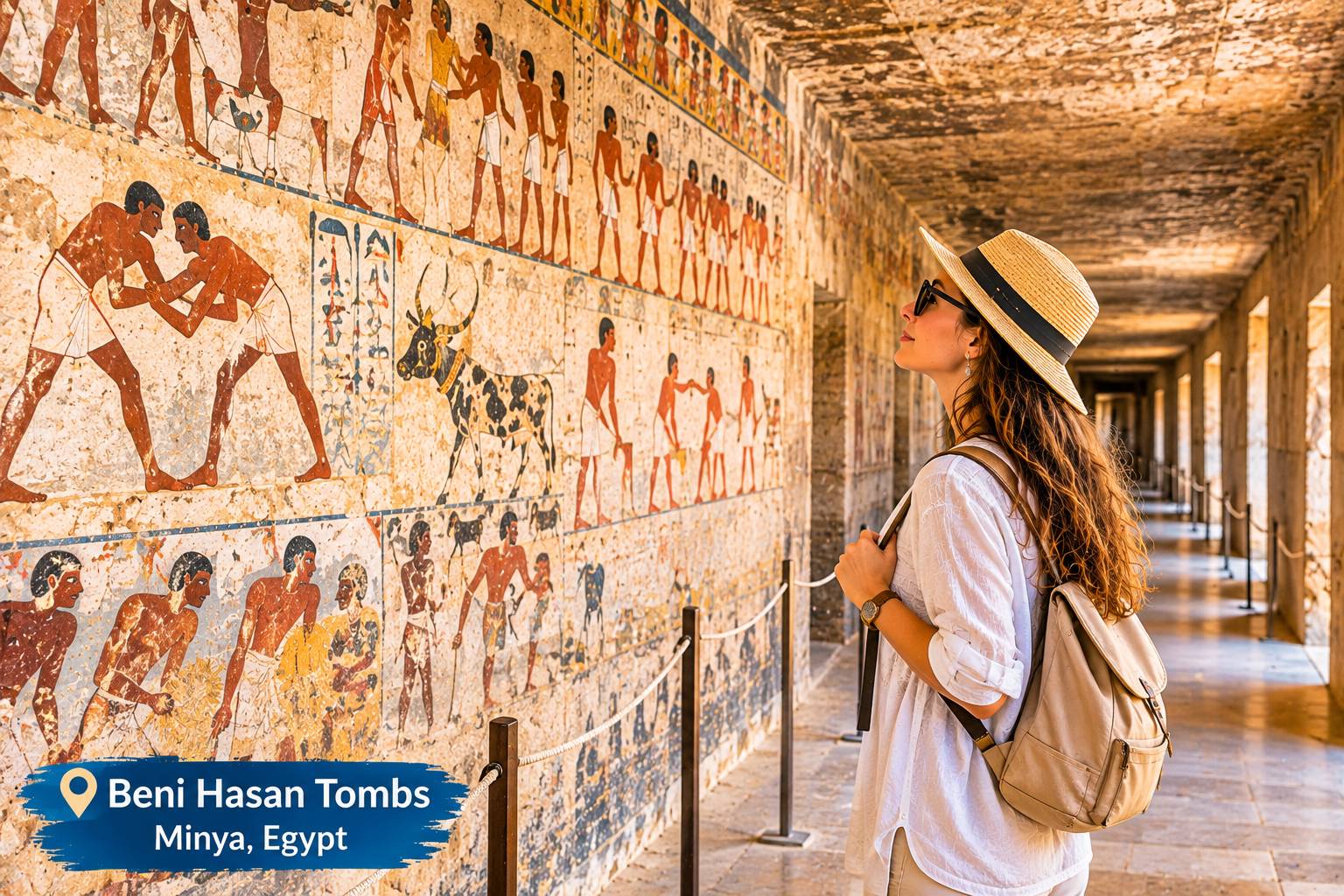
Solo Female Travel in Minya: Safety, Tips & Things to Do (2027)
Introduction: Discover a Different Side of Egypt
When travellers think about Egypt, they often imagine the Pyramids of Giza, the temples of Luxor or the beaches of the Red Sea. But there is another fascinating region worth discovering: Minya, in Middle Egypt.
Located along the Nile River, Minya is known for its archaeological treasures, traditional villages, fertile countryside and important chapters of ancient Egyptian history.
For solo female travellers interested in history and culture, Minya offers an opportunity to explore places that are less familiar to many international visitors.
Some of the region's most important archaeological attractions include Beni Hasan, Tuna el-Gebel and Tell el-Amarna. These sites reveal different periods of Egyptian history, from the Middle Kingdom to the Amarna period and the Greco-Roman era.
Travelling independently in Minya requires more planning than visiting a major resort destination. Transport, local arrangements and opening times should be organised in advance.
If you are planning a longer journey around Egypt, read our complete Solo Female Travel in Egypt guide.
Is Minya Suitable for Solo Female Travelers?
Minya is primarily a cultural and archaeological destination rather than a conventional holiday resort. It may appeal to travellers who enjoy historical sites, local culture and quieter destinations.
However, independent tourism infrastructure is more limited than in Cairo, Luxor or Hurghada. Some archaeological sites are spread across different areas, so arranging reliable transportation is particularly important.
For a more comfortable visit:
-
Choose accommodation with a staffed reception and recent guest reviews.
-
Arrange transportation with a reputable local provider.
-
Consider a licensed Egyptologist guide for archaeological visits.
-
Confirm site opening times and access before travelling.
-
Avoid isolated locations without an organised transport plan.
-
Keep your accommodation details and emergency contacts available.
-
Share your itinerary with someone you trust.
No destination can guarantee personal safety. Check your government's latest Egypt travel advice before departure and follow instructions from local authorities.
The UK Foreign, Commonwealth & Development Office Egypt travel advice provides information about regional risks, security and travel insurance. Advice can change, so check it again shortly before your trip.
Best Things to Do in Minya Alone
1. Visit the Beni Hasan Tombs
Beni Hasan is one of Minya's most remarkable archaeological attractions.
The site contains rock-cut tombs belonging to officials and important figures from ancient Egypt's Middle Kingdom. Several tombs feature colourful wall paintings depicting everyday life, hunting, agriculture, wrestling, crafts and foreign visitors.
The tombs offer a fascinating insight into life thousands of years ago.
The location also provides views over the Nile Valley and surrounding farmland.
Solo travel tip: Arrange transportation and check which tombs are open before your visit. A knowledgeable guide can help explain the artwork and historical background.
Official information is available through Egypt's Ministry of Tourism and Antiquities – Beni Hasan.
2. Explore Tell el-Amarna
Tell el-Amarna is one of the most historically significant archaeological areas in Egypt.
It was the ancient city of Akhetaten, established by Pharaoh Akhenaten during the 18th Dynasty as a centre for the worship of the Aten.
Today, visitors can explore remains associated with the ancient city, including temples, residential areas and rock-cut tombs.
For travellers interested in ancient Egyptian religion, architecture and history, this is an especially rewarding destination.
Solo travel tip: The archaeological area is extensive. Arrange a vehicle and guide in advance rather than relying on finding transport after arrival.
Learn more through Experience Egypt's guide to Al-Minya.
3. Discover Tuna el-Gebel
Tuna el-Gebel is an archaeological area associated with ancient Hermopolis Magna.
It is particularly known for its extensive necropolis, underground burial galleries and Greco-Roman monuments.
Highlights include the catacombs associated with sacred animals, the tomb of Petosiris and the Tomb of Isadora.
The site is interesting because it reflects the mixture of Egyptian and Greco-Roman artistic and religious traditions.
Solo travel tip: Visit with an organised itinerary and confirm access arrangements before setting out.
The Egyptian Ministry of Tourism and Antiquities provides information about the site through its official Tuna el-Gebel page.
4. Enjoy Views of the Nile
Minya is situated beside the Nile, and the surrounding countryside offers a quieter experience than Egypt's larger cities.
You can enjoy views of the river, agricultural land and traditional settlements.
Take time to experience the local atmosphere, enjoy a meal and observe everyday life along the Nile.
If you want to explore outside the city, arrange transport with a trusted provider and confirm your return journey.
5. Discover Local Markets and Everyday Life
Minya's markets and shopping streets offer an opportunity to experience a less tourist-oriented side of Egypt.
You may find local food, household products, clothing and traditional goods.
When visiting markets:
-
Keep valuables secure.
-
Carry smaller amounts of cash.
-
Ask about prices before purchasing.
-
Be polite when negotiating.
-
Dress comfortably and respectfully.
Markets can be busy, so remain aware of your belongings and surroundings.
6. Explore More of Middle Egypt
Minya can be part of a wider cultural journey through Middle Egypt.
Depending on your interests and travel arrangements, you may consider combining your visit with other historical locations in the region.
Do not attempt to cover too many archaeological sites in one day. Distances, road conditions and site access can make a realistic itinerary more enjoyable than a rushed schedule.
Where to Stay in Minya as a Solo Female Traveler
Accommodation should be one of your first planning decisions.
Consider hotels in Minya city with:
-
A staffed reception.
-
Recent and credible guest reviews.
-
Secure room access.
-
Reliable transportation assistance.
-
Clear check-in and payment policies.
-
Restaurants or shops within a convenient distance.
Before booking, contact the property directly to confirm its location, facilities and available services.
If you plan to visit several archaeological sites, ask whether the hotel can help arrange a reputable driver.
Getting Around Minya Alone
Transport planning is particularly important in Minya because its archaeological attractions are spread across different locations.
Private Transportation
A private vehicle with a professional driver can make a multi-site itinerary easier to manage.
It allows you to organise pickup times, spend longer at places that interest you and avoid searching for transport between archaeological locations.
Local Taxis
Taxis may be useful for shorter journeys within the city. Agree on the fare before starting your journey and confirm your destination clearly.
Guided Excursions
For first-time visitors, an organised excursion with a licensed Egyptologist can simplify the experience.
A guide can explain the historical significance of each site and help coordinate the day's schedule.
For solo female travellers, organised transport and clear arrangements are especially useful when visiting places outside the main city.
What Should Women Wear in Minya?
Minya is more traditional than many international Red Sea resort areas.
There is no need for formal clothing, but modest, comfortable outfits are a practical choice when exploring the city and archaeological sites.
Consider packing:
-
Lightweight trousers.
-
Long skirts or comfortable dresses.
-
Breathable shirts and tops.
-
A light scarf or cover-up.
-
Comfortable walking shoes.
-
Sunglasses and a sun hat.
-
A light jacket for cooler evenings during winter.
For archaeological visits, choose footwear suitable for uneven ground and walking.
Best Time to Visit Minya
The cooler months are generally more comfortable for sightseeing and outdoor archaeological visits.
October to April: Often a good period for exploring historical sites and walking outdoors.
May to September: Temperatures can be very high. Plan visits early in the morning, carry water and avoid prolonged exposure to the midday sun.
Check the weather forecast before your visit and confirm opening hours with the relevant authorities.
Suggested 2-Day Minya Itinerary for Solo Female Travelers
Day 1: Beni Hasan and Minya City
-
Have breakfast at your hotel.
-
Travel to the Beni Hasan archaeological site.
-
Explore the Middle Kingdom tombs with a guide.
-
Enjoy a local lunch.
-
Return to Minya city.
-
Spend the evening relaxing at your hotel or enjoying dinner.
Day 2: Tell el-Amarna and Tuna el-Gebel
-
Start early with your pre-arranged driver.
-
Explore Tell el-Amarna and its archaeological remains.
-
Continue to Tuna el-Gebel, subject to access and travel arrangements.
-
Visit the main monuments and burial areas that are open.
-
Return to Minya.
This itinerary is a proposal, not a guaranteed schedule. Confirm site access, travel times and local arrangements before departure. If you prefer a slower pace, split the visits across additional days.
What to Pack for Minya
A few essentials can make your visit more comfortable:
-
Sunscreen.
-
Sunglasses.
-
A wide-brimmed hat.
-
Comfortable walking shoes.
-
Lightweight and modest clothing.
-
Reusable water bottle.
-
Portable phone charger.
-
Small day bag.
-
Cash for small purchases.
-
Copies of important travel documents.
-
Any personal medication you require.
For archaeological visits, keep your belongings light and follow the site's photography and visitor rules.
Can You Visit Minya from Cairo?
Yes. Minya can be included in a longer journey from Cairo.
You can explore transport options by road or rail, depending on your schedule and preferences. Check current timetables and availability before booking.
If you are visiting several archaeological sites, staying overnight in Minya may be more practical than attempting a rushed day trip.
For international visitors, arranging a private vehicle and a licensed Egyptologist can make the journey easier to coordinate.
Is Minya Better Than Luxor for Solo Female Travelers?
Minya and Luxor offer different types of cultural experiences.
Minya is particularly interesting for travellers who want to explore Middle Egypt and discover archaeological sites that receive fewer international visitors.
Luxor has a more developed tourism infrastructure, a wider choice of hotels and restaurants, and internationally famous attractions such as Karnak Temple, Luxor Temple and the Valley of the Kings.
If this is your first visit to Egypt, Luxor may be easier to organise independently. If you have already visited the major tourist destinations, Minya can offer a fascinating addition to your itinerary.
You can also read our Solo Female Travel in Egypt guide for more destination ideas.
Frequently Asked Questions
Is Minya safe for solo female travelers?
Minya is a destination that requires sensible planning, particularly for transportation and visits to archaeological sites outside the city. Choose reputable accommodation, arrange reliable transport and check current official travel advice before travelling.
What are the most important archaeological sites in Minya?
Some of the best-known sites include Beni Hasan, Tell el-Amarna and Tuna el-Gebel. Each offers a different perspective on ancient Egyptian history.
How many days should I spend in Minya?
Two days can provide an introduction to the main archaeological attractions, although a longer stay may be preferable if you want a slower itinerary.
Do I need a guide in Minya?
A licensed Egyptologist is highly recommended, especially if you are visiting several archaeological locations. A guide can explain the history and help coordinate transportation and site visits.
Can I visit Minya independently?
Independent travel is possible, but you should plan transportation, accommodation and site access in advance. Some attractions are outside the city and are not easy to reach using informal transport arrangements.
What is the best time to visit Minya?
The cooler months, particularly October through April, are generally more comfortable for sightseeing. Summer visits require careful planning around high temperatures.
Is Minya worth visiting?
Yes, particularly for travellers interested in ancient Egyptian history, archaeology and destinations beyond the country's most famous tourist centres.
Final Thoughts: Discover the History of Middle Egypt
Minya offers a different perspective on Egypt. Its archaeological sites, Nile scenery and cultural heritage make it an interesting destination for travellers who want to explore beyond Cairo, Luxor and the Red Sea resorts.
For solo female travellers, the key is preparation: choose suitable accommodation, arrange reliable transportation, confirm archaeological site access and consider travelling with a qualified guide.
With a well-organised itinerary, Minya can become a memorable part of a wider Egyptian journey.
Planning more of Egypt? Explore our complete guide to Solo Female Travel in Egypt for more destination guides and practical travel advice.