


Solo Female Travel in Kom Ombo Egypt
Solo Female Travel in Kom Ombo Egypt: Safety, Tips & Things to Do (2027)
Introduction: Discover Kom Ombo, Egypt
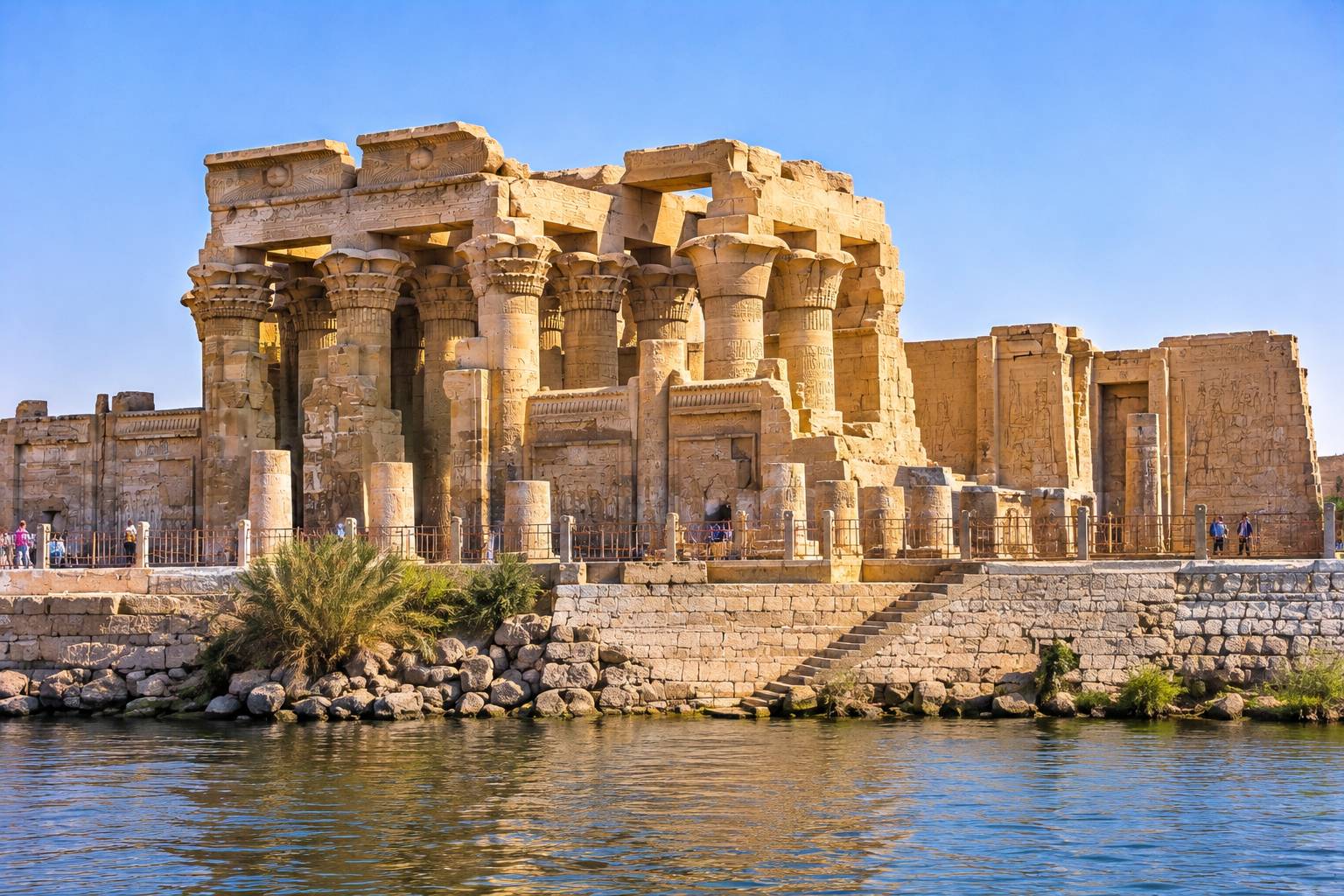
Kom Ombo is one of the most fascinating historical destinations in Upper Egypt. Located on the eastern bank of the Nile, north of Aswan, the town is famous for its extraordinary double temple dedicated to two ancient Egyptian gods: Sobek, the crocodile god, and Horus the Elder.
Unlike the larger tourist destinations of Luxor and Aswan, Kom Ombo offers a relatively short but memorable cultural experience. Its archaeological attractions, Nile views and traditional Upper Egyptian atmosphere make it an excellent stop during a journey along the river.
For solo female travellers interested in ancient Egyptian religion, archaeology and local culture, Kom Ombo is particularly rewarding.
Many visitors discover the town during a Nile cruise between Luxor and Aswan. It can also be visited on an organised excursion from Aswan.
If you are planning a wider Egyptian journey, start with our complete guide to Solo Female Travel in Egypt.
Is Kom Ombo Suitable for Solo Female Travelers?
Kom Ombo is a traditional Upper Egyptian town rather than a large international tourist resort.
Its main attraction is the Temple of Kom Ombo, which is located close to the Nile and is commonly included in organised sightseeing itineraries.
For solo female travellers, visiting as part of a Nile cruise or an organised private excursion can be convenient because transportation and sightseeing arrangements are coordinated in advance.
For a comfortable visit:
-
Arrange transportation through a reputable tour operator or hotel.
-
Consider hiring a licensed Egyptologist.
-
Confirm your pickup and return arrangements before leaving your accommodation.
-
Keep your phone charged and save important contact details.
-
Wear comfortable shoes and lightweight clothing.
-
Keep your valuables secure in crowded areas.
-
Avoid unfamiliar streets late at night.
-
Share your itinerary with someone you trust.
-
Follow local instructions around archaeological and port areas.
No destination can guarantee personal safety. Check your government's current travel advice before departure.
The UK Foreign, Commonwealth & Development Office travel advice for Egypt provides information about security, transportation and precautions for visitors.
Best Things to Do in Kom Ombo Alone
1. Visit the Temple of Kom Ombo
The Temple of Kom Ombo is the town's most famous attraction and one of Egypt's most unusual ancient monuments.
It was built during the Ptolemaic period and continued to be decorated during the Roman period.
What makes it especially interesting is that it was dedicated to two different gods:
-
Sobek: The ancient Egyptian crocodile god associated with water, fertility and protection.
-
Horus the Elder: A falcon-associated deity connected with kingship and protection.
The temple has a remarkable symmetrical design, with two parallel sections, two main axes and separate sanctuaries for the two gods.
Highlights include:
-
The monumental entrance.
-
The decorated columns.
-
The large hypostyle halls.
-
The twin sanctuaries.
-
Religious inscriptions and wall reliefs.
-
The ancient calendar scenes.
-
The famous relief depicting medical instruments.
The symmetrical design makes Kom Ombo different from most other Egyptian temples.
Solo travel tip: Consider hiring a licensed Egyptologist. The temple's inscriptions contain fascinating details about ancient religion, medicine and royal ceremonies.
Official information: Egyptian Ministry of Tourism and Antiquities – Kom Ombo Temple.
2. Discover the Famous Medical Instruments Relief
One of the most interesting details inside Kom Ombo Temple is a carved scene showing instruments associated with ancient medical practices.
The relief depicts different instruments, including objects resembling surgical tools.
It is particularly interesting for travellers who want to learn about ancient Egyptian medicine and the history of healthcare.
Your guide can explain the interpretation of the carving and its historical context.
Photography tip: Look carefully at the details of the carved stonework and follow the site's photography rules.
3. Visit the Crocodile Museum
The Crocodile Museum is located beside Kom Ombo Temple and is one of the area's most unusual attractions.
It is dedicated to the ancient Egyptian worship of Sobek and the religious importance of crocodiles along the Nile.
The museum's collection includes:
-
Mummified crocodiles.
-
Crocodile eggs and remains.
-
Statues of the god Sobek.
-
Ancient funerary objects.
-
Pottery coffins.
-
Religious objects and archaeological displays.
The museum helps explain why crocodiles were associated with divine protection, fertility and the power of the Nile.
Some of the preserved crocodile mummies are particularly impressive because of their size.
For travellers interested in ancient Egyptian beliefs, this is an essential addition to the temple visit.
Solo travel tip: Allow extra time for the museum after exploring the main temple. It is located within the same archaeological complex.
Official information: Crocodile Museum – Egyptian Ministry of Tourism and Antiquities.
4. Explore the Temple's Twin Sanctuaries
One of the most remarkable architectural features of Kom Ombo is its two sanctuaries.
Unlike a conventional temple with a single main religious axis, the Kom Ombo complex has two parallel sections.
The southern section was associated with Sobek, while the northern section was dedicated to Horus the Elder.
This arrangement reflects the temple's dual religious identity.
As you explore, notice how the architectural layout and decorative scenes reflect the worship of both deities.
A knowledgeable guide can make this unusual design much easier to understand.
5. Admire the Ancient Calendar Relief
Kom Ombo contains interesting carvings associated with the ancient Egyptian calendar and religious festivals.
These scenes illustrate the importance of timekeeping, religious ceremonies and agricultural seasons in ancient Egyptian life.
The Nile's annual flooding was central to agriculture and economic activity, and calendars helped coordinate important activities.
The temple's inscriptions provide a fascinating glimpse into how ancient Egyptians connected religious beliefs with everyday life.
6. Enjoy Views of the Nile
Kom Ombo's location beside the Nile is one of its most appealing features.
The temple stands close to the river, providing lovely views of the water and the surrounding agricultural landscape.
You can enjoy the scenery, photograph the riverbanks and watch boats passing along the Nile.
If you are travelling on a Nile cruise, the experience of arriving at Kom Ombo by boat is particularly memorable.
Solo travel tip: Enjoy the scenery from permitted public areas and your organised cruise or excursion. Follow local instructions around docks and working river facilities.
7. Discover Traditional Upper Egyptian Life
Kom Ombo offers an opportunity to experience everyday life in a traditional Upper Egyptian town.
Away from the main archaeological attraction, you can discover local shops, cafés and markets.
You may find:
-
Fresh fruit.
-
Local spices.
-
Traditional sweets.
-
Handmade souvenirs.
-
Clothing.
-
Household goods.
Exploring local streets during the daytime can provide a different perspective on Egypt beyond its famous historical monuments.
Shopping tip: Ask about prices before purchasing and keep your belongings secure in crowded areas.
8. Enjoy Traditional Egyptian Food
A visit to Kom Ombo can also be an opportunity to enjoy traditional Upper Egyptian food.
Depending on the restaurant, you may find:
-
Ful medames.
-
Taameya.
-
Fresh Egyptian bread.
-
Grilled chicken.
-
Grilled meat.
-
Rice dishes.
-
Traditional vegetables.
-
Seasonal desserts.
-
Egyptian tea.
Choose an established restaurant, check menu prices before ordering and communicate any dietary requirements clearly.
If you are joining a Nile cruise, ask whether lunch or dinner is included in your package.
9. Experience a Nile Cruise Stop
Kom Ombo is one of the best-known stops on the Nile cruise route between Luxor and Aswan.
A cruise allows you to enjoy the scenery while travelling between major archaeological destinations.
Depending on your itinerary, you may visit:
-
Luxor.
-
Edfu.
-
Kom Ombo.
-
Aswan.
-
Philae Temple.
Some cruises include guided visits to Kom Ombo Temple and the Crocodile Museum.
For solo female travellers, an organised cruise can simplify transportation and sightseeing arrangements.
Before booking, confirm cabin arrangements, single supplements, group excursions and the attractions included.
10. Photograph the Temple at Sunset
Kom Ombo Temple is particularly attractive when the late-afternoon sunlight illuminates the ancient sandstone walls.
The warm colours create beautiful contrasts with the Nile landscape.
Photography enthusiasts can enjoy capturing the monumental architecture, columns and decorative reliefs.
Allow enough time to explore the site rather than concentrating only on photographs.
Check the current closing time and last-entry requirements before planning a sunset visit.
Where to Stay in Kom Ombo as a Solo Female Traveler
Kom Ombo has fewer international hotel options than Luxor and Aswan.
For many visitors, staying in Aswan or travelling on a Nile cruise is more convenient than booking several nights in Kom Ombo.
Staying in Aswan
Aswan offers a wider range of hotels, restaurants and organised excursions.
It can be a practical base for exploring Kom Ombo as part of a day trip or Nile cruise.
Staying on a Nile Cruise
A Nile cruise can be a comfortable option for solo travellers who want to explore several historical destinations.
Depending on the itinerary, it may include guided visits to Kom Ombo and Edfu.
Confirm the single-room arrangements, additional charges and included excursions before booking.
Staying Locally in Kom Ombo
If you prefer a slower visit, check local accommodation availability.
Choose properties with recent guest reviews, clear reception arrangements, secure rooms and reliable transport assistance.
Getting Around Kom Ombo Alone
Kom Ombo's archaeological attraction is relatively easy to visit once you arrive in the area, but transport planning remains important.
Nile Cruise Excursions
For many international visitors, a Nile cruise is the most convenient way to reach Kom Ombo.
The cruise operator coordinates the arrival and departure arrangements, making sightseeing easier to organise.
Private Transportation
A private vehicle can be arranged from Aswan for a more flexible excursion.
Confirm your pickup point, return time, waiting time and total price before booking.
Local Taxis
Taxis may be useful for shorter journeys around town.
Agree on the fare before travelling and use drivers recommended by your hotel or tour operator whenever possible.
Walking
Walking is practical around the temple complex and selected central areas.
Wear comfortable footwear, especially during hot weather.
Temple of Kom Ombo: Opening Hours and Tickets
The Egyptian Ministry of Tourism and Antiquities provides official information for the temple, and its online ticketing platform provides current ticket details.
The published online ticket information currently lists:
| Visitor category | Published ticket price |
|---|---|
| Foreign adult | EGP 450 |
| Foreign student | EGP 225 |
| Egyptian adult | EGP 40 |
| Egyptian student | EGP 20 |
The Crocodile Museum is included with the temple-area entry ticket according to the Ministry's museum information.
The official ticketing platform lists the daily opening time as 7:00 AM, with the last entry at 8:00 PM. The Ministry's Arabic monument page lists visiting hours from 7:00 AM to 9:00 PM.
Important: Ticket prices and opening hours can change. Confirm the latest details before travelling, and arrive at least one hour before closing.
Official resources:
What Should Women Wear in Kom Ombo?
Kom Ombo is a traditional Upper Egyptian town rather than a beach resort.
Comfortable and modest clothing is a practical choice when exploring the archaeological site and local streets.
Consider packing:
-
Lightweight trousers.
-
Comfortable summer dresses.
-
Breathable tops.
-
A light cover-up.
-
Comfortable walking shoes.
-
Sunglasses.
-
A wide-brimmed hat.
-
Sunscreen.
-
A light scarf.
The temple has large outdoor areas, uneven stone surfaces and limited shade in some sections, so practical clothing and sun protection are important.
Best Time to Visit Kom Ombo
The weather plays an important role in planning your visit.
October to April: Generally more comfortable for exploring the temple and enjoying outdoor sightseeing.
May and September: These months can be suitable for sightseeing, although daytime temperatures may be high.
June to August: Summer can be extremely hot in Upper Egypt. Visit early, carry sufficient water and avoid unnecessary exposure to direct sunlight.
For most solo female travellers, the cooler months are the more comfortable choice.
Suggested 1-Day Kom Ombo Itinerary for Solo Female Travelers
Morning: Discover the Temple
-
Arrive in Kom Ombo through your pre-arranged excursion or Nile cruise.
-
Explore the monumental entrance.
-
Discover the twin temple sections.
-
Learn about Sobek and Horus the Elder.
-
Examine the famous medical instruments relief.
-
Visit the inner sanctuaries.
Midday: Explore the Crocodile Museum
-
Visit the Crocodile Museum.
-
Discover the mummified crocodiles.
-
Learn about the worship of Sobek.
-
Explore the museum's archaeological displays.
-
Enjoy lunch at an established restaurant or according to your cruise arrangements.
Afternoon: Enjoy the Nile
-
Spend time enjoying views of the river.
-
Explore suitable local shopping areas if time permits.
-
Take photographs of the temple surroundings.
-
Return to your cruise or pre-arranged transportation.
This is a suggested itinerary. Adjust the timing according to your cruise schedule, opening arrangements and weather conditions.
Can You Visit Kom Ombo from Aswan?
Yes. Kom Ombo is a popular excursion from Aswan.
You can arrange a private road excursion or visit as part of a Nile cruise.
The journey is manageable for a day trip, although exact travel times depend on your starting point and transportation arrangements.
A private excursion can be useful if you want to explore the temple at your own pace.
Can You Visit Kom Ombo from Luxor?
Yes. Kom Ombo is commonly included in journeys between Luxor and Aswan.
A Nile cruise is particularly convenient because the temple is an established stop along the river route.
You may also arrange an organised road itinerary, but check the schedule carefully if you plan to combine Kom Ombo with other temples on the same day.
Can You Combine Kom Ombo with Edfu?
Absolutely. Edfu and Kom Ombo are two of the most important Ptolemaic temples in Upper Egypt.
Edfu Temple is dedicated primarily to Horus, while Kom Ombo is a double temple dedicated to Sobek and Horus the Elder.
Both destinations are commonly included in Nile cruise itineraries.
You can read our Solo Female Travel in Edfu guide for more information about the Temple of Horus.
For travellers who enjoy ancient Egyptian history, visiting both temples provides a fascinating comparison of religious architecture and beliefs.
What to Pack for Kom Ombo
Useful items include:
-
Sunscreen.
-
Sunglasses.
-
A wide-brimmed hat.
-
Comfortable walking shoes.
-
Lightweight clothing.
-
Reusable water bottle.
-
Portable phone charger.
-
Small secure day bag.
-
Cash for small purchases.
-
Copies of important travel documents.
-
Personal medication.
The Crocodile Museum does not permit large bags or luggage inside its exhibition galleries. Small personal items are more convenient for your visit.
Is Kom Ombo Better Than Edfu or Philae for Solo Female Travel?
These three destinations offer different ancient Egyptian experiences.
Kom Ombo is famous for its unusual double temple dedicated to Sobek and Horus the Elder, as well as its Crocodile Museum.
Edfu is known for its magnificent Temple of Horus, one of the most complete ancient Egyptian temples.
Philae is famous for its beautiful island temple dedicated to the goddess Isis, reached by boat from Aswan.
For travellers interested in unusual religious architecture and ancient crocodile worship, Kom Ombo is particularly interesting.
For a more monumental temple experience, Edfu is an excellent choice. For island scenery and the worship of Isis, Philae is unforgettable.
Frequently Asked Questions
Is Kom Ombo safe for solo female travelers?
Kom Ombo can be explored with sensible preparation. Arrange reliable transport, use established guides and take normal precautions when visiting unfamiliar areas.
What is Kom Ombo famous for?
Kom Ombo is famous for its double temple dedicated to Sobek and Horus the Elder, its symmetrical design and the nearby Crocodile Museum.
How many gods were worshipped at Kom Ombo Temple?
The temple was dedicated primarily to two deities: Sobek, the crocodile god, and Horus the Elder, the falcon-associated deity.
Is the Crocodile Museum included in the temple ticket?
The Egyptian Ministry of Tourism and Antiquities states that the area-entry ticket includes access to both Kom Ombo Temple and the Crocodile Museum. Confirm the latest ticket conditions before visiting.
How much time should I spend at Kom Ombo?
Around two hours can provide a comfortable introduction to the temple and museum, although your preferred duration may vary.
Can I visit Kom Ombo from Aswan?
Yes. Kom Ombo can be visited through an organised excursion from Aswan or as part of a Nile cruise.
Is Kom Ombo included in Nile cruises?
Many Nile cruises between Luxor and Aswan include Kom Ombo as a sightseeing stop. Check your specific itinerary before booking.
What is the famous medical instruments relief?
It is a carved representation of instruments associated with ancient medical practices, making it one of the most interesting decorative scenes in the temple.
What is the best time to visit Kom Ombo?
October to April is generally more comfortable for outdoor sightseeing. During summer, an early visit is recommended because of the heat.
Can I combine Kom Ombo and Edfu in one trip?
Yes. Both sites can be visited as part of a Nile cruise or a carefully organised private itinerary between Luxor and Aswan.
Final Thoughts: Discover the Double Temple of Kom Ombo
Kom Ombo offers an extraordinary look into ancient Egyptian religion and architecture.
Its unusual double design, dedicated to Sobek and Horus the Elder, makes it one of the most distinctive temples in Egypt. The nearby Crocodile Museum adds another fascinating dimension to the experience.
For solo female travellers, Kom Ombo is a rewarding historical stop, particularly as part of a Nile cruise or organised excursion from Aswan.
Arrange your transportation, choose a knowledgeable guide, wear comfortable clothing and allow enough time to explore both the temple and museum.
Whether you are discovering the ancient medical reliefs, learning about crocodile worship or enjoying the Nile scenery, Kom Ombo deserves a place on your Egyptian itinerary.
Continue exploring Egypt: Read our complete guide to Solo Female Travel in Egypt for more destination guides and practical travel advice.