


Solo Female Travel in Dendera, Egypt
Solo Female Travel in Dendera, Egypt: Safety, Tips & Things to Do (2027)
Introduction: Discover Dendera, Egypt
Dendera is one of Egypt's most fascinating archaeological destinations, located in Qena Governorate in Upper Egypt, north of Luxor.
The area is internationally famous for the magnificent Temple of Hathor, one of the best-preserved ancient Egyptian temple complexes.
Unlike the enormous tourist centres of Cairo and Luxor, Dendera offers a quieter cultural experience centred around its extraordinary temple, beautiful ancient artwork and religious history.
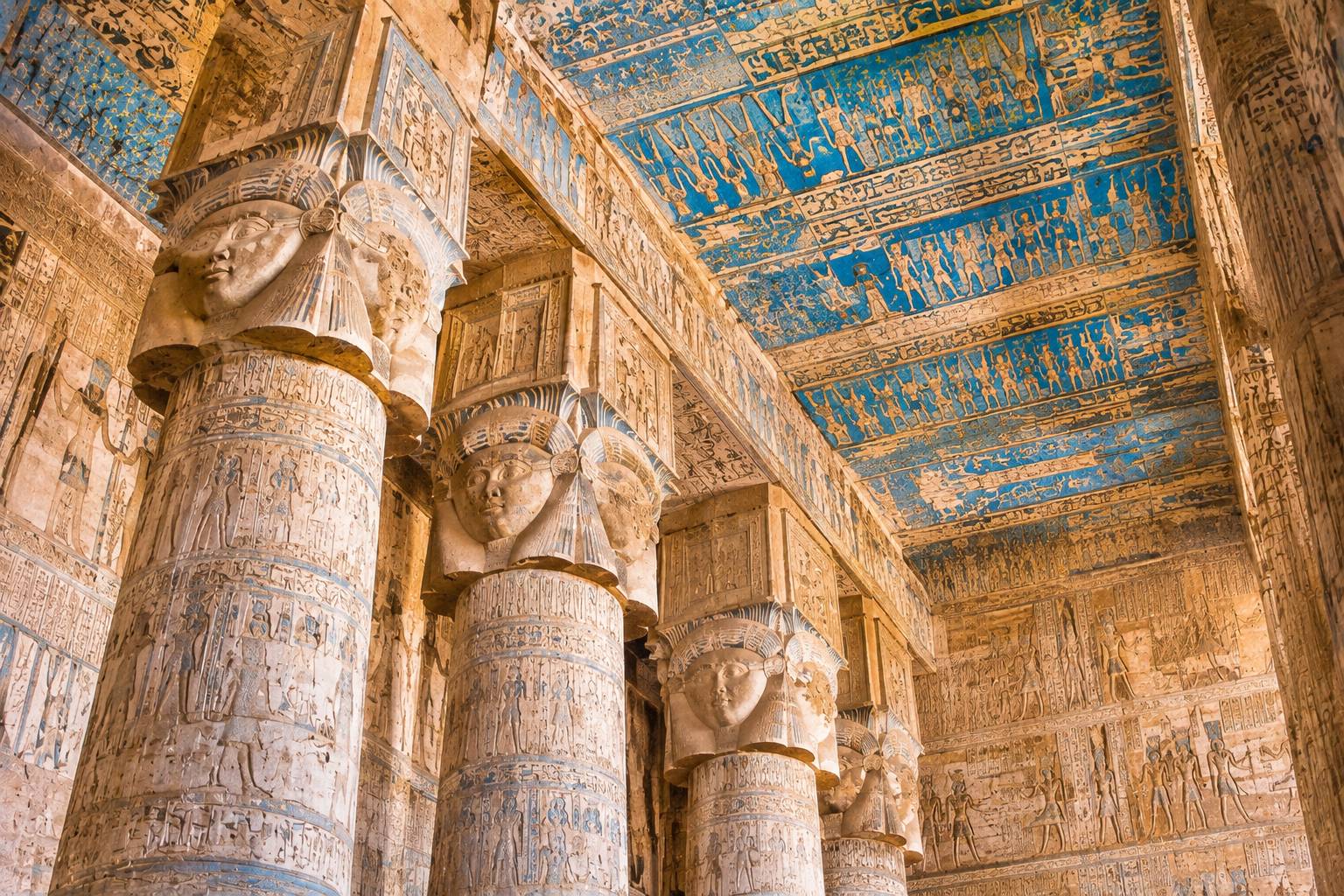
The temple is particularly famous for its impressive sandstone columns, Hathor-headed capitals, astronomical ceiling decorations and colourful hieroglyphic reliefs.
For solo female travellers interested in ancient Egyptian civilisation, architecture, photography and cultural tourism, Dendera is an excellent destination to include in an Upper Egypt itinerary.
It is also a convenient day trip from Luxor, making it possible to explore this remarkable archaeological site without changing hotels.
For more destination inspiration, read our complete guide to Solo Female Travel in Egypt.
Is Dendera Suitable for Solo Female Travelers?
Dendera is a historical destination rather than a large tourist town. Most international visitors come specifically to explore the Temple of Hathor before returning to Luxor or continuing towards Qena.
The archaeological complex is a popular sightseeing attraction, but transportation should be arranged in advance.
For a comfortable solo visit:
-
Arrange transportation with a reputable driver or tour operator.
-
Consider hiring a licensed Egyptologist.
-
Confirm your pickup and return arrangements before departure.
-
Wear comfortable walking shoes.
-
Carry drinking water and sun protection.
-
Keep your phone charged and save important contact details.
-
Keep valuables secure.
-
Avoid unfamiliar areas after dark.
-
Share your itinerary with someone you trust.
-
Check current official travel advice before departure.
No destination can guarantee personal safety. For additional information, consult the UK Foreign, Commonwealth & Development Office travel advice for Egypt.
For solo female travellers, a private organised day trip from Luxor is a practical option because the transportation and sightseeing schedule can be arranged in advance.
Best Things to Do in Dendera Alone
1. Visit the Magnificent Temple of Hathor
The Temple of Hathor is the main attraction in Dendera and one of the most impressive ancient monuments in Egypt.
It was dedicated to Hathor, one of the most important goddesses in ancient Egyptian religion.
Hathor was associated with:
-
Love and beauty.
-
Music and dance.
-
Joy and celebration.
-
Motherhood.
-
Fertility.
-
The sky and the heavens.
The surviving main temple dates primarily to the Ptolemaic period, with later additions and decorations from the Roman period.
The complex contains remarkable architectural details, including massive sandstone columns, decorated halls, chapels and religious inscriptions.
One of the most impressive features is the entrance façade, where six monumental columns are decorated with the distinctive faces of the goddess Hathor.
These beautifully carved capitals make the temple particularly recognisable.
Solo travel tip: Take your time exploring the temple instead of rushing through the main hall. A knowledgeable Egyptologist can explain the religious scenes and symbolism.
Official information: Egyptian Ministry of Tourism and Antiquities – Temple of Dendera.
2. Explore the Great Hypostyle Hall
The Great Hypostyle Hall is one of the most memorable parts of the Temple of Hathor.
It contains impressive columns covered with hieroglyphics, religious scenes and colourful decorative details.
The columns feature capitals representing the goddess Hathor, with her distinctive face appearing on their decorated sides.
Look carefully at the capitals, inscriptions and painted surfaces.
You will notice details representing ancient Egyptian religious beliefs, royal ceremonies and the worship of the gods.
The hall is also an excellent place for architectural photography.
Photography tip: Look upwards to appreciate the decorative ceiling and try to capture the relationship between the columns and the astronomical artwork.
3. Admire the Famous Astronomical Ceiling
One of the most extraordinary features of Dendera Temple is its astronomical decoration.
The ceilings contain representations connected with the ancient Egyptian understanding of the sky, stars and religious cosmology.
The artwork includes celestial figures, goddesses, astronomical symbols and detailed hieroglyphic inscriptions.
The conservation work carried out inside the temple has helped reveal many of the original colours that had been hidden beneath layers of soot and dirt.
Today, visitors can appreciate the remarkable blue, yellow, red and other pigments that survive on the ancient surfaces.
The temple is particularly interesting for anyone curious about the relationship between ancient Egyptian religion and astronomy.
Important historical note: The famous circular Dendera Zodiac was removed in the 19th century and is now displayed at the Louvre in Paris. The temple still preserves remarkable astronomical decorations, but the original circular zodiac is not on the ceiling today.
4. Discover the Temple Roof
The upper levels of Dendera Temple contain additional religious and architectural features.
The roof is associated with important ancient ceremonies connected with the goddess Hathor and the celebration of the New Year.
The processional staircases feature decorated walls depicting priests carrying sacred images during ceremonial events.
The upper areas also contain chapels and spaces connected with religious practices.
Some special visitor areas may require an additional ticket or may have restricted access.
Ask at the ticket office which sections are open on the day of your visit.
For visitors interested in ancient Egyptian religious architecture, exploring the permitted upper areas can add another dimension to the experience.
5. Visit the Mammisi (Birth House)
The Mammisi is a smaller religious building located within the Dendera complex.
The term refers to a divine birth house, where the birth of a sacred child was celebrated.
The surviving Roman-period Mammisi is decorated with religious scenes connected with the birth of the divine child Ihy, who was associated with Hathor and Horus.
The structure features columns, decorated walls and scenes representing religious ceremonies.
It provides an interesting example of how ancient Egyptian religious beliefs continued during the Roman period.
It is worth exploring as part of your visit to the larger temple complex.
6. Discover the Temple's Crypts
The Temple of Hathor contains a number of underground chambers known as crypts.
These spaces were associated with the storage of sacred objects and important religious equipment.
Some of the crypts have decorated walls with detailed scenes and inscriptions.
Their architectural design makes them particularly interesting for visitors who want to understand the more private religious functions of ancient Egyptian temples.
Certain areas may have special access arrangements or additional ticket requirements.
Check availability at the ticket office before planning to visit.
7. Look for the Cleopatra VII and Caesarion Relief
One of the most interesting historical details at Dendera is the famous relief showing Cleopatra VII with her son Caesarion.
The scene is located on the exterior rear wall of the temple.
It provides an important representation of Cleopatra within the traditional visual language of ancient Egyptian royal art.
Unlike many modern artistic portrayals of Cleopatra, the relief presents her as a ruler participating in religious traditions and royal offerings.
For visitors interested in the Ptolemaic period and Egypt's final dynasty, this is a fascinating detail.
Photography tip: Ask your guide to identify the scene so you do not miss it while exploring the exterior walls.
8. Explore the Sacred Lake
Like several major ancient Egyptian temple complexes, Dendera includes archaeological remains associated with water-related religious practices.
The sacred lake was connected with purification and ritual activities.
Although the surviving structure may not be as visually impressive as the main temple, it is important for understanding the religious organisation of ancient temple complexes.
Ask your guide about the archaeological remains and how the water system may have been used.
9. Photograph the Temple's Exterior Reliefs
The exterior walls of Dendera Temple contain extensive carved scenes representing the pharaohs making offerings to the gods.
These scenes illustrate ancient religious ceremonies, royal authority and the relationship between the ruler and the divine world.
The decoration is particularly interesting because construction and decoration continued during the Roman period.
You can also find inscriptions and reliefs associated with different rulers of that era.
For photography enthusiasts, the exterior walls provide plenty of opportunities to capture the detail of ancient Egyptian stone carving.
10. Enjoy the Surrounding Countryside
Dendera is located in the fertile Nile Valley, where agricultural land contrasts with the surrounding desert environment.
The journey from Luxor passes through traditional Upper Egyptian communities and farming landscapes.
You can appreciate the green fields, palm trees and villages along the way.
If you arrange a private excursion, ask your driver whether there is an appropriate public stopping point for photographs.
Respect private agricultural land and avoid entering properties without permission.
Where to Stay When Visiting Dendera as a Solo Female Traveler
Dendera is best treated as an archaeological excursion rather than an independent accommodation destination.
The nearby city of Qena offers local accommodation and services, while Luxor provides a much wider range of international hotels, restaurants and organised t