


Solo Female Travel in Abydos
Introduction: Discover Abydos, Egypt
Abydos is one of the most fascinating archaeological destinations in Egypt. Located in Sohag Governorate in Upper Egypt, it was one of the most important religious centres of ancient Egyptian civilisation.
The area is particularly famous for the magnificent Temple of Seti I, the remarkable Abydos King List and its association with Osiris, the ancient Egyptian god of the afterlife.
Unlike the busy tourist destinations of Cairo and Luxor, Abydos offers a quieter historical experience. Its temples, ancient inscriptions and archaeological remains provide an opportunity to discover another important chapter of Egypt's history.
For solo female travellers interested in archaeology, ancient religion, architecture and cultural tourism, Abydos is an excellent addition to an Upper Egypt itinerary.
The destination is generally visited as an organised excursion from Luxor or through arrangements from Sohag. Because attractions are spread across archaeological areas, arranging reliable transportation in advance is important.
For more destination inspiration, explore our complete guide to Solo Female Travel in Egypt.
Is Abydos Suitable for Solo Female Travelers?
Abydos is a historical destination rather than a conventional tourist town.
Most visitors come specifically to explore the Temple of Seti I and other archaeological remains in the area.
The main temple is an established tourist attraction, but the surrounding archaeological landscape is less developed than the major sightseeing areas of Luxor.
For solo female travellers, an organised day excursion with a professional driver and licensed Egyptologist is a practical option.
Before travelling:
-
Choose a reputable tour operator.
-
Arrange transportation in advance.
-
Consider hiring a licensed Egyptologist.
-
Confirm the attractions included in your itinerary.
-
Check opening hours and ticket arrangements.
-
Carry drinking water and sun protection.
-
Keep your phone charged and save important contact details.
-
Avoid exploring isolated archaeological areas independently.
-
Share your itinerary with someone you trust.
-
Check the latest official travel advice for your nationality.
No destination can guarantee personal safety. Use recognised transportation providers and take normal precautions when travelling alone.
You can review the UK Foreign, Commonwealth & Development Office Egypt travel advice before booking your trip.
Best Things to Do in Abydos Alone
1. Visit the Magnificent Temple of Seti I
The Temple of Seti I is the most important attraction in Abydos and one of the most remarkable ancient Egyptian temples.
It was built during the reign of Pharaoh Seti I of the 19th Dynasty and its decoration was continued by his son Ramesses II.
The temple is especially famous for the quality of its carved reliefs, colourful decorations and unusual architectural layout.
Unlike many Egyptian temples, its ground plan has an L-shaped design.
The complex contains a series of important religious chambers, halls and sanctuaries.
Highlights include:
-
The impressive entrance and courtyard.
-
Two hypostyle halls.
-
Beautifully decorated columns.
-
The seven principal sacred chapels.
-
Religious reliefs and inscriptions.
-
The famous Abydos King List.
-
Scenes connected with the mythology of Osiris.
-
Ancient royal and ceremonial representations.
The seven chapels were associated with several major deities, including Osiris, Isis, Horus, Amun-Ra, Ra-Horakhty and Ptah, as well as Seti I himself.
The quality of the stone carvings is particularly impressive because many scenes preserve fine details and traces of their original colours.
Solo travel tip: Allow enough time to explore the temple's different chambers. A licensed Egyptologist can help explain the stories represented in the reliefs and the importance of the seven chapels.
Official information: Egyptian Ministry of Tourism and Antiquities – Temple of Seti I.
2. Discover the Famous Abydos King List
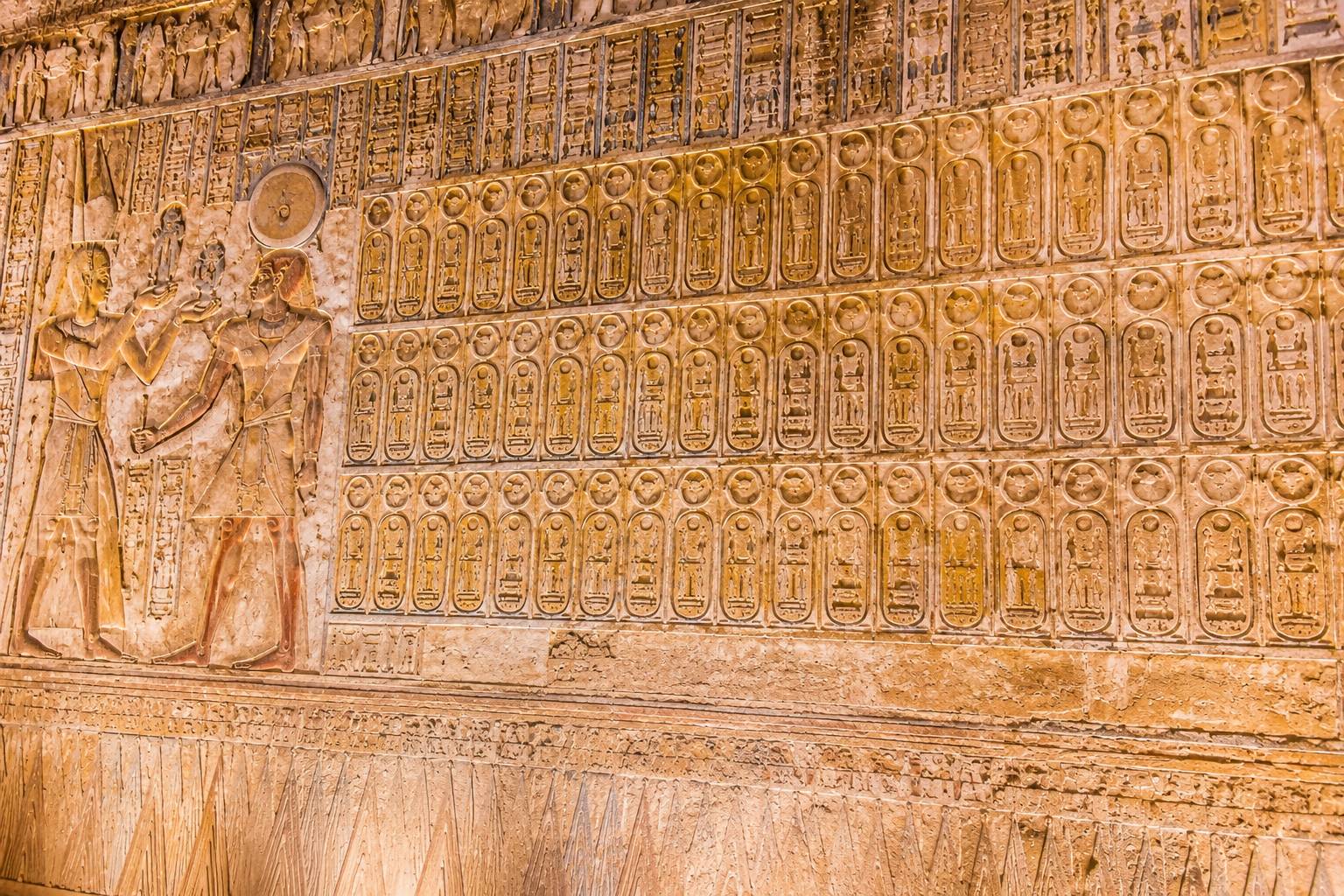
One of the most important historical features of the Temple of Seti I is the Abydos King List.
This inscription records the names of numerous earlier Egyptian rulers.
Seti I is represented with his son, the future Ramesses II, as they participate in a ritual honouring their royal predecessors.
The list is particularly valuable because it provides evidence of how ancient Egyptian kings understood and presented their royal ancestry.
However, it is important to understand that this is not a complete chronological record of every Egyptian ruler.
Some rulers were deliberately excluded because they were not recognised by the royal tradition promoted by Seti I.
For historians, the inscription is an important source for understanding ancient Egyptian kingship, political legitimacy and religious traditions.
Solo travel tip: Ask your guide to identify the location of the King List inside the temple. It is one of the most historically important features of the complex and deserves more than a quick photograph.
Further reading: American Research Center in Egypt – The Abydos King List.
3. Explore the Osireion
The Osireion is one of the most mysterious archaeological structures in Abydos.
Located behind the Temple of Seti I, it is traditionally associated with Osiris, the ancient Egyptian god of resurrection and the afterlife.
Its architecture is very different from the main temple.
The structure contains enormous stone blocks, massive pillars and a central island-like platform surrounded by channels.
These unusual features have led to considerable archaeological interest.
The Osireion is often described as a symbolic tomb or cenotaph associated with Osiris, although its precise purpose and construction history remain subjects of scholarly discussion.
Its monumental stone architecture creates a very different atmosphere from the decorated halls of the main temple.
Important visitor information: Access to the Osireion's interior may be restricted. Do not assume that it is open for ordinary visitors or included in the standard temple ticket. Confirm access with the site authorities before your trip.
4. Visit the Temple of Ramesses II
The Temple of Ramesses II is another important archaeological attraction in Abydos.
It is associated with the New Kingdom and the reign of Ramesses II, one of ancient Egypt's most famous pharaohs.
Although the surviving remains are less complete than those of the Temple of Seti I, the site is historically significant.
Archaeological discoveries at the temple have revealed foundation deposits, storage areas and objects connected with the original construction ceremonies.
These discoveries provide valuable information about temple construction, religious offerings and the economic organisation of ancient Egyptian religious institutions.
The temple is especially interesting for travellers who want to understand more about the historical development of Abydos beyond its most famous monument.
Learn more: Egyptian Ministry of Tourism and Antiquities – Discoveries at the Temple of Ramesses II.
5. Discover the Ancient City of Abydos
Abydos was much more than a collection of temples.
It was an important religious centre with a long history stretching back to the earliest periods of ancient Egyptian civilisation.
The ancient settlement was closely connected with the worship of Osiris and the belief in resurrection and the afterlife.
People from different parts of Egypt travelled to Abydos for religious ceremonies, burial traditions and pilgrimage.
The wider archaeological landscape contains evidence of temples, settlements, royal monuments and cemeteries.
For visitors interested in ancient history, this helps explain why Abydos became one of Egypt's most important sacred destinations.
Solo travel tip: The wider archaeological landscape is extensive. Explore only permitted visitor areas and arrange remote-site visits with an experienced local guide.
6. Learn About the Worship of Osiris
The religious importance of Abydos was closely connected with Osiris.
According to ancient Egyptian mythology, Osiris was a king who was murdered by his brother Seth and later restored to life through the actions of Isis.
He became associated with resurrection, fertility and the afterlife.
Ancient Egyptians believed Abydos was particularly connected with his cult and religious traditions.
The annual religious celebrations associated with Osiris attracted pilgrims from different regions.
The Temple of Seti I contains important scenes and inscriptions relating to the mythology of Osiris.
For visitors interested in Egyptian mythology, Abydos offers a deeper understanding of the religious ideas that shaped ancient Egyptian society.
7. Explore the Shunet El-Zebib
Shunet El-Zebib is one of Abydos's most important early archaeological monuments.
It is a large mud-brick funerary enclosure associated with King Khasekhemwy of the Second Dynasty.
Its construction dates back to the early period of ancient Egyptian royal history.
The monument is particularly important because of its massive mud-brick walls and its connection with early royal funerary traditions.
It provides an opportunity to understand how royal architecture developed before the construction of the great stone pyramids.
The site is part of the wider North Abydos archaeological landscape.
Solo travel tip: Confirm public access and current visitor arrangements before attempting to visit. Do not assume the site is included in a standard Temple of Seti I excursion.
Further information: Abydos Archaeology Project.
8. Discover the Ancient Royal Necropolis of Umm El-Qa'ab
Umm El-Qa'ab is an important archaeological cemetery located in the Abydos region.
The name is commonly translated as Mother of Pots, referring to the large quantities of pottery fragments found around the ancient burial areas.
The cemetery contains the tombs of several early Egyptian kings and is particularly significant for understanding the origins of Egyptian kingship.
Some tombs date back to the First and Second Dynasties.
The area is important to archaeologists because it provides evidence of burial practices, royal administration and religious beliefs during the earliest stages of ancient Egyptian civilisation.
Visitor note: This is an archaeological research area rather than a conventional tourist attraction. Access and visitor arrangements may be restricted. Confirm official permission before planning a visit.
9. Enjoy the Upper Egyptian Countryside
Abydos is located in the Nile Valley, surrounded by agricultural land and desert landscapes.
The countryside offers a different perspective from the monumental temples.
During the journey, you may see:
-
Palm groves.
-
Agricultural fields.
-
Traditional villages.
-
Irrigation canals.
-
Rural markets.
-
Desert hills in the distance.
The contrast between green farmland and the dry desert environment is an important feature of Upper Egypt.
If you are travelling with a private driver, ask about appropriate public stopping points for photographs.
Respect private agricultural land and local communities.
10. Discover Traditional Sohag Culture
Abydos is located in Sohag Governorate, an area with a rich Upper Egyptian cultural identity.
The wider region offers an opportunity to experience traditional markets, local food and everyday community life.
Depending on your itinerary, you can explore parts of Sohag city or visit local commercial areas.
You may find:
-
Traditional Egyptian sweets.
-
Local bread.
-
Handmade products.
-
Spices.
-
Clothing.
-
Seasonal agricultural products.
For solo female travellers, a visit to an established restaurant or market during the daytime can be a pleasant way to experience the region.
Where to Stay When Visiting Abydos as a Solo Female Traveler
Abydos is best treated as a historical excursion rather than a major independent accommodation destination.
The nearest larger urban services are associated with Al-Balyana and Sohag, while Luxor offers a wider selection of tourist accommodation and organised excursions.
Staying in Luxor
Luxor is a practical base for travellers who want to explore Abydos as part of a wider Upper Egypt itinerary.
It offers:
-
A wider selection of hotels.
-
International restaurants.
-
Licensed Egyptologists.
-
Organised archaeological excursions.
-
Private transportation.
-
Nile cruise services.
Abydos can be combined with Dendera in a longer excursion, but the driving time is substantial.
Staying in Sohag
Sohag may be a useful base if you want to spend more time exploring the governorate.
Before booking, check the exact hotel location, guest reviews, reception arrangements and available transportation.
Staying Near Al-Balyana
Al-Balyana is the closest town to the Abydos archaeological area.
However, accommodation choices and tourism facilities may be more limited than in Luxor or Sohag.
For many international solo visitors, using Luxor as a base with pre-arranged transportation is the simpler option.
Getting Around Abydos Alone
Abydos's attractions are spread across a wider archaeological area, so transportation should be organised before arriving.
Private Transportation from Luxor
A private vehicle is one of the most convenient options.
It allows you to arrange an early departure, visit the Temple of Seti I and return to your hotel according to an agreed schedule.
The journey is substantial, so allow sufficient time for road travel and sightseeing.
Confirm the total price, waiting time, driver details and return arrangements before booking.
Transportation from Sohag
Sohag is closer to Abydos than Luxor and may be a suitable starting point for visitors already staying in the governorate.
Arrange a reliable driver through your hotel or a reputable local provider.
Organised Historical Excursions
An organised excursion can include:
-
Private air-conditioned transportation.
-
Hotel pickup.
-
A licensed Egyptologist.
-
Entrance tickets, if specified.
-
Sightseeing at the Temple of Seti I.
-
Return transportation.
Check whether the Osireion, Temple of Ramesses II or other archaeological areas are genuinely included and accessible before booking.
Local Transportation
Local transport may be available around Al-Balyana, but visitors should not rely on finding a return vehicle after reaching a remote archaeological site.
For a solo visit, pre-arranged transportation is more practical.
Temple of Seti I: Opening Hours and Ticket Prices
The official Egyptian monument ticket portal currently publishes the following visitor information for Abydos Temple.
Published opening hours
| Visitor information | Hours |
|---|---|
| Summer | 7:00 AM–5:00 PM |
| Winter | 7:00 AM–5:00 PM |
| Ramadan | 9:00 AM–4:00 PM |
Last entry: 4:00 PM during the regular summer and winter schedules, and 3:00 PM during Ramadan.
Published ticket prices
| Visitor category | Price |
|---|---|
| Foreign adult | EGP 260 |
| Foreign student | EGP 130 |
| Egyptian adult | EGP 10 |
| Egyptian student | EGP 5 |
The official portal also lists free entry for children under six, Egyptians with special needs and Egyptians aged 60 or above.
Mobile-phone photography is listed as free of charge.
These prices and visitor arrangements may change, so confirm the details before your trip.
Official booking: Abydos Temple – Egyptian Monument Ticket Portal.
The Egyptian Ministry of Tourism and Antiquities also provides information about the temple and its historical significance. Visitors are advised to arrive at least one hour before closing. <Cite refs={["turn778742search0","turn778742search1"]}/>
What Should Women Wear in Abydos?
Abydos is a traditional Upper Egyptian destination and its main attraction is an archaeological and religious heritage site.
Comfortable, modest clothing is a practical choice.
Consider packing:
-
Lightweight trousers.
-
Comfortable summer dresses.
-
Breathable tops.
-
A light scarf or cover-up.
-
Comfortable walking shoes.
-
Sunglasses.
-
A wide-brimmed hat.
-
Sunscreen.
-
A light jacket for cooler weather.
The temple complex contains outdoor areas and uneven stone surfaces, so practical footwear is important.
During summer, breathable clothing and adequate sun protection are essential.
Best Time to Visit Abydos
The best time to visit Abydos depends on the weather and your preferred sightseeing experience.
October to April: Generally more comfortable for walking around the archaeological complex.
March to May: A useful period for cultural sightseeing and visiting historic sites in Upper Egypt.
June to September: Temperatures can become extremely high. Early morning visits are recommended, and visitors should carry sufficient water.
For most solo female travellers, the cooler months provide a more comfortable archaeological sightseeing experience.
Suggested 1-Day Abydos Itinerary for Solo Female Travelers
Morning: Discover the Temple of Seti I
-
Depart from your hotel in Luxor or Sohag using pre-arranged transportation.
-
Arrive at the Temple of Seti I.
-
Explore the main entrance and halls.
-
Discover the seven sacred chapels.
-
Visit the famous Abydos King List.
-
Learn about the temple's connection with Osiris.
Midday: Explore Other Historical Sites
-
Visit the Osireion viewpoint or accessible areas, subject to official visitor access.
-
Explore the Temple of Ramesses II if access and schedule permit.
-
Enjoy a break and refreshments.
Afternoon: Return to Your Accommodation
-
Take final photographs of the archaeological complex.
-
Meet your pre-arranged driver.
-
Return according to the agreed transport schedule.
This is a suggested itinerary, not a guarantee that every archaeological area will be open. Confirm access arrangements before travelling.
Can You Visit Abydos from Luxor?
Yes. Abydos can be visited from Luxor as a long historical day excursion.
The road journey is approximately 160–170 kilometres, depending on the precise pickup point and route, and can take around two and a half to three hours each way.
Because the journey is long, it is best to begin early in the morning.
Some visitors combine Abydos with Dendera during one organised excursion. This creates a particularly interesting day for travellers interested in ancient Egyptian religion and architecture, although it can be a tiring schedule.
If you prefer a more relaxed experience, consider visiting Abydos on a separate day.
Can You Visit Abydos from Sohag?
Yes. Sohag is geographically closer to Abydos than Luxor and can be a practical starting point.
You can arrange a private vehicle from Sohag city or coordinate transportation through a local tour operator.
The exact journey depends on your starting point, traffic and access arrangements.
If you are staying in Sohag, confirm pickup and return times before booking your archaeological visit.
Can You Combine Abydos with Dendera?
Yes. Dendera and Abydos can be combined in one long day excursion from Luxor.
This is an excellent option for travellers interested in ancient Egyptian religion, architecture and royal history.
Dendera is famous for the Temple of Hathor, its decorated astronomical ceiling and Hathor-headed columns.
Abydos is famous for the Temple of Seti I, the Abydos King List and its association with Osiris.
For more information about the other destination, read our Solo Female Travel in Dendera guide.
Allow sufficient time for both the road journey and temple visits. A separate visit to each site offers a more relaxed experience.
What to Pack for Abydos
Useful items include:
-
Sunscreen.
-
Sunglasses.
-
A wide-brimmed hat.
-
Comfortable walking shoes.
-
Lightweight clothing.
-
Reusable water bottle.
-
Portable phone charger.
-
Small secure day bag.
-
Cash for small purchases.
-
Copies of important travel documents.
-
Personal medication.
The archaeological site has areas exposed to direct sunlight, so bring enough water and sun protection.
Is Abydos Better Than Dendera or Edfu for Solo Female Travel?
Abydos, Dendera and Edfu are three extraordinary archaeological destinations in Upper Egypt, but each offers a different experience.
Abydos is especially important for its religious heritage, the Temple of Seti I, the King List and its association with Osiris.
Dendera is famous for the Temple of Hathor, its spectacular astronomical ceiling and detailed reliefs.
Edfu is known for the Temple of Horus, one of Egypt's most complete ancient temples.
If you are interested in ancient royal history and religious traditions, Abydos is an excellent choice.
If you prefer colourful temple decoration and astronomical artwork, Dendera is particularly impressive.
For monumental temple architecture dedicated to Horus, Edfu is a must-see destination.
Frequently Asked Questions
Is Abydos safe for solo female travelers?
Abydos can be visited with sensible preparation. Arrange reliable transportation, use established guides and check current official travel advice before departure.
What is Abydos famous for?
Abydos is famous for the Temple of Seti I, the Abydos King List, its connection with the worship of Osiris and its important ancient royal necropolis.
Where is Abydos located?
Abydos is located in Sohag Governorate in Upper Egypt, near the town of Al-Balyana.
How far is Abydos from Luxor?
The journey from Luxor is approximately 160–170 kilometres by road, depending on the starting point and route.
How many hours should I spend at the Temple of Seti I?
Allow around two hours or more to explore the temple at a comfortable pace, depending on your interest in the inscriptions, chapels and reliefs.
What is the Abydos King List?
It is a royal inscription inside the Temple of Seti I that records the names of a selected group of earlier Egyptian rulers. It is an important historical source but is not a complete list of every pharaoh.
What is the Osireion?
The Osireion is a monumental structure behind the Temple of Seti I traditionally associated with Osiris. Its unusual architecture and precise purpose have attracted considerable archaeological interest.
Can I visit the Osireion?
Access may be restricted. Confirm the current visitor arrangements with the site authorities before travelling, rather than assuming it is included in the main temple ticket.
Can I visit Abydos from Luxor in one day?
Yes. It is possible as a long day trip from Luxor. An early departure and reliable private transportation are recommended.
Can I combine Abydos and Dendera in one trip?
Yes. Both destinations can be combined in a long excursion from Luxor, although a separate day for each offers more time for sightseeing.
What is the best time to visit Abydos?
October through April is generally more comfortable for archaeological sightseeing. Summer visits are possible, but early morning departures are recommended because of the heat.
Is Abydos worth visiting?
Absolutely. It is one of Egypt's most important historical and religious sites, especially for travellers interested in the mythology of Osiris, royal history and ancient Egyptian temple architecture.
Final Thoughts: Discover the Sacred History of Abydos
Abydos offers an extraordinary journey into the religious and royal history of ancient Egypt.
The Temple of Seti I, the famous King List, the Osireion and other archaeological remains reveal why Abydos became one of the most important sacred centres in ancient Egyptian civilisation.
For solo female travellers, a well-organised excursion from Luxor or Sohag is a practical way to discover the destination.
Arrange reliable transportation, consider hiring a knowledgeable Egyptologist, confirm which archaeological areas are accessible and allow enough time to explore the temple without rushing.
Whether you are admiring the delicate carvings of Seti I's temple, discovering the royal inscriptions or learning about the mythology of Osiris, Abydos is a rewarding addition to a journey through Upper Egypt.
Continue exploring Egypt: Read our complete guide to Solo Female Travel in Egypt for more destination guides and practical travel advice.