


Solo Female Travel on a Nile Cruise in Egypt
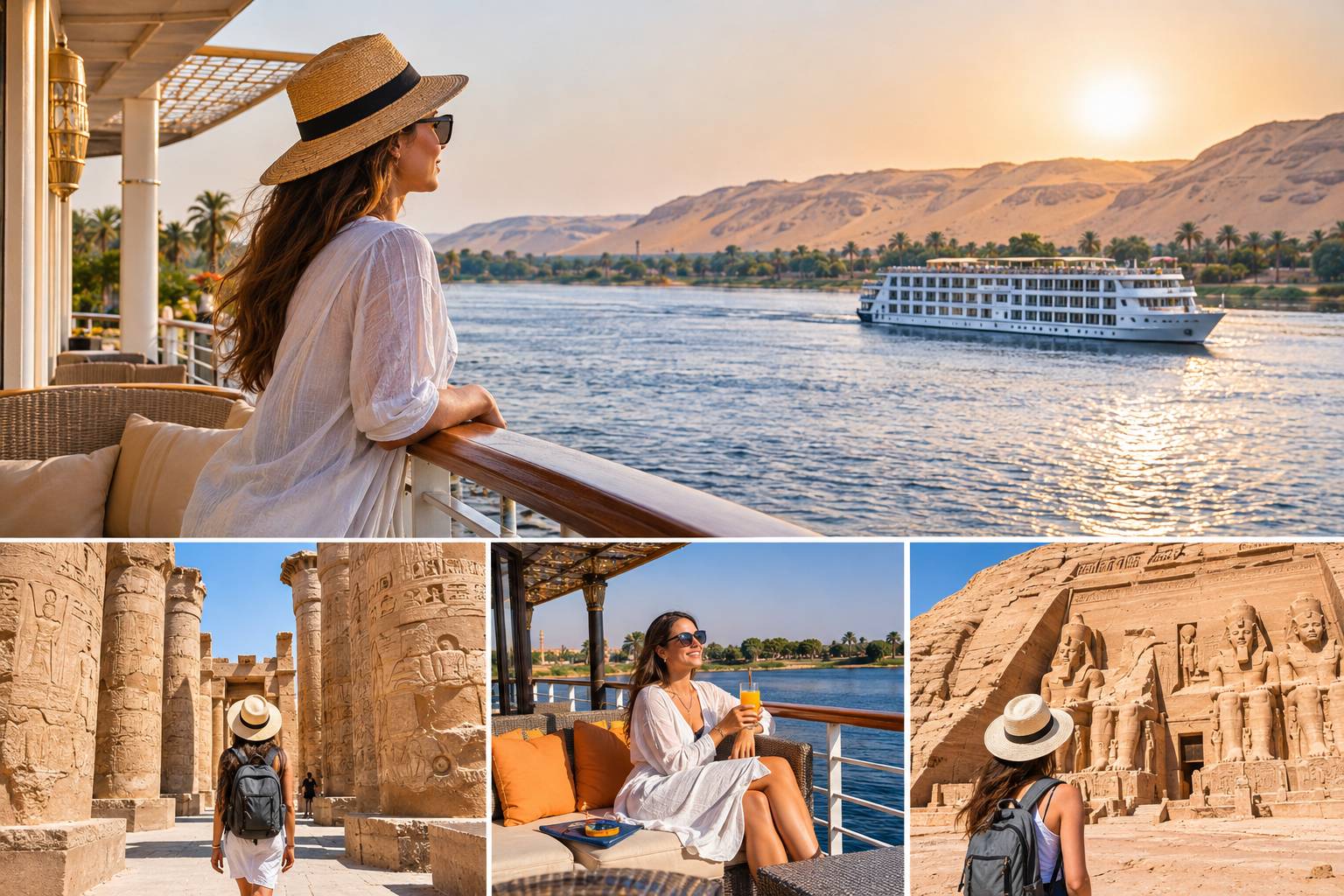
Solo Female Travel on a Nile Cruise in Egypt: Complete Guide (2027)
Introduction: Is a Nile Cruise in Egypt Good for Solo Female Travelers?
A Nile cruise is one of the most memorable ways to discover Egypt.
Instead of travelling between historical cities by road, you can sail along the world's most famous ancient river while visiting magnificent temples, royal tombs and traditional riverside communities.
A typical Nile cruise connects Luxor and Aswan, two of Egypt's most important historical destinations. Along the way, you can discover Edfu Temple, Kom Ombo Temple and the beautiful landscapes of the Nile Valley.
For solo female travellers, a Nile cruise can be a convenient way to explore southern Egypt because accommodation, meals, transportation between destinations and some guided excursions are organised together.
You can enjoy the scenery from the sun deck, meet other travellers, relax by the swimming pool and explore ancient monuments without changing hotels every night.
However, choosing the right cruise is important. Ship conditions, safety standards, single-room availability, excursion arrangements and service quality can vary.
This guide explains how to choose a suitable Nile cruise, what to expect during the journey and how to plan a comfortable solo experience.
For available itineraries and packages, explore our Egypt Nile Cruises page.
You can also read our complete guide to Solo Female Travel in Egypt for more practical travel advice.
Is a Nile Cruise Suitable for Solo Female Travelers?
Yes, a Nile cruise can be a convenient way to explore Egypt alone, particularly if you prefer an organised holiday rather than arranging every transfer and hotel independently.
Most conventional Nile cruises provide accommodation, meals and a planned sailing itinerary. Many also offer guided visits to historical attractions.
This means you can enjoy several destinations while keeping the same cabin throughout the cruise.
Why Solo Female Travelers May Enjoy a Nile Cruise
-
You do not need to change hotels between every destination.
-
Meals are often included in the cruise package.
-
You can join organised group excursions.
-
You have opportunities to meet international travellers.
-
You can relax between sightseeing activities.
-
You can enjoy beautiful Nile scenery from the ship.
-
Transportation between the main cruise destinations is arranged according to the itinerary.
Things to Consider Before Booking
A Nile cruise is not automatically the best option for every solo traveller.
Consider the following:
-
Some cruise companies charge a single supplement.
-
Some cabins are designed primarily for two guests.
-
Not every excursion is necessarily included.
-
Ship facilities and service standards vary.
-
Some vessels have stairs or limited accessibility.
-
Embarking and disembarking may involve walking across gangways.
-
The daily sightseeing schedule can be busy.
The best approach is to select a reputable cruise operator and confirm all important details before paying.
Types of Nile Cruises in Egypt
There are different ways to experience the Nile, depending on your travel preferences and budget.
1. Traditional Luxury Nile Cruise Ships
<escape>These are the most common option for visitors travelling between Luxor and Aswan.</escape>
They are usually multi-deck passenger vessels with private cabins and shared facilities.
Depending on the ship, facilities may include:
-
Private en-suite cabins.
-
Restaurants.
-
Swimming pools.
-
Sun decks.
-
Lounges.
-
Bars.
-
Entertainment areas.
-
Guided sightseeing excursions.
For solo female travellers, a conventional cruise ship can be convenient because it offers organised services and opportunities to meet other passengers.
Before booking, compare the actual ship, not just the advertised number of stars.
2. Dahabiya Nile Cruises
A dahabiya is a smaller traditional-style sailing vessel offering a more intimate Nile experience.
Compared with large cruise ships, dahabiyas usually carry fewer passengers and may follow a more relaxed itinerary.
Depending on the operator, they can offer:
-
Smaller passenger groups.
-
More personalised service.
-
Quiet sailing experiences.
-
Traditional meals.
-
Stops at selected riverside locations.
-
A more private atmosphere.
A dahabiya may suit solo travellers who prefer a smaller group and a quieter holiday.
However, check whether the sailing dates are guaranteed, whether a single cabin is available and how the operator handles safety and transport arrangements.
3. Felucca Sailing Experiences
A felucca is a traditional wooden sailing boat used on the Nile.
Felucca trips are generally shorter sailing experiences rather than the conventional multi-night cruise holiday.
They are particularly popular in Aswan and Luxor.
A short felucca excursion can be a wonderful way to enjoy the river, especially around sunset.
For solo female travellers, choose a reputable operator, agree on the price and duration in advance and check the boat's safety equipment.
Best Nile Cruise Routes for Solo Female Travelers
The most popular cruise route connects Luxor and Aswan.
The journey can operate in both directions, with different departure days and sightseeing schedules.
According to Egypt's official tourism platform, most conventional Luxor–Aswan cruises take approximately four to five days, depending on the direction of travel. <Cite refs={["turn358822search5"]}/>
Option 1: Luxor to Aswan Nile Cruise
This route is a popular choice for travellers who want to begin with Luxor's major archaeological attractions before sailing south.
A typical itinerary may include:
Luxor
-
Karnak Temple.
-
Luxor Temple.
-
Valley of the Kings.
-
Temple of Hatshepsut.
-
Colossi of Memnon.
Edfu
-
Temple of Horus.
-
Traditional Nile scenery.
-
Local sightseeing around the temple area.
Kom Ombo
-
Double Temple of Sobek and Horus.
-
Crocodile Museum.
-
Nile river views.
Aswan
-
Philae Temple.
-
Aswan High Dam.
-
Unfinished Obelisk.
-
Optional Nubian cultural experiences.
The exact programme depends on the cruise company and sailing schedule.
Option 2: Aswan to Luxor Nile Cruise
This route follows the same general destinations in reverse.
A typical journey begins in Aswan and continues towards Luxor.
Possible highlights include:
-
Philae Temple.
-
Aswan High Dam.
-
Kom Ombo Temple.
-
Edfu Temple.
-
Esna Lock.
-
Luxor Temple.
-
Karnak Temple.
-
Valley of the Kings.
This route is also attractive for solo visitors who prefer starting their trip in Aswan and finishing in Luxor.
Option 3: Longer Nile Cruise Holiday
Some cruise packages offer longer itineraries, including additional nights in Luxor or Aswan.
These can be particularly appealing if you want more time for sightseeing and relaxation.
Some programmes may include hotel accommodation before or after the cruise, airport transfers and extra excursions.
Check exactly which services are included.
Best Places to Visit During a Nile Cruise
One of the biggest advantages of a Nile cruise is the opportunity to discover several major historical destinations during one journey.
1. Explore Luxor's Ancient Temples
Luxor is one of the world's most important open-air archaeological destinations.
It contains an extraordinary collection of temples, monuments and royal tombs.
Important attractions include:
Karnak Temple: A vast complex famous for its enormous columns, decorated halls and sacred lake.
Luxor Temple: A magnificent temple located close to the Nile and famous for its monumental entrance and ancient statues.
Valley of the Kings: The royal burial area containing the tombs of important New Kingdom pharaohs.
Temple of Hatshepsut: A remarkable terraced temple built into the cliffs of Deir el-Bahari.
A licensed Egyptologist can help explain the history, religious symbolism and architecture of these monuments.
2. Discover Edfu Temple
Edfu is famous for the magnificent Temple of Horus.
The temple was constructed during the Ptolemaic period and is one of the best-preserved ancient Egyptian temples.
Its enormous entrance pylons, decorated columns and religious inscriptions make it an essential stop during a Nile cruise.
The temple is dedicated primarily to Horus, the falcon-associated god connected with kingship and protection.
3. Visit Kom Ombo Temple
Kom Ombo is one of Egypt's most unusual temple complexes.
It has a double design and was dedicated to two deities:
-
Sobek, the crocodile god.
-
Horus the Elder, associated with protection and kingship.
The complex also includes the Crocodile Museum, which displays preserved crocodile mummies and objects connected with the worship of Sobek.
Its location beside the Nile makes it one of the most picturesque stops along the cruise route.
4. Enjoy Aswan
Aswan offers a more relaxed atmosphere than many other Egyptian tourist destinations.
It is famous for beautiful Nile scenery, Nubian culture and important archaeological sites.
Highlights include:
-
Philae Temple.
-
The Unfinished Obelisk.
-
Aswan High Dam.
-
Nubian villages.
-
Traditional felucca sailing.
-
Local markets.
-
Botanical Garden.
If you have additional time, consider extending your stay in Aswan before or after the cruise.
5. Experience Philae Temple
Philae Temple is one of the most beautiful ancient monuments in southern Egypt.
Dedicated primarily to the goddess Isis, the temple is located on Agilkia Island and is reached by boat.
Its location, architecture and connection with ancient Egyptian religious traditions make it a highlight of an Aswan visit.
The temple is particularly attractive for photography.
6. Discover the Nubian Villages
Some Aswan excursions offer opportunities to discover Nubian culture.
Depending on your chosen experience, you may enjoy:
-
Traditional architecture.
-
Colourful village streets.
-
Nubian food.
-
Local handicrafts.
-
Traditional music.
-
Cultural introductions from local hosts.
Choose respectful cultural experiences that support local communities.
For more information about southern Egypt, explore our other destination guides.
What Is Daily Life Like on a Nile Cruise?
A Nile cruise combines sightseeing with time spent on board.
Although daily schedules differ, a typical day may follow this pattern.
Early Morning: Breakfast and Sightseeing
Some archaeological visits begin early to avoid the strongest sunlight.
You may have breakfast before joining a guided excursion.
Depending on the itinerary, the morning visit may include a temple, tomb or archaeological site.
Late Morning: Return to the Ship
After sightseeing, passengers return to the vessel.
The ship may continue sailing towards the next destination.
You can relax on the sun deck, enjoy refreshments or watch the riverbanks.
Afternoon: Lunch and Relaxation
Lunch is commonly served in the ship's restaurant.
Afterward, you may have free time to enjoy the pool, read a book or take photographs of the scenery.
Evening: Dinner and Entertainment
Dinner is usually served on board.
Some cruises organise evening programmes that may include traditional music, cultural performances or themed dinners.
The entertainment programme varies by vessel.
Solo travel tip: Joining group activities and organised excursions can be a pleasant way to meet other passengers without feeling pressured to socialise throughout the trip.
How to Choose the Right Nile Cruise as a Solo Female Traveler
Choosing the right vessel is one of the most important parts of your trip.
Two cruises can advertise similar itineraries while offering very different accommodation and service standards.
Before booking, compare the following.
1. Cabin Arrangements
Ask whether the cruise offers:
-
Single-occupancy cabins.
-
A single supplement.
-
Twin cabins for solo travellers.
-
Private bathrooms.
-
Secure cabin locks.
-
Room-service options.
Do not assume that a double cabin will automatically be available at the advertised price for one person.
2. Cruise Ship Facilities
Check the facilities available on the actual vessel.
Important details include:
-
Restaurant quality.
-
Swimming pool.
-
Sun deck.
-
Reception.
-
Elevators, if needed.
-
Cabin air conditioning.
-
Wi-Fi availability.
-
Medical assistance arrangements.
3. Excursion Arrangements
Ask whether the cruise price includes an Egyptologist and transportation for sightseeing.
Some cruises include a number of guided visits, while others charge separately for certain attractions.
Confirm entrance tickets, optional experiences and any additional excursion fees.
4. Dining Arrangements
Food is an important part of the experience.
Ask whether the package includes:
-
Breakfast.
-
Lunch.
-
Dinner.
-
Afternoon refreshments.
-
Drinking water.
-
Special dietary arrangements.
If you have food allergies or dietary restrictions, inform the cruise operator before arrival.
5. Passenger Reviews
Look for recent independent reviews of the exact vessel.
Pay attention to comments about:
-
Cabin cleanliness.
-
Food quality.
-
Crew professionalism.
-
Boat maintenance.
-
Noise levels.
-
Excursion organisation.
-
Safety procedures.
-
Departure punctuality.
Avoid relying exclusively on old promotional photographs or generic five-star descriptions.
Nile Cruise Safety Tips for Solo Female Travelers
A Nile cruise can be an enjoyable way to explore Egypt, but vessel safety should never be overlooked.
The UK Foreign Office warns that overcrowding and inadequate safety standards have contributed to accidents involving Nile cruises and Red Sea ferries. It recommends taking care with boat services and booking through reputable providers. <Cite refs={["turn915059view0"]}/>
Before boarding, ask the operator about the vessel's current safety arrangements.
Questions to Ask Before Booking
-
Is the vessel properly licensed and operating legally?
-
What safety inspection or certification does it hold?
-
Are life jackets available for every passenger?
-
Where are the emergency exits and muster point?
-
Will the crew provide a safety briefing?
-
Are fire extinguishers and emergency equipment maintained?
-
What medical assistance is available?
-
What happens if the sailing schedule changes?
-
Is passenger capacity controlled?
-
What insurance and emergency arrangements apply?
Personal Safety on Board
-
Keep your cabin key and phone secure.
-
Familiarise yourself with emergency exits.
-
Attend the crew's safety briefing.
-
Keep important documents in a secure place.
-
Avoid entering restricted crew areas.
-
Do not accept private invitations from strangers that make you uncomfortable.
-
Be careful when moving between decks, particularly near stairs and gangways.
-
Do not leave drinks unattended.
-
Keep the cruise reception number available.
Safety During Shore Excursions
-
Follow the agreed meeting time.
-
Keep your guide's contact details.
-
Avoid leaving the organised group without informing the guide.
-
Carry sufficient drinking water.
-
Wear appropriate footwear.
-
Follow site rules and local instructions.
-
Arrange transportation back to the ship.
-
Keep your passport or a secure copy accessible as appropriate.
The FCDO also advises female travellers to use reputable providers for services and excursions and to exercise additional caution when travelling alone, particularly at night. <Cite refs={["turn248024view1","turn915059view0"]}/>
What Should Women Wear on a Nile Cruise?
A Nile cruise offers several different environments, so it is useful to pack a mixture of comfortable and practical clothing.
On the Cruise Ship
You can generally wear comfortable holiday clothing.
Consider:
-
Lightweight dresses.
-
Linen trousers.
-
Summer tops.
-
Sandals.
-
Comfortable lounge wear.
-
Swimwear for the pool.
-
A light cardigan for evenings.
Some vessels organise special dinners or themed evenings. Check whether your cruise has a dress recommendation.
During Temple Visits
Egyptian archaeological sites are often exposed to direct sunlight.
Practical clothing includes:
-
Lightweight trousers.
-
Comfortable dresses.
-
Breathable tops.
-
Walking shoes.
-
Sunglasses.
-
A sun hat.
-
A light scarf.
Modest clothing is a practical choice for religious and traditional areas.
Best Time to Take a Nile Cruise in Egypt
The best time to enjoy a Nile cruise is generally during the cooler months.
October to December
This is a popular period for sightseeing.
Temperatures are generally more comfortable than during summer, making temple visits and walking easier.
January to February
Winter offers pleasant daytime conditions, although early mornings and evenings can be cooler.
Bring a light jacket for deck activities and sunrise excursions.
March to May
Spring is another attractive period for a Nile cruise.
The weather becomes warmer, but many days remain suitable for outdoor sightseeing.
June to September
Summer temperatures in Luxor and Aswan can become extremely high.
If you travel during this period, choose early morning excursions and prioritise hydration and sun protection.
The Egyptian tourism platform recommends the cooler October-to-May period as a particularly pleasant time for Nile cruises. <Cite refs={["turn358822search5"]}/>
Suggested 5-Day Nile Cruise Itinerary for Solo Female Travelers
This is a sample Luxor-to-Aswan sightseeing programme. The actual order and timing depend on the cruise operator, sailing direction, lock schedules and included excursions.
Day 1: Arrival in Luxor
-
Arrive in Luxor.
-
Meet your pre-arranged driver.
-
Transfer to the Nile cruise vessel.
-
Complete check-in.
-
Enjoy lunch on board, according to your package.
-
Visit Karnak Temple.
-
Explore Luxor Temple if included in the itinerary.
-
Return to the ship.
-
Enjoy dinner and overnight accommodation.
Day 2: Luxor West Bank
-
Have breakfast on board.
-
Visit the Valley of the Kings.
-
Explore the Temple of Hatshepsut.
-
Stop at the Colossi of Memnon.
-
Return to the cruise.
-
Enjoy lunch and begin sailing according to the vessel's schedule.
-
Relax on the sun deck.
-
Enjoy dinner on board.
Day 3: Edfu and Nile Sailing
-
Enjoy breakfast.
-
Visit Edfu Temple.
-
Explore the Temple of Horus with your guide.
-
Return to the ship.
-
Continue sailing through the Nile Valley.
-
Experience the Esna Lock passage, depending on the sailing schedule.
-
Enjoy lunch, dinner and onboard activities.
Day 4: Kom Ombo and Aswan
-
Have breakfast on board.
-
Visit Kom Ombo Temple.
-
Explore the double temple and Crocodile Museum.
-
Return to the vessel.
-
Continue sailing towards Aswan.
-
Enjoy the river scenery.
-
Dinner and overnight stay on board.
Day 5: Discover Aswan
-
Enjoy breakfast.
-
Visit the Aswan High Dam if included.
-
Explore the Unfinished Obelisk.
-
Visit Philae Temple by boat.
-
Return to the vessel or continue to your hotel or airport according to your travel arrangements.
Important: Five days is a sample itinerary, not a guaranteed schedule for every vessel. Some cruises start in Aswan, reverse the order, use different departure days or allocate additional nights to Luxor and Aswan.
Can You Take a Nile Cruise Alone Without Joining a Group?
Yes. You can book a Nile cruise as a solo passenger.
However, the availability and price depend on the cruise company and cabin configuration.
Some operators offer single-occupancy cabins, while others charge a single supplement for using a double cabin alone.
Before booking, ask:
-
Is there a dedicated single cabin?
-
Is the single supplement mandatory?
-
Are solo passengers welcome on shared excursions?
-
Can you join group sightseeing activities?
-
Are meals served at shared tables?
-
Is there a single-passenger booking fee?
For solo female travellers, joining a shared group excursion can be a good way to explore without having to arrange private transportation at every stop.
What Is Included in a Nile Cruise Package?
Inclusions vary between operators and vessels.
A typical full-board package may include:
-
Cruise accommodation.
-
Daily breakfast.
-
Lunch.
-
Dinner.
-
Access to onboard facilities.
-
Some entertainment.
-
Scheduled sailing.
-
Selected guided excursions, depending on the package.
However, the following may be charged separately:
-
Archaeological entrance tickets.
-
Optional sightseeing.
-
Special tomb visits.
-
Drinks and bottled water.
-
Wi-Fi.
-
Gratuities.
-
Airport transfers.
-
Additional hotel nights.
-
Private excursions.
Always request a written list of inclusions and exclusions before confirming your booking.
For available itineraries, accommodation options and cruise packages, visit our Egypt Nile Cruises page.
What to Pack for a Nile Cruise
A practical packing list will help you enjoy the cruise and its sightseeing activities.
Clothing
-
Lightweight summer clothing.
-
Comfortable walking trousers.
-
Modest outfits for temple visits.
-
Swimwear.
-
Beach cover-up.
-
Comfortable sandals.
-
Walking shoes.
-
Light jacket for evenings.
-
Sleepwear.
-
A small bag for daily excursions.
Personal Items
-
Sunscreen.
-
Sunglasses.
-
Wide-brimmed hat.
-
Reusable water bottle.
-
Personal medication.
-
Toiletries.
-
Portable phone charger.
-
Power adapter suitable for your devices.
-
Copies of travel documents.
-
Small amount of cash.
Useful Extras
-
Book or e-reader.
-
Headphones.
-
Waterproof phone pouch.
-
Small first-aid kit.
-
Camera.
-
Hand sanitiser.
For archaeological excursions, carry only what you need for the visit rather than taking all your luggage.
How to Meet Other Travelers on a Nile Cruise
One advantage of a cruise is that you spend several days with other passengers in a shared environment.
You can meet other travellers naturally without needing to organise social activities independently.
Some ideas include:
-
Joining the group Egyptologist tour.
-
Attending evening entertainment.
-
Sitting at shared restaurant tables if available.
-
Participating in onboard activities.
-
Talking with other guests on the sun deck.
-
Joining organised shore excursions.
You do not need to socialise constantly. You can enjoy your own space while still having opportunities to connect with other people.
If you prefer travelling independently, choose the cruise and excursion arrangements that offer the right balance of shared experiences and private time.
Is a Nile Cruise Better Than Independent Travel Between Luxor and Aswan?
A Nile cruise and independent land travel offer different advantages.
Nile Cruise
A cruise may be suitable if you prefer:
-
Staying in one cabin for several nights.
-
Organised transport between sightseeing destinations.
-
Meals included in your package.
-
Scheduled group excursions.
-
Scenic sailing between historical sites.
-
Onboard relaxation.
Independent Travel
Travelling independently may suit you if you prefer:
-
Choosing your own hotels.
-
Spending more time at individual attractions.
-
Setting your own daily schedule.
-
Exploring local restaurants.
-
Staying longer in Luxor or Aswan.
-
Mixing rail, road and air transportation.
A cruise is often more convenient for travellers who want several destinations organised within one package.
Independent travel can offer more flexibility, but it requires additional planning and transport arrangements.
Can You Combine a Nile Cruise with Cairo and the Giza Pyramids?
Absolutely.
A Nile cruise is an excellent addition to a wider Egypt holiday that begins or ends in Cairo.
A possible itinerary includes:
Days 1–3: Cairo and Giza
-
Great Pyramids of Giza.
-
Great Sphinx.
-
Grand Egyptian Museum.
-
Historic Cairo.
Days 4–8: Nile Cruise
-
Luxor.
-
Edfu.
-
Kom Ombo.
-
Aswan.
-
Philae Temple.
Additional days: Aswan or Abu Simbel
If your travel advice and itinerary permit, you may extend your stay in southern Egypt to include additional archaeological visits.
For more Giza travel ideas, read our Solo Female Travel in Giza guide.
Frequently Asked Questions
Is a Nile cruise safe for solo female travelers?
A Nile cruise can be a convenient holiday option, but safety standards vary between vessels. Choose a reputable operator, ask about current safety inspections, life jackets and emergency procedures, and review your government's travel advice.
Can a woman book a Nile cruise alone?
Yes. Solo travellers can book a cabin, subject to availability and the cruise company's single-occupancy policy. A single supplement may apply.
How many days does a Nile cruise take?
Most conventional Luxor–Aswan cruises take around four to five days, depending on the direction and itinerary. Longer packages may include additional hotel nights or a return sailing.
What is the best Nile cruise route?
Both Luxor-to-Aswan and Aswan-to-Luxor routes can be excellent. The best option depends on your flights, preferred sightseeing schedule and available cruise departures.
What places can I visit during a Nile cruise?
Common stops include Luxor, Edfu, Kom Ombo and Aswan. Some itineraries also include additional excursions or overnight stays.
Are meals included on Nile cruises?
Many conventional Nile cruise packages offer full board, including breakfast, lunch and dinner. Confirm the exact meal plan and drinks policy before booking.
Are entrance tickets included in the cruise price?
Not always. Some packages include tickets to selected attractions, while others charge entrance fees separately. Request a written list of inclusions before paying.
Can I meet other solo travellers on a Nile cruise?
Yes. Group excursions, shared meals and onboard entertainment provide opportunities to meet other passengers.
Is Wi-Fi available on Nile cruise ships?
Some vessels offer Wi-Fi, but speed, availability and charges vary. Internet connectivity may also be limited while sailing.
Can I swim on a Nile cruise?
Many larger cruise ships have a swimming pool on the sun deck. Facilities differ by vessel, so confirm before booking.
What should I wear during temple visits?
Comfortable and modest clothing is recommended. Wear walking shoes, use sun protection and bring a light cover-up.
When is the best time to take a Nile cruise?
October through May is generally a comfortable period for sightseeing along the Nile. Summer can be very hot in Luxor and Aswan.
Can I visit Abu Simbel after a Nile cruise?
Yes. Abu Simbel can be added to a wider Aswan itinerary, subject to current travel advice and transport arrangements. Check the route requirements before booking.
Do Nile cruise ships have elevators?
Some vessels have elevators while others rely on stairs. Ask about accessibility and cabin location before booking, particularly if mobility is a consideration.
Final Thoughts: Discover Egypt Through a Nile Cruise
A Nile cruise is an unforgettable way to experience Egypt's ancient history, beautiful river landscapes and welcoming cultural traditions.
For solo female travellers, it can provide a convenient combination of accommodation, meals, transportation and organised sightseeing.
From the magnificent temples of Luxor and Edfu to the double temple of Kom Ombo and the peaceful scenery of Aswan, a cruise offers an extraordinary journey through southern Egypt.
The key is to choose the right vessel, confirm the single-cabin arrangements, check the safety procedures and understand exactly what is included in your package.
Whether you prefer a luxury cruise ship, a smaller dahabiya or a short traditional felucca experience, the Nile offers several ways to discover Egypt at your own pace.
Plan your journey: Explore our Egypt Nile Cruises page to discover available cruise packages and itinerary options.
For more independent travel advice, return to our Solo Female Travel in Egypt guide.
Sources and Further Reading
-
Egyptian Chamber of Diving and Water Sports
SEO Title: Solo Female Travel on a Nile Cruise in Egypt: Complete Guide (2026)
Suggested URL: /en/solo-female-travel-nile-cruise-egypt
Focus Keyword: Solo Female Travel on a Nile Cruise in Egypt
Secondary Keywords: Egypt Nile cruise solo female travel, Nile cruise for solo travellers, Luxor to Aswan cruise, Aswan to Luxor cruise, Egypt river cruise, solo woman Egypt holiday, Nile cruise safety tips
Meta Description: Planning a solo female Nile cruise in Egypt? Discover the best routes, temples, cruise options, safety advice, packing tips and how to choose the right Nile cruise.Introduction: Is a Nile Cruise in Egypt Good for Solo Female Travelers?
A Nile cruise is one of the most memorable ways to discover Egypt.
Instead of travelling between historical cities by road, you can sail along the world's most famous ancient river while visiting magnificent temples, royal tombs and traditional riverside communities.
A typical Nile cruise connects Luxor and Aswan, two of Egypt's most important historical destinations. Along the way, you can discover Edfu Temple, Kom Ombo Temple and the beautiful landscapes of the Nile Valley.
For solo female travellers, a Nile cruise can be a convenient way to explore southern Egypt because accommodation, meals, transportation between destinations and some guided excursions are organised together.
You can enjoy the scenery from the sun deck, meet other travellers, relax by the swimming pool and explore ancient monuments without changing hotels every night.
However, choosing the right cruise is important. Ship conditions, safety standards, single-room availability, excursion arrangements and service quality can vary.
This guide explains how to choose a suitable Nile cruise, what to expect during the journey and how to plan a comfortable solo experience.
For available itineraries and packages, explore our Egypt Nile Cruises page.
You can also read our complete guide to Solo Female Travel in Egypt for more practical travel advice.
Is a Nile Cruise Suitable for Solo Female Travelers?
Yes, a Nile cruise can be a convenient way to explore Egypt alone, particularly if you prefer an organised holiday rather than arranging every transfer and hotel independently.
Most conventional Nile cruises provide accommodation, meals and a planned sailing itinerary. Many also offer guided visits to historical attractions.
This means you can enjoy several destinations while keeping the same cabin throughout the cruise.
Why Solo Female Travelers May Enjoy a Nile Cruise
-
You do not need to change hotels between every destination.
-
Meals are often included in the cruise package.
-
You can join organised group excursions.
-
You have opportunities to meet international travellers.
-
You can relax between sightseeing activities.
-
You can enjoy beautiful Nile scenery from the ship.
-
Transportation between the main cruise destinations is arranged according to the itinerary.
-
Things to Consider Before Booking
A Nile cruise is not automatically the best option for every solo traveller.
Consider the following:
-
Some cruise companies charge a single supplement.
-
Some cabins are designed primarily for two guests.
-
Not every excursion is necessarily included.
-
Ship facilities and service standards vary.
-
Some vessels have stairs or limited accessibility.
-
Embarking and disembarking may involve walking across gangways.
-
The daily sightseeing schedule can be busy.
-
The best approach is to select a reputable cruise operator and confirm all important details before paying.
Types of Nile Cruises in Egypt
There are different ways to experience the Nile, depending on your travel preferences and budget.
1. Traditional Luxury Nile Cruise Ships
<escape>These are the most common option for visitors travelling between Luxor and Aswan.</escape>
They are usually multi-deck passenger vessels with private cabins and shared facilities.
Depending on the ship, facilities may include:
-
Private en-suite cabins.
-
Restaurants.
-
Swimming pools.
-
Sun decks.
-
Lounges.
-
Bars.
-
Entertainment areas.
-
Guided sightseeing excursions.
-
For solo female travellers, a conventional cruise ship can be convenient because it offers organised services and opportunities to meet other passengers.
Before booking, compare the actual ship, not just the advertised number of stars.
2. Dahabiya Nile Cruises
A dahabiya is a smaller traditional-style sailing vessel offering a more intimate Nile experience.
Compared with large cruise ships, dahabiyas usually carry fewer passengers and may follow a more relaxed itinerary.
Depending on the operator, they can offer:
-
Smaller passenger groups.
-
More personalised service.
-
Quiet sailing experiences.
-
Traditional meals.
-
Stops at selected riverside locations.
-
A more private atmosphere.
-
A dahabiya may suit solo travellers who prefer a smaller group and a quieter holiday.
However, check whether the sailing dates are guaranteed, whether a single cabin is available and how the operator handles safety and transport arrangements.
3. Felucca Sailing Experiences
A felucca is a traditional wooden sailing boat used on the Nile.
Felucca trips are generally shorter sailing experiences rather than the conventional multi-night cruise holiday.
They are particularly popular in Aswan and Luxor.
A short felucca excursion can be a wonderful way to enjoy the river, especially around sunset.
For solo female travellers, choose a reputable operator, agree on the price and duration in advance and check the boat's safety equipment.
Best Nile Cruise Routes for Solo Female Travelers
The most popular cruise route connects Luxor and Aswan.
The journey can operate in both directions, with different departure days and sightseeing schedules.
According to Egypt's official tourism platform, most conventional Luxor–Aswan cruises take approximately four to five days, depending on the direction of travel. <Cite refs={["turn358822search5"]}/>
Option 1: Luxor to Aswan Nile Cruise
This route is a popular choice for travellers who want to begin with Luxor's major archaeological attractions before sailing south.
A typical itinerary may include:
Luxor
-
Karnak Temple.
-
Luxor Temple.
-
Valley of the Kings.
-
Temple of Hatshepsut.
-
Colossi of Memnon.
-
Edfu
-
Temple of Horus.
-
Traditional Nile scenery.
-
Local sightseeing around the temple area.
-
Kom Ombo
-
Double Temple of Sobek and Horus.
-
Crocodile Museum.
-
Nile river views.
-
Aswan
-
Philae Temple.
-
Aswan High Dam.
-
Unfinished Obelisk.
-
Optional Nubian cultural experiences.
-
The exact programme depends on the cruise company and sailing schedule.
Option 2: Aswan to Luxor Nile Cruise
This route follows the same general destinations in reverse.
A typical journey begins in Aswan and continues towards Luxor.
Possible highlights include:
-
Philae Temple.
-
Aswan High Dam.
-
Kom Ombo Temple.
-
Edfu Temple.
-
Esna Lock.
-
Luxor Temple.
-
Karnak Temple.
-
Valley of the Kings.
-
This route is also attractive for solo visitors who prefer starting their trip in Aswan and finishing in Luxor.
Option 3: Longer Nile Cruise Holiday
Some cruise packages offer longer itineraries, including additional nights in Luxor or Aswan.
These can be particularly appealing if you want more time for sightseeing and relaxation.
Some programmes may include hotel accommodation before or after the cruise, airport transfers and extra excursions.
Check exactly which services are included.
Best Places to Visit During a Nile Cruise
One of the biggest advantages of a Nile cruise is the opportunity to discover several major historical destinations during one journey.
1. Explore Luxor's Ancient Temples
Luxor is one of the world's most important open-air archaeological destinations.
It contains an extraordinary collection of temples, monuments and royal tombs.
Important attractions include:
Karnak Temple: A vast complex famous for its enormous columns, decorated halls and sacred lake.
Luxor Temple: A magnificent temple located close to the Nile and famous for its monumental entrance and ancient statues.
Valley of the Kings: The royal burial area containing the tombs of important New Kingdom pharaohs.
Temple of Hatshepsut: A remarkable terraced temple built into the cliffs of Deir el-Bahari.
A licensed Egyptologist can help explain the history, religious symbolism and architecture of these monuments.
2. Discover Edfu Temple
Edfu is famous for the magnificent Temple of Horus.
The temple was constructed during the Ptolemaic period and is one of the best-preserved ancient Egyptian temples.
Its enormous entrance pylons, decorated columns and religious inscriptions make it an essential stop during a Nile cruise.
The temple is dedicated primarily to Horus, the falcon-associated god connected with kingship and protection.
3. Visit Kom Ombo Temple
Kom Ombo is one of Egypt's most unusual temple complexes.
It has a double design and was dedicated to two deities:
-
Sobek, the crocodile god.
-
Horus the Elder, associated with protection and kingship.
-
The complex also includes the Crocodile Museum, which displays preserved crocodile mummies and objects connected with the worship of Sobek.
Its location beside the Nile makes it one of the most picturesque stops along the cruise route.
4. Enjoy Aswan
Aswan offers a more relaxed atmosphere than many other Egyptian tourist destinations.
It is famous for beautiful Nile scenery, Nubian culture and important archaeological sites.
Highlights include:
-
Philae Temple.
-
The Unfinished Obelisk.
-
Aswan High Dam.
-
Nubian villages.
-
Traditional felucca sailing.
-
Local markets.
-
Botanical Garden.
-
If you have additional time, consider extending your stay in Aswan before or after the cruise.
5. Experience Philae Temple
Philae Temple is one of the most beautiful ancient monuments in southern Egypt.
Dedicated primarily to the goddess Isis, the temple is located on Agilkia Island and is reached by boat.
Its location, architecture and connection with ancient Egyptian religious traditions make it a highlight of an Aswan visit.
The temple is particularly attractive for photography.
6. Discover the Nubian Villages
Some Aswan excursions offer opportunities to discover Nubian culture.
Depending on your chosen experience, you may enjoy:
-
Traditional architecture.
-
Colourful village streets.
-
Nubian food.
-
Local handicrafts.
-
Traditional music.
-
Cultural introductions from local hosts.
-
Choose respectful cultural experiences that support local communities.
For more information about southern Egypt, explore our other destination guides.
What Is Daily Life Like on a Nile Cruise?
A Nile cruise combines sightseeing with time spent on board.
Although daily schedules differ, a typical day may follow this pattern.
Early Morning: Breakfast and Sightseeing
Some archaeological visits begin early to avoid the strongest sunlight.
You may have breakfast before joining a guided excursion.
Depending on the itinerary, the morning visit may include a temple, tomb or archaeological site.
Late Morning: Return to the Ship
After sightseeing, passengers return to the vessel.
The ship may continue sailing towards the next destination.
You can relax on the sun deck, enjoy refreshments or watch the riverbanks.
Afternoon: Lunch and Relaxation
Lunch is commonly served in the ship's restaurant.
Afterward, you may have free time to enjoy the pool, read a book or take photographs of the scenery.
Evening: Dinner and Entertainment
Dinner is usually served on board.
Some cruises organise evening programmes that may include traditional music, cultural performances or themed dinners.
The entertainment programme varies by vessel.
Solo travel tip: Joining group activities and organised excursions can be a pleasant way to meet other passengers without feeling pressured to socialise throughout the trip.
How to Choose the Right Nile Cruise as a Solo Female Traveler
Choosing the right vessel is one of the most important parts of your trip.
Two cruises can advertise similar itineraries while offering very different accommodation and service standards.
Before booking, compare the following.
1. Cabin Arrangements
Ask whether the cruise offers:
-
Single-occupancy cabins.
-
A single supplement.
-
Twin cabins for solo travellers.
-
Private bathrooms.
-
Secure cabin locks.
-
Room-service options.
-
Do not assume that a double cabin will automatically be available at the advertised price for one person.
2. Cruise Ship Facilities
Check the facilities available on the actual vessel.
Important details include:
-
Restaurant quality.
-
Swimming pool.
-
Sun deck.
-
Reception.
-
Elevators, if needed.
-
Cabin air conditioning.
-
Wi-Fi availability.
-
Medical assistance arrangements.
-
3. Excursion Arrangements
Ask whether the cruise price includes an Egyptologist and transportation for sightseeing.
Some cruises include a number of guided visits, while others charge separately for certain attractions.
Confirm entrance tickets, optional experiences and any additional excursion fees.
4. Dining Arrangements
Food is an important part of the experience.
Ask whether the package includes:
-
Breakfast.
-
Lunch.
-
Dinner.
-
Afternoon refreshments.
-
Drinking water.
-
Special dietary arrangements.
-
If you have food allergies or dietary restrictions, inform the cruise operator before arrival.
5. Passenger Reviews
Look for recent independent reviews of the exact vessel.
Pay attention to comments about:
-
Cabin cleanliness.
-
Food quality.
-
Crew professionalism.
-
Boat maintenance.
-
Noise levels.
-
Excursion organisation.
-
Safety procedures.
-
Departure punctuality.
-
Avoid relying exclusively on old promotional photographs or generic five-star descriptions.
Nile Cruise Safety Tips for Solo Female Travelers
A Nile cruise can be an enjoyable way to explore Egypt, but vessel safety should never be overlooked.
The UK Foreign Office warns that overcrowding and inadequate safety standards have contributed to accidents involving Nile cruises and Red Sea ferries. It recommends taking care with boat services and booking through reputable providers. <Cite refs={["turn915059view0"]}/>
Before boarding, ask the operator about the vessel's current safety arrangements.
Questions to Ask Before Booking
-
Is the vessel properly licensed and operating legally?
-
What safety inspection or certification does it hold?
-
Are life jackets available for every passenger?
-
Where are the emergency exits and muster point?
-
Will the crew provide a safety briefing?
-
Are fire extinguishers and emergency equipment maintained?
-
What medical assistance is available?
-
What happens if the sailing schedule changes?
-
Is passenger capacity controlled?
-
What insurance and emergency arrangements apply?
-
Personal Safety on Board
-
Keep your cabin key and phone secure.
-
Familiarise yourself with emergency exits.
-
Attend the crew's safety briefing.
-
Keep important documents in a secure place.
-
Avoid entering restricted crew areas.
-
Do not accept private invitations from strangers that make you uncomfortable.
-
Be careful when moving between decks, particularly near stairs and gangways.
-
Do not leave drinks unattended.
-
Keep the cruise reception number available.
-
Safety During Shore Excursions
-
Follow the agreed meeting time.
-
Keep your guide's contact details.
-
Avoid leaving the organised group without informing the guide.
-
Carry sufficient drinking water.
-
Wear appropriate footwear.
-
Follow site rules and local instructions.
-
Arrange transportation back to the ship.
-
Keep your passport or a secure copy accessible as appropriate.
-
The FCDO also advises female travellers to use reputable providers for services and excursions and to exercise additional caution when travelling alone, particularly at night. <Cite refs={["turn248024view1","turn915059view0"]}/>
What Should Women Wear on a Nile Cruise?
A Nile cruise offers several different environments, so it is useful to pack a mixture of comfortable and practical clothing.
On the Cruise Ship
You can generally wear comfortable holiday clothing.
Consider:
-
Lightweight dresses.
-
Linen trousers.
-
Summer tops.
-
Sandals.
-
Comfortable lounge wear.
-
Swimwear for the pool.
-
A light cardigan for evenings.
-
Some vessels organise special dinners or themed evenings. Check whether your cruise has a dress recommendation.
During Temple Visits
Egyptian archaeological sites are often exposed to direct sunlight.
Practical clothing includes:
-
Lightweight trousers.
-
Comfortable dresses.
-
Breathable tops.
-
Walking shoes.
-
Sunglasses.
-
A sun hat.
-
A light scarf.
-
January to February
Winter offers pleasant daytime conditions, although early mornings and evenings can be cooler.
Bring a light jacket for deck activities and sunrise excursions.
March to May
Spring is another attractive period for a Nile cruise.
The weather becomes warmer, but many days remain suitable for outdoor sightseeing.
June to September
Summer temperatures in Luxor and Aswan can become extremely high.
If you travel during this period, choose early morning excursions and prioritise hydration and sun protection.
The Egyptian tourism platform recommends the cooler October-to-May period as a particularly pleasant time for Nile cruises. <Cite refs={["turn358822search5"]}/>
Suggested 5-Day Nile Cruise Itinerary for Solo Female Travelers
This is a sample Luxor-to-Aswan sightseeing programme. The actual order and timing depend on the cruise operator, sailing direction, lock schedules and included excursions.
Day 1: Arrival in Luxor
-
Arrive in Luxor.
-
Meet your pre-arranged driver.
-
Transfer to the Nile cruise vessel.
-
Complete check-in.
-
Enjoy lunch on board, according to your package.
-
Visit Karnak Temple.
-
Explore Luxor Temple if included in the itinerary.
-
Return to the ship.
-
Enjoy dinner and overnight accommodation.
-
Day 2: Luxor West Bank
-
Have breakfast on board.
-
Visit the Valley of the Kings.
-
Explore the Temple of Hatshepsut.
-
Stop at the Colossi of Memnon.
-
Return to the cruise.
-
Enjoy lunch and begin sailing according to the vessel's schedule.
-
Relax on the sun deck.
-
Enjoy dinner on board.
-
Day 3: Edfu and Nile Sailing
-
Enjoy breakfast.
-
Visit Edfu Temple.
-
Explore the Temple of Horus with your guide.
-
Return to the ship.
-
Continue sailing through the Nile Valley.
-
Experience the Esna Lock passage, depending on the sailing schedule.
-
Enjoy lunch, dinner and onboard activities.
-
Day 4: Kom Ombo and Aswan
-
Have breakfast on board.
-
Visit Kom Ombo Temple.
-
Explore the double temple and Crocodile Museum.
-
Return to the vessel.
-
Continue sailing towards Aswan.
-
Enjoy the river scenery.
-
Dinner and overnight stay on board.
-
Day 5: Discover Aswan
-
Enjoy breakfast.
-
Visit the Aswan High Dam if included.
-
Explore the Unfinished Obelisk.
-
Visit Philae Temple by boat.
-
Return to the vessel or continue to your hotel or airport according to your travel arrangements.
-
Important: Five days is a sample itinerary, not a guaranteed schedule for every vessel. Some cruises start in Aswan, reverse the order, use different departure days or allocate additional nights to Luxor and Aswan.
Can You Take a Nile Cruise Alone Without Joining a Group?
Yes. You can book a Nile cruise as a solo passenger.
However, the availability and price depend on the cruise company and cabin configuration.
Some operators offer single-occupancy cabins, while others charge a single supplement for using a double cabin alone.
Before booking, ask:
-
Is there a dedicated single cabin?
-
Is the single supplement mandatory?
-
Are solo passengers welcome on shared excursions?
-
Can you join group sightseeing activities?
-
Are meals served at shared tables?
-
Is there a single-passenger booking fee?
-
For solo female travellers, joining a shared group excursion can be a good way to explore without having to arrange private transportation at every stop.
What Is Included in a Nile Cruise Package?
Inclusions vary between operators and vessels.
A typical full-board package may include:
-
Cruise accommodation.
-
Daily breakfast.
-
Lunch.
-
Dinner.
-
Access to onboard facilities.
-
Some entertainment.
-
Scheduled sailing.
-
Selected guided excursions, depending on the package.
-
However, the following may be charged separately:
-
Archaeological entrance tickets.
-
Optional sightseeing.
-
Special tomb visits.
-
Drinks and bottled water.
-
Wi-Fi.
-
Gratuities.
-
Airport transfers.
-
Additional hotel nights.
-
Private excursions.
-
Always request a written list of inclusions and exclusions before confirming your booking.
For available itineraries, accommodation options and cruise packages, visit our Egypt Nile Cruises page.
What to Pack for a Nile Cruise
A practical packing list will help you enjoy the cruise and its sightseeing activities.
Clothing
-
Lightweight summer clothing.
-
Comfortable walking trousers.
-
Modest outfits for temple visits.
-
Swimwear.
-
Beach cover-up.
-
Comfortable sandals.
-
Walking shoes.
-
Light jacket for evenings.
-
Sleepwear.
-
A small bag for daily excursions.
-
Personal Items
-
Sunscreen.
-
Sunglasses.
-
Wide-brimmed hat.
-
Reusable water bottle.
-
Personal medication.
-
Toiletries.
-
Portable phone charger.
-
Power adapter suitable for your devices.
-
Copies of travel documents.
-
Small amount of cash.
-
Useful Extras
-
Book or e-reader.
-
Headphones.
-
Waterproof phone pouch.
-
Small first-aid kit.
-
Camera.
-
Hand sanitiser.
-
For archaeological excursions, carry only what you need for the visit rather than taking all your luggage.
How to Meet Other Travelers on a Nile Cruise
One advantage of a cruise is that you spend several days with other passengers in a shared environment.
You can meet other travellers naturally without needing to organise social activities independently.
Some ideas include:
-
Joining the group Egyptologist tour.
-
Attending evening entertainment.
-
Sitting at shared restaurant tables if available.
-
Participating in onboard activities.
-
Talking with other guests on the sun deck.
-
Joining organised shore excursions.
-
You do