


The Holy Family Journey in Egypt: The Ultimate Christian Pilgrimage Guide
The Holy Family Journey in Egypt: The Ultimate Christian Pilgrimage Guide
Follow the Traditional Footsteps of Jesus, the Virgin Mary, and Saint Joseph Through Egypt's Ancient Churches, Biblical Sites, and Historic Monasteries.
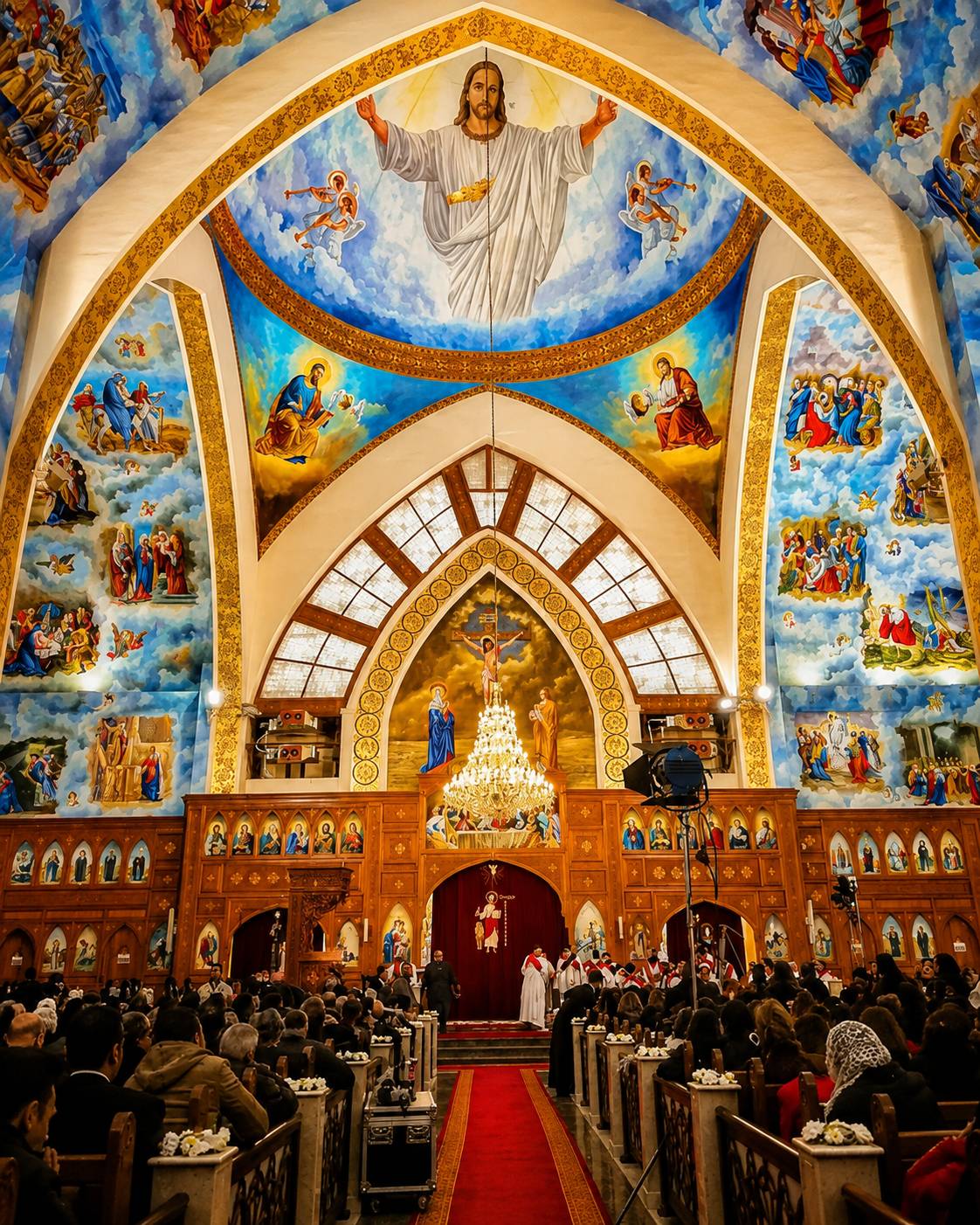
Egypt is one of the most important destinations in the world for Christian pilgrimage. Beyond its famous pyramids and ancient temples, the country preserves a remarkable religious heritage connected with the traditional journey of the Holy Family.
According to Christian tradition, the Virgin Mary, Saint Joseph, and the infant Jesus traveled to Egypt seeking refuge. Their journey is associated with numerous locations across the country, including ancient churches, monasteries, caves, springs, and historic villages.
Today, these sacred destinations attract Christian pilgrims, religious groups, history enthusiasts, and international travelers interested in discovering the spiritual heritage of Egypt.
From the Hanging Church and Abu Serga Church in Cairo to the monasteries of Wadi El Natrun, the Church of the Virgin Mary in Maadi, Gabal El-Tair in Minya, and the Monastery of Al-Muharraq in Assiut, the traditional Holy Family route offers an unforgettable journey through Egypt's Christian history.
Whether you are planning a personal pilgrimage, a family religious holiday, or a private Christian group tour, this guide will help you discover the most important Holy Family sites in Egypt.
With Let's Explore Egypt Travel, you can organize a personalized pilgrimage with private transportation, professional guides, and flexible sightseeing arrangements.
1. What Is the Holy Family Journey in Egypt?
The Holy Family journey refers to the traditional account of the Virgin Mary, Saint Joseph, and the infant Jesus traveling to Egypt to escape King Herod.
According to the Gospel of Matthew, Joseph was warned in a dream to take Mary and Jesus to Egypt because Herod intended to harm the child.
Egypt became their place of refuge until it was safe to return.
Over the centuries, Christian traditions connected this journey with several locations throughout Egypt.
These places became important centers of Christian worship and pilgrimage, with churches and monasteries established to commemorate the Holy Family's traditional presence.
The traditional route extends through different regions, including:
-
North Sinai.
-
The Nile Delta.
-
Greater Cairo.
-
Wadi El Natrun.
-
Minya.
-
Assiut.
The Holy Family journey is an important part of Egypt's Coptic Christian heritage and offers visitors an opportunity to explore the country's religious history.
2. Why Is Egypt Important for Christian Pilgrimage?
Egypt holds a special position in Christian history.
The country is traditionally associated with the Holy Family's refuge and also played a major role in the development of early Christianity.
Egypt became one of the most important centers of Christian monasticism, producing influential spiritual figures and preserving ancient religious traditions.
There are several reasons why Christian travelers choose Egypt for pilgrimage:
-
Visiting traditional Holy Family locations.
-
Exploring some of the oldest churches in the country.
-
Discovering ancient Coptic Christian traditions.
-
Visiting historic desert monasteries.
-
Learning about the development of Christian monasticism.
-
Exploring religious artwork, manuscripts, and architecture.
-
Experiencing the spiritual atmosphere of Egypt's historic churches.
A pilgrimage through Egypt combines religious discovery with cultural exploration and historical education.
3. The Most Important Holy Family Sites in Cairo
Cairo contains several important religious landmarks associated with the traditional Holy Family journey.
Many of these sites are located within the historic districts of Old Cairo and Matariya.
The Hanging Church – Coptic Cairo
The Hanging Church, officially known as Saint Virgin Mary's Coptic Orthodox Church, is one of the most famous Christian landmarks in Egypt.
The church stands above the southern gate of the ancient Roman Fortress of Babylon, giving it its distinctive name.
It is admired for its historic architecture, beautiful wooden ceiling, marble columns, and religious icons.
The Hanging Church is an essential stop for anyone exploring Coptic Cairo.
Visitors can learn about the history of the Coptic Orthodox Church and the development of Christianity in Egypt.
Abu Serga Church – The Church of Saints Sergius and Bacchus
Abu Serga Church is among the most significant religious destinations associated with the Holy Family.
According to Christian tradition, the church stands above a cave connected with the Holy Family's stay in Egypt.
The underground crypt is one of the most important features of the building.
Visitors can explore its ancient architecture, historic religious decorations, and traditional Christian heritage.
Abu Serga Church is particularly meaningful for Christian pilgrims interested in the traditional journey of Jesus, Mary, and Joseph.
The Church of Saint Barbara
Saint Barbara Church is another important historic church in Coptic Cairo.
Dedicated to Saint Barbara, the church preserves traditional Coptic architectural elements and religious artwork.
Its location within the historic religious district makes it easy to combine with other nearby Christian landmarks.
The Church of Saint Mercurius – Abu Seifein
The Church of Saint Mercurius, commonly known as Abu Seifein, is an important Coptic Christian monument.
It is associated with the history of Egyptian Christianity and preserves significant religious traditions.
Visitors interested in Coptic heritage can include it in a walking tour of Old Cairo.
The Coptic Museum
The Coptic Museum is one of the most important places to understand the history of Christianity in Egypt.
Its collections include:
-
Ancient Coptic manuscripts.
-
Religious icons.
-
Historic textiles.
-
Wooden carvings.
-
Stonework.
-
Religious objects.
-
Examples of Coptic artistic traditions.
A visit to the museum adds historical context to the religious sites in Old Cairo.
4. The Church of the Virgin Mary in Maadi
Located beside the Nile River in southern Cairo, the Church of the Virgin Mary in Maadi is an important destination associated with the Holy Family tradition.
According to tradition, the Holy Family departed from this area by boat, continuing their journey south along the Nile.
The church is particularly significant because of its location beside the river.
Visitors can explore the historic church, learn about its religious traditions, and enjoy the peaceful surroundings.
Maadi is often included in Christian pilgrimage itineraries because it provides another connection with the traditional journey through Egypt.
5. Virgin Mary's Tree in Matariya
Virgin Mary's Tree is located in the Matariya district of Cairo.
According to Christian tradition, the Holy Family rested in this area during their stay in Egypt.
The site is associated with a tree and a spring connected with the traditional account of their visit.
The location is particularly meaningful for Christian visitors who want to discover the religious heritage of Cairo beyond the main Coptic churches.
A visit to Matariya can be combined with other Holy Family landmarks during a private Cairo pilgrimage tour.
6. Wadi El Natrun: Ancient Christian Monasteries
Wadi El Natrun is one of the most important centers of Christian monasticism in Egypt.
Located between Cairo and Alexandria, the region became a major destination for Christian monks seeking solitude, prayer, and spiritual discipline.
The area is home to several historic Coptic monasteries that remain active religious communities.
Monastery of Saint Bishoy
The Monastery of Saint Bishoy is one of the most famous monasteries in Wadi El Natrun.
It is associated with Saint Bishoy, an important figure in Coptic monastic history.
The monastery preserves historic religious architecture and remains an important center of spiritual life.
Monastery of the Syrians
Also known as Deir El-Surian, this monastery is famous for its historic architecture, religious manuscripts, and beautiful decorations.
It is an important destination for visitors interested in the history of Egyptian Christianity.
Monastery of Saint Macarius
The Monastery of Saint Macarius is another significant spiritual center in Wadi El Natrun.
It is associated with the development of early Christian monastic traditions and continues to play an important role in Coptic religious life.
Monastery of the Romans
The Monastery of the Romans is another historic religious landmark in the region.
Its long history makes it an interesting addition to a Wadi El Natrun pilgrimage itinerary.
Important visitor information: These monasteries are active religious communities. Visiting arrangements, opening hours, photography permissions, and access to individual buildings may vary. Travelers should confirm access in advance and respect monastery regulations.
7. Gabal El-Tair in Minya: One of the Important Holy Family Destinations
Gabal El-Tair, also known as the Mountain of the Birds, is an important destination associated with the traditional Holy Family journey through Upper Egypt.
Located in Minya Governorate near the Nile, the area is famous for the Monastery of the Virgin Mary.
According to Christian tradition, the Holy Family visited this region during their journey south.
The Monastery of the Virgin Mary
The monastery is an important pilgrimage destination for Coptic Christians.
It is traditionally associated with the Holy Family's visit and preserves centuries of religious traditions.
The surrounding area offers beautiful views of the Nile Valley and the landscape of Upper Egypt.
Visitors can explore the religious history of the site and learn about its significance within the Holy Family route.
Minya is particularly suitable for travelers who want to explore Christian heritage outside Cairo.
8. The Monastery of Al-Muharraq in Assiut
The Monastery of the Virgin Mary at Al-Muharraq is one of Egypt's most important Coptic pilgrimage destinations.
Located in Assiut Governorate, the monastery is traditionally associated with an extended period of the Holy Family's stay in Egypt.
The monastery contains historic churches, religious buildings, and important spiritual landmarks.
For Christian pilgrims, Al-Muharraq is one of the most meaningful destinations along the traditional route.
Its religious importance makes it a major stop for travelers planning a longer Christian pilgrimage through Upper Egypt.
9. Deir Dronka: The Monastery of the Virgin Mary in Assiut
Deir Dronka, also known as the Monastery of the Virgin Mary, is located near Assiut.
It is an important Coptic Christian pilgrimage destination and is traditionally associated with the Holy Family's presence in the region.
The monastery attracts many Christian visitors, particularly during religious celebrations.
Its location on the hills overlooking Assiut provides an interesting setting for visitors exploring the area's religious heritage.
10. Suggested Holy Family Pilgrimage Itineraries
The traditional Holy Family route covers many locations, so visitors can choose an itinerary according to their available time.
Here are some suggested programs.
Option 1: One-Day Holy Family Tour in Cairo
Duration: Approximately 6–8 hours.
Ideal for travelers staying in Cairo who want to discover the main Holy Family landmarks.
Suggested itinerary:
-
Hotel pickup in Cairo.
-
Visit the Hanging Church.
-
Explore Abu Serga Church.
-
Visit Saint Barbara Church.
-
Discover Abu Seifein Church.
-
Explore the Coptic Museum, subject to opening hours.
-
Visit the Church of the Virgin Mary in Maadi, subject to scheduling.
-
Return to your hotel.
This tour is suitable for individual travelers, families, and small Christian groups.
Option 2: Two-Day Christian Heritage Tour
Duration: 2 days.
Day 1: Coptic Cairo and Maadi
-
The Hanging Church.
-
Abu Serga Church.
-
Saint Barbara Church.
-
Abu Seifein Church.
-
Ben Ezra Synagogue.
-
The Church of the Virgin Mary in Maadi.
Day 2: Matariya and Wadi El Natrun
-
Visit Virgin Mary's Tree in Matariya.
-
Travel to Wadi El Natrun.
-
Visit selected Coptic monasteries.
-
Return to Cairo.
The program depends on monastery opening arrangements and travel time.
Option 3: Five-Day Holy Family Pilgrimage Tour
Duration: 5 days.
Day 1: Arrival in Cairo
-
Airport pickup.
-
Hotel transfer.
-
Free time.
Day 2: Coptic Cairo and Holy Family Churches
-
Hanging Church.
-
Abu Serga Church.
-
Saint Barbara Church.
-
Coptic Museum.
-
Church of the Virgin Mary in Maadi.
Day 3: Matariya and Wadi El Natrun
-
Visit Virgin Mary's Tree.
-
Travel to Wadi El Natrun.
-
Visit selected monasteries.
-
Return to Cairo.
Day 4: Travel to Minya
-
Private transfer to Minya.
-
Explore Gabal El-Tair.
-
Visit the Monastery of the Virgin Mary, subject to access.
Day 5: Return to Cairo
-
Breakfast.
-
Private transfer back to Cairo.
-
Airport drop-off or additional hotel stay.
Option 4: Seven-Day Holy Family Pilgrimage Tour
Duration: 7 days.
This itinerary is designed for visitors interested in a more extensive religious journey.
Day 1: Arrival in Cairo
-
Airport pickup.
-
Private hotel transfer.
-
Overnight stay.
Day 2: Coptic Cairo
-
Hanging Church.
-
Abu Serga Church.
-
Saint Barbara Church.
-
Abu Seifein Church.
-
Coptic Museum.
Day 3: Maadi and Matariya
-
Church of the Virgin Mary in Maadi.
-
Virgin Mary's Tree.
-
Explore additional traditional Holy Family locations in Cairo.
Day 4: Wadi El Natrun
-
Travel to the monasteries.
-
Visit selected religious sites.
-
Return to Cairo or overnight accommodation according to the itinerary.
Day 5: Cairo to Minya
-
Private transfer to Minya.
-
Visit Gabal El-Tair.
-
Explore the Monastery of the Virgin Mary.
Day 6: Minya to Assiut
-
Travel to Assiut.
-
Visit the Monastery of Al-Muharraq.
-
Explore Deir Dronka, subject to access.
-
Overnight in Assiut.
Day 7: Return or onward travel
-
Breakfast.
-
Private transfer according to your departure arrangements.
This itinerary should be customized after checking transportation times, accommodation, and the opening schedules of religious sites.
11. Best Time to Follow the Holy Family Route in Egypt
The best time to visit Egypt for a Christian pilgrimage is generally from October to April.
During these months, temperatures are more comfortable for sightseeing and traveling between cities.
Winter: December to February
Winter is a good season for visiting churches, monasteries, and religious landmarks.
However, travelers should bring warm clothing for early mornings and cooler evenings.
Spring: March to April
Spring offers pleasant temperatures for exploring Cairo and Upper Egypt.
It is a popular period for cultural and religious travel.
Autumn: October to November
Autumn is another excellent time for pilgrimage tours.
The weather is generally suitable for walking tours and longer journeys.
Religious Celebrations
Some Christian visitors prefer traveling during important religious celebrations.
The dates of Easter and other religious events vary according to the church calendar.
During major celebrations, accommodation and transportation should be arranged early.
12. What Should You Wear During a Christian Pilgrimage in Egypt?
Visitors should dress respectfully when entering churches and monasteries.
We recommend:
-
Wearing clothing that covers the shoulders.
-
Choosing trousers or skirts covering the knees.
-
Avoiding revealing clothing.
-
Wearing comfortable walking shoes.
-
Bringing a light jacket during winter.
-
Following photography regulations.
-
Respecting worshippers and religious ceremonies.
Some monasteries may have additional dress and visitor requirements.
Always follow the instructions of monastery staff and your local guide.
13. Can You Visit the Holy Family Sites Independently?
Yes. Independent visitors can travel to many Holy Family destinations in Egypt.
However, visiting several locations across different governorates requires careful transportation planning.
Some sites are located far from major cities, and monasteries may have specific opening schedules.
A private guided tour can make the experience more convenient by arranging:
-
Private transportation.
-
Hotel pickup and drop-off.
-
A customized itinerary.
-
Professional historical guidance.
-
Assistance with entrance arrangements.
-
Coordination of multi-day travel.
-
Flexible sightseeing schedules.
For visitors planning to explore several destinations, private transportation can help make the journey more comfortable and organized.
14. Why Book Your Holy Family Tour with Let's Explore Egypt Travel?
Planning a Christian pilgrimage involves more than visiting individual churches.
Travelers need a well-organized itinerary that considers transportation distances, religious site opening hours, accommodation, and the interests of the group.
Let's Explore Egypt Travel helps international visitors organize private tours and customized travel experiences throughout Egypt.
Our services include:
Private Air-Conditioned Transportation
Travel comfortably between churches, monasteries, and historic destinations.
Professional Licensed Guides
Explore the history of Egypt with knowledgeable local guides. Specialized religious guidance can be arranged according to the itinerary.
Customized Pilgrimage Programs
Choose a one-day Cairo experience or a multi-day journey covering several Holy Family destinations.
Private Group Arrangements
We can help organize tours for couples, families, church communities, and religious groups.
Hotel and Airport Transfers
Arrange transportation from Cairo International Airport and hotels throughout your trip.
Flexible Travel Planning
Customize the schedule according to your arrival date, group size, religious interests, and budget.
Our aim is to make discovering Egypt's Christian heritage comfortable, informative, and memorable.
15. Combine Your Holy Family Pilgrimage with Other Egypt Tours
Many visitors choose to combine their religious journey with other famous attractions in Egypt.
Depending on your available time, you can add:
Giza Pyramids and the Great Sphinx
Discover one of the world's most famous ancient monuments.
Grand Egyptian Museum
Explore Egypt's ancient civilization through remarkable archaeological collections.
Islamic Cairo
Discover historic mosques, religious schools, and the architectural heritage of Islamic Egypt.
Alexandria
Explore the city's historic landmarks and multicultural heritage.
Luxor and Aswan
Discover the temples, monuments, and ancient history of Upper Egypt.
Combining religious tourism with cultural sightseeing creates a more complete Egyptian holiday.
Explore our available private Egypt tour packages:
https://letsexploreegypttravel.com/en/egypttourpackages
16. Frequently Asked Questions About the Holy Family Journey in Egypt
1. Did the Holy Family really visit Egypt?
The Gospel of Matthew describes the Holy Family's flight to Egypt. Specific locations along the journey are preserved through Christian tradition and Coptic historical heritage.
2. What is the most important Holy Family church in Cairo?
Abu Serga Church and the Hanging Church are among the most important Christian landmarks in Coptic Cairo.
3. Where did the Holy Family stay in Egypt?
According to Christian tradition, the Holy Family visited several locations across Egypt, including areas in the Nile Delta, Cairo, Wadi El Natrun, Minya, and Assiut.
4. How many days are needed for a Holy Family pilgrimage?
A one-day tour is suitable for the main Christian landmarks in Cairo. A five-to-seven-day itinerary allows visitors to explore additional destinations in Upper Egypt.
5. Can I visit the Holy Family sites in one day?
You can visit several major Holy Family locations in Cairo in one day. However, visiting sites in Minya and Assiut requires additional travel days.
6. Is Wadi El Natrun included in the Holy Family route?
Wadi El Natrun is an important destination in Egypt's Christian heritage and is traditionally associated with the wider Holy Family journey and the development of Coptic monasticism.
7. Is Mount Sinai part of the Holy Family route?
Mount Sinai is not generally considered one of the main Holy Family route destinations. However, it is an important biblical pilgrimage destination and can be added to a wider religious tour of Egypt.
8. Can I organize a private Holy Family pilgrimage tour?
Yes. Private tours can be arranged for individuals, couples, families, and Christian groups.
9. Are the monasteries open to international visitors?
Many monasteries receive visitors, but access arrangements vary. It is important to confirm opening hours and visitor policies before traveling.
10. Is the Holy Family pilgrimage suitable for senior travelers?
Yes. Many sites in Cairo can be visited with private transportation and a relaxed schedule. Some locations involve stairs, uneven surfaces, or longer walks, so the itinerary should be adjusted to individual mobility needs.
11. What is the best time to visit the Holy Family sites?
October to April is generally the most comfortable season for visiting religious sites throughout Egypt.
12. Can I combine the Holy Family tour with the Pyramids of Giza?
Yes. Travelers can combine their Christian pilgrimage with visits to the Giza Pyramids, the Grand Egyptian Museum, and other Cairo attractions.
17. Plan Your Holy Family Pilgrimage in Egypt
The traditional journey of the Holy Family is one of the most meaningful parts of Egypt's religious heritage.
From the historic churches of Coptic Cairo to the monasteries of Wadi El Natrun, from the Nile landscapes of Minya to the spiritual destinations of Assiut, each location offers a unique opportunity to explore centuries of Christian history.
Whether you are planning a personal pilgrimage, a family religious holiday, or a group journey with your church community, Egypt offers an unforgettable experience.
With Let's Explore Egypt Travel, you can arrange a private Holy Family tour with comfortable transportation, customized itineraries, and professional local assistance.
Discover the Christian heritage of Egypt and follow the traditional footsteps of the Holy Family.
Explore our Egypt Tour Packages:
Contact Let's Explore Egypt Travel today to plan your private Christian pilgrimage in Egypt.