


Wadi El Hitan (Valley of the Whales): The Ultimate Visitor Guide to Egypt's Prehistoric Wonder
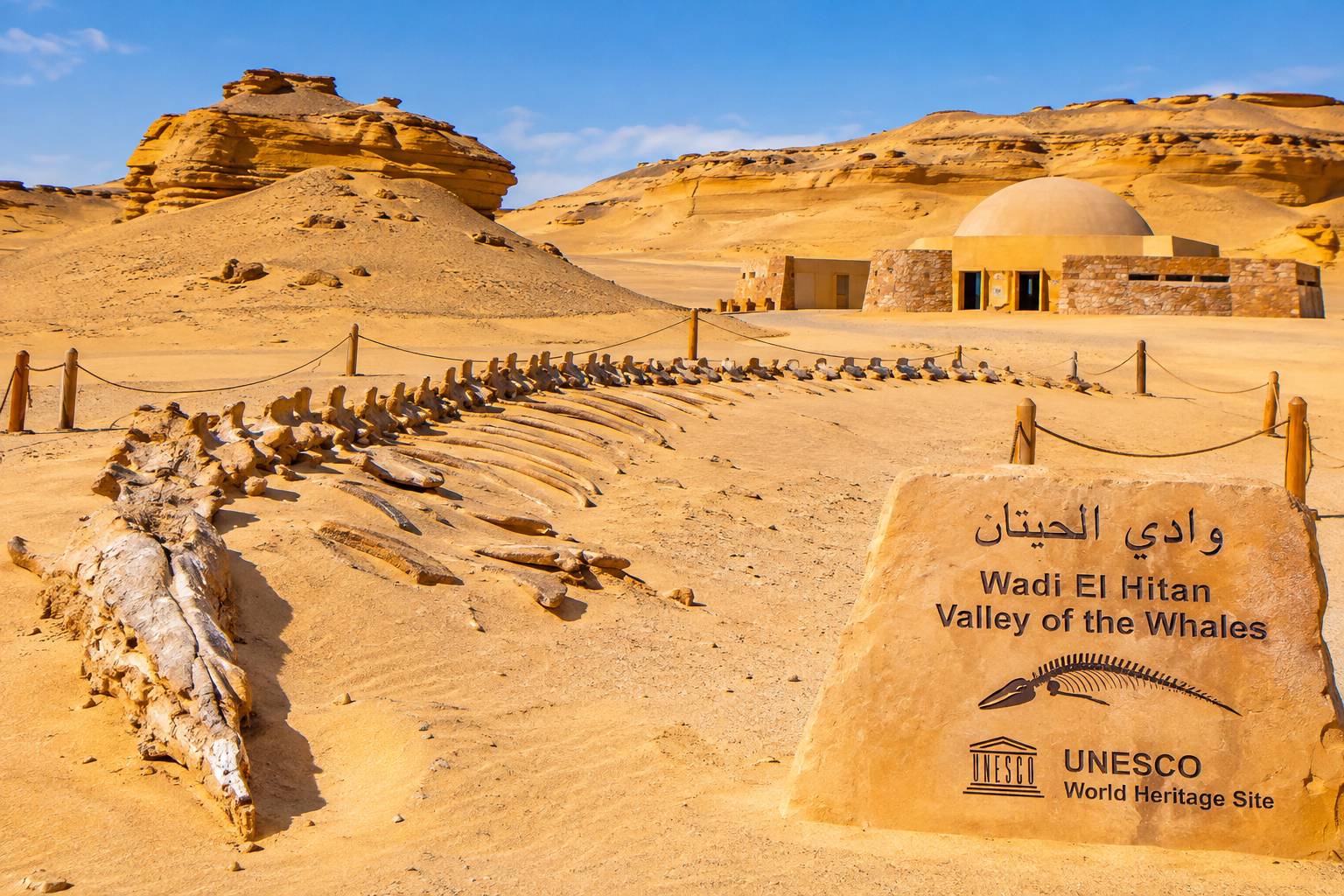
Wadi El Hitan (Valley of the Whales): The Ultimate Visitor Guide to Egypt's Prehistoric Wonder
Discover Millions of Years of Natural History in Egypt's Western Desert – Explore Ancient Whale Fossils, the Fossils and Climate Change Museum, Desert Landscapes, and One of the World's Most Extraordinary UNESCO World Heritage Sites.
Imagine walking through the Egyptian desert and discovering the fossilized skeletons of enormous whales that lived approximately 40 million years ago, when this part of Egypt was covered by a warm, shallow sea.
This is the extraordinary experience waiting for visitors at Wadi El Hitan (Valley of the Whales), one of Egypt's most remarkable natural attractions.
Located within the Wadi El Rayan Protected Area in Fayoum Governorate, Wadi El Hitan is internationally recognized for its exceptional collection of prehistoric whale fossils. The site provides extraordinary scientific evidence of how ancient whales evolved from land-dwelling mammals into the ocean-going animals we know today.
Recognized as a UNESCO World Heritage Site in 2005, Wadi El Hitan is not simply a destination for fossil enthusiasts. It is an open-air natural museum where visitors can explore ancient geological formations, enormous fossilized whale skeletons, and the fascinating history of prehistoric life.
Whether you are visiting Egypt for the first time, planning a day trip from Cairo, or looking for an unusual desert adventure, Wadi El Hitan offers an unforgettable experience.
With Let's Explore Egypt Travel, you can discover the Valley of the Whales through a private Fayoum excursion with organized transportation and a customized sightseeing itinerary.
1. What Is Wadi El Hitan (Valley of the Whales)?
Wadi El Hitan, also known as the Valley of the Whales, is a protected natural and geological area located in the Western Desert of Egypt.
The site contains thousands of fossil remains, including the skeletons of ancient whales that lived during the Eocene geological epoch, approximately 40 million years ago.
At that time, much of northern Egypt was covered by an ancient sea known as the Tethys Sea.
Over millions of years, geological changes transformed the landscape, leaving behind remarkable fossil deposits in what is now the Egyptian desert.
Today, visitors can discover fossilized remains of prehistoric whales, sharks, fish, sea turtles, and other marine organisms.
The most important discoveries belong to an extinct group of early whales known as Archaeoceti.
These fossils provide exceptional evidence of the evolutionary transition from land-based mammals to fully aquatic whales.
Wadi El Hitan was added to the UNESCO World Heritage List in 2005 under natural heritage criterion VIII because of its outstanding scientific importance.
It is considered one of the most important fossil sites in the world for understanding whale evolution.
2. Why Is Wadi El Hitan So Famous?
Wadi El Hitan is famous because it preserves an extraordinary record of prehistoric marine life.
Unlike many fossil locations where remains are scattered or difficult to interpret, this protected landscape contains exceptionally well-preserved whale skeletons in their original geological surroundings.
Scientists have discovered important evidence showing how ancient whales gradually adapted to life in the water.
Some of these prehistoric animals still had small hind limbs, demonstrating their evolutionary connection with earlier land mammals.
The site's importance includes:
-
Remarkable fossilized whale skeletons.
-
Evidence of prehistoric marine ecosystems.
-
Important discoveries related to whale evolution.
-
Ancient geological formations.
-
Fossil remains of sharks and other marine animals.
-
Exceptional scientific and educational value.
-
A unique desert environment protected by Egyptian conservation authorities.
For travelers interested in nature, science, geology, and ancient history, Wadi El Hitan is one of the most unusual places to visit in Egypt.
3. The History of Wadi El Hitan: When Egypt Was Under the Sea
One of the most fascinating aspects of visiting Wadi El Hitan is understanding that the Egyptian desert was once a marine environment.
Approximately 40 million years ago, during the Eocene epoch, the region was part of a warm marine ecosystem.
The ancient sea supported a variety of marine organisms, including early whales, sharks, fish, and other animals.
As millions of years passed, geological and environmental changes transformed the region.
Sediments accumulated, marine environments disappeared, and the landscape gradually became part of the Western Desert.
The fossilized remains preserved in the rocks provide a remarkable record of this transformation.
The Evolution of Ancient Whales
One of the most important discoveries at Wadi El Hitan is the evidence of early whale evolution.
Ancient whale species such as Basilosaurus and Dorudon lived in prehistoric oceans.
These animals had bodies adapted to aquatic life but retained some anatomical characteristics associated with their land-dwelling ancestors.
Some fossils reveal reduced hind limbs, providing evidence of the evolutionary transition.
Today, Wadi El Hitan is considered one of the world's most significant locations for understanding this important chapter in the history of life on Earth.
4. The Most Important Attractions at Wadi El Hitan
A visit to Wadi El Hitan offers several interesting experiences beyond seeing fossilized whale skeletons.
The protected area combines scientific attractions, natural landscapes, and outdoor exploration.
A. The Fossilized Whale Skeletons
The main attraction is the extraordinary collection of prehistoric whale fossils.
Visitors can observe large fossilized skeletons displayed along designated walking routes.
These remains provide a unique opportunity to understand the physical structure of ancient whales.
Some skeletons reveal the enormous size of these prehistoric animals, while others demonstrate the anatomical changes that occurred during their evolution.
Seeing these fossils in their natural geological setting makes the experience particularly special.
B. Basilosaurus Fossils
Basilosaurus is one of the most famous prehistoric whale species discovered at Wadi El Hitan.
It was a large marine mammal with a long, streamlined body.
Some Basilosaurus specimens reached approximately 18 metres in length.
The fossils provide valuable evidence about the appearance, movement, and development of early whales.
Visitors interested in prehistoric animals will find these discoveries particularly fascinating.
C. The Fossils and Climate Change Museum
The Fossils and Climate Change Museum is an important attraction within the Wadi El Hitan visitor experience.
The museum introduces visitors to the geological history of the region and the evolution of ancient marine animals.
Its exhibits include prehistoric fossil remains and educational information about the relationship between environmental changes and the development of life.
One of the highlights is the impressive display of a prehistoric whale skeleton.
The museum provides useful context before visitors explore the outdoor fossil trail.
D. The Open-Air Fossil Museum
Wadi El Hitan is often described as a natural open-air museum.
Visitors can explore designated paths where fossilized remains are displayed within the surrounding desert landscape.
These trails provide opportunities to observe ancient geological formations and understand how fossils became preserved over millions of years.
Walking through the area feels like traveling back into prehistoric Egypt.
E. Desert Landscapes and Sandstone Formations
The Valley of the Whales is also famous for its unusual desert scenery.
The surrounding landscape features:
-
Sandstone rock formations.
-
Small desert hills.
-
Open sandy valleys.
-
Natural geological structures.
-
Beautiful desert horizons.
These landscapes create excellent opportunities for photography and nature exploration.
F. Ancient Marine Fossils
Although whale skeletons are the main attraction, the region also preserves evidence of other prehistoric marine organisms.
Visitors can learn about the ancient ecosystem through the fossil displays and educational information available at the site.
5. The Fossils and Climate Change Museum: What Will You See?
The Fossils and Climate Change Museum is one of the most interesting parts of a Wadi El Hitan excursion.
It was developed to help visitors understand the geological and environmental history of the region.
The museum presents information about ancient marine ecosystems, fossil discoveries, and climate changes that shaped the landscape.
Visitors can discover:
-
Ancient whale skeletons.
-
Fossilized marine organisms.
-
Geological displays.
-
Information about whale evolution.
-
Educational exhibits about climate change.
-
The relationship between ancient seas and modern desert environments.
The museum is particularly valuable for families with children, students, and visitors interested in science.
It provides a deeper understanding of why Wadi El Hitan is internationally recognized.
6. Where Is Wadi El Hitan Located?
Wadi El Hitan is located in Fayoum Governorate, approximately 80 kilometres west of Fayoum city and around 150 kilometres southwest of Cairo, depending on the starting point and route.
It is situated within the wider Wadi El Rayan Protected Area in Egypt's Western Desert.
The destination is relatively remote compared with popular Egyptian attractions such as the Giza Pyramids or the Grand Egyptian Museum.
The final approach involves desert tracks, so transportation planning is important.
The location makes Wadi El Hitan an excellent destination for travelers looking to explore a different side of Egypt beyond its traditional archaeological sites.
7. How to Get to Wadi El Hitan from Cairo
Traveling from Cairo to Wadi El Hitan is an exciting journey through the landscapes of the Western Desert.
There are several ways to organize the trip, but private transportation is generally the most convenient option.
By Private Car and 4x4 Vehicle
A typical journey starts in Cairo and continues towards Fayoum through the Cairo–Fayoum road network.
From Fayoum, travelers continue towards Wadi El Rayan and the Valley of the Whales.
The final desert approach requires appropriate vehicle arrangements.
A suitable 4x4 vehicle is strongly recommended for the remote desert tracks. Visitors should not assume that a regular city car can safely reach the site.
By Organized Private Tour
Booking a private Fayoum tour is a convenient option for international travelers.
A well-organized trip can include:
-
Hotel pickup in Cairo.
-
Private transportation to Fayoum.
-
Appropriate 4x4 transportation for the desert section.
-
Visit to Wadi El Hitan.
-
Time to explore the fossil museum.
-
Guided sightseeing.
-
Optional visits to other Fayoum attractions.
-
Return transportation to Cairo.
With Let's Explore Egypt Travel, visitors can arrange a customized itinerary according to their travel schedule and interests.
8. Best Time to Visit Wadi El Hitan
The best season to visit Wadi El Hitan is generally from October to April.
During these months, daytime temperatures are usually more comfortable for exploring the desert and walking along the fossil trails.
Winter: December to February
Winter is an excellent time for visiting the Valley of the Whales.
The weather is generally suitable for outdoor exploration, although mornings and evenings can be cold.
Spring: March to April
Spring offers pleasant conditions for desert excursions and photography.
It is also a good period for combining Wadi El Hitan with other Fayoum attractions.
Autumn: October to November
Autumn is another excellent season for visiting the region.
Temperatures are usually more comfortable than during the summer months.
Summer: May to September
Summer can be extremely hot in the Western Desert.
Visitors planning a summer excursion should arrange an early departure, carry sufficient drinking water, and avoid prolonged outdoor walking during the hottest hours.
9. How Long Should You Spend at Wadi El Hitan?
Most visitors should allow approximately two to three hours for exploring the main visitor facilities, museum, and designated fossil trails.
However, the total trip from Cairo requires considerably more time because of the distance and desert access.
For a comfortable experience, we recommend allocating a full day for a private Wadi El Hitan excursion.
Travelers can also combine the destination with other attractions in Fayoum, depending on the available time.
10. Things to Do at Wadi El Hitan
Wadi El Hitan offers a different type of sightseeing experience from Egypt's traditional archaeological destinations.
Popular activities include:
Discover Prehistoric Whale Fossils
Explore the designated trails and observe ancient whale skeletons preserved in the desert.
Visit the Fossils and Climate Change Museum
Learn about the geological history of the region and the evolution of marine mammals.
Enjoy Desert Photography
Capture the unique sandstone formations, fossil displays, and expansive desert scenery.
Explore Geological Formations
Discover the natural structures that reveal the ancient marine history of the region.
Enjoy Educational Family Activities
The site is particularly interesting for children and students who enjoy science, prehistoric animals, and nature.
Combine Your Visit with a Desert Adventure
Visitors can combine Wadi El Hitan with selected destinations within the wider Wadi El Rayan area, subject to travel time and access arrangements.
11. Places to Visit Near Wadi El Hitan
One of the advantages of visiting Fayoum is that several attractions can be combined into a longer excursion.
Wadi El Rayan Waterfalls
Wadi El Rayan is one of Fayoum's most famous natural attractions.
The area is known for its lakes, desert landscapes, and waterfalls connecting two lakes.
It offers excellent opportunities for photography and nature sightseeing.
Magic Lake
Magic Lake is famous for its beautiful desert setting and changing water colours.
The surrounding dunes make it a popular destination for photography, outdoor activities, and desert adventures.
Mudawara Mountain
Mudawara Mountain offers impressive views over the surrounding desert and lakes.
It is a popular photography stop for visitors exploring the Wadi El Rayan area.
Tunis Village
Tunis Village is known for its traditional pottery workshops, artistic community, and peaceful rural atmosphere.
Visitors can discover local crafts, enjoy traditional food, and experience a different side of Egyptian culture.
Lake Qarun
Lake Qarun is one of the most famous natural landmarks in Fayoum.
It is particularly interesting for visitors who enjoy landscapes, birdwatching, and nature photography.
These attractions can be included in a customized Fayoum itinerary.
12. Suggested Wadi El Hitan Day Trip from Cairo
For visitors staying in Cairo, a full-day private excursion is an excellent way to discover the Valley of the Whales.
Here is a suggested itinerary.
Private Wadi El Hitan Tour – One Day
Early Morning: Departure from Cairo
-
Private pickup from your Cairo hotel.
-
Travel towards Fayoum.
-
Enjoy the changing scenery as the city gradually gives way to desert landscapes.
Morning: Wadi El Rayan Area
-
Continue towards the protected area.
-
Enjoy selected scenic stops, depending on the route and available time.
-
Prepare for the desert journey to Wadi El Hitan.
Late Morning: Wadi El Hitan
-
Arrive at the Valley of the Whales.
-
Explore the Fossils and Climate Change Museum.
-
Discover the prehistoric whale skeletons.
-
Walk along designated fossil trails.
-
Enjoy photography and the desert scenery.
Afternoon: Additional Fayoum Attractions
Depending on the available time and road conditions, the tour can include:
-
Magic Lake.
-
Mudawara Mountain.
-
Wadi El Rayan waterfalls.
Evening: Return to Cairo
-
Begin the return journey.
-
Private drop-off at your hotel.
The itinerary can be adjusted according to the group's interests and the actual travel conditions.
13. Can You Visit Wadi El Hitan with Children?
Yes. Wadi El Hitan can be an interesting destination for families with children.
The fossilized whale skeletons provide an opportunity for children to learn about prehistoric animals and the evolution of marine life.
The museum also helps make the experience educational and engaging.
However, parents should consider the following:
-
The journey from Cairo is relatively long.
-
Desert temperatures can be high.
-
Some walking takes place on sandy or uneven terrain.
-
Children should remain on designated paths.
-
Drinking water and sun protection are essential.
-
Young children should be supervised throughout the visit.
Families with school-age children may find the destination particularly educational.
14. What Should You Bring to Wadi El Hitan?
Because Wadi El Hitan is located in a remote desert environment, preparation is important.
We recommend bringing:
-
Comfortable walking shoes.
-
Drinking water.
-
Sunglasses.
-
Sunscreen.
-
A hat or cap.
-
Lightweight clothing during warm months.
-
A warm jacket during winter.
-
A camera or smartphone.
-
Snacks for the journey.
-
Personal medications.
Visitors should also carry any necessary identification and confirm their protected-area booking arrangements before departure.
15. Important Rules for Visiting Wadi El Hitan
Wadi El Hitan is a protected natural heritage site.
Its fossils and geological formations are extremely valuable and must be preserved.
Visitors should follow all conservation regulations.
Important rules include:
-
Never remove fossils or stones from the protected area.
-
Do not touch, damage, or climb on fossil skeletons.
-
Stay on designated walking paths.
-
Do not drive vehicles through restricted fossil areas.
-
Avoid leaving rubbish.
-
Respect wildlife and natural vegetation.
-
Follow the instructions of park staff and authorized guides.
-
Do not disturb scientific research activities.
Responsible tourism helps protect this extraordinary site for future generations.
16. Entrance Fees and Visitor Information
Wadi El Hitan is part of Egypt's protected-area system, and entrance charges apply.
The Egyptian Environmental Affairs Agency publishes protected-area entrance fees, including a separate fee category for the Wadi El Hitan area.
However, fees and booking procedures can change, so visitors should confirm the latest charges before traveling.
The Egyptian Ministry of Environment also provides an online protected-area ticket booking service.
Before your visit, confirm:
-
Visitor entrance fees.
-
Vehicle charges.
-
Available visiting times.
-
Required booking arrangements.
-
Special permits for professional photography, if applicable.
-
Current museum and visitor-facility access.
For an organized private tour, ask your tour operator to clarify which entrance charges and transportation costs are included in the quotation.
17. Why Visit Wadi El Hitan with Let's Explore Egypt Travel?
Exploring Wadi El Hitan requires more preparation than visiting attractions within Cairo.
The destination is remote, and the desert approach requires suitable transportation and knowledge of the area.
At Let's Explore Egypt Travel, we help international visitors discover Fayoum through private excursions and customized sightseeing programs.
Our services can include:
Private Transportation
Comfortable transportation from Cairo or Fayoum, with suitable 4x4 arrangements for the desert section.
Customized Itineraries
Choose between a focused Wadi El Hitan excursion or a longer Fayoum adventure.
Professional Tour Guidance
Discover the geological and historical importance of the destination with knowledgeable local guidance.
Hotel Pickup and Drop-Off
Enjoy convenient transportation from your hotel in Cairo or nearby locations.
Flexible Sightseeing
Combine Wadi El Hitan with Wadi El Rayan, Magic Lake, Mudawara Mountain, and Tunis Village where practical.
Private Experiences
Travel with your family, friends, or partner without joining a large group.
Whether you want a short geological adventure or a complete Fayoum experience, we can help organize a suitable journey.
18. Frequently Asked Questions About Wadi El Hitan
1. What is Wadi El Hitan famous for?
Wadi El Hitan is famous for its exceptional collection of fossilized prehistoric whales dating back approximately 40 million years. It provides important scientific evidence of whale evolution.
2. Where is Wadi El Hitan located in Egypt?
Wadi El Hitan is located in Fayoum Governorate within the Wadi El Rayan Protected Area in Egypt's Western Desert.
3. Is Wadi El Hitan a UNESCO World Heritage Site?
Yes. Wadi El Hitan was inscribed on the UNESCO World Heritage List in 2005 because of its outstanding fossil record and importance for understanding whale evolution.
4. How old are the whale fossils at Wadi El Hitan?
The main fossil deposits date back approximately 40 million years to the Eocene epoch.
5. Why are there whale fossils in the Egyptian desert?
The area was once part of an ancient sea. Over millions of years, geological changes transformed the marine environment into the desert landscape visible today.
6. Can I visit Wadi El Hitan from Cairo in one day?
Yes. A full-day private trip from Cairo is possible. However, the journey is relatively long, so an early departure is recommended.
7. Do I need a 4x4 vehicle to visit Wadi El Hitan?
A suitable 4x4 vehicle is strongly recommended for the remote desert approach. Visitors should arrange appropriate transportation and follow the protected area's access rules.
8. Is there a museum at Wadi El Hitan?
Yes. The Fossils and Climate Change Museum presents important fossil specimens and educational information about the region's geological history.
9. How long should I spend at Wadi El Hitan?
Allow approximately two to three hours for the main visitor experience, including the museum and designated fossil trails. More time is needed if combining the visit with nearby attractions.
10. What is the best time to visit Wadi El Hitan?
October through April is generally the most comfortable season. Summer visitors should arrange early departures and take precautions against extreme heat.
11. Can children visit Wadi El Hitan?
Yes. It is an educational destination for families, although parents should consider the long journey, desert heat, and walking conditions.
12. Can I combine Wadi El Hitan with Wadi El Rayan?
Yes. The two destinations are located within the wider protected-area landscape and can be combined in a private Fayoum excursion, subject to available time and access arrangements.
13. Can visitors collect fossils from Wadi El Hitan?
No. Removing fossils or damaging geological formations is prohibited. Visitors must respect the site's conservation regulations.
14. Is Wadi El Hitan suitable for photography?
Yes. The fossil displays, sandstone formations, and open desert landscapes provide excellent photography opportunities. Professional photography may require additional permission.
15. Can I book a private Wadi El Hitan tour from Cairo?
Yes. Let's Explore Egypt Travel can help organize a private Fayoum excursion with transportation and a customized itinerary.
19. Plan Your Wadi El Hitan Adventure with Let's Explore Egypt Travel
Wadi El Hitan is one of Egypt's most extraordinary natural treasures.
Walking among the fossilized skeletons of ancient whales, discovering the history of prehistoric oceans, and exploring the peaceful landscapes of the Western Desert create an experience unlike traditional sightseeing.
For travelers who want to discover a different side of Egypt, the Valley of the Whales is an unforgettable destination.
Whether you are interested in science, nature, photography, geology, or desert adventures, this remarkable UNESCO World Heritage Site deserves a place on your Egypt itinerary.
Let’s Explore Egypt Travel can help you organize a private journey to Wadi El Hitan and discover more of Fayoum's natural and cultural attractions.
Travel comfortably, explore responsibly, and experience the extraordinary history of Egypt's prehistoric desert.
Book your private Fayoum adventure today and discover the Valley of the Whales!
Explore our Egypt Tour Packages:
Contact Let's Explore Egypt Travel to arrange your private Wadi El Hitan tour from Cairo.
-
Discover a UNESCO World Heritage Site famous for its 40-million-year-old prehistoric whale fossils.
-
See enormous fossilized skeletons of ancient whales, including Basilosaurus.
-
Explore the fascinating Fossils and Climate Change Museum.
-
Walk through an extraordinary open-air fossil museum in Egypt's Western Desert.
-
Learn how ancient whales evolved from land-dwelling mammals into marine animals.
-
Discover prehistoric marine fossils, including remains of sharks and other sea creatures.
-
Enjoy spectacular desert landscapes and unique geological formations.
-
Capture incredible photographs of ancient fossils and sandstone scenery.
-
Experience one of Egypt's most remarkable natural and scientific attractions.
-
Combine your visit with Wadi El Rayan, Magic Lake, and Mudawara Mountain.