


Tunis Village, Fayoum – The Ultimate Visitor Guide
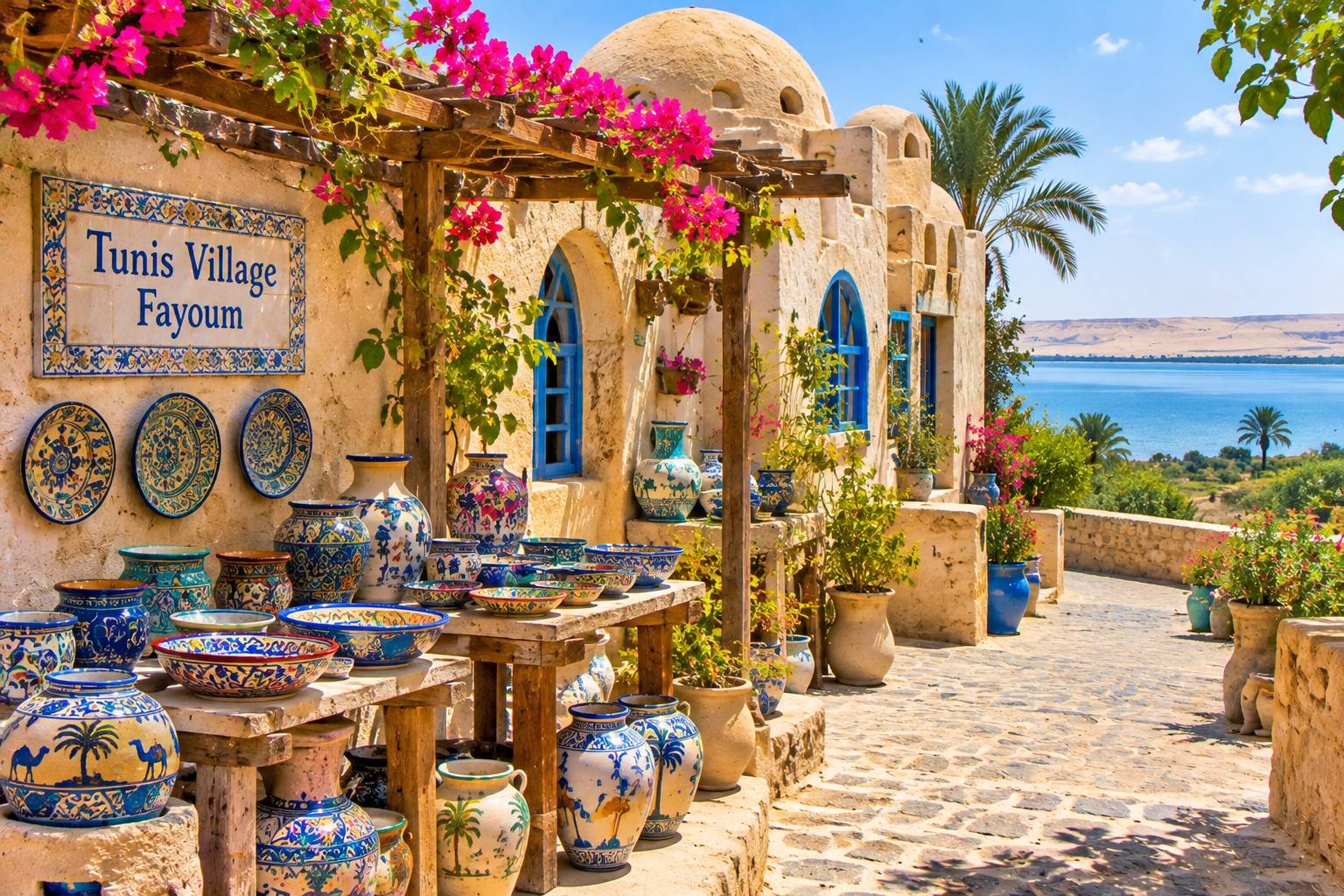
Tunis Village, Fayoum – The Ultimate Visitor Guide to Egypt’s Famous Pottery Village
Tunis Village, Fayoum – The Ultimate Visitor Guide to Egypt’s Famous Pottery Village
Introduction: Discover the Artistic Heart of Fayoum
Away from the busy streets of Cairo and Egypt’s famous archaeological attractions, Tunis Village offers a completely different travel experience. Located in Fayoum Governorate, overlooking the beautiful waters of Lake Qarun, this charming village is known for its handmade pottery, creative workshops, traditional-style architecture and peaceful countryside atmosphere.
Tunis Village has become one of Egypt’s most interesting cultural destinations. Visitors come to explore pottery studios, meet local artisans, discover handmade crafts, enjoy scenic lake views and experience a slower side of Egyptian life.
Whether you are interested in art, photography, culture, nature or a relaxing weekend escape, Tunis Village deserves a place on your Fayoum itinerary.
In this guide, you will discover the history of Tunis Village, its pottery traditions, the best things to do, nearby attractions, how to get there from Cairo and practical tips for planning your visit.
1. Where Is Tunis Village in Egypt?
Tunis Village is located in Fayoum Governorate, southwest of Cairo, on elevated land overlooking the southern side of Lake Qarun.
Its location gives visitors beautiful views of the lake, surrounding agricultural areas and the desert landscape beyond. The village is also conveniently positioned for exploring several of Fayoum’s most famous natural and cultural attractions.
Location: Fayoum Governorate, Egypt
Main landmark: Lake Qarun
Approximate journey from Cairo: Around 1.5–2.5 hours by road, depending on your starting point, traffic and route
Recommended visit: Half a day to a full day, or an overnight stay
Tunis Village is often combined with a wider Fayoum excursion that includes Lake Qarun, Wadi El Rayan, Magic Lake and other natural attractions.
2. The Story Behind Tunis Village
Tunis Village was once a quiet rural community associated mainly with farming and fishing. Its transformation into a recognized artistic destination is closely connected to Swiss potter Evelyne Porret, who settled in the area and helped introduce pottery education to local children.
Her work encouraged a new generation of artisans to develop ceramic-making skills. Some of those students eventually established their own workshops, helping pottery become an important part of the village's identity and local economy.
Today, visitors can find independent pottery studios and workshops displaying handmade plates, bowls, cups, decorative objects and colorful ceramic pieces.
The village's story is an inspiring example of how art, education and local entrepreneurship can help create new opportunities for a rural community.
3. Why Is Tunis Village Famous?
Tunis Village is especially famous for its pottery and artistic atmosphere, but there are several reasons why travelers enjoy visiting.
Traditional Handmade Pottery
Pottery is the village's best-known attraction. Local artisans produce ceramic objects in different shapes, sizes and designs. Many pieces feature colorful decorations inspired by nature, animals, birds, fish and everyday rural life.
Independent Art Studios
Walking through the village, visitors can discover small studios where pottery is produced, painted and displayed. Each workshop may have its own style and collection.
Mud-Brick Architecture
The village is known for earthy buildings, traditional-inspired designs, domed roofs, courtyards and gardens. These architectural features create a distinctive atmosphere that blends with the surrounding countryside.
Lake Qarun Views
The elevated location provides beautiful views across Lake Qarun, particularly in the softer light of the early morning and late afternoon.
Peaceful Countryside
Compared with Cairo, Tunis Village offers a slower pace of life, open landscapes and an opportunity to enjoy rural Egyptian culture.
4. Best Things to Do in Tunis Village
1. Visit the Local Pottery Workshops
Exploring the pottery studios is one of the most rewarding experiences in Tunis Village.
You can browse handmade ceramic collections, observe the work of local artisans where workshops welcome visitors, and learn about the different stages of pottery production.
You may find:
-
Handmade plates and serving dishes.
-
Decorative ceramic bowls.
-
Colorful cups and mugs.
-
Painted animal and nature designs.
-
Vases and home decorations.
-
Unique souvenirs made by local craftspeople.
Buying directly from a working studio is also a meaningful way to support local artisans.
2. Try a Pottery-Making Experience
Some workshops offer visitors the opportunity to try working with clay under the guidance of an artisan.
Depending on availability, you may learn how to shape clay on a pottery wheel, form a simple object or decorate a ceramic piece.
These experiences can be particularly enjoyable for families and travelers interested in creative activities.
Arrange your session in advance because availability, duration and prices vary between workshops.
3. Walk Through the Village
Take time to explore the village on foot. Its small lanes, gardens, studios and distinctive buildings make it an enjoyable place for a relaxed walk.
Rather than visiting only one shop, explore several studios and discover the different styles created by local artists.
Remember to ask permission before photographing artisans or entering private workshops.
4. Enjoy Views of Lake Qarun
Lake Qarun is one of Fayoum's most recognizable natural landmarks. From Tunis Village, visitors can enjoy views of its waters and the surrounding landscape.
The lake is particularly attractive during sunrise and sunset, when changing light creates beautiful opportunities for photography.
5. Discover Local Food and Rural Hospitality
Tunis Village has guesthouses and small places to eat where visitors can enjoy a more relaxed countryside atmosphere.
Depending on the establishment, you may find traditional Egyptian dishes, homemade bread, local cheese, fresh vegetables and simple country-style meals.
Food availability and menus vary, so check with your chosen restaurant or accommodation before visiting.
6. Enjoy Photography
Tunis Village offers plenty of photography opportunities, including pottery displays, colorful ceramic designs, traditional-style buildings, gardens, village lanes and Lake Qarun viewpoints.
The best light is generally in the early morning or late afternoon.
5. The Famous Pottery of Tunis Village
The pottery of Tunis Village is more than a souvenir. It represents the development of a local craft community and the skills passed between generations of artisans.
The village's ceramic style is often recognized by its colorful painted surfaces, nature-inspired decorations and handmade character.
Unlike mass-produced factory items, handmade pieces can show small variations in shape, color and decoration. These differences are part of their individual character.
What Can You Buy?
Popular items include:
-
Ceramic plates.
-
Decorative bowls.
-
Coffee cups and mugs.
-
Vases.
-
Small animal figures.
-
Wall decorations.
-
Handmade gifts and souvenirs.
Tips for Buying Pottery
Before purchasing, compare pieces from different studios. Ask whether an item is handmade, how it should be cleaned and whether it is suitable for food use.
If you plan to travel by air, ask the seller to wrap fragile pieces securely. Keep valuable or delicate items in suitable hand luggage whenever possible.
6. Lake Qarun: The Natural Landmark Near Tunis Village
Lake Qarun is an important part of the Fayoum landscape and one of the reasons Tunis Village is so attractive to visitors.
The lake is known for its natural scenery, birdlife and long history. It is also associated with the ancient landscape of the Fayoum Depression.
Visitors can enjoy the lake from different viewpoints around the area. Activities and access arrangements depend on the specific location and local conditions.
If you are interested in nature and photography, consider including time around Lake Qarun as part of your visit to Tunis Village.
Read our related guide: Lake Qarun, Fayoum – The Ultimate Visitor Guide (add this internal link when the article is published).
7. Nearby Attractions to Combine with Tunis Village
One of the biggest advantages of visiting Tunis Village is its location near several of Fayoum's most interesting attractions.
Magic Lake
Magic Lake is known for its desert setting, surrounding sand dunes and changing water colors under different lighting conditions.
Read our guide: Magic Lake Fayoum – The Ultimate Visitor Guide
Wadi El Rayan Waterfalls
Wadi El Rayan is famous for its lakes and waterfalls, creating a striking contrast with the surrounding desert landscape.
Read our guide: Wadi El Rayan Waterfalls – The Ultimate Travel Guide
Wadi El Hitan – Valley of the Whales
Wadi El Hitan is a UNESCO World Heritage Site famous for its fossil remains of ancient whales and evidence of the evolutionary history of whales.
Read our guide: Wadi El Hitan – Valley of the Whales
Mudawara Mountain
Mudawara Mountain is a scenic rocky landmark overlooking the Lower Lake of Wadi El Rayan. It is popular for panoramic desert views and photography.
Read our guide: Mudawara Mountain, Fayoum – The Ultimate Visitor Guide
Qasr Qarun Temple
Qasr Qarun is an ancient temple complex in the Fayoum region, offering an opportunity to explore another side of the area's historical heritage.
Consider combining it with Tunis Village if you are planning a longer cultural tour.
8. Suggested One-Day Tunis Village and Fayoum Itinerary
If you are traveling from Cairo, Tunis Village can be included in a full-day private excursion.
Morning – Departure from Cairo
Meet your driver and travel to Fayoum in a private air-conditioned vehicle.
Late Morning – Tunis Village
Explore the village, visit pottery workshops, meet local artisans and enjoy time browsing handmade ceramics.
Lunch – Local Restaurant or Guesthouse
Enjoy a relaxed lunch featuring Egyptian food and countryside hospitality.
Afternoon – Lake Qarun
Continue to a suitable viewpoint around Lake Qarun for scenic views and photography.
Optional Extension – Wadi El Rayan
If time permits, continue to Wadi El Rayan to discover its lakes and waterfalls.
Evening – Return to Cairo
After a day exploring Fayoum, return to Cairo with your driver.
The itinerary can be adjusted depending on your interests, available time and road conditions.
9. Best Time to Visit Tunis Village
The cooler months from October to April are generally comfortable for exploring Tunis Village and the wider Fayoum region.
Autumn: October and November
A pleasant period for walking around the village, exploring workshops and enjoying the countryside.
Winter: December to February
Daytime temperatures can be comfortable, while evenings may become cold. Bring an extra layer of clothing.
Spring: March and April
A good time for outdoor exploration and photography, although temperatures can begin to rise.
Summer: May to September
The weather can be very hot, particularly around midday. If visiting during summer, plan outdoor activities for the morning and late afternoon.
10. How to Get to Tunis Village from Cairo
The most convenient way to reach Tunis Village from Cairo is by private vehicle.
A private transfer gives you flexibility to stop for photographs, explore nearby attractions and adjust the schedule.
You can also travel to Fayoum by public transport and arrange local transportation, but this may require additional planning.
For travelers who want to visit several attractions in one day, a private tour is usually the more convenient option.
11. Practical Travel Tips
Before visiting Tunis Village, keep these points in mind:
-
Carry some Egyptian cash for small purchases and workshops.
-
Ask about pottery workshop availability before traveling.
-
Request permission before photographing people or private studios.
-
Wear comfortable walking shoes.
-
Bring sun protection during warmer months.
-
Pack fragile pottery carefully for the return journey.
-
Allow enough time to explore more than one workshop.
-
If staying overnight, confirm accommodation arrangements in advance.
12. Is Tunis Village Worth Visiting?
Absolutely. Tunis Village offers a different perspective on Egypt, away from the country's major archaeological attractions.
It is an excellent destination for visitors who appreciate handmade crafts, local culture, rural architecture, peaceful scenery and authentic experiences.
The village also works well as part of a wider Fayoum itinerary, especially when combined with Lake Qarun, Wadi El Rayan and Wadi El Hitan.
For travelers who want to discover more than Egypt's famous monuments, Tunis Village is a memorable addition to their journey.
Frequently Asked Questions About Tunis Village
1. Where is Tunis Village located?
Tunis Village is in Fayoum Governorate, southwest of Cairo, overlooking Lake Qarun.
2. What is Tunis Village famous for?
It is famous for its pottery workshops, handmade ceramics, local artists, traditional-style buildings and peaceful countryside atmosphere.
3. Who introduced pottery to Tunis Village?
Swiss potter Evelyne Porret played a major role in developing pottery education in the village and training local children.
4. Can tourists try making pottery?
Some local workshops offer pottery-making experiences. Availability, prices and session arrangements vary, so advance confirmation is recommended.
5. How far is Tunis Village from Cairo?
The journey is generally around 1.5–2.5 hours by road, depending on the starting point, traffic and route.
6. Can I visit Tunis Village in one day?
Yes. A day trip is possible, although an overnight stay allows more time to enjoy the village and explore nearby attractions.
7. Is Tunis Village suitable for families?
Yes. Families can enjoy pottery workshops, village walks, local food and scenic views. Confirm age requirements with individual workshops before booking.
8. What can I buy in Tunis Village?
Visitors can buy handmade ceramic plates, bowls, mugs, vases, decorative objects and other locally produced pottery.
9. Can Tunis Village be combined with Wadi El Rayan?
Yes. Tunis Village can be included in a wider Fayoum itinerary with Wadi El Rayan, depending on the available time and route.
10. What is the best time to visit?
October to April is generally the most comfortable period for outdoor activities in the Fayoum region.
Explore Tunis Village and Fayoum with Let's Explore Egypt Travel
Discover a different side of Egypt with a private journey to Tunis Village and the beautiful landscapes of Fayoum.
With Let's Explore Egypt Travel, you can arrange a private air-conditioned vehicle, flexible sightseeing stops and a personalized itinerary based on your interests.
Whether you want to explore pottery workshops, enjoy Lake Qarun, discover Wadi El Rayan or visit the Valley of the Whales, we can help organize your Fayoum experience.
Explore our Egypt tour packages:
Contact Let's Explore Egypt Travel to plan your private Fayoum day trip from Cairo.
Highlights – Tunis Village, Fayoum
-
Discover Tunis Village, Egypt’s famous pottery and art destination.
-
Explore traditional pottery workshops and handmade ceramic collections.
-
Meet local artisans and learn about their creative traditions.
-
Enjoy an optional hands-on pottery-making experience.
-
Admire colorful ceramics, unique designs and handmade souvenirs.
-
Walk through charming village lanes and traditional-style buildings.
-
Enjoy beautiful views overlooking Lake Qarun.
-
Experience authentic rural Egyptian culture and hospitality.
-
Discover local cafés, guesthouses and countryside restaurants.
-
Capture beautiful photos of pottery, gardens and scenic landscapes.
-
Combine your visit with Magic Lake and Wadi El Rayan.
-
Enjoy a relaxing cultural escape on a private Fayoum day trip from Cairo.