


Qasr Qarun Temple, Fayoum – The Ultimate Visitor Guide
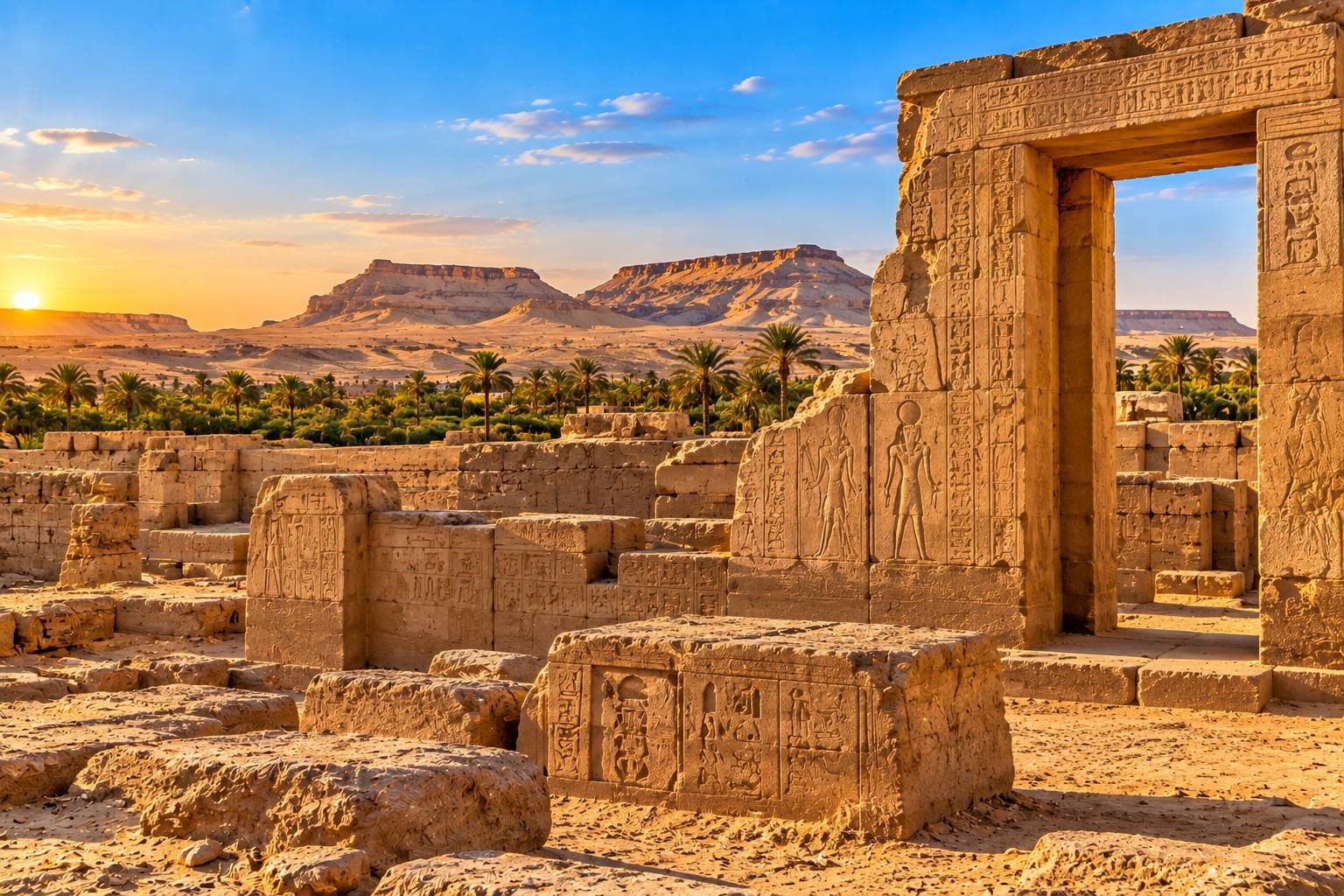
Qasr Qarun Temple, Fayoum – The Ultimate Visitor Guide to Ancient Egypt’s Hidden Temple
Introduction: Discover the Ancient Mystery of Qasr Qarun
Away from Egypt's crowded tourist attractions, on the western side of Lake Qarun in Fayoum, stands one of the region's most fascinating archaeological monuments: Qasr Qarun Temple.
Despite its name, which translates as the Palace of Qarun, this remarkable building is not a medieval palace. It is an ancient temple dating primarily to the Ptolemaic period, with later Roman-period additions to the surrounding religious complex.
The temple is particularly interesting because much of its stone structure has survived. Its thick limestone walls, unusual interior layout, narrow passages and ancient chambers provide visitors with an opportunity to explore a different chapter of Egypt's history.
Qasr Qarun was part of the ancient town of Dionysias, a settlement that once occupied an important position near the western edge of the Fayoum region.
Whether you are interested in ancient Egyptian religion, Greco-Roman history, archaeology or unusual destinations, Qasr Qarun is a rewarding stop on a Fayoum journey.
In this guide, discover the temple's history, architecture, religious significance, things to see, location, visiting information and nearby attractions.
1. Where Is Qasr Qarun Temple Located?
Qasr Qarun Temple is located near the western end of Lake Qarun in Fayoum Governorate, southwest of Cairo.
The archaeological site stands close to the modern village of Qarun, within the remains of the ancient settlement of Dionysias.
Its location makes it an interesting destination for visitors exploring the western side of Fayoum and the surrounding desert landscape.
Location: Qasr Qarun, Yusuf El-Seddiq, Fayoum Governorate, Egypt
Historical setting: Ancient Dionysias
Approximate journey from Cairo: Around 2–3 hours by road, depending on traffic and your starting point
Recommended visit: Approximately 1–2 hours for the temple, with additional time for nearby attractions.
The temple can be combined with Lake Qarun, Tunis Village and other Fayoum archaeological and natural attractions.
2. The History of Qasr Qarun Temple
Qasr Qarun is an important monument from the Ptolemaic period, when Egypt was ruled by a Greek-speaking dynasty following the arrival of Alexander the Great.
The temple's original construction belongs to the Ptolemaic era, although the precise building chronology is not fully established through surviving inscriptions.
The surrounding settlement, known as Dionysias, developed into an important town during the Greco-Roman period.
Its location near the desert frontier was significant because routes connected the Fayoum region with parts of Egypt's Western Desert, including the route towards Bahariya Oasis.
The temple remained an important religious building as the surrounding settlement developed.
The Ptolemaic Period
During the Ptolemaic period, Egyptian religious traditions continued while Greek cultural influences became increasingly visible throughout the country.
Temples served as religious centers, places of ritual activity and important institutions within local communities.
Qasr Qarun reflects this historical period through its architecture and religious associations.
The Roman Period
The surrounding settlement continued to be occupied during Roman rule.
The wider archaeological area includes remains associated with the ancient town, including traces of buildings and a Roman-period fortress.
The combination of Ptolemaic and Roman remains makes the site valuable for understanding the development of the Fayoum region over several centuries.
3. Which Ancient Gods Were Worshipped at Qasr Qarun?
Qasr Qarun is particularly associated with the worship of Sobek, the ancient Egyptian crocodile god.
Sobek was an important deity in the Fayoum region, where water, agriculture and crocodiles played significant roles in local religious traditions.
He was associated with the Nile, fertility, strength and protection.
The Egyptian Ministry of Tourism and Antiquities also describes the temple's religious associations with the Greek god Dionysus.
This reflects the cultural mixture that developed in Egypt during the Ptolemaic and Roman periods.
The temple is therefore an interesting example of the religious world of ancient Fayoum, where Egyptian traditions existed alongside Greek influences.
4. Why Is Qasr Qarun Temple Unique?
Qasr Qarun is different from many of Egypt's larger temples.
Instead of an enormous complex with long open courtyards and monumental columns, it has a compact exterior and a surprisingly complicated interior.
Its surviving structure gives visitors a sense of how ancient religious buildings could be organized around multiple chambers and sacred spaces.
Its Remarkably Preserved Structure
Much of the temple's original stone structure remains standing, including important sections of its walls and roof.
This makes it particularly interesting for visitors who want to see an ancient temple that has retained much of its original architectural form.
Its Unusual Interior Layout
The building contains multiple chambers, corridors and internal levels.
Its layout is more complicated than its simple exterior appearance suggests.
Its Ancient Limestone Construction
The temple was built using large blocks of yellow limestone, creating a distinctive appearance that contrasts with the surrounding desert landscape.
Its Connection with Dionysias
The temple stands within the archaeological setting of an ancient Greco-Roman town, making the wider site historically significant beyond the temple building itself.
5. Best Things to See at Qasr Qarun Temple
1. The Ancient Stone Entrance
Begin your visit at the main entrance, where you can appreciate the temple's compact exterior and substantial stone construction.
Look for the surviving decorative elements above the entrance, including the winged sun motif.
The entrance provides an introduction to the religious symbolism and architectural traditions of the ancient building.
2. The Interior Chambers
One of the most interesting parts of the temple is its interior.
Inside, visitors can explore a series of rooms and connecting passages that lead deeper into the building.
The arrangement of the chambers reflects the religious purpose of the temple and its different sacred spaces.
Some interior areas can be dim, so take care when moving through the building.
3. The Sanctuary
At the innermost part of the temple are the sacred chambers associated with the religious function of the building.
The sanctuary area is particularly important because it represents the central religious space of the temple.
The official description of the temple identifies three chapels within the sanctuary area.
4. The Internal Staircases
The temple's internal staircases are another distinctive feature.
They connect different levels of the structure and demonstrate the unusual vertical arrangement of the building.
Access to certain areas may be restricted depending on conservation and visitor-safety arrangements. Follow the instructions of site staff.
5. The Roof and Upper Structure
The upper parts of the building help visitors understand the temple's original architectural design.
Where access is permitted, the elevated position offers a different perspective on the surrounding archaeological landscape.
Always follow the site guardian's instructions and do not climb into closed or restricted areas.
6. The Surrounding Archaeological Landscape
After exploring the temple, take time to appreciate the wider setting.
The remains of ancient Dionysias extend beyond the main building, offering a glimpse into the history of a settlement that once stood near the desert frontier.
The contrast between ancient stone architecture, desert surroundings and the nearby lake makes the location particularly attractive for photography.
6. The Ancient Town of Dionysias
Qasr Qarun Temple was part of the ancient town of Dionysias.
The town developed during the Greco-Roman period and occupied an important position near the western edge of the Fayoum region.
Its location was connected with routes leading towards Egypt's Western Desert.
Dionysias was more than a religious center. It was also a settlement with residential, military and other community structures.
Today, much of the ancient town survives only as archaeological remains.
What Can Visitors Learn from Dionysias?
The site helps visitors understand:
-
The development of settlements in ancient Fayoum.
-
The relationship between temples and ancient communities.
-
Trade and movement between the Fayoum and Western Desert.
-
The coexistence of Egyptian and Greco-Roman cultural influences.
-
The role of religious buildings in ancient towns.
Exploring the wider archaeological landscape adds another dimension to a visit to Qasr Qarun.
7. The Winter Solstice and Qasr Qarun
Qasr Qarun is sometimes associated with reports of a special solar alignment around the winter solstice.
The winter solstice occurs around December 21 or 22 in the Northern Hemisphere, when the sun reaches its southernmost apparent position in the sky.
The reported alignment has attracted interest from visitors and photographers interested in ancient astronomy and temple orientation.
However, the exact details, timing and visitor arrangements should be confirmed with the Egyptian Ministry of Tourism and Antiquities before planning a special trip around this event.
If you are interested in visiting during the winter solstice, check official announcements rather than assuming a particular event or access schedule will take place.
8. Photography at Qasr Qarun Temple
Qasr Qarun offers excellent opportunities for historical and architectural photography.
Some of the most interesting subjects include:
-
The ancient limestone exterior.
-
The main entrance and decorative details.
-
Interior corridors and chambers, where photography is permitted.
-
The architectural layout of the temple.
-
The surrounding desert landscape.
-
The wider archaeological remains of Dionysias.
Early morning and late afternoon can provide attractive natural light.
Before taking photographs inside the monument, check the current photography rules and any applicable fees.
9. Nearby Attractions to Combine with Qasr Qarun
One of the advantages of visiting Qasr Qarun is its location within the wider Fayoum region.
You can combine the temple with natural landscapes, cultural villages and other archaeological sites.
Lake Qarun
Lake Qarun is one of the most recognizable natural landmarks in Fayoum.
Enjoy scenic viewpoints, discover local fishing culture and explore the lake's environmental and historical importance.
Read our guide: Lake Qarun, Fayoum – The Ultimate Visitor Guide
Tunis Village
Tunis Village is famous for its handmade pottery, artistic workshops and traditional-style buildings.
It is an excellent stop for travelers interested in local culture and handicrafts.
Read our guide: Tunis Village, Fayoum – The Ultimate Visitor Guide
Magic Lake
Magic Lake is known for its desert scenery, surrounding sand dunes and changing water colors under different lighting conditions.
Read our guide: Magic Lake Fayoum – The Ultimate Visitor Guide
Wadi El Rayan Waterfalls
Wadi El Rayan is famous for its lakes and waterfalls, offering a beautiful contrast between water and desert landscapes.
Read our guide: Wadi El Rayan Waterfalls – The Ultimate Travel Guide
Mudawara Mountain
Mudawara Mountain is a scenic rocky landmark overlooking the Lower Lake of Wadi El Rayan.
It is popular for panoramic views and photography.
Read our guide: Mudawara Mountain, Fayoum – The Ultimate Visitor Guide
Wadi El Hitan – Valley of the Whales
Wadi El Hitan is a UNESCO World Heritage Site famous for its prehistoric whale fossils and exceptional evidence of whale evolution.
Read our guide: Wadi El Hitan – Valley of the Whales
10. Suggested One-Day Qasr Qarun and Fayoum Itinerary
If you are traveling from Cairo, Qasr Qarun can be included in a private Fayoum sightseeing tour.
Morning – Departure from Cairo
Meet your driver and travel to Fayoum in a private air-conditioned vehicle.
Late Morning – Qasr Qarun Temple
Explore the ancient temple, discover its chambers and learn about its Ptolemaic and Roman-period history.
Midday – Lake Qarun
Continue to a suitable lakeside viewpoint and enjoy the surrounding scenery.
Lunch – Local Restaurant
Enjoy a relaxed Egyptian lunch in the Fayoum countryside.
Afternoon – Tunis Village
Visit pottery workshops, explore handmade ceramic collections and discover the village's artistic traditions.
Optional Extension – Wadi El Rayan
If time and the route permit, continue to Wadi El Rayan to discover its lakes and waterfalls.
Evening – Return to Cairo
Travel back to Cairo after a day exploring the historical and natural highlights of Fayoum.
The itinerary can be customized depending on your interests, available time and road conditions.
11. Best Time to Visit Qasr Qarun Temple
The cooler months from October to April are generally the most comfortable for visiting Qasr Qarun and exploring the wider Fayoum region.
Autumn: October and November
Pleasant conditions for archaeological sightseeing, photography and exploring nearby attractions.
Winter: December to February
Comfortable daytime weather is common, although mornings and evenings can be cool.
December is also the period when visitors interested in the reported winter-solstice alignment may wish to check official announcements.
Spring: March and April
A good period for combining the temple with outdoor sightseeing around Fayoum.
Summer: May to September
Temperatures can become very high. Plan your visit early in the day, bring drinking water and avoid prolonged exposure to direct sunlight.
12. Opening Hours and Visitor Information
The Egyptian Ministry of Tourism and Antiquities lists Qasr Qarun among the archaeological sites open to visitors.
The published standard visiting hours are:
-
Opening time: 8:00 AM
-
Closing time: 5:00 PM
-
Last admission: One hour before closing, according to the Ministry's site information.
-
Location: Qarun Village, Yusuf El-Seddiq, Fayoum.
Opening arrangements may change during Ramadan, public holidays or special events.
For official visitor information, contact the Egyptian tourism and antiquities hotline at 19654 or check the Ministry's website before traveling.
Ticket prices and eligibility for discounts can change. Confirm the current ticket price at the official ticket office before your visit.
13. How to Get to Qasr Qarun from Cairo
The most convenient way to reach Qasr Qarun from Cairo is by private vehicle.
The journey takes approximately 2–3 hours, depending on traffic, departure location and the route.
A private vehicle is particularly useful if you want to combine Qasr Qarun with other Fayoum attractions.
You can also travel to Fayoum using public transport and arrange local transportation, but visiting several locations in one day may require additional planning.
For a comfortable experience, consider arranging a private air-conditioned vehicle with a driver who knows the Fayoum region.
14. Practical Travel Tips
Before visiting Qasr Qarun, keep these recommendations in mind:
-
Wear comfortable walking shoes.
-
Bring drinking water, especially during warmer months.
-
Carry sun protection and a hat.
-
Take care when walking through dark or uneven interior areas.
-
Follow the site guardian's instructions.
-
Do not touch or damage ancient stone surfaces.
-
Respect restricted areas and conservation barriers.
-
Check photography rules before taking pictures inside.
-
Confirm opening hours and ticket prices before departure.
-
Allow additional time if combining the temple with other Fayoum attractions.
15. Is Qasr Qarun Temple Worth Visiting?
Absolutely. Qasr Qarun is one of Fayoum's most interesting historical attractions and an excellent destination for travelers who want to explore ancient Egypt beyond the country's most famous monuments.
Its unusual architecture, surviving interior chambers and connection with the ancient town of Dionysias make it a rewarding experience for visitors interested in archaeology and history.
The temple also offers a different atmosphere from the large and crowded archaeological complexes elsewhere in Egypt.
When combined with Lake Qarun, Tunis Village and other Fayoum attractions, it becomes an important part of a memorable cultural and countryside journey.
Frequently Asked Questions About Qasr Qarun Temple
1. Where is Qasr Qarun Temple located?
Qasr Qarun Temple is located near the western end of Lake Qarun in Fayoum Governorate, Egypt.
2. What is Qasr Qarun Temple famous for?
It is famous for its remarkably preserved Ptolemaic-period stone structure, unusual interior chambers, staircases and religious history.
3. When was Qasr Qarun Temple built?
The temple dates primarily to the Ptolemaic period. Its exact construction date has not been established conclusively.
4. Which god was worshipped at Qasr Qarun?
The temple is particularly associated with Sobek, the ancient Egyptian crocodile god. The Egyptian Ministry of Tourism and Antiquities also mentions Dionysus in its description of the temple's religious associations.
5. What was the ancient town near Qasr Qarun called?
The temple stood within the ancient town of Dionysias, an important settlement near the western edge of the Fayoum region.
6. How long should I spend at Qasr Qarun?
Allow approximately one to two hours to explore the temple and appreciate its architecture and archaeological setting.
7. Can I visit Qasr Qarun from Cairo in one day?
Yes. Qasr Qarun can be visited as part of a private day trip from Cairo, particularly when combined with selected nearby attractions.
8. What are the opening hours of Qasr Qarun?
The Ministry of Tourism and Antiquities lists standard visiting hours as 8:00 AM to 5:00 PM. Confirm current arrangements before traveling.
9. Is Qasr Qarun the same as a palace?
No. Despite its Arabic name, which translates as Palace of Qarun, the monument is an ancient temple.
10. What attractions are near Qasr Qarun?
Nearby attractions include Lake Qarun, Tunis Village, Wadi El Rayan, Magic Lake, Mudawara Mountain and Wadi El Hitan.
11. Is Qasr Qarun suitable for families?
Families interested in history and archaeology can enjoy the site. However, some interior passages and staircases may be dark or uneven, so supervise children carefully and follow site instructions.
12. Can I combine Qasr Qarun with Tunis Village?
Yes. Both attractions can be included in a Fayoum itinerary, along with Lake Qarun and other nearby destinations.
Explore Qasr Qarun and Fayoum with Let's Explore Egypt Travel
Discover the fascinating history and natural beauty of Fayoum with Let's Explore Egypt Travel.
Our private Fayoum excursions can combine ancient archaeological sites, scenic lakes, traditional villages and desert landscapes.
Explore Qasr Qarun Temple, discover the history of ancient Dionysias, enjoy Lake Qarun and visit the famous pottery workshops of Tunis Village.
Your private Fayoum experience can include:
-
Private air-conditioned transportation.
-
Flexible sightseeing itinerary.
-
Visits to selected historical and natural attractions.
-
Professional licensed Egyptologist guide, subject to your chosen package.
-
Pickup and drop-off in Cairo.
Explore our Egypt tour packages:
Contact Let's Explore Egypt Travel to plan your private Fayoum day trip from Cairo.
Highlights – Karanis (Kom Oshim), Fayoum
-
Discover Karanis, one of Fayoum’s most important Greco-Roman archaeological sites.
-
Explore the remains of an ancient agricultural town dating back to the Ptolemaic period.
-
Visit the ancient northern and southern temple complexes.
-
Discover the religious traditions of ancient Egyptian and Greco-Roman communities.
-
Explore ancient houses, streets and residential buildings.
-
Learn about everyday life in ancient Egypt through archaeological discoveries.
-
Discover pottery, tools, coins and household objects from the ancient settlement.
-
Visit Kom Oshim Museum and explore Fayoum’s archaeological heritage.
-
Learn about the famous Fayoum mummy portraits and Roman-era art.
-
Capture photographs of ancient ruins and historic architecture.
-
Combine your visit with Lake Qarun, Qasr Qarun Temple and Tunis Village.
-
Experience Fayoum’s fascinating history on a private archaeological tour from Cairo.
Highlights – Qasr Qarun Temple, Fayoum
-
Discover Qasr Qarun, one of Fayoum’s most fascinating ancient temples.
-
Explore a remarkably preserved Ptolemaic-period limestone structure.
-
Learn about the ancient town of Dionysias and its historical importance.
-
Discover the temple’s connection with Sobek, the ancient Egyptian crocodile god.
-
Explore ancient chambers, narrow corridors and internal staircases.
-
Admire the temple’s ancient entrance and architectural details.
-
Discover the religious traditions of Ptolemaic and Roman-period Egypt.
-
Learn about the reported winter solstice solar alignment.
-
Enjoy photography of the temple and surrounding desert landscape.
-
Visit nearby Lake Qarun and discover its natural beauty.
-
Combine your visit with Tunis Village and its famous pottery workshops.
-
Explore Fayoum’s historical and natural attractions on a private day trip from Cairo.