


Karanis Fayoum: Explore the Ancient City of Kom Oshim
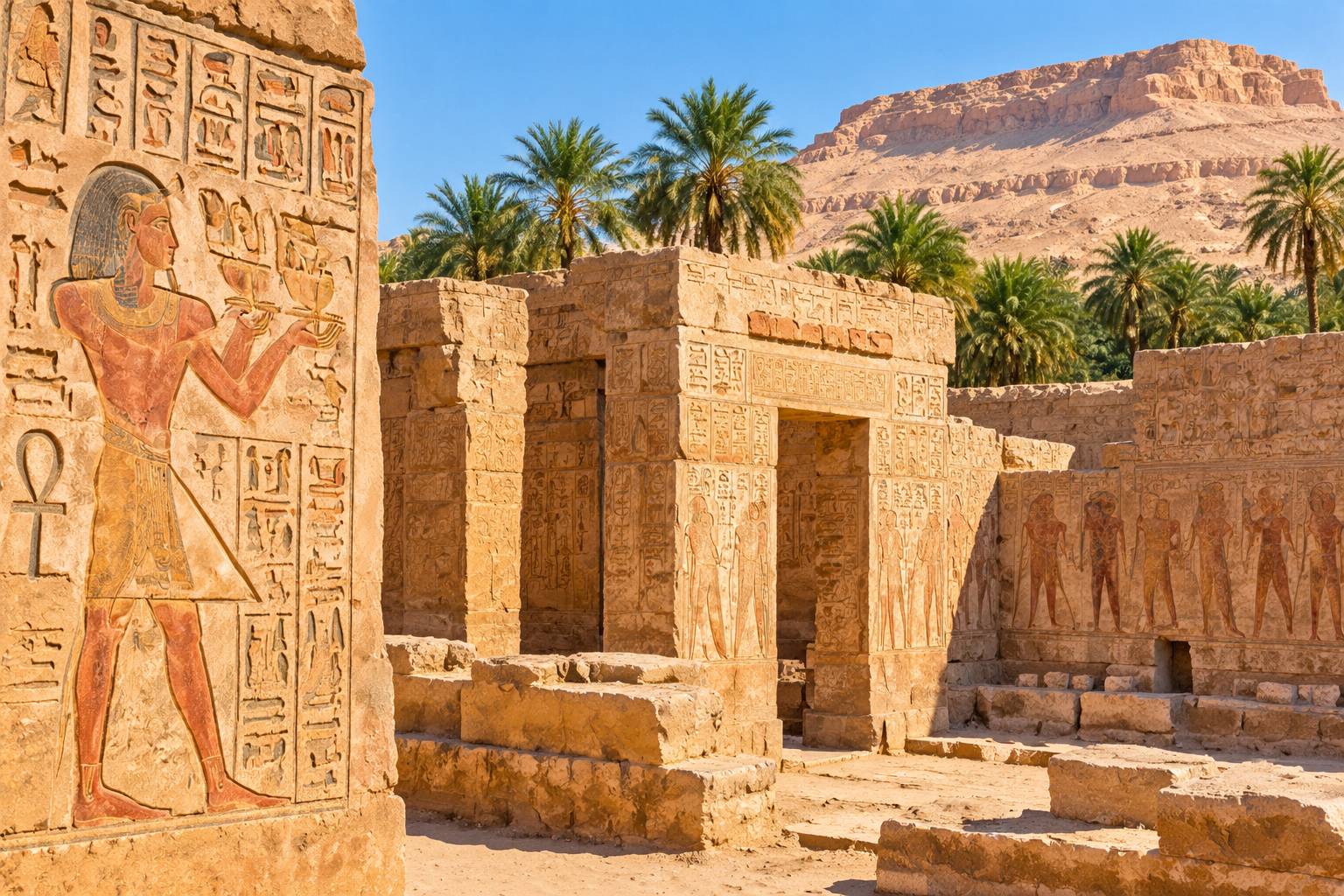
Karanis (Kom Oshim), Fayoum – The Ultimate Visitor Guide to Ancient Greco-Roman Egypt
Introduction: Discover the Ancient City of Karanis
The Fayoum region is home to some of Egypt's most fascinating archaeological treasures, and one of its most important historical sites is Karanis, also known as Kom Oshim.
Located near the northern entrance to Fayoum, Karanis was once a thriving agricultural town during the Greco-Roman period. Its remains provide a remarkable picture of everyday life in ancient Egypt, including homes, temples, streets and objects used by ordinary people.
Unlike the monumental temples and royal tombs found in other parts of Egypt, Karanis offers a different experience. It allows visitors to explore the remains of a community where people lived, worked, worshipped and traded more than two thousand years ago.
The archaeological site is particularly valuable because it preserves evidence of daily life during the Ptolemaic and Roman periods. Its two temples, residential remains and archaeological discoveries make it an interesting destination for history enthusiasts and cultural travelers.
In this guide, you will discover the history of Karanis, its temples, archaeological importance, what to see, how to get there and which Fayoum attractions you can combine with your visit.
1. Where Is Karanis (Kom Oshim) Located?
Karanis is located near the modern town of Kom Oshim in Fayoum Governorate, southwest of Cairo.
Its position near the northern entrance to the Fayoum Depression made it an important settlement connected with the agricultural and economic life of the region.
The site is relatively accessible from Cairo and can be included in a day trip to Fayoum.
Location: Kom Oshim, Fayoum Governorate, Egypt
Historical name: Karanis
Historical period: Primarily Ptolemaic and Roman
Approximate journey from Cairo: Around 1.5–2.5 hours by road, depending on traffic and your starting point
Recommended visit: Approximately 1–2 hours for the archaeological site, with additional time for nearby attractions.
2. The History of Karanis
Karanis was established during the Ptolemaic period, when Egypt was ruled by the Greek-speaking dynasty founded after Alexander the Great.
The town became an important agricultural settlement within the Fayoum region.
Its development was closely connected with the expansion of agriculture and irrigation projects that transformed parts of the Fayoum Depression into productive farmland.
During the Roman period, Karanis continued to grow and remained an important rural community.
Archaeological discoveries show that the town had residential buildings, religious structures, workshops and facilities connected with daily life.
The settlement was occupied for several centuries before gradually declining.
Karanis During the Ptolemaic Period
The Ptolemaic rulers invested in the development of the Fayoum region, encouraging agricultural expansion and the establishment of new settlements.
Karanis became part of this wider development.
Its inhabitants included people involved in farming, trade and other occupations that supported the local economy.
Karanis During the Roman Period
The town continued to flourish during Roman rule.
The archaeological remains reveal how Egyptian and Greco-Roman traditions influenced local architecture, religious practices and everyday life.
Karanis is particularly valuable because it provides evidence about ordinary residents rather than focusing exclusively on kings, rulers and monumental religious buildings.
3. Why Is Karanis Archaeologically Important?
Karanis is one of the most interesting archaeological sites in Fayoum because it provides a detailed picture of an ancient agricultural town.
The remains help archaeologists understand how people organized their homes, managed resources and participated in local religious and economic activities.
The site is particularly important for several reasons:
-
It preserves evidence of a Ptolemaic and Roman-period settlement.
-
It contains remains of ancient residential buildings.
-
It includes two important temple complexes.
-
It provides evidence of ancient agriculture and rural life.
-
Archaeological excavations uncovered everyday objects and written documents.
-
It demonstrates the cultural mixture of ancient Egypt during the Greco-Roman period.
Karanis is an excellent destination for visitors who want to understand how ordinary communities lived in ancient Egypt.
4. The Ancient Temples of Karanis
Two important temple complexes are among the main attractions at Karanis.
These religious structures reflect the spiritual traditions of the local community and the influence of Egyptian religious beliefs during the Ptolemaic and Roman periods.
The Northern Temple
The northern temple is one of the principal religious structures within the archaeological site.
It is associated with the worship of Egyptian deities, particularly Sobek, the crocodile god connected with water, fertility and protection.
The remains help visitors appreciate the religious importance of the settlement and the architectural traditions of the period.
The Southern Temple
The southern temple is another important structure at Karanis.
Its remains provide further evidence of the town's religious organization and the importance of temples within local communities.
Both temple complexes contribute to the archaeological value of the site.
Visitors should follow the site's access instructions and respect any areas restricted for conservation.
5. Best Things to See at Karanis
1. The Ancient Residential District
One of the most interesting features of Karanis is its residential area.
The remains of houses reveal how ordinary people organized their living spaces.
You can observe sections of walls, building foundations and architectural details that help reconstruct the appearance of the ancient town.
2. The Ancient Temples
Explore the remains of the northern and southern temple complexes.
These structures provide insight into the religious life of the inhabitants and the connection between Egyptian traditions and Greco-Roman culture.
3. Ancient Streets and Building Foundations
Walking through the archaeological site gives visitors an impression of the original town layout.
The remains of streets and buildings show how the settlement developed over time.
4. Archaeological Remains and Everyday Objects
Excavations at Karanis uncovered a wide range of objects connected with daily life.
These discoveries include pottery, tools, household objects, coins and written documents.
They provide important evidence about the economy, social organization and cultural life of the town.
5. Traditional Building Materials
Many surviving structures were built using mudbrick, a common construction material in ancient Egyptian settlements.
The remains demonstrate how local materials and building techniques were adapted to the environment.
6. Photography Opportunities
Karanis offers interesting photography opportunities for visitors who appreciate archaeology and ancient architecture.
You can photograph the surviving structures, temple remains, ancient walls and surrounding desert landscape, subject to current site rules.
6. Kom Oshim Museum: Discover the History of Fayoum
A visit to Karanis can be combined with the Kom Oshim Museum, located near the archaeological site.
The museum displays archaeological objects from Fayoum and helps visitors understand the history of the region.
Its collections include objects connected with daily life, religion, art and the archaeological heritage of the area.
Depending on the current exhibition arrangements, visitors may see pottery, statues, tools and other discoveries from Fayoum's ancient settlements.
Why Visit the Museum?
The museum provides valuable context before or after exploring Karanis.
Seeing objects recovered from archaeological sites helps visitors understand how ancient communities lived and what they used in their daily activities.
Check current museum opening arrangements before planning your visit.
7. The Famous Fayoum Portraits and Karanis
One of the most fascinating discoveries associated with the archaeological history of Karanis and other Fayoum sites is the group of ancient painted mummy portraits commonly known as the Fayoum portraits.
These remarkable paintings were produced during the Roman period and placed over the faces of mummies.
They are among the most important examples of portrait painting from the ancient Mediterranean world.
The portraits demonstrate the cultural mixture that existed in Roman Egypt, combining Egyptian funerary traditions with artistic styles influenced by the wider Greco-Roman world.
Although Fayoum portraits were discovered at several locations across the region, they should not all be attributed specifically to Karanis.
Their broader connection with the Fayoum makes them an important subject when exploring the area's ancient history.
8. Daily Life in Ancient Karanis
Karanis is particularly interesting because its archaeological remains reveal the everyday activities of its inhabitants.
Agriculture
Agriculture was central to the town's economy.
The fertile Fayoum region supported the cultivation of crops, and irrigation was essential to agricultural production.
Trade and Markets
The town participated in local economic networks through the exchange of agricultural products, household goods and other commodities.
Religion
Temples played an important role in community life.
The inhabitants worshipped Egyptian deities within a cultural environment influenced by Greek and Roman traditions.
Homes and Families
The surviving houses provide evidence about domestic architecture and family life.
Their layouts help archaeologists understand how residents used their living spaces.
Written Documents
Documents recovered from archaeological sites in Fayoum provide valuable information about taxation, administration, agriculture and personal affairs during the Greco-Roman period.
Together, these discoveries make Karanis an important source for understanding ancient rural society.
9. Nearby Attractions to Combine with Karanis
A visit to Karanis can be part of a wider Fayoum cultural and natural tour.
Lake Qarun
Lake Qarun is one of Fayoum's most recognizable natural landmarks.
Enjoy its scenic landscapes, discover local fishing culture and learn about the lake's historical significance.
Read our guide: Lake Qarun, Fayoum – The Ultimate Visitor Guide
Qasr Qarun Temple
Qasr Qarun is a remarkable ancient temple near the western side of Lake Qarun.
Its Ptolemaic-period architecture, interior chambers and connection with ancient Dionysias make it an interesting historical stop.
Read our guide: Qasr Qarun Temple – The Ultimate Visitor Guide
Tunis Village
Tunis Village is famous for handmade pottery, artistic workshops and traditional-style architecture.
It is an excellent place to discover local culture and buy handmade ceramic souvenirs.
Read our guide: Tunis Village, Fayoum – The Ultimate Visitor Guide
Wadi El Rayan Waterfalls
Wadi El Rayan is famous for its lakes and waterfalls, creating a beautiful contrast with the surrounding desert landscape.
Read our guide: Wadi El Rayan Waterfalls – The Ultimate Travel Guide
Magic Lake
Magic Lake is known for its desert scenery, surrounding sand dunes and changing water colors under different lighting conditions.
Read our guide: Magic Lake Fayoum – The Ultimate Visitor Guide
Mudawara Mountain
Mudawara Mountain is a scenic rocky landmark overlooking the Lower Lake of Wadi El Rayan.
Read our guide: Mudawara Mountain, Fayoum – The Ultimate Visitor Guide
Wadi El Hitan – Valley of the Whales
Wadi El Hitan is a UNESCO World Heritage Site famous for its prehistoric whale fossils and exceptional evidence of whale evolution.
Read our guide: Wadi El Hitan – Valley of the Whales
10. Suggested One-Day Karanis and Fayoum Itinerary
Karanis is located near the northern entrance to Fayoum, making it a practical starting point for a day of sightseeing from Cairo.
Morning – Departure from Cairo
Meet your driver and travel to Fayoum in a private air-conditioned vehicle.
Late Morning – Karanis Archaeological Site
Explore the remains of the ancient town, including its residential areas, temple structures and archaeological features.
Midday – Kom Oshim Museum
Visit the museum to discover archaeological objects and learn more about the history of Fayoum.
Lunch – Local Restaurant
Enjoy a relaxed Egyptian lunch before continuing your journey.
Afternoon – Lake Qarun or Tunis Village
Choose between exploring the lake's scenic surroundings or visiting Tunis Village and its pottery workshops.
Optional Extension – Qasr Qarun
If time and the route permit, add a visit to the ancient temple near the western side of Lake Qarun.
Evening – Return to Cairo
Travel back to Cairo after a day exploring the history and landscapes of Fayoum.
The itinerary can be adjusted according to your interests, available time and opening arrangements.
11. Best Time to Visit Karanis
The cooler months from October to April are generally the most comfortable for visiting Karanis and exploring the wider Fayoum region.
Autumn: October and November
A pleasant period for archaeological sightseeing and outdoor photography.
Winter: December to February
Comfortable daytime temperatures are common, although mornings and evenings can be cool.
Spring: March and April
A good time for combining archaeological visits with outdoor sightseeing.
Summer: May to September
Temperatures can become very high, especially around midday. Visit early in the morning, bring drinking water and wear sun protection.
12. Opening Hours and Visitor Information
Karanis and Kom Oshim Museum are archaeological and cultural attractions in Fayoum.
Opening hours, ticket prices and access arrangements can change, including during public holidays and special occasions.
Before traveling, confirm:
-
Current archaeological-site opening hours.
-
Museum opening hours.
-
Admission fees for foreign and Egyptian visitors.
-
Photography regulations.
-
Whether any areas are temporarily closed.
For official information, contact the Egyptian tourism and antiquities hotline at 19654 or check the Ministry of Tourism and Antiquities website.
Allow approximately one to two hours for Karanis, with extra time for the museum if it is open and included in your itinerary.
13. How to Get to Karanis from Cairo
The easiest way to reach Karanis from Cairo is by private vehicle.
The archaeological site is near Kom Oshim, close to the northern entrance of Fayoum.
A private vehicle allows you to explore Karanis, visit the museum and continue to other attractions without depending on public transport connections.
Public transport to Fayoum is also possible, followed by local transportation to Kom Oshim. However, this option may require additional planning.
For travelers who want to visit several locations in one day, private air-conditioned transportation is a convenient choice.
14. Practical Travel Tips
Before visiting Karanis, consider these recommendations:
-
Wear comfortable walking shoes.
-
Bring drinking water, particularly during warmer months.
-
Carry a hat and sun protection.
-
Allow sufficient time to explore the archaeological remains.
-
Check the museum's opening arrangements before traveling.
-
Follow the instructions of site staff.
-
Do not touch or remove archaeological objects.
-
Respect restricted areas and conservation barriers.
-
Confirm ticket prices and photography rules in advance.
-
Consider combining Karanis with other nearby Fayoum attractions.
15. Is Karanis Worth Visiting?
Absolutely. Karanis is one of the most interesting archaeological destinations in Fayoum for visitors who want to understand everyday life in ancient Egypt.
Its residential remains, temples, archaeological discoveries and connection with the Greco-Roman period make it different from Egypt's larger and more famous monuments.
The nearby Kom Oshim Museum adds another dimension to the experience by presenting objects and discoveries from the region.
If you are interested in ancient history, archaeology and cultural travel, Karanis deserves a place on your Fayoum itinerary.
Frequently Asked Questions About Karanis (Kom Oshim)
1. Where is Karanis located?
Karanis is located near the modern town of Kom Oshim in Fayoum Governorate, southwest of Cairo.
2. What is Karanis famous for?
It is famous for its Ptolemaic and Roman-period archaeological remains, including residential buildings, temples and discoveries connected with everyday life.
3. When was Karanis established?
Karanis was established during the Ptolemaic period and continued to develop during Roman rule.
4. What are the main attractions at Karanis?
The main attractions include the ancient residential remains, northern and southern temple complexes and the wider archaeological landscape.
5. Can I visit Kom Oshim Museum?
The museum is located near the archaeological site and can be included in your visit, subject to current opening arrangements.
6. What is the connection between Karanis and the Fayoum portraits?
The famous Fayoum mummy portraits were discovered at several locations in the region. They reflect the artistic and cultural traditions of Roman Egypt, but not all were found specifically at Karanis.
7. How long should I spend at Karanis?
Allow around one to two hours for the archaeological site. Add more time if you plan to visit Kom Oshim Museum.
8. Can I visit Karanis from Cairo in one day?
Yes. Karanis is suitable for a day trip from Cairo, especially when combined with selected attractions in Fayoum.
9. What attractions are near Karanis?
Nearby destinations include Lake Qarun, Qasr Qarun Temple, Tunis Village and other Fayoum attractions.
10. Is Karanis suitable for families?
Yes, especially for families interested in history and archaeology. Children should be supervised around uneven ground and ancient structures.
11. Is Karanis an Egyptian or Greek archaeological site?
Karanis developed under the Ptolemaic rulers of Egypt and continued during Roman rule. Its archaeological remains reflect a mixture of Egyptian and Greco-Roman cultural influences.
12. What should I bring when visiting Karanis?
Bring drinking water, comfortable shoes, sun protection and a camera if photography is permitted.
Explore Karanis and Fayoum with Let's Explore Egypt Travel
Discover the archaeological treasures and natural beauty of Fayoum with Let's Explore Egypt Travel.
Our private Fayoum excursions can combine ancient archaeological sites, scenic lakes, traditional villages and desert landscapes.
Explore Karanis, discover the history of ancient Dionysias and visit other remarkable destinations throughout Fayoum.
Your private Fayoum experience can include:
-
Private air-conditioned transportation.
-
Flexible sightseeing itinerary.
-
Visits to selected historical and natural attractions.
-
Professional licensed Egyptologist guide, subject to your chosen package.
-
Pickup and drop-off in Cairo.
Explore our Egypt tour packages:
Contact Let's Explore Egypt Travel to plan your private Fayoum archaeological tour.
Highlights – Karanis (Kom Oshim), Fayoum
-
Discover Karanis, one of Fayoum’s most important Greco-Roman archaeological sites.
-
Explore the remains of an ancient agricultural town dating back to the Ptolemaic period.
-
Visit the ancient northern and southern temple complexes.
-
Discover the religious traditions of ancient Egyptian and Greco-Roman communities.
-
Explore ancient houses, streets and residential buildings.
-
Learn about everyday life in ancient Egypt through archaeological discoveries.
-
Discover pottery, tools, coins and household objects from the ancient settlement.
-
Visit Kom Oshim Museum and explore Fayoum’s archaeological heritage.
-
Learn about the famous Fayoum mummy portraits and Roman-era art.
-
Capture photographs of ancient ruins and historic architecture.
-
Combine your visit with Lake Qarun, Qasr Qarun Temple and Tunis Village.
-
Experience Fayoum’s fascinating history on a private archaeological tour from Cairo.