


Medinet Madi, Fayoum – The Ultimate Visitor Guide
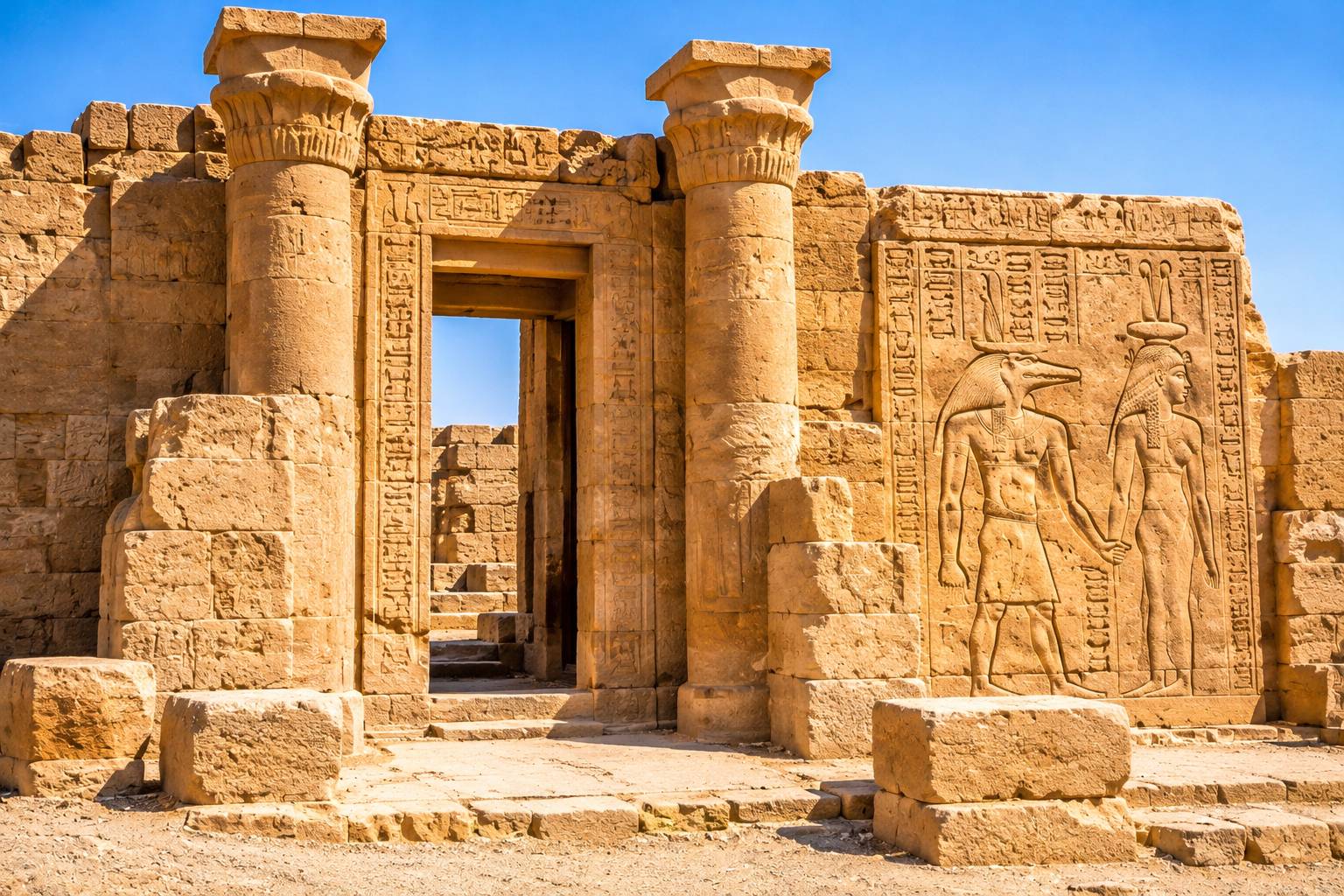
Medinet Madi, Fayoum – The Ultimate Visitor Guide to Ancient Egypt’s Hidden Temple City
Introduction: Discover Medinet Madi, One of Fayoum’s Hidden Archaeological Treasures
Fayoum is home to some of Egypt’s most remarkable archaeological destinations, and Medinet Madi is one of its most fascinating historical sites.
Located in the southwestern part of Fayoum Governorate, Medinet Madi preserves the remains of an ancient religious settlement with a history extending back to the Middle Kingdom. Its temples, inscriptions and archaeological structures provide an extraordinary glimpse into the religious traditions of ancient Egypt.
The site is particularly associated with the worship of Sobek, the crocodile god, and Renenutet, a goddess connected with harvests, nourishment and protection.
Unlike the crowded archaeological complexes of Luxor and Giza, Medinet Madi offers a quieter experience where visitors can explore ancient architecture and discover a lesser-known chapter of Egyptian history.
Whether you are passionate about ancient temples, Egyptian mythology, archaeology or cultural travel, Medinet Madi deserves a place on your Fayoum itinerary.
In this guide, you will discover the history of Medinet Madi, its temples, religious significance, archaeological remains, things to see, how to get there and nearby attractions.
1. Where Is Medinet Madi Located?
Medinet Madi is located in Fayoum Governorate, southwest of Cairo, in the southwestern part of the Fayoum Depression.
The archaeological site lies in a desert environment surrounded by agricultural land and open landscapes.
Its position makes it an interesting destination for travelers exploring the historical and natural attractions of Fayoum.
Location: Medinet Madi, Fayoum Governorate, Egypt
Historical period: Middle Kingdom, with major later developments during the Ptolemaic and Roman periods
Main religious associations: Sobek and Renenutet
Approximate journey from Cairo: Around 2–3 hours or more, depending on traffic, route and final access conditions
Recommended visit: Approximately 1–2 hours, depending on access and interest in archaeology.
Because the site is located away from the main urban areas, arranging transportation in advance is recommended.
2. The Ancient History of Medinet Madi
Medinet Madi has a long and fascinating history that extends across several periods of ancient Egyptian civilization.
The site originated during the Middle Kingdom, particularly during the reigns of Amenemhat III and Amenemhat IV of the Twelfth Dynasty.
It was established as an important religious center in the Fayoum region.
The original temple was dedicated to Sobek and Renenutet, two deities closely connected with the natural environment and agricultural prosperity of the region.
The temple was later expanded and modified during subsequent periods, particularly under Ptolemaic and Roman rule.
These developments transformed the original religious building into a larger complex with additional architectural features and religious structures.
The Middle Kingdom
The Middle Kingdom was an important period in ancient Egyptian history.
During the Twelfth Dynasty, rulers invested heavily in the development of the Fayoum region, improving irrigation systems and encouraging agricultural expansion.
Medinet Madi was part of this wider development.
The temple provided a religious center for the local population and reflected the importance of agriculture, water and fertility in ancient Egyptian society.
The Ptolemaic Period
During the Ptolemaic period, the temple underwent further development.
Additional structures and decorative elements were introduced, reflecting the continuation of Egyptian religious traditions under Greek-speaking rulers.
The Ptolemaic additions are important because they show how ancient Egyptian temples continued to function and evolve after Alexander the Great's arrival in Egypt.
The Roman Period
The wider area continued to be occupied and used during Roman rule.
The archaeological remains provide evidence of the long history of religious activity and settlement in the region.
3. Which Gods Were Worshipped at Medinet Madi?
Medinet Madi is particularly important because of its association with two ancient Egyptian deities: Sobek and Renenutet.
Sobek – The Crocodile God
<escape>Sobek</escape> was one of the most important deities associated with the Fayoum region.
He was represented as a crocodile or as a human figure with a crocodile head.
Sobek was connected with:
-
Water and the Nile.
-
Fertility and agricultural prosperity.
-
Strength and protection.
-
The natural world and crocodiles.
His importance in Fayoum reflects the close relationship between ancient Egyptian communities and the region's waterways.
Renenutet – Goddess of Harvest and Nourishment
Renenutet was an ancient Egyptian goddess associated with harvests, nourishment, fertility and protection.
She was especially important to agricultural communities because she represented the abundance of crops and the prosperity of the land.
She was often represented as a cobra or as a woman with a cobra's head.
Her worship at Medinet Madi reflects the agricultural importance of the Fayoum region.
Why Were These Two Gods Worshipped Together?
Sobek and Renenutet represented complementary aspects of life in ancient Fayoum.
Sobek was associated with water and the natural forces that supported the region, while Renenutet represented agricultural abundance and nourishment.
Together, their worship reflected the importance of water, farming and fertility to the ancient community.
4. Why Is Medinet Madi Archaeologically Important?
Medinet Madi is one of the most important archaeological sites in Fayoum because it preserves a rare example of a Middle Kingdom temple with later Ptolemaic additions.
Its significance includes:
-
A temple originally established during the Twelfth Dynasty.
-
Religious inscriptions and architectural remains.
-
Evidence of Ptolemaic expansion and restoration.
-
Connections with Sobek and Renenutet worship.
-
Important evidence of ancient Egyptian religious traditions.
-
A historical connection with agricultural development in Fayoum.
The site helps historians understand how religious buildings developed over many centuries and how ancient communities maintained their traditions during changing political periods.
5. Best Things to See at Medinet Madi
1. The Ancient Temple Complex
The main attraction is the surviving temple complex.
Explore its ancient walls, entrances, chambers and architectural remains.
The temple reflects the building traditions of the Middle Kingdom, together with later additions from subsequent periods.
2. The Temple's Ancient Inscriptions
Inscriptions and decorative elements are among the most interesting features of the site.
They provide information about religious traditions, the gods worshipped at the temple and the rulers associated with its construction and later development.
Look carefully at the surviving inscriptions and architectural details while respecting conservation barriers.
3. The Middle Kingdom Architecture
One of the most remarkable aspects of Medinet Madi is its connection with the Twelfth Dynasty.
The original temple is an important example of religious architecture from the Middle Kingdom.
It offers a different architectural experience from the much larger New Kingdom temples found in Luxor.
4. The Ptolemaic Additions
The later additions provide evidence of how the temple developed over time.
These structures demonstrate the continued importance of traditional Egyptian religious buildings during the Ptolemaic period.
5. The Religious Sanctuary
The sanctuary was the most sacred part of the temple.
It was associated with the religious activities and worship of the deities honored at Medinet Madi.
The surviving remains help visitors understand the organization of ancient Egyptian religious spaces.
6. The Surrounding Archaeological Landscape
The wider setting of Medinet Madi is also interesting.
The temple stands within a landscape that combines archaeological remains, desert terrain and agricultural surroundings.
This setting provides an opportunity to appreciate the relationship between ancient religious centers and the natural environment.
7. Photography Opportunities
Medinet Madi offers excellent opportunities for visitors interested in archaeological photography.
Interesting subjects include:
-
Ancient stone walls.
-
Temple entrances and chambers.
-
Surviving inscriptions.
-
Architectural details.
-
Desert surroundings.
-
Panoramic views of the archaeological landscape.
Check photography rules before taking pictures inside the monument.
6. Medinet Madi and the Development of Ancient Fayoum
The history of Medinet Madi is closely connected with the transformation of Fayoum into an important agricultural region.
Ancient Egyptian rulers invested in water management and agricultural development, helping expand productive land in the Fayoum Depression.
The region became known for its fertile fields, irrigation systems and settlements.
Temples such as Medinet Madi were part of this wider social and religious landscape.
The worship of Sobek and Renenutet reflected the importance of natural resources and agricultural prosperity.
For modern visitors, Medinet Madi offers an opportunity to understand the relationship between ancient Egyptian religion, agriculture and the environment.
7. Medinet Madi and the UNESCO World Heritage Context
Medinet Madi is included within the UNESCO World Heritage property known as Wadi El Hitan, part of the wider protected heritage landscape of Fayoum.
The broader area is internationally recognized for its exceptional natural and cultural significance.
Wadi El Hitan is particularly famous for its fossil remains documenting the evolution of whales.
Medinet Madi represents a different aspect of Fayoum's heritage, highlighting the region's archaeological and historical importance.
When planning a visit, remember that access arrangements for different protected and archaeological areas may vary.
8. Nearby Attractions to Combine with Medinet Madi
A visit to Medinet Madi can be part of a larger Fayoum adventure.
The region offers a combination of ancient temples, traditional villages, lakes, waterfalls and desert landscapes.
Lake Qarun
Lake Qarun is one of the most recognizable natural landmarks in Fayoum.
Enjoy scenic views, discover local fishing culture and explore the lake's historical importance.
Read our guide: Lake Qarun, Fayoum – The Ultimate Visitor Guide
Qasr Qarun Temple
Qasr Qarun is an ancient Ptolemaic-period temple near the western side of Lake Qarun.
Its architecture and religious history make it an interesting stop for visitors exploring ancient Fayoum.
Read our guide: Qasr Qarun Temple – The Ultimate Visitor Guide
Karanis (Kom Oshim)
Karanis is an important Greco-Roman archaeological settlement known for its ancient houses, temples and evidence of everyday life.
Read our guide: Karanis, Fayoum – Explore the Ancient City of Kom Oshim
Tunis Village
Tunis Village is famous for its pottery workshops, local artisans and traditional-style buildings.
Read our guide: Tunis Village, Fayoum – The Ultimate Visitor Guide
Magic Lake
Magic Lake is known for its desert scenery, sand dunes and changing water colors under different lighting conditions.
Read our guide: Magic Lake Fayoum – The Ultimate Visitor Guide
Wadi El Rayan Waterfalls
Wadi El Rayan is famous for its lakes and waterfalls, creating a striking contrast with the surrounding desert.
Read our guide: Wadi El Rayan Waterfalls – The Ultimate Travel Guide
Wadi El Hitan – Valley of the Whales
Wadi El Hitan is a UNESCO World Heritage Site famous for its prehistoric whale fossils.
Read our guide: Wadi El Hitan – Valley of the Whales
9. Suggested One-Day Medinet Madi and Fayoum Itinerary
Medinet Madi can be included in a private Fayoum tour from Cairo, although the route should be planned carefully because it is located in the southwestern part of the region.
Morning – Departure from Cairo
Meet your driver and travel to Fayoum in a private air-conditioned vehicle.
Late Morning – Medinet Madi
Explore the ancient temple, discover its history and learn about the worship of Sobek and Renenutet.
Midday – Local Lunch
Enjoy a traditional Egyptian lunch at a suitable restaurant, depending on the route and availability.
Afternoon – Selected Fayoum Attractions
Depending on available time and road conditions, continue to one or two nearby destinations, such as Lake Qarun, Tunis Village or Qasr Qarun.
Evening – Return to Cairo
Travel back to Cairo after exploring Fayoum's historical and cultural attractions.
A longer itinerary may be more suitable if you want to combine Medinet Madi with Wadi El Rayan or Wadi El Hitan.
10. Best Time to Visit Medinet Madi
The cooler months from October to April are generally the most comfortable for exploring Medinet Madi and the wider Fayoum region.
Autumn: October and November
Pleasant conditions for archaeological sightseeing and outdoor exploration.
Winter: December to February
Comfortable daytime temperatures are common, although mornings and evenings can be cool.
Spring: March and April
A good time for combining archaeological visits with countryside sightseeing.
Summer: May to September
Temperatures can become very high, particularly in exposed archaeological areas.
If visiting during summer, plan an early departure, carry sufficient drinking water and avoid prolonged exposure to direct sunlight.
11. Opening Hours and Visitor Information
Medinet Madi is an archaeological site, and access arrangements may depend on current conservation and site-management conditions.
Before visiting, confirm:
-
Whether the archaeological site is open to independent visitors.
-
Current opening hours.
-
Ticket prices and applicable visitor categories.
-
Whether advance permission or special arrangements are required.
-
Photography regulations.
-
Road and access conditions.
For official information, contact the Egyptian tourism and antiquities hotline at 19654 or consult the Ministry of Tourism and Antiquities.
Do not rely on old online ticket prices or opening-hour information without confirmation.
12. How to Get to Medinet Madi from Cairo
The most convenient way to reach Medinet Madi from Cairo is by private vehicle.
The journey generally takes several hours, depending on traffic, the chosen route and the final access arrangements.
Because Medinet Madi is located in the southwestern part of Fayoum, it is important to plan the itinerary before departure.
A private vehicle provides flexibility for visiting the archaeological site and selected nearby destinations.
Public transportation to Fayoum may be possible, but reaching the archaeological site and combining it with other attractions can require additional arrangements.
For a comfortable visit, consider arranging a private air-conditioned vehicle with a driver familiar with Fayoum.
13. Practical Travel Tips
Before visiting Medinet Madi, keep these recommendations in mind:
-
Confirm access arrangements before traveling.
-
Wear comfortable walking shoes.
-
Bring sufficient drinking water.
-
Carry sun protection and a hat.
-
Follow the instructions of site staff.
-
Do not touch or damage ancient inscriptions and structures.
-
Respect conservation barriers and restricted areas.
-
Check photography rules before taking pictures.
-
Plan transportation in advance.
-
Allow enough time for the journey and return to Cairo.
14. Is Medinet Madi Worth Visiting?
Absolutely. Medinet Madi is one of Fayoum's most interesting archaeological attractions for travelers who want to explore lesser-known aspects of ancient Egyptian history.
Its connection with the Middle Kingdom, the Ptolemaic period and the worship of Sobek and Renenutet makes it especially important.
The temple also offers a different experience from Egypt's better-known archaeological sites, allowing visitors to discover a quieter historical destination.
For travelers interested in ancient religion, archaeology and the history of Fayoum, Medinet Madi is a worthwhile addition to a carefully planned itinerary.
Frequently Asked Questions About Medinet Madi
1. Where is Medinet Madi located?
Medinet Madi is located in Fayoum Governorate, southwest of Cairo, in the southwestern part of the Fayoum Depression.
2. How old is Medinet Madi?
The original temple dates to the Middle Kingdom, particularly the Twelfth Dynasty, with later additions during the Ptolemaic and Roman periods.
3. Which gods were worshipped at Medinet Madi?
The temple was dedicated primarily to Sobek, the crocodile god, and Renenutet, the goddess associated with harvests and nourishment.
4. What is Medinet Madi famous for?
It is famous for its ancient temple, Middle Kingdom origins, later Ptolemaic additions and religious inscriptions.
5. Can tourists visit Medinet Madi?
Access arrangements can vary. Visitors should confirm current opening arrangements and any required permissions before traveling.
6. How long should I spend at Medinet Madi?
Allow approximately one to two hours for the archaeological site, depending on access and your interest in its history.
7. Can I visit Medinet Madi from Cairo in one day?
A day trip may be possible, but the journey and route should be planned carefully. A longer Fayoum itinerary may provide a more comfortable experience.
8. What attractions are near Medinet Madi?
Other Fayoum destinations include Lake Qarun, Qasr Qarun Temple, Karanis, Tunis Village, Wadi El Rayan and Wadi El Hitan.
9. What is the significance of Sobek in Fayoum?
Sobek was an important deity associated with water, fertility, protection and crocodiles. His worship was particularly significant in the Fayoum region.
10. Is Medinet Madi suitable for families?
Families interested in history and archaeology may enjoy the site. Children should be supervised around uneven ground and ancient structures.
11. What is the best time to visit Medinet Madi?
October to April is generally the most comfortable period for outdoor sightseeing in Fayoum.
12. What should I bring when visiting Medinet Madi?
Bring drinking water, comfortable shoes, sun protection and a camera if photography is permitted.
Explore Medinet Madi and Fayoum with Let's Explore Egypt Travel
Discover the hidden archaeological treasures and natural beauty of Fayoum with Let's Explore Egypt Travel.
Our private Fayoum excursions can combine ancient temples, archaeological sites, scenic lakes, traditional villages and desert landscapes.
Explore Medinet Madi, learn about the worship of Sobek and Renenutet, discover ancient Karanis and visit the remarkable landscapes of the Fayoum region.
Your private Fayoum experience can include:
-
Private air-conditioned transportation.
-
Flexible sightseeing itinerary.
-
Visits to selected historical and natural attractions.
-
Professional licensed Egyptologist guide, subject to your chosen package.
-
Pickup and drop-off in Cairo.
Explore our Egypt tour packages:
Contact Let's Explore Egypt Travel to plan your private Fayoum archaeological tour.