


Hawara Pyramid – The Ultimate Visitor Guide
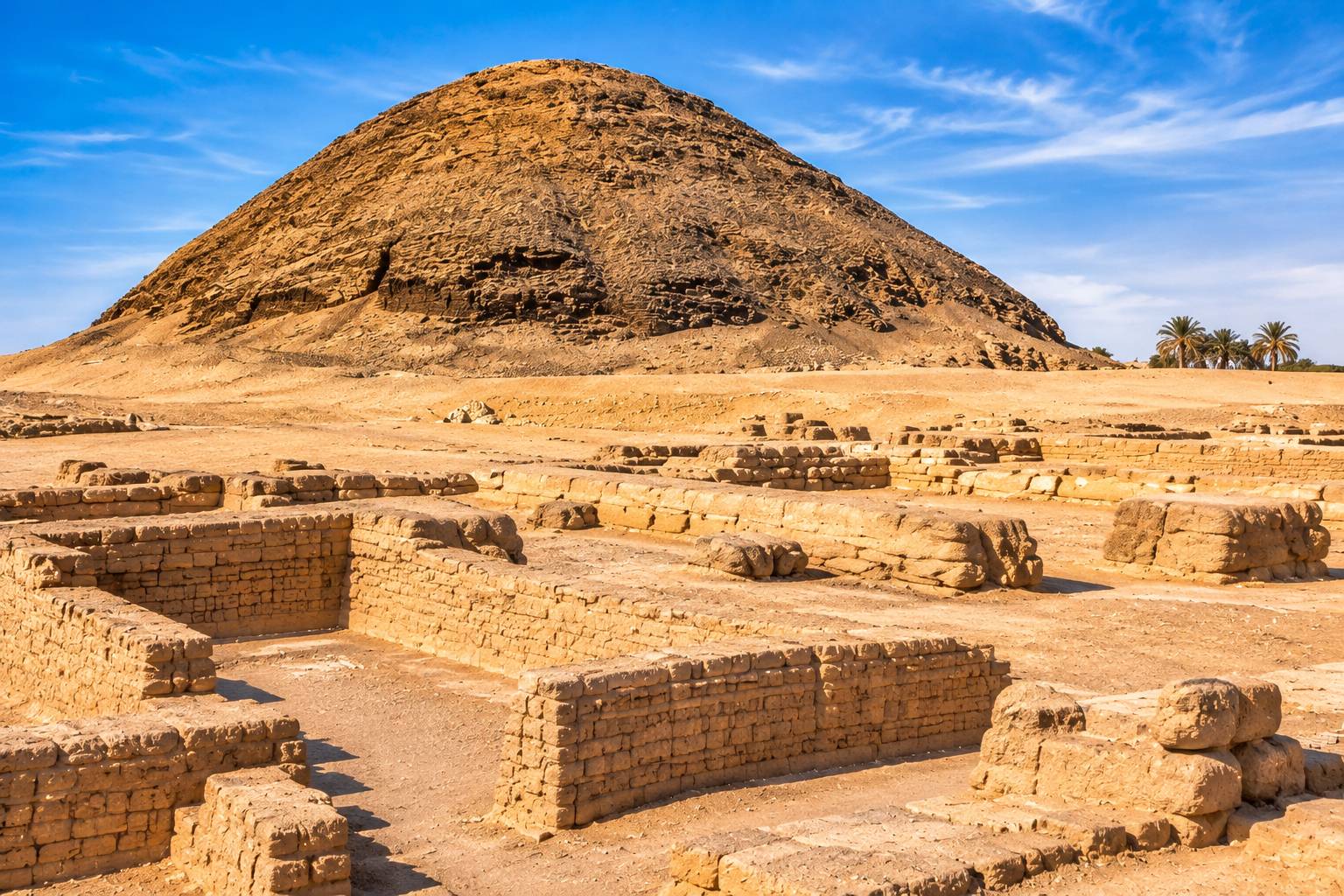
Hawara Pyramid – The Ultimate Visitor Guide to the Lost Labyrinth of Ancient Egypt
Introduction: Discover the Mystery of Hawara Pyramid
Away from the busy streets of Cairo and the famous pyramids of Giza lies one of Egypt’s most intriguing archaeological sites: the Hawara Pyramid in Fayoum.
Built during the Middle Kingdom for Pharaoh Amenemhat III of the Twelfth Dynasty, this remarkable monument is connected to one of the most fascinating mysteries of ancient Egyptian architecture: the legendary Labyrinth.
Ancient Greek writers described the Labyrinth as an enormous complex of halls, courtyards and chambers. Although much of this extraordinary structure has disappeared, its history continues to attract archaeologists, historians and travelers interested in Egypt’s ancient past.
Today, Hawara offers visitors an opportunity to explore a lesser-known chapter of Egyptian history and discover a different side of Fayoum beyond its lakes, waterfalls and desert landscapes.
Whether you are passionate about archaeology, interested in the Middle Kingdom, or planning a cultural trip through Fayoum, Hawara Pyramid deserves a place on your itinerary.
1. Where Is Hawara Pyramid Located?
Hawara Pyramid is located near Hawara village in the Fayoum Governorate, southwest of Cairo, Egypt. The archaeological site stands near the entrance to the Fayoum depression and close to the Bahr Youssef waterway.
The location is particularly interesting because it connects the ancient royal landscape with the fertile agricultural region of Fayoum.
Visitors exploring the area can combine Hawara with other archaeological and natural attractions, including:
-
Medinet Madi, an ancient temple complex.
-
Karanis (Kom Oshim), the remains of a Greco-Roman settlement.
-
Qasr Qarun Temple, an important ancient religious site.
-
Lake Qarun, one of Egypt’s most famous natural lakes.
-
Tunis Village, known for pottery workshops and rural scenery.
-
Wadi El Rayan, famous for its waterfalls and desert landscapes.
Hawara is a particularly interesting stop for travelers who want to discover archaeological sites beyond the traditional Cairo and Giza sightseeing route.
2. Who Built the Hawara Pyramid?
The Hawara Pyramid was built for Pharaoh Amenemhat III, one of the most important rulers of Egypt’s Twelfth Dynasty.
Amenemhat III ruled during the Middle Kingdom, a period remembered for strong royal administration, agricultural development, impressive construction projects and artistic achievements.
He had a significant connection with the Fayoum region. His building projects and other royal activities demonstrate the importance of this fertile area during his reign.
The Hawara Pyramid was his second major pyramid project. His earlier pyramid was constructed at Dahshur, but Hawara became the location associated with his final royal burial.
The monument reflects the architectural ambition and engineering knowledge of ancient Egyptian builders.
3. The Architecture of Hawara Pyramid
Unlike the famous stone pyramids of Giza, the Hawara Pyramid was constructed using a mudbrick core covered with limestone casing.
Over the centuries, much of the original outer casing disappeared, leaving the weathered remains of the central structure.
The pyramid originally had an impressive appearance, with its smooth limestone exterior reflecting the sunlight across the surrounding landscape.
One of its most remarkable features was its complicated internal design.
Ancient Egyptian architects created a system of corridors and passages intended to protect the royal burial chamber from tomb robbers.
The burial chamber itself was carved from a massive block of quartzite. Its construction and sealing system demonstrate the advanced engineering techniques used by Middle Kingdom builders.
Although the pyramid's interior is not generally accessible to ordinary visitors, its architectural history remains an important reason why Hawara attracts archaeological interest.
4. The Legendary Labyrinth of Hawara
One of the most fascinating aspects of Hawara is its association with the ancient Egyptian Labyrinth.
The Labyrinth was not the pyramid itself. It was a vast mortuary temple complex associated with Amenemhat III and located beside the pyramid.
Ancient Greek writers, especially Herodotus, described an extraordinary building with numerous courtyards, halls and chambers. Their accounts presented the complex as one of the most impressive architectural achievements in Egypt.
Some ancient descriptions mention thousands of rooms, although these figures cannot be independently confirmed today.
The original complex has been heavily damaged over time. Stone was removed and reused in later construction, while the remains were affected by centuries of environmental change and human activity.
Today, only limited archaeological traces survive.
Despite its poor preservation, the Labyrinth remains an important subject of archaeological research and one of the reasons Hawara is so fascinating to historians.
5. Why Is the Hawara Labyrinth So Famous?
The Labyrinth became famous because ancient writers described it as an architectural wonder.
Its reputation was based on its enormous scale, complex arrangement and the number of spaces it reportedly contained.
For centuries, travelers and researchers have attempted to understand what the original building looked like and how its different sections were arranged.
Archaeological research has helped identify the location and remains of the mortuary complex, but many details of its original design remain uncertain.
This distinction is important: the Labyrinth is a real archaeological subject associated with Hawara, but many popular stories about enormous hidden underground cities or completely preserved secret chambers are not established archaeological facts.
The mystery surrounding the site comes from the contrast between the impressive ancient descriptions and the limited remains visible today.
6. Archaeological Discoveries at Hawara
Hawara is important not only because of its pyramid and Labyrinth but also because the surrounding cemetery was used for many centuries.
Archaeological excavations have revealed evidence from different periods, including the Middle Kingdom and the Roman period.
One of the most famous discoveries associated with Hawara is the collection of Roman-period mummy portraits.
These painted portraits were placed with mummies and are among the most recognizable examples of funerary art from Roman Egypt.
They provide valuable information about clothing, hairstyles, artistic traditions and cultural life in the Fayoum region.
The discoveries demonstrate that Hawara remained an important burial area long after the Middle Kingdom pyramid was constructed.
Visitors interested in the wider history of Fayoum can also explore Karanis, where archaeological remains reveal the daily life of communities during the Greco-Roman period.
7. What Can You See at Hawara Pyramid Today?
Hawara is not a fully reconstructed monument like some of Egypt’s better-known archaeological attractions.
Instead, visitors encounter an archaeological landscape that requires imagination and an interest in history.
Depending on site access and conservation conditions, the experience may include:
-
The remains of Amenemhat III's pyramid.
-
The surrounding archaeological landscape.
-
The area associated with the ancient Labyrinth.
-
The remains of the wider ancient cemetery.
-
Views of the agricultural landscape surrounding Hawara.
The site is particularly rewarding for travelers who enjoy exploring lesser-known archaeological places and understanding how ancient monuments changed over thousands of years.
It is important to remember that the pyramid's interior and certain archaeological areas may be restricted. Visitors should confirm current access arrangements before traveling.
8. Best Time to Visit Hawara Pyramid
The best time to explore Hawara and the wider Fayoum region is generally during the cooler months.
October to April is usually more comfortable for outdoor sightseeing, archaeological exploration and desert excursions.
During summer, temperatures can become very high, especially around midday.
For a more comfortable visit, consider these recommendations:
-
Start early in the morning.
-
Wear comfortable walking shoes.
-
Bring drinking water.
-
Use sun protection, including a hat and sunscreen.
-
Carry a camera for landscape and archaeological photography.
-
Avoid touching or climbing on ancient structures.
A morning visit can also make it easier to combine Hawara with other attractions in Fayoum during the same day.
9. How to Get to Hawara Pyramid from Cairo
Hawara is located in the Fayoum region, southwest of Cairo. The journey is commonly arranged by private vehicle, making it easier to visit the pyramid and other attractions without relying on multiple public transport connections.
A private day trip from Cairo can be organized with:
-
Hotel pickup in Cairo or Giza.
-
Private air-conditioned transportation.
-
A flexible sightseeing schedule.
-
Stops at selected archaeological and natural attractions.
-
Return transportation to your hotel.
Travel time depends on your starting point, traffic and the places included in your itinerary.
For visitors who want to explore more than one archaeological site, a private Fayoum day trip is a convenient way to make the most of the journey.
10. Attractions to Combine with Hawara Pyramid
One of the biggest advantages of visiting Hawara is the opportunity to explore other remarkable places throughout Fayoum.
Here are some attractions worth considering.
Medinet Madi
Medinet Madi is an important archaeological site featuring an ancient temple associated with the Middle Kingdom and later periods.
Explore our guide: Medinet Madi Fayoum: Explore the Ancient Temple of Egypt.
Karanis (Kom Oshim)
Karanis is an ancient Greco-Roman settlement where visitors can discover the remains of houses, temples and everyday community life.
Read more: Karanis Fayoum: Explore the Ancient City of Kom Oshim.
Qasr Qarun Temple
Qasr Qarun is a fascinating ancient temple near Lake Qarun. Its stone architecture and historical background make it an interesting stop for visitors exploring the archaeological heritage of Fayoum.
Read our guide: Qasr Qarun Temple: The Ultimate Visitor Guide.
Lake Qarun
Lake Qarun is one of the best-known natural attractions in Fayoum. It offers beautiful landscapes and opportunities to enjoy the region's natural environment.
Discover more: Lake Qarun Fayoum: The Ultimate Visitor Guide.
Tunis Village
Tunis Village is famous for its pottery workshops, artistic atmosphere and traditional countryside character.
Explore: Tunis Village Fayoum: The Ultimate Visitor Guide.
Magic Lake
Magic Lake is a beautiful desert lake surrounded by sandy landscapes and popular with visitors exploring the natural side of Fayoum.
Read more: Magic Lake Fayoum: The Ultimate Visitor Guide.
Wadi El Rayan Waterfalls
Wadi El Rayan is famous for its waterfalls, lakes and desert scenery. It is an excellent addition to a nature-focused Fayoum itinerary.
Discover: Wadi El Rayan Waterfalls: The Ultimate Travel Guide.
Wadi El Hitan – Valley of the Whales
Wadi El Hitan is a UNESCO World Heritage Site famous for its extraordinary fossil remains of ancient whales.
Explore our guide: Wadi El Hitan – Valley of the Whales: The Ultimate Visitor Guide.
Mudawara Mountain
Mudawara Mountain offers beautiful desert scenery and panoramic views, making it an appealing stop for photography and nature lovers.
Read more: Mudawara Mountain Fayoum: The Ultimate Visitor Guide.
11. Is Hawara Pyramid Worth Visiting?
Yes, especially if you are interested in ancient Egyptian history and want to discover archaeological sites beyond the traditional tourist route.
Hawara is different from the pyramids of Giza. It does not offer the same monumental appearance or extensive visitor facilities, but it has a fascinating historical story.
Its connection with Amenemhat III, the Middle Kingdom and the legendary Labyrinth makes it a valuable destination for travelers interested in Egypt's archaeological heritage.
It is also an excellent addition to a wider Fayoum itinerary that includes ancient temples, traditional villages, lakes and desert landscapes.
For travelers who enjoy discovering lesser-known historical places, Hawara offers a rewarding experience.
12. Travel Tips Before Visiting Hawara Pyramid
Before planning your visit, keep these practical tips in mind:
-
Check opening arrangements: Confirm the latest opening hours, ticket information and site access before departure.
-
Respect restricted areas: Do not enter closed archaeological structures or restricted zones.
-
Choose suitable transportation: A private vehicle is useful when combining Hawara with other Fayoum attractions.
-
Bring water: The archaeological surroundings can be exposed to strong sunlight.
-
Wear comfortable shoes: The ground around archaeological sites may be uneven.
-
Allow enough time: Plan your day according to the number of attractions you want to visit.
-
Travel with a knowledgeable guide: An experienced Egyptologist can explain the history of Amenemhat III, the pyramid's construction and the Labyrinth's archaeological significance.
13. Explore Hawara Pyramid with Let's Explore Egypt Travel
Discover the ancient history and natural beauty of Fayoum with Let's Explore Egypt Travel.
Our private Egypt tours can be arranged around your interests, whether you want to explore ancient archaeological sites, visit traditional villages, enjoy desert landscapes or discover the famous lakes and waterfalls of Fayoum.
A private Fayoum excursion can be tailored to include Hawara and other attractions according to site access, available time and your travel preferences.
Enjoy the flexibility of private transportation and the opportunity to explore Egypt at your own pace.
Ready to discover Fayoum?
Explore our available trips and private experiences:
https://letsexploreegypttravel.com/en/egypttourpackages
Contact Let's Explore Egypt Travel to plan your private Fayoum adventure.
Frequently Asked Questions About Hawara Pyramid
1. Where is Hawara Pyramid located?
Hawara Pyramid is located near Hawara village in Fayoum Governorate, southwest of Cairo, Egypt.
2. Who built Hawara Pyramid?
The pyramid was built for Pharaoh Amenemhat III of Egypt's Twelfth Dynasty during the Middle Kingdom.
3. What is the Hawara Labyrinth?
The Labyrinth was a large mortuary temple complex associated with Amenemhat III's pyramid. Ancient Greek writers described it as an enormous structure containing numerous halls, courtyards and chambers.
4. Is the Labyrinth still standing?
Most of the original Labyrinth has disappeared. Only limited archaeological remains survive, and researchers continue to study the site.
5. Is Hawara Pyramid open to visitors?
The Egyptian Ministry of Tourism and Antiquities lists Hawara Pyramid among its archaeological sites open for visits. However, access to the pyramid's interior and specific areas may be restricted. Confirm the latest arrangements before traveling.
6. Can visitors enter Hawara Pyramid?
Interior access should not be assumed. The pyramid's internal passages are not generally open for ordinary visits, so check with the relevant authorities before planning an interior visit.
7. What is special about Hawara Pyramid?
Its connection with Amenemhat III, its unusual mudbrick construction, its complex burial architecture and its association with the legendary Labyrinth make it especially important.
8. Can I visit Hawara Pyramid on a day trip from Cairo?
Yes. Hawara can be included in a private day trip from Cairo, often combined with other archaeological and natural attractions in Fayoum.
9. What other places can I visit near Hawara?
Popular Fayoum attractions include Medinet Madi, Karanis, Qasr Qarun, Lake Qarun, Tunis Village, Magic Lake, Wadi El Rayan and Wadi El Hitan.
10. What is the best time to visit Hawara Pyramid?
The cooler months, generally from October to April, are usually the most comfortable for outdoor sightseeing in Fayoum.
Final Thoughts
Hawara Pyramid is one of Fayoum's most fascinating historical destinations. Built for Amenemhat III, it preserves the story of a powerful Middle Kingdom ruler and an extraordinary mortuary complex remembered through ancient descriptions of the Egyptian Labyrinth.
Although much of the original architecture has disappeared, Hawara remains an important place for understanding Egypt's ancient engineering, royal burial traditions and archaeological heritage.
For travelers looking beyond the famous monuments of Cairo and Giza, Hawara is an opportunity to discover another remarkable chapter of ancient Egypt.
Plan your Fayoum adventure with Let's Explore Egypt Travel and discover the hidden historical treasures of Egypt.