


: Qasr El-Sagha Temple Fayoum: Explore Egypt's Ancient Desert Temple
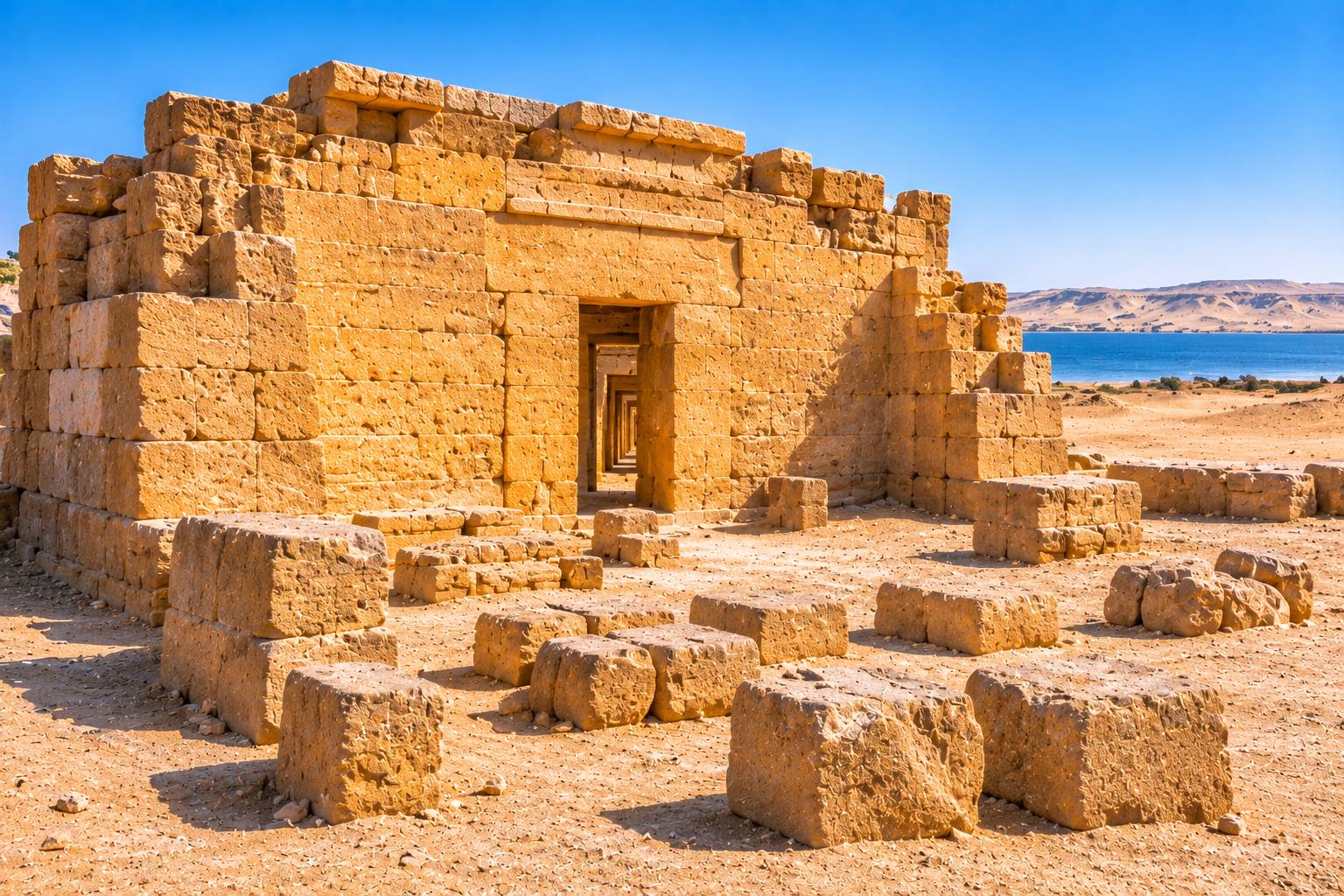
Qasr El-Sagha Temple Fayoum: The Ultimate Visitor Guide to Egypt's Mysterious Ancient Temple
Introduction: Discover Qasr El-Sagha, Fayoum's Mysterious Desert Temple
Hidden in the desert north of Lake Qarun, far from the busy tourist routes of Cairo and Giza, stands one of Fayoum's most unusual archaeological monuments: Qasr El-Sagha Temple.
Built from massive limestone and sandstone blocks, this remarkable structure has attracted the attention of archaeologists because of its unusual architecture, undecorated walls and mysterious history.
Unlike many famous Egyptian temples covered with hieroglyphic inscriptions and colorful reliefs, Qasr El-Sagha is remarkably simple. Its interior contains a central passage and seven small chambers or shrine-like rooms, while the building appears to have been left unfinished.
Its precise date and original religious purpose have been debated by researchers. Archaeological evidence generally places the monument in the Middle Kingdom, although some details remain uncertain.
For travelers who enjoy discovering lesser-known historical places, Qasr El-Sagha offers a fascinating opportunity to explore an unusual part of ancient Egyptian architecture while enjoying the remote desert scenery of northern Fayoum.
1. Where Is Qasr El-Sagha Temple Located?
Qasr El-Sagha Temple is located in the northern part of the Fayoum depression, in the desert area north of Lake Qarun and near the Gebel Qatrani escarpment.
The temple stands in a remote landscape of rocky hills, open desert and archaeological remains.
Its position is particularly interesting because the ancient shoreline of Lake Qarun was much closer to the monument than the modern shoreline. Changes in the lake's size over thousands of years have transformed the surrounding landscape.
Today, the temple is several kilometres from the lake, surrounded by a quiet desert environment that feels very different from the agricultural villages and busy streets of central Fayoum.
The wider archaeological region contains evidence of ancient settlements, cemeteries, prehistoric activity and important geological formations.
Visitors exploring this area can combine Qasr El-Sagha with other destinations around Fayoum, depending on road conditions, available time and site access.
2. What Is the History of Qasr El-Sagha Temple?
Qasr El-Sagha is generally associated with the Middle Kingdom, particularly the Twelfth Dynasty.
However, its exact construction date and the identity of the ruler responsible for the building have not been established with certainty.
Unlike many Egyptian temples, Qasr El-Sagha has no extensive decorative inscriptions identifying its builder, original dedication or religious ceremonies.
Archaeological studies, pottery discoveries and comparisons with other structures have helped researchers investigate its possible date.
The temple is often discussed in connection with the Middle Kingdom and the wider archaeological landscape of northern Fayoum.
Its history is particularly interesting because it demonstrates that ancient Egyptian religious architecture was not always decorated with the elaborate inscriptions and reliefs seen at famous temples such as Karnak or Luxor.
Qasr El-Sagha remains an important example of a distinctive and still partly mysterious ancient building.
3. Who Built Qasr El-Sagha Temple?
The identity of the pharaoh who commissioned Qasr El-Sagha has not been definitively established.
Some interpretations associate the monument with the Twelfth Dynasty and the period of rulers such as Senusret II or Senusret III.
However, visitors should be careful about treating either king as the confirmed builder.
The absence of royal inscriptions makes it difficult to identify the person responsible for its construction.
This uncertainty is part of what makes the monument so interesting to archaeological researchers.
Rather than presenting a definite royal history, Qasr El-Sagha invites visitors to consider the evidence available from its architecture, archaeological surroundings and associated discoveries.
4. Why Is Qasr El-Sagha Temple So Unusual?
Qasr El-Sagha differs from many other ancient Egyptian temples in several important ways.
Massive Stone Construction
The building was constructed using large blocks of local stone, including limestone and sandstone.
The blocks were carefully shaped and fitted together, creating a strong architectural structure.
No Elaborate Hieroglyphic Decoration
The interior walls are largely undecorated.
Unlike famous temples with extensive religious inscriptions, the monument provides very little direct information about its original use.
Seven Chambers
One of its most distinctive features is a group of seven small chambers or shrine-like spaces arranged along the interior.
Their arrangement has attracted archaeological interest and encouraged discussion about the building's possible religious function.
An Apparently Unfinished Structure
The temple appears to have been left unfinished or never fully decorated.
Researchers have considered different explanations, including the possibility that the building was used for a relatively limited period.
A Remote Desert Setting
Its location near the northern Fayoum escarpment gives it a distinctive atmosphere and makes the journey part of the experience.
5. Explore the Seven Chambers of Qasr El-Sagha
One of the most fascinating features of Qasr El-Sagha is its internal arrangement.
The building has a central passage leading toward a series of seven chambers or shrine-like rooms.
These spaces are among the most distinctive elements of the temple.
The arrangement has encouraged researchers to investigate whether the rooms were intended for religious statues, ritual objects or different divine figures.
Some academic interpretations suggest that the central chamber may have had a special religious importance.
However, without a complete set of inscriptions or securely identified statues, the original function of every chamber remains uncertain.
For visitors, the seven-room arrangement is one of the main architectural details to look for when exploring the monument.
6. Was Qasr El-Sagha Dedicated to Sobek?
Sobek, the crocodile god, was one of the most important deities worshipped in ancient Fayoum.
The region had a strong historical association with crocodile worship, and several archaeological discoveries demonstrate the importance of Sobek in local religious traditions.
A fragment of basalt bearing an inscription connected with Sobek of Shedety has been associated with the Qasr El-Sagha temple area.
This evidence has encouraged suggestions that the temple, or at least part of its religious activity, may have been connected with Sobek.
However, its original dedication is not completely certain.
It is therefore more accurate to describe a possible connection with Sobek rather than claim that the temple's religious purpose has been conclusively established.
Visitors interested in the history of crocodile worship in Fayoum can also explore other archaeological sites in the region.
7. Who Discovered Qasr El-Sagha Temple?
The temple was documented by the German explorer and naturalist Georg August Schweinfurth in the nineteenth century.
His visit in 1884 brought attention to the isolated monument and helped introduce it to archaeological study.
Other researchers later investigated the area, including Flinders Petrie and archaeologists working on the settlements and cemeteries surrounding the temple.
Further archaeological research has helped establish the importance of the wider region, which includes evidence of Middle Kingdom occupation and earlier human activity.
The discoveries demonstrate that Qasr El-Sagha was not an isolated building without a historical setting. It formed part of a wider archaeological landscape that deserves further study.
8. Qasr El-Sagha and the Ancient Shoreline of Lake Qarun
One of the most interesting aspects of visiting Qasr El-Sagha is understanding how the landscape has changed.
In ancient times, Lake Qarun was larger than it is today, and its shoreline extended much closer to the temple.
The modern distance between the temple and the lake reflects thousands of years of environmental and human changes.
The Fayoum depression has experienced major changes in water levels, agricultural development and land use throughout its history.
The relationship between the temple, the ancient shoreline and nearby archaeological settlements helps explain why this location was important in the past.
Visitors can appreciate the contrast between the remote desert setting and the fertile agricultural landscapes found elsewhere in Fayoum.
To learn more about the lake's history and modern scenery, read our guide:
Lake Qarun Fayoum: The Ultimate Visitor Guide
9. The Archaeological Landscape Around Qasr El-Sagha
Qasr El-Sagha is part of a wider archaeological and natural region near Gebel Qatrani.
The surrounding landscape contains evidence of ancient human activity, including settlement remains and cemeteries.
The area is also important for its geological history and fossil discoveries.
The northern Fayoum desert has attracted researchers interested in archaeology, geology and the environmental history of the region.
For visitors, this creates an opportunity to experience more than a single monument.
The journey introduces a landscape where ancient settlements, desert escarpments, fossil-bearing formations and the changing shoreline of Lake Qarun form part of the same wider story.
Access to some remote locations may require special arrangements or permission, so visitors should plan carefully.
10. What Can You See at Qasr El-Sagha Today?
Qasr El-Sagha is not a large reconstructed temple complex with extensive visitor facilities.
Its appeal comes from its unusual architecture, remote location and mysterious historical background.
Depending on current access arrangements, visitors may be able to see:
-
The exterior walls built from large stone blocks.
-
The main entrance and central passage.
-
The seven interior chambers, if access is permitted.
-
The distinctive stone construction.
-
The surrounding desert landscape.
-
Views toward the northern Fayoum escarpment.
The temple's undecorated walls make it especially different from Egypt's more famous religious monuments.
Visitors should not expect extensive hieroglyphic scenes or reconstructed interiors. The experience is primarily about understanding the structure and appreciating its unusual archaeological character.
11. Best Time to Visit Qasr El-Sagha Temple
The best time to explore Qasr El-Sagha and the wider Fayoum region is generally during the cooler months.
October to April is usually more comfortable for outdoor sightseeing.
During summer, temperatures can become very high, particularly in exposed desert locations.
For a more enjoyable visit:
-
Start early in the morning.
-
Wear comfortable walking shoes.
-
Bring sufficient drinking water.
-
Use sunscreen and wear a hat.
-
Carry a camera for landscape photography.
-
Follow local instructions and archaeological site regulations.
Because Qasr El-Sagha is in a remote area, it is important to plan transportation and site access before departure.
12. How to Get to Qasr El-Sagha from Cairo
Qasr El-Sagha is located in the northern Fayoum desert, southwest of Cairo.
The journey usually involves reaching the Fayoum area before continuing toward the northern desert and the temple.
The final approach may involve rough or unpaved tracks, depending on the route and current conditions.
For this reason, a suitable vehicle and an experienced local driver are important.
A private excursion can be arranged with:
-
Pickup from your hotel in Cairo or Giza.
-
Private transportation toward Fayoum.
-
A planned visit to Qasr El-Sagha, subject to permission and access.
-
Additional stops around Lake Qarun or other accessible attractions.
-
Return transportation to your hotel.
Travel time depends on traffic, the chosen route, road conditions and the number of stops included.
Because this is a remote archaeological site, visitors should confirm access requirements and road conditions before setting out.
13. Attractions to Combine with Qasr El-Sagha Temple
Fayoum offers a remarkable combination of ancient temples, archaeological settlements, traditional villages, lakes and desert scenery.
You can combine Qasr El-Sagha with other attractions to create a more complete exploration of the region.
Lake Qarun
Enjoy the scenery around one of Egypt's best-known natural lakes and discover its importance to the history of Fayoum.
Read more: Lake Qarun Fayoum: The Ultimate Visitor Guide.
Hawara Pyramid
Discover the pyramid built for Amenemhat III and its connection with the legendary Labyrinth.
Explore: Hawara Pyramid: The Ultimate Visitor Guide.
Lahun Pyramid
Explore the pyramid of Senusret II and learn about the ancient settlement of Kahun.
Read our guide: Lahun Pyramid: The Ultimate Visitor Guide.
Qasr Qarun Temple
Visit another important ancient temple in Fayoum and discover its distinctive architecture and historical background.
Explore: Qasr Qarun Temple: The Ultimate Visitor Guide.
Karanis (Kom Oshim)
Discover the remains of an ancient Greco-Roman settlement, including evidence of houses, temples and everyday life.
Read more: Karanis Fayoum: Explore the Ancient City of Kom Oshim.
Medinet Madi
Explore an ancient temple complex with a history extending from the Middle Kingdom into later periods.
Read our guide: Medinet Madi Fayoum: Explore the Ancient Temple of Egypt.
Tunis Village
Discover pottery workshops, local crafts and the traditional countryside atmosphere of Fayoum.
Explore: Tunis Village Fayoum: The Ultimate Visitor Guide.
Magic Lake
Enjoy desert scenery and one of the region's best-known natural attractions.
Read more: Magic Lake Fayoum: The Ultimate Visitor Guide.
Wadi El Rayan Waterfalls
Discover the waterfalls, lakes and desert landscapes of the Wadi El Rayan protected area.
Explore: Wadi El Rayan Waterfalls: The Ultimate Travel Guide.
Wadi El Hitan – Valley of the Whales
Visit the UNESCO World Heritage Site famous for its ancient whale fossils and extraordinary geological history.
Read more: Wadi El Hitan: The Ultimate Visitor Guide to Egypt's Prehistoric Wonder.
Mudawara Mountain
Enjoy panoramic views and the dramatic desert scenery of Fayoum.
Explore: Mudawara Mountain Fayoum: The Ultimate Visitor Guide.
14. Is Qasr El-Sagha Temple Worth Visiting?
Qasr El-Sagha is especially rewarding for travelers who enjoy archaeology, unusual architecture and destinations away from crowded tourist attractions.
It does not offer the monumental scale of Karnak or the decorative richness of the temples in Luxor.
Instead, it provides a different kind of experience: a quiet archaeological monument whose history and original purpose still raise questions.
Its massive stone blocks, seven chambers, undecorated walls and remote desert location make it one of Fayoum's most distinctive historical attractions.
If you are exploring the region with an interest in ancient Egyptian architecture, Qasr El-Sagha is worth considering as part of a carefully planned itinerary.
15. Travel Tips Before Visiting Qasr El-Sagha
Before planning your visit, keep these recommendations in mind:
-
Confirm access: Check whether the archaeological site is open and whether special permission or arrangements are required.
-
Check road conditions: The final approach may involve rough desert tracks.
-
Choose suitable transportation: Use a suitable vehicle and an experienced driver familiar with the area.
-
Bring water: The surrounding desert is exposed to strong sunlight.
-
Wear comfortable shoes: The ground around the monument may be uneven.
-
Respect the monument: Do not climb on the walls, remove stones or touch fragile archaeological features.
-
Consider a knowledgeable guide: A professional guide can explain the temple's architecture, possible religious connections and the wider history of Fayoum.
-
Plan your other stops: Combine the temple with accessible attractions around Lake Qarun when practical.
16. Explore Fayoum with Let's Explore Egypt Travel
Discover the hidden archaeological treasures and natural beauty of Fayoum with Let's Explore Egypt Travel.
Whether you are interested in ancient temples, Middle Kingdom pyramids, traditional villages, desert landscapes or the famous lakes and waterfalls, we can help arrange a private excursion around your interests.
A private Fayoum itinerary can be tailored to include selected archaeological attractions, subject to access permissions, road conditions and available time.
Enjoy private transportation and the flexibility to explore Egypt beyond the traditional tourist route.
Ready to discover Fayoum?
Explore our Egypt tours and private travel experiences:
https://letsexploreegypttravel.com/en/egypttourpackages
Contact Let's Explore Egypt Travel to plan your private Fayoum adventure.
Frequently Asked Questions About Qasr El-Sagha Temple
1. Where is Qasr El-Sagha Temple located?
Qasr El-Sagha is located in the northern Fayoum desert, north of Lake Qarun and near the Gebel Qatrani escarpment in Egypt.
2. How old is Qasr El-Sagha Temple?
The temple is generally associated with the Middle Kingdom, although its precise construction date remains debated.
3. Who built Qasr El-Sagha Temple?
The original builder has not been conclusively identified. Some interpretations associate the temple with the Twelfth Dynasty, but no confirmed royal inscription identifies its founder.
4. What makes Qasr El-Sagha unique?
Its massive stone construction, undecorated walls, unusual internal layout and seven small chambers make it different from many other ancient Egyptian temples.
5. Was Qasr El-Sagha dedicated to Sobek?
A possible connection with Sobek has been suggested based on archaeological evidence, including an inscribed basalt fragment. However, the original dedication is not certain.
6. Who documented Qasr El-Sagha?
The German explorer Georg August Schweinfurth documented the monument in 1884.
7. How many chambers does the temple have?
The temple is known for its seven small shrine-like chambers arranged along its interior, together with other spaces.
8. Is Qasr El-Sagha near Lake Qarun?
Yes. It is located in the desert north of Lake Qarun. The ancient lake once extended much closer to the temple than the modern shoreline.
9. Can I visit Qasr El-Sagha from Cairo?
Yes, it can be included in a private trip to Fayoum. However, visitors should confirm site access, permissions and road conditions before traveling.
10. Is Qasr El-Sagha suitable for families?
It may interest families with older children who enjoy history and archaeology. The remote location, desert conditions and possible rough access roads should be considered when planning a visit with young children.
11. What other attractions can I visit in Fayoum?
Popular attractions include Hawara Pyramid, Lahun Pyramid, Qasr Qarun Temple, Karanis, Medinet Madi, Lake Qarun, Tunis Village, Magic Lake, Wadi El Rayan and Wadi El Hitan.
Final Thoughts
Qasr El-Sagha Temple is one of the most unusual archaeological monuments in Fayoum.
Its massive stone blocks, seven interior chambers and undecorated walls make it different from the famous temples found elsewhere in Egypt.
Although its exact date and original religious purpose remain uncertain, the monument provides an interesting glimpse into the architectural and religious history of the Middle Kingdom.
For travelers who want to discover lesser-known places and explore the archaeological heritage of Fayoum, Qasr El-Sagha offers a memorable journey into Egypt's ancient past.
Explore the hidden treasures of Fayoum with Let's Explore Egypt Travel.
Qasr El-Sagha Temple – Highlights
-
Discover one of Fayoum's most mysterious ancient Egyptian temples.
-
Explore a remarkable Middle Kingdom monument in the northern Fayoum desert.
-
Admire massive limestone and sandstone blocks.
-
Discover the temple's unusual architectural design and seven interior chambers.
-
Learn about its possible connection with Sobek, the ancient crocodile god.
-
Explore the temple's fascinating history and unanswered archaeological questions.
-
Enjoy the remote desert landscape near Lake Qarun and Gebel Qatrani.
-
Discover a lesser-known archaeological attraction away from Egypt's crowded tourist sites.
-
Combine your visit with Lake Qarun, Hawara Pyramid, Lahun Pyramid and other Fayoum attractions.
-
Experience Fayoum's ancient history with a private trip from Let's Explore Egypt Travel.