


Umm es-Sawan Fayoum: Ancient Gypsum Quarries and Old Kingdom History
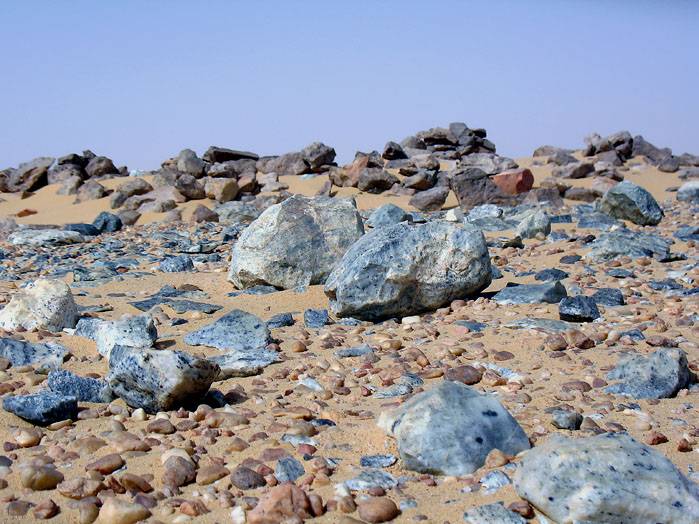
Umm es-Sawan Fayoum: Discover Egypt's Ancient Gypsum Quarries
Hidden in the northern desert of Fayoum, away from Egypt's famous pyramids and temples, lies an archaeological landscape that reveals a fascinating part of ancient Egyptian industry.
Umm es-Sawan is one of Egypt's most remarkable ancient gypsum quarry sites. Thousands of years ago, workers came here to extract a valuable mineral used to create beautiful stone vessels, decorative objects and materials for construction.
The remains of ancient quarrying activities provide evidence of how Egyptian craftsmen transformed natural resources into objects used in everyday life, religious practices and elite burials.
Unlike the monumental architecture of Giza or Saqqara, Umm es-Sawan tells a different story. It reveals the work behind ancient Egyptian craftsmanship: extracting raw materials, shaping stone, organizing workshops and transporting finished products.
Located in the wider northern Fayoum quarry landscape, Umm es-Sawan is also connected to other important archaeological and geological locations, including Widan El-Faras and Gebel Qatrani.
In this guide, discover the history of Umm es-Sawan, why its gypsum was valuable, what archaeologists found at the site and how this remote destination fits into a wider Fayoum adventure.
1. Where Is Umm es-Sawan Located?
Umm es-Sawan is situated in the northern Fayoum Desert, north of Lake Qarun and within the wider Gebel Qatrani landscape.
The site is part of an important archaeological and geological region containing ancient quarries, desert formations and evidence of prehistoric environments.
It is located approximately 40 kilometres southwest of the Giza Plateau, according to archaeological research, although the actual journey depends on the route and access arrangements.
The surrounding region includes several important destinations:
-
Widan El-Faras ancient basalt quarries
-
Gebel Qatrani fossil landscapes
-
Qasr El-Sagha Temple
-
Lake Qarun
-
Dimai, the ancient settlement of Soknopaiou Nesos
-
Other geological and archaeological remains in northern Fayoum
Umm es-Sawan is particularly important because it preserves evidence of ancient gypsum extraction and the production of stone vessels.
Visitors interested in ancient Egyptian industry can explore it alongside the nearby basalt quarries of Widan El-Faras.
Read our related guide:
Widan El-Faras Fayoum: Ancient Quarries and Oldest Paved Road
2. What Is Umm es-Sawan Famous For?
Umm es-Sawan is famous for its ancient gypsum quarries.
Gypsum was an important natural material in ancient Egypt. It could be processed for different purposes, including the manufacture of stone vessels and the preparation of plaster.
The quarry at Umm es-Sawan is especially significant because archaeological investigations revealed evidence of ancient vessel production.
Researchers documented numerous unfinished vessels, workshop-related remains and tools associated with the working of gypsum.
More than 3,000 unfinished vessels were recorded during the earlier archaeological investigations, illustrating the scale of production at the site.
These discoveries help researchers understand how ancient Egyptian craftsmen worked with gypsum and organized production in a remote desert environment.
The quarry is one of the most important examples of ancient gypsum extraction in Egypt.
3. The History of Umm es-Sawan in Ancient Egypt
The history of Umm es-Sawan reaches back to the early periods of ancient Egyptian civilization.
Archaeological evidence indicates that the quarry was exploited during the Early Dynastic Period and the Old Kingdom.
These periods were important in the development of Egyptian state organization, royal burial traditions, craftsmanship and monumental architecture.
As elite tombs and royal complexes became increasingly elaborate, demand grew for specialized materials and finely made objects.
Gypsum was among the materials used by ancient Egyptian craftsmen.
The quarry at Umm es-Sawan supplied a valuable resource that could be shaped into vessels and processed for other uses.
The archaeological remains demonstrate that this was not simply a place where stone was removed from the ground. It was part of a wider production landscape involving extraction, preparation and workshop activities.
4. What Is Gypsum, and Why Did Ancient Egyptians Use It?
Gypsum is a naturally occurring mineral composed of calcium sulfate dihydrate.
It can form in different geological environments and may occur in layers, veins or other mineral deposits.
Ancient Egyptian craftsmen used gypsum in several ways.
Gypsum Stone Vessels
One important use was producing vessels in different shapes and sizes.
These objects could be used for storing substances and as valuable possessions in elite burial contexts.
Their smooth surfaces and attractive appearance made them desirable products.
Gypsum Plaster
Gypsum could also be processed into plaster.
Plaster had practical applications in ancient construction and finishing work.
Decorative and Ornamental Objects
The material could be shaped into smaller objects for decorative or personal use.
The variety of applications made gypsum a valuable resource for ancient Egyptian workshops.
Important distinction: The term "Egyptian alabaster" is often used for two different stones. Archaeological sources sometimes refer to gypsum as alabaster, but the famous Egyptian alabaster used for many vessels and monuments is actually calcite. Umm es-Sawan is known specifically for its gypsum deposits.
5. The Ancient Gypsum Vessels of Umm es-Sawan
One of the most fascinating discoveries at Umm es-Sawan was the large number of unfinished stone vessels.
These objects provide evidence of the production process and the skills of ancient craftsmen.
The vessels were found in different stages of preparation.
Some had already been shaped, while others remained unfinished.
Their presence helps archaeologists reconstruct how gypsum was transformed into finished products.
How Were the Vessels Made?
Although the precise methods varied according to the object, the general process involved several stages:
1. Selecting the gypsum
Workers identified suitable material within the quarry.
2. Extracting the raw stone
The gypsum was removed from the geological deposit using available tools and techniques.
3. Preparing the rough shape
The stone was reduced to a manageable form before further shaping.
4. Hollowing the vessel
Craftsmen worked the interior to create the required container shape.
5. Finishing the surface
The vessel was refined to improve its appearance and make it suitable for use.
The unfinished objects discovered at Umm es-Sawan are valuable because they reveal the production process rather than showing only completed products.
They help us understand the technical knowledge and craftsmanship that supported ancient Egyptian society.
6. More Than 3,000 Unfinished Vessels: An Important Archaeological Discovery
The large number of unfinished vessels documented at Umm es-Sawan is one of the site's most remarkable features.
The discovery demonstrates the scale of ancient production in this remote location.
Instead of imagining the quarry as an isolated place where a few workers extracted gypsum, the archaeological evidence points to organized production activities.
The unfinished vessels also help researchers investigate the relationship between the raw material and the finished products found in ancient Egyptian archaeological contexts.
By examining the mineral composition and manufacturing characteristics of objects, researchers can investigate possible sources and production techniques.
Umm es-Sawan therefore offers important information about ancient Egyptian trade, craftsmanship and the movement of materials.
7. Ancient Tools and Workshop Activities
Archaeologists working at Umm es-Sawan documented tools associated with the extraction and processing of gypsum.
Among the recorded materials were chert tools and equipment used in the production of stone vessels.
Chert is a hard, fine-grained sedimentary rock that can be shaped into sharp tools.
Its properties made it useful for cutting, scraping and working different materials.
The presence of tools and unfinished vessels provides evidence of workshop activity in the quarry landscape.
These discoveries are important because they reveal the practical methods used by ancient craftsmen.
They also help researchers understand how workers adapted available resources to the demands of production.
8. The Ancient Quarry Workshops and Stone Structures
Umm es-Sawan contains archaeological remains associated with the organization of quarry and workshop activities.
Earlier excavations recorded numerous circular stone arrangements across parts of the site.
These features were initially interpreted as possible foundations of worker shelters.
Later archaeological discussion has emphasized the possibility that many were associated with workshop activities rather than ordinary domestic buildings.
This distinction is important.
It reminds us that archaeological remains should be interpreted carefully and that the original function of a structure may not always be obvious.
The remains nevertheless provide valuable evidence of how ancient production was organized in a remote desert setting.
9. How Was Gypsum Transported from Umm es-Sawan?
The transportation of stone and minerals was an essential part of ancient Egyptian industry.
After extraction and processing, materials needed to reach workshops, settlements and major construction centres.
The transportation system used for gypsum from Umm es-Sawan was different from the one associated with the basalt quarries of Widan El-Faras.
Research on the northern Fayoum quarry landscape suggests that gypsum may have been transported overland toward the Nile Valley and the Memphis region.
A cleared route or track could have connected the quarry area with destinations closer to the pyramid fields.
The exact organization and route of transportation should be understood as a subject of archaeological research rather than a fully documented modern road alignment.
The important point is that Umm es-Sawan formed part of a wider supply network connecting remote natural resources with ancient Egyptian production and construction centres.
10. Umm es-Sawan and Widan El-Faras: Two Important Ancient Quarries
The northern Fayoum desert contains two particularly important ancient quarry landscapes.
Although they are located within the same wider region, they supplied different materials and served different purposes.
Widan El-Faras: The Basalt Quarry
Widan El-Faras was an important source of basalt.
The stone was used in selected architectural projects, particularly flooring in Old Kingdom mortuary temples.
The quarry is also famous for its ancient paved road, which connected the extraction area with a loading point near the former shoreline of Lake Moeris.
Umm es-Sawan: The Gypsum Quarry
Umm es-Sawan supplied gypsum used for stone vessels and other purposes.
Its archaeological importance comes from the unfinished vessels, quarry remains and evidence of workshop activities.
Why Are Both Sites Important?
Together, these locations reveal the diversity of ancient Egyptian stone production.
One supplied hard volcanic stone for architectural projects, while the other supplied gypsum for vessels and other products.
They demonstrate how ancient Egyptians developed different extraction and manufacturing techniques according to the properties of each material.
Read more about the neighbouring quarry landscape:
Widan El-Faras Fayoum: Ancient Quarries and Oldest Paved Road
11. Umm es-Sawan and the Ancient Industrial Landscape of Northern Fayoum
Umm es-Sawan is not an isolated archaeological site.
It forms part of a wider industrial landscape that preserves evidence of ancient resource extraction and production.
The northern Fayoum region contains geological deposits, ancient quarries, transportation routes and archaeological remains connected with different periods of Egyptian history.
This landscape is especially valuable because researchers can study how different activities were related to one another.
Instead of focusing only on a single building or monument, archaeologists can investigate the entire process:
-
Identifying natural resources
-
Extracting stone and minerals
-
Processing raw materials
-
Organizing workshop activities
-
Moving products to other regions
-
Supplying royal and private projects
This broader perspective helps explain how ancient Egyptian civilization depended on organized production systems.
12. Nearby Places to Explore Around Umm es-Sawan
Visitors exploring Umm es-Sawan can discover several other important destinations in the wider Fayoum region.
The best itinerary depends on access arrangements, available time and the condition of desert roads.
Gebel Qatrani
Gebel Qatrani is famous for its fossil-rich geological formations and evidence of ancient environments.
The region has produced important discoveries related to prehistoric mammals and early primates.
It is an excellent destination for visitors interested in geology, fossils and natural history.
Read our guide:
Gebel Qatrani Fayoum: Ancient Fossils and Desert Landscapes
Widan El-Faras
Widan El-Faras is one of the most important ancient basalt quarry sites in Egypt.
Its remains provide evidence of Old Kingdom stone extraction and transportation.
Read more:
Widan El-Faras Fayoum: Ancient Quarries and Oldest Paved Road
Qasr El-Sagha Temple
Qasr El-Sagha is a distinctive ancient stone temple located in northern Fayoum.
Its massive blocks and unusual architectural arrangement make it one of the region's most interesting archaeological destinations.
Read our guide:
Qasr El-Sagha Temple Fayoum: Explore Egypt's Ancient Desert Temple
Lake Qarun
Lake Qarun is one of Fayoum's most recognizable natural attractions.
It has a long history connected with the changing landscape of the Fayoum Depression.
Visitors can enjoy its scenery and explore nearby villages and archaeological sites.
Read more:
Lake Qarun Fayoum: The Ultimate Visitor Guide
Dimai: The Ancient City of Soknopaiou Nesos
Dimai is an ancient settlement north of Lake Qarun.
It is known for its temple complex, mudbrick remains and ancient processional road.
The site flourished during the Ptolemaic and Roman periods.
Read more:
Dimai Fayoum: Explore Ancient Soknopaiou Nesos, Egypt's Crocodile City
13. What Can Visitors See at Umm es-Sawan?
Umm es-Sawan is an archaeological quarry landscape rather than a conventional tourist attraction.
Visitors should not expect a large museum, reconstructed workshops or extensive visitor facilities.
The experience focuses on understanding the remains of ancient gypsum extraction and production.
Depending on the areas accessible during a visit, the landscape may include:
-
Geological gypsum deposits
-
Ancient extraction areas
-
Remains associated with workshop activities
-
Archaeological stone arrangements
-
Desert formations and escarpments
-
Evidence connected with ancient stone production
The archaeological remains can be difficult to interpret without specialist knowledge.
A knowledgeable guide can help explain the difference between natural geological features and evidence of human activity.
It is important to remember that the unfinished vessels and tools documented in earlier excavations are archaeological discoveries, not objects visitors should expect to see scattered across the site today.
14. Best Time to Visit Umm es-Sawan
The cooler months are generally more comfortable for exploring the northern Fayoum desert.
October to April
This period is usually preferable for outdoor activities.
Temperatures are generally more suitable for spending time around remote archaeological and geological locations.
May to September
Summer temperatures can become very high in exposed desert areas.
Visitors travelling during this period should plan an early departure and avoid unnecessary midday exposure.
Best Time of Day
Early morning is generally preferable for desert exploration.
It offers more comfortable temperatures and can provide excellent natural light for photography.
The exact schedule should depend on weather conditions and access arrangements.
15. How to Get to Umm es-Sawan from Cairo
Umm es-Sawan is located in a remote area of northern Fayoum.
The journey usually begins by travelling from Cairo toward Fayoum, followed by a route into the northern desert.
The final route depends on the exact location to be visited and the access conditions at the time.
For a well-organized trip, visitors should consider arranging:
-
Private air-conditioned transportation
-
An experienced driver familiar with Fayoum
-
A knowledgeable local guide
-
A suitable vehicle for the planned desert route
-
Advance confirmation of site access
-
Drinking water and essential supplies
Some remote locations may require special transportation or permission.
Do not assume that every quarry area can be reached by an ordinary passenger vehicle.
16. Can You Visit Umm es-Sawan on a Day Trip?
A visit from Cairo may be possible as part of a planned northern Fayoum excursion, but it requires careful organization.
The journey should take account of travel time, road conditions, site access and the number of locations included.
Visitors interested in Umm es-Sawan may also want to explore Widan El-Faras and selected nearby archaeological sites.
However, visiting several remote locations in one day can become tiring if the itinerary is too ambitious.
A private trip with a carefully selected route is often a more practical way to explore the region.
17. Responsible Tourism at Umm es-Sawan
Umm es-Sawan is an important archaeological and geological resource.
Its remains help researchers understand the development of ancient Egyptian craftsmanship and industrial production.
Visitors should help protect the site by following responsible tourism practices:
-
Do not remove gypsum, stones or archaeological objects.
-
Do not collect unfinished vessels or tool fragments.
-
Avoid damaging quarry surfaces.
-
Do not disturb archaeological structures.
-
Stay on approved routes wherever possible.
-
Avoid driving over sensitive archaeological remains.
-
Take all rubbish away from the desert.
-
Follow instructions from local authorities and conservation staff.
Even small fragments can provide valuable scientific information when studied in their original archaeological context.
Protecting the site helps preserve its history for future generations.
18. Is Umm es-Sawan Worth Visiting?
Umm es-Sawan is especially interesting for visitors who want to understand the practical side of ancient Egyptian civilization.
It is a rewarding destination for:
-
Ancient Egyptian history enthusiasts
-
Archaeology enthusiasts
-
Visitors interested in ancient craftsmanship
-
Students and educational groups
-
Geology enthusiasts
-
Travellers exploring unusual Fayoum destinations
-
Visitors interested in the history of ancient industry
It may be less suitable for travellers expecting a traditional monument with decorated walls, statues or extensive visitor facilities.
Its importance lies in the evidence of production, extraction and craftsmanship that survives in the desert landscape.
For anyone interested in how ancient Egyptians transformed natural materials into useful and beautiful objects, Umm es-Sawan offers a fascinating story.
19. Explore the Ancient Quarries of Fayoum with Let’s Explore Egypt Travel
The northern Fayoum desert preserves a remarkable part of Egypt's history.
From the gypsum vessels of Umm es-Sawan to the basalt quarries of Widan El-Faras and the fossil landscapes of Gebel Qatrani, the region offers a different perspective on ancient Egyptian civilization.
These places reveal the people, materials and techniques behind the construction and craftsmanship that made ancient Egypt famous.
Let’s Explore Egypt Travel can help you plan a private Fayoum experience with transportation and local guidance according to your interests and the locations that can be visited.
Whether you are interested in ancient quarries, archaeological landscapes, geology or desert exploration, we can help organize a suitable itinerary.
Explore our Egypt tour packages:
https://letsexploreegypttravel.com/en/egypttourpackages
Contact Let’s Explore Egypt Travel to plan your private Fayoum adventure.
Frequently Asked Questions About Umm es-Sawan Fayoum
1. Where is Umm es-Sawan located?
Umm es-Sawan is located in the northern Fayoum Desert, north of Lake Qarun and within the wider Gebel Qatrani region of Egypt.
2. What is Umm es-Sawan famous for?
It is famous for its ancient gypsum quarries and archaeological evidence of stone vessel production.
3. How old are the Umm es-Sawan quarries?
The quarry was exploited during the Early Dynastic Period and Old Kingdom, with evidence of ancient gypsum use reaching back to the early periods of Egyptian civilization.
4. What was gypsum used for in ancient Egypt?
Gypsum was used to manufacture stone vessels and other objects, as well as for plaster and construction-related purposes.
5. How many unfinished vessels were discovered at Umm es-Sawan?
Earlier archaeological investigations documented more than 3,000 unfinished vessels at the site.
6. Who excavated Umm es-Sawan?
The site was investigated by British archaeologists Gertrude Caton-Thompson and Dorothea Gardner during the early twentieth century. Their work helped establish its importance as an ancient gypsum quarry.
7. Is Egyptian alabaster the same as gypsum?
Not always. The term Egyptian alabaster is often used for calcite, while gypsum is a different mineral. Umm es-Sawan is specifically known for its gypsum deposits.
8. What tools did ancient Egyptians use at Umm es-Sawan?
Archaeological investigations documented chert tools and other evidence associated with quarrying and stone vessel production.
9. Is Umm es-Sawan near Widan El-Faras?
Yes. Both sites are part of the northern Fayoum quarry landscape, although they supplied different materials and served different production purposes.
10. Can tourists visit Umm es-Sawan?
A visit may be possible with suitable planning, but access to the remote quarry area should be confirmed before travelling.
11. What other places can I visit near Umm es-Sawan?
The wider region includes Widan El-Faras, Gebel Qatrani, Qasr El-Sagha, Lake Qarun and Dimai.
12. What is the best time to visit Umm es-Sawan?
The cooler months, generally October to April, are usually more comfortable for exploring the desert.
13. Can visitors collect gypsum or ancient vessels?
No. Visitors should not remove minerals, unfinished vessels, tools or archaeological objects from the site.
14. Do I need a guide to visit Umm es-Sawan?
A knowledgeable local guide and an experienced driver are strongly recommended because the site is remote and access conditions can vary.
Final Travel Tip
Umm es-Sawan offers a rare opportunity to discover the ancient Egyptian world beyond temples and pyramids.
Its gypsum quarries, unfinished vessels and workshop remains reveal the skills of craftsmen who transformed natural materials into objects used thousands of years ago.
Explore the site responsibly and combine it with other northern Fayoum destinations to discover one of Egypt's most fascinating archaeological landscapes.