


Philadelphia Fayoum: Explore the Ancient City of Darb Gerza
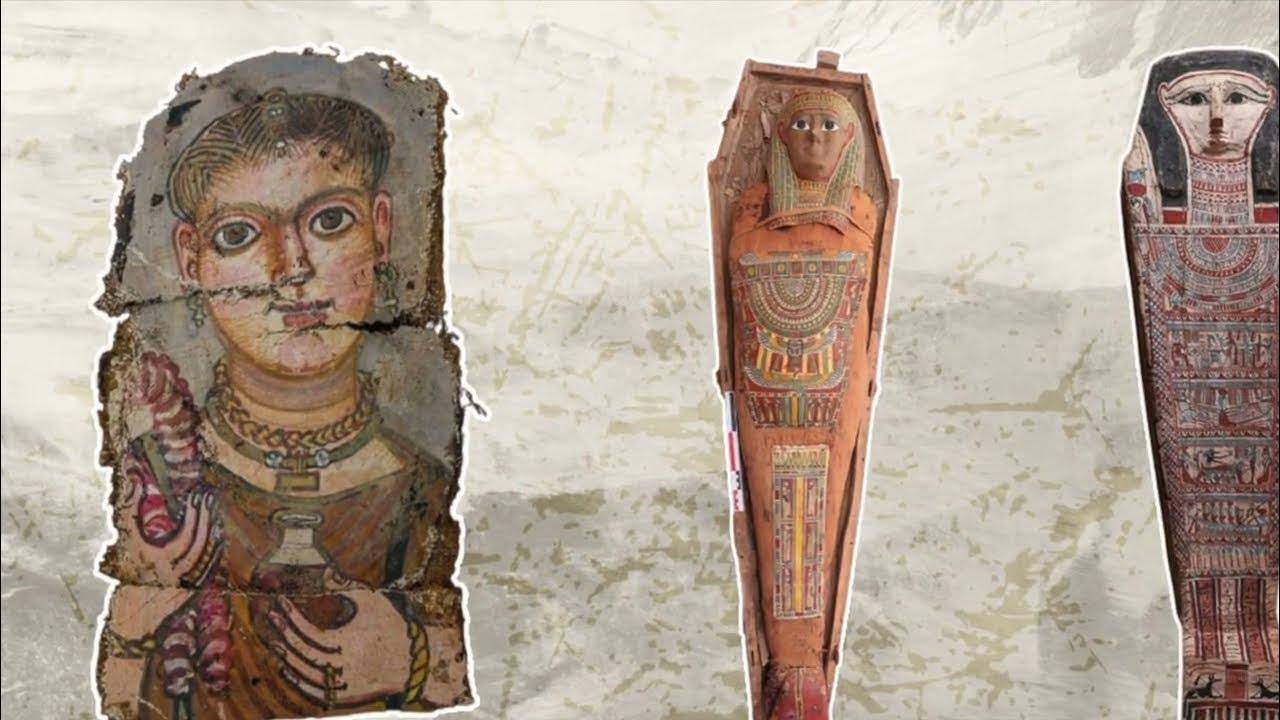
Philadelphia Fayoum: Discover the Ancient Greco-Roman City of Darb Gerza
The Fayoum region of Egypt preserves an extraordinary collection of ancient settlements that reveal how different civilizations lived, worked and developed over thousands of years.
Among these fascinating archaeological destinations is Philadelphia, an ancient Greco-Roman settlement located at the modern archaeological site of Darb Gerza, also known as Kom el-Kharaba el-Kabir Girza.
Founded during the early Ptolemaic period, Philadelphia became an important agricultural and administrative community in the northeastern Fayoum. Its location connected the Fayoum Depression with routes leading toward the Nile Valley, making it an important part of the region's economic and transportation network.
Today, Philadelphia is especially famous for two remarkable archaeological discoveries: the Zenon Archive, one of the most important collections of Greek papyri from Ptolemaic Egypt, and the famous Fayoum mummy portraits, which reveal the artistic and cultural traditions of ancient Egyptian society under Greek and Roman rule.
Recent archaeological excavations have also revealed new information about the city's residential districts, religious buildings, pottery production and ancient cemetery.
In this guide, discover the history of Philadelphia, its connection with the Ptolemaic dynasty, the Zenon papyri, the Fayoum mummy portraits and the archaeological discoveries that make this ancient city one of the most interesting destinations in Fayoum.
1. Where Is Ancient Philadelphia Located?
Ancient Philadelphia is located at Darb Gerza, also known by its archaeological name Kom el-Kharaba el-Kabir Girza, in northeastern Fayoum, Egypt.
The site occupies an important position between the cultivated Fayoum landscape and the desert hills to the southeast.
Its geographical location was particularly significant because it overlooked an ancient commercial route connecting the Fayoum with the Nile Valley.
The settlement covered a substantial area, approximately 2 kilometres from north to south and 1.5 kilometres from east to west, according to the archaeological survey conducted by the French and Austrian research teams.
Philadelphia was part of the ancient Arsinoite region, the administrative territory associated with the Fayoum during the Ptolemaic and Roman periods.
Other important archaeological locations in the wider region include:
-
Bacchias (Kom Umm el-Atl)
-
Karanis (Kom Oshim)
-
Dimai (Soknopaiou Nesos)
-
Medinet Madi
-
Qasr Qarun Temple
-
Hawara Pyramid
Philadelphia is particularly interesting for visitors who want to explore the history of ancient Egyptian towns beyond the famous monuments of Giza and Luxor.
2. The Foundation of Philadelphia During the Ptolemaic Period
Philadelphia was founded during the reign of Ptolemy II Philadelphus, one of the most influential rulers of the Ptolemaic dynasty.
Ptolemy II ruled Egypt from 285 to 246 BC and was associated with major developments in administration, agriculture, commerce and cultural life.
The name Philadelphia is generally connected with his royal epithet, Philadelphus.
The settlement formed part of a wider program of agricultural development in the Fayoum Depression.
During the Ptolemaic period, the region experienced extensive changes in irrigation, land organization and settlement patterns.
New communities were established or expanded along irrigation networks, helping increase agricultural production and support the growing population.
Philadelphia became one of these important communities.
Its development reflects the wider transformation of Fayoum under the early Ptolemies, when Egyptian agricultural resources became increasingly connected with the administration and economy of the Hellenistic kingdom.
3. Why Was Philadelphia Important in Ancient Egypt?
Philadelphia was important because of its agricultural, administrative and geographical position.
It was located near a route connecting the Fayoum with the Nile Valley, making it a useful point for regional movement and economic exchange.
The town also became associated with a large royal agricultural estate administered by Apollonios, the financial minister of Ptolemy II.
This estate was managed by an official named Zenon, whose surviving documents provide an extraordinary record of economic and administrative activity.
Philadelphia was therefore much more than a small agricultural settlement.
Its history reveals the relationship between royal administration, land ownership, agricultural production and the daily lives of people living in Ptolemaic Egypt.
The archaeological remains and papyrus documents help researchers understand how these systems worked.
4. The Famous Zenon Archive: Thousands of Years of Written History
One of the most important discoveries associated with Philadelphia is the Zenon Archive.
This remarkable collection of papyrus documents is connected with Zenon, an estate manager who worked for Apollonios during the reign of Ptolemy II.
The archive contains approximately 2,000 documents and is one of the most important sources for understanding economic and social life in Ptolemaic Egypt.
The documents include:
-
Letters
-
Administrative reports
-
Financial records
-
Agricultural accounts
-
Contracts
-
Business correspondence
-
Information about workers and employees
-
Records concerning land and livestock
-
Documents related to trade and transportation
These papyri are valuable because they provide detailed information about activities that are rarely described in monumental inscriptions.
Instead of reading only about kings and religious ceremonies, researchers can investigate the practical details of everyday administration.
Who Was Zenon?
Zenon was an estate manager working for Apollonios, a powerful official who served as financial minister under Ptolemy II.
He was responsible for managing important activities connected with Apollonios' estate.
His correspondence provides evidence of how agricultural production, financial management and administrative decisions were organized.
The archive also reveals the extensive connections between the Fayoum, Alexandria and other parts of the Ptolemaic kingdom.
Why Is the Zenon Archive So Important?
The archive is important because it gives researchers access to an unusually detailed record of ancient economic life.
It helps explain how the Ptolemaic government organized agricultural estates, managed resources and supervised workers.
It also reveals the interaction between Greek and Egyptian communities during the Hellenistic period.
For historians, the Zenon Archive is one of the most valuable documentary windows into ancient Fayoum.
5. The Fayoum Mummy Portraits and Ancient Philadelphia
Another reason Philadelphia is famous is its connection with the Fayoum mummy portraits.
These extraordinary paintings are among the most recognizable examples of funerary art from Roman Egypt.
They depict individuals with remarkable attention to facial features, hairstyles, clothing and personal appearance.
Many were painted on wooden panels and attached to the upper part of mummified bodies.
The portraits reflect the multicultural society of Roman Egypt, where Egyptian funerary traditions existed alongside artistic influences from the Greek and Roman worlds.
The Er-Rubayyat Cemetery
The archaeological area of Philadelphia is closely associated with the Er-Rubayyat cemetery, which became famous because of the mummy portraits discovered there.
During the late nineteenth century, numerous portraits from this region entered private collections and museums.
Some were collected by Theodor Graf in 1887.
Their archaeological context was not always recorded carefully, making it difficult for researchers to reconstruct the original burial arrangements.
Later archaeological investigations helped identify the cemetery and establish its connection with ancient Philadelphia.
What Makes the Portraits Special?
The portraits are particularly important because they preserve individual human faces from the Roman period.
They show differences in hairstyle, clothing, jewelry and artistic techniques.
They also demonstrate how ancient Egyptian funerary customs adapted to changing cultural influences.
The portraits are not simply paintings. They provide valuable evidence about identity, social status, artistic traditions and burial practices in Roman Egypt.
6. Recent Archaeological Discoveries at Philadelphia
Modern excavations have brought renewed attention to ancient Philadelphia.
The Egyptian archaeological mission working at Gerza has investigated the cemetery and uncovered important remains dating from the Ptolemaic and Roman periods.
Among the notable discoveries announced in recent years are:
-
Mummy portraits
-
Mummified individuals
-
Painted wooden coffins
-
Anthropoid coffins
-
Ptolemaic and Roman funerary structures
-
Papyrus documents
-
Pottery
-
A terracotta statue of Isis-Aphrodite
One particularly important discovery was a large funerary building with a decorated floor made from coloured mortar and tiles.
The building also had a colonnaded area, of which four columns were reported.
These discoveries provide new information about the funerary architecture and burial traditions of ancient Philadelphia.
They also help researchers understand how Egyptian and Greek artistic traditions interacted within the same community.
7. The Ancient Cemetery of Philadelphia
The cemetery associated with Philadelphia is an important archaeological landscape in its own right.
It provides evidence of how the inhabitants of the settlement buried their dead and expressed their religious and cultural identities.
Excavations have revealed different burial structures and funerary traditions.
The archaeological evidence includes:
-
Tomb architecture
-
Painted wooden coffins
-
Mummies
-
Mummy portraits
-
Burial objects
-
Ceramics
-
Funerary inscriptions and documents
The cemetery reflects a society in which different cultural traditions existed together.
Some burial practices continued older Egyptian traditions, while other features reflected Greek and Roman influences.
The 2019–2024 Excavations
Recent research directed by Egyptian archaeologist Basem Gehad examined the early Roman necropolis of ancient Philadelphia.
The excavations provided important information about tomb architecture, mummification practices, burial objects and the development of the cemetery.
The results were published in a dedicated archaeological study examining the funerary landscape of the settlement.
This research has helped restore archaeological context to objects and mummy portraits that had previously become dispersed among different collections.
For visitors interested in the history of ancient burial customs, Philadelphia is an important archaeological reference point.
8. Greek and Egyptian Cultural Traditions in Philadelphia
Philadelphia provides an excellent example of the multicultural character of ancient Fayoum.
During the Ptolemaic and Roman periods, the region was home to people from different cultural backgrounds.
Greek language and administrative practices existed alongside Egyptian religious traditions and local customs.
This cultural interaction can be seen in several aspects of the archaeological record:
Language: Greek was widely used in administration and documentary records, while Egyptian languages continued to be important in religious and everyday contexts.
Religion: Egyptian deities continued to be worshipped, while Greek religious influences were also present.
Burial customs: Egyptian mummification traditions existed alongside funerary styles and artistic features influenced by Greek and Roman culture.
Architecture: Buildings and decorative features sometimes combined different construction traditions.
Art: The Fayoum mummy portraits are among the clearest examples of the interaction between local funerary customs and Mediterranean artistic styles.
Philadelphia therefore offers an important opportunity to understand how cultural exchange shaped everyday life in ancient Egypt.
9. The Ancient Urban Layout of Philadelphia
Philadelphia was a planned settlement with residential and productive districts.
Archaeological research has identified different urban sectors, although much of the original architecture has deteriorated over time.
The site includes two principal zones, separated by the modern road known as Darb el-Girza.
Earlier archaeological investigations concentrated mainly on parts of the southern zone.
More recent research has expanded the study of the northern area.
The archaeological survey has examined:
-
Residential districts
-
Pottery production areas
-
Workshops
-
Ancient structures
-
Building remains
-
Streets and settlement organization
-
The relationship between the town and its surrounding agricultural landscape
The research has helped create a more detailed understanding of how the ancient settlement was organized.
It also shows how much archaeological information can still be recovered from sites that appear relatively modest when compared with Egypt's major monumental destinations.
10. Pottery Production and Ancient Industry
Pottery was essential to everyday life in ancient Philadelphia.
Ceramic vessels were used for cooking, storage, transportation and many household activities.
Archaeological investigations have identified areas associated with pottery production.
Researchers have discovered kilns and large deposits of ceramics, providing evidence of organized manufacturing activities.
The pottery industry was part of the wider economic system of the town.
Local production helped supply the needs of residents and may also have supported exchange with neighbouring communities.
The study of ceramic remains is particularly useful because pottery can help archaeologists establish dates and identify changes in trade and settlement patterns.
These discoveries show that Philadelphia was not only a place of administration and agriculture but also a centre of productive activity.
11. Agriculture and the Royal Estate of Apollonios
Agriculture played a central role in the development of Philadelphia.
The settlement was connected with the agricultural reclamation and development projects undertaken during the early Ptolemaic period.
One of the most important historical figures associated with the town was Apollonios.
He controlled a substantial royal estate, and Zenon was responsible for managing many of its operations.
The Zenon Archive provides evidence of how this estate functioned.
Its documents refer to agricultural production, workers, supplies, livestock and financial matters.
They also reveal how a large estate was connected to a wider network of economic and administrative activities.
The historical importance of Philadelphia is therefore closely linked to the development of agriculture in Fayoum.
12. Trade and Transportation Between Philadelphia and the Nile Valley
Philadelphia occupied a strategic position along a route connecting the Fayoum with the Nile Valley.
This location helped support movement between agricultural communities and larger centres of administration and commerce.
Goods, people and information could travel between the region and other parts of Egypt.
The ancient route also contributed to the importance of the settlement as an administrative and economic centre.
The papyri associated with Philadelphia provide evidence of commercial and logistical activities.
These documents help researchers understand how the ancient economy depended on transportation networks linking settlements, agricultural estates and major cities.
The site's geographical position was therefore one of the main factors behind its historical importance.
13. What Happened to Ancient Philadelphia?
Philadelphia remained an important settlement during the Ptolemaic and Roman periods.
However, like many ancient communities in Fayoum, its importance gradually declined.
Historical and archaeological evidence suggests that the settlement was abandoned by around the beginning of the fifth century CE.
The exact reasons for its decline should not be reduced to a single cause.
Changes in agriculture, settlement organization, administration and the wider economic environment may all have contributed to its transformation.
Over time, buildings deteriorated and the ancient urban landscape became buried beneath archaeological deposits and later activity.
Today, the remains offer an opportunity to reconstruct the history of a community that once played an important role in the economic and cultural life of Fayoum.
14. What Can Visitors See at Philadelphia Today?
Philadelphia is an archaeological site rather than a fully reconstructed ancient city.
Visitors should not expect restored streets, complete houses or an extensive visitor centre.
The surviving remains and accessible archaeological areas may include:
-
Ancient settlement mounds
-
Mudbrick building remains
-
Sections of residential districts
-
Archaeological areas associated with workshops
-
Remains of funerary structures
-
The wider landscape of ancient Gerza
It is important to understand that the famous mummy portraits and many of the papyri associated with Philadelphia are not displayed at the archaeological site.
Many objects have been excavated, transferred to collections or studied by archaeological institutions.
The main value of visiting Philadelphia is understanding the location, archaeological landscape and historical importance of the ancient settlement.
Access arrangements should be confirmed before travelling.
15. Nearby Attractions to Explore Around Philadelphia
A visit to Philadelphia can be part of a wider archaeological journey through Fayoum.
The region contains several important ancient settlements and monuments.
Bacchias – Kom Umm el-Atl
Bacchias was an ancient Greco-Roman settlement with temples, residential buildings, agricultural structures and evidence of local production.
Its history provides an excellent comparison with Philadelphia.
Read our guide:
Bacchias Fayoum: Explore the Ancient Greco-Roman City of Kom Umm el-Atl
Note: Replace this link with your Bacchias article URL when published. This is not the correct Bacchias URL.
Karanis – Kom Oshim
Karanis is one of the best-known Greco-Roman settlements in Fayoum.
Its remains include temples, houses and evidence of everyday life during the Ptolemaic and Roman periods.
Read more:
Karanis Fayoum: Explore the Ancient City of Kom Oshim
Dimai – Soknopaiou Nesos
Dimai is an ancient settlement north of Lake Qarun, famous for its temple complex and ancient processional road.
Read our guide:
Dimai Fayoum: Explore Ancient Soknopaiou Nesos, Egypt's Crocodile City
Medinet Madi
Medinet Madi preserves an ancient temple complex with a history extending from the Middle Kingdom into the Ptolemaic and Roman periods.
Read more:
Medinet Madi Fayoum: Explore the Ancient Temple of Egypt
Lake Qarun
Lake Qarun is one of the most important natural landmarks in Fayoum and offers a beautiful setting for exploring the region.
Read our guide:
Lake Qarun Fayoum: The Ultimate Visitor Guide
16. Best Time to Visit Philadelphia
The cooler months are generally the most comfortable for exploring archaeological sites in Fayoum.
October to April
These months usually provide more comfortable temperatures for outdoor sightseeing.
Visitors can spend more time exploring the archaeological landscape without the intense heat of summer.
May to September
Summer temperatures can become very high, particularly in exposed archaeological areas.
Travellers visiting during these months should plan an early departure, carry sufficient drinking water and avoid unnecessary midday exposure.
Best Time of Day
Morning is generally preferable for exploring Philadelphia.
The weather is often more comfortable, and the natural light can be suitable for photography.
17. How to Get to Philadelphia from Cairo
Ancient Philadelphia is located in northeastern Fayoum, and visitors can reach the wider Gerza area by road from Cairo.
The journey involves travelling toward the northeastern Fayoum region.
The actual route and travel time depend on traffic, road conditions and the selected starting point.
For a comfortable visit, consider arranging:
-
Private air-conditioned transportation
-
An experienced driver
-
A knowledgeable guide familiar with Fayoum
-
A planned itinerary including nearby archaeological sites
-
Drinking water and suitable outdoor clothing
The site is less developed for tourism than major attractions such as the Giza Pyramids.
Visitors should confirm access arrangements and current site conditions before departure.
18. Is Philadelphia Worth Visiting?
Philadelphia is particularly interesting for visitors who want to explore the multicultural history of ancient Egypt.
It is especially suitable for:
-
Ancient Egyptian history enthusiasts
-
Archaeology lovers
-
Visitors interested in Greek and Roman Egypt
-
Students and educational groups
-
Travellers interested in mummy portraits
-
Visitors studying ancient papyri and administration
-
People exploring the archaeological sites of Fayoum
It may be less suitable for travellers expecting a fully restored monument with extensive tourist facilities.
Its importance lies in its archaeological discoveries and its connection with some of the most valuable historical documents and funerary artworks from Roman Egypt.
For visitors who enjoy discovering lesser-known historical destinations, Philadelphia offers a fascinating experience.
19. Explore Ancient Philadelphia and Fayoum with Let's Explore Egypt Travel
Fayoum is one of Egypt's most rewarding destinations for travellers interested in ancient history, archaeology and natural landscapes.
From the ancient city of Philadelphia to Bacchias, Karanis and Dimai, the region preserves an extraordinary record of life during the Ptolemaic and Roman periods.
These ancient settlements reveal how people worked, traded, worshipped and built communities in the fertile Fayoum region.
Let's Explore Egypt Travel can help you organize a private Fayoum experience with transportation and local guidance according to your interests and the locations that can be visited.
Whether you want to explore ancient settlements, discover archaeological remains or enjoy the natural scenery of the Fayoum oasis, we can help plan a suitable itinerary.
Explore our Egypt tour packages:
https://letsexploreegypttravel.com/en/egypttourpackages
Contact Let's Explore Egypt Travel to plan your private Fayoum archaeological adventure.
Frequently Asked Questions About Philadelphia Fayoum
1. Where is ancient Philadelphia located?
Ancient Philadelphia is located at Darb Gerza, also known as Kom el-Kharaba el-Kabir Girza, in northeastern Fayoum, Egypt.
2. Who founded Philadelphia in Egypt?
Philadelphia was founded during the reign of Ptolemy II Philadelphus in the third century BC.
3. Why was the ancient city called Philadelphia?
The name is associated with the royal epithet Philadelphus used by Ptolemy II.
4. What is Philadelphia famous for?
It is famous for the Zenon Archive, the Fayoum mummy portraits, its Ptolemaic h