


Sobek: The Crocodile God of Ancient Egypt
Sobek: The Crocodile God of Ancient Egypt – Mythology, Temples and Religious Worship
Among the many gods of ancient Egypt, few were as powerful and fascinating as Sobek, the crocodile god.
Represented as a crocodile or a human figure with a crocodile head, Sobek was associated with water, fertility, strength, protection and the dangerous forces of nature. His image reflected the Nile crocodile: a powerful animal that could inspire fear while also symbolizing the life-giving waters of the Egyptian landscape.
Sobek was worshipped in different parts of ancient Egypt, but his cult became particularly important in the Fayoum region. Here, the crocodile's natural environment, the agricultural importance of water and the development of local religious centres helped establish one of the most significant traditions of crocodile worship in Egyptian history.
From the ancient city of Shedet, known to the Greeks as Crocodilopolis, to the temples of Tebtunis, Karanis, Dimai and Kom Ombo, Sobek's worship developed through many centuries.
His story is also connected with sacred crocodiles, animal mummies, royal power and the ancient Egyptian understanding of creation and regeneration.
In this guide, discover who Sobek was, what he represented, how he was worshipped, where his temples were located and why he remains one of the most recognizable gods of ancient Egypt.
1. Who Was Sobek in Ancient Egyptian Religion?
Sobek was an ancient Egyptian deity associated with the crocodile and the powerful natural forces connected with water.
He was commonly represented in two forms:
-
A complete crocodile.
-
A human body with the head of a crocodile.
His image appeared in temple reliefs, statues, amulets, religious manuscripts and funerary objects.
Sobek was not simply a god of dangerous animals. His religious identity included several important aspects of Egyptian life.
He was associated with:
-
The Nile and its waters
-
Fertility and agricultural prosperity
-
Physical strength and protection
-
Royal authority
-
Creation and regeneration
-
The dangerous power of nature
These associations made Sobek particularly important in regions where water was essential to agriculture and everyday survival.
The ancient Egyptians recognized that the crocodile was both powerful and unpredictable. Its natural characteristics helped shape the religious personality of the god.
Sobek could represent the life-giving power of water, but also the destructive force that people feared.
2. What Does the Name Sobek Mean?
The name Sobek is the conventional modern spelling of the ancient Egyptian divine name.
It appears in different forms in historical and scholarly sources, including Suchos, a Greek form used in ancient descriptions.
The exact development and interpretation of the name have been studied by Egyptologists, but its association with the crocodile is clear from the god's iconography and religious traditions.
Sobek was worshipped under different local forms throughout Egypt.
These local identities were not necessarily identical. Each temple and religious centre could develop its own theology, titles, ceremonies and relationships with other deities.
This explains why Sobek's cult in Fayoum was not exactly the same as his cult at Kom Ombo in Upper Egypt.
3. How Was Sobek Represented?
Sobek's appearance was closely connected with the Nile crocodile.
His most familiar representation shows a man with a crocodile head.
In other representations, he appears as a complete crocodile.
He could also wear different crowns and headdresses depending on the religious context.
Some representations associate him with solar symbolism, particularly when he was connected with Re.
Sobek as a Crocodile
The crocodile form emphasized the god's strength and natural power.
It also reflected the importance of crocodiles in the Nile environment.
Sobek as a Human Figure with a Crocodile Head
This form allowed artists to represent the deity as a powerful anthropomorphic figure while preserving his crocodile identity.
It is one of the most recognizable forms in ancient Egyptian religious art.
Sobek and Solar Symbolism
In some religious traditions, Sobek became closely associated with the sun god Re.
The combined deity Sobek-Re reflected the development of Egyptian theology and the tendency to combine the powers of different gods.
The Metropolitan Museum of Art preserves examples of objects representing Sobek and his connections with other deities. <Cite refs={["turn641177search1","turn641177search2"]}/>
4. The Powers and Religious Meaning of Sobek
Sobek's religious identity was complex.
His importance cannot be explained through one single characteristic.
Water and the Nile
Sobek was closely associated with water and the natural environment of the Nile.
Water was essential for agriculture, transportation, fishing and settlement.
The crocodile's connection with rivers and wetlands helped establish Sobek as a deity connected with this vital resource.
Fertility and Agricultural Prosperity
The Nile flood deposited fertile soil across the agricultural landscape.
Sobek's association with water therefore connected him with agricultural fertility and the prosperity of Egyptian communities.
Strength and Protection
The crocodile was a powerful predator.
Its strength and ability to survive in a dangerous environment made it an appropriate symbol of protection and physical power.
Royal Authority
Sobek also became connected with kingship and royal power.
During the Middle Kingdom, his cult gained particular importance in the Fayoum, where royal building projects and religious institutions strengthened his position.
Regeneration and Creation
Some religious traditions connected Sobek with creation and the regeneration of life.
His relationship with water and the primeval forces of creation helped establish a broader theological role beyond his crocodile identity.
These different characteristics explain why Sobek could be worshipped as both a protective and potentially dangerous deity. <Cite refs={["turn641177search0","turn641177search4","turn641177search22"]}/>
5. Sobek in Ancient Egyptian Mythology
Sobek appears in several Egyptian religious traditions.
His mythology changed across different periods and religious centres.
Rather than having one single story, he developed different roles within the wider Egyptian religious system.
Sobek and the Primeval Waters
Some traditions associated Sobek with the primeval waters from which creation emerged.
This connected him with the earliest forces of the universe.
His association with water made him particularly suitable for religious explanations of fertility, creation and the renewal of life.
Sobek and the Creation of Life
In certain traditions, Sobek was connected with the emergence of life from the primordial waters.
His creative role was sometimes expressed through his relationship with the Nile and the fertility of the land.
Sobek and Horus
Sobek was also associated with Horus in some Egyptian religious traditions.
The relationship between the two gods could vary according to local theology.
At Kom Ombo, Sobek was worshipped alongside Haroeris, a form of Horus the Elder.
The temple's dual dedication reflects the importance of combining different divine traditions within one religious complex.
Sobek and Re
The association between Sobek and Re created the combined divine identity known as Sobek-Re.
This combination connected the crocodile god with solar power, creation and regeneration.
The relationship between Sobek and other Egyptian deities demonstrates how flexible and complex Egyptian religious beliefs could become.
6. Why Was Sobek So Important in the Fayoum?
The Fayoum region was one of the most important centres of Sobek worship.
Its ancient landscape included lakes, marshes, waterways and agricultural areas.
The region's natural environment helped establish a strong connection between crocodiles and local religious traditions.
Sobek became closely associated with the prosperity of the oasis.
His worship was particularly important in settlements where agriculture depended on water management.
The principal religious centre was ancient Shedet, known in Greek as Crocodilopolis.
However, Sobek was also worshipped at several other Fayoum sites.
These included:
-
Tebtunis
-
Karanis
-
Dimai
-
Medinet Madi
-
Theadelphia
-
Hawara and its wider archaeological landscape
Each location developed its own religious traditions and local manifestations of the crocodile god.
The Fayoum is therefore one of the most important regions for understanding the diversity of Sobek worship. <Cite refs={["turn641177search0","turn641177search22","turn641177search6"]}/>
7. Crocodilopolis: The Ancient City of Sobek
One of the most famous centres of Sobek worship was ancient Shedet, known to the Greeks as Crocodilopolis.
The ancient settlement is associated with the area of Kiman Faris in modern Medinet el-Fayoum.
The city's religious identity was strongly connected with the crocodile god.
Its name, Crocodilopolis, means City of Crocodiles.
During the Ptolemaic period, the settlement also became associated with the name Arsinoe.
The Great Temple of Sobek was one of the most important religious monuments in the city.
Although the temple no longer survives as a complete monument, archaeological and historical evidence demonstrates its importance.
Crocodilopolis played a central role in the religious history of the Fayoum and became one of the most recognizable centres of crocodile worship in Egypt.
Read our complete guide:
Crocodilopolis: Ancient City of Sobek and Sacred Crocodiles
8. The Great Temple of Sobek in Crocodilopolis
The Great Temple of Sobek was the principal religious centre of ancient Shedet.
Its development is associated particularly with the Middle Kingdom and the Twelfth Dynasty.
The temple's history reflects the growing importance of Sobek in the Fayoum.
The building underwent different stages of development and later modifications.
Although much of the original structure has disappeared, archaeological evidence and historical records preserve information about its former importance.
The temple was more than a place for religious ceremonies.
It was part of a wider religious institution involving priests, rituals, offerings and the preservation of sacred knowledge.
Its importance also reflected the relationship between Egyptian kingship, the Fayoum region and the worship of Sobek.
9. Amenemhat III and the Rise of Sobek Worship
Pharaoh Amenemhat III of the Twelfth Dynasty was closely associated with the development of the Fayoum.
His reign was an important period of agricultural and architectural activity in the region.
He supported projects connected with water management and the development of settlements.
Sobek's religious importance also increased during this period.
The connection between the king and the crocodile god helped strengthen the religious identity of the Fayoum.
Amenemhat III was also responsible for important monuments in the region, including the pyramid complex at Hawara.
His association with Fayoum's development makes him an important figure in the history of Sobek worship.
Discover another part of his legacy:
Hawara Pyramid: The Ultimate Visitor Guide
10. Sobek Worship at Tebtunis
Tebtunis was one of the most important religious settlements in southern Fayoum.
Its principal temple was dedicated to Soknebtynis, a local manifestation of Sobek.
The temple complex included religious buildings and a processional road.
Archaeological excavations also revealed a large cemetery associated with crocodile burials.
Tebtunis is particularly important because of the papyrus documents discovered there.
The manuscripts preserve information about temple administration, religious traditions and the local cult of Sobek.
These discoveries help researchers understand how crocodile worship operated in an ancient Egyptian community.
Read more:
Tebtunis Fayoum: Ancient City, Sobek Temple and Papyrus Library
11. Sobek Worship at Karanis
Karanis, also known as Kom Oshim, was an important Greco-Roman settlement in northern Fayoum.
Its temples were associated with two local forms of Sobek:
-
Pnepheros
-
Petesouchos
These local divine identities demonstrate that Sobek worship was not identical throughout the region.
Different communities developed their own religious traditions, titles and temple practices.
Karanis is also important because archaeological discoveries have revealed houses, temples, storage facilities and evidence of everyday life.
Its remains provide a valuable picture of a provincial Egyptian settlement during the Ptolemaic and Roman periods.
Read our guide:
Karanis Fayoum: Explore the Ancient City of Kom Oshim
12. Soknopaios: The Crocodile God of Dimai
Dimai, also known as Soknopaiou Nesos, was another important religious settlement in Fayoum.
Its principal deity was Soknopaios, a local form of Sobek.
The ancient Egyptian name of this deity is commonly interpreted as Sobek of Dimai.
The settlement contained a major temple complex and a long processional road.
Its religious history is especially interesting because local traditions combined Egyptian religious beliefs with the wider cultural environment of the Ptolemaic and Roman periods.
The Metropolitan Museum of Art preserves a representation of a falcon-headed crocodile associated with Soknopaios, illustrating the combination of crocodile and solar or Horus-related symbolism. <Cite refs={["turn641177search2"]}/>
Read more:
Dimai Fayoum: Explore Ancient Soknopaiou Nesos
13. Sobek at Medinet Madi
Medinet Madi is another important archaeological site in Fayoum.
Its temple complex includes religious traditions associated with Sobek and Renenutet.
Renenutet was a goddess connected with harvest, nourishment and agricultural prosperity.
The relationship between these deities reflects the importance of agriculture and water in the ancient Fayoum.
The temple has a long history, with its earliest major construction phases associated with the Middle Kingdom and later additions made during subsequent periods.
Medinet Madi offers a valuable comparison with the religious architecture of Crocodilopolis and Tebtunis.
Read our visitor guide:
Medinet Madi Fayoum: The Ultimate Visitor Guide
14. Sobek at Kom Ombo: The Great Double Temple
Kom Ombo, located north of Aswan, was one of the most important centres of Sobek worship in Upper Egypt.
The temple is particularly famous because it was dedicated to two principal deities:
-
Sobek, the crocodile god.
-
Haroeris, a form of Horus the Elder.
Unlike many Egyptian temples dedicated to one principal deity, Kom Ombo has a distinctive double design.
It contains parallel architectural axes and separate sanctuaries associated with the two gods.
The southern side is associated with Sobek, while the northern side is associated with Haroeris.
The present temple was constructed mainly during the Ptolemaic and Roman periods, although an earlier religious building existed at the site.
The temple's decoration provides important information about the religious traditions of the period.
The Egyptian Ministry of Tourism and Antiquities identifies Sobek's associations with fertility, water, the inundation and vegetation. <Cite refs={["turn641177search7"]}/>
Why Is Kom Ombo Important?
Kom Ombo provides one of the best-preserved examples of a temple dedicated to Sobek.
Visitors can explore its columns, reliefs, sanctuaries and inscriptions.
The temple also demonstrates how Egyptian religious traditions continued under Ptolemaic and Roman rule.
For visitors interested in Sobek, it is one of the most important monuments in southern Egypt.
15. The Crocodile Museum at Kom Ombo
Beside the Temple of Kom Ombo is the Crocodile Museum.
The museum focuses on the religious and cultural importance of crocodiles in ancient Egypt.
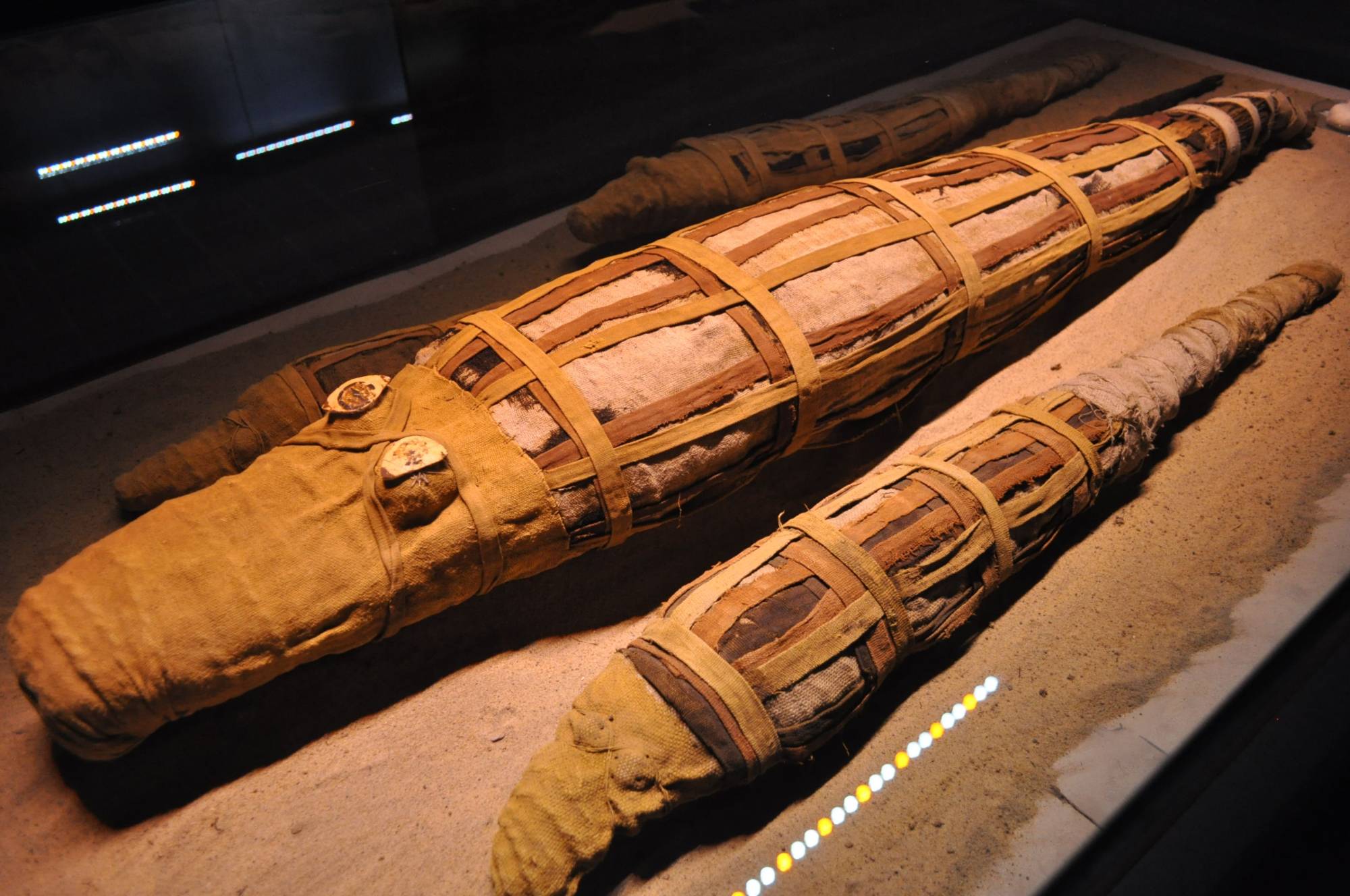
It opened in 2012 and displays a collection of mummified Nile crocodiles and objects associated with Sobek worship.
The exhibition includes:
-
Mummified crocodiles of different sizes
-
Crocodile remains and fetuses
-
Statues of Sobek
-
Religious objects
-
Examples of ancient crocodile burial practices
-
Models illustrating sacred animal burials
The museum provides a particularly useful opportunity to see preserved crocodile mummies.
It also helps visitors understand why the crocodile became such an important symbol in ancient Egyptian religion.
The Ministry of Tourism and Antiquities provides an official description of the museum and its collection. <Cite refs={["turn641177search8"]}/>
16. Why Were Crocodiles Sacred to Sobek?
Crocodiles were associated with Sobek because of their natural power and connection with water.
Ancient Egyptians recognized the danger of these animals, particularly in rivers and marshes.
However, their strength and relationship with the Nile also made them powerful religious symbols.
The crocodile represented several characteristics associated with Sobek:
-
Physical strength
-
Protection
-
Fertility
-
Natural power
-
Water and regeneration
In some temples, sacred crocodiles were maintained in religious settings.
Ancient accounts describe animals receiving food and special treatment.
When sacred crocodiles died, their bodies could be mummified and buried.
Other crocodiles were prepared as votive offerings by worshippers.
It is important to remember that not every crocodile mummy represented a sacred temple animal. Different forms of animal mummification served different religious purposes.
17. Crocodile Mummies and the Cult of Sobek
Crocodile mummification became one of the most recognizable features of Sobek worship.
Archaeologists have discovered crocodile mummies in different parts of Egypt, particularly in regions associated with the crocodile god.
The Fayoum is especially important because of its temples and animal burial sites.
Crocodile mummies could be carefully wrapped in linen, placed in containers or prepared with decorative details.
Some preserved remains include young crocodiles, embryos and eggs.
The archaeological evidence demonstrates that animal mummification was a complex religious practice rather than a single standardized process.
Read our complete article:
Crocodile Mummies of Fayoum: Ancient Egypt's Cult of Sobek
18. The Book of the Faiyum: Sobek and the Sacred Landscape
One of the most important religious documents associated with the Fayoum is the Book of the Faiyum.
This ancient Egyptian composition presents the region as a sacred landscape connected with Sobek and other deities.
It combines geography, mythology and religious symbolism.
The Fayoum is represented not simply as a physical area but as a place with a special divine identity.
One surviving section of the Book of the Faiyum is preserved at the Walters Art Museum.
Its imagery includes the lake, Sobek-Re, Osiris, the solar child and other divine figures.
The composition connects the sacred landscape of the Fayoum with stories of creation and the regeneration of the sun. <Cite refs={["turn641177search12","turn641177search6"]}/>
This text is especially valuable because it reveals how priests understood the relationship between local geography and Egyptian mythology.
19. Sobek During the Ptolemaic and Roman Periods
Sobek's worship continued to develop during the Ptolemaic and Roman periods.
These eras were characterized by interaction between Egyptian, Greek and Roman cultural traditions.
Egyptian temples continued to preserve traditional religious beliefs, while local communities developed new forms of worship.
Sobek became associated with different divine identities and local manifestations.
In some places, he was connected with solar deities.
In others, he was worshipped alongside Horus or other local gods.
The temples of Fayoum and Kom Ombo provide important evidence of these developments.
Documents from Tebtunis and Soknopaiou Nesos are especially valuable for understanding the religious life of the region.
They preserve information about priests, temple activities, religious texts and the local theology of Sobek. <Cite refs={["turn641177search6","turn641177search22"]}/>
20. The Decline of Sobek Worship
The religious traditions of ancient Egypt changed significantly during the late Roman and Byzantine periods.
The spread of Christianity gradually transformed religious life throughout the country.
Traditional temple institutions lost their former position, and many ancient religious practices declined.
However, the end of official temple worship did not mean that every tradition disappeared immediately.
The history of individual settlements varied, and some communities continued to occupy the same areas for centuries.
The archaeological record therefore shows a gradual transformation rather than one single moment when Sobek worship ended everywhere.
Today, Sobek remains one of the best-known gods of ancient Egypt because of the surviving temples, statues, papyri and crocodile mummies.
21. Where Can You Explore the History of Sobek in Egypt?
Travellers interested in Sobek can explore several important archaeological destinations.
| Destination | Historical importance |
|---|---|
| Crocodilopolis, Fayoum | Ancient centre of Sobek worship |
| Tebtunis, Fayoum | Temple of Soknebtynis and crocodile cemetery |
| Karanis, Fayoum | Temples dedicated to local forms of Sobek |
| Dimai, Fayoum | Temple of Soknopaios |
| Medinet Madi, Fayoum | Temple traditions associated with Sobek |
| Kom Ombo, Aswan | Major double temple dedicated to Sobek and Haroeris |
| Crocodile Museum, Kom Ombo | Museum collection of crocodile mummies |
These destinations provide different perspectives on the history of Sobek and the religious traditions of ancient Egypt.
22. Best Time to Explore Sobek's Ancient Temples
The cooler months are generally the most comfortable period for exploring archaeological sites in Egypt.
October to April
This period usually offers more pleasant temperatures for outdoor sightseeing.
It is particularly suitable for visiting Fayoum's archaeological locations and the temples of Upper Egypt.
May to September
Summer temperatures can become very high, especially in exposed archaeological areas.
Visitors should plan early departures, carry sufficient drinking water and protect themselves from the sun.
Best Time of Day
Morning visits are generally preferable for outdoor archaeological sightseeing.
They offer more comfortable temperatures and good natural light for photography.
23. Plan a Journey Through the Ancient World of Sobek
A journey through the history of Sobek can combine archaeological sites in Fayoum with the great temples of Upper Egypt.
Fayoum Archaeological Experience
A possible Fayoum itinerary could include:
Crocodilopolis: Discover the ancient city of Shedet and its relationship with Sobek.
Karanis: Explore the remains of a Greco-Roman settlement with temples associated with local forms of the crocodile god.
Tebtunis: Discover the temple of Soknebtynis, the papyrus library and the crocodile cemetery.
Medinet Madi: Explore the ancient temple complex and its religious traditions.
Dimai: Visit the archaeological remains of Soknopaiou Nesos and learn about the worship of Soknopaios.
The route should be planned according to site access, road conditions and the time available.
Upper Egypt Experience
Visitors travelling to Aswan can explore:
-
Kom Ombo Temple
-
The Crocodile Museum
-
The archaeological landscapes of the Nile Valley
Combining Fayoum and Kom Ombo requires a multi-day journey because the locations are far apart.
24. Explore Ancient Egyptian History with Let's Explore Egypt Travel
Egypt offers an extraordinary opportunity to discover the mythology, temples and religious traditions of one of the world's oldest civilizations.
From the ancient city of Crocodilopolis to the temples of Tebtunis and Kom Ombo, the history of Sobek reveals how ancient Egyptians understood the natural world and the power of the Nile.
Let's Explore Egypt Travel can help organize a private archaeological experience in Fayoum, with transportation and local guidance according to your interests and the destinations that can be visited.
Whether you want to explore ancient temples, discover the history of crocodile worship or learn about the archaeological heritage of Fayoum, we can help plan a suitable journey.
Explore our Egypt tour packages:
https://letsexploreegypttravel.com/en/egypttourpackages
Contact Let's Explore Egypt Travel to discover the fascinating world of ancient Egyptian gods and temples.
Frequently Asked Questions About Sobek
1. Who was Sobek in ancient Egypt?
Sobek was an ancient Egyptian god associated with crocodiles, water, fertility, protection and strength. He was commonly represented as a crocodile or a man with a crocodile head.
2. What was Sobek the god of?
Sobek was associated with water, the Nile, fertility, agricultural prosperity, physical strength and protection.
3. Why was Sobek represented as a crocodile?
The crocodile's strength, dangerous nature and connection with rivers and wetlands made it a powerful symbol for the deity.
4. Where was Sobek worshipped?
Sobek was worshipped throughout Egypt, with particularly important cult centres in Fayoum and Kom Ombo.
5. What was the most important centre of Sobek worship in Fayoum?
Ancient Shedet, known to the Greeks as Crocodilopolis, was one of the most important centres of Sobek worship.
6. What is the relationship between Sobek and Crocodilopolis?
Crocodilopolis was the Greek name of ancient Shedet, a city strongly associated with the crocodile god.
7. Was Sobek connected with the Nile?
Yes. Sobek was associated with water and the Nile, making him an important deity in a civilization dependent on river water and agricultural fertility.
8. Was Sobek connected with Horus?
Yes. Some religious traditions associated Sobek with Horus. At Kom Ombo, the two deities were worshipped together.
9. What is Sobek-Re?
Sobek-Re was a combined divine identity connecting Sobek with Re, the sun god.
10. Why were crocodiles mummified in ancient Egypt?
Crocodiles could be mummified as sacred animals or as votive offerings dedicated to Sobek.
11. Where can I see crocodile mummies in Egypt?
The Crocodile Museum beside Kom Ombo Temple in Aswan displays mummified Nile crocodiles and objects connected with Sobek worship.
12. What is Soknebtynis?
Soknebtynis was a local form of Sobek worshipped at the ancient Fayoum settlement of Tebtunis.
13. What is Soknopaios?
Soknopaios was a local manifestation of Sobek worshipped at the ancient settlement of Dimai, also known as Soknopaiou Nesos.
14. What is the Book of the Faiyum?
The Book of the Faiyum is an ancient Egyptian religious composition that presents the Fayoum as a sacred landscape connected with Sobek and other deities.
15. Is Sobek still worshipped today?
Sobek is primarily studied today as part of ancient Egyptian religious history. His temples, images and surviving texts remain important archaeological and cultural heritage.
Final Thoughts: Discover the Power of Sobek
Sobek was one of the most fascinating deities of ancient Egypt.
His connection with crocodiles, water, fertility and protection made him an important figure in the religious life of the Nile Valley.
His worship developed across different regions, especially in Fayoum, where ancient communities built temples and maintained religious traditions connected with the crocodile god.
From Crocodilopolis and Tebtunis to Karanis, Dimai and Kom Ombo, the surviving archaeological evidence reveals the diversity and importance of Sobek worship.
Exploring his history is also a journey through the ancient Egyptian understanding of nature, mythology and the sacred power of water.