


Ancient Egyptian Gods of Fayoum: Temples, Myths and Sacred Animals
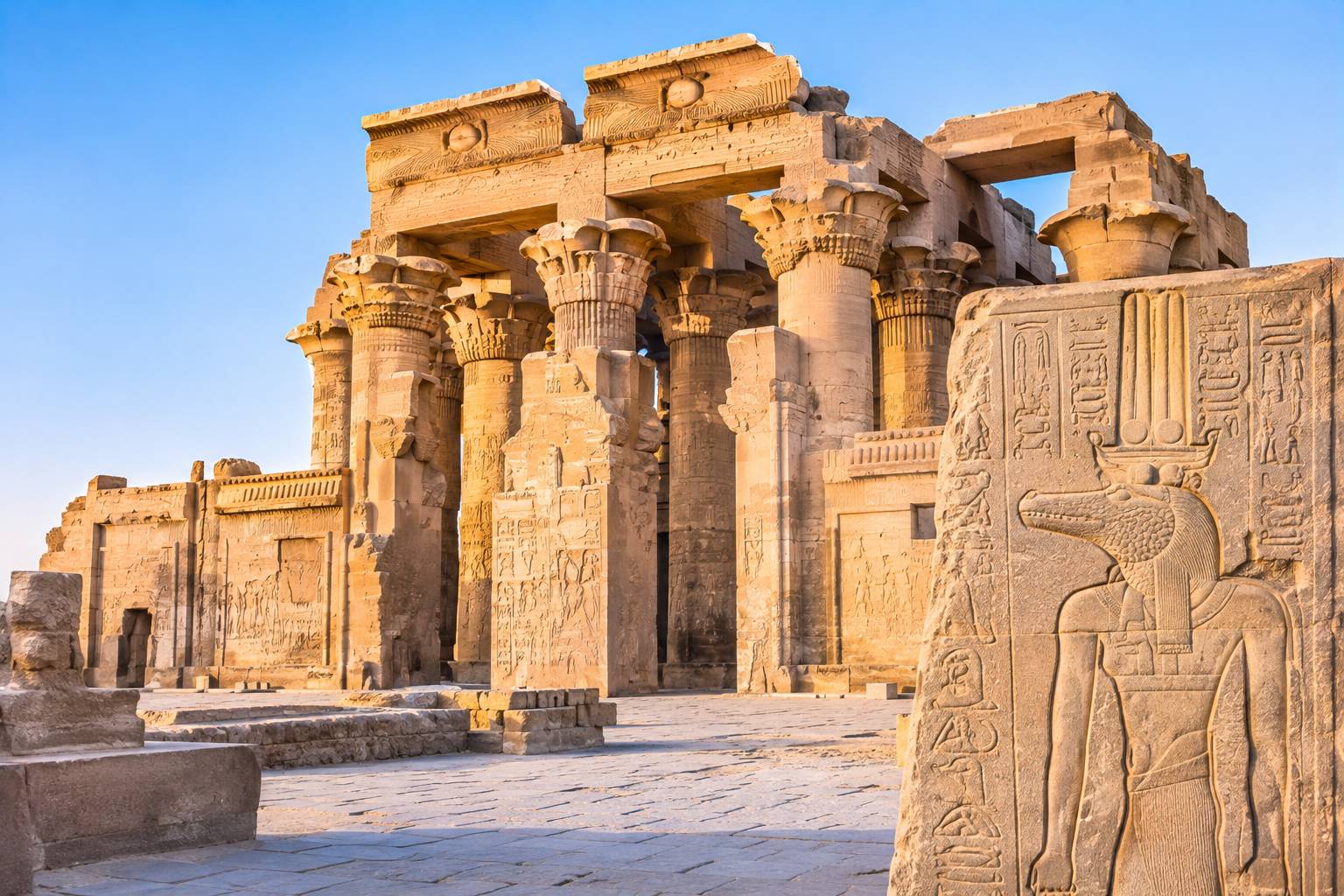
The Ancient Egyptian Gods of Fayoum: Temples, Mythology and Sacred Animals
The Ancient Egyptian Gods of Fayoum: Discover the Temples, Mythology and Sacred Animals
The Fayoum region is famous for its lakes, desert landscapes, archaeological sites and remarkable natural history. However, thousands of years ago, it was also one of the most fascinating religious landscapes in ancient Egypt.
Ancient Egyptian communities living in Fayoum worshipped several powerful gods and goddesses connected with water, agriculture, fertility, protection and the natural world.
Among them, Sobek, the crocodile god, became particularly important. His worship was closely connected with the region's waterways and its agricultural prosperity.
Other important deities included Renenutet, the cobra goddess of harvest and nourishment; Horus, the falcon god associated with kingship; Isis, the great goddess of protection and motherhood; and Osiris, the god of the afterlife and regeneration.
These gods were worshipped in different temples and settlements throughout the region. Some religious traditions were closely associated with particular towns, while others connected Fayoum with the wider religious world of ancient Egypt.
The archaeological remains of Crocodilopolis, Tebtunis, Karanis, Dimai and Medinet Madi provide valuable evidence of this religious heritage.
In this guide, discover the most important ancient Egyptian gods associated with Fayoum, their mythology, temples, sacred animals and the archaeological discoveries that help us understand their worship.
1. Why Was Fayoum Important in Ancient Egyptian Religion?
Fayoum occupied a special position in ancient Egyptian civilization.
Located southwest of Cairo, the region was connected to the Nile Valley through the Bahr Youssef, a major waterway that supplied the depression.
Its lakes, wetlands, agricultural land and natural waterways created an environment that supported farming, fishing and settlement.
Water was essential to every aspect of ancient Egyptian life. It provided drinking supplies, supported agriculture and helped communities survive in an otherwise dry environment.
These conditions influenced the religious traditions of the region.
Several deities worshipped in Fayoum were associated with water, fertility, crops and the natural forces that sustained life.
The region became particularly important for the worship of Sobek and Renenutet.
Over time, local temples developed their own religious identities, while remaining connected with broader Egyptian mythology.
Fayoum therefore provides an excellent opportunity to understand how ancient Egyptian religion developed within a particular geographical and agricultural environment.
2. Sobek: The Crocodile God of Fayoum
<text color="secondary" size="xs" weight="medium">THE PRINCIPAL CROCODILE DEITY</text>
Sobek was one of the most important gods worshipped in ancient Fayoum.
He was represented as a crocodile or as a human figure with the head of a crocodile.
His religious associations included:
-
Water and the Nile
-
Fertility and agricultural prosperity
-
Strength and protection
-
Royal authority
-
Regeneration and creation
The crocodile was a powerful animal in the ancient Egyptian environment.
It lived in rivers, lakes and wetlands, where it could be both dangerous and respected.
The animal's strength and connection with water helped shape Sobek's religious identity.
In Fayoum, Sobek became a central deity whose worship was closely connected with the natural environment and the prosperity of local communities.
Sobek's Most Important Religious Centres in Fayoum
Sobek was worshipped in several ancient settlements, including:
-
Crocodilopolis, ancient Shedet
-
Tebtunis
-
Karanis
-
Dimai
-
Medinet Madi
Different towns worshipped local manifestations of the god, sometimes with distinct names and religious traditions.
Learn more:
Sobek: The Crocodile God of Ancient Egypt
3. Renenutet: The Cobra Goddess of Harvest and Fertility
Renenutet was one of the most important goddesses associated with agriculture and food production.
She was commonly represented as a cobra or as a woman with a cobra head.
Her name is often translated as something close to "the nourisher" or "the feeding snake."
She was associated with:
-
Agricultural fertility
-
Harvests and grain
-
Food and nourishment
-
Protection of stored produce
-
Royal protection
Renenutet was especially important in agricultural regions such as Fayoum.
The success of farming depended on water, fertile soil, successful harvests and the proper storage of grain.
Her religious identity reflected these essential aspects of daily life.
Renenutet and the Agricultural Community
Renenutet was not only a goddess of temples and royal religion.
Her protective role was also relevant to ordinary agricultural communities.
Farmers depended on successful harvests and the preservation of their food supplies.
The goddess was therefore closely connected with the prosperity of households and agricultural production.
Her popularity in Fayoum demonstrates how religious beliefs could reflect the practical needs of local communities.
The Global Egyptian Museum describes Renenutet as a harvest and fertility goddess, particularly important in the Fayoum region. <Cite refs={["turn824846search5","turn824846search6"]}/>
4. Horus: The Falcon God of Kingship
Horus was one of the most important gods in ancient Egyptian religion.
He was commonly represented as a falcon or a man with a falcon head.
His principal associations included:
-
Kingship
-
Protection
-
Divine authority
-
The sky
-
The legitimate power of the pharaoh
Horus was closely connected with the Egyptian royal tradition.
The pharaoh was considered the living representative of Horus on earth, linking kingship with divine authority.
Horus in the Religious World of Fayoum
Horus was worshipped in different forms throughout Egypt, including in religious traditions connected with Fayoum.
At some local centres, he was associated with Sobek and Renenutet.
This relationship demonstrates that Egyptian gods were not always worshipped independently.
Different deities could form local divine groups or share religious functions.
In some traditions, Sobek was connected with Horus through the wider mythology of divine protection and kingship.
The exact relationships varied between temples and historical periods.
5. Isis: The Great Goddess of Protection and Motherhood
Isis was one of the most influential goddesses in ancient Egyptian religion.
She was associated with:
-
Motherhood
-
Protection
-
Healing and magic
-
Royal legitimacy
-
Marriage and family
-
The resurrection of Osiris
She was usually represented as a woman wearing a throne-shaped crown or, in other forms, with cow horns and a solar disk.
Isis and the Religious Traditions of Fayoum
Isis was worshipped in different parts of Egypt, including the Fayoum region.
Her religious importance became particularly widespread during the Ptolemaic and Roman periods.
She was also connected with Renenutet in some later religious traditions.
At Medinet Madi, Renenutet was associated with Isis under the form of Isis-Thermuthis during the Late Period and later religious developments.
This association demonstrates how ancient Egyptian religious identities could evolve through the combination of different divine traditions.
Isis also appears in the religious papyri discovered at Tebtunis.
These manuscripts include ritual texts connected with Isis and Nephthys, providing evidence of the presence of Osirian religious traditions in the temple environment. <Cite refs={["turn824846search2","turn824846search21"]}/>
6. Osiris: The God of the Afterlife and Regeneration
Osiris was one of the central figures in ancient Egyptian mythology.
He was associated with:
-
Death and resurrection
-
The afterlife
-
Regeneration
-
Fertility
-
The continuation of life after death
Osiris was commonly represented as a mummified king wearing the white crown of Upper Egypt and holding the crook and flail.
His mythology was closely connected with Isis and Horus.
According to the traditional myth, Osiris was killed by his brother Seth. Isis recovered and restored his body through her magical power.
Their son Horus later became associated with the struggle to establish legitimate kingship.
Osiris at Tebtunis
The religious traditions of Osiris were also present at Tebtunis.
Papyrus documents associated with the temple of Sobek preserve evidence of Osirian rituals.
These include fragments of the Lamentations of Isis and Nephthys and other ceremonial texts.
This is particularly interesting because Tebtunis is best known for its temple dedicated to Soknebtynis, a local form of Sobek.
The papyri demonstrate that a temple could preserve rituals connected with several deities rather than focusing exclusively on one god.
Research presented at the International Congress of Egyptologists discusses the evidence for the cult of Osiris at Tebtunis. <Cite refs={["turn824846search21"]}/>
7. Nephthys: The Goddess of Mourning and Protection
Nephthys was an important goddess in the mythology of Osiris.
She was associated with:
-
Funerary protection
-
Mourning
-
The protection of the dead
-
Religious rituals
-
The restoration of Osiris
She was often represented as a woman wearing a headdress bearing the hieroglyphic signs of her name.
Nephthys frequently appears alongside Isis in funerary and religious compositions.
Nephthys and Tebtunis
The Lamentations of Isis and Nephthys appear among the religious texts associated with Tebtunis.
These compositions were connected with the rituals surrounding Osiris.
Their presence demonstrates that the temple's religious library preserved a wider collection of Egyptian religious traditions.
It also provides evidence of the continued importance of ancient Egyptian funerary theology during the Greco-Roman period.
8. Renenutet and Sobek: The Relationship Between Agriculture and Water
One of the most interesting religious relationships in Fayoum was the association between Sobek and Renenutet.
The two deities represented complementary aspects of the natural environment.
Sobek was associated with water and the crocodile, while Renenutet protected agricultural production and nourishment.
Together, their religious identities reflected the relationship between water and farming.
Without water, agriculture could not flourish.
Without successful harvests, communities could not maintain their prosperity.
This relationship made both gods particularly meaningful in the Fayoum region.
At Medinet Madi, Sobek and Renenutet were associated within the local religious tradition.
The temple's history demonstrates how the worship of these deities developed together over time. <Cite refs={["turn824846search2","turn824846search5"]}/>
9. The Sacred Animals of Ancient Fayoum
Ancient Egyptian religion included many sacred animals.
Some animals were associated with particular gods, while others could become part of religious offerings and funerary practices.
Fayoum was especially famous for its crocodile cults, but its religious world was not limited to crocodiles.
Crocodiles
Crocodiles were associated with Sobek.
Some were treated as sacred animals, while others were mummified as votive offerings.
Cobras and Snakes
Snakes were closely connected with Renenutet and other protective goddesses.
The cobra could represent protection, royal authority and agricultural fertility.
Falcons
Falcons were associated with Horus and royal power.
Their imagery appeared in temples and religious objects throughout Egypt.
Ibises
The ibis was associated with Thoth, the god of wisdom, writing and knowledge.
Ibis mummies became important religious offerings in several Egyptian centres, although they were not the defining animal cult of Fayoum.
Other Sacred Animals
Ancient Egyptian religious practices included the mummification of cats, dogs, fish, bulls and other animals.
These practices varied according to local traditions and the deity involved.
The presence of animal mummies reveals the close relationship between religious belief and the natural world.
10. Crocodile Mummies: The Most Famous Religious Discoveries of Fayoum
Crocodile mummies are among the most fascinating archaeological discoveries associated with ancient Fayoum.
They provide physical evidence of the worship of Sobek and the religious importance of crocodiles.
Some mummies were carefully wrapped in linen.
Others were placed in containers or prepared with decorative coverings.
Archaeologists have also discovered remains of young crocodiles, embryos and eggs.
Crocodile burials were associated with different religious practices.
Some animals were treated as sacred manifestations of the god, while others were prepared as votive offerings.
The Crocodile Cemetery at Tebtunis
Tebtunis is one of the most important Fayoum sites connected with crocodile burials.
The ancient settlement was dedicated to Soknebtynis, a local manifestation of Sobek.
Archaeological investigations uncovered a large crocodile cemetery and important evidence of religious activity.
Read more:
Crocodile Mummies of Fayoum: Ancient Egypt's Cult of Sobek
11. Crocodilopolis: The City of the Crocodile God
Ancient Shedet, known to the Greeks as Crocodilopolis, was one of the principal centres of Sobek worship.
The settlement is associated with the modern area of Kiman Faris in Medinet el-Fayoum.
Its ancient religious identity was closely connected with crocodiles and the cult of Sobek.
The Great Temple of Sobek was an important religious monument in the city.
The settlement was also known by the name Arsinoe during the Ptolemaic period.
Although much of the ancient city has disappeared beneath modern development, its history remains essential to understanding the religious heritage of Fayoum.
Discover the complete history:
Crocodilopolis: Ancient City of Sobek and Sacred Crocodiles
12. Tebtunis: The Temple of Soknebtynis
Tebtunis was one of the most important religious settlements in southern Fayoum.
Its principal temple was dedicated to Soknebtynis, a local form of Sobek.
The site is particularly famous for its archaeological discoveries, including:
-
Temple remains
-
A processional road
-
Residential districts
-
Ancient public buildings
-
Crocodile burials
-
Large collections of papyrus documents
The papyri are especially valuable because they preserve information about religious rituals, administration and daily life.
Some manuscripts contain religious texts connected with Osiris, Isis and Nephthys.
This demonstrates that the religious life of Tebtunis was more diverse than the worship of one deity alone.
Read our detailed guide:
Tebtunis Fayoum: Ancient City, Sobek Temple and Papyrus Library
13. Medinet Madi: The Temple of Sobek and Renenutet
Medinet Madi is one of the most important ancient religious sites in Fayoum.
The temple was founded during the Middle Kingdom under Pharaoh Amenemhat III and was dedicated primarily to Renenutet.
The temple was later expanded during the Ptolemaic and Roman periods.
Its religious traditions also included Sobek, the crocodile god.
The relationship between Sobek and Renenutet reflected the importance of water and agriculture in the region.
The goddess Renenutet protected crops and agricultural prosperity, while Sobek was associated with water and the natural forces that sustained life.
The temple is particularly important because it preserves significant Middle Kingdom architecture within a complex that was later expanded.
The University of Pisa's Egyptology research page describes the temple's foundation and its relationship with Renenutet and Sobek. <Cite refs={["turn824846search2"]}/>
Read our visitor guide:
Medinet Madi Fayoum: The Ultimate Visitor Guide
14. Karanis: Ancient Temples and Local Forms of Sobek
Karanis, also known as Kom Oshim, was an important Greco-Roman settlement in northern Fayoum.
The settlement contained temples dedicated to local forms of Sobek.
Among these were Pnepheros and Petesouchos.
These divine names demonstrate the variety of crocodile-related religious traditions in Fayoum.
Archaeological excavations at Karanis have revealed temples, houses, streets, storage facilities and evidence of everyday activities.
The site is particularly useful for understanding how religious institutions functioned within a provincial Egyptian town during the Ptolemaic and Roman periods.
Discover more:
Karanis Fayoum: Explore the Ancient City of Kom Oshim
15. Dimai: The Temple of Soknopaios
Dimai, also known as Soknopaiou Nesos, was another important religious settlement in Fayoum.
Its principal temple was dedicated to Soknopaios, a local manifestation of Sobek.
The site is located near the northern shore of Lake Qarun.
Its archaeological remains include a temple complex and a long processional road.
Dimai provides valuable evidence of religious life during the Ptolemaic and Roman periods.
The settlement also demonstrates how local communities developed their own forms of worship while maintaining connections with broader Egyptian religious traditions.
Read more:
Dimai Fayoum: Explore Ancient Soknopaiou Nesos
16. The Role of Temples in Ancient Fayoum
Temples were central institutions in ancient Egyptian society.
They were not simply places where people gathered to pray.
They also functioned as centres of religious administration, economic activity, education and the preservation of sacred knowledge.
A major temple could include:
-
Sanctuaries dedicated to deities
-
Rooms for religious equipment
-
Storage areas
-
Administrative spaces
-
Areas for priests
-
Processional routes
-
Sacred courtyards
Temples also received agricultural products and other offerings.
Some managed land and resources that supported their activities.
Papyrus documents from Fayoum demonstrate the importance of temples in economic and administrative life.
Research on Egyptian religion in the papyri explains how temples combined religious functions with administrative and economic responsibilities. <Cite refs={["turn824846search0","turn824846search1"]}/>
17. Ancient Egyptian Religious Festivals in Fayoum
Religious festivals were an important part of Egyptian life.
They provided opportunities for communities to participate in ceremonies, processions and celebrations connected with their local gods.
Festivals could involve:
-
Religious processions
-
Offerings of food and flowers
-
Incense and libations
-
Music and ceremonial activities
-
Public celebrations
-
Temple rituals
Renenutet was associated with harvest festivals and the agricultural calendar.
Sobek's festivals were connected with local temple traditions and the religious identity of the crocodile god.
The exact ceremonies varied according to the location and historical period.
These festivals demonstrate that religion was not limited to the interior of temples. It also influenced the wider community.
18. The Relationship Between Egyptian Religion and Everyday Life
Religion was closely connected with everyday activities in ancient Egypt.
Agriculture, water management, food storage, childbirth, family life and death all had religious dimensions.
The gods represented forces that people believed influenced their lives.
For agricultural communities in Fayoum, the importance of Sobek and Renenutet was particularly understandable.
Water and successful harvests were essential to survival.
The worship of these deities reflected the practical concerns of farmers, priests, rulers and local communities.
Ancient papyri, temple inscriptions and archaeological remains help researchers understand these relationships.
The religious history of Fayoum therefore provides a valuable perspective on how ancient Egyptians understood their world.
19. Best Places to Discover the Ancient Gods of Fayoum
Visitors interested in ancient Egyptian mythology can explore several important destinations in the region.
| Site | Main religious association |
|---|---|
| Crocodilopolis | Sobek |
| Tebtunis | Soknebtynis, Osiris and other temple traditions |
| Medinet Madi | Renenutet and Sobek |
| Karanis | Pnepheros and Petesouchos |
| Dimai | Soknopaios |
| Kom Ombo | Sobek and Haroeris |
These sites offer different perspectives on the religious history of ancient Egypt.
Some preserve temple architecture, while others are important because of papyrus discoveries, animal burials or archaeological remains.
20. Best Time to Visit Fayoum's Ancient Temples
The cooler months are generally the most comfortable period for exploring Fayoum.
October to April
This period usually offers more pleasant weather for outdoor archaeological visits.
It is a suitable time to explore temples, ancient settlements and desert landscapes.
May to September
Summer temperatures can become very high, especially at exposed archaeological locations.
Visitors should plan early departures and carry sufficient drinking water.
Best Time of Day
Morning is generally preferable for archaeological sightseeing.
It provides more comfortable temperatures and suitable natural light for photography.
21. How to Plan a Historical Journey Through Ancient Fayoum
A private archaeological journey through Fayoum can include several important religious and historical sites.
Depending on the available time and current access conditions, a possible itinerary could include:
Stop 1: Crocodilopolis
Discover the history of ancient Shedet and the worship of Sobek.
Stop 2: Karanis
Explore the temples and residential remains of an important Greco-Roman settlement.
Stop 3: Medinet Madi
Discover the ancient temple dedicated to Renenutet and its association with Sobek.
Stop 4: Tebtunis
Learn about the temple of Soknebtynis, the papyrus library and the crocodile cemetery.
Stop 5: Dimai
Explore the ancient temple of Soknopaios and the remains of an important religious settlement.
The route should be adapted to actual distances, road conditions, access permissions and available daylight. Some remote archaeological locations may require special arrangements.
22. Explore the Ancient Religious Heritage of Fayoum with Let's Explore Egypt Travel
Fayoum is one of Egypt's most fascinating destinations for travellers interested in ancient Egyptian religion and archaeology.
From the crocodile god Sobek to the agricultural goddess Renenutet, the region preserves a remarkable history of temples, sacred animals and religious traditions.
Let's Explore Egypt Travel can help organize a private Fayoum experience with transportation and local guidance, depending on the destinations you wish to visit and their current access arrangements.
Discover ancient temples, explore archaeological settlements and learn about the gods and beliefs that shaped life in ancient Egypt.
Explore our Egypt tour packages:
https://letsexploreegypttravel.com/en/egypttourpackages
Contact Let's Explore Egypt Travel to plan your private archaeological journey through Fayoum.
Frequently Asked Questions About the Ancient Egyptian Gods of Fayoum
1. Who were the main gods worshipped in ancient Fayoum?
Important deities associated with the region included Sobek, Renenutet, Horus, Isis and Osiris. Their importance and local forms varied between settlements and historical periods.
2. Who was the most important god in Fayoum?
Sobek was one of the region's most important deities, especially because of the strong association between crocodiles, water and the agricultural landscape.
3. Why was Sobek worshipped in Fayoum?
Fayoum's waterways and wetlands provided a natural environment for crocodiles. Sobek's associations with water, strength and fertility made him particularly important to local communities.
4. Who was Renenutet?
Renenutet was a cobra goddess associated with harvests, grain, nourishment and agricultural prosperity.
5. What was the relationship between Sobek and Renenutet?
Their religious associations reflected the importance of water and agriculture. Sobek was connected with water, while Renenutet protected crops and food production.
6. Was Horus worshipped in Fayoum?
Yes. Horus was part of the wider religious traditions of ancient Egypt, and local religious groups in Fayoum could associate him with other deities.
7. Was Isis worshipped in Fayoum?
Yes. Isis was worshipped in different parts of Egypt, including the Fayoum region, particularly during later historical periods.
8. Was Osiris worshipped in Fayoum?
Yes. Papyrus documents from Tebtunis provide evidence of Osirian rituals and religious texts associated with the local temple environment.
9. What animals were sacred in ancient Fayoum?
Crocodiles were particularly important because of their association with Sobek. Other animals, including snakes and falcons, were associated with different deities.
10. Where can I see crocodile mummies in Fayoum?
Tebtunis is an important archaeological site associated with crocodile burials. However, many excavated specimens are not displayed at the site itself.
11. Which ancient Fayoum temple is associated with Renenutet?
The temple of Medinet Madi was dedicated primarily to Renenutet and was later expanded during the Ptolemaic and Roman periods.
12. What was Crocodilopolis famous for?
Crocodilopolis was famous for the worship of Sobek and its sacred crocodile traditions.
13. What was the religious importance of Tebtunis?
Tebtunis was an important centre of Soknebtynis worship and is famous for its temple remains, crocodile cemetery and papyrus discoveries.
14. Were Egyptian temples used only for worship?
No. Temples were also important economic, administrative and cultural institutions that preserved religious texts and managed resources.
15. What is the best way to explore ancient Fayoum?
A private trip with suitable transportation and a knowledgeable guide can help visitors explore selected archaeological sites and understand their religious and historical importance.
Final Thoughts
The ancient Egyptian gods of Fayoum reveal how closely religion was connected with the natural environment and everyday life.
Sobek represented the power of water and the crocodile. Renenutet protected agriculture and nourishment. Horus symbolized kingship, while Isis and Osiris represented protection, family, death and regeneration.
Their temples, sacred animals, papyrus manuscripts and archaeological remains provide a fascinating picture of ancient Egyptian religious traditions.
From Crocodilopolis to Tebtunis, Karanis, Dimai and Medinet Madi, Fayoum offers a remarkable journey into the spiritual world of ancient Egypt.