


Renenutet: The Ancient Egyptian Cobra Goddess of Harvest
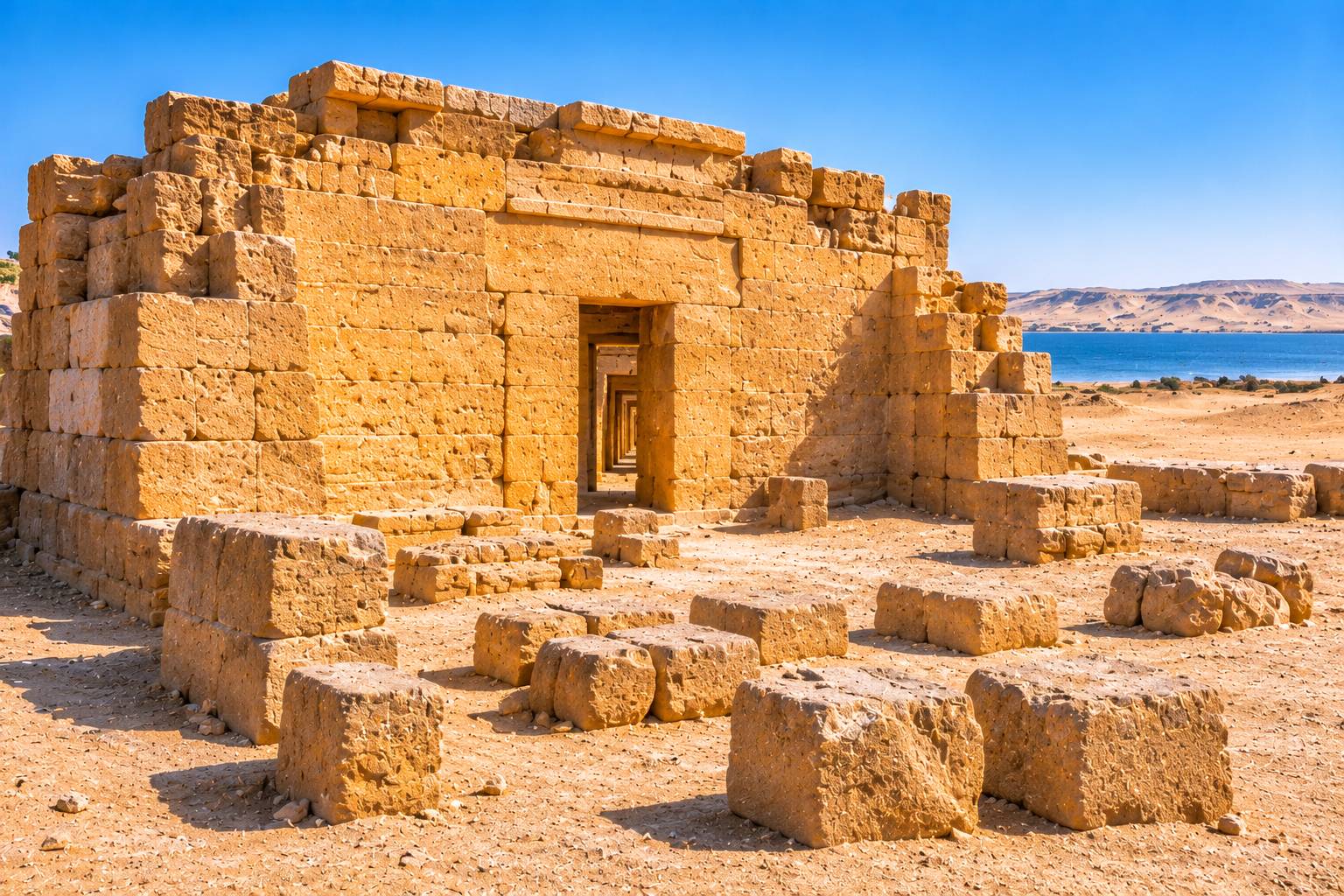
Renenutet: The Ancient Egyptian Cobra Goddess of Harvest, Fertility and Nourishment
Introduction: Who Was Renenutet?
Ancient Egypt was a civilization deeply connected to agriculture, the Nile River and the natural cycles that sustained life. The annual flooding of the Nile brought fertile soil to the fields, while successful harvests provided grain, food and security for communities throughout the country.
Among the deities associated with this essential part of Egyptian life was Renenutet, an ancient Egyptian cobra goddess connected with nourishment, agricultural abundance, stored food and protection.
Often represented as a cobra or as a woman with the head of a cobra, Renenutet was an important protective deity. Her role was closely connected to the food that sustained Egyptian households and the agricultural resources that supported the kingdom.
Her importance is particularly visible in the Fayoum region, where one of ancient Egypt’s most remarkable surviving Middle Kingdom temples was dedicated to her at Medinet Madi.
Today, Renenutet offers an interesting way to understand the relationship between ancient Egyptian religion, farming, food security and the development of the Fayoum as an important agricultural region.
1. The Meaning and Name of Renenutet
Renenutet is known by several spellings in Egyptological literature, including Renenut and Ernutet. In the Greek period, she became associated with the name Thermuthis.
Her name has traditionally been connected with ideas of nurturing and nourishment. She was not simply a goddess of plants or fields; her responsibilities also extended to the protection of food supplies and valuable goods.
Ancient Egyptian society depended on the successful production and storage of agricultural products. Grain was particularly important because it could be stored and used throughout the year. Protecting these supplies was essential for households, temples and the state.
Renenutet’s religious role reflected this practical reality. She was associated with the protection and abundance of food, especially grain and the products kept in storage facilities.
Her importance therefore went beyond the moment of harvesting. She represented the security of the resources that sustained life after the crops had been collected.
2. Renenutet as the Goddess of Harvest and Nourishment
Agriculture was one of the foundations of ancient Egyptian civilization. Farmers depended on the Nile’s seasonal flooding, suitable weather and careful management of farmland.
The harvest was not only an economic event. It was also connected with religious beliefs, offerings and the well-being of the community.
Renenutet was associated with several aspects of this agricultural world:
-
Harvest and grain: She was connected with agricultural produce and the protection of grain.
-
Food storage: She was regarded as a guardian of granaries and stored provisions.
-
Nourishment: Her protective role extended to the food that sustained people.
-
Abundance: She represented the hope for plentiful agricultural resources.
-
Protection: Her cobra form connected her with divine protection and the safeguarding of valuable resources.
The goddess was sometimes described through titles associated with the granary and the fields. Such titles reflect the importance of food production and storage in Egyptian religious thought.
It is important to understand that Renenutet was not exclusively a goddess of the harvest. Her earlier and broader associations also included the protection of valuable products and the places where they were kept.
3. Why Was Renenutet Depicted as a Cobra?
The cobra was a powerful symbol in ancient Egyptian religion.
Snakes could represent danger, protection, renewal and divine authority. The cobra was particularly important because of its defensive posture and its association with royal protection.
Renenutet was commonly represented in two forms:
-
A cobra, sometimes shown in a protective position.
-
A woman with the head of a cobra.
These representations helped communicate her divine identity and protective character.
The cobra was also associated with the royal uraeus, the protective serpent worn on the forehead of Egyptian kings. Although Renenutet and Wadjet were distinct goddesses with different religious identities, their serpent symbolism reflects the wider importance of cobra imagery in Egyptian beliefs.
For Renenutet, the serpent form was especially appropriate to a deity responsible for protecting essential resources.
Her image could appear in religious settings where food, offerings and agricultural abundance were important.
4. Renenutet and the Ancient Egyptian Agricultural Calendar
The agricultural cycle shaped much of everyday life in ancient Egypt.
The traditional Egyptian calendar was closely associated with the Nile’s annual cycle and the changing conditions of the land. Farming activities included preparing fields, sowing seeds, maintaining crops and collecting the harvest.
Renenutet’s religious significance was closely connected with this agricultural world.
Grain was one of the most important products of the Egyptian economy. It provided food, could be stored for future use and played a major role in the administration of temples and royal institutions.
The goddess was associated with the protection of these resources and the abundance they represented.
Her relationship with agricultural products also helps explain why she was important in a society where food security was essential to political stability and everyday survival.
Some ancient traditions connected Renenutet with harvest-related celebrations. However, specific ceremonies and dates varied across periods and locations, so it is better not to assume that every Egyptian community celebrated her in exactly the same way.
5. The Temple of Renenutet at Medinet Madi in Fayoum
One of the most important places associated with Renenutet is Medinet Madi, an archaeological site in the Fayoum region of Egypt.
The ancient settlement was known as Dja during the Pharaonic period and later became associated with the name Narmouthis.
The temple was founded during the Middle Kingdom, particularly under Pharaoh Amenemhat III, and was continued or completed under his successor Amenemhat IV.
It was dedicated to Renenutet, the cobra goddess, and was also associated with Sobek, the crocodile god of the Fayoum.
The temple is especially important because it preserves rare evidence of Middle Kingdom religious architecture and decoration.
According to the University of Pisa’s archaeological research, the original temple included a columned hall and a sanctuary with three niches. Its walls contained scenes and inscriptions associated with the royal rulers and the deities worshipped there.
The temple later became part of a larger religious complex. During the Ptolemaic period, additional structures and courts were constructed around the earlier sanctuary.
The ancient sanctuary therefore provides evidence of how Egyptian religious traditions continued and developed over many centuries.
6. Amenemhat III and Amenemhat IV: The Pharaohs Behind the Temple
The temple at Medinet Madi is closely connected with two rulers of Egypt’s Twelfth Dynasty: Amenemhat III and Amenemhat IV.
Amenemhat III was one of the most important kings of the Middle Kingdom. His reign was associated with major building projects and the development of the Fayoum region.
The Fayoum was particularly valuable because of its agricultural potential. Improving water management and expanding cultivated land helped strengthen the region’s economic importance.
The temple dedicated to Renenutet reflects the religious dimension of this agricultural development.
Amenemhat IV, his successor, was also represented in the temple’s decoration. Inscriptions and reliefs associate both kings with offerings to the deities.
The presence of these royal scenes demonstrates the relationship between kingship, religious devotion and the prosperity of the land.
For visitors interested in ancient Egyptian history, Medinet Madi is an especially valuable site because it connects the history of the Middle Kingdom with the later religious development of Fayoum.
7. Renenutet and Sobek: Two Important Deities of Fayoum
Renenutet was closely associated with Sobek, the crocodile god who held an important position in the religious traditions of the Fayoum.
Sobek was connected with water, strength and the natural environment of the region. His crocodile form reflected the presence and power of crocodiles in the Nile and its waterways.
Renenutet, by contrast, was associated with nourishment, agricultural products and protection.
Their religious association brought together two important aspects of life in the Fayoum:
-
Water and the natural environment.
-
Agriculture and the food produced from the land.
This connection was particularly meaningful in a region where water management and fertile agricultural land were essential to prosperity.
To learn more about Sobek, read our article:
Sobek – The Crocodile God of Ancient Egypt:
https://letsexploreegypttravel.com/en/activity/348952/sobek-the-crocodile-god-of-ancient-egypt
You can also explore the history of Crocodilopolis, the ancient city associated with the worship of Sobek:
8. Renenutet and Thermuthis: The Goddess in the Greek and Roman Periods
The religious history of Renenutet continued beyond the Pharaonic period.
During the Greek and Roman periods, Egyptian religious traditions interacted with Greek cultural influences. Renenutet became associated with the Greek name Thermuthis, and her worship continued in forms that reflected this changing religious environment.
At Medinet Madi, the temple complex was expanded during the Ptolemaic period. The site became an important religious centre, and inscriptions and architectural additions provide evidence of its continued importance.
The goddess was also associated with Isis in later religious traditions, particularly through the form known as Isis-Thermuthis.
This association should be understood as part of the changing religious landscape of the later periods rather than as evidence that Renenutet and Isis had always been the same goddess.
The development of these traditions demonstrates how Egyptian deities could acquire new identities and associations while retaining important elements of their earlier religious roles.
9. Renenutet and the Protection of Food Stores
One of the most interesting aspects of Renenutet’s identity is her connection with storage and the protection of valuable products.
For ancient Egyptians, collecting a successful harvest was only one part of agricultural life. The food also had to be stored safely.
Granaries and storage facilities were important institutions. They helped preserve grain and other provisions for future use, including periods when fresh crops were unavailable.
Renenutet’s protective role was therefore closely connected with the security of these supplies.
This association reveals an important aspect of ancient Egyptian religion: deities were not only connected with dramatic natural forces or royal ceremonies. They could also represent the everyday necessities that allowed society to function.
Food, storage and nourishment were matters of survival, and Renenutet’s worship reflected their importance.
10. Renenutet in the Wider World of Ancient Egyptian Gods
Renenutet was part of a much larger religious system in which different deities were associated with particular aspects of nature, society and human life.
Her role can be better understood by comparing her with other Egyptian gods and goddesses.
Sobek: Associated with crocodiles, water and the Fayoum region. His worship was particularly important in the local religious traditions of the oasis.
Isis: A major goddess associated with motherhood, protection, magic and royal legitimacy. In later periods, she became connected with Renenutet through the Isis-Thermuthis tradition.
Osiris: Associated with death, resurrection and agricultural renewal. His religious symbolism was also connected with the cycles of life and fertility.
Nepri: A deity associated with grain and the agricultural products that sustained Egyptian communities.
These connections show how ancient Egyptian religious beliefs linked agriculture, nourishment, fertility, protection and the natural environment.
Discover more in our guide:
Ancient Egyptian Gods of Fayoum: Temples, Myths and Sacred Animals
https://letsexploreegypttravel.com/en/activity/348953/ancient-egyptian-gods-of-fayoum-temples-myths-and-sacred-animals
11. Can You Visit the Temple of Renenutet Today?
Yes. Medinet Madi is an archaeological site in Fayoum and is an important destination for travellers interested in ancient Egyptian history beyond the famous monuments of Cairo and Luxor.
The site offers an opportunity to explore the remains of the Middle Kingdom temple and later additions from the Ptolemaic and Roman periods.
Visitors interested in the history of Renenutet can learn about:
-
The Middle Kingdom temple associated with Amenemhat III and Amenemhat IV.
-
The religious importance of Renenutet and Sobek.
-
Ancient Egyptian temple architecture.
-
Later additions to the sanctuary.
-
The historical development of the Fayoum region.
Access arrangements, opening times, ticket prices and visitor facilities can change. Travellers should confirm the latest information with the relevant Egyptian antiquities authorities or their local tour operator before visiting.
Medinet Madi can also be included in a wider Fayoum itinerary, depending on road conditions, available time and current site access.
12. Explore More Ancient Egyptian History in Fayoum
Renenutet is only one part of the fascinating religious and archaeological history of Fayoum.
The region contains ancient settlements, temples, pyramids, desert landscapes and natural attractions that reveal different chapters of Egypt’s past.
Consider exploring these related destinations:
Medinet Madi: Discover the Middle Kingdom temple and its later religious complex.
https://letsexploreegypttravel.com/en/activity/348936/medinet-madi-fayoum-the-ultimate-visitor-guide
Tebtunis: Explore an ancient settlement associated with the worship of Sobek and the discovery of important papyri.
https://letsexploreegypttravel.com/en/activity/348946/tebtunis-fayoum-ancient-city-sobek-temple-and-papyrus-library
Karanis: Learn about the ancient city of Kom Oshim and its Greco-Roman history.
https://letsexploreegypttravel.com/en/activity/348935/karanis-fayoum-explore-the-ancient-city-of-kom-oshim
Qasr Qarun Temple: Discover an ancient temple near Lake Qarun.
https://letsexploreegypttravel.com/en/activity/348934/qasr-qarun-temple-the-ultimate-visitor-guide
Lake Qarun: Explore one of Fayoum’s best-known natural and historical landmarks.
https://letsexploreegypttravel.com/en/activity/348933/lake-qarun-fayoum-the-ultimate-visitor-guide
Conclusion: Why Renenutet Matters in Ancient Egyptian History
Renenutet was more than a cobra goddess associated with the harvest. She represented the protection of food, the security of stored resources and the nourishment that sustained ancient Egyptian society.
Her temple at Medinet Madi provides an important connection between religion, agriculture and the history of Fayoum during the Middle Kingdom. The later development of her worship also demonstrates how Egyptian religious traditions continued to evolve during the Greek and Roman periods.
For travellers exploring Egypt beyond the famous pyramids and temples, the story of Renenutet adds another dimension to the experience of Fayoum.
By visiting Medinet Madi and exploring the surrounding archaeological landscape, visitors can discover a region where ancient Egyptian beliefs, agricultural life and historical architecture came together.
Explore the history of Fayoum with Let’s Explore Egypt Travel and discover another side of ancient Egypt.
Browse our Egypt tours:
https://letsexploreegypttravel.com/en/egypttourpackages
Frequently Asked Questions About Renenutet
1. Who was Renenutet in ancient Egyptian religion?
Renenutet was an ancient Egyptian cobra goddess associated with nourishment, harvest, grain, food storage and protection.
2. What was Renenutet the goddess of?
She was particularly associated with agricultural products, grain, granaries, nourishment and the protection of valuable food supplies.
3. Why was Renenutet represented as a cobra?
The cobra was an important symbol of protection in ancient Egyptian religion. Renenutet’s serpent form reflected her protective role and divine identity.
4. Where was Renenutet worshipped?
Renenutet was worshipped in different parts of ancient Egypt. She was especially important in the Fayoum region, where a major temple was dedicated to her at Medinet Madi.
5. Where is the Temple of Renenutet?
The temple is located at Medinet Madi in the Fayoum region of Egypt. It dates to the Middle Kingdom and is associated with Pharaohs Amenemhat III and Amenemhat IV.
6. Was Renenutet connected with Sobek?
Yes. At Medinet Madi, Renenutet was worshipped alongside Sobek, the crocodile god associated with the Fayoum.
7. Was Renenutet the same goddess as Isis?
Not originally. In later religious traditions, Renenutet became associated with Isis through the form known as Isis-Thermuthis. This reflects the evolution of Egyptian religion during later periods.
8. What was the Greek name of Renenutet?
Renenutet became associated with the Greek name Thermuthis during the Greek and Roman periods.
9. Can tourists visit Medinet Madi?
Medinet Madi is an archaeological site in Fayoum. Visitors should check current access arrangements, opening times and ticket information before travelling.
10. Why is Renenutet important for understanding ancient Egypt?
Her worship reveals how ancient Egyptians connected religion with agriculture, food security, nourishment and the protection of essential resources.
Plan Your Fayoum Experience
Discover the archaeological treasures and natural beauty of Fayoum with Let’s Explore Egypt Travel. Explore ancient temples, historic settlements, desert landscapes and the fascinating stories of the gods and people who shaped this region.