12 Best Attractions in Alexandria, Egypt
1. Citadel of Qaitbay
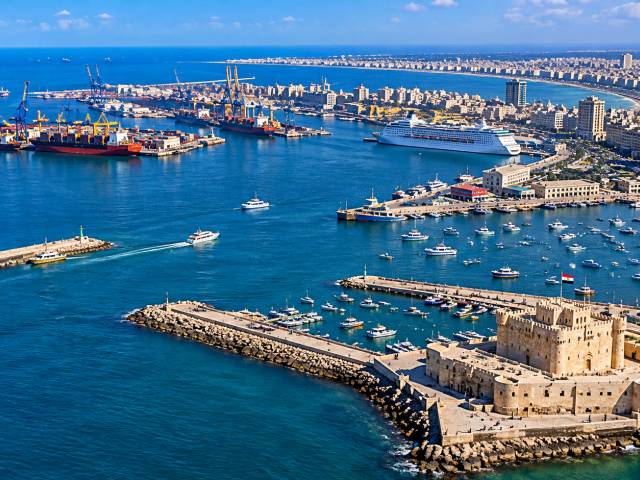
The Citadel of Qaitbay is one of Alexandria's most recognizable landmarks. Built between 1477 and 1479 by Sultan Qaitbay, the fortress stands on the site associated with the ancient Lighthouse of Alexandria.
Its defensive walls, stone towers, and strategic position overlooking the Mediterranean make it a rewarding destination for history lovers and photographers.
Visitors can explore the fortress architecture and enjoy views of the surrounding harbor. The site also provides a fascinating connection between medieval Egyptian history and the ancient world's maritime heritage.
Highlights:
Explore a historic 15th-century coastal fortress.
Enjoy views of the Mediterranean Sea.
Learn about Alexandria's defensive and maritime history.
Visit one of the city's most recognizable landmarks.
2. Bibliotheca Alexandrina
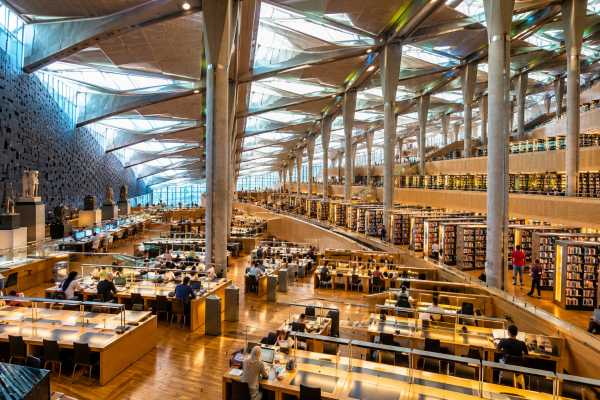
The Bibliotheca Alexandrina is a modern cultural landmark created in tribute to the ancient Library of Alexandria. Its distinctive circular design and enormous sloping roof make it one of the most remarkable buildings on the city's waterfront.
Inside, the complex includes a major library, museums, exhibitions, and cultural facilities. Visitors can discover how Alexandria continues to celebrate its historic reputation as a center of learning and intellectual exchange.
The modern library is not the surviving original library of antiquity. Instead, it represents a contemporary cultural project inspired by Alexandria's ancient scholarly legacy.
Highlights:
Admire striking contemporary architecture.
Explore exhibitions and cultural collections.
Discover the legacy of ancient Alexandria.
Enjoy the location near the Mediterranean waterfront.
3. Catacombs of Kom El Shoqafa
The Catacombs of Kom El Shoqafa are among the most distinctive archaeological sites in Alexandria. This underground burial complex reflects the interaction of Egyptian, Greek, and Roman traditions during the ancient city's development.
Visitors descend through underground passages to discover burial chambers, sculptural details, and decorative elements that reveal the cultural diversity of Roman-era Alexandria.
The combination of artistic styles makes the catacombs particularly valuable for understanding how different civilizations influenced one another.
Highlights:
Explore underground burial chambers.
Discover a blend of Egyptian, Greek, and Roman artistic traditions.
Examine ancient funerary architecture and decoration.
Learn about burial customs in Roman Alexandria.
4. Pompey's Pillar
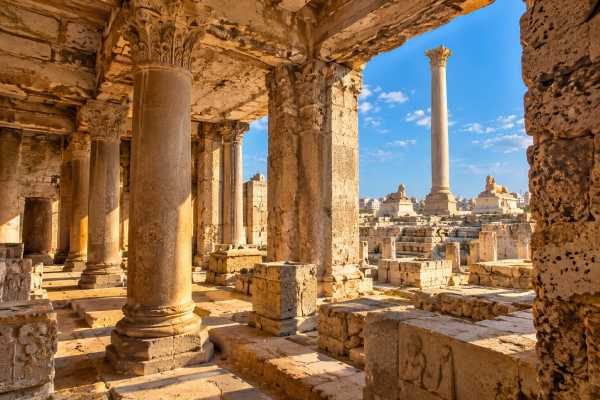
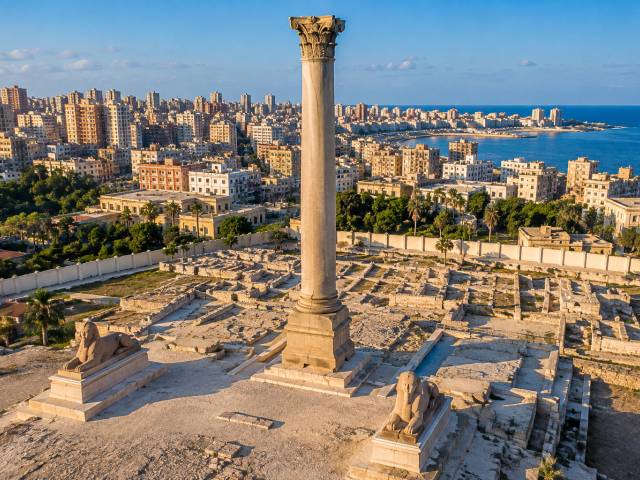
Pompey's Pillar is a monumental granite column standing beside the archaeological remains of the Serapeum, an important ancient religious complex.
Despite its popular name, the column is associated with Emperor Diocletian rather than the Roman general Pompey. It remains one of Alexandria's most impressive surviving Roman-era monuments.
The surrounding archaeological area provides additional context about the religious and civic life of ancient Alexandria.
Highlights:
See a towering ancient granite column.
Explore the archaeological remains of the Serapeum.
Discover Alexandria's Roman-era history.
Combine the visit with the nearby Catacombs of Kom El Shoqafa.
5. Alexandria National Museum
The Alexandria National Museum introduces visitors to the city's long and varied history through archaeological objects and historical displays.
Its collections help explain Alexandria's development from ancient Egyptian civilization through the Greek and Roman periods and into later historical eras.
For travelers visiting several archaeological sites, the museum offers useful context that connects individual monuments with the broader story of the city.
Highlights:
Discover artifacts from different historical periods.
Learn about Alexandria's changing cultural identity.
Explore the city's archaeological heritage.
Gain context for visiting other historic attractions.
6. Graeco-Roman Museum
The Graeco-Roman Museum focuses on the history and culture of Alexandria during the Greek and Roman periods. Its collections help visitors understand the artistic, religious, and social traditions that developed in this multicultural city.
Sculptures, inscriptions, and archaeological objects provide insight into daily life and the relationship between Egyptian traditions and classical Mediterranean culture.
Highlights:
Explore Greek and Roman antiquities.
Discover sculpture and archaeological artifacts.
Learn about the cultural exchange that shaped Alexandria.
Add historical depth to an Alexandria sightseeing itinerary.
Check the museum's current opening arrangements and exhibitions before visiting.
7. Royal Jewelry Museum
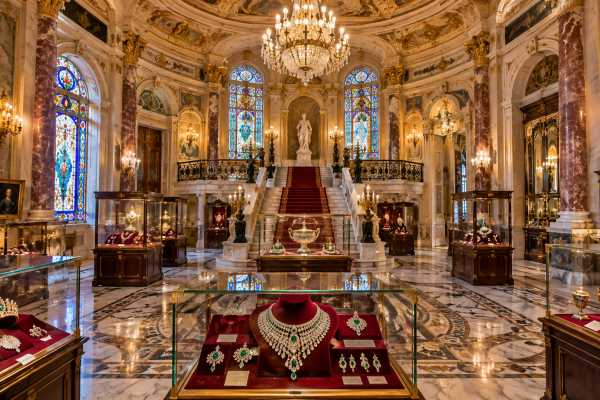
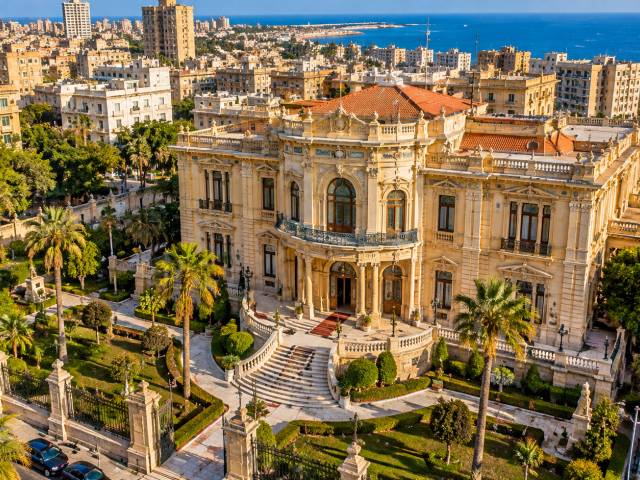
The Royal Jewelry Museum offers a different perspective on Egyptian history. Housed in a historic palace associated with Princess Fatma Al-Zahra, it preserves jewelry and precious objects connected with Egypt's former royal family.
The palace itself is part of the experience, with decorative interiors and architectural features that contrast with Alexandria's ancient tombs and Roman ruins.
Visitors can learn about royal craftsmanship, precious materials, and the lifestyle of Egypt's monarchy before the end of royal rule in 1952.
Highlights:
Discover royal jewelry and precious objects.
Appreciate the palace's decorative architecture.
Learn about the Muhammad Ali dynasty.
Explore a distinctive chapter of modern Egyptian history.
8. Montaza Palace Gardens
Montaza Palace Gardens provide a relaxing escape from the busy city streets. The landscaped grounds, palm trees, walking paths, and Mediterranean scenery make the area popular with visitors seeking outdoor space.
The gardens are associated with Egypt's former royal family and offer a different experience from Alexandria's archaeological attractions.
Highlights:
Walk through landscaped gardens.
Enjoy views and breezes from the Mediterranean coast.
Discover the area's royal heritage.
Take a relaxing break during a sightseeing day.
Access to individual buildings and facilities may vary, so check current visitor arrangements before travelling.
9. Kom El-Dikka Archaeological Site
Kom El-Dikka preserves remains of an ancient urban district dating mainly from the Roman and Byzantine periods. The site includes a Roman theater, bath complexes, lecture halls, and other archaeological features.
Unlike a single isolated monument, Kom El-Dikka offers a glimpse of a larger neighborhood and its public life. The remains help explain how people gathered, studied, bathed, and lived in ancient Alexandria.
Highlights:
Explore the Roman theater.
Discover ancient bath complexes and lecture halls.
See archaeological remains from the Roman and Byzantine periods.
Learn about everyday life in the ancient city.
10. Alexandria Corniche
The Alexandria Corniche follows the city's Mediterranean waterfront and offers a chance to experience modern Alexandria.
The sea, busy streets, cafés, and coastal views create an atmosphere different from that of the archaeological sites. The Corniche is a useful place to pause between visits and appreciate Alexandria as a living coastal city.
Highlights:
Enjoy views of the Mediterranean.
Experience Alexandria's waterfront atmosphere.
Take photographs of the coastline.
Relax between historical sightseeing stops.
Choose accessible public areas and take care when crossing busy roads.
11. Alexandria's Eastern Harbor
The Eastern Harbor is closely connected with ancient Alexandria's royal and maritime history. During the Ptolemaic period, the surrounding area formed part of the city's prestigious royal quarter.
Underwater archaeological investigations have revealed remains associated with ancient waterfront structures and the changing coastline.
The modern waterfront and the archaeological discoveries beneath the sea represent different layers of Alexandria's history. The harbor helps visitors understand why the city became such an important Mediterranean center.
Highlights:
Discover the story of ancient Alexandria's harbor.
Learn about underwater archaeological discoveries.
Explore accessible waterfront areas.
Understand the city's historic relationship with the Mediterranean.
The Eastern Harbor should not be confused with the modern commercial port, and access to operational port facilities may be restricted.
12. Anfushi Tombs
The Anfushi Tombs provide another perspective on ancient Alexandria's funerary traditions. Associated with the Ptolemaic period, the tombs help illustrate the range of burial practices that developed in this culturally diverse city.
For visitors interested in archaeology, the site can complement the better-known Catacombs of Kom El Shoqafa.
Highlights:
Discover ancient burial traditions.
Learn about Ptolemaic-era Alexandria.
Explore another part of the city's archaeological heritage.
Add a less familiar historical site to your itinerary.
Confirm current opening arrangements before planning a visit.
Best Things to Do in Alexandria
Alexandria offers more than archaeological sightseeing. Depending on your interests and available time, you can:
Explore historic fortresses and ancient monuments.
Visit museums dedicated to Egyptian and classical history.
Discover royal palaces and landscaped gardens.
Walk along accessible sections of the Mediterranean waterfront.
Learn about the city's ancient harbors and maritime heritage.
Enjoy local seafood and Egyptian cuisine at a restaurant.
Photograph Alexandria's architecture and coastal scenery.
The best itinerary combines historical attractions with time to experience the city's distinctive Mediterranean atmosphere.
One-Day Alexandria Itinerary
If you have only one day in Alexandria, choose a manageable route rather than attempting to visit every attraction.
Morning: Ancient Alexandria
Begin with the Catacombs of Kom El Shoqafa, then visit Pompey's Pillar and the nearby Serapeum archaeological area.
Midday: Culture and Lunch
Visit the Bibliotheca Alexandrina if it is open and time allows. Enjoy lunch at a local restaurant before continuing your sightseeing.
Afternoon: Mediterranean Coast
Explore the Citadel of Qaitbay and enjoy the waterfront. If time permits, add a short stop at another nearby attraction.
Before returning to Cairo
Allow sufficient time for road traffic and your return journey. If you want to include Montaza Gardens or several museums, consider extending your visit or staying overnight.
Two-Day Alexandria Itinerary
A two-day visit provides more flexibility and reduces the pressure to rush between sites.
Day 1: Archaeological Alexandria
Catacombs of Kom El Shoqafa
Pompey's Pillar and the Serapeum
Kom El-Dikka archaeological site
Alexandria National Museum, subject to opening hours
Day 2: Coastal and Cultural Alexandria
Bibliotheca Alexandrina
Citadel of Qaitbay
Alexandria Corniche
Montaza Palace Gardens
Royal Jewelry Museum, if opening hours and travel time allow
The exact order should be adjusted to the locations, opening schedules, and time required at each attraction.
Practical Travel Tips
Best time to visit: Spring and autumn are often comfortable for walking and sightseeing. Summer can be warm and busy, especially along the coast.
Transportation: A private vehicle can make it easier to visit several attractions in one day. Public transport and taxis may also be suitable depending on your route.
Clothing and footwear: Wear comfortable walking shoes, particularly at archaeological sites with stairs or uneven surfaces.
Tickets and opening hours: Check official visitor information before travelling because schedules, fees, and access arrangements can change.
Photography: Confirm photography rules at museums and archaeological attractions before taking pictures indoors.
Food: Allow time to enjoy local Egyptian dishes and Alexandria's seafood traditions.
Frequently Asked Questions About Alexandria Attractions
What is Alexandria most famous for?
Alexandria is known for its Mediterranean waterfront, the Citadel of Qaitbay, the Bibliotheca Alexandrina, ancient archaeological sites, and its long Greek, Roman, and Egyptian history.
Can I visit Alexandria in one day from Cairo?
Yes. A day trip can cover several major attractions, particularly if transportation and the route are planned in advance. A longer visit is better for museums, gardens, and less-visited sites.
Which attractions are best for history lovers?
The Catacombs of Kom El Shoqafa, Pompey's Pillar, Kom El-Dikka, the Graeco-Roman Museum, and the Citadel of Qaitbay are excellent choices.
Is Alexandria suitable for families?
Yes. Families can choose from museums, coastal walks, gardens, and historic landmarks. Consider children's ages, walking distances, and the time needed at each site.
Can I combine the Citadel of Qaitbay with the Bibliotheca Alexandrina?
Both can be included in the same itinerary, but check opening times and allow enough travel time between locations.
Is Alexandria worth visiting from Cairo?
Yes. Alexandria offers a different experience from Cairo, with Mediterranean scenery, classical archaeological sites, historic fortifications, and a distinctive coastal atmosphere.
What is the best way to explore Alexandria?
A private guided tour can be convenient for visitors who want to combine several attractions in one day. Independent travelers can also explore the city by planning their route and checking opening hours in advance.
Explore Alexandria with Let's Explore Egypt Travel
Alexandria combines ancient history, royal heritage, archaeological discoveries, and the atmosphere of a Mediterranean coastal city. From the underground Catacombs of Kom El Shoqafa to the sea-facing Citadel of Qaitbay, each attraction reveals another part of the city's story.
Whether you are planning a day trip from Cairo or a longer stay, choosing the right route will help you experience more of Alexandria without rushing.
Discover Alexandria's historic landmarks with Let's Explore Egypt Travel and plan a sightseeing experience tailored to your interests.
Explore more:
Alexandria Day Trips and Tours