Best Attractions in Bahariya Oasis, Egypt
Bahariya Oasis is one of Egypt’s most fascinating destinations for travelers who want to explore ancient history, unusual geological formations, natural springs, and traditional oasis life. Located approximately 370 kilometres southwest of Cairo, this Western Desert oasis offers a very different experience from Egypt’s famous pyramid complexes and Nile Valley temples.
From the dark volcanic hills of the Black Desert to the palm groves around Bawiti and the archaeological discoveries that made the region internationally famous, Bahariya has attractions for nature lovers, photographers, history enthusiasts, and adventure travelers.
The oasis is also a starting point for organized trips toward the White Desert, Crystal Mountain, and Agabat Valley. These destinations can be combined into a multi-day Western Desert safari, depending on the route and travel arrangements. In this guide, discover the best attractions in Bahariya Oasis, what makes each place special, how to plan your visit, and which tours can help you explore the region.
1. Black Desert
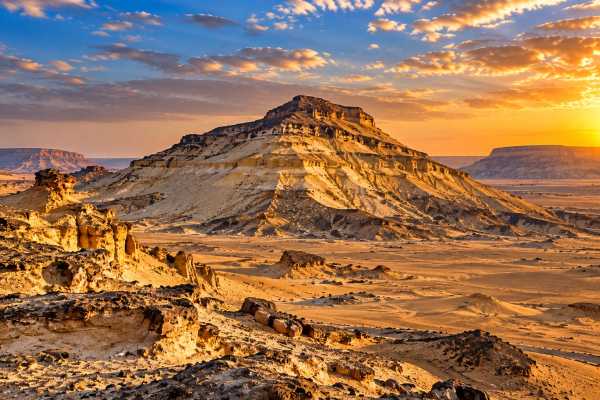
The Black Desert is one of the most recognizable natural attractions around Bahariya Oasis. Its landscape features dark volcanic hills, rocky slopes, and sandy terrain that creates a striking contrast with the surrounding desert.
The dark appearance comes from volcanic material and weathered rock covering parts of the hills. From a distance, the hills stand out against the pale desert floor, creating excellent opportunities for landscape photography.
Visitors generally explore the area as part of a guided desert excursion. Depending on the route, stops may include scenic viewpoints and selected locations where the contrast between dark rock and golden sand is especially dramatic.
Best for: Desert photography, geological scenery, nature lovers, and 4x4 safaris.
Explore our Black Desert Tour to plan your visit.
2. White Desert
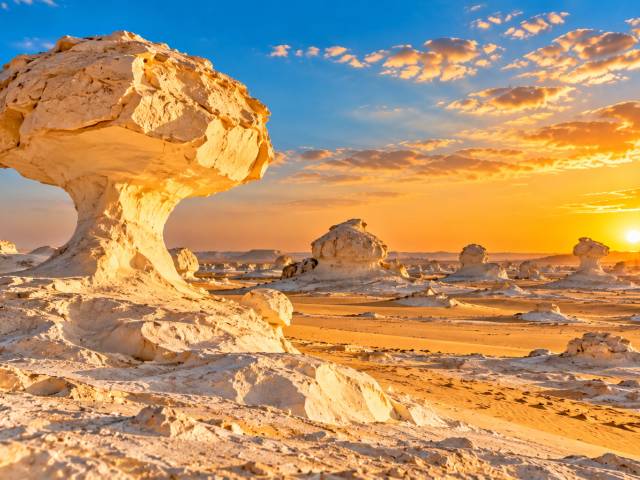
The White Desert is famous for its extraordinary chalk and limestone formations, which natural erosion has sculpted into unusual shapes resembling mushrooms, towers, and abstract sculptures.
It is one of Egypt’s most distinctive protected landscapes and a highlight of Western Desert travel. The pale rock formations appear particularly dramatic at sunrise and sunset, when warm light creates changing shades of cream, pink, and gold.
Many travelers choose an overnight desert safari to experience the landscape after sunset and, where permitted, enjoy a designated camping experience beneath the night sky.
The White Desert is farther along the route toward Farafra, so it is best planned as part of a suitable multi-stop journey rather than assumed to be a quick sightseeing stop within Bawiti.
Best for: Landscape photography, geology, desert camping, and multi-day adventures.
Discover our White Desert Tours from Cairo.
3. Crystal Mountain
Crystal Mountain is a distinctive geological stop along the Western Desert route connecting Bahariya Oasis and Farafra.
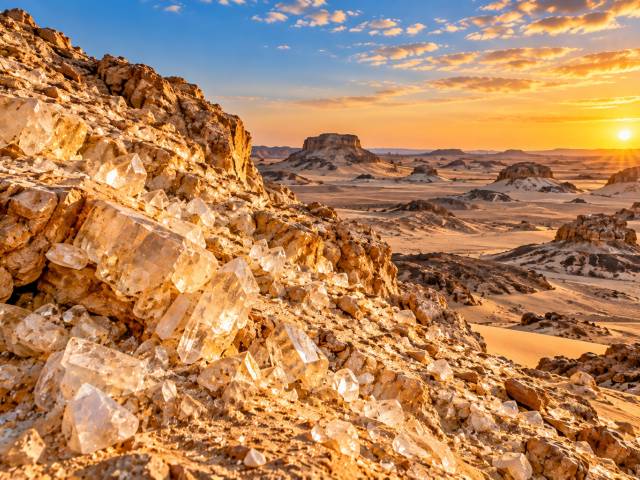
The site is known for exposed crystalline minerals within the rock, producing unusual textures and reflective surfaces. It is a popular stop for visitors interested in geology and desert photography.
Rather than expecting a high mountain that requires a long climb, think of Crystal Mountain as a geological formation where visitors can observe distinctive mineral-rich rock.
Do not chip, collect, or remove crystals or other rock fragments. Protecting these formations helps preserve the landscape for future visitors and scientific research.
Best for: Geology, close-up photography, and Western Desert sightseeing.
Ask about including Crystal Mountain in your White Desert tour from Cairo.
4. Agabat Valley
Agabat Valley offers a dramatic landscape of pale rock formations, sandy valleys, and rugged desert scenery. Its unusual shapes and sweeping views make it a popular stop on some Western Desert safari routes.
The area provides a visual contrast with the dark hills of the Black Desert and the chalk formations of the White Desert. Visitors can enjoy the changing scenery, photograph the rock formations, and experience the scale of the open desert.
The route and exact stops depend on current access conditions and the itinerary chosen. An experienced local driver can help identify suitable viewpoints and avoid fragile terrain.
Best for: Photography, geological landscapes, scenic drives, and desert adventures.
Consider Agabat Valley as part of a White Desert safari.
5. Bawiti and the Palm Groves of Bahariya Oasis
Bawiti is the main town of Bahariya Oasis and a convenient base for exploring its agricultural landscapes, archaeological sites, and natural attractions.
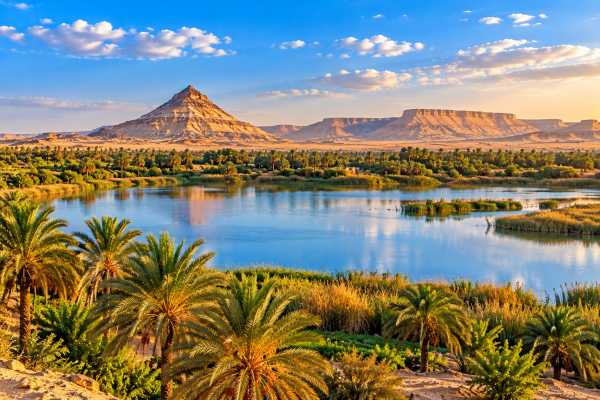
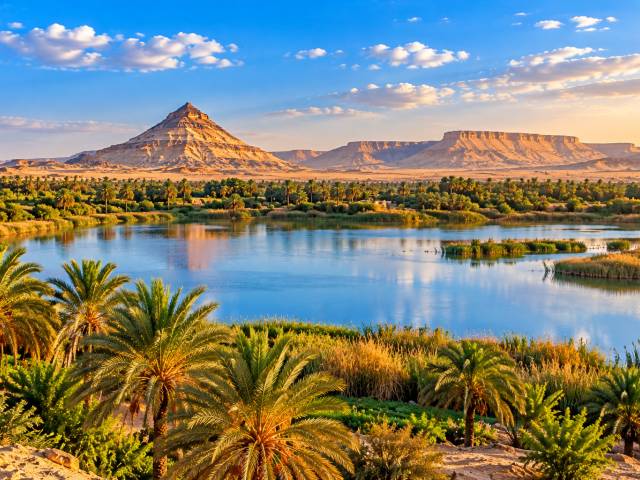
The oasis is known for its date palms, olive trees, cultivated land, and traditional settlements. These green areas create a striking contrast with the rocky hills and open desert surrounding them.
A guided walk or drive through accessible parts of the oasis can provide insight into local agriculture and the importance of water in sustaining life in the Western Desert.
Visitors should respect private farmland and ask permission before photographing local residents or entering agricultural properties.
Best for: Cultural sightseeing, nature photography, local agriculture, and relaxed oasis exploration.
Explore our Bahariya Oasis Tours.
6. Valley of the Golden Mummies
The Valley of the Golden Mummies became internationally famous following the discovery of a large Greco-Roman-era burial ground near Bawiti.
The mummies attracted attention because some had gilded masks and decorated funerary coverings. The discoveries provided important evidence about burial traditions and cultural influences in Bahariya during the Ptolemaic and Roman periods.
The original excavation area should not be assumed to be open for general tourist visits. Egypt’s official tourism information notes that the excavation site is not open to the public, while some mummies have been displayed in El-Bawiti. Check current museum arrangements before planning your visit. <Cite refs={["turn263042search12"]}/>
Best for: Archaeology, ancient Egyptian history, and Greco-Roman heritage.
When arranging your trip, ask which accessible museum displays or archaeological sites can be included in your itinerary.
7. Ain el-Muftella Temple
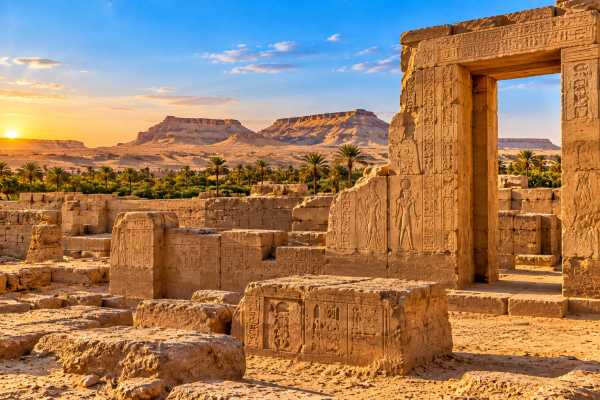
Ain el-Muftella is an important archaeological site near Bawiti, known for its decorated chapels and connections with the religious history of Bahariya Oasis.
The surviving remains are associated with the Twenty-sixth Dynasty, including the reign of Amasis II. The chapels contain religious scenes and inscriptions that provide insight into worship and royal traditions in ancient Egypt.
The temple is especially interesting for travelers who want to discover smaller archaeological sites beyond Egypt’s most famous monuments. A knowledgeable guide can explain the religious imagery and historical context of the surviving decorations.
Access to individual structures and opening arrangements should be confirmed before visiting.
Best for: Ancient history, temple architecture, religious art, and cultural sightseeing.
8. Temple of Alexander the Great
The Temple of Alexander the Great is associated with Alexander’s rule in Egypt and the worship of Amun.
Its archaeological importance comes from evidence connecting Alexander with traditional Egyptian religious practices. Inscriptions associated with the site include royal titulary and a Greek dedication to Amun, providing insight into the interaction between Egyptian and Greek traditions.
The remains are relatively modest in scale compared with the great temples of southern Egypt, but the site's historical significance makes it an interesting stop for archaeology enthusiasts.
Confirm current access arrangements with your local guide before including the temple in your schedule.
Best for: Archaeology, Alexander the Great, ancient religion, and historical sightseeing.
9. Old Qasr Archaeological Site
The Old Qasr archaeological site in El-Qasr village is another important part of Bahariya’s heritage.
The site is associated primarily with the Twenty-sixth Dynasty and has produced architectural remains, inscriptions, and artifacts that help researchers investigate religious and administrative life in the oasis.
Discoveries linked with King Psamtik I and other historical periods illustrate the importance of archaeological research in understanding Bahariya’s past.
Because archaeological excavation does not automatically mean a site is open to tourists, confirm whether Old Qasr can be visited on your travel date.
Best for: Archaeology, ancient inscriptions, and the history of Bahariya Oasis.
10. Sheikh Subi Archaeological Site
Sheikh Subi is an important archaeological area associated with the history of Bahariya’s rulers and priests.
In August 2026, Egypt’s State Information Service announced the discovery of three tombs from different historical periods at the site, accompanied by ancient artifacts, sarcophagi, and mummified remains. The discoveries add to the evidence of the oasis’s long history. <Cite refs={["turn263042search4"]}/>
This is an active area of archaeological interest, so visitors should not assume that newly discovered tombs or artifacts are accessible to tourists.
Best for: Travelers interested in archaeological discoveries and the continuing research into Bahariya’s history.
Check current access arrangements before including this site in a sightseeing itinerary.
11. Gabal al-Ingleez (English Mountain)
Gabal al-Ingleez, also known as English Mountain, is associated with historical remains from the British presence during the First World War.
The hill is also known for views over Bahariya Oasis and its palm groves. From suitable viewpoints, visitors can appreciate the contrast between cultivated land, settlement areas, and the surrounding desert hills.
It can be a rewarding stop for travelers who enjoy photography and more recent history alongside the oasis’s ancient heritage.
Walking conditions and access should be checked locally.
Best for: Panoramic views, photography, and military history.
12. Gebel el Dist (Pyramid Mountain)
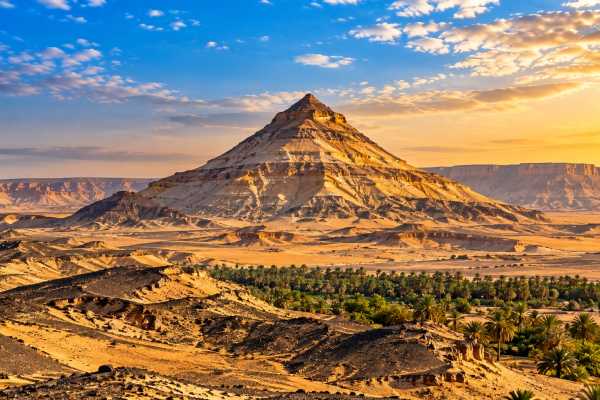
Gebel el Dist, often called Pyramid Mountain, is a natural geological landmark known for its distinctive pyramid-like silhouette.
Unlike the Pyramids of Giza, this is a naturally formed mountain. Its exposed sedimentary rock layers are part of the wider geological landscape of Bahariya and are important for understanding the region’s ancient environmental history.
The wider Bahariya Formation is internationally known for Cretaceous fossils, including dinosaur remains. However, visitors should not expect to see dinosaur fossils exposed at the mountain itself.
Best for: Geological sightseeing, nature photography, and natural history.
Ask a local guide about access and suitable viewpoints.
13. Gebel Maghrafa and Bahariya’s Prehistoric Heritage
The Bahariya region is important to paleontologists because its Cretaceous rock formations have yielded fossils of dinosaurs and other prehistoric animals.
Gebel Maghrafa is associated with this geological heritage. The wider Bahariya Formation preserves evidence of ancient ecosystems that existed roughly 100 million years ago, although individual dinosaur species should not be attributed to a specific viewpoint without supporting evidence.
Visitors interested in prehistoric Egypt can learn about the region’s fossil history while exploring its natural landscapes.
Collecting fossils or breaking rock formations should be avoided to protect this scientific heritage.
Best for: Geology, prehistoric natural history, and educational sightseeing.
14. Lake El Marun
Lake El Marun is a saline lake located north of Bawiti and forms part of the natural and agricultural environment of Bahariya Oasis.
The wider lake environment includes water, shoreline habitats, vegetation, cultivated land, and palm plantations. Scientific research has documented birdlife around the lake, including resident and migratory species, although the birds present vary with season and local conditions. <Cite refs={["turn263042search1"]}/>
The lake is best approached as a nature and landscape stop rather than a developed resort or guaranteed swimming destination. Water levels and shoreline conditions can change.
Best for: Nature photography, birdwatching, and learning about the oasis environment.
Ask locally about accessible viewpoints and current conditions before planning a visit.
15. Bahariya Oasis Natural Springs
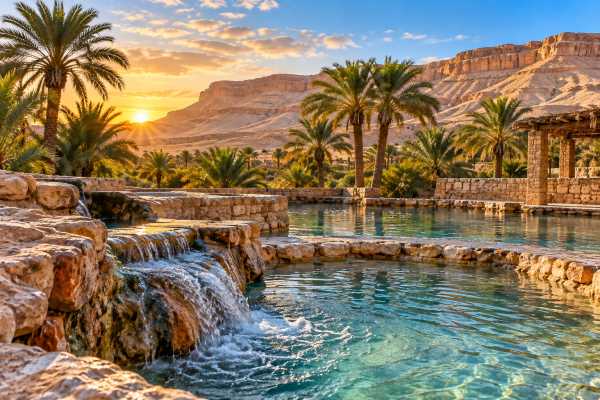
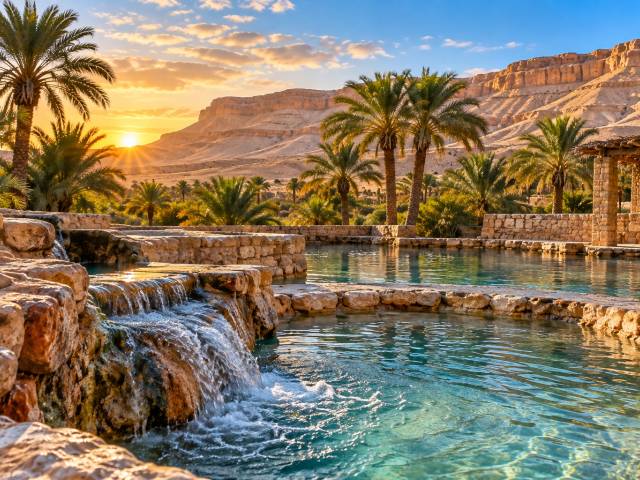
Bahariya Oasis is known for natural hot and cold springs that form part of its water resources and support the surrounding agricultural landscape.
Some springs have simple bathing facilities, while others are less developed. Water temperature, cleanliness, accessibility, and visitor amenities vary, so check the specific location before arranging a bathing stop.
Avoid assuming that the water has proven medical benefits, and do not enter any pool that is too hot or appears unsafe.
Best for: Relaxation, nature, and a break during an oasis sightseeing trip.
Ask your tour operator which spring is currently accessible and whether transport or entrance fees are included.
How Many Days Do You Need in Bahariya Oasis?
The best length of stay depends on whether you want to focus on the oasis itself or explore farther into the Western Desert.
One-Day Bahariya Oasis Trip
A day trip from Cairo can introduce you to the oasis and selected attractions around Bawiti. Because the drive takes several hours each way, the itinerary should be realistic and should not attempt to include every remote desert destination.
Two-Day White Desert Safari
A two-day trip can provide time to travel from Cairo to Bahariya Oasis, explore selected desert attractions, and continue toward the White Desert, subject to the operator’s route and current conditions.
Some itineraries include an overnight camping experience in an authorized location.
Three-Day Western Desert Adventure
A three-day trip can provide more flexibility to combine oasis sightseeing with the Black Desert, Crystal Mountain, Agabat Valley, and the White Desert.
You may also have time for selected archaeological attractions, depending on access arrangements and the agreed itinerary.
Before booking, confirm transportation, guides, meals, accommodation, camping equipment, permits, entrance fees, and all other inclusions.
Best Time to Visit Bahariya Oasis
The cooler months from autumn through spring are generally comfortable for outdoor sightseeing and desert travel.
Morning and late afternoon can be more comfortable for walking, photography, and visiting exposed archaeological sites. Summer temperatures may become very high, so outdoor activities should be planned carefully with sufficient drinking water and sun protection.
For an overnight desert trip, bring warm clothing during cooler months because temperatures can drop after sunset.
Opening hours and access restrictions for archaeological attractions can change. The Egyptian Ministry of Tourism and Antiquities lists the Bahariya archaeological area with visiting hours and contact details; check its current guidance before your visit. <Cite refs={["turn263042search6"]}/>
Book a Bahariya Oasis Tour from Cairo
Exploring Bahariya Oasis is easier when your itinerary is planned around travel time, site access, and the attractions you most want to see.
With Let’s Explore Egypt Travel, you can discuss a trip focused on oasis scenery and archaeology or arrange a longer journey into the Western Desert.
Recommended Tours
Ideal for exploring Bawiti, the palm groves, selected archaeological attractions, and the natural landscape of the oasis.
2. Bahariya Oasis Day Tours from Cairo
A practical starting point for travelers with limited time who want to visit Bahariya Oasis from Cairo.
For travelers interested in the striking dark volcanic hills and rocky landscapes of the Western Desert.
4. White Desert Tours from Cairo
Best for a wider desert adventure that may include the White Desert, Crystal Mountain, Agabat Valley, and other stops along the route.
Request Your Personalized Itinerary
Contact our team with your travel dates, group size, and preferred attractions. Ask us to confirm which sites are open, the itinerary, transport arrangements, entrance fees, meals, camping, and the total price before booking.
Discover Bahariya Oasis with Let’s Explore Egypt Travel and explore Egypt beyond the famous pyramids.