Beyond Giza: Exploring Saqqara, Dahshur, and Memphis in One Day
Beyond Giza: Exploring Saqqara, Dahshur, and Memphis in One Day
Introduction
For many travelers, Egypt is synonymous with the Great Pyramids of Giza. Towering over the desert plateau on the edge of Cairo, the pyramids have captivated visitors for centuries and remain one of the world's most recognizable landmarks. Yet, while Giza deserves its reputation as one of humanity's greatest achievements, it represents only a small chapter in the remarkable story of ancient Egyptian civilization.
Just a short distance south of Giza lies a collection of archaeological sites that many visitors overlook: Saqqara, Dahshur, and Memphis. Together, these destinations reveal the origins of pyramid construction, the evolution of royal architecture, and the foundations of one of the most influential civilizations in world history.
A journey through these sites is more than a sightseeing tour. It is a chronological voyage through ancient Egypt's most important innovations, from the first stone pyramid ever built to the earliest successful true pyramids and the political capital that ruled Egypt for thousands of years.
If you want to understand how the pyramids came to exist and gain a deeper appreciation of Egypt's extraordinary past, exploring Saqqara, Dahshur, and Memphis in one day is one of the most rewarding experiences available in Egypt.
The Historical Importance of Ancient Memphis
Before visiting the monuments themselves, it is important to understand the significance of Memphis.
Founded around 3100 BC by King Narmer, who unified Upper and Lower Egypt, Memphis became the first capital of a united Egyptian kingdom. Strategically located near the Nile Delta, the city served as the political, administrative, military, and religious center of Egypt for centuries.
Memphis flourished during the Old Kingdom, often referred to as the "Age of the Pyramids." Pharaohs governed vast territories from this city, overseeing ambitious construction projects and establishing traditions that would define Egyptian civilization for millennia.
The city's influence extended far beyond politics. Memphis became a center for trade, culture, art, and religious worship. Temples dedicated to the god Ptah attracted pilgrims from across Egypt, while artisans and craftsmen produced masterpieces that influenced generations.
Although little remains of the once-great city today, Memphis provides essential context for understanding why the surrounding pyramid fields were established. The necropolises of Saqqara and Dahshur served as burial grounds for the kings, nobles, and elites who lived and ruled in Memphis.
Together, these sites formed the spiritual and political heart of ancient Egypt.
Saqqara: The Beginning of Pyramid Construction
The first major stop on this journey is Saqqara, one of Egypt's most important archaeological treasures.
Serving as the principal necropolis of Memphis for more than 3,000 years, Saqqara contains an extraordinary collection of tombs, temples, pyramids, and monuments spanning numerous dynasties.
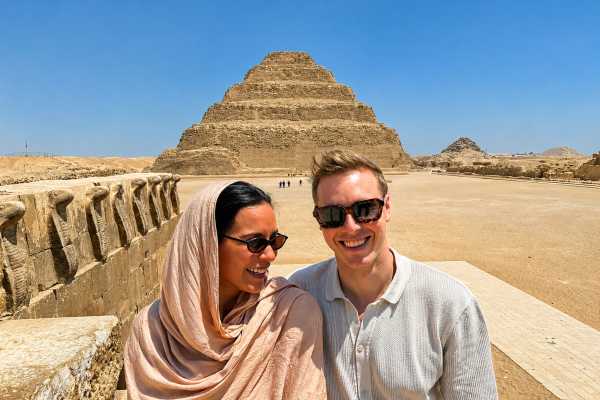
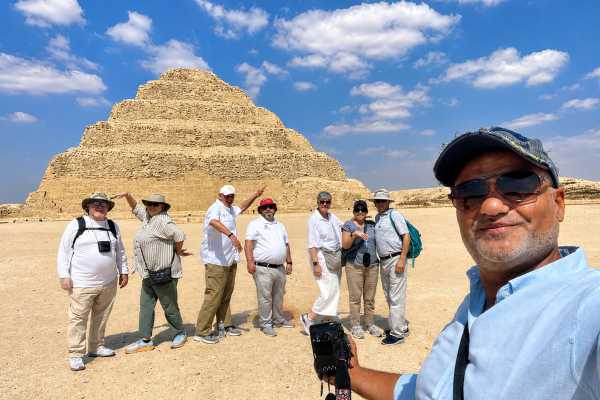
However, the site's most famous attraction is undoubtedly the Step Pyramid of Djoser.
The Vision of Imhotep
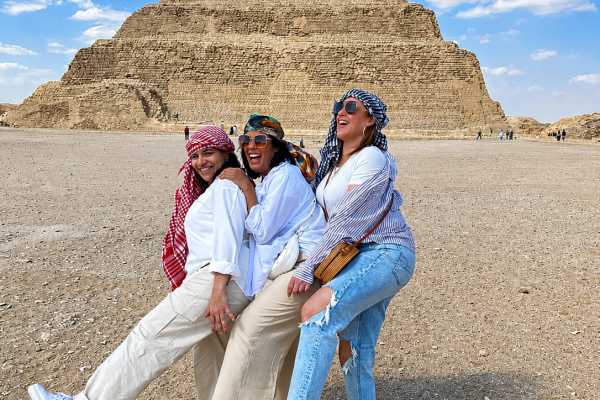
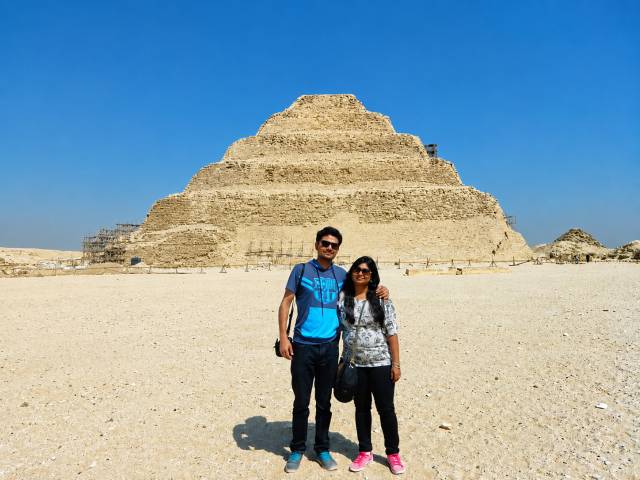
Constructed during the Third Dynasty around 2670 BC, the Step Pyramid was commissioned by Pharaoh Djoser and designed by Imhotep, one of history's earliest known architects.
Before Djoser's reign, royal tombs were typically built as rectangular mudbrick structures called mastabas. Imhotep revolutionized Egyptian architecture by stacking several mastabas on top of one another, creating a six-tiered pyramid that rose dramatically above the desert landscape.
This innovation transformed royal burial practices and laid the foundation for all subsequent pyramid construction.
Today, Imhotep is celebrated not only as an architect but also as a physician, engineer, and scholar. His achievements were so remarkable that he was later deified and worshipped as a god.
Exploring the Step Pyramid Complex
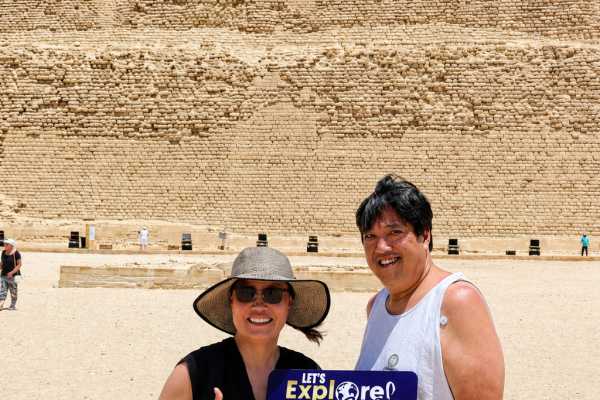
The Step Pyramid is only one part of a vast ceremonial complex covering approximately 15 hectares.
Visitors can explore:
Massive limestone walls surrounding the complex
Ceremonial courtyards
Ancient temples
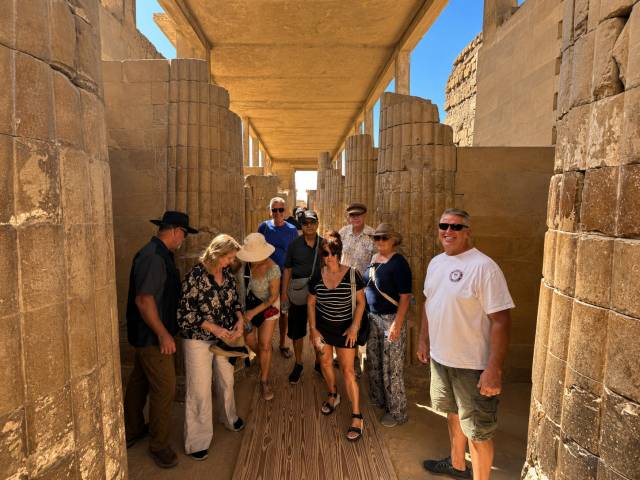
Colonnaded entrance passages
Ritual structures used during royal ceremonies
Walking through the complex offers a rare glimpse into the earliest experiments in monumental stone architecture.
Unlike later pyramids, which focused primarily on the burial chamber, Djoser's complex was designed as an entire sacred city for the afterlife.
The Tombs of the Nobles
Beyond the Step Pyramid, Saqqara contains numerous tombs belonging to high-ranking officials and nobles.
Many feature remarkably preserved wall reliefs depicting:
Agricultural activities
Hunting scenes
Religious ceremonies
Daily life in ancient Egypt
Family gatherings and celebrations
These colorful carvings provide invaluable insight into Egyptian society and offer some of the finest examples of Old Kingdom art.
The Pyramid of Unas
Another highlight of Saqqara is the Pyramid of Unas.
Although modest in size compared to Giza's monuments, it contains one of Egypt's greatest archaeological treasures: the Pyramid Texts.
These inscriptions represent the oldest known religious texts in human history and were intended to guide the pharaoh through the afterlife.
The hieroglyphs covering the pyramid's interior walls remain one of the most important discoveries in Egyptology.
Dahshur: Where Pyramid Design Evolved
After exploring Saqqara, the journey continues to Dahshur.
While often overshadowed by Giza, Dahshur is arguably one of Egypt's most fascinating pyramid fields because it documents the crucial transition from experimental designs to the classic pyramid shape recognized worldwide.
Pharaoh Sneferu's Ambition
Dahshur is closely associated with Pharaoh Sneferu, founder of the Fourth Dynasty and father of Khufu, builder of the Great Pyramid.
Sneferu was one of Egypt's greatest builders and commissioned several pyramid projects during his reign.
His architects faced significant engineering challenges, and their efforts produced two of the most unique monuments in Egypt.
The Bent Pyramid
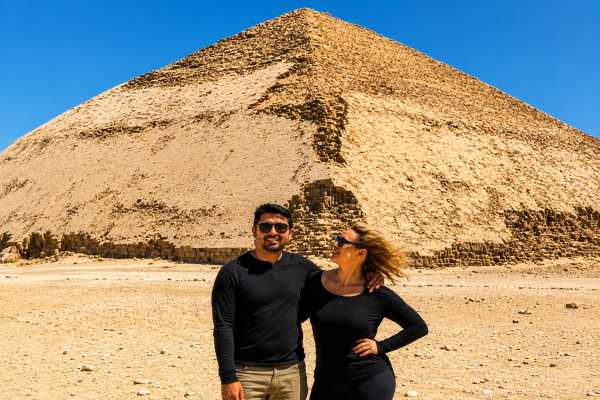
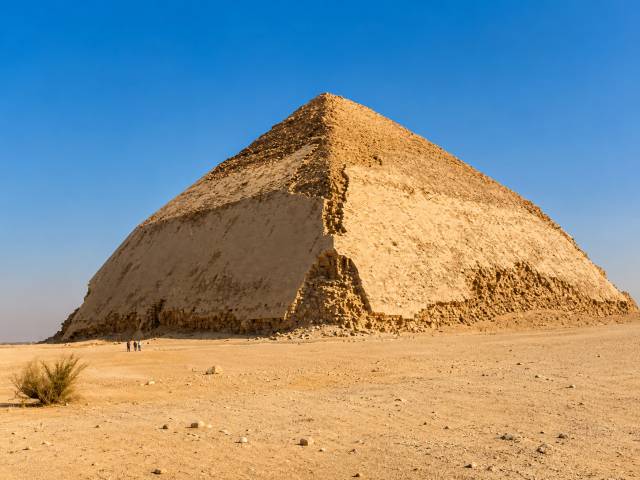
The Bent Pyramid immediately captures attention because of its unusual shape.
The pyramid begins at a steep angle but changes slope partway up, creating its distinctive appearance.
Historians believe builders altered the angle during construction to improve structural stability and prevent collapse.
Despite its unconventional design, the Bent Pyramid remains one of the best-preserved pyramids in Egypt.
Much of its original polished limestone casing is still intact, allowing visitors to appreciate how pyramids originally appeared thousands of years ago.
Standing before the Bent Pyramid provides a fascinating glimpse into the trial-and-error process that led to architectural perfection.
The Red Pyramid
Following lessons learned from the Bent Pyramid, Sneferu's builders successfully constructed the Red Pyramid.
This monument represents Egypt's first true smooth-sided pyramid and served as the model for later masterpieces at Giza.
Named for the reddish hue of its limestone blocks, the Red Pyramid rises approximately 104 meters above the desert.
Visitors can enter the pyramid through a descending passage that leads to a series of chambers and corbelled ceilings.
The experience of standing inside one of the world's oldest true pyramids is unforgettable.
Unlike the crowded pyramids at Giza, the Red Pyramid often offers a quieter and more intimate experience.
Why Dahshur Matters
Dahshur demonstrates the evolution of engineering and architectural knowledge.
Without the lessons learned here, the Great Pyramid of Giza might never have been possible.
For travelers interested in history, architecture, or engineering, Dahshur provides a deeper understanding of the ingenuity behind Egypt's most famous monuments.
Memphis: The Capital of an Empire
The final stop is Memphis, the city that connected all these sites.
Although centuries of flooding, rebuilding, and human activity have reduced much of the ancient city to ruins, several remarkable artifacts remain.
The Colossal Statue of Ramses II
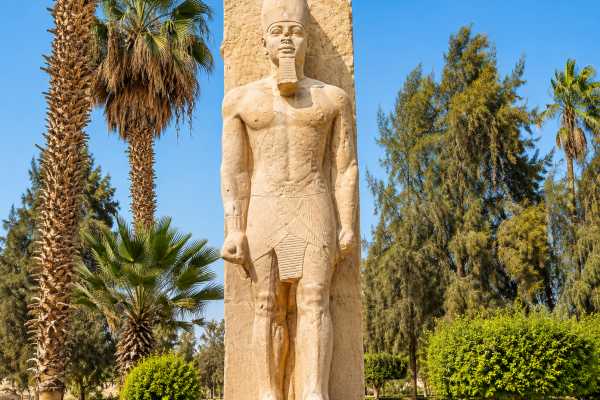
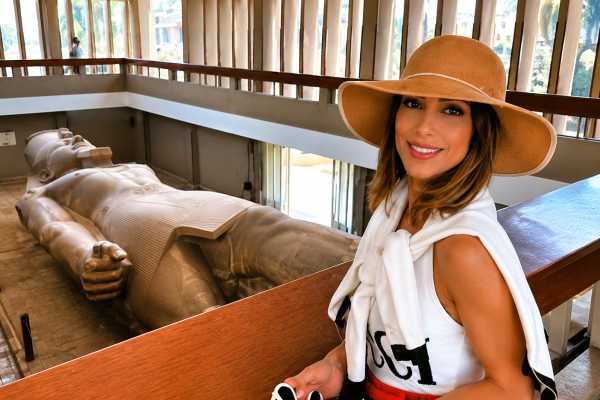
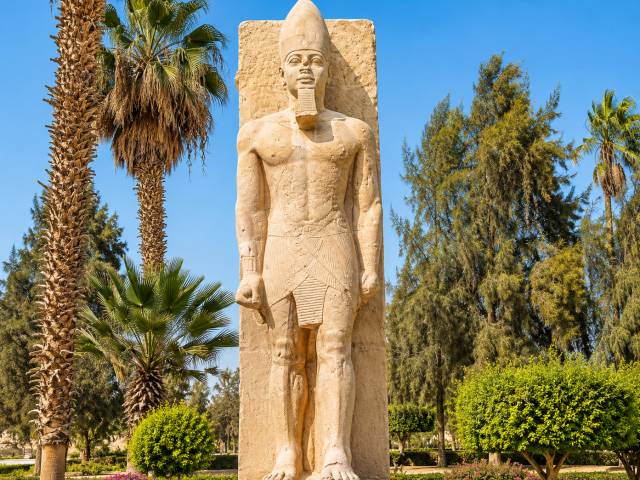
The centerpiece of Memphis is the enormous limestone statue of Ramses II.
Measuring over 10 meters in length, this masterpiece once stood proudly within a temple complex.
The statue's detailed craftsmanship highlights the artistic achievements of ancient Egyptian sculptors.
Visitors can observe intricate features, including facial expressions, royal insignia, and finely carved details that have survived for more than 3,000 years.
The Alabaster Sphinx
Another notable attraction is the Alabaster Sphinx.
Carved from a single block of alabaster, this impressive sculpture differs from the famous Sphinx at Giza while showcasing the same artistic excellence.
Its elegant proportions and craftsmanship make it one of Memphis's most treasured monuments.
Understanding Ancient Urban Life
While pyramids often dominate discussions about Egypt, Memphis reminds visitors that these monuments were part of a thriving civilization.
The city housed administrators, priests, merchants, craftsmen, soldiers, and ordinary citizens whose efforts supported the kingdom's prosperity.
Memphis provides the human context behind Egypt's monumental achievements.
Why Combine Saqqara, Dahshur, and Memphis in One Day?
Visiting these sites together creates a complete narrative of Egypt's early history.
Rather than seeing isolated monuments, travelers witness a chronological progression:
Memphis — the political center.
Saqqara — the birth of pyramid architecture.
Dahshur — the refinement of pyramid engineering.
Giza — the ultimate achievement that followed.
This sequence transforms a simple excursion into a comprehensive historical experience.
Practical Travel Tips
Best Time to Visit
October through April offers the most comfortable temperatures.
What to Wear
Lightweight clothing
Comfortable walking shoes
Sunglasses
Sunscreen
Hat
Photography Opportunities
These sites offer some of Egypt's most spectacular photography locations with fewer crowds than Giza.
Early morning and late afternoon provide the best lighting conditions.
Duration
A full-day excursion typically lasts between 8 and 10 hours, allowing ample time to explore each site.
Conclusion
While the Great Pyramids of Giza deserve every bit of their fame, travelers who limit themselves to Giza miss a crucial part of Egypt's story.
Saqqara reveals the birth of pyramid construction through the revolutionary vision of Imhotep and the Step Pyramid of Djoser. Dahshur showcases the engineering experiments that led to the world's first true pyramids. Memphis provides the historical foundation of the civilization that made these extraordinary achievements possible.
Together, these destinations create one of Egypt's most rewarding cultural experiences. They offer fewer crowds, richer historical context, and a deeper appreciation for the ingenuity, ambition, and creativity of ancient Egyptian civilization.
For travelers seeking more than a postcard view of the pyramids, a day exploring Saqqara, Dahshur, and Memphis is an unforgettable journey through the origins of one of humanity's greatest civilizations.