




Cairo Travel Guide 2026: Things to Do, Places to Visit, Tours & Travel Tips
Cairo is not simply a city you visit. It is a city you experience.
The Egyptian capital brings together thousands of years of history, busy modern streets, ancient monuments, traditional markets, museums, mosques, churches, restaurants and the Nile River. Within a single day, you can stand in front of a pyramid built thousands of years ago, explore medieval Islamic architecture, enjoy traditional Egyptian food and watch Cairo come alive after sunset.
For first-time visitors, however, Cairo can feel overwhelming. The city is huge, attractions are spread across different areas, and choosing what to see can be difficult when your time is limited.
This Cairo Travel Guide 2026 is designed to make your trip easier.
Instead of simply listing attractions, this guide explains how to organize your time, what to see, which places can be combined in one day, what to do if you have only a few hours, and how to experience Cairo beyond the famous pyramids.
Cairo at a Glance
Cairo is the capital of Egypt and one of the country's most important cultural and historical centers.
The city stretches along the Nile and connects several different experiences.
You can explore ancient Egypt around Giza, Saqqara and Memphis.
You can discover medieval Cairo around the Citadel, Al-Azhar and historic Islamic neighborhoods.
You can explore Coptic Cairo and its churches and heritage sites.
And you can experience modern Cairo through its restaurants, cafés, shopping districts and neighborhoods.
This mixture is what makes Cairo special.
If you are planning to explore more of Egypt after Cairo, browse our Egypt Day Tours for additional private sightseeing experiences.
How Many Days Do You Need in Cairo?
The ideal length of a Cairo visit depends on your interests and travel schedule.
One Day in Cairo
If you only have one day, focus on the major highlights:
Giza Pyramids → Great Sphinx → Grand Egyptian Museum → evening in Cairo
Trying to add every historical attraction to the same day will make the experience rushed.
A private Cairo Day Tour can help you organize the major attractions into a practical itinerary.
Two Days in Cairo
With two days, you can divide your trip between ancient Egypt and historic Cairo.
Day 1: Giza Pyramids + Great Sphinx + Grand Egyptian Museum
Day 2: Citadel + Islamic Cairo + Khan El Khalili + Coptic Cairo
Three Days in Cairo
With three days, add the archaeological sites south of the city:
Day 3: Saqqara + Memphis + Dahshur
This gives you a much broader understanding of Egyptian history than visiting Giza alone.
The Giza Pyramids: Where Your Cairo Adventure Begins
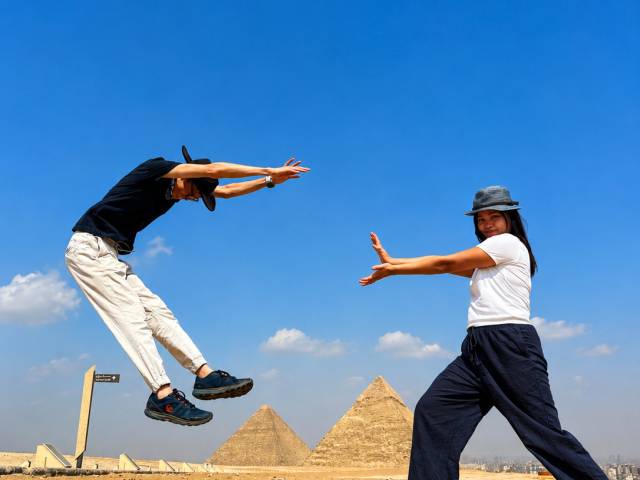
For most first-time visitors, the Giza Plateau is the first major stop.
The site is much more than three pyramids standing in the desert. It is an enormous archaeological landscape containing pyramids, temples, tombs and monuments connected with the royal funerary complexes of ancient Egypt.
The three principal pyramids are:
Great Pyramid of Khufu
Pyramid of Khafre
Pyramid of Menkaure
The Great Pyramid of Khufu is the largest and most famous of the three.
If you want to explore the plateau with your own vehicle and a dedicated guide, our Private Giza Pyramids Tour provides a flexible way to experience the major monuments at your own pace.
The Great Sphinx: Look Beyond the Photograph
The Great Sphinx is one of the most recognizable monuments in the world.
Its human head and lion's body are carved into the limestone landscape beside the Giza pyramids.
Many visitors spend only a few minutes taking photographs before moving on.
That is a missed opportunity.
The Sphinx is connected to the surrounding temples and the royal funerary complex, and understanding that relationship makes the visit much more meaningful.
Experience the Pyramids at Sunset
The Giza Plateau changes character as the day comes to an end.
The desert light becomes softer, the monuments take on different colors, and the pyramids create an impressive backdrop for photography.
If you prefer an evening experience, consider our Sunset Giza Pyramids Tour for a private visit timed around sunset.
Grand Egyptian Museum: Complete Your Giza Experience
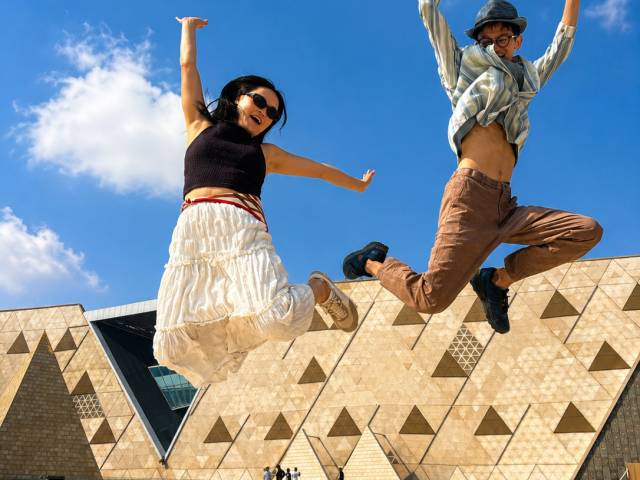
The Grand Egyptian Museum adds another dimension to a visit to Giza.
At the pyramids, you experience monumental architecture in its original landscape.
Inside the museum, you can explore archaeological objects and learn more about the civilization that created these monuments.
Combining the Giza Plateau with the museum creates a balanced sightseeing day:
Morning: Outdoor archaeology
Afternoon: Museum
Evening: Cairo
Cairo Beyond the Pyramids
One of the biggest mistakes visitors make is thinking that seeing the pyramids means they have seen Cairo.
It doesn't.
The historic center of the city tells a completely different story.
Here, medieval architecture, mosques, markets, traditional houses and narrow streets create an atmosphere that feels completely different from the desert landscape of Giza.
Explore Historic Islamic Cairo
Islamic Cairo is not a single attraction.
It is an entire historic environment filled with monuments, mosques, schools, markets and traditional streets.
Among the places you can explore are:
Al-Azhar Mosque
Sultan Hassan Mosque
Al-Rifa'i Mosque
Ibn Tulun Mosque
Historic Cairo streets
Khan El Khalili
Walking through these areas allows you to experience Cairo as a living city rather than simply visiting individual monuments.
Khan El Khalili: More Than a Souvenir Market
Khan El Khalili is one of Cairo's most famous historic markets.
Visitors come here for souvenirs, jewelry, lamps, spices, traditional crafts and other Egyptian products.
But shopping isn't the only reason to visit.
The narrow streets, old buildings, traditional cafés and constant movement are part of the experience.
Take your time.
Walk through the smaller lanes, stop for Egyptian tea or coffee and watch everyday Cairo unfold around you.
Visit the Citadel of Saladin
The Citadel of Saladin occupies an elevated position overlooking Cairo.
The location was strategically important throughout history, but today it also offers visitors a different perspective of the city.
The most recognizable building inside the complex is the Mosque of Muhammad Ali, famous for its large domes and Ottoman-inspired architecture.
The Citadel can easily be combined with Islamic Cairo and Khan El Khalili during the same sightseeing day.
Discover Coptic Cairo
Cairo's history isn't only about pharaohs and Islamic architecture.
Coptic Cairo provides another important chapter.
The area contains historic churches and Christian heritage sites that reflect the long history of Egypt's Coptic community.
Highlights include:
The Hanging Church
Church of Saints Sergius and Bacchus
Coptic Museum
Babylon Fortress area
Explore Another Side of Ancient Egypt
Giza is only one chapter in the story of ancient Egypt.
If you have an additional day, travel south of Cairo to explore Saqqara, Memphis and Dahshur.
Saqqara
Saqqara is famous for the Step Pyramid of Djoser and its extensive archaeological landscape.
Memphis
Memphis was one of ancient Egypt's important capitals.
Dahshur
Dahshur is particularly interesting for travelers who want to understand how pyramid design developed.
The Bent Pyramid and Red Pyramid are among its best-known monuments.
Together, Saqqara, Memphis and Dahshur provide a deeper understanding of ancient Egyptian architecture beyond the Giza Plateau.
Experience the Nile River
The Nile is part of Cairo's identity.
During the day, the river provides a break from the busy streets.
After sunset, the atmosphere changes completely.
Depending on your travel style, you can enjoy:
Private felucca ride
Nile dinner cruise
Restaurant overlooking the Nile
Evening riverside experience
A Nile experience can be particularly enjoyable after a long day of sightseeing.
Egyptian Food You Should Try in Cairo
You haven't fully experienced Cairo until you've tried Egyptian food.
Some of the most popular dishes include:
Koshary
Rice, pasta, lentils, chickpeas, tomato sauce and crispy onions.
Ful Medames
Cooked fava beans traditionally served with bread and various toppings.
Egyptian Ta'ameya
Egyptian-style falafel traditionally made primarily from fava beans.
Molokhia
A traditional Egyptian dish with a distinctive texture and flavor.
Egyptian Desserts
Try:
Basbousa
Kunafa
Om Ali
Cairo Layover Tours: What Can You See Between Flights?
Cairo is a popular stopover destination for international travelers, and a long airport connection can become an opportunity to see some of Egypt's most famous sights.
If you have enough time between flights, a private Cairo Layover Tour can be organized around your arrival and departure schedule.
However, your total layover time is not the same as your sightseeing time.
You need to allow time for:
Immigration
Baggage collection
Airport procedures
Transportation
Cairo traffic
Returning to the airport
Check-in and security
Short Layover
For a shorter connection, concentrate on:
Giza Pyramids + Great Sphinx
Longer Layover
You may be able to combine:
Giza + Sphinx + Grand Egyptian Museum
Very Long Layover
Depending on your flight schedule, you may have enough time for:
Giza + museum + Khan El Khalili
The most important rule is simple:
Don't try to visit too many attractions during a short layover.
A well-planned private itinerary is usually much more practical than trying to cover the entire city.
What to Do in Cairo If You Only Have One Day
A realistic one-day itinerary could look like:
7:30 AM – Hotel pickup
8:00 AM – Giza Pyramids
10:30 AM – Great Sphinx and Valley Temple
12:00 PM – Egyptian lunch
1:30 PM – Grand Egyptian Museum
5:00 PM – Return toward Cairo
6:30 PM – Khan El Khalili
8:00 PM – Dinner
The exact schedule should always be adjusted according to opening hours, ticket arrangements, traffic and your hotel location.
Cairo in Two Days
Day One: Ancient Egypt
Giza Pyramids
Great Sphinx
Grand Egyptian Museum
Day Two: Historic Cairo
Citadel
Islamic Cairo
Khan El Khalili
Coptic Cairo
Cairo in Three Days
Day 1
Giza Pyramids
Great Sphinx
Grand Egyptian Museum
Day 2
Citadel
Islamic Cairo
Khan El Khalili
Coptic Cairo
Day 3
Saqqara
Memphis
Dahshur
Best Time to Visit Cairo
Cairo can be visited throughout the year, but your sightseeing strategy should change depending on the season.
Cooler Months
Generally more comfortable for long outdoor sightseeing days.
Hot Months
Start earlier in the morning, especially when visiting Giza.
The Simple Rule
The hotter the weather, the earlier you should start.
Where to Stay in Cairo
Giza
Best for travelers whose main priority is the pyramids and pyramid views.
Downtown Cairo
Convenient for central attractions and the historic Egyptian Museum.
Zamalek
A popular neighborhood with restaurants, cafés and Nile-side locations.
New Cairo
A modern part of the metropolitan area with newer hotels, restaurants and developments.
Choose your hotel based on your itinerary rather than simply choosing the most famous neighborhood.
Cairo Travel Tips
Start Early
Early starts are especially useful for outdoor attractions.
Don't Overload Your Itinerary
Cairo is enormous. Trying to visit too many attractions in one day can make the trip exhausting.
Allow Extra Time for Traffic
Travel times can change significantly depending on traffic.
Wear Comfortable Shoes
You will probably walk more than you expect.
Carry Water
Especially during the warmer months.
Keep Small Cash
Small purchases and local cafés are easier when you have smaller Egyptian notes.
Dress Appropriately
Comfortable clothing is ideal for sightseeing. More modest clothing is appropriate when visiting religious sites.
Check Your Egypt Visa Requirements
Before traveling, check the requirements that apply to your nationality and circumstances.
Our Egypt Visa Guide explains the main tourist visa options, including information about the Egypt e-Visa and visa on arrival.
Is Cairo Suitable for Families?
Yes.
Families can enjoy Cairo, but the itinerary should be planned around children's energy levels.
Popular family experiences include:
Giza Pyramids
Great Sphinx
Camel rides
Museums
Nile experiences
Open archaeological spaces
Build breaks and meal times into the itinerary rather than filling every hour with sightseeing.
Cairo for Couples
Cairo can be a memorable destination for couples.
Instead of spending every hour visiting monuments, combine sightseeing with experiences.
A couple's Cairo itinerary could include:
Early morning pyramid visit
Private photography
Grand Egyptian Museum
Pyramid-view breakfast
Khan El Khalili evening walk
Private Nile experience
Dinner overlooking the river
The best romantic itineraries leave enough free time to enjoy the city.
Why Choose a Private Cairo Tour?
Cairo is a city where flexibility can make a major difference.
A private tour allows you to:
Start at a convenient time
Spend longer at attractions you enjoy
Adjust your itinerary
Travel in a private vehicle
Take photographs without rushing
Choose where to stop for lunch
Combine attractions logically
Avoid wasting time on unnecessary stops
For travelers with limited time, this flexibility can be especially valuable.
Explore our Cairo Day Tours to discover private sightseeing experiences designed around different schedules.
Cairo Is More Than the Pyramids
The pyramids may be what brings many travelers to Cairo, but they are only the beginning.
Cairo is ancient and modern at the same time.
You can stand beside the Great Pyramid in the morning, explore a medieval market in the afternoon and watch the city lights reflect across the Nile at night.
You can walk through a historic mosque district and then sit in a modern café.
You can visit a museum filled with thousands of years of history and minutes later find yourself surrounded by the energy of contemporary Cairo.
That contrast is the real character of the city.
Frequently Asked Questions About Cairo
Is Cairo worth visiting?
Cairo is particularly rewarding for travelers interested in ancient history, archaeology, museums, architecture, Egyptian food and cultural experiences.
How many days should I spend in Cairo?
Two to three days is a good starting point for most first-time visitors. Travelers with additional time can explore the city at a slower pace and add Saqqara, Memphis and Dahshur.
What is the most famous attraction in Cairo?
The Giza Pyramids are Cairo's most internationally recognized attraction.
Can I visit the pyramids and Grand Egyptian Museum in one day?
Yes. The two can be combined into a full sightseeing day, depending on opening hours, tickets and your schedule.
Can I visit Cairo during a layover?
Yes, provided you have enough time after accounting for immigration, transportation, traffic and your return to the airport. A dedicated Cairo Layover Tour can be planned around your flight schedule.
Is one day enough for Cairo?
One day is enough to experience major highlights, but it isn't enough to explore everything the city has to offer.
What should I wear in Cairo?
Comfortable clothing is recommended for sightseeing. More modest clothing is appropriate when visiting mosques, churches and other religious sites.
Should I hire an Egyptologist guide?
If you want to understand the history behind the monuments rather than simply photograph them, a knowledgeable Egyptologist guide can add considerable context.
What is the best area to stay in Cairo?
It depends on your itinerary. Giza is convenient for pyramid-focused trips, while Downtown and Zamalek can be useful for travelers focusing more on central Cairo.
Can I visit Saqqara and the pyramids in the same day?
Yes. With a well-planned private itinerary, Giza can be combined with Saqqara and other nearby archaeological sites, although it will be a longer day.
Plan Your Cairo Experience
Cairo rewards travelers who give it enough time and organize their itinerary intelligently.
Whether you have a single day, a long weekend or several days in Egypt, the best approach is to combine major attractions with time to experience the city itself.
Start with the pyramids.
Explore the museums.
Walk through historic Cairo.
Taste Egyptian food.
See the Nile after sunset.
And leave enough room for the unexpected moments that make travel memorable.
When you're ready to explore the capital, discover our Cairo Day Tours or browse our wider selection of Egypt Day Tours.
If you're only passing through Cairo between flights, explore our Cairo Layover Tours.
Before traveling, review our Egypt Visa Guide and make sure you have the appropriate travel documents.
Welcome to Cairo — where ancient history and everyday Egyptian life meet.