Egypt Nile Cruise Itinerary: Luxor, Edfu, Kom Ombo & Aswan
An Egypt Nile cruise itinerary is one of the most rewarding ways to discover the ancient wonders of southern Egypt. Traveling along the Nile River between Luxor and Aswan allows you to explore magnificent temples, royal tombs, traditional riverside villages, and remarkable monuments that reveal thousands of years of Egyptian history.
Instead of changing hotels every night, you can enjoy your accommodation aboard a cruise ship while traveling between some of the country's most famous archaeological sites. Depending on your selected itinerary, your journey may include Karnak Temple, Luxor Temple, the Valley of the Kings, Edfu Temple, Kom Ombo Temple, and the beautiful Philae Temple in Aswan.
Most travelers choose a cruise lasting approximately three to four nights, although longer itineraries and alternative sailing directions are available. The exact schedule depends on the cruise operator, sailing dates, and included excursions.
In this guide, you will discover what a typical Luxor to Aswan Nile cruise itinerary looks like, which temples you can visit, how many days to allow, and how to prepare for your journey.
Why Choose a Nile Cruise in Egypt?
A Nile cruise combines sightseeing, accommodation, transportation between destinations, and time to relax along one of the world's most historically important rivers.
For many travelers, the greatest advantage is the opportunity to visit several major archaeological sites without arranging separate hotel stays in every destination.
Here are some reasons to consider a Nile cruise:
Discover ancient Egyptian monuments: Explore temples, royal tombs, and historic religious complexes.
Enjoy scenic river journeys: See agricultural landscapes, palm trees, small settlements, and traditional life along the Nile.
Travel between major destinations: Visit Luxor, Edfu, Kom Ombo, and Aswan within one itinerary.
Combine guided tours with relaxation: Spend time exploring historical sites and relaxing aboard the ship.
Choose different cruise categories: Depending on availability, you may select standard, luxury, or premium accommodation.
To compare available options, visit our Egypt Nile Cruises page.
Overview of a Typical Luxor to Aswan Nile Cruise Itinerary
A traditional Luxor to Aswan itinerary combines the major attractions of Luxor with the temples located farther south along the Nile.
The following is an illustrative four-day itinerary. Actual cruise schedules may differ, and some ships operate on a three-night program or visit certain attractions on different days.
Day 1: Arrive in Luxor and Explore the East Bank
Your journey begins in Luxor, one of the most important archaeological destinations in Egypt. The city stands on the site of ancient Thebes, which served as a major religious and political center during important periods of Egyptian history.
Depending on your arrival time and cruise schedule, your first day may include visits to Karnak Temple and Luxor Temple.
Karnak Temple Complex
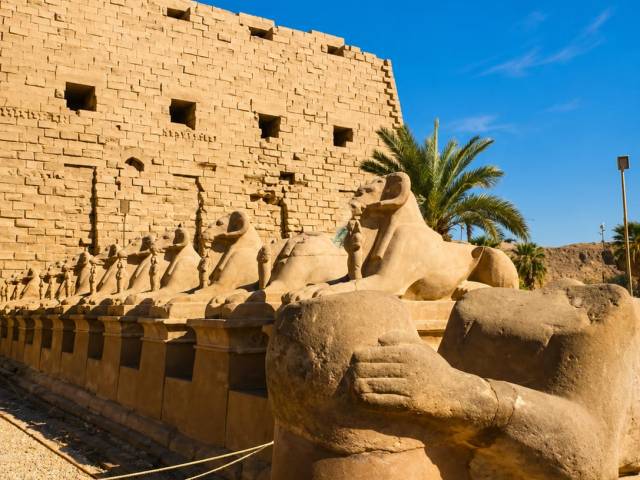
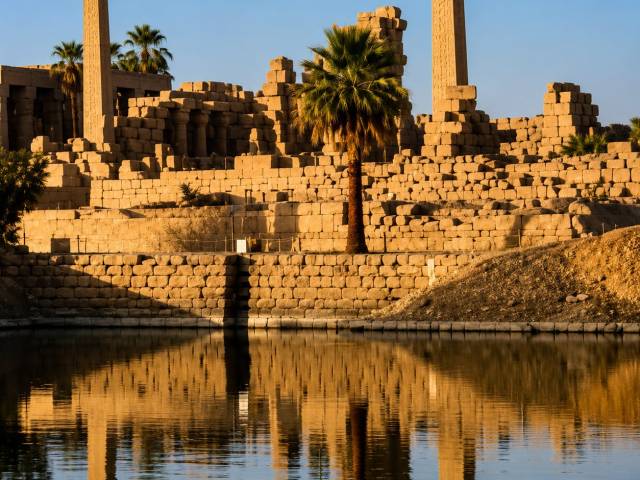
Karnak is one of the largest religious complexes ever constructed. Developed over many centuries, it contains enormous columns, monumental gateways, sacred spaces, and inscriptions associated with different pharaohs.
The Great Hypostyle Hall is one of its most impressive features. Its towering columns give visitors a sense of the scale and ambition of ancient Egyptian architecture.
A guided visit can help you understand the religious significance of the complex and the rulers who contributed to its expansion.
Luxor Temple
Located close to the modern city center, Luxor Temple is another major monument on Luxor's East Bank.
The temple is associated with royal ceremonies and the annual Opet Festival, which connected the religious traditions of Karnak and Luxor. Its monumental entrance, statues, and columns make it an important stop for visitors interested in ancient Egyptian civilization.
Some itineraries schedule Luxor Temple in the evening, when the illuminated monument can provide a different atmosphere.
After sightseeing, you may board your cruise ship, settle into your cabin, and enjoy dinner according to the vessel's schedule.
Overnight: Nile cruise ship in Luxor or another location specified by the operator.
Day 2: Explore the West Bank of Luxor
The second day often focuses on Luxor's West Bank, home to royal tombs, monumental funerary architecture, and archaeological landscapes associated with ancient Egyptian beliefs about the afterlife.
Depending on the itinerary, you may visit the Valley of the Kings, the Temple of Hatshepsut, and the Colossi of Memnon.
Valley of the Kings
The Valley of the Kings served as a burial ground for many pharaohs and members of the royal elite during the New Kingdom.
The site contains decorated tombs cut into the surrounding rock. Their walls feature scenes and texts connected with ancient Egyptian religious beliefs, the journey after death, and the protection of the deceased ruler.
Entrance arrangements vary, and admission to certain tombs may require a separate ticket. The tombs available to visitors can also change.
If visiting a particular tomb is important to you, confirm the current ticket rules before your trip.
Temple of Hatshepsut
The mortuary temple of Hatshepsut stands against the dramatic cliffs of Deir el-Bahari.
Hatshepsut was one of ancient Egypt's most notable female rulers. Her temple is famous for its terraces, architectural design, and relationship with the surrounding landscape.
The monument offers a different experience from the large columned temples of the East Bank and is an important part of many Luxor itineraries.
Colossi of Memnon
The Colossi of Memnon are two enormous stone statues that once stood in front of the mortuary temple of Amenhotep III.
The statues are a familiar landmark on the West Bank and are often included as a short stop during a sightseeing tour.
After the West Bank excursion, you may return to the ship as it prepares to continue its journey south. Sailing schedules depend on the cruise operator and river navigation arrangements.
Overnight: Aboard the cruise ship.
Day 3: Visit Edfu Temple and Kom Ombo Temple
The third day often includes two important temples located between Luxor and Aswan: Edfu Temple and Kom Ombo Temple.
These sites help visitors understand the religious traditions of ancient Egypt beyond the major monuments of Luxor.
Edfu Temple
Edfu Temple is dedicated primarily to Horus, the falcon-associated god linked with kingship and protection.
Built during the Ptolemaic period, the temple is among the best-preserved ancient Egyptian temple complexes. Its monumental entrance, courtyards, reliefs, and inscriptions provide valuable information about ancient religious practices.
Walking through the temple allows visitors to appreciate its architectural scale and the detailed decoration preserved on its walls.
Many cruise programs include Edfu as a major excursion, although the exact timing and transportation arrangements depend on the ship's itinerary.
Kom Ombo Temple
Kom Ombo Temple occupies an attractive position near the Nile and is unusual because it is dedicated to two groups of deities.
One side is associated with Sobek, the crocodile god, while the other is associated with Horus the Elder.
The temple's symmetrical layout and surviving reliefs make it particularly interesting to visitors who want to learn how ancient Egyptian religious traditions developed over time.
Nearby displays may include crocodile mummies associated with the worship of Sobek. The availability and arrangements for visiting museum displays should be confirmed locally.
Kom Ombo is often visited as the cruise continues toward Aswan.
Overnight: Aboard the cruise ship, depending on the sailing schedule.
Day 4: Discover Aswan and Philae Temple
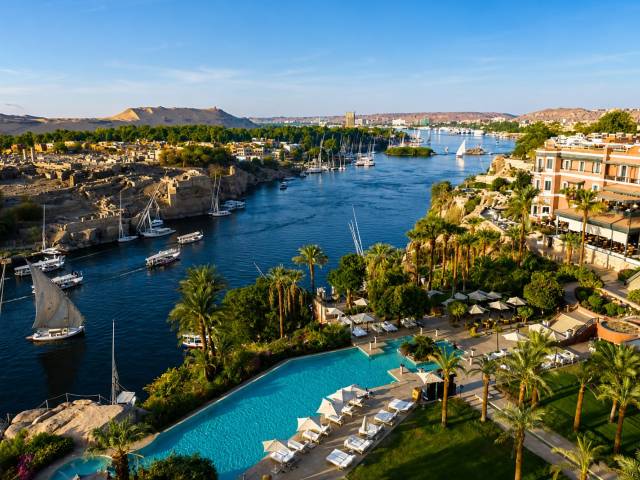
Aswan provides a different atmosphere from Luxor. The city is known for its Nile scenery, islands, Nubian cultural heritage, and important archaeological attractions.
Your final day may include Philae Temple and other sites, depending on the cruise program and departure arrangements.
Philae Temple
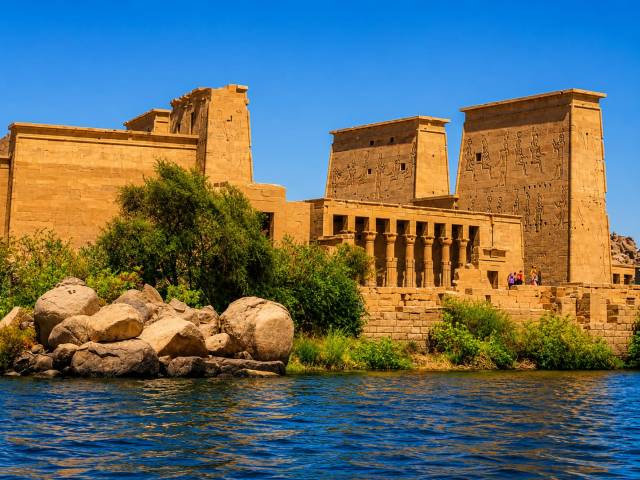
Philae Temple is dedicated primarily to Isis, one of the most important goddesses in ancient Egyptian religion.
The temple complex was relocated to Agilkia Island through an international preservation project after the construction of the Aswan High Dam threatened the original location.
Visitors typically reach the temple by boat. Its island setting, monumental structures, and decorated walls make it one of the most memorable attractions in Aswan.
The temple is especially appealing to travelers interested in the preservation of ancient monuments and the continuation of religious traditions during later periods of Egyptian history.
Aswan High Dam
Some itineraries include a visit to the Aswan High Dam, a major modern engineering project that transformed water management and electricity generation in Egypt.
The dam also played a central role in the story of relocating threatened archaeological monuments, including Philae Temple.
Unfinished Obelisk
The Unfinished Obelisk is located in an ancient granite quarry in Aswan. It provides insight into the techniques used by ancient Egyptian stoneworkers.
The enormous obelisk was left unfinished, making it a valuable example of the stone extraction and carving process.
Not every Nile cruise package includes all three attractions. Confirm the included visits and entrance fees when booking.
Overnight: Depending on your program, you may stay aboard the cruise ship or continue to a hotel or airport transfer.
Can You Take a Nile Cruise From Aswan to Luxor?
Yes. Many Nile cruises operate in the opposite direction, traveling from Aswan to Luxor.
An Aswan to Luxor itinerary generally covers the same major destinations, but the order and timing of excursions can differ.
Depending on the operator, a south-to-north cruise may include Philae Temple, Kom Ombo, Edfu, and the major attractions of Luxor. The number of nights and the exact order of visits depend on the sailing schedule.
When comparing itineraries, do not assume that every cruise visits the same attractions on the same day. Review the full program before making your reservation.
How Many Days Do You Need for a Nile Cruise?
The ideal duration depends on how many monuments you want to visit and whether you prefer a relaxed or more compact schedule.
Three-Night Nile Cruise
A three-night cruise can be a practical choice for travelers with limited time. It may cover several major attractions between Luxor and Aswan.
However, the schedule can be busy, and the precise sightseeing program varies by operator.
Four-Night Nile Cruise
A four-night cruise often provides a comfortable way to experience the traditional Luxor to Aswan route.
Depending on the itinerary, travelers can visit major sites in Luxor, Edfu, Kom Ombo, and Aswan while enjoying time aboard the ship.
Longer Nile Cruise
A longer program may provide additional time in particular destinations, more excursions, or a more relaxed overall experience.
Travelers who want to explore more of southern Egypt can also consider adding extra hotel nights in Luxor or Aswan before or after their cruise.
The best duration is the one that fits your arrival schedule, sightseeing priorities, and travel budget.
What Is Usually Included in a Nile Cruise Package?
The inclusions depend on the cruise operator and package category. Before booking, check whether your price covers the following services:
Accommodation aboard the cruise ship.
Meals according to the stated meal plan.
Guided sightseeing excursions.
Transportation during included excursions.
Entrance tickets to archaeological sites.
Transfers between the airport, hotel, and cruise ship.
A licensed Egyptologist guide or another specified guide service.
Taxes and service charges, where applicable.
Some packages include guided visits but exclude entrance tickets. Others may charge separately for optional excursions, special tombs, drinks, or particular services.
Always compare the full list of inclusions rather than selecting a cruise based on the advertised price alone.
For more information, read our guide to what is included in a Nile cruise package, if published at this address.
Best Time to Follow This Nile Cruise Itinerary
The cooler months are generally the most comfortable for exploring the temples and archaeological sites of Upper Egypt.
October through April is usually a good period for a Luxor to Aswan cruise. October, November, February, and March are particularly attractive for many travelers.
During summer, Luxor and Aswan can become extremely hot. If you travel between June and August, early excursions, sun protection, sufficient water, and air-conditioned transportation become especially important.
Seasonal conditions and cruise schedules can vary. Check the weather forecast and confirm your operator's itinerary before departure.
For a detailed seasonal comparison, see our guide to the best time to take a Nile cruise in Egypt, if published at this address.
What Should You Pack for a Nile Cruise?
A practical packing list can make temple visits and time aboard the ship more comfortable.
Consider bringing:
Comfortable walking shoes for temple courtyards and archaeological sites.
Lightweight clothing suitable for warm weather.
A hat, sunglasses, and sunscreen.
A light jacket for cooler mornings and evenings during winter.
A small day bag for excursions.
Any necessary personal medication.
A camera or smartphone for photographs.
Modest clothing suitable for visiting religious or culturally significant places.
If your itinerary includes tombs, temple steps, or uneven archaeological paths, comfortable footwear is particularly important.
During summer, take extra care to protect yourself from the heat and follow your guide's recommendations.
Tips for Planning Your Luxor to Aswan Nile Cruise
Book the Right Cruise Category
Compare the ship's facilities, cabin category, itinerary, meal arrangements, and included excursions. A higher price does not automatically mean that every sightseeing expense is included.
Confirm Your Departure Date
Cruise schedules vary. Confirm the departure date, boarding time, route, and number of nights before arranging connecting flights or hotels.
Check Entrance Fees
Entrance tickets may be included in some packages and excluded from others. Ask for a clear list of included sites and any additional ticket costs.
Allow Time for Flights and Transfers
If you are flying into Luxor or departing from Aswan, leave a suitable buffer for transfers and possible schedule changes. Avoid making tightly connected arrangements without confirming the cruise timetable.
Consider a Private Guide
A private licensed Egyptologist guide can offer a more personalized experience, explain historical details, and help tailor the sightseeing pace where arrangements allow.
Combine Your Cruise With Cairo
Many visitors combine a Nile cruise with time in Cairo to explore the Giza Pyramids and museums. You can arrange the Cairo portion before or after the cruise depending on flight schedules and personal preferences.
Frequently Asked Questions About an Egypt Nile Cruise Itinerary
What places do you visit on a Luxor to Aswan Nile cruise?
A typical itinerary may include Karnak Temple, Luxor Temple, the Valley of the Kings, Edfu Temple, Kom Ombo Temple, and Philae Temple. Some programs also include the Temple of Hatshepsut, the Colossi of Memnon, the Aswan High Dam, or the Unfinished Obelisk.
Is a three-night Nile cruise enough?
A three-night cruise can cover several major attractions, but the itinerary may be busy. A four-night program may offer a more comfortable schedule, depending on the operator and included excursions.
Which is better, Luxor to Aswan or Aswan to Luxor?
Both directions can offer an excellent experience. The main difference is the order of sightseeing and the cruise departure schedule. Compare the exact itineraries, duration, and prices before choosing.
Are entrance tickets included in Nile cruise packages?
Not always. Some packages include entrance tickets, while others charge them separately. Confirm the inclusions for every attraction on your itinerary before booking.
Can I visit Abu Simbel during a Nile cruise?
Abu Simbel is not automatically included in a standard Luxor to Aswan cruise itinerary. Travelers may be able to arrange it as an additional excursion from Aswan, subject to timing, availability, and transportation arrangements.
What is the best month for a Luxor to Aswan Nile cruise?
October, November, February, and March are generally excellent options for comfortable sightseeing. April can also be very good, while December and January are popular cooler-season choices.
Do Nile cruises include a tour guide?
Many cruise packages offer guided excursions, but the type of guide and the languages available vary. Confirm whether a licensed Egyptologist guide is included and whether the excursions are private or shared.
Can I arrange a private Nile cruise itinerary?
Private transfers and private guided excursions may be available, depending on the operator and package. The cruise vessel itself may operate on a shared schedule even when your land excursions are private.
Start Planning Your Egypt Nile Cruise
A Luxor to Aswan Nile cruise brings together some of the most remarkable destinations in ancient Egypt. From the immense columns of Karnak Temple to the royal tombs of Luxor, the preserved sanctuary at Edfu, the double temple at Kom Ombo, and the island setting of Philae, each stop reveals another part of Egypt's fascinating history.
Choosing the right itinerary, cruise duration, and travel dates will help you make the most of your journey. Before booking, compare the ship, included excursions, entrance fees, transfers, and guide arrangements.
Explore our Egypt Nile Cruises to find an option that matches your travel plans.
Let’s Explore Egypt Travel can help you organize an unforgettable Egyptian journey combining ancient monuments, scenic river travel, and the cultural treasures of Luxor and Aswan.