


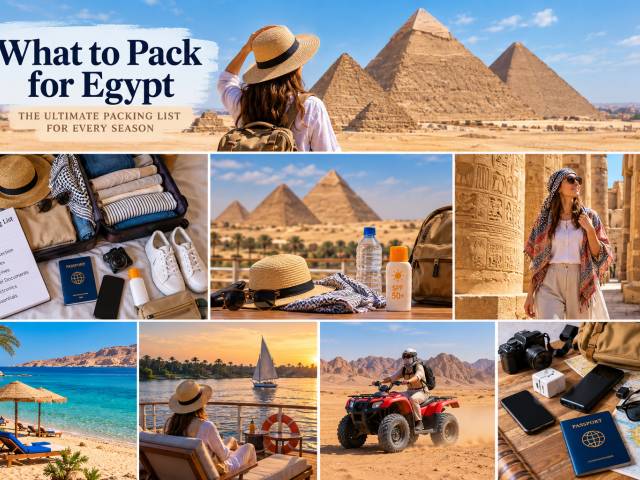
What to Pack for Egypt: The Ultimate Packing List for Every Season
Planning a trip to Egypt? Knowing what to pack can make your vacation more comfortable, whether you are exploring the Great Pyramids of Giza, discovering ancient temples in Luxor, sailing along the Nile, or relaxing on the beaches of the Red Sea.
Egypt offers an incredible mix of ancient history, vibrant cities, desert landscapes, and beautiful coastal destinations. However, the weather varies by season and location. Sunny days, high temperatures, dusty archaeological sites, cool winter evenings, and cultural dress expectations all influence what belongs in your suitcase.
The good news is that packing for Egypt does not need to be complicated. With lightweight clothing, comfortable walking shoes, reliable sun protection, and a few essential travel items, you can prepare for an unforgettable Egyptian adventure.
In this complete guide, discover exactly what to pack for Egypt, what to wear at the pyramids and temples, which essentials to bring for a Nile cruise or beach holiday, and how to adjust your packing list for summer and winter.
Quick answer: What should you pack for Egypt?
Pack lightweight, breathable clothing, comfortable walking shoes, a sun hat, sunglasses, high-SPF sunscreen, a scarf or shawl for religious sites, a light jacket for cooler evenings, swimwear if you plan to visit the Red Sea, personal medications, travel documents, and a suitable power adapter.
1. Understanding Egypt's Weather Before You Pack
The first step in preparing your Egypt packing list is understanding when and where you will travel.
Egypt generally has hot, dry summers and milder winters. Cairo and Giza can have cooler winter evenings, while Luxor and Aswan experience particularly intense summer heat. Coastal destinations such as Hurghada and Sharm El Sheikh have their own seasonal conditions.
Egypt is a year-round destination, but your clothing choices should reflect your itinerary and travel dates.
What to pack for Egypt in spring: March to May
Spring is a popular time to explore Egypt's archaeological sites and historic cities. Temperatures generally become warmer as the season progresses, and occasional dusty winds can affect outdoor sightseeing.
Pack:
Lightweight cotton or linen shirts.
Breathable trousers, skirts, or comfortable travel pants.
Short-sleeved tops.
Comfortable walking shoes.
A wide-brimmed hat and sunglasses.
Sunscreen and lip balm with SPF.
A lightweight scarf to protect against dust.
A thin jacket for cooler mornings and evenings.
If your itinerary includes Cairo, Giza, Luxor, and Aswan, prioritize breathable fabrics and clothing that protects your skin from direct sunlight.
What to pack for Egypt in summer: June to September
Summer can be extremely hot, especially in Upper Egypt, including Luxor and Aswan. Visiting temples and archaeological sites often involves walking outdoors with limited shade.
Choose clothing that keeps you cool while providing practical sun protection.
Pack:
Loose-fitting cotton or linen shirts.
Lightweight trousers or long skirts.
Breathable T-shirts.
Comfortable walking shoes or trainers.
A wide-brimmed hat.
High-SPF sunscreen.
Sunglasses with UV protection.
A reusable water bottle.
Swimwear for hotels, pools, and beach resorts.
A light cardigan for heavily air-conditioned indoor spaces.
Avoid packing too many thick fabrics, heavy jeans, or tight clothing that becomes uncomfortable during long sightseeing days.
Important tip: If you are visiting Luxor or Aswan in summer, plan outdoor sightseeing for cooler hours when possible. Drink water regularly, rest in shaded areas, and follow local guidance during extreme temperatures.
What to pack for Egypt in autumn: October to November
Autumn is an excellent period for combining sightseeing, cultural experiences, and beach relaxation. Days can remain warm, while evenings gradually become cooler, particularly later in the season.
Pack lightweight shirts, comfortable trousers, long-sleeved tops, walking shoes, sunglasses, sunscreen, a scarf, and a light sweater or jacket. Include swimwear if your itinerary includes the Red Sea.
October can still feel summery in many destinations, so check the forecast rather than packing exclusively for cool weather.
What to pack for Egypt in winter: December to February
Winter in Egypt is generally mild during the day, but mornings and evenings can be chilly. Temperatures may feel particularly cold during early starts, desert excursions, and outdoor activities after sunset.
Pack:
Long-sleeved shirts.
Lightweight trousers or jeans.
Sweaters or fleece layers.
A light to medium jacket.
Comfortable closed-toe walking shoes.
Socks for cooler mornings.
A scarf or shawl.
Sunglasses and sunscreen.
Swimwear if your hotel has a heated pool or your itinerary includes the Red Sea.
Do not assume that Egypt is hot everywhere throughout winter. Desert temperatures can drop considerably at night, so check the forecast for each destination on your itinerary.
2. The Best Clothing to Pack for Egypt
Choosing versatile clothing is one of the easiest ways to pack efficiently. You want outfits that are comfortable for walking, suitable for cultural visits, and easy to combine.
Lightweight shirts and T-shirts
Cotton and linen are practical choices for Egypt because they are breathable and comfortable in warm weather.
Bring a combination of short-sleeved tops and lightweight long-sleeved shirts. Long sleeves can provide useful protection against direct sunlight, especially when exploring open archaeological sites.
Neutral colors such as beige, white, light blue, and khaki are easy to coordinate and work well for sightseeing.
Trousers, skirts, and shorts
Lightweight trousers are useful for visiting temples, walking around Cairo, and exploring traditional markets. Long skirts and loose-fitting pants are also practical choices.
Shorts can be comfortable in tourist resorts and some casual settings. However, they may be less appropriate for certain religious buildings and traditional neighborhoods.
For maximum flexibility, pack a combination of trousers, breathable tops, and one or two outfits for evenings out.
Underwear, socks, and sleepwear
Pack enough underwear and socks for your trip, taking laundry facilities into account. If you plan to walk extensively, comfortable socks can help reduce friction and blisters.
Lightweight sleepwear is suitable for warmer months, while a warmer layer may be useful in winter.
A light jacket or cardigan
A light jacket is one of the most useful items on an Egypt packing list. It can help during winter evenings, early-morning excursions, breezy Nile cruises, and long journeys in air-conditioned vehicles.
Choose a compact layer that fits easily into your day bag.
A scarf or shawl
A scarf is versatile and takes up very little luggage space. It can cover your shoulders when needed, provide additional sun protection, or offer warmth when the temperature drops.
A lightweight scarf is particularly useful when visiting mosques and other religious sites.
3. What to Wear When Visiting the Pyramids of Giza
A visit to the Great Pyramids of Giza is a highlight of many Egypt holidays. The plateau is expansive, and exploring it can involve walking across sand, uneven ground, and exposed areas with little shade.
Your clothing should prioritize comfort, sun protection, and freedom of movement.
Recommended outfit for the Giza Pyramids:
A breathable T-shirt or lightweight long-sleeved shirt.
Comfortable trousers, travel pants, or suitable shorts.
Trainers or sturdy walking shoes.
A wide-brimmed hat or cap.
Sunglasses.
Sunscreen.
A small backpack for water and personal essentials.
Avoid brand-new shoes that have not been broken in, as extended walking can cause blisters. High heels and slippery footwear are impractical on sandy or uneven ground.
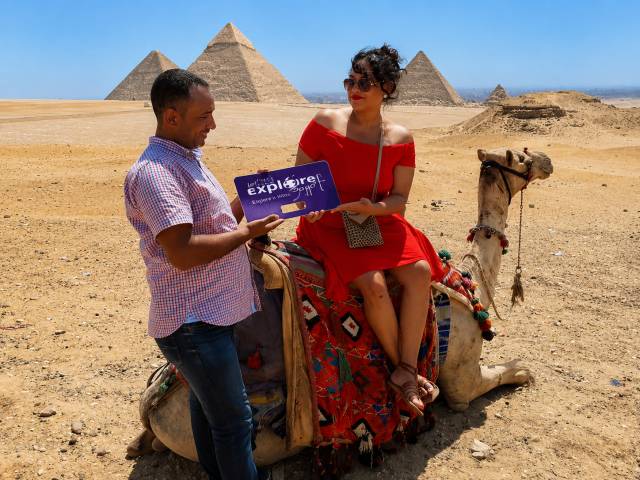
If you plan to enjoy a camel ride, choose trousers that allow comfortable movement and shoes that stay securely on your feet.
For a guided visit, explore the private sightseeing experiences available through Let's Explore Egypt Travel.
Should you wear white at the pyramids?
Light-colored clothing can be comfortable in sunny weather because it absorbs less heat than many dark fabrics. White, beige, and other light shades are also popular for travel photographs.
However, comfort and sun protection matter more than choosing a particular color.
What should you bring for pyramid photography?
If you want memorable photographs, consider packing your smartphone or camera, a portable power bank, a microfiber cloth for cleaning your camera lens, a hat, sunglasses, and a small bottle of water.
Protect your electronic equipment from dust and avoid leaving it exposed to direct sunlight for long periods.
4. What to Wear at Egyptian Temples and Ancient Sites
Egypt's historic attractions include the Karnak Temple Complex, Luxor Temple, the Valley of the Kings, Abu Simbel, and numerous archaeological sites.
Many of these attractions require walking outdoors, sometimes for extended periods. Practical clothing is therefore essential.
Choose breathable tops, lightweight trousers, and comfortable shoes with a good grip. A long-sleeved shirt can help protect your arms from the sun without requiring heavy clothing.
For tombs and temples, wear shoes that are comfortable on uneven surfaces and stairs.
If you are visiting several sites in one day, pack a small day bag containing water, sunscreen, sunglasses, and any personal essentials you need.
5. What to Pack for Mosques and Religious Sites in Egypt
Egypt has important Islamic, Christian, and Jewish heritage sites. Visitors should dress respectfully when entering places of worship.
For mosques, churches, synagogues, and other religious landmarks, it is sensible to have clothing that covers your shoulders and knees. Some sites may have additional requirements.
Women may need a headscarf at certain mosques, so carrying one is a practical precaution. Shoes may need to be removed in designated areas.
A useful religious-site outfit includes a top that covers the shoulders, long trousers or a long skirt, a lightweight scarf or shawl, and shoes that are easy to remove when necessary.
You do not need to buy an entirely separate wardrobe for religious visits. A few versatile items can work for sightseeing and cultural experiences alike.
6. Shoes: One of the Most Important Things to Pack
The right shoes can make a significant difference to your Egypt holiday.
You may walk across sandy ground at the pyramids, climb steps at ancient monuments, explore museums, and spend hours walking around busy streets.
Bring at least one reliable pair of comfortable walking shoes.
Walking shoes or trainers
Choose shoes with good support, a secure fit, and a sole suitable for uneven surfaces. Breathable trainers are a practical choice for many sightseeing itineraries.
Break them in before your trip rather than wearing them for the first time at the pyramids.
Sandals
Comfortable sandals can be useful for relaxed days, hotels, and beach resorts. However, open sandals may be less practical on dusty archaeological sites or uneven ground.
Flip-flops
Pack flip-flops for hotel showers, swimming pools, or the beach. They should not replace proper walking shoes for long sightseeing days.
Water shoes
Water shoes may be useful if your itinerary includes snorkeling, rocky beaches, or certain water activities in the Red Sea. Whether you need them depends on the resort and planned excursions.
7. Sun Protection: Essential for an Egypt Trip
Egypt's sunshine is one of the country's attractions, but extended exposure can make outdoor sightseeing uncomfortable and increase the risk of sunburn and heat-related illness.
Include sun protection in your day bag rather than leaving everything in your hotel room.
Sunscreen
Bring broad-spectrum sunscreen with a high SPF, preferably SPF 30 or higher. Apply it as directed and reapply according to the product instructions, especially after swimming or sweating.
Sunglasses
Choose sunglasses that provide UV protection. They can make a big difference when walking in bright sunlight or around reflective sand and water.
A sun hat
A hat with a wide brim can help protect your face, ears, and neck. A cap is also useful, although it provides less coverage.
Lip balm
Lip balm with SPF can help protect your lips from sun and dry conditions.
A reusable water bottle
Carry water when sightseeing and drink regularly. During very hot weather, take breaks in the shade and avoid unnecessary strenuous activity during the hottest part of the day.
For additional health advice before travelling, consult the CDC's Egypt travel health information.
8. Toiletries and Personal Care Items
Although basic toiletries are available in Egypt, you may prefer to bring your usual products, especially if you have sensitive skin or particular preferences.
Consider packing:
Toothbrush and toothpaste.
Shampoo and conditioner.
Body wash or soap.
Deodorant.
Moisturizer.
Sunscreen.
Lip balm with SPF.
Hairbrush or comb.
Personal hygiene products.
Hand sanitizer.
Tissues and travel wipes.
Insect repellent when appropriate.
Contact lenses, solution, or prescription glasses if needed.
Travel-size containers can help reduce luggage weight.
If you are visiting desert areas, bring a small pouch to keep toiletries and electronics protected from dust.
9. Medicines and a Basic Travel Health Kit
Bring any prescription medicines you regularly use, together with enough supply for your trip and a reasonable allowance for delays.
Keep medicines in their original packaging where possible, and check Egypt's current rules before travelling with controlled or restricted medication. Carry prescriptions or supporting medical documentation when appropriate.
A basic travel health kit may include:
Your regular prescription medicines.
Basic plasters and wound dressings.
An antiseptic suitable for minor cuts.
Oral rehydration salts.
Familiar over-the-counter medicines you can safely use.
Personal allergy medication, if needed.
Insect repellent.
Any personal medical supplies.
Do not start unfamiliar medication simply because you are travelling. If you have a medical condition or take regular medication, ask your healthcare professional what you should bring.
Travel insurance that covers your planned activities is also worth arranging before departure.
10. Travel Documents and Money
Travel documents should be among the first things you prepare, not the last items you throw into your suitcase.
Before travelling to Egypt, check the entry requirements applicable to your nationality, passport, and itinerary.
Pack or securely store:
A valid passport.
The appropriate Egyptian visa or entry authorization, if required.
Flight tickets and booking confirmations.
Hotel reservations.
Travel insurance details.
Copies of important documents.
Emergency contact information.
Bank cards and some cash.
Keep digital copies of important documents in a secure location, and carry a separate copy where practical.
Some businesses accept cards, while smaller vendors and certain services may prefer cash. Carry a sensible amount of small-denomination Egyptian pounds for everyday purchases and tips, while keeping the majority of your money secure.
Do not rely on a single payment method.
For official travel advice, review the UK Government's Egypt travel guidance.
11. Electronics and Travel Adapters
Your phone will probably be one of your most useful travel tools. You may use it for maps, booking confirmations, translation, photography, communication, and navigation.
Consider packing:
Smartphone and charging cable.
Power bank.
Travel adapter compatible with your devices.
Camera and accessories, if needed.
Headphones.
E-reader or tablet, if desired.
Downloaded maps and essential travel documents.
Egypt commonly uses European-style Type C and Type F electrical sockets, but socket compatibility and voltage requirements should be checked against your specific devices and accommodation.
A power bank is especially useful during long sightseeing days. Keep it in your carry-on luggage and follow your airline's rules for battery capacity and transport.
If you intend to buy a local SIM or use an eSIM, check compatibility with your phone before departure.
12. What to Pack for a Nile Cruise
A Nile cruise between Luxor and Aswan combines sightseeing with time aboard the ship. Your packing list should cover both temple visits and relaxed time on deck.
Pack lightweight daytime clothing, comfortable walking shoes, sandals for onboard relaxation, swimwear if the ship has a swimming pool, sunglasses, sunscreen, a sun hat, a light sweater or jacket, modest clothing for religious sites, and a small day bag for excursions.
The sun can be strong on open decks, so protection is important even when a breeze makes the weather feel cooler.
If you are travelling in winter, include an extra layer for early-morning excursions and evenings on deck.
To explore options for your visit, see the tours and travel experiences offered by Let's Explore Egypt Travel.
13. What to Pack for Hurghada and Sharm El Sheikh
If your Egypt holiday includes a Red Sea resort, you will need some additional beach and water-sport essentials.
Pack swimsuits, beachwear, flip-flops or sandals, a beach cover-up, sunscreen, sunglasses, a hat, a lightweight beach bag, a waterproof phone pouch if useful, water shoes if appropriate for your planned activities, and snorkeling equipment if you prefer to bring your own.
Swimwear is generally suitable around hotel pools and designated beach areas. When leaving the resort for towns, shops, or cultural attractions, carry regular clothing that fits the setting.
Check whether your hotel provides beach towels and snorkeling equipment before packing bulky items unnecessarily.
14. What to Pack for a Desert Safari
Desert excursions can involve sunshine, dust, wind, and cooler temperatures after sunset. Conditions vary depending on the location and season.
For a desert safari, consider packing lightweight long-sleeved clothing, comfortable trousers, closed-toe shoes, a scarf or buff to help shield your face from dust, sunglasses, sunscreen, a hat, water, a light jacket for the evening, and a small backpack.
Follow your tour operator's instructions regarding footwear and protective equipment. If the excursion involves quad biking or another motorized activity, use the safety equipment provided and wear clothing appropriate for the activity.
For overnight desert camping, pack warmer layers than you would for an ordinary daytime sightseeing tour.
15. What to Pack for a Family Trip to Egypt
Travelling with children requires a little extra preparation, particularly when your itinerary includes long drives or outdoor sightseeing.
In addition to the regular packing list, consider children's sun hats, sunscreen suitable for each family member, comfortable walking shoes, lightweight changes of clothing, refillable water bottles, familiar snacks for journeys, any necessary children's medicines, wet wipes and tissues, entertainment for flights and road transfers, swimwear for family-friendly resorts, and essential comfort items for younger children.
Plan regular breaks during hot-weather excursions, and make sure children have appropriate sun protection.
For visits to the Giza Pyramids and other large archaeological sites, a small day bag can help keep essential items accessible without carrying too much.
16. What to Pack for a Honeymoon in Egypt
Egypt is a memorable honeymoon destination, combining ancient wonders, Nile cruises, romantic hotel stays, desert landscapes, and Red Sea resorts.
Alongside practical sightseeing clothes, consider packing a few outfits for special occasions.
Your honeymoon packing list could include comfortable daytime outfits, a smart-casual outfit for dinner, one or two special-occasion outfits, swimwear and beachwear, comfortable walking shoes, sandals or dress shoes, sunscreen and sunglasses, personal toiletries and preferred skincare products, a light jacket for evenings, and a camera or smartphone for photographs.
If you are planning a Nile cruise, a luxury hotel stay, or a beach resort, check the dress expectations of any restaurants or special experiences you have booked.
You do not need to overpack to enjoy a special trip. Choose versatile outfits that can be worn in more than one setting.
17. What NOT to Pack for Egypt
Packing efficiently is just as important as bringing the right items.
Too many heavy clothes: Lightweight layers are more versatile for most Egypt trips.
Uncomfortable new shoes: Break in walking shoes before travelling.
Excessive valuables: Avoid carrying expensive jewelry or unnecessary valuables to crowded markets and archaeological sites.
Large toiletries: Travel-size containers can save space, and many basics are available locally.
Too many formal outfits: Most sightseeing days call for practical clothing. One smart-casual outfit is often sufficient for an ordinary holiday.
Bulky beach equipment: Check what your hotel or resort already provides.
Unnecessary duplicate electronics: Bring the devices you will genuinely use.
Restricted items without checking the rules: Review Egyptian customs and import requirements before travelling with drones, professional equipment, prescription medication subject to special rules, or other potentially restricted items.
A lighter suitcase makes airport transfers, domestic flights, and hotel changes easier.
18. A Complete Egypt Packing Checklist
Use this checklist before you leave home.
Clothing
Lightweight shirts and T-shirts.
Long-sleeved shirts.
Comfortable trousers or long skirts.
Underwear and socks.
Sleepwear.
A light sweater or jacket.
Comfortable walking shoes.
Sandals or flip-flops.
Swimwear, if needed.
A scarf or shawl.
Smart-casual clothing for evenings, if needed.
Sun protection
Sunscreen.
Sunglasses with UV protection.
Sun hat or cap.
Lip balm with SPF.
Reusable water bottle.
Toiletries and health
Toothbrush and toothpaste.
Shampoo and conditioner.
Deodorant and moisturizer.
Personal hygiene products.
Hand sanitizer and tissues.
Insect repellent, if appropriate.
Prescription medicines.
Basic first-aid supplies.
Travel insurance details.
Documents and money
Passport.
Visa or entry authorization, if required.
Flight and hotel confirmations.
Tour booking details.
Copies of important documents.
Bank cards.
Some Egyptian pounds.
Electronics
Phone and charger.
Power bank.
Compatible travel adapter.
Camera, if needed.
Headphones.
Downloaded maps and travel documents.
Optional extras
Small day backpack.
Beach bag.
Water shoes.
Dust scarf for desert excursions.
Travel laundry bag.
Snacks for long journeys.
A book or entertainment for flights.
19. Practical Packing Tips for Your Egypt Vacation
A few simple decisions can make your trip easier.
Pack outfits, not individual items. Choose clothes that work together so you can create several outfits with fewer pieces.
Use layers. A T-shirt, long-sleeved shirt, and lightweight jacket offer more flexibility than a suitcase full of bulky clothes.
Keep your day bag light. Carry water, sunscreen, a hat, your phone, and necessary personal items. Leave unnecessary valuables securely stored.
Prepare for early starts. Many travellers visit major archaeological sites in the morning to make the most of the day and avoid the strongest afternoon heat.
Check the weather for every destination. If your trip includes both Cairo and southern Egypt, do not assume the temperatures will be identical.
Check baggage allowances for domestic flights. Airlines can have different restrictions for checked luggage, cabin baggage, and batteries.
Protect your passport and medication. Keep essential documents and important medicines accessible rather than placing everything in checked luggage.
Leave room for souvenirs. Egypt offers many opportunities to buy handicrafts, papyrus artwork, textiles, and other souvenirs. A little extra suitcase space can be useful.
20. Frequently Asked Questions About Packing for Egypt
What clothes should tourists wear in Egypt?
Lightweight, breathable clothing is ideal for most sightseeing. Comfortable trousers, cotton shirts, long-sleeved tops, and practical walking shoes are good choices. Modest clothing is recommended when visiting religious sites and traditional areas.
Do I need warm clothes in Egypt?
Yes, depending on your travel dates and destinations. Winter mornings and evenings can be chilly, and desert areas may become cold at night. A sweater or light jacket is a useful addition to most packing lists.
Can I wear shorts in Egypt?
Shorts can be comfortable in resort areas and some casual tourist settings. However, longer trousers or skirts are more versatile for religious buildings, traditional neighborhoods, and certain cultural attractions.
What shoes are best for visiting the pyramids?
Comfortable trainers or sturdy walking shoes with a good grip are generally the best choices. The ground can be sandy, uneven, and exposed to the sun.
Should I bring sunscreen to Egypt?
Yes. Sunscreen is an important part of your packing list, especially for outdoor attractions such as the Giza Pyramids, Karnak Temple, and the Valley of the Kings.
What should I pack for Egypt in December?
Bring lightweight daytime clothing, long trousers, comfortable walking shoes, a sweater, and a light to medium jacket. Add sunglasses and sunscreen because sunny winter days are common.
What should I pack for Egypt in July?
Choose loose, lightweight, breathable clothing. Bring a sun hat, UV-protective sunglasses, sunscreen, comfortable shoes, and a reusable water bottle. Be especially prepared for intense heat in Luxor and Aswan.
Do I need a scarf in Egypt?
A scarf is not required everywhere, but it is useful for covering your shoulders or hair when appropriate at religious sites. It can also provide protection against sun and dust.
Can I wear swimwear in Egypt?
Swimwear is generally appropriate at hotel pools, beaches, and resort facilities. When travelling through cities or visiting cultural attractions, change into clothing suitable for the setting.
What should I pack for a Nile cruise?
Pack comfortable sightseeing clothes, walking shoes, sunscreen, sunglasses, a hat, a light jacket, and swimwear if your ship has a pool. Include modest clothing for temple visits.
What essentials should I keep in my carry-on bag?
Keep your passport, necessary travel documents, essential medicines, phone, charger, payment cards, a change of clothes, and other important personal items in your carry-on, subject to airline security rules.
How many outfits should I pack for a one-week trip to Egypt?
For a seven-day trip, around five to seven daytime outfits that can be mixed and matched are a reasonable starting point. Add underwear, sleepwear, an extra layer, and activity-specific clothing. You can adjust the quantity if your hotel offers laundry facilities or your itinerary includes a beach stay.
Final Thoughts: Pack Smart and Enjoy Egypt
The best Egypt packing list combines comfort, practicality, sun protection, and respect for local customs. You do not need an enormous suitcase or a completely new wardrobe. A few versatile outfits, dependable walking shoes, essential travel documents, and the right seasonal layers will prepare you for most Egyptian adventures.
Whether you are standing before the Great Pyramids of Giza, exploring the temples of Luxor, cruising along the Nile, discovering Cairo's historic streets, or enjoying the Red Sea, thoughtful preparation helps you spend less time worrying about your luggage and more time enjoying the experience.
At Let's Explore Egypt Travel, travellers can discover private tours and personalized sightseeing experiences across Egypt. Plan your itinerary in advance, choose clothing suited to your activities, and prepare for an unforgettable journey through one of the world's most fascinating destinations.
Useful Travel Resources
Experience Egypt – Official Travel Information